Place
France Updated Oct 2026
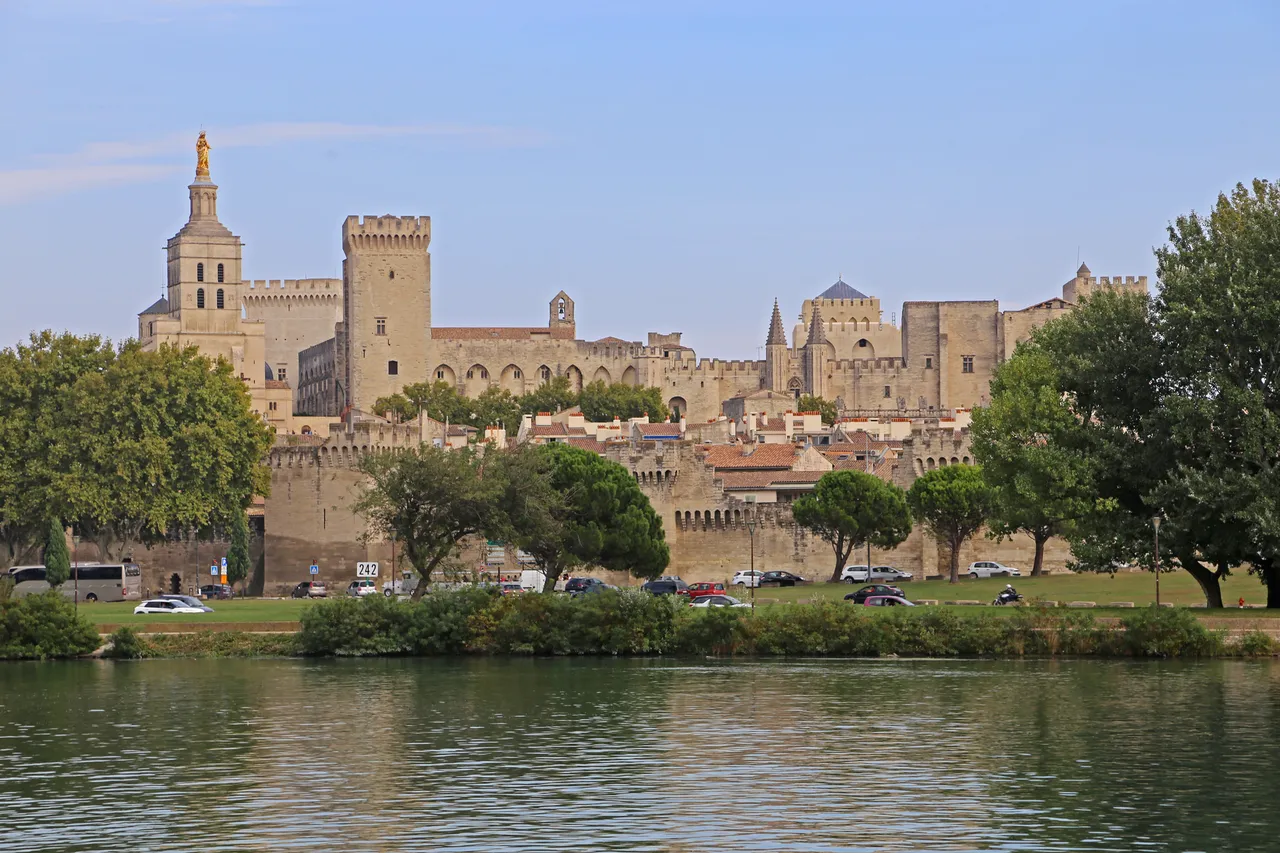
Four arches of a bridge that once crossed the Rhône remain in the water below Avignon’s papal palace. In Avignon, France, that broken span and the vast Gothic fortress above it make history feel less like a backdrop than a force still shaping the streets.
 Photo: Bingqian Li / Pexels
Built from cited sources · see the method · How we make our guides →
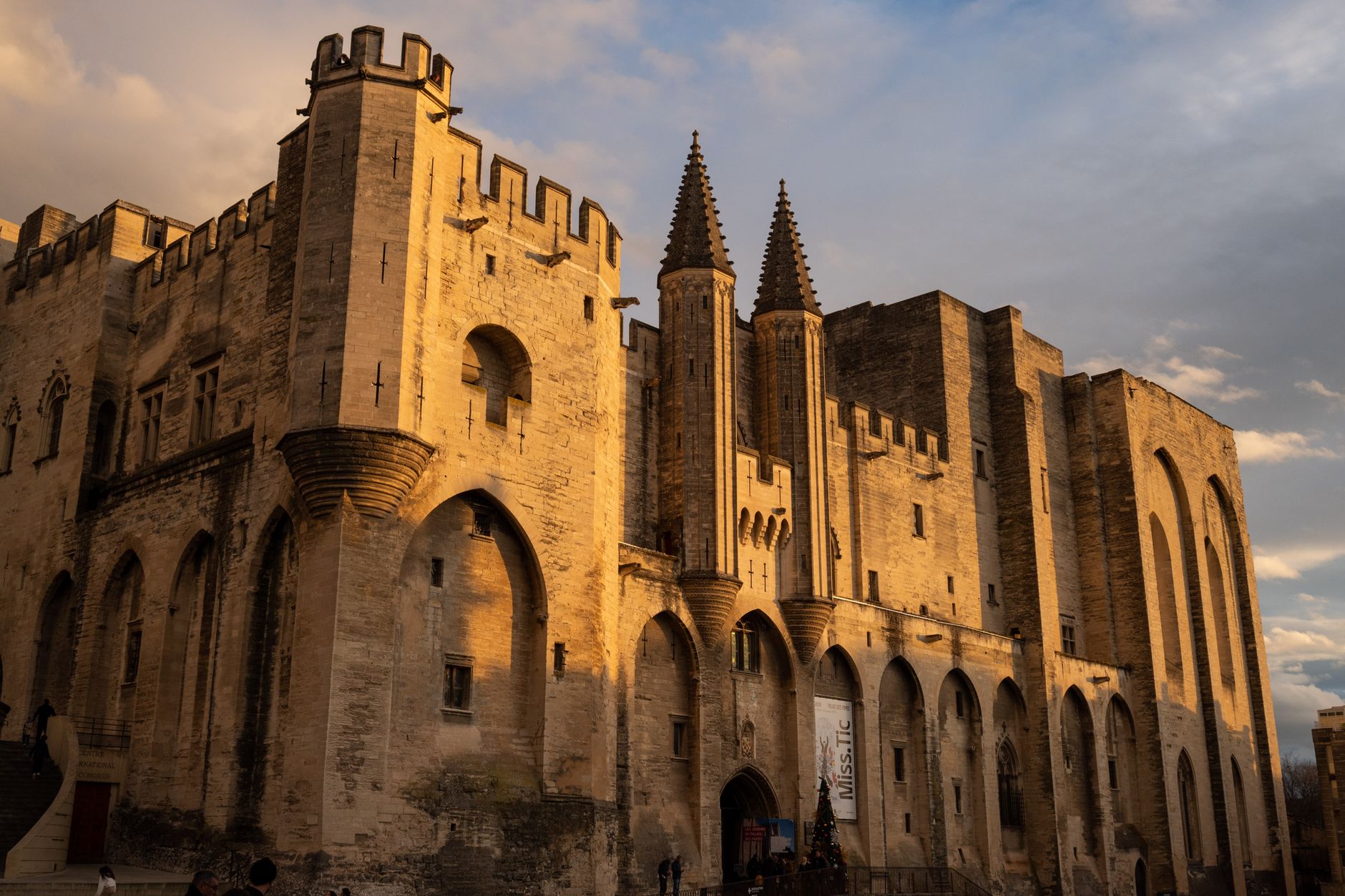
The Palais des Papes rose between 1335 and 1352, when popes made Avignon their seat; today, its halls still hold 14th-century frescoes by Matteo Giovanetti. In the Chambre du Cerf, painted scenes of hunting and fishing offer a glimpse of courtly life beyond prayer and ceremony.
Inside the 4.3-kilometre circuit of medieval ramparts, the city shifts from monumental stone to shaded lanes and market counters. At Les Halles on Place Pie, the scent of ripe tomatoes, cheese and herbs rises beneath a 300-square-metre living wall.
Every July, the Festival d’Avignon turns the Palais des Papes’ Cour d’Honneur into an open-air theatre, carrying on a tradition Jean Vilar began in 1947. The city’s old walls don’t keep the past still; they frame a place that keeps making new work inside them.
Not every monument, just the ones we'd walk you past ourselves.


Where to wander, by quarter — each with its own rhythm.
Before you go
Curated from places in this city. Same price as official sites.


Prices shown are indicative — final pricing and availability are confirmed at checkout. Audiala may receive a commission from bookings made via these links.
From a Rhône-side settlement to a city of popes, revolutions, and open-air theatre
Archaeological finds place people on the Rocher des Doms and in the Balance district thousands of years before Avignon had a name. A carved sandstone stele and polished greenstone axes survive as traces of that early settlement above the Rhône.
Later accounts place a Greek trading post here around this date, linked to Massalia, modern Marseille. The name Aouen(n)ion has been interpreted in different ways, so the precise founding story remains uncertain; the Rhône-side location made exchange its natural purpose.
Roman forces brought southern Gaul, including Avignon, into the province of Gallia Narbonensis. The change tied the river settlement to Roman administration and the growing network of roads and trade routes across Provence.
Avignon is recorded as attaining the status of a Roman colony, though the specific date is less securely established than its broader Roman-era development. The title placed the town within Rome’s civic order and gave its local institutions a new political frame.
Dendrochronological evidence points to a wooden bridge across the Rhône in the late third century. Even a temporary crossing mattered here: it connected riverbanks that floods and shifting currents could otherwise keep apart.
Nectarius, the earliest historically attested bishop of Avignon, took part in the Council of Riez. His appearance in the record shows a Christian community with a place in the church councils of late Roman Provence.
Avignon became part of the Kingdom of Burgundy-Arles, which entered the Holy Roman Empire. The city’s rulers were now bound to a far larger political order, though everyday power remained divided among regional lords and local authorities.
Avignon established a consular government, with a podestà at its head, and asserted greater autonomy from feudal counts. The arrangement gave local elites a firmer hand in civic affairs, a confidence tested a century later by a royal siege.
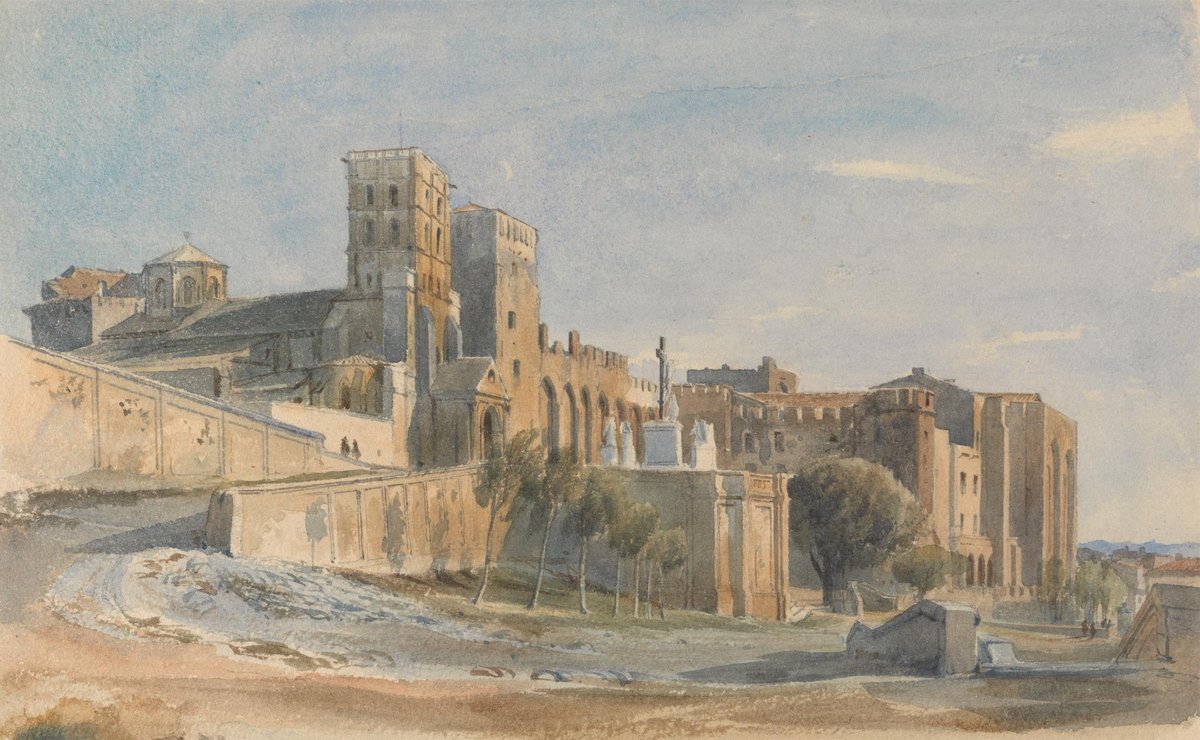
Construction began on Notre-Dame des Doms, a Romanesque cathedral on the Rocher des Doms beside the river. Its stone mass still marks the high ground above the old city, where bells would carry over the Rhône and its traffic.
Builders raised a stone bridge across the Rhône, traditionally associated with the shepherd Saint Bénézet. Its original 22 arches linked Avignon to Villeneuve-lès-Avignon; four remain today, with the Chapel of Saint-Nicolas perched on a surviving pier.
King Louis VIII’s crusading army encircled Avignon after the city resisted its passage and backed Count Raymond VII of Toulouse. The siege lasted nearly three months before the city surrendered; its defenses were dismantled and its political independence sharply reduced.
Pope Clement V moved the papal curia to Avignon, beginning the period commonly called the Avignon Papacy. Clerks, envoys, churchmen, and petitioners poured into a city whose streets now served the business of the western church.
The poet Francesco Petrarch later dated his first sight of Laura to 6 April 1327, at the Church of Sainte-Claire in Avignon. Her identity remains debated, but the encounter became one of the defining stories of his love poetry and tied the city to an early Renaissance literary legend.
Pope Benedict XII began the austere Palais Vieux in 1335; Clement VI expanded it with the more ornate Palais Neuf. Together, the palace’s vast halls, towers, and frescoed chambers turned Avignon into a working seat of papal power, built in stone on a scale the city had never seen.
Pope Clement VI bought Avignon from Queen Joan I of Naples for 80,000 florins, making the city papal territory. In the same year the Black Death struck; Clement issued protections for Jewish residents as plague panic turned into scapegoating elsewhere.
Pope Innocent VI ordered new defenses against the mercenary companies roaming Provence after the Hundred Years’ War. The stone ramparts, completed over the following years, eventually enclosed the city for 4.3 kilometres, their gates and towers guarding against both armed raiders and the Rhône’s floods.
Catherine of Siena came to Avignon and pressed Pope Gregory XI to return the papacy to Rome. Her mission joined spiritual conviction to hard politics; Gregory left the city that September and reached Rome in January 1377.
After Urban VI’s election in Rome, French cardinals chose Clement VII as a rival pope and established his court in Avignon. The resulting Western Schism divided European loyalties between competing papacies for nearly four decades.
French forces besieged Antipope Benedict XIII inside the Palais des Papes after France withdrew its support. He held out for years, then escaped in disguise in 1403, leaving the palace with an episode of papal history that sounds almost too theatrical to be true.
The Council of Constance elected Martin V, ending the Western Schism and Avignon’s role as a papal residence. The city and the neighboring Comtat Venaissin remained under papal rule, however, and would stay outside France until the Revolution.
As the Great Plague of Marseille spread through Provence, Avignon enforced cordons and quarantine measures to limit contagion. Gates and roads became lines of defense, and the city endured a period of fear and loss even as authorities tried to keep infection out.
Joseph-Michel Montgolfier was living in Avignon when, according to the familiar account, he noticed heated air lift cloth toward a chimney on Rue Saint-Étienne. That observation helped point him toward the hot-air balloon, an invention that would soon carry a Provençal name into the sky.
The French Constituent Assembly decreed the annexation of Avignon and the Comtat Venaissin. Centuries of papal government ended, and the city entered the rapidly changing political order of revolutionary France.
After municipal secretary Lescuyer was lynched, suspected counter-revolutionaries were imprisoned in the Palais des Papes’ Tour de la Glacière. Around 60 were killed there, leaving a brutal mark on the city’s first months under revolutionary rule.
A catastrophic flood submerged broad parts of Avignon as the Rhône rose to a recorded level of 7.95 metres. Water turned streets into channels and exposed the city’s old vulnerability to the river that had made its fortunes.
Allied air raids targeted Avignon’s railway yards and bridges, damaging nearby homes as well as transport links. German forces withdrew, and U.S. troops and French Resistance fighters liberated the city on 25 August.
Director Jean Vilar founded the Festival d’Avignon and staged performances in the Palais des Papes’ Cour d’Honneur. The vast stone courtyard, once built for ceremony and rule, became a theatre under the open sky.
UNESCO inscribed Avignon’s historic centre, including the Palais des Papes, Notre-Dame des Doms, Pont Saint-Bénézet, and the ramparts, as a World Heritage Site. The designation recognized a city centre in which medieval religious, civic, and defensive architecture still meet within the old walls.
The LGV Méditerranée opened, with a dedicated Avignon TGV station linking the city to France’s high-speed rail network. The journey to Paris fell to about 2 hours 40 minutes, bringing the river city into much closer reach of the capital.
Avignon’s modern tramway began passenger service on Line T1. The new line offered a different way to move through a city whose older routes had been shaped by walls, gates, and the broad course of the Rhône.
Actor and theater director · 1912–1971
Founded the Festival d’Avignon in 1947
In 1947, Jean Vilar turned the Palais des Papes’ Cour d’Honneur into a theater stage and founded the Festival d’Avignon. He might recognize today’s July crowds as proof that the courtyard still belongs to performers as much as to stone.
Inventor · 1740–1810
Lived and worked in Avignon from 1780
Montgolfier moved to Avignon to run a printing business, and in November 1782 he is said to have noticed hot air lifting a silk cloth toward a chimney on Rue Saint-Étienne. That small domestic observation helped lead to the hot-air balloon; the street still gives the story an unusually intimate address.
Poet and scholar · 1304–1374
Lived in Avignon and first saw Laura here in 1327
Petrarch came to Avignon with his family as a young man, when the papal court drew people from across Europe. Tradition places his first sight of Laura at the Church of Sainte-Claire on 6 April 1327; the city’s crowded religious life became the unlikely setting for some of his most private poetry.
Pope · c. 1285–1342
Commissioned the Palais Vieux in Avignon
Benedict XII began the Palais Vieux, the older, more fortress-like part of the papal palace, after becoming pope in 1334. He might find today’s visitor-filled halls a strange afterlife for a building conceived to give the papal court a secure home.
Pope · 1291–1352
Commissioned the Palais Neuf in Avignon
Clement VI expanded the palace with the Palais Neuf, whose grand rooms and painted chambers reveal a less austere papal world. The contrast with Benedict XII’s older fortress still tells a story: Avignon’s rulers wanted security, but they also wanted to be seen.
Singer · born 1946
Born and raised in Avignon
Mireille Mathieu grew up in Avignon and won a local singing competition in 1962 before her career carried her far beyond Provence. The city that first heard her voice might still feel like a fitting place to begin a song.
Where locals actually book dinner — not the tourist menus.
Small things that change how the city treats you.
The city, as it actually looks.



Yes—Avignon brings the Palais des Papes, the surviving arches of Pont Saint-Bénézet and a walled old town into one walkable visit. Stay long enough to see the frescoes and then climb to the Rocher des Doms for a view across the Rhône.
Two full days give you time for the Palais des Papes, the bridge, the old center and a museum or market visit. Add a third day if you want a slower pace or plan to see more of the region.
Avignon TGV station is outside the walled center; connect to Avignon Centre by local TER train or bus. Check current departures before travel, as schedules can change.
Yes. The main sights inside the ramparts are easy to explore on foot, while Orizo buses and trams serve trips beyond the center. A car is more useful for exploring the wider region than for visiting the old town.
Avignon is manageable with ordinary city precautions. Keep valuables secure in crowded July festival venues and busy places such as Les Halles, and stay aware of your surroundings after dark.
Costs depend on your choices: major sights such as the papal palace and bridge have admission fees, while walking the old streets and spending time in the Jardin des Doms cost nothing. Check official attraction sites for current ticket prices, and book July accommodation early.
Avignon is best known for the Palais des Papes and the Avignon Papacy, when popes resided here in the 14th century. The four surviving arches of Pont Saint-Bénézet are another emblem of the city, immortalized in the French song Sur le pont d’Avignon.
41 places to discover






Saved and recently read places — kept on this device only.
Photos may have been resized or cropped.