
Historical Background: Gerbert d’Aurillac (Pope Sylvester II)
Early Life and Education
Gerbert d’Aurillac was born around 938 CE in the Auvergne region (Encyclopedia.com). His formative years were spent at the Abbey of Saint-Géraud, where he gained a rigorous education in the liberal arts and theology. Access to the abbey’s renowned scriptorium and library laid the groundwork for Gerbert’s later intellectual achievements.
Scholarly Achievements and Influence
In 967, Gerbert traveled to Catalonia, particularly the monastery of Santa Maria de Ripoll. There, he encountered advanced Arabic scientific traditions, which had a lasting impact on Western European learning (History of Information). He introduced the abacus, astrolabe, and advocated for Arabic numerals, catalyzing a revival of scientific thought that would flourish in the centuries ahead.
Political and Ecclesiastical Career
Gerbert’s career included roles as master of the Cathedral School at Reims, abbot of Bobbio, archbishop of Reims and Ravenna, and, ultimately, pope in 999. As Pope Sylvester II, he championed church reform and played a key part in the Christianization of Eastern Europe, all while supporting the intellectual enrichment of the clergy (Britannica).
Contributions to Science and Letters
Gerbert’s treatises on the abacus and astrolabe, along with his correspondence (Opera Mathematica, Lettres de Gerbert), are invaluable for understanding medieval scholarship and the cross-cultural exchange of knowledge (Encyclopedia.com).
Legacy and Commemoration in Aurillac
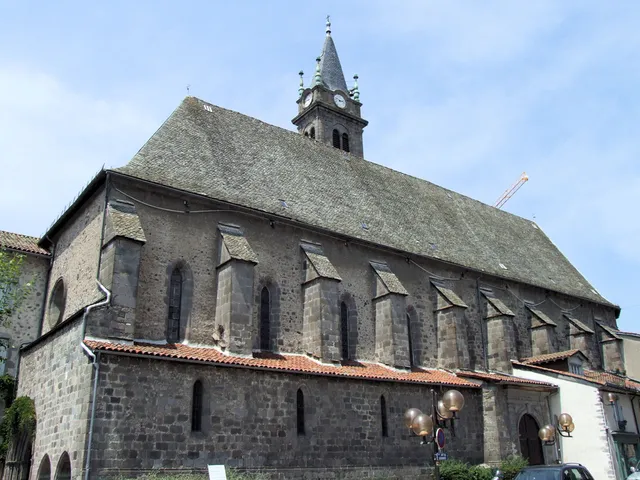
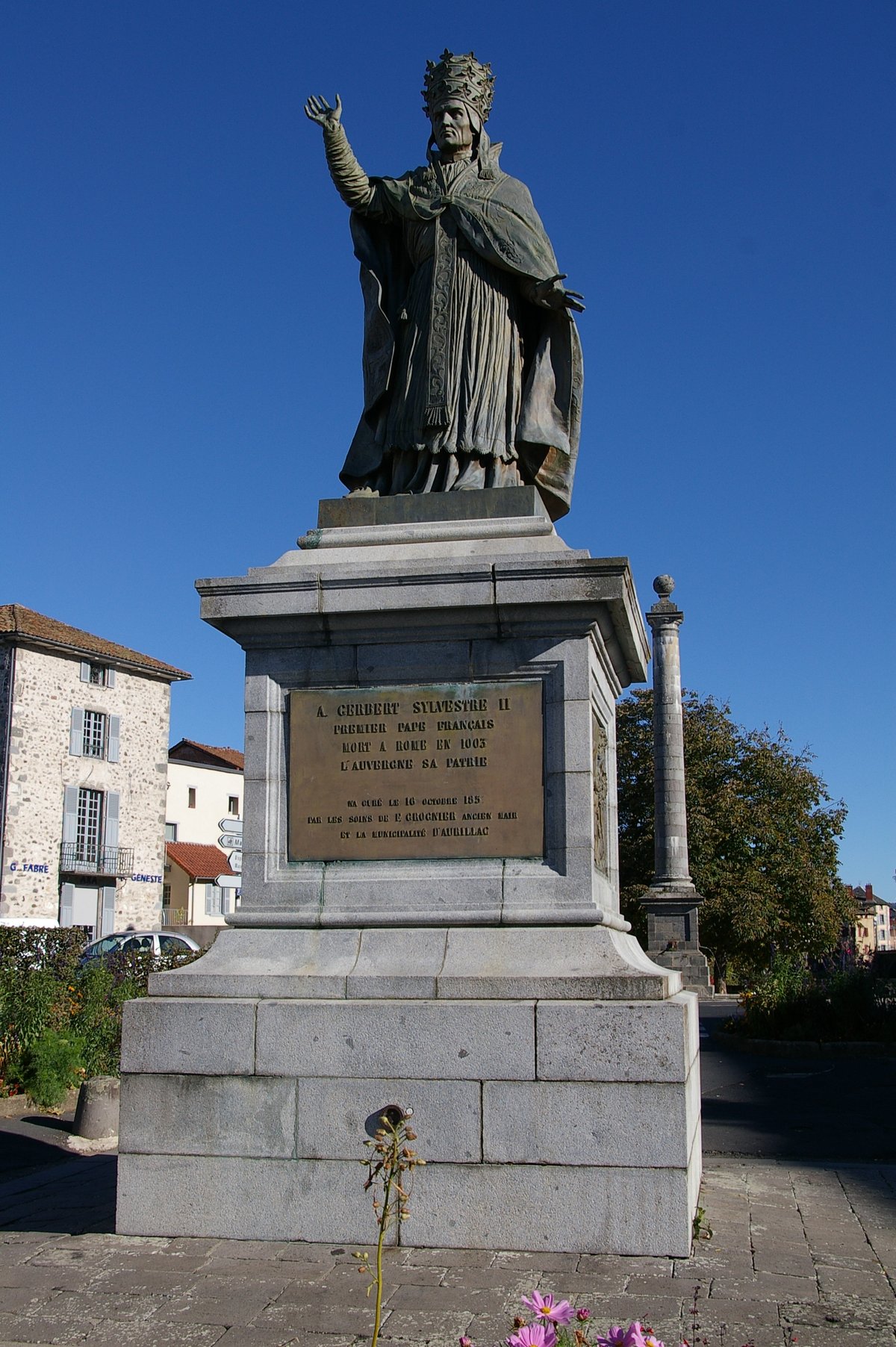
Aurillac celebrates Gerbert’s achievements through the Sylvester II Statue, the Musée d’Art et d’Archéologie, and the Église Saint-Géraud, as well as by naming schools and libraries in his honor (Triplyzer; Choosewhere).
The Sylvester II Statue
History and Artistic Features
Erected in 1851 and crafted by David d’Angers, the statue stands at the northern end of the Gravier promenade. The monument’s base features three detailed reliefs: Gerbert’s early monastic education, his role as a scholar and inventor, and his papal coronation. These panels visually narrate his journey from local student to international figure (Pays Aurillac Tourisme).
Symbolism and Urban Placement
The statue’s location marks a symbolic gateway between Aurillac’s medieval quarter and the newer parts of town. As a public monument, it serves as both a civic landmark and a reminder of the town’s enduring commitment to learning and cultural exchange (Choosewhere).
Visiting Information
Location and Access
- Address Gravier Promenade, northern end, Aurillac, Cantal, France
- Nearby Landmarks Place Gerbert, Château Saint-Étienne, Saint-Géraud Abbey
- Getting There
- 15–20 minute walk from Gare d’Aurillac (main train station)
- City buses and car rentals available; parking at “Parking du Gravier” and “Parking Place Gerbert”
Visiting Hours and Admission
- Statue Access Outdoor and accessible 24/7, year-round
- Admission Free
- Nearby Attractions
- Museums and abbeys typically open 10:00–18:00 (seasonal variations possible; check official sites)
- Museum entry: €5–€8
Accessibility
- Statue Area Paved, mostly flat, suitable for wheelchairs
- Nearby Restrooms Available at Place du Square
- Accessibility in Museums Most provide accommodations; check in advance for specific needs
Best Time to Visit and Travel Tips
- Ideal Months May to September (pleasant weather, cultural events)
- Peak Season July–August (Aurillac Street Theatre Festival; more crowds, higher prices)
- Low Season January (quiet, best hotel rates, but cooler weather and shorter hours for some attractions)
- Weather Temperate; pack layers and a rain jacket or umbrella
Guided Tours and Events
- Guided Tours Offered by the tourism office, often including the statue and major historic sites
- Special Events May 12th (Sylvester II’s papal anniversary), Aurillac Street Theatre Festival in August
Place Gerbert: Aurillac’s Historic Center
Setting and Ambiance
Place Gerbert is the lively square anchoring Aurillac’s Old Town. Encircled by medieval and 19th-century architecture with cafés, artisan shops, and event spaces, it’s a hub of community life, especially during festivals and markets.
Integration with Heritage Trail
The square and statue are integral stops on Aurillac’s heritage trail, which connects visitors with key historical and cultural landmarks.
Local Life and Events
Markets, performances, and commemorative events regularly animate Place Gerbert. The area is safe, well-lit, and welcoming at all hours.
Practical Visitor Guide
Transportation and Parking
- By Rail Gare d’Aurillac (regional connections)
- By Bus City and regional lines serve the center
- By Car Ample public parking near the promenade; daily rental averages $66 (cheapest in February, highest in June) (Where and When)
Nearby Attractions
- Château Saint-Étienne Museum of Volcanoes, panoramic town views (France-Voyage)
- Saint-Géraud Abbey Gerbert’s formative monastery
- Museum of Art and Archaeology Exhibits on Gerbert and local history
- Place du Square Markets, local shops, additional dining
Amenities and Accessibility
- Cafés and Shops Around Place Gerbert, with local specialties (Cantal cheese, truffade)
- Restrooms Public facilities near Place du Square
- Accessibility Old Town is mostly flat, but some cobblestone streets can be uneven
Photography and Visitor Experience
- Best Light Early morning or late afternoon for statue photos
- Interpretive Panels Informational plaques in French, sometimes English; QR codes for digital guides
Budgeting and Responsible Tourism
- Admission Visiting the statue is free; museums charge modest fees
- Dining Options range from casual to fine dining
- Transport Bus tickets ~€1.20 (2025)
- Sustainability Support local businesses, use reusable water bottles/bags, and respect the heritage site
Frequently Asked Questions (FAQ)
Q: What are the Sylvester II Statue visiting hours?
A: The statue is outdoors and accessible 24/7, free of charge.
Q: Are tickets required to visit the statue?
A: No; admission is free.
Q: Are guided tours available?
A: Yes; walking tours of Aurillac’s historic center, including the statue, are available through the tourism office.
Q: Is the site wheelchair accessible?
A: Yes; the area is paved and mostly flat.
Q: When is the best time to visit?
A: May to September offers the best weather and most cultural events.
Q: What other sites are nearby?
A: Saint-Géraud Abbey, Château Saint-Étienne, Place du Square, and the Museum of Art and Archaeology.