Historical Background
Origins and Early History
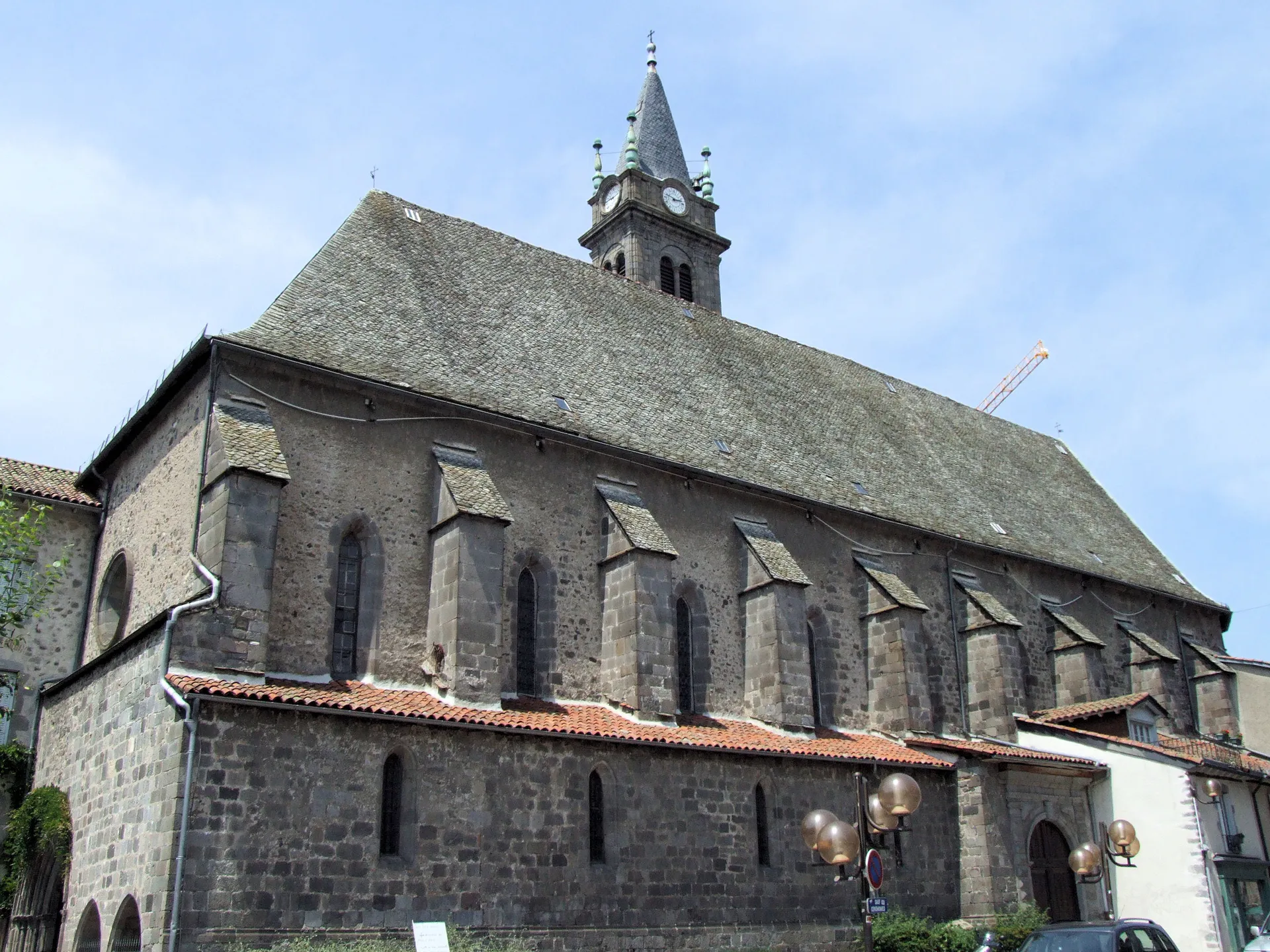
Église Notre-Dame-Aux-Neiges in Aurillac, France, has a rich and storied history that dates back to the early 14th century. Initially constructed as a chapel for a convent of Cordeliers, a branch of the Franciscan order, the church was built using brèche volcanique, a type of volcanic rock prevalent in the region. This early construction phase is significant as it reflects the architectural styles and religious practices of the medieval period in France (Monumentum).
Restoration and Architectural Evolution
The church underwent significant restoration and expansion in the 17th century. During this period, chapels were added between the buttresses, creating the appearance of side aisles, or "faux collatéraux." This architectural feature is particularly notable as it demonstrates the evolving design preferences and the influence of different architectural styles over the centuries. The western portal, characterized by its successive recessed arches without a tympanum, and the southern door with its 17th-century bossages, are key elements from this period (Monumentum).
19th Century Modifications
The 19th century brought further changes to Église Notre-Dame-Aux-Neiges. In 1847, the church's bell tower was reconstructed by the diocesan architect Carriat. This reconstruction was part of a broader trend during the 19th century in France, where many historical buildings were restored or modified to preserve their structural integrity and aesthetic appeal. Additionally, in 1889, the chevet (the eastern end of the church) was restored by the architect Aigueparsses, who also added an upper floor above the former chapter house and constructed a round tower staircase leading to it (Monumentum).
Historical Significance
The church's name, Notre-Dame-Aux-Neiges, is believed to commemorate the liberation of Aurillac on August 5, 1581, during the Wars of Religion. According to legend, the Virgin Mary caused it to snow on this day, enabling the Catholic forces to repel the Protestant attackers. This event is celebrated annually on August 5, in honor of Sainte Marie des Neiges (Wikipedia).
Protected Status and Cultural Heritage
Église Notre-Dame-Aux-Neiges was officially recognized as a historical monument by the French government on March 25, 1977. This designation underscores the church's architectural and historical importance, ensuring its preservation for future generations. The church houses several pieces of classified historical furniture, including a painting of the Last Supper, statues of the Virgin and Child, Saint Roch, Saint Philip Neri, and a Black Madonna known as the "Vierge en majesté." These artifacts add to the church's cultural and religious significance (Monumentum).
Architectural Features
Église Notre-Dame-Aux-Neiges is an excellent example of southern French ecclesiastical architecture. Its single nave is flanked by chapels that create the illusion of side aisles. The western portal, with its series of recessed arches, and the southern door, originally part of a now-lost cloister, are notable features. The church's bell tower, rebuilt in the 19th century, and the restored chevet, with its added upper floor and round tower staircase, highlight the building's architectural evolution over the centuries (Monumentum).
Art and Interior Decoration
Inside the church, visitors can find several significant works of art. The painting of the Last Supper is a focal point, along with statues of the Virgin and Child, Saint Roch, and Saint Philip Neri. The Black Madonna, or "Vierge en majesté," is another important artifact, reflecting the church's deep religious heritage. These pieces are not only valuable for their artistic merit but also for their historical and religious significance (Monumentum).
Modern-Day Relevance
Today, Église Notre-Dame-Aux-Neiges remains an active place of worship and a significant historical site. It attracts visitors not only for its religious services but also for its architectural beauty and historical importance. The church is a testament to the rich cultural and religious history of Aurillac and the broader Cantal region. Its preservation as a historical monument ensures that it will continue to be a place of interest and reverence for future generations (Wikipedia).
Visitor Information
Visiting Hours
The church is open to the public daily from 9:00 AM to 6:00 PM.
Tickets
Entry to the church is free, but donations are appreciated to help with maintenance and preservation.
Accessibility
The church is accessible to visitors with mobility issues, with ramps and designated areas for easier access.
Nearby Attractions
While in Aurillac, visitors can also explore the Musée d'Art et d'Archéologie, Château Saint-Étienne, and the picturesque streets of the old town.