
Place
France Verified Aug 2026
Charcoal-dark roofs catch the cold light beneath a hill of volcanic basalt, while umbrella ribs click together in workshops below. Aurillac, France, is an Auvergne town where a 12th-century keep explains the geology under your feet and, each August, streets fill with more than 600 OFF street-theatre troupes. Come for the odd pairing: mountain food, Romanesque memory, and an arts festival that refuses to stay on a stage.
 Photo: B.navez · CC BY-SA 3.0
Built from cited sources · see the method · How we make our guides →
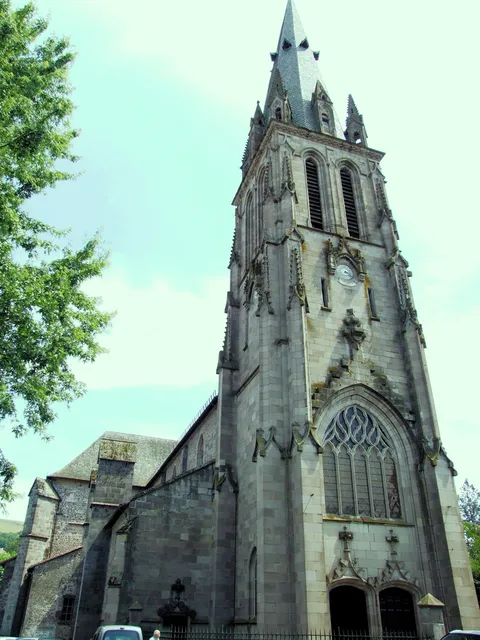
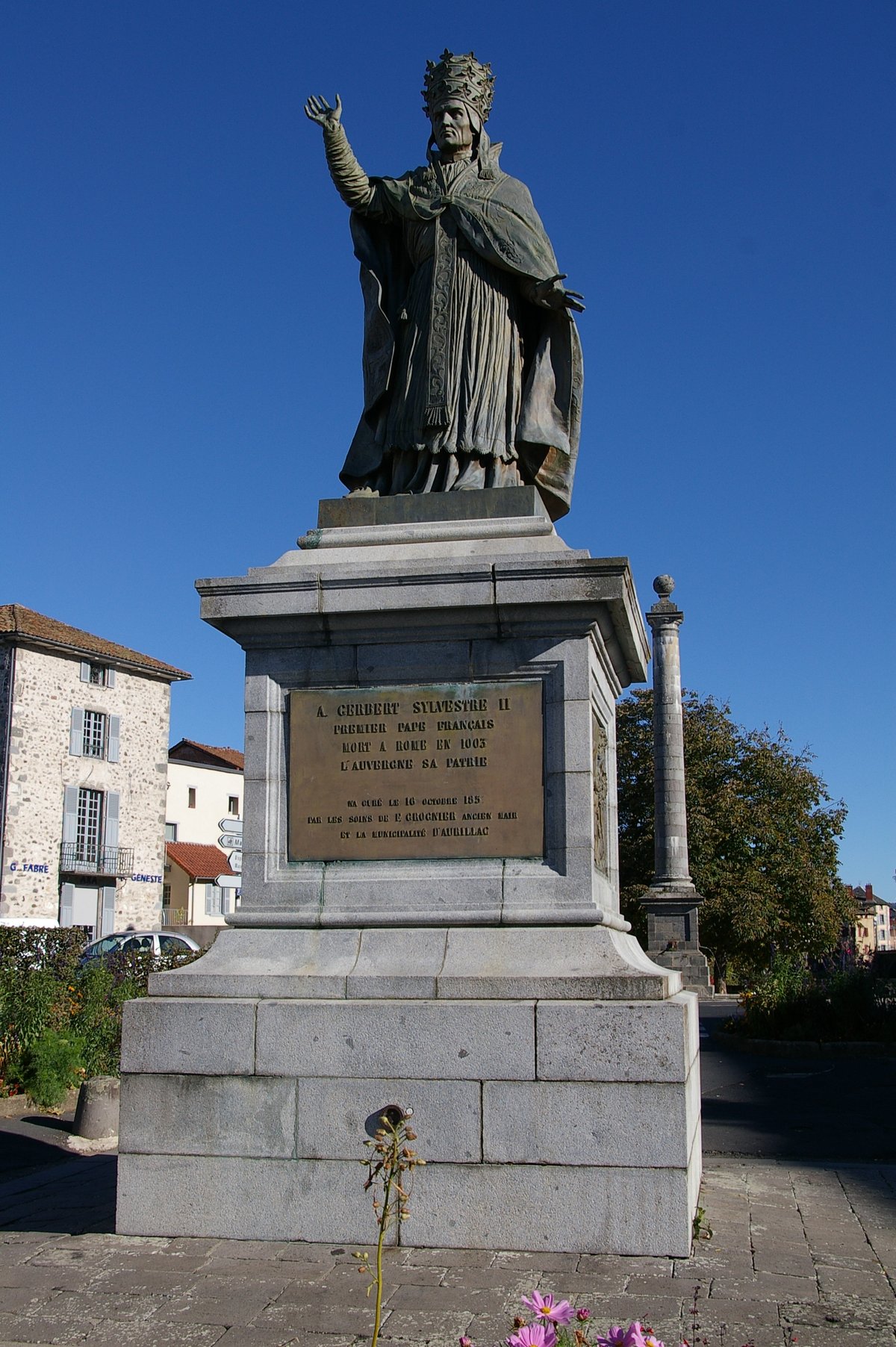
Aurillac’s oldest story gathers around Saint-Géraud Abbey, founded around 894 and first consecrated in 916. Gerbert studied here before becoming Pope Sylvester II in 999; his statue on Place Gerbert commemorates the scholar associated with the abacus, Arabic numerals, and early mechanical clockmaking in medieval Europe.
The town’s working identity is just as distinctive. Maison Piganiol, founded in 1884, still cuts fabric, mounts ribs, and stitches canopies by hand, while the covered market deals in Cantal, Salers, Saint-Nectaire, cured ham, and the ingredients for truffade—potatoes folded with melting tome fraîche.
Beyond the old streets, Aurillac opens onto the Cantal volcano, the largest extinct volcanic massif in Europe. Gorges de la Jordanne lie 15–20 kilometers away and Puy Mary 39 kilometers north; together they change the town from an isolated prefecture into a basecamp for reading the dark stone, high pastures, and weather that shaped it.
Not every monument, just the ones we'd walk you past ourselves.
Where to wander, by quarter — each with its own rhythm.
Before you go
Aurillac grew around an abbey, a volcanic hill, and a stubborn talent for reinvention
Archaeological evidence points to occupation around Aurillac during the Gallo-Roman period, probably connected to an estate known as Aureliacum. The Jordanne offered water, routes, and fertile ground; a later local legend imagined gold glittering in its alluvial sands.
Gerald, the future Saint Géraud, was born into the local ruling family at the fortress on the Saint-Étienne hill. His decision to turn family power toward religious charity would give Aurillac the institution around which its medieval town gathered.
Around 894, Gerald founded the Benedictine Abbey of Saint-Géraud and secured a papal privilege of exemption, placing it directly under Rome rather than a nearby bishop or lord. That unusual independence brought land, scholars, pilgrims, and a powerful new center to the Jordanne valley.
Gerald died on October 13, 909, and was buried at the abbey he had founded. His tomb became a pilgrimage focus, while the first stone abbey church, consecrated between 916 and 918, replaced the fragile timber beginnings with walls meant to endure.
Tradition places Gerbert's birth near Aurillac around 945, with his early education taking place at Saint-Géraud in the following decades. The monastery's school gave the gifted boy access to the liberal arts before Catalan study exposed him to mathematics and astronomy circulating from the Islamic world.
An expanded abbey church, known to historians as Aurillac II, was consecrated in 972. Its enlargement reflects the reach of Saint-Géraud: a remote monastery had become a religious and intellectual address known well beyond Auvergne.
Pope Urban II visited Aurillac after the Council of Clermont and consecrated the reformed abbey church around 1095–1096. Incense, candle smoke, and the authority of a pope passing through the doors strengthened the abbey's place on the pilgrimage map.
During the 12th century, the rulers of Aurillac built the heavy stone keep of Château Saint-Étienne on the volcanic outcrop above town. Its thick walls watched the river crossings and market streets, turning the old family seat into a statement of secular power.
Aurillac's townspeople rose against the abbot's civil and criminal jurisdiction in 1184, attacking and pillaging abbey property. A second revolt in 1233 brought papal sentences and excommunications, revealing how sharply urban commerce chafed against monastic rule.
A peace accord between the abbot of Saint-Géraud and the townspeople established a consulate, giving local magistrates a recognized role in governing Aurillac. The abbey retained nominal authority, but the town gained a political voice of its own.
The plague struck Aurillac in the years after 1348, killing residents and weakening the abbey's income, workforce, and networks of exchange. The smell of lime and the closing of busy doors would have marked a town suddenly forced inward.
During the Hundred Years' War, English-backed raiders and unpaid mercenary bands repeatedly crossed the Auvergne. Aurillac strengthened its gates, towers, and ramparts, while the Jordanne's crossings became defensive points rather than simple routes to market.
The death of Hugues de la Roche, the last abbot freely elected by the monastery, ended an old local custom. From this point, the Holy See appointed commendatory abbots, often powerful outsiders more interested in revenue than in Aurillac's daily affairs.
Cesare Borgia held the title of commendatory abbot of Saint-Géraud from 1493 to 1498, one of the clearest signs that Aurillac's abbey had become a prize in high ecclesiastical politics. Its revenues could travel far from the dark stone streets that produced them.
After financial strain, internal disorder, and scandals, Saint-Géraud was secularized in 1561 and converted into a collegiate chapter of secular canons. The Benedictine centuries ended, though the church and its accumulated memory remained at the heart of town.
On September 6, 1569, Protestant troops under Jean de Brunenc seized Aurillac by surprise during the Wars of Religion. The abbey, cloister, library, and archives went up in flames; Saint Géraud's golden reliquary was melted, and tombs were desecrated.
Aurillac rebuilt after the religious wars, restoring Saint-Géraud in a late Gothic manner and adding new religious houses such as Notre-Dame-aux-Neiges. Fresh stonework could not restore the burned archives, but it gave the town a usable and solemn center again.
Master organ builder Joseph Rabiny installed the historic pipe organ at Saint-Géraud in 1779. Its pipes brought a different kind of authority into the nave: breath, vibration, and music filling the same stone enclosure that had survived fire and political upheaval.
The National Constituent Assembly created the department of Cantal on March 4, 1790, naming Aurillac its prefecture rather than Saint-Flour. Revolutionary administration replaced the old abbey-centered order with offices, decrees, and a new civic hierarchy.
Construction of the Hôtel de la Préfecture du Cantal began around 1800 and continued into the following years. The neoclassical building made departmental government visible in stone, with a measured façade replacing the defensive gestures of the medieval hill.
Émile Duclaux was born in Aurillac in 1840 before becoming a chemist, microbiologist, and close collaborator of Louis Pasteur. As director of the Pasteur Institute from 1895, he connected this provincial birthplace to the laboratories where modern microbiology took form.
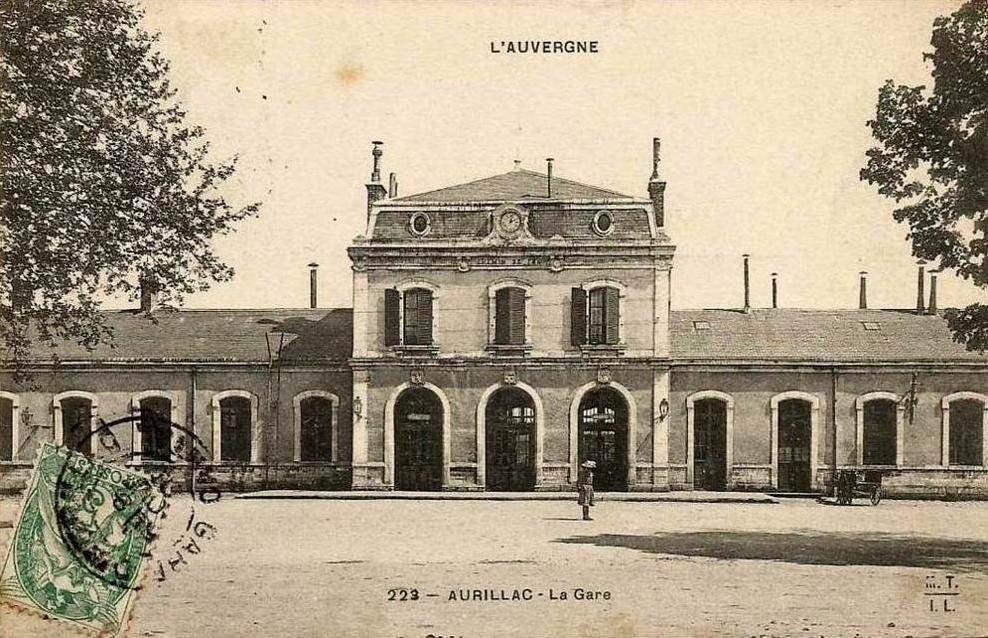
Rail service reached Aurillac in 1866, linking the town with Figeac, Arvant, and Clermont-Ferrand. Iron, coal smoke, Cantal cheese, and manufactured goods began moving through the station, loosening the isolation imposed by the surrounding mountains.
A fire swept through Château Saint-Étienne in 1868, damaging the historic complex above the town. Restoration brought Neo-Gothic touches to the medieval keep, leaving a building that looks older than parts of its present appearance really are.
Jean-Baptiste Piganiol founded Maison Piganiol in 1884, helping turn an existing peddling trade into a specialized manufacturing industry. Cutting cloth, mounting ribs, and sewing tips by hand gave Aurillac an exportable craft with a distinctly practical elegance.
Between 1900 and 1930, more than eight major umbrella factories operated in Aurillac, and local production supplied over half of France's umbrellas. The town's industrial rhythm sounded less like a mill than a thousand small gestures: cloth cut, ribs snapped into place, handles polished.
After the 1940 armistice, Aurillac remained in Vichy's Zone libre until German troops occupied southern France in November 1942. Resistance groups used the Cantal mountains for weapons drops, ambushes, and railway sabotage, and local forces helped liberate the city and department in August 1944.
Theatre director Michel Crespin founded the Festival International de Théâtre de Rue d'Aurillac and the ÉCLAT association in 1986. Performances spilled from stages into courtyards, streets, and squares, making the town's public life part of the production rather than a backdrop.
During the 1990s, the Muséum des Volcans took residence in a wing of Château Saint-Étienne. Rocks, scale models, and hands-on displays explain how the Cantal volcanic massif formed, giving the old fortress a second life as a classroom of stone and lava.
France's territorial reform placed Cantal within the enlarged Auvergne-Rhône-Alpes region in 2016. Aurillac remained the departmental capital, but decisions affecting the town now reached across a much wider administrative territory.
Archaeological work and major restoration projects in the 2020s have exposed Carolingian and medieval remains around the Abbatiale Saint-Géraud. Beneath later plaster and repairs, the abbey still gives up the outlines of the institution that first made Aurillac a town.
Count and Saint · c. 855–909
Born here; founded the Abbey of Saint-Géraud
According to local historical tradition, Gerald was born at the family seat on Château Saint-Étienne and founded the Benedictine Abbey of Saint-Géraud around 894–895. Buried in the abbey church, he might recognize today’s city as the urban life that grew from his monastery, though the traffic would be less saintly.
Scholar and Pope · c. 946–1003
Educated at the Abbey of Saint-Géraud
Gerbert studied at Aurillac’s abbey school before becoming Pope Sylvester II in 999, carrying the town’s name into European intellectual history. The statue on Place Gerbert gives a medieval scholar a modern audience; he would probably approve of the city’s continued fascination with instruments, numbers and learning.
Microbiologist and Chemist · 1840–1904
Born here
Born in Aurillac, Duclaux later worked with Louis Pasteur and became the second director of the Pasteur Institute from 1895 to 1904. The lycée bearing his name keeps that scientific thread visible in a city better known to visitors for cheese and volcanic rock.
Benedictine Abbot · c. 878–942
Abbot of Saint-Géraud in 925–926
Odo spent a brief but revealing spell as abbot of Saint-Géraud in 925–926 before leading Cluny’s reforming monastery. He also wrote the Life of Saint Gerald, turning Aurillac’s founder into a figure whose story helped preserve the town’s early memory.
Cardinal and Condottiero · 1475–1507
Commendatory abbot of Saint-Géraud from 1493 to 1498
The Renaissance power broker Cesare Borgia held the title of commendatory abbot of Saint-Géraud between 1493 and 1498, an unexpected link between Aurillac and papal Rome. He would likely find today’s quiet abbey precinct less useful politically, but perhaps more pleasant.
President of France · 1857–1932
Born here
Paul Doumer was born in Aurillac in 1857 and went on to serve as governor-general of French Indochina before becoming President of the Republic in 1931. A walk through the city today would show him a provincial capital still producing national stories, though with fewer presidential speeches in the cafés.
Where locals actually book dinner — not the tourist menus.
This AOP cow’s-milk cheese comes in young, semi-aged and old versions, shifting from lactic and supple to firm, peppery and cellar-rich. Taste it at the covered market, then compare it melted into a hot regional dish.
Salers is a raw-milk mountain cheese made during the cows’ pasture season, with a dense texture and grassy, slightly hazelnut flavor. Look for it alongside the red Salers cattle story in nearby villages and farm shops.
Cantal’s great skillet dish combines potatoes with melting tome fraîche, often with garlic and bacon. The cheese pulls into long strands as it reaches the table, making this the meal for a cold evening.
Pounti is a savory Auvergne loaf of pork, greens and herbs punctuated by prunes, so each slice moves between peppery, earthy and sweet. It is an excellent market or bistro order when you want something more local than a generic tart.
These thin buckwheat pancakes belong to the Cantal table and are commonly served with cheese or other savory fillings. Try one at the Marché Couvert, especially on a Saturday morning when local producers bring in fresh dairy and charcuterie.
Tripoux consists of small tripe parcels slowly cooked in a seasoned broth, a traditional dish with a deep, meaty aroma and tender texture. It rewards an open mind and a hearty appetite more than a rushed lunch.
Distillerie Louis Couderc makes Auvergnat aperitifs from wild yellow gentian root gathered on the Cantal high plateaus. Its gentian liqueur and house specialty La Jeannette bring a bitter, alpine note to an after-dinner glass.
South of Aurillac, the forests around Mourjou shape a food culture built around sweet chestnuts, used in cakes, purées and preserves. The Maison de la Châtaigne explains the old tools and recipes, giving the flavor a proper sense of place.
Small things that change how the city treats you.
The city, as it actually looks.


Yes, if you like medieval streets, volcanic geology and food with a strong local identity. Two compact museums, Château Saint-Étienne, the Jordanne riverfront and the umbrella workshops give the town more substance than its size suggests.
Allow two days for Aurillac itself, or three to five days with Cantal excursions. That gives you time for the old town, Muséum des Volcans, local food and a trip toward Puy Mary or Lake Saint-Étienne-Cantalès.
The quickest scheduled air connection is usually Paris-Orly to Aurillac–Tronquières Airport, followed by a 5–10 minute taxi ride into town. Aurillac’s SNCF station also has regional trains toward Clermont-Ferrand, Brive-la-Gaillarde and Toulouse.
Yes, for the center; the old town, Place Gerbert, Rue Vermenouze and the Jordanne banks are walkable. Trans’cab runs six urban bus lines, a free electric downtown shuttle and reservation-based services, while summer shuttles reach Mandailles-Saint-Julien and Puech des Ouilhes.
Aurillac is generally a low-risk French departmental prefecture, though normal precautions still apply. During the August street-theatre festival, keep bags closed in dense crowds and take extra care on mountain roads during storms, fog or snow.
Aurillac can suit a moderate budget, especially if you use the free center shuttle, shop at the covered market and eat a weekday plat du jour. Restaurant prices vary, but service is included in France; a €1–€2 café tip or €2–€5 after a good dinner is customary rather than required.
Start with truffade, the hot potato-and-tome fraîche dish associated with Cantal. Pounti, bourriols, tripoux, potée auvergnate and tarte à la tomme offer a broader taste of the department’s rustic cooking.
Visit from mid-May to mid-September for warmer days, with July the driest month in the climate averages supplied. Late August adds the International Street Theatre Festival, while winter brings cold nights, possible snow and more difficult mountain driving.
20 places to discover
Saved and recently read places — kept on this device only.
Photos may have been resized or cropped.