Plan and listen to Saliers Concentration Camp with Audiala.
Audio guide in your pocket, itinerary in your browser. Built for the way you actually visit.
Introduction: Saliers Concentration Camp—Historical Background and Significance
The Saliers Concentration Camp, set in the Camargue region near Arles, France, stands as a powerful reminder of the persecution of the Roma community during World War II. Established in 1942, it was the only camp in France specifically built to detain “nomads”—primarily Roma families—under the discriminatory policies of the Vichy government, which collaborated with Nazi Germany. The camp is a testament not only to France’s internment system, which evolved from World War I, but also to the targeted oppression of marginalized groups including Roma, Jews, political dissidents, and refugees (memorialdesnomadesdefrance.fr; USHMM: France).
Initially neglected in postwar remembrance, Saliers has become a focal point for education and commemoration, honoring the approximately 700 men, women, and children who endured harsh conditions there. The memorial features commemorative steles and interpretive panels, connecting visitors to the history of anti-Roma persecution. Its proximity to the historic city of Arles and the unique Camargue region allows visitors to engage with both cultural heritage and the memory of the Holocaust (memorialsaliers.fr; Cercle d’étude de la Déportation et de la Shoah).
This guide provides a thorough overview of the Saliers Concentration Camp’s history, practical visitor details including hours and accessibility, and tips for enriching your visit with nearby attractions and educational resources.
Discover the History of Internment Camps in France
France’s internment camps, including Saliers, are significant markers of 20th-century history, especially for those interested in the legacy of World War II and human rights. Understanding their origins, evolution, and present-day memorialization enhances the experience of visiting these sites.
Early Origins and Historical Context
Internment camps in France originated during World War I, initially detaining enemy nationals such as Germans and Austro-Hungarians. The framework expanded in the interwar years, detaining Armenians and “nomads” following restrictive legislation. The Spanish Civil War (1936–1939) saw Republican refugees placed in camps like Rivesaltes, a pattern that continued and intensified under the Vichy regime.
The Vichy Regime and Expansion of Internment Camps
Following France’s 1940 defeat, the Vichy government dramatically increased the use of internment camps, targeting Jews, Roma and Sinti (“nomads”), political dissidents, and refugees. The decree of April 6, 1940, restricted nomad mobility, setting the stage for mass internment.
Saliers Camp: Internment of “Nomads”
Constructed in 1942 in the Camargue near Arles, the Saliers camp was designed by architect Jacques Van Migom as a “model camp” for propaganda purposes. It failed to meet humane standards: around 700 Roma men, women, and children were interned in inadequate conditions between 1942 and 1944, forced to build their own huts and live without proper facilities.
Visiting the Saliers Camp
Location and Access
Saliers camp is located near Arles in the Bouches-du-Rhône department. Visitors can reach Arles by train or car from cities like Marseille or Avignon, then travel to Saliers by local transport or taxi. The site is about 15–20 km south of Arles, accessible via the D37 road, with parking nearby (Arles Tourism).
GPS Coordinates:
Latitude: 43.6266
Longitude: 4.6272
Visiting Hours and Tickets
- Hours: Open year-round, typically from 9:00 AM to 6:00 PM, with seasonal variations.
- Admission: Free of charge. Guided tours may require advance booking and a small fee (Saliers Memorial).
Guided Tours and Educational Programs
Guided tours provide historical context and personal testimonies. Educational workshops are available for schools and groups, often in partnership with local museums.
Accessibility
Efforts have been made to accommodate visitors with reduced mobility, with paved pathways and ramps at the memorial. Some areas with uneven terrain may be challenging; contact the visitor center for details.
Nearby Attractions
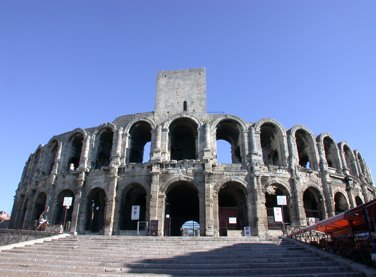
- Arles: Renowned for its Roman amphitheater, UNESCO-listed sites, and vibrant cultural scene.
- Camargue Natural Park: Offers unique landscapes and wildlife (Musée de la Camargue).
- Alyscamps Necropolis and Saintes-Maries-de-la-Mer: Other notable historical sites in the region.
Multimedia and Virtual Experiences
For those unable to visit in person, virtual tours and online exhibitions—including survivor testimonies and historical documents—are available via the Mémorial des Nomades de France.
Frequently Asked Questions (FAQ)
Q: What are the visiting hours for the Saliers camp?
A: Open daily from 9:00 AM to 6:00 PM, with possible seasonal variations; check the official website for updates.
Q: Is there an entrance fee?
A: Admission is free; guided tours may have a nominal fee.
Q: How do I reach Saliers from Arles?
A: Via car, taxi, or local buses (no direct public transport).
Q: Are guided tours available?
A: Yes, often by advance booking; group and educational visits can be arranged.
Q: Is the site accessible for those with disabilities?
A: Some accessible features exist, but terrain can be uneven; contact ahead for details.
Q: Are there facilities on site?
A: No restrooms or cafes; prepare accordingly.
Legacy of the Saliers Concentration Camp
Historical Context and Postwar Recognition
Opened in June 1942, Saliers detained over 700 Roma until its closure in September 1944 (USHMM). Postwar, the suffering of the Roma at Saliers was largely ignored, reflecting ongoing marginalization and reluctance to confront Vichy’s role. Renewed interest from the late 20th century led to memorialization and educational initiatives (Memorial de la Shoah).
Memorialization Efforts
Physical Memorials
A commemorative stele was installed in 2006, inscribed in French and Romani, honoring victims and serving as the focal point for remembrance (Roma Rights Journal). The site retains little original infrastructure, with interpretive panels providing historical context.
Annual Commemorations and Education
Events are held on International Roma Day (April 8) and European Roma Holocaust Memorial Day (August 2), with ceremonies and educational activities led by local authorities and Roma organizations (Council of Europe). Partnerships with schools and the Memorial de la Shoah have deepened educational outreach.
Research and Publications
Scholars such as Marie-Christine Hubert and Emmanuel Filhol have produced detailed studies using survivor testimonies and archival research (USHMM), supporting educational and commemorative work.
Visitor Information
On-Site Experience
- What to Expect: The site is modest, focused on the memorial stele and historical panels. No reconstructed barracks or museum exist.
- Atmosphere: The open, rural setting provides a contemplative experience. No amenities are on site.
Practical Tips
- Best Time to Visit: Spring and autumn are ideal due to mild weather; summer can be hot and exposed.
- Accessibility: Flat but unpaved; may require assistance for some visitors.
- Conduct: Maintain respectful silence; avoid disruptive activities.
- Photography: Permitted for personal or educational use.
Further Learning
- Arles: Offers accommodations, dining, and cultural sites (Audiala Arles Guide).
- Local Museums: Musée de la Camargue features exhibits on regional history.
- Recommended Reading: “Le camp de Saliers: Un camp d’internement pour les Tsiganes, 1942–1944” by Emmanuel Filhol.
Continuing Challenges and Remembrance
Despite increased recognition, Saliers remains less visited and known than other Holocaust sites. Ongoing advocacy calls for better educational resources and preservation (Roma Rights Journal). Continued remembrance combats prejudice and promotes historical understanding.
Discover More
A visit to Saliers Concentration Camp offers a powerful connection to a neglected chapter of history. By honoring the memory of the Roma victims and engaging with educational resources, visitors help preserve the legacy of the site and its lessons for future generations.
Enhance your visit with the Audiala app, providing guided audio tours and further historical context for Arles and the Camargue. Explore related memorials, and follow updates on commemorative events and educational initiatives.
Key Points and Recommendations
- Historical Importance: The only purpose-built camp for Roma in France during WWII, central to the history of anti-Roma persecution.
- Visiting Experience: Free, year-round access; modest memorials; annual commemorations.
- Practical Tips: Prepare for limited facilities, plan respectful visits, and supplement your trip with nearby cultural sites.
- Further Resources: Download the Audiala app and consult official sources for in-depth historical information.
Listen to the full story in the app
The whole Saliers Concentration Camp,
told well.
Audio guides for 1,100+ cities across 96 countries. History, stories, and local insight — offline ready.

Verified, and shown.
Researched and written by the Audiala editorial team from historical records, architectural archives, and local expertise.
Researched from Wikidata, Wikipedia & official sources · fact-checked · How we make our guides →