Plan and listen to Hôtel De Truchet with Audiala.
Audio guide in your pocket, itinerary in your browser. Built for the way you actually visit.
Introduction
Nestled in the historic heart of Arles, France, Hôtel De Truchet stands as a remarkable testament to the city’s rich tapestry of history, architecture, and culture. While Arles is celebrated for its impressive Roman monuments and vibrant artistic heritage, the Hôtel De Truchet offers a unique window into the Renaissance and Classical Provençal urban lifestyle through its grand townhouse architecture and archaeological significance. Dating from the 17th to 19th centuries, this distinguished hôtel particulier is situated within a UNESCO World Heritage zone, renowned for its dense concentration of heritage buildings and Roman ruins. The hotel’s location reflects Arles’ evolution from a Greek trading post to a thriving Roman colony and beyond (snippetsofparis.com; arles-guide.com).
The Hôtel De Truchet blends local Provençal and French Renaissance architectural styles, featuring symmetrical façades, ornate stonework, and internal courtyards built atop significant Gallo-Roman foundations. These archaeological layers are legally protected to preserve the city’s historical narrative (Monumentum; France-Voyage). Although primarily a private guesthouse, its central location offers unparalleled access to Arles’ major historical and cultural sites, including the iconic Roman Amphitheatre, Ancient Theatre, and Alyscamps necropolis, making it an ideal base for travelers seeking comfort and immersion in history (Booking.com; arlestourisme.com).
This guide explores the Hôtel De Truchet’s historical significance, architectural features, visitor information, nearby attractions, and practical travel tips. Whether you are a history enthusiast, architecture aficionado, or cultural traveler, you will find all the essential insights to plan a memorable visit to this Renaissance landmark in Arles (Petit Futé; PlanetWare).
Early Origins and Urban Context
Arles, located in southern France’s Bouches-du-Rhône department, boasts continuous urban history dating back to the 6th century BCE. Initially inhabited by Ligurians and Celts, and later developed as a Greek trading post, Arles’ strategic location on the Rhône River made it a vital crossroads connecting the Mediterranean to inland Gaul (snippetsofparis.com). In 46 BCE, Julius Caesar transformed Arles—then Arelate—into a Roman colony, ushering in a period of intense urban development marked by the construction of monumental structures such as the amphitheatre, theatre, baths, and necropolis (arles-guide.com).
The Hôtel De Truchet: Historical Placement
Hôtel De Truchet is a distinguished 17th–19th century Provençal townhouse located at 5, rue Truchet in Arles’ historic center. In the French context, “hôtel particulier” refers to a grand urban townhouse, often built by influential merchants or nobility to display their status (trivago.fr). The surrounding area is characterized by narrow medieval streets and a dense array of heritage buildings, many of which are protected as part of Arles’ UNESCO World Heritage designation, which covers 88 officially listed monuments (fr.wikipedia.org).
Architectural and Social Evolution
The Hôtel De Truchet embodies the architectural trends of its era, constructed with local limestone and featuring elegant façades, internal courtyards, and ornate staircases that blend Provençal and classical styles. Its proximity to major monuments such as the Roman Amphitheatre and Ancient Theatre situates it at the heart of Arles’ historic urban fabric (arles-guide.com; arlestourisme.com).
The Truchet Family and Local Notables
While specific archival records on the Truchet family are limited, the building’s name indicates ownership by a prominent local family, a common tradition in Arles where noble residences often bore their founders’ names. Such families were influential in municipal governance, commerce, and the arts, shaping the city’s cultural heritage (trivago.fr).
Visiting Hôtel De Truchet: Hours, Tickets, and Accommodation
Visiting Hours:
Hôtel De Truchet operates as a maison d’hôtes (guesthouse), so public visiting hours are limited. Accommodation is available year-round, with check-in typically from 3 PM and check-out by 11 AM. Prospective guests should contact the guesthouse directly for availability or special arrangements.
Tickets and Booking:
No entrance tickets are required for the building itself, as it functions as a private guesthouse. Reservations can be made through major booking platforms or directly with the property (trivago.fr; Booking.com).
Accessibility:
As a historic building, Hôtel De Truchet retains much of its original architecture, which may include stairs and narrow passageways. The guesthouse strives to accommodate visitors with limited mobility, so it is recommended to inquire in advance about specific accessibility options.
Guided Tours and Experiences:
The Hôtel De Truchet does not offer regular guided tours, but its location within Arles’ UNESCO zone gives guests easy access to city tours and cultural events.
Architectural Features and Historical Layers
Renaissance and Classical Provençal Architecture
The Hôtel De Truchet exemplifies Arles’ tradition of “hôtels particuliers,” which flourished during the Renaissance and Classical periods. It is officially recognized as a Monument Historique, with both its structure and Gallo-Roman subsoil protected by decree since March 13, 1995 (Monumentum). Key features include:
- Symmetrical façades with classical proportions
- Ornate stonework (pilasters, cornices)
- Large arched doorways to inner courtyards
- Wrought iron balconies and window grilles
- High ceilings and grand staircases
The design blends local Provençal traditions with broader French Renaissance influences, reflecting elegance and practicality (France-Voyage).
Gallo-Roman Foundations and Archaeological Significance
Hôtel De Truchet’s subsoil contains archaeological remains from the Gallo-Roman period. Like many buildings in Arles, it was constructed atop earlier Roman structures, incorporating ancient materials into its foundations (Monumentum; Provence-Alpes-Côte d’Azur). These layers reinforce Arles’ reputation as a “Little Rome.”
Integration into the Urban Landscape
Situated in the heart of Arles’ historic center, Hôtel De Truchet fits harmoniously into a streetscape of narrow, winding lanes and heritage buildings. Its location is within walking distance of major sites such as Place de la République, the amphitheatre, and the Alyscamps necropolis (Museedupatrimoine.fr; France-Voyage).
Cultural Significance
Social and Economic Role
Hôtels particuliers like Hôtel De Truchet were centers of social, economic, and sometimes political activity. Owners were often influential figures—merchants, magistrates, or nobility—who shaped Arles’ civic life (France-Voyage). The mansion’s architecture facilitated gatherings and private retreat, reflecting the dual nature of elite urban living.
Connection to Arles’ Heritage and UNESCO Status
While not a UNESCO site itself, Hôtel De Truchet forms part of Arles’ ensemble of protected buildings that illustrate the city’s evolution from antiquity through modern times. Preservation of such residences supports Arles’ status as a “City of Art and History,” a designation renewed by the French government through 2036 (Arles Guide).
Symbolism and Identity
Hôtel De Truchet symbolizes Arles’ layered identity, blending Roman, medieval, and Renaissance traditions. Its architecture and archaeological remains are microcosms of the city’s resilience and adaptability (The Empty Nest Explorers). The hôtel is occasionally open to the public during European Heritage Days (Monumentum).
Preservation and Contemporary Use
Legal Protection and Conservation
As a Monument Historique, Hôtel De Truchet is safeguarded under French law. Any alterations or restorations must comply with strict heritage guidelines, ensuring preservation of both visible architecture and archaeological subsoil (Monumentum).
Accessibility and Public Engagement
Currently a private property, Hôtel De Truchet is generally not open for public visits, except during select heritage events. Visitors can admire its façade and courtyard from the street and learn about its history through guided city tours.
Visitor Information
- Visiting Hours: No regular public hours; check local event schedules.
- Tickets: None required unless for special events.
- Guided Tours: Occasionally available during heritage days or as part of city walking tours.
- Accessibility: Exterior is accessible; interior access is rare and may have limitations.
Nearby Attractions and Arles Sightseeing
Roman Heritage
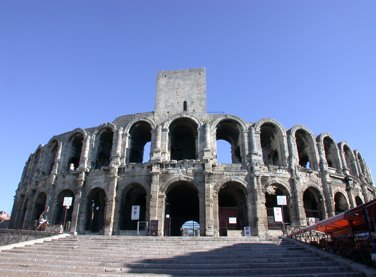
- Arènes d’Arles (Roman Amphitheatre): 5-minute walk; open daily; tickets ~€10; wheelchair accessible (Petit Futé; PlanetWare).
- Théâtre Antique: 7-minute walk; open daily; combined ticket with Cryptoportiques; limited accessibility.
- Cryptoportiques du Forum: Subterranean Roman galleries; open Tuesday–Sunday; combined ticket with Théâtre Antique; not wheelchair accessible.
- Thermes de Constantin: 10-minute walk; open daily; tickets ~€7.
- Les Alyscamps: Roman necropolis; free entry; mostly accessible.
Art and Culture
- Fondation Vincent van Gogh Arles: Modern art exhibitions; Tuesday–Sunday; €8 admission; fully accessible (PlanetWare).
- Musée Réattu: Art museum with works by Réattu, Picasso, and more (The Crazy Tourist).
- Rencontres d’Arles: International photography festival, July–October (Rencontres d’Arles).
Religious and Spiritual Sites
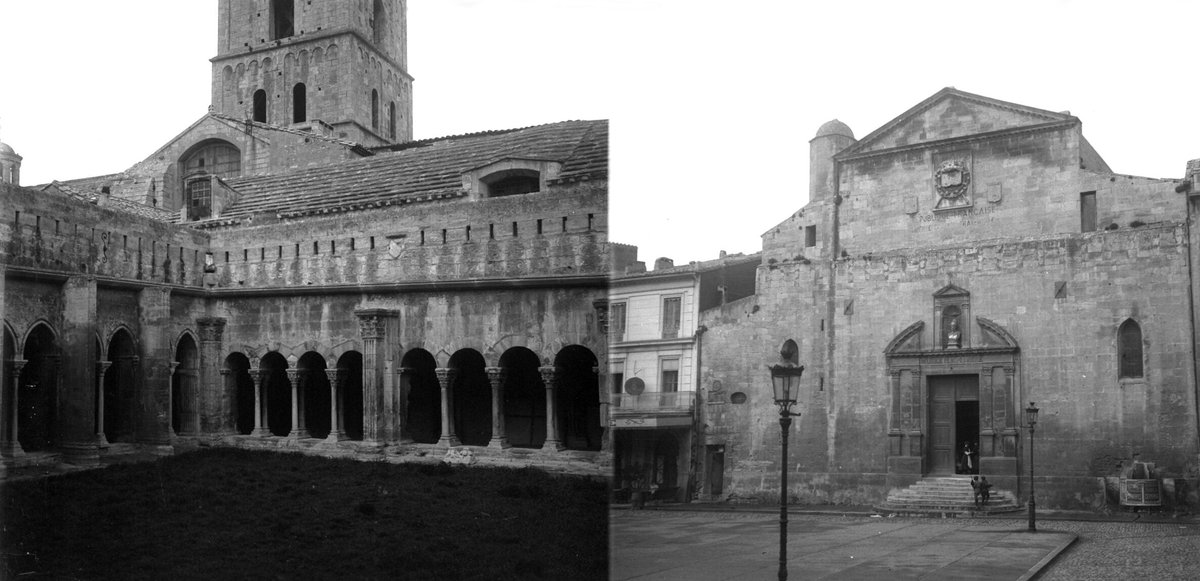
- Cathédrale Saint-Trophime and Cloître: On Place de la République; open daily; small admission fee; wheelchair accessible.
- Abbaye de Montmajour: 2 km from Arles; open 10:00–18:00; tickets €6; limited accessibility.
Natural and Outdoor Activities
- Parc Naturel Régional de Camargue: Wild horses, flamingos, and outdoor adventures (The Crazy Tourist).
- Barbegal Aqueduct and Mill: Roman engineering marvel, 15-minute drive from Arles.
Villages and Day Trips
- Les Baux-de-Provence: Medieval village, 30 minutes by car (PlanetWare).
- Avignon: 50 minutes by car or 20 minutes by train; home to Palais des Papes.
- Nîmes: Easily accessible, featuring its own amphitheatre and Roman monuments.
Accommodation Features at Hôtel De Truchet
- Room Types: Upscale apartments, including penthouse options with city and river views.
- Amenities: Air conditioning, Wi-Fi, satellite TV, kitchen, terrace, and massage services (Booking.com).
- Accessibility: Some features available; confirm directly with the property.
- Dining: Self-catering in apartments; numerous nearby cafes and restaurants.
- Parking: No on-site parking; public options nearby (Rick Steves Forum).
Practical Travel Tips
- Best Time to Visit: Spring and early autumn for mild weather and fewer crowds.
- Markets: Visit on Wednesdays or Saturdays for vibrant local markets (The Weithouse).
- City Pass: The Arles City Pass grants access to multiple monuments and museums (The Weithouse).
- Transportation: Arles train station is one kilometer away, with connections to Avignon, Nîmes, and Marseille.
Frequently Asked Questions (FAQ)
Q: Can I visit the interior of Hôtel De Truchet?
A: Generally, no. The building is private, but may open for European Heritage Days.
Q: What are the hotel’s check-in and check-out times?
A: Check-in from 3:00 PM; check-out by 11:00 AM.
Q: Are pets allowed?
A: Pets may be allowed upon prior request—confirm with the property.
Q: Is the hotel wheelchair accessible?
A: Some accessibility features exist; inquire directly for details.
Q: Are guided tours available?
A: The hotel itself does not offer tours, but staff can recommend local operators.
Visuals and Interactive Elements


Summary and Recommendations
Hôtel De Truchet encapsulates the essence of Arles, where history, culture, and architecture intersect across centuries. From its Gallo-Roman foundations to its Renaissance grandeur and present-day guesthouse status, the building is a microcosm of Arles’ heritage. Its protected status as a Monument Historique ensures both its visible beauty and hidden archaeological layers are preserved, contributing to Arles’ identity as a "City of Art and History" (Monumentum; fr.wikipedia.org).
Staying at Hôtel De Truchet offers guests an immersive experience among Arles’ Roman amphitheatre, ancient theatre, and cultural landmarks. While interior visits are limited, its central location and architectural value make it a must-see for enthusiasts of French heritage. Combine your stay with city tours, festivals, and visits to museums and markets for a rewarding experience (arlestourisme.com; Rencontres d’Arles).
For seamless planning, use the Audiala app for guided tours and insider tips, and consult combined tickets for monuments to maximize your visit (Explore Your Bucket List; The Crazy Tourist).
Listen to the full story in the app
The whole Hôtel De Truchet,
told well.
Audio guides for 1,100+ cities across 96 countries. History, stories, and local insight — offline ready.

Verified, and shown.
Researched and written by the Audiala editorial team from historical records, architectural archives, and local expertise.
Researched from Wikidata, Wikipedia & official sources · fact-checked · How we make our guides →