Plan and listen to Arles Bust with Audiala.
Audio guide in your pocket, itinerary in your browser. Built for the way you actually visit.
Introduction
Nestled on the banks of the Rhône River in southern France, Arles is a city steeped in Roman history and culture. Among its most notable archaeological treasures is the Arles Bust—a life-sized marble sculpture discovered in 2007, believed by many to portray Julius Caesar. This extraordinary artifact, now housed in the Musée Départemental Arles Antique, provides a rare glimpse into Roman portraiture and the city’s foundation as a major Roman hub. In this comprehensive guide, you’ll find essential details on the bust’s origins, how to visit, practical information, and tips to make the most of your exploration of Arles’ rich historical landscape (World Archaeology; On the Rhône; Musée Départemental Arles Antique; Nomads Travel Guide).


Historical Context: Discovery of the Arles Bust
Circumstances of the Find
In 2007, an underwater archaeological survey of the Rhône near Arles led to the discovery of the Arles Bust. Divers from the French Department of Subaquatic Archaeological Research uncovered this remarkably preserved marble head, along with other significant Roman artifacts, such as a Neptune statue and a bronze satyr. These finds underscore Arles’ role as a major Roman port, with the riverbed serving as a depository for lost or discarded objects throughout antiquity (World Archaeology; On the Rhône).
Identification and Debate
Upon its discovery, the bust was heralded as an unprecedented portrait of Julius Caesar, with scholars citing its realistic (veristic) Republican style and the city’s historical connection to Caesar, who founded Arelate (Arles) as a Roman colony in 46 BCE. However, this identification remains a topic of scholarly debate; the absence of inscriptions or definitive iconography leaves its subject open to interpretation. Experts such as Paul Zanker have dated the bust to the Augustan period, suggesting a slightly later origin, while others, including Mary Beard, have cautioned against definitive attribution. The bust is now generally referred to as the “presumed bust of Julius Caesar” (World Archaeology).
Arles in the Roman World
During the height of the Roman Empire, Arles (then Arelate) flourished as a vital administrative, commercial, and cultural center. With a population exceeding 30,000, it boasted monumental architecture including an amphitheater, theater, and circus, as well as bustling trade links across the Mediterranean. The Rhine River discoveries, especially the Arles Bust, vividly illustrate the city’s significance and the enduring legacy of Roman influence in southern France (Arles Guide).
The Arles Bust: Artistic and Cultural Significance
The Arles Bust is a masterwork of Roman Republican verism. Carved from white marble, it depicts a balding, middle-aged man with pronounced wrinkles and a distinctive physiognomy. This style, emphasizing realism over idealism, reflects the Roman virtues of gravitas and experience. If indeed a portrait of Caesar, the bust would be among the oldest known sculptural representations created during his lifetime, possibly commissioned to honor him as the patron of Arelate (World Archaeology; On the Rhône).
Visiting the Arles Bust: Practical Information
Museum Location and Display
The Arles Bust is prominently displayed at the Musée Départemental Arles Antique (MDAA), located on the Presqu’île du Cirque Romain, just outside the historic city center. The museum’s contemporary architecture contrasts with its ancient treasures, providing an inviting space to explore Arles’ Roman past.
Hours and Tickets
- Opening Hours: Tuesday to Sunday, 10:00 AM – 6:00 PM. Closed Mondays, January 1, May 1, and December 25.
- Tickets: Standard admission is €8, with reduced rates for students, seniors, and groups. Tickets can be purchased at the entrance or online (official website).
- Guided Tours: Available in French and English. Advance reservation is recommended, especially during peak seasons.
Accessibility
The museum is fully accessible to visitors with reduced mobility, offering ramps, elevators, accessible restrooms, and multilingual information panels (Audiala).
Getting There
- By Train: SNCF trains connect Arles with Marseille and Nîmes.
- By Car: Parking is available near the museum, accessible via the A54 motorway.
- By Bus/On Foot: Local buses serve the site, and it is a short walk from the city center.
- By Bicycle: Dedicated cycle paths along the Rhône make for a scenic approach (Nomads Travel Guide).
Nearby Attractions
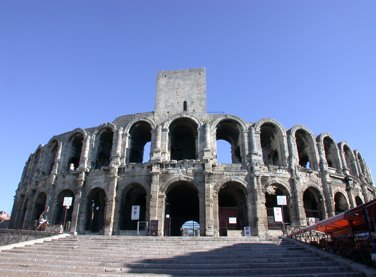
- Roman Amphitheatre (Les Arènes): A 20,000-seat arena still in use today.
- Ancient Theatre: The site of cultural performances since the 1st century BCE.
- Cryptoporticus: Subterranean galleries beneath the Roman forum.
- Alyscamps: An ancient Roman necropolis.
- Baths of Constantine: Remnants of public Roman baths.
All are within walking distance, making it easy to create a full day of exploration (Nomads Travel Guide).
Musée Départemental Arles Antique: Collections, Facilities, and Events
Collections and Highlights
The MDAA houses one of the most important collections of Roman antiquities in France, including:
- The Arles Bust (presumed Julius Caesar)
- Venus of Arles
- Colossal Statue of Augustus
- Arles-Rhône 3 Barge: An exceptionally preserved Gallo-Roman vessel
- Paleo-Christian Sarcophagi: Second largest collection after the Vatican
- Mosaics and Frescoes: From Roman domus recently excavated (Le Méridional; MDAA Press Dossier, 2024)
Facilities
- Onsite café and museum shop
- Lockers, restrooms, and baby-changing facilities
- Photography permitted without flash; restrictions may apply to certain exhibits
Current Renovations and Special Events
The museum is undergoing renovations (completion expected November 2025), but most collections remain accessible. Special exhibitions, including participatory installations for the 30th anniversary, are ongoing (Made in Marseille; Le Méridional).
Exploring Arles: Itinerary Suggestions
Morning:
- Begin at the Musée Départemental Arles Antique to view the Arles Bust and other Roman treasures.
Late Morning:
- Walk to the Roman Amphitheatre and Ancient Theatre.
Lunch:
- Enjoy Provençal cuisine at a café near Place du Forum.
Afternoon:
- Visit the Cryptoporticus, Alyscamps, and Baths of Constantine.
Evening:
- Follow the Van Gogh trail or attend a local festival (travelfranceblog.com; travelshelper.com).
Frequently Asked Questions (FAQ)
Q: Is the Arles Bust definitely a portrait of Julius Caesar?
A: The bust is widely believed to represent Caesar but lacks definitive inscriptions; debate continues among experts.
Q: What are the museum’s hours?
A: Tuesday–Sunday, 10:00 AM to 6:00 PM; closed Mondays and select holidays.
Q: How do I buy tickets?
A: Purchase at the museum entrance or online. Discounts available for students, seniors, and groups.
Q: Are guided tours available?
A: Yes, in French and English. Advance booking is recommended.
Q: Is the museum accessible?
A: Fully accessible, with facilities for visitors with reduced mobility.
Q: Is photography allowed?
A: Yes, non-flash photography is permitted unless otherwise indicated.
Summary and Final Tips
The Arles Bust is a captivating testament to Roman art and the enduring legacy of Arles as a vital Roman city. Whether you’re a history enthusiast or a casual traveler, a visit to the Musée Départemental Arles Antique connects you directly to the ancient world. Take time to explore the city’s other UNESCO-listed Roman sites, enjoy local cuisine, and participate in vibrant festivals to enrich your experience. For up-to-date information, guided audio content, and insider tips, download the Audiala app and visit the museum’s official website.
Listen to the full story in the app
The whole Arles Bust,
told well.
Audio guides for 1,100+ cities across 96 countries. History, stories, and local insight — offline ready.
Verified, and shown.
Researched and written by the Audiala editorial team from historical records, architectural archives, and local expertise.
Researched from Wikidata, Wikipedia & official sources · fact-checked · How we make our guides →