Aix-en-Provence
France Updated Apr 2026
Warm stone throws back the light in Aix-en-Provence, France, and the fountains never quite let you forget that this city began with water. On Cours Mirabeau, plane trees filter the sun into strips of green shade while café glasses clink under wrought-iron balconies. Then a church door opens, and the air turns cool and mineral. Aix surprises because it feels polished and lived-in at the same time.
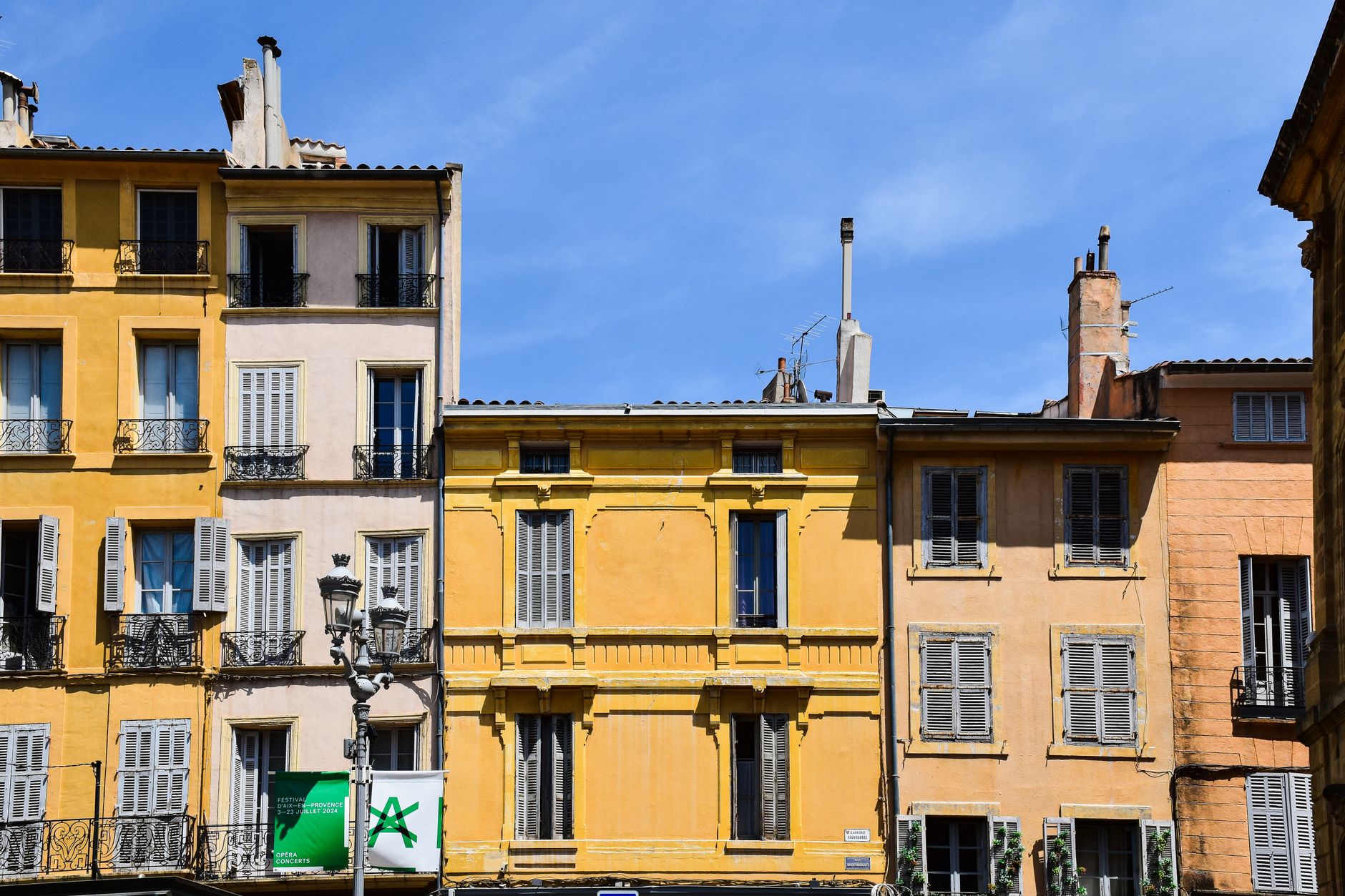 Photo: AXP Photography / Pexels
- Attractions
- 18
- Trip length
- 2-3 days
- Best season
- Late spring and early autumn (May-June, September-early October)
Why Aix-en-Provence
Built from cited sources · see the method · How we make our guides →
Aix wears its elegance lightly. The old center folds Roman fragments, crooked market lanes, and Baroque facades into a walkable grid, while the Quartier Mazarin answers with straight 17th-century streets and mansions built for people who preferred symmetry to medieval improvisation. You feel the difference underfoot.
Paul Cézanne still shapes how people look at this city, but Aix is better when you treat him as one layer rather than the whole story. His studio on the hill at Les Lauves, the ochre cuts of the Bibemus quarries, and the steady blue mass of Montagne Sainte-Victoire explain the local obsession with light; Place Richelme, by contrast, smells of melons, goat cheese, and coffee before noon, which explains daily life better than any museum label could.
Music gives Aix its second heartbeat. Summer opera fills the former Archbishop's Palace, students spill out of bars around Place des Cardeurs, and a city once nicknamed the "21st arrondissement of Paris" because the TGV reaches the capital in about three hours still keeps a stubborn Provençal rhythm: morning market, long lunch, late apéro, then a concert or a slow walk home past another fountain.
Cezanne's City
Aix makes more sense once you see Sainte-Victoire in the distance and realize Paul Cezanne kept chasing that ridge for decades. His studio at Les Lauves, the Jas de Bouffan estate, and the Bibemus quarries turn the city into a map of one painter's obsession.Baroque Stone and Fountains
Honey-colored mansions, wrought-iron balconies, and fountains appear almost embarrassingly often here. Cours Mirabeau sets the tone, but the sharper pleasure is the Mazarin district, laid out in 1646 with straight aristocratic streets that still feel composed rather than staged.Centuries in One Block
Saint-Sauveur Cathedral stacks Roman, Romanesque, Gothic, and Baroque fabric into one building, which is a polite way of saying Aix rarely tears up its past when it can build on top of it. A few streets away, Saint-Jean-de-Malte lifts a severe Gothic silhouette over the Granet quarter.Cultured After Dark
Aix isn't sleepy once the shutters close. The Festival d'Aix animates the former Archbishop's Palace, the 18th-century Theatre du Jeu de Paume keeps its Italianate intimacy, and newer rooms like the Grand Theatre de Provence and 6MIC pull the city beyond postcard Provence.
Neighborhoods
Where to wander, by quarter — each with its own rhythm.
Vieil Aix
North of Cours Mirabeau, the old town is the Aix people imagine first: narrow lanes, shuttered houses, fountain splashes at odd corners, and squares that open suddenly after a dark passage. Saint-Sauveur Cathedral, the Hôtel de Ville, and the food stalls around Place Richelme sit here, but the real pleasure is slower than any checklist: cold stone in a church porch, soap and spice drifting from small shops, and the market crowd thinning after 11 a.m.Cours Mirabeau
This 440-meter avenue is the city's stage set, and for once the cliché is deserved. Plane trees shade the sidewalks, the Fontaine Moussue steams gently from 34°C thermal water, and cafés such as Les Deux Garçons trade on two centuries of ritual as much as on what is in the cup. Come for people-watching, but do not confuse it with the whole city.Quartier Mazarin
Created in 1646, the Mazarin district feels like Aix deciding to straighten its back. Its calm grid of hôtels particuliers, private courtyards, and pale facades gives the neighborhood a quieter, more aristocratic mood than the older streets to the north, and places such as Place des Quatre-Dauphins and Hôtel de Caumont show how well the city understood urban theater in the 17th and 18th centuries.Quartier Granet
Around Musée Granet and Saint-Jean-de-Malte, Aix shifts into art-and-architecture mode. The church claims a special place as the first Gothic building in Provence according to the tourism office, and the museum district nearby makes it easy to spend half a day moving between old masters, 20th-century works at Granet XXe, and the clipped formality of the Mazarin streets outside.Place des Cardeurs and Verrerie
Evening starts here. Place des Cardeurs fills with terrace tables, while Rue de la Verrerie and Rue des Magnans pull in a younger, louder crowd for beer, cocktails, and late conversation that drifts into the street. If Cours Mirabeau is where Aix poses, this is where it loosens its collar.Sextius-Mirabeau and Allées Provençales
West of the historic core, modern Aix makes its case without apology. The Grand Théâtre de Provence, Rudy Ricciotti's Pavillon Noir, and the newer shopping-and-dining strip at Allées Provençales give this district a sharper, contemporary edge, best felt just before a performance when office workers, students, and well-dressed festivalgoers all converge at once.Les Lauves
The slopes above the center matter because they show you what Cézanne kept returning to. Atelier Cézanne sits here, and the nearby Terrain des Peintres frames Sainte-Victoire with almost rude clarity, as if the city wanted to demonstrate that the painter was not inventing anything after all. Go late in the day, when the light starts doing the work for you.
Plan your trip
Before you go
- Getting There
- In 2026, most travelers arrive via Marseille Provence Airport (MRS), about 25 km away; La Metropole Mobilite shuttle A2 links Marseille Airport, Aix TGV, Plan d'Aillane P+R, and Aix coach station, with airport-to-center fares from €10 one way. Main rail arrivals are Aix-en-Provence TGV and the central Aix-en-Provence station, while drivers usually come in on the A8 from Nice or Avignon and the A51 from Marseille and the Alps.
- Getting Around
- Aix has no metro and no tram in 2026; this is a bus city. The local network runs 28 urban bus lines, 3 electric Diabline center shuttles, Line A Aixpress, transport on demand, and 7 park-and-ride sites, with single tickets at €1.20, a 30-day pass at €28, and the Aix-en-Provence City Pass including unlimited local bus travel but not the airport or TGV shuttles.
- Climate & Best Time
- Spring usually lands around 16-23C, summer around 27-31C, autumn around 12-26C, and winter around 5-13C, with more than 300 days of sunshine but hotter spells in late July and August. High summer is driest and busiest, while autumn brings more rain; May-June and September-early October are the sweet spot if you want long outdoor days without that hard Provençal heat pressing on the stone.
- Language & Currency
- French runs the city, and a simple 'Bonjour' before any question goes further here than perfect grammar. France uses the euro, cards are widely accepted in 2026, contactless is common on local transport, and the Aix-en-Provence City Pass starts at €29 for 24 hours, €39 for 48 hours, and €49 for 72 hours.
Aix, Built on Hot Springs and Hard Arguments
From Roman camp to courtly capital, sleeping beauty to cultural nerve center
- c. 175 BCE
Entremont Raises Its Walls
Before Aix existed, power sat on the hill at Entremont, the Salyens' oppidum north of the future city. Stone ramparts climbed above the scrub, and the settlement began to look less like a refuge than a capital with teeth.
- 122 BCE
Sextius Founds Aquae Sextiae
Roman consul Gaius Sextius Calvinus planted a new town beside the hot springs after crushing local resistance. The name said exactly what mattered: waters, and Sextius. Aix starts here, with steam in the air and empire in the soil.
- 102 BCE
Marius Breaks the Teutones
Near Aquae Sextiae, Gaius Marius smashed the Teutones and Ambrones in one of the late Republic's decisive battles. The fighting was brutal and close. For Rome, the road to Italy stayed open; for Aix, the place entered history with the smell of blood and dust already on it.
- c. 400
A Provincial Capital Emerges
By late antiquity, Aix had become the capital of Narbonensis Secunda, a promotion that gave the city administrative weight far beyond its size. Bureaucracy sounds dry until you remember what it brings: roads repaired, clerks paid, bishops noticed, and a city taught to think of itself as important.
- c. 500
The Baptistery Takes Shape
The octagonal baptistery of Saint-Sauveur rose from reused Roman columns, Christian ritual fitted into antique stone. You can still feel the splice. Aix did not erase Rome; it kept building on top of it.
- 731
Aix Falls to Raids
Saracen forces seized Aix in a century when the city was already weakened by repeated attacks and broken water systems. Aqueducts failed, population thinned, and the old Roman confidence drained away. Cities can survive conquest; bad plumbing is harder.
Show the full timeline (29 moments)
- 1182
Counts Return to Aix
In the late 12th century, the Counts of Provence made Aix their residence again, pulling political gravity back into the city. Courts, clerics, merchants, and petitioners followed. A capital is partly a matter of decree, partly a matter of who starts renting rooms.
- c. 1270
Saint-Jean-de-Malte Rises
Saint-Jean-de-Malte took shape outside the old walls, its Gothic lines sharper than anything Provence had quite seen before. The counts chose it as a burial church, which tells you how the city was growing: outward, upward, and with a little ceremony.
- 1357
The Walls Pull Tight
Aix strengthened and reorganized its defenses, drawing its medieval quarters into a more coherent enclosure. Stone answered fear, as it usually does. The city that visitors stroll through now was shaped as much by anxiety as by elegance.
- 1409
A University Opens Its Doors
A papal bull confirmed the university founded by Louis II of Anjou, giving Aix a durable intellectual spine. Students arrived with ink on their fingers and arguments ready in their mouths. That habit never really left the city.
- 1409
René Gives Aix a Court
René of Anjou became the ruler most closely tied to Aix's late medieval flowering, turning the city into a courtly center of art, ceremony, and learned display. He mattered because he made power look cultivated. Provence has rarely resisted that combination.
- c. 1476
The Burning Bush Glows
Nicolas Froment completed the Burning Bush triptych for the cathedral, one of those works that makes a city seem richer than its street plan alone would suggest. Gold, red, and Marian blue gathered under church light. Aix learned to stage devotion as visual theater.
- 1481
Provence Passes to France
After the Angevin line ended, Provence passed to the French crown, though full integration took a few more years to settle. The change was political before it was emotional. Aix stopped being the center of a principality and became a provincial capital under a larger king.
- 1501
Parlement Makes Aix Judge
Louis XII created the Parlement of Provence in Aix, making the city the judicial capital of the province. Robes, petitions, feuds, property disputes, heresy cases: all of it thickened the urban texture. Law gave Aix money, status, and a lasting taste for formality.
- 1545
The Waldensian Repression Begins
Magistrates tied to the Parlement of Aix played a central role in the massacre of the Waldensians of the Luberon. This is one of the city's darker chapters, and it should stay visible. Elegant facades do not cancel what institutions once authorized.
- 1580
Peiresc Inherits the City
Nicolas-Claude Fabri de Peiresc, scholar, collector, and relentless letter writer, became the great learned mind associated with Aix. His house drew books, fossils, coins, manuscripts, and conversation from across Europe. Some cities build prestige with armies; Aix often preferred correspondence.
- 1646
Mazarin Quarter Expands South
Archbishop Michel Mazarin pushed a planned extension beyond the old walls, laying out what became the Quartier Mazarin. Straight streets and aristocratic mansions changed the city's posture. Medieval Aix curled inward; baroque Aix learned to pose.
- 1660
Campra Hears the City Sing
André Campra was born in Aix and trained in its cathedral world before becoming one of France's leading baroque composers. His connection matters because Aix was not just a city of lawyers and bishops. It produced music with polish and bite.
- 1665
Vendôme Builds for Pleasure
The Pavillon de Vendôme began as the duke's suburban retreat, half statement, half indulgence. Aix has a weakness for buildings that pretend to be modest while clearly enjoying themselves. This one never quite bothers to pretend.
- 1720
Plague Closes the Gates
When plague spread from Marseille, Aix tightened controls and tried to hold the line between terror and order. Streets emptied, suspicion hardened, and ordinary contact became dangerous. Epidemics strip cities down to their nerves.
- 1790
Revolution Turns the Crowd Savage
In December 1790, royalist lawyer Jean-Joseph-Pierre Pascalis was lynched during revolutionary unrest in Aix. The violence was public, humiliating, and meant to be seen. A city trained in legal ritual discovered how fast politics can drop the wig and pick up the rope.
- 1839
Cezanne Is Born Here
Paul Cézanne was born in Aix, and no later artist would stamp the city more deeply. He painted its limestone, its pines, its dry light, and above all Sainte-Victoire until the mountain became less a backdrop than an obsession. Modern art owes Aix more than the city sometimes admits in its polite self-portrait.
- 1860
The Rotonde Starts Splashing
The Fontaine de la Rotonde rose 12 meters high at the western end of town, fed by new waterworks and crowned by figures of Justice, Agriculture, and Fine Arts. It is civic propaganda in stone and spray. Few fountains announce a city's self-image so bluntly.
- 1939
Camp des Milles Opens
A former tile factory outside Aix became Camp des Milles, first for internees and later a waystation in the machinery of deportation. More than 10,000 people from dozens of countries passed through. The brick dust and kiln walls kept the memory, even when the city preferred not to look too closely.
- 1944
Liberation Reaches Aix
American forces and the French Resistance liberated Aix in August 1944, ending four years of occupation. Church bells and engine noise filled the same air. Freedom often arrives sounding mechanical before it feels moral.
- 1948
Opera Reclaims the Summer Night
The Festival d'Aix-en-Provence began in the courtyard of the former archbishop's palace with Mozart's Cosi fan tutte. That choice set the tone: cultured, ambitious, a little exacting. Aix stopped being merely a handsome old city and became a place that expected serious audiences.
- 1976
Vasarely Bends the Eye
Victor Vasarely inaugurated his foundation in Aix, planting optical art in a city better known for baroque stone and Cezanne's stubborn brushwork. The building feels like a geometric argument. Good. Aix has always liked a strong visual thesis.
- 2001
The TGV Pulls Paris Closer
Aix-en-Provence TGV station opened on the high-speed line, shrinking the trip to Paris to roughly three hours. Distance changed faster than identity. The city kept its Provençal manners while becoming easier prey for second-home fantasies and weekend ambition.
- 2012
Camp des Milles Becomes Memorial
The Camp des Milles Memorial Site opened to the public, turning a place of confinement into a place of witness. That matters because memory needs walls, not just speeches. Aix finally gave one of its hardest stories a permanent address.
Who lived here
-
Painter · 1839–1906
Paul Cézanne
Born here; lived and worked here for much of his life
Cézanne kept returning to Aix the way some people return to an argument they never quite finish. He painted Sainte-Victoire until the mountain stopped looking like scenery and started looking like structure; today he would still recognize the dry light, though he might grumble at the souvenir shops built around his name.
-
Novelist and journalist · 1840–1902
Émile Zola
Grew up here as a child and studied at Collège Bourbon
Zola arrived in Aix young and formed the friendship that would mark both his life and Cézanne's. The two wandered the countryside above town as schoolboys; he would probably find modern Aix richer, tidier, and a little too pleased with itself.
-
Composer · 1892–1974
Darius Milhaud
Grew up here and is buried here
Milhaud carried Aix with him into 20th-century music, even after Marseille, Paris, Brazil, and America widened his ear. Back in town, the heat, synagogue melodies, and clipped Provençal light feel close to his music: quick, layered, never sleepy.
-
Composer · 1660–1744
André Campra
Born here; trained at Saint-Sauveur Cathedral
Campra began in the cathedral choir before Paris turned him into one of the key opera composers between Lully and Rameau. Stand inside Saint-Sauveur and that career makes sense; the building still holds sound like a hand cupped around a candle.
-
Painter · 1775–1849
François Marius Granet
Born here; returned and died here
Granet painted interiors where silence feels almost architectural, which suits Aix better than you might expect. He gave works back to the city, and the museum that bears his name still carries that slightly stubborn civic pride: serious art in a town that knows appearances matter.
-
Scholar and astronomer · 1580–1637
Nicolas-Claude Fabri de Peiresc
Lived and worked here from 1607 until his death
Peiresc turned his Aix house into a nerve center of early modern curiosity, trading letters, objects, and ideas across Europe. He would love the city for the same reason he once used it so well: close enough to the wider world to matter, far enough from Paris to think clearly.
-
Artist · 1906–1997
Victor Vasarely
Founded a major institution here
Vasarely chose Aix for the Fondation Vasarely, then filled it with optical geometry bold enough to startle a city built on stone courtyards and fountains. The contrast works. His building still feels like a future imagined in the 1970s and left standing for us to test.
-
Pianist and writer · born 1969
Hélène Grimaud
Born here
Grimaud was born in Aix before taking her career onto bigger stages, but the city's mix of discipline and sensuality suits her story. You can imagine her hearing the same church bells and market noise that still drift through the center, then turning them into something harder and more inward.
Where to Eat
Where locals actually book dinner — not the tourist menus.
-
Calisson d'Aix
This almond-and-candied-melon sweet, pressed into a small lozenge and sealed with royal icing, is the city's edible signature. Try one fresh from a confiserie rather than buying the first tourist box you see; the texture should give softly, not fight back.
-
Place Richelme Market Breakfast
Skip the bland hotel buffet and head to Place Richelme, where the morning market smells of peaches, herbs, goat cheese, and roast chicken fat by midmorning. This is where Aix feels lived in, not posed for photographs.
-
Rose from the Coteaux d'Aix-en-Provence
Local rose isn't a lifestyle prop here; it's what the climate and stony soils are good at. Order a glass with lunch, pale and cold, and it suddenly becomes obvious why Provençal afternoons move at their own speed.
-
Aix and Sainte-Victoire Wines
Look beyond rose if you can. Bottles from the Sainte-Victoire side often show more structure and mineral grip, especially beside grilled lamb, olive tapenade, or aged cheese.
-
Aïoli
When done properly, this is less a sauce than a declaration of garlic faith: dense, pungent, and made to carry vegetables, salt cod, or shellfish. One warning: plan the rest of your afternoon accordingly.
-
Daube Provencale
This slow-cooked beef stew, usually deepened with red wine, orange peel, and herbs, suits the cooler months better than the postcard weather does. It tastes like Provence after sunset rather than Provence at noon.
-
Soupes au Pistou and Market Vegetables
Provençal cooking around Aix can be unexpectedly restrained when the produce is good. A bowl of soupe au pistou or a plate of farcis provencaux lets the basil, tomato, zucchini, and olive oil do the talking.
-
Roy Rene and the Calisson Museum
If you want context with your sugar, the Roy Rene site explains how calissons are made and why almonds matter so much in this part of Provence. Tasting after the visit helps, naturally.
Insider tips
Small things that change how the city treats you.
Use the A2
From Marseille Provence Airport, take La Métropole Mobilité line A2 to Aix Gare Routière. It runs every 30 minutes, takes about 30 minutes, and the airport fare is €10 one way or €16 return.Buy Before Boarding
Line A, the Aixpress backbone route, requires a ticket before you get on. Use the station machines; drivers do not sell tickets on that line.Flag a Diabline
The electric Diabline shuttles are the easiest way across the old center, Mazarin, and Sextius. You can hail them along the route Monday to Saturday, 08:30-19:30, except on Avenue Victor Hugo and at Rotonde where you board at stops.Check Pass Coverage
The Aix-en-Provence City Pass can pay off fast if you plan museums, guided visits, and local buses. It includes unlimited LeBus, LeCar, and Diabline travel, but not the airport or Aix TGV shuttles.Keep Small Cash
Cards work widely, and local transport now accepts contactless payment in many cases, but cash still helps for small purchases. France caps contactless card payments at €50 per transaction, so a few euro coins save time at markets and bakeries.Tip Lightly
Restaurant bills in France usually include service compris, so tipping is a thank-you, not a duty. Round up or leave a little change for warm service; nobody expects an American-style percentage.Watch Crowds Closely
Aix feels calm, but pickpockets go where visitors bunch up: markets, bus stations, crowded shopping streets. Split your valuables, put cash away right after ATM withdrawals, and keep bags zipped in Place Richelme or around the coach station.
Gallery
The city, as it actually looks.


Frequently asked
Is Aix-en-Provence worth visiting?
Yes, especially if you like cities that reward walking rather than checklist tourism. Aix gives you Roman bones, Baroque facades, Cézanne's studio, food markets, and plane trees shading Cours Mirabeau, all packed into a center you can cross on foot.
How many days in Aix-en-Provence?
Two to three days works well for most travelers. That gives you time for the old town, a Cézanne day, one serious museum such as Musée Granet or Fondation Vasarely, and a slow market lunch without rushing.
How do I get from Marseille Airport to Aix-en-Provence?
Take the A2 shuttle from Marseille Provence Airport to Aix Gare Routière. The ride is about 30 minutes, departures are every 30 minutes, and tickets cost €10 one way.
Does Aix-en-Provence have a metro or tram?
No. Aix is bus-based, with 28 urban lines, the high-frequency Aixpress Line A, and the small electric Diabline shuttles for the center.
Is Aix-en-Provence safe at night?
Generally yes in the center, with the usual city caveats. The main issues are petty theft and bag snatching in crowded streets, markets, and transport hubs, so late at night the smart move is simple: stay on busy streets and keep valuables out of sight.
Is Aix-en-Provence expensive?
Yes, it leans pricey for Provence, especially around Cours Mirabeau and the polished streets of Mazarin. You can keep costs down with the €1.20 local bus fare, market lunches in Place Richelme, and the City Pass if you plan to stack museums and guided visits.
What is the best time to visit Aix-en-Provence?
Late May to June and September to early October are the sweet spots. You still get the bright Provençal light, but without the hard heat that can settle over the city in late July and August.
Can you walk everywhere in Aix-en-Provence?
You can walk most of the historic center easily because it is semi-pedestrianized and compact. For the Atelier Cézanne, Fondation Vasarely, or outer neighborhoods, add a Diabline or regular bus rather than a taxi.
Pick up where you left off
Saved and recently read places — kept on this device only.
Photo credits (12)
- AXP Photography — Pexels License (https://www.pexels.com/license/) — Source: https://www.pexels.com/photo/29983863/
- Aile d' Eristalis paucisinuatus N. THEOBALD 1937 Holotype A 1005 du Stampien d'Aix-en-Provence — Nicolas Théobald — CC BY-SA 4.0 (https://creativecommons.org/licenses/by-sa/4.0/) — Source: https://commons.wikimedia.org/wiki/File:Aile_d'_Eristalis_paucisinuatus_N._THEOBALD_1937_Holotype_A_1005_du_Stampien_d'Aix-en-Provence.jpg
- 500px photo (30184319) — David Wong — CC BY 3.0 (https://creativecommons.org/licenses/by/3.0/) — Source: https://commons.wikimedia.org/wiki/File:500px_photo_(30184319).jpeg
- 500px photo (30184347) — David Wong — CC BY 3.0 (https://creativecommons.org/licenses/by/3.0/) — Source: https://commons.wikimedia.org/wiki/File:500px_photo_(30184347).jpeg
- Aiv-en-Provence - Fontaine des Bagniers 1 — René Hourdry — CC BY-SA 4.0 (https://creativecommons.org/licenses/by-sa/4.0/) — Source: https://commons.wikimedia.org/wiki/File:Aiv-en-Provence_-_Fontaine_des_Bagniers_1.jpg
- Aix Terrace on roofs (2642107427) — fab to pix — CC BY-SA 2.0 (https://creativecommons.org/licenses/by-sa/2.0/) — Source: https://commons.wikimedia.org/wiki/File:Aix_Terrace_on_roofs_(2642107427).jpg
- 500px photo (30184321) — David Wong — CC BY 3.0 (https://creativecommons.org/licenses/by/3.0/) — Source: https://commons.wikimedia.org/wiki/File:500px_photo_(30184321).jpeg
- Aix-en Province 234DSC 0101 (49804900206) — János Korom Dr. >17 Million views from Wien, Austria — CC BY-SA 2.0 (https://creativecommons.org/licenses/by-sa/2.0/) — Source: https://commons.wikimedia.org/wiki/File:Aix-en_Province_234DSC_0101_(49804900206).jpg
- Aix-en Province 113DSC 0221 (49228852308) — János Korom Dr. >17 Million views from Wien, Austria — CC BY-SA 2.0 (https://creativecommons.org/licenses/by-sa/2.0/) — Source: https://commons.wikimedia.org/wiki/File:Aix-en_Province_113DSC_0221_(49228852308).jpg
- Aix-en Province 234DSC 0102 (49804900416) — János Korom Dr. >17 Million views from Wien, Austria — CC BY-SA 2.0 (https://creativecommons.org/licenses/by-sa/2.0/) — Source: https://commons.wikimedia.org/wiki/File:Aix-en_Province_234DSC_0102_(49804900416).jpg
- 500px photo (30184309) — David Wong — CC BY 3.0 (https://creativecommons.org/licenses/by/3.0/) — Source: https://commons.wikimedia.org/wiki/File:500px_photo_(30184309).jpeg
- Aix bakery (2642932314) — fab to pix — CC BY-SA 2.0 (https://creativecommons.org/licenses/by-sa/2.0/) — Source: https://commons.wikimedia.org/wiki/File:Aix_bakery_(2642932314).jpg
Photos may have been resized or cropped.