Bastille
4th Arrondissement of ParisFrance 48° N · 2° E Updated May 2026
Only seven prisoners were inside when the Bastille fell; today the square trades in revolt, market bustle, nightlife, and a marina hidden below street level.
- Entry
- Free
How does a prison that no longer exists still manage to dominate your imagination? At Bastille in the 4th arrondissement of Paris, France, that absence is the reason to come: you stand in a noisy roundabout of scooters, metro grilles, and plane trees, with the bronze July Column rising above you, and slowly realize that one of the most charged places in French history survives mostly as air, paving lines, and memory.
Most visitors arrive expecting a monument and find a gap. The old fortress is gone, yet the square still feels like a stage set for public emotion: traffic circling, protest banners gathering, opera crowds spilling out at dusk, and the canal basin opening a few steps away toward the Arsenal.
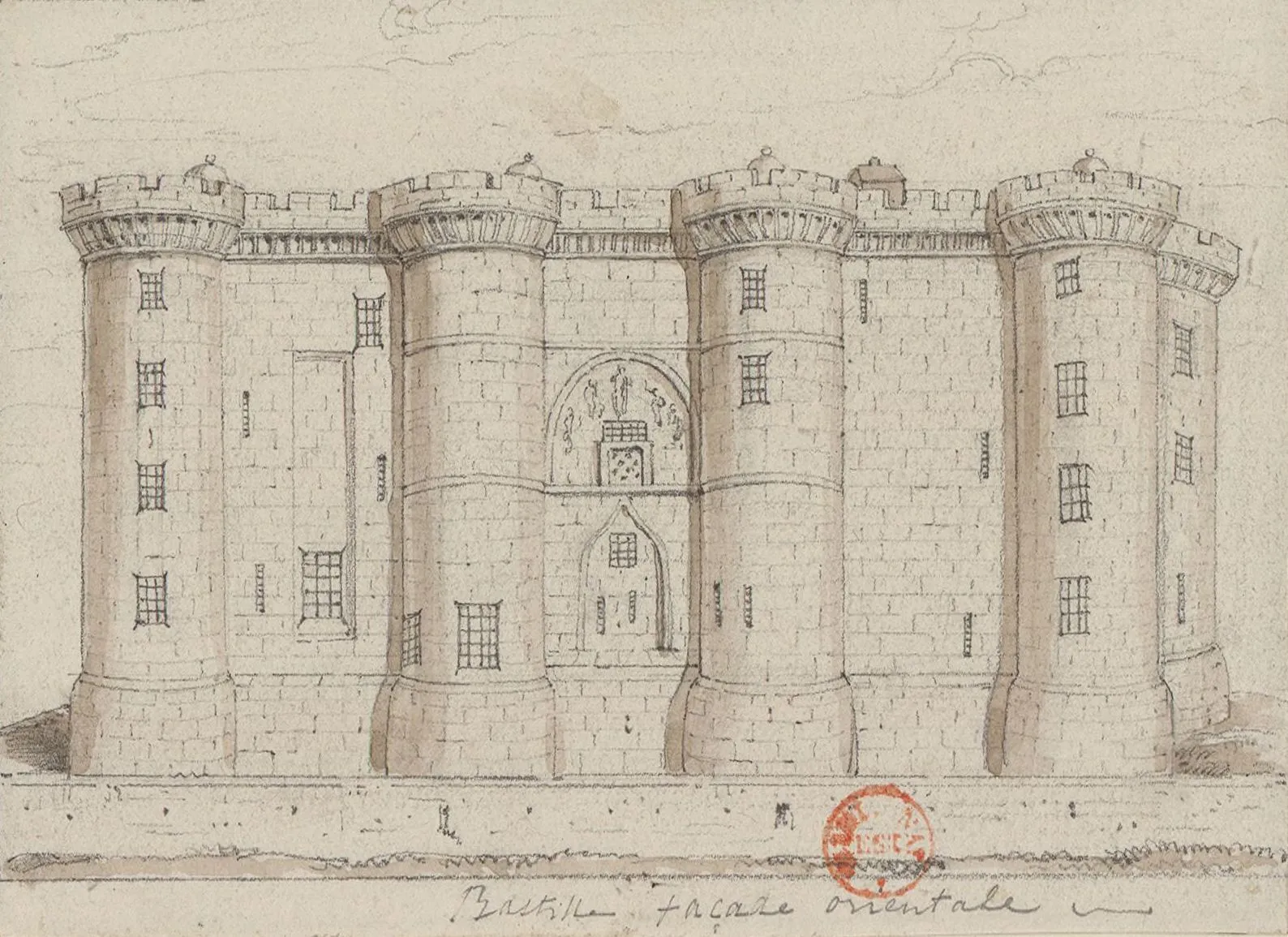
That mismatch is the whole point. Records show the Bastille began in the 14th century as a defensive gate on Paris's eastern edge, became a state prison under Richelieu in the 17th century, and then turned, after 14 July 1789, into the most famous ruin in Europe.
Come for the revolution, yes, but also for the sharper lesson. Bastille shows how a city can erase a building and keep its charge alive for centuries.
What to see
-
The July Column and the Square Beneath It
Bastille’s oddest surprise is that the monument everyone photographs is not about 1789 at all. The July Column rose between 1835 and 1840 for the dead of the 1830 Revolution, its winged Genius perched 52 meters up, about the height of a 17-storey Paris apartment block, while the vanished prison survives only as red paving stones under your feet tracing the old fortress between rue Saint-Antoine and boulevard Henri-IV. Stand still long enough and the square changes meaning: bus brakes hiss, scooters whip round the circle, and that civic noise makes the place clearer, because Bastille was never a pretty relic but a machine for power, fear, and then memory. -
Port de l’Arsenal
Two minutes south of the column, Bastille drops its shoulders. The Port de l’Arsenal sits below street level like a secret exhale, with boat masts ticking in the wind, lock gates clanking now and then, and pergolas threaded with honeysuckle, clematis, and trumpet vine in spring; after all that stone and traffic above, the basin feels almost improbable. Come near sunset, when the water catches the last pale gold and the square behind you starts to sound far away, and you understand why this stretch matters: Bastille is not only where a prison fell, but where Paris quietly opens into water. -
A Bastille Walk in Fragments
Read Bastille as a sequence, not a single monument: start on the square with the prison’s footprint under the paving, slip into Cour Damoye where old façades and a surviving freight lift still remember the workshop district, then climb behind the Opéra Bastille onto the first stretch of the Coulée verte René-Dumont, the former 1859 railway turned garden. Best of all, finish at Square Henri-Galli with the reassembled stones of the Tour de la Liberté, moved here after Metro works in 1899; they look modest, almost too modest, and that is the lesson of Bastille in one glance.
Plan your visit
- Getting There
- Bastille is easiest by Metro: Bastille station on lines 1, 5, and 8 opens onto Rue Saint-Antoine, Boulevard Beaumarchais, Rue de la Roquette, and Rue de Lyon, so you can surface almost under the July Column. Buses 29, 69, 76, 86, 87, and 91 also stop nearby; from Gare de Lyon, the walk is about 12 minutes, while drivers are better off using Parking Indigo Bastille or Parking Indigo Opéra Bastille rather than circling this busy junction.
- Opening Hours
- As of 2026, Place de la Bastille itself is an open public square with no gate or standard closing hour. The July Column is a different story: guided visits to the base and necropolis run only on Saturdays and Sundays at 14:30 and 16:30, in French, with advance booking required; the upper parts and summit are closed to visitors.
- Time Needed
- Give the square 15 to 25 minutes if you only want the column, the fortress outline traced in the paving, and a quick sense of where history turned into traffic. A better visit takes 45 to 60 minutes with the Port de l’Arsenal or Square Henri-Galli added, while the official July Column tour lasts 1 hour 30 minutes and a fuller Bastille wander can easily fill 2 to 3 hours.
- Accessibility
- The outdoor visit is the easy part: the redesigned pedestrian zone around Bastille and the walk down toward the Port de l’Arsenal are the most comfortable routes for wheelchair users, with more than 11,000 square meters of pedestrian space, about the size of two basketball courts laid side by side. Interior access to the July Column remains limited and should be confirmed directly before booking, since only the base is visitable and the public information does not clearly confirm lift access.
- Cost & Tickets
- As of 2026, the square is free, while the July Column guided visit costs 13 euros full price and 6 euros reduced, with free entry for children under 7 and some cardholders. Book ahead through the Centre des monuments nationaux, because places are capped at 18 people, no luggage storage is provided, and prebooking secures your slot more than it saves you from a queue.
History
Where Paris Keeps Returning to the Street
The Bastille changed function again and again: fortress, royal stronghold, prison, demolition site, memorial ground, traffic knot, opera district. One habit stayed put. People have kept coming here to make something public, whether that meant defending the city, toppling a symbol, dancing on the cleared ruins, burying revolutionaries, or filling the square with chants and flags.
That continuity matters more than the missing stones. Bastille's real afterlife is not architectural but civic: a place where private anger becomes crowd noise, and where Paris still rehearses its idea of liberty in full view of everyone else.
The turning point
The Day the Bastille Became Larger Than Itself
At first glance, the story seems simple: on 14 July 1789 Parisians stormed a hated prison, freed its victims, and shattered royal despotism in one clean blow. The scene still encourages that reading. You look at the column, the open square, the marching routes that often begin or end here, and the legend feels almost too tidy.
Then the facts start to itch. Records show the fortress held only seven prisoners that day, while royal authorities had moved 250 barrels of gunpowder inside two days earlier. Bernard-Rene Jordan de Launay, the governor, was not guarding a packed dungeon so much as a military stockpile and a symbol; what was at stake for him was brutally personal, because surrender without orders meant disgrace, resistance meant bloodshed, and detonating the powder could have blown up his garrison and much of the neighborhood.
The turning point came when negotiation collapsed and the crowd kept pressing. De Launay yielded after hours of fighting, and the Bastille's meaning flipped in an afternoon: a fortress built under Charles V to control the eastern approach to Paris became, in defeat, the proof that a crowd could force history open. Once you know that, the square looks different. You stop searching for a vanished prison and start seeing Bastille for what it has been ever since 1789: Paris's recurring theater of assembly, where symbols matter because people gather hard enough to make them real.
What Changed
What Endured
Tips for visitors
Start At Sully
The July Column tour does not begin at the column. You need to be in the courtyard of Hôtel de Sully, 62 rue Saint-Antoine, 10 minutes before departure, which also makes a neat pairing with Place des Vosges just up the street.Shoot Outside
Casual photography in the square is fine, and the best pictures usually come from the south side where the column rises above the Port de l’Arsenal like a bronze mast over a canal basin. Leave the tripod and drone fantasies behind: larger shoots in Paris need authorization, and drone use in the city is tightly regulated.Eat Off-Square
Skip the obvious places facing the roundabout; Bastille is better a few streets deeper. For budget, try Le Petit Keller or East Mamma; for mid-range, Brasserie Rosie or Clamato; if you want to spend properly, Septime still carries weight and books up fast.Best Visiting Window
Thursday or Sunday morning gives you Marché Bastille on Boulevard Richard-Lenoir, which tells you more about the area than the traffic circle ever will. For the square itself, late afternoon light works best on the column, and the descent toward the Arsenal basin turns unexpectedly quiet once the commuter rush thins.Watch Night Crowds
Bastille is generally safe by Paris standards, but the Metro platforms, late-night bar clusters, and Rue de Lappe are prime territory for pickpockets and sloppy overpaying. Keep your phone zipped away in crowds, buy transport only from official machines, and have one drink on Rue de Lappe for the scene before moving elsewhere.Don’t Bring Bags
The July Column visit offers no luggage storage, and mobile signal at entry can be patchy, so load your e-ticket before you arrive. If you are coming straight from Gare de Lyon or the airport, stash bags with a nearby storage service first or the whole plan becomes annoying fast.
Frequently asked
Is Bastille worth visiting?
Yes, if you treat Bastille as a layered piece of Paris rather than a vanished prison. The fortress is gone, but the square still carries the shock of July 14, 1789, and the site rewards anyone who likes places where history sits in plain sight under traffic noise and shoe leather. Give it 45 minutes and walk from the column down to the Arsenal basin, where the mood changes in about the time it takes a kettle to boil.
How long do you need at Bastille?
You need 15 to 25 minutes for the square alone, and 45 to 60 minutes if you want the place to make sense. That longer visit gives you time to spot the fortress outline in the paving, walk to Square Henri-Galli for real Bastille stones, and drop toward the Port de l'Arsenal. If you book the July Column visit, set aside 1 hour 30 minutes.
How do I get to Bastille from central Paris?
The easiest route is the Metro: Bastille station is on lines 1, 5, and 8. From the Marais or Hôtel de Ville area, you can also walk in about 18 minutes, roughly 1.35 kilometers, which is shorter than many museum audio guides. Arriving from Gare de Lyon is even easier, since Bastille is one stop away on Line 1 or about a 12-minute walk.
What is the best time to visit Bastille?
Sunday morning is the best time to visit Bastille if you want the area alive but still readable. Marché Bastille is running, the light on the column is cleaner, and the walk down to the Arsenal basin feels calmer before the evening bar crowd rolls in. Spring is the sweet spot, when the basin pergolas flower and the square's hard stone edge softens a little.
Can you visit Bastille for free?
Yes, the square, the fortress outline in the pavement, and the remains in Square Henri-Galli are free. The paid part is the July Column necropolis, which currently runs on guided visits only at 13 euros full price and 6 euros reduced, with free entry for some categories including children under 7. Free access exists for occasional special events, but no standing first-Sunday rule was documented in the research.
What should I not miss at Bastille?
Don't miss the red paving that traces the lost fortress, because most people walk straight over it without realizing they are crossing the old walls. Also worth your time are the July Column, whose gilded figure stands 52 meters up like a six-story Haussmann building with wings, and Square Henri-Galli, where actual Bastille foundations survive. Then slip down to the Port de l'Arsenal, where the noise of scooters gives way to masts, water, and a very different Paris.
Sources & attribution 8
- City of Paris — Historical overview of the Bastille site, its evolution from fortress to prison to present-day square, and context for what visitors are actually seeing now.
- Colonne de Juillet — Official practical information for visiting the July Column, including guided-visit-only access, tour times, duration, and meeting point.
- RATP — Official Metro access for Bastille station, confirming lines 1, 5, and 8 and station access points around the square.
- Centre des monuments nationaux Ticketing — Current ticket prices, reduced and free categories, booking details, and visitor conditions for the July Column guided visit.
- City of Paris — Official information on Square Henri-Galli, used for the surviving Bastille remains and as a recommended add-on to the main square.
- Colonne de Juillet — Details on the red paving that marks the fortress footprint and the urban geography that makes Bastille readable today.
- City of Paris — Official market listing used to support the recommendation for Sunday morning visits and the timing of Marché Bastille.
- City of Paris — Official information on the Arsenal garden, including atmosphere, seasonal appeal, and why the south side of Bastille works well on foot.
Built from cited sources · see the method · How we make our guides →
Pick up where you left off
Saved and recently read places — kept on this device only.
Photo credits (5)
- Bruno Charlier — Pexels License (https://www.pexels.com/license/) — Source: https://www.pexels.com/photo/11948738/
- Paris, place de la Bastille, la Colonne de Juillet et lOpéra Bastille — Marie Thérèse Hébert & Jean Robert Thibault — CC BY-SA 2.0 (https://creativecommons.org/licenses/by-sa/2.0/) — Source: https://commons.wikimedia.org/wiki/File:Paris,_place_de_la_Bastille,_la_Colonne_de_Juillet_et_lOpéra_Bastille.jpg
- Adrien Olichon — Pexels License (https://www.pexels.com/license/) — Source: https://www.pexels.com/photo/19101667/
- Nathan Cima — Unsplash License (https://unsplash.com/license) — Source: https://images.unsplash.com/photo-1749867785944-4c6176820f4e
- Colonne de Juillet - Place de la Bastille - Paris — Tomsamy — CC BY-SA 4.0 (https://creativecommons.org/licenses/by-sa/4.0/) — Source: https://commons.wikimedia.org/wiki/File:Colonne_de_Juillet_-_Place_de_la_Bastille_-_Paris.jpg
Photos may have been resized or cropped.