Plan and listen to Stolperstein Dedicated To Heinrich Huppert with Audiala.
Audio guide in your pocket, itinerary in your browser. Built for the way you actually visit.
Introduction
The Stolpersteine (“stumbling stones”) project is the largest decentralized memorial in the world, honoring victims of Nazi persecution. In 2018, Helsinki joined this international network, embedding brass plaques into its sidewalks to commemorate Austrian Jewish refugees, including Heinrich Huppert, who were deported during World War II. This detailed guide provides historical context, practical visitor information, and tips on exploring the Stolperstein dedicated to Huppert—helping travelers, students, and history enthusiasts engage meaningfully with Holocaust remembrance in Finland.
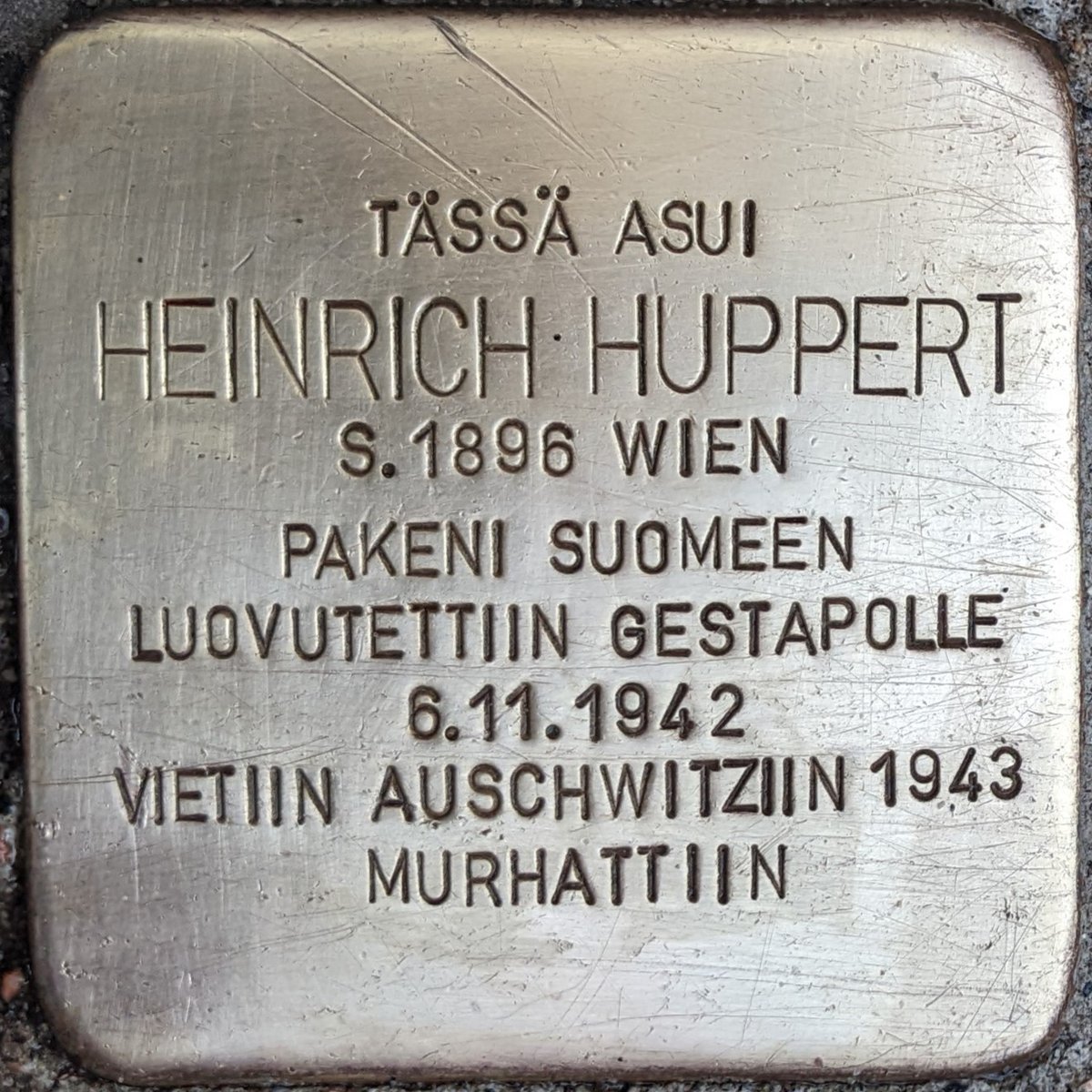
Initiated in 1992 by German artist Gunter Demnig, the Stolpersteine project integrates remembrance into daily life by placing small, engraved brass plaques in city streets at the last freely chosen residences or workplaces of Nazi victims. Each 10x10 cm “stumbling stone” is inscribed with the name, birth year, and fate of an individual, restoring dignity to those lost in the Holocaust (stolpersteine.eu; en.wikipedia.org; stichting-stolpersteine.nl).
By 2025, over 116,000 Stolpersteine have been installed across 31 countries, making the project the world's largest decentralized Holocaust memorial. The stones commemorate not only Jews, but also Sinti and Roma, LGBTQ+ individuals, Jehovah’s Witnesses, and others persecuted by the Nazis (stolpersteine.eu; iamexpat.de).

Heinrich Huppert and the Finnish Context
Finland During WWII
Finland’s wartime history is complex. While the nation’s Jewish citizens were largely spared, eight Jewish refugees—including Heinrich Huppert—were handed over to the Gestapo in 1942, under pressure from Nazi Germany. Only one survived the Holocaust (Finland Today; de.wikipedia.org; wikidata.org).
Heinrich Huppert
Heinrich Huppert was a Jewish businessman from Vienna who sought refuge in Finland in 1938. In 1942, he was deported along with other refugees. His Stolperstein, following the project's tradition, is placed at his last Helsinki address—a tangible connection between past and present, and a powerful reminder of the personal stories behind historical events (Finland Today; wikidata.org).
Visiting the Stolpersteine in Helsinki
Finding the Heinrich Huppert Stolperstein
- Location: The Stolperstein for Heinrich Huppert is located in the Munkkiniemi district of Helsinki, likely along Munkkiniemen Puistotie, near other Stolpersteine commemorating deported Austrian Jews (Finland Today).
- Getting There:
- Public Transport: Tram line 4 and several buses serve Munkkiniemi. Use the HSL Journey Planner for real-time schedules.
- On Foot/Bike: Helsinki’s pedestrian and cycling infrastructure makes the district accessible and scenic.
- Taxi/Rideshare: Taxis and apps like Uber are available.
The Stolpersteine are small and set flush with the pavement, usually near building entrances. Look for square brass plaques embedded in the sidewalk.
Accessibility and Practical Tips
- Open Access: Stolpersteine are located in public spaces, accessible 24/7, and free to visit—no tickets or reservations required.
- Best Time to Visit: Helsinki is pleasant year-round; summer (June–August) offers long daylight hours (Danny CPH).
- Footwear: Wear comfortable shoes for walking on city pavements.
- Respect: Do not stand or sit on the stones, and avoid obstructing their view for others.
- Mobility: Sidewalks in Munkkiniemi are generally accessible, though some may be uneven.
Nearby Attractions and Amenities
- Cafés and Restaurants: Munkkiniemi has cafés and bakeries for refreshments.
- Parks: The district is close to the waterfront and Seurasaari Open-Air Museum.
- Museums: The Helsinki City Museum and Amos Rex Museum are nearby.
- Hakaniemi Market Square: Accessible via public transport, this lively area offers local food and crafts (Hakaniemi Market Square).
Cultural and Memorial Significance
The Stolpersteine project personalizes remembrance by marking the very locations where Holocaust victims lived, studied, or worked. Rooted in the idea that “a person is only forgotten when their name is forgotten,” each stone ensures the enduring visibility of the victim's identity (stolpersteine.eu). In Helsinki, these stones spark ongoing dialogue about Finnish wartime responsibility and the importance of confronting history (ibgtravel.eu).
Supporters see the ground-level placement as a gesture of humility; reading the names often means bowing one’s head in respect (iamexpat.de).
Broader European Context
Helsinki’s Stolpersteine are part of a network spanning over 1,800 cities in 31 countries, encompassing Germany, Austria, the Netherlands, Belgium, Czech Republic, Poland, Italy, Norway, and more (pragueviews.com). Each stone is a node in a continent-wide act of remembrance, linking local stories to a shared European narrative.
FAQ
Q: Where exactly is the Heinrich Huppert Stolperstein?
A: In the Munkkiniemi district of Helsinki, typically along Munkkiniemen Puistotie. Maps are available at the Helsinki Tourist Information Office.
Q: Are there visiting hours or tickets required?
A: No. The Stolpersteine are accessible in public spaces at any time and are free to visit.
Q: Is the site wheelchair accessible?
A: Sidewalks are generally accessible, but some may be uneven. For personalized advice, contact the Helsinki Tourist Information Office.
Q: Are guided tours available?
A: Yes, several local providers offer Jewish heritage and WWII history tours, which can include the Stolpersteine.
Q: Can I take photographs?
A: Discreet photography is allowed. Please be respectful of the site and local residents.
Internal Links
Listen to the full story in the app
The whole Stolperstein Dedicated To Heinrich Huppert,
told well.
Audio guides for 1,100+ cities across 96 countries. History, stories, and local insight — offline ready.
Verified, and shown.
Researched and written by the Audiala editorial team from historical records, architectural archives, and local expertise.
Researched from Wikidata, Wikipedia & official sources · fact-checked · How we make our guides →