Plan and listen to Stolperstein Dedicated To Dr Georg Kollmann with Audiala.
Audio guide in your pocket, itinerary in your browser. Built for the way you actually visit.
Introduction: The Stolperstein for Dr. Georg Kollmann—History and Significance
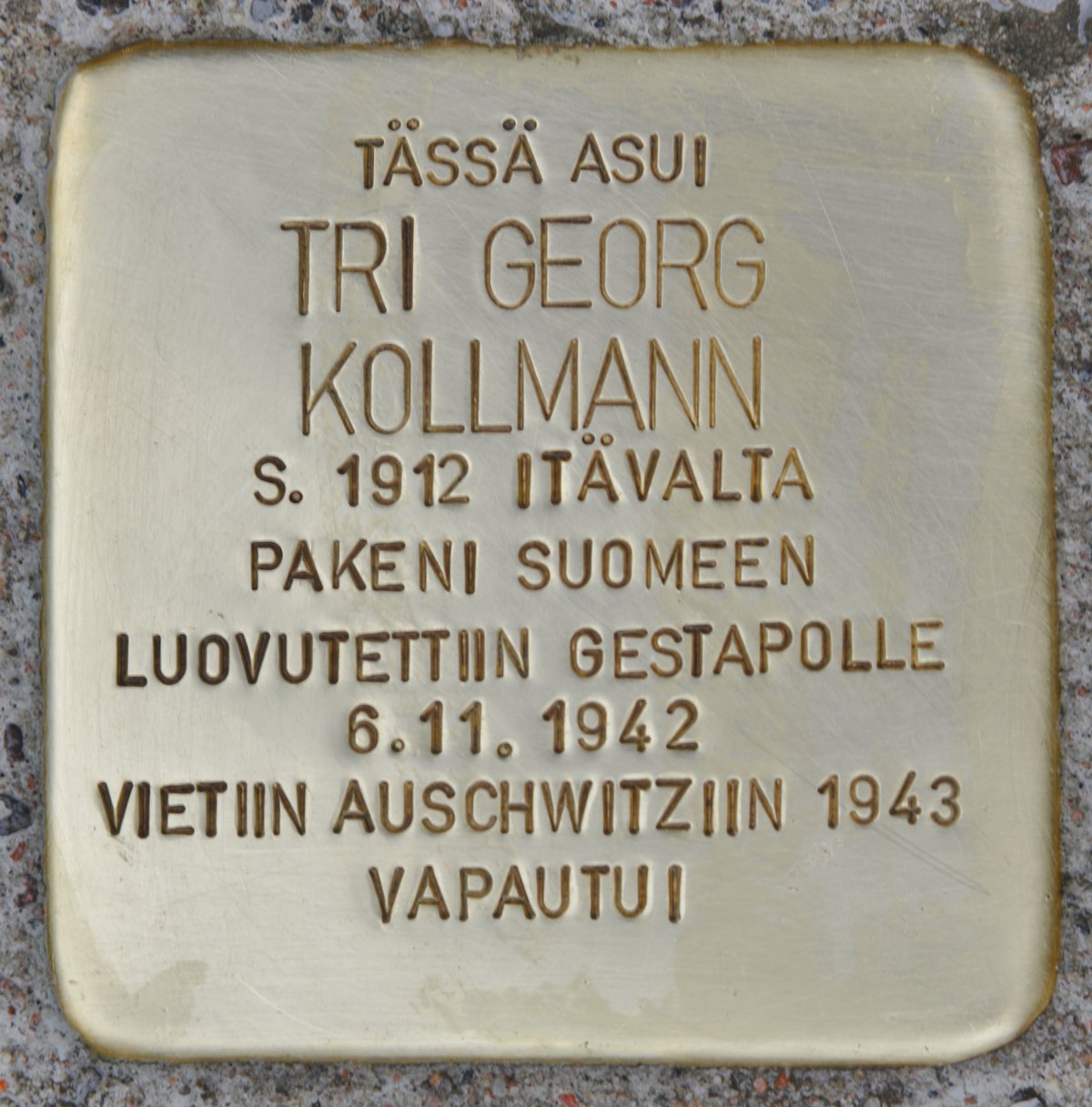
Embedded in the pavements of Helsinki, the Stolperstein dedicated to Dr. Georg Kollmann stands as a poignant reminder of the Holocaust's reach and the resilience of those who survived. Stolpersteine, or "stumbling stones," are small brass plaques installed at the last freely chosen residences of Nazi victims, marking the places where individuals like Dr. Kollmann once lived before being swept up in the horrors of war and persecution. Conceived by German artist Gunter Demnig in 1992, the Stolpersteine project transforms ordinary city streets into sites of memory and reflection, giving passersby a chance to confront the past in their daily lives (Stolpersteine.eu; Wikipedia).
Dr. Georg Kollmann’s Stolperstein is part of a network of more than 107,000 stones installed across 29 countries. As an Austrian-born Jewish physician, Dr. Kollmann sought refuge in Finland during the 1930s, only to face deportation by Finnish authorities in 1942. Of his family, only Dr. Kollmann survived; his wife, Janka, and son, Franz Olof, perished in Auschwitz (de.wikipedia.org; Vryjdfkk Blog). Helsinki’s installation of Stolpersteine in 2018 marked Finland’s entry into this international remembrance project, emphasizing both local and global commitments to Holocaust memory (Stolpersteine.eu).
This guide provides detailed insights into the Stolperstein’s historical context, practical visiting tips, accessibility information, and highlights of nearby Jewish heritage and Holocaust-related sites in Helsinki. Whether you are a history enthusiast, a student, or an engaged traveler, visiting the Stolperstein for Dr. Georg Kollmann offers a meaningful connection to the enduring legacy of remembrance (BBC; MTV Uutiset).

The Stolpersteine Project: Origins, Philosophy, and Artistic Vision
Stolpersteine, meaning "stumbling stones" in German, are Europe’s largest decentralized memorial to Holocaust victims. The project began in 1992 in Cologne, Germany, initiated by artist Gunter Demnig, who sought to return names and stories to those erased by the Nazis (Stolpersteine.eu; Wikipedia).
The project's philosophy is rooted in personalizing remembrance. Instead of grand monuments, Stolpersteine are installed at street level, often in front of victims' last known residences. The act of "stumbling" over these stones is intended to prompt reflection; the small size of the plaques requires visitors to bow, symbolizing respect (BBC; PragueViews.com). Each stone is inscribed with the individual's name, year of birth, fate, and—where known—the date of death or survival.
The project’s participatory nature is also central: local communities, schools, relatives, and historians collaborate in research, funding, and installation. As of 2024, Stolpersteine have been laid in 29 countries, making this a truly pan-European memorial (Stolpersteine.eu).
The Story of Dr. Georg Kollmann and His Family
Dr. Georg Kollmann, an Austrian-born Jewish physician, fled the rising tide of Nazi persecution for Finland in the late 1930s, accompanied by his Hungarian-born wife Janka and their son Franz Olof. Settling in Helsinki’s Munkkiniemi district, the family became part of Finland’s small but well-integrated Jewish community (de.wikipedia.org; Vryjdfkk Blog).
Tragedy struck on November 6, 1942, when Finnish authorities, under pressure from Nazi Germany, arrested and extradited eight Jewish refugees—including the Kollmann family—to the Gestapo in Tallinn. Dr. Kollmann was the sole survivor; his wife and son were murdered at Auschwitz. The extradition of these refugees, most of whom perished, led to public outrage in Finland, prompting the government to halt further deportations (MTV Uutiset; suomenmaa.fi).
The Stolperstein in Helsinki: Location, Accessibility, and Visiting Tips
Location
The Stolperstein dedicated to Dr. Georg Kollmann is located in central Helsinki, embedded in the pavement near the site of his former residence in Munkkiniemi. The exact location can be found via the official Stolpersteine map or Helsinki’s cultural heritage websites.
Visiting Hours and Tickets
As an outdoor memorial, the Stolperstein is accessible 24/7, all year round. There is no entrance fee, and no tickets or reservations are required.
Accessibility
The site is set in a pedestrian-friendly area, with paved sidewalks and good public transport links. It is suitable for visitors with mobility challenges, though some pavements may be uneven in winter.
Travel Tips
- Visit during daylight for the best visibility and photographic opportunities.
- Combine your visit with nearby historical sites for a richer experience.
- Use public transport: trams and buses serve the Munkkiniemi district regularly.
- Respect the solemn nature of the site; photography is allowed but should be discreet.
Nearby Jewish Heritage Sites and Holocaust Memorials
1. Finland Holocaust Monument
Located in central Helsinki, the Finland Holocaust Monument is a significant site commemorating the experiences of Finnish Jews and refugees during World War II. The monument honors the memory of those who perished and celebrates Finland’s efforts to protect its Jewish citizens during the Nazi era (Wikipedia: Continuation War; ESRA Magazine; Jewish Museum of Finland).
- Location: Near Helsinki Cathedral and the National Museum of Finland
- Visiting Hours: Daily, 9:00 AM–6:00 PM; open year-round
- Admission: Free
- Accessibility: Wheelchair accessible; public transport nearby
2. Munkkiniemi Jewish Memorial
This outdoor memorial, located on Munkkiniemen puistotie, marks the site of the Kollmann family’s arrest and honors all Jewish refugees deported from Finland in 1942. The monument features symbolic sculptures and inscriptions, providing a moving site for reflection (MTV Uutiset).
- Location: Munkkiniemen puistotie, Munkkiniemi, Helsinki
- Visiting Hours: Dawn to dusk, year-round
- Admission: Free
- Accessibility: Wheelchair accessible
3. Jewish Museum of Finland
The Jewish Museum of Finland offers deeper insights into the history, culture, and resilience of the Jewish community in Finland. The museum is located not far from the Stolperstein and other central landmarks (Jewish Museum of Finland).
Guided Tours, Community Engagement, and Educational Impact
Many local tour operators include the Stolperstein and associated memorials in their guided walking tours. These tours provide historical context and personal stories, enriching the visitor experience. Special commemorative events, particularly on Holocaust Remembrance Day, are also held at these sites.
The Stolpersteine project actively involves communities in research, installation, and ongoing care of the stones. Cleaning the brass plaques, especially before remembrance days, is a widely respected tradition (PragueViews.com).
Frequently Asked Questions
Q: Where exactly is the Stolperstein for Dr. Georg Kollmann located?
A: The Stolperstein is embedded in the pavement in Munkkiniemi, Helsinki. Exact location details are available on the official Stolpersteine website.
Q: Do I need a ticket to visit the Stolperstein?
A: No, the memorial is freely accessible at all times.
Q: Is the site accessible to visitors with disabilities?
A: Yes, the pavement is wheelchair accessible, though seasonal weather may affect conditions.
Q: Are guided tours available?
A: Yes, check with Helsinki cultural tours or the Jewish Museum of Finland for schedules.
Q: Can I take photographs at the site?
A: Yes, but please be respectful of the memorial’s solemn purpose.
Listen to the full story in the app
The whole Stolperstein Dedicated To Dr Georg Kollmann,
told well.
Audio guides for 1,100+ cities across 96 countries. History, stories, and local insight — offline ready.
Verified, and shown.
Researched and written by the Audiala editorial team from historical records, architectural archives, and local expertise.
Researched from Wikidata, Wikipedia & official sources · fact-checked · How we make our guides →