Plan and listen to Johan Sederholm Mausoleum with Audiala.
Audio guide in your pocket, itinerary in your browser. Built for the way you actually visit.
Introduction: A Window into Helsinki's Mercantile and Architectural Past
Located in the tranquil Vanha Kirkkopuisto (Old Church Park) in central Helsinki, the Johan Sederholm Mausoleum stands as a silent witness to the city's transformation during the 18th and 19th centuries. This guide offers a comprehensive overview of the mausoleum—its historical context, architecture, visiting hours, accessibility, and its connection to nearby attractions such as the Sederholm House and Senate Square. Whether you're a history enthusiast, architecture lover, or traveler seeking Helsinki’s hidden heritage, this guide provides essential details and practical tips.
For the most current updates, refer to the Helsinki City Museum, BLF.fi, and the Sveaborg Project blog.

Historical Background
The Sederholm Family and Johan Sederholm
The Sederholm family's roots in Helsinki date to the early 18th century. Erik Sederholm, Johan’s father, moved from Stockholm and served as a customs inspector. Johan Sederholm (1722–1805) became the city's most prosperous merchant, shipowner, and industrialist, playing a pivotal role in Helsinki’s economic ascent. His influence is immortalized in the Sederholm House (1757), the oldest stone building in central Helsinki, now part of the Helsinki City Museum (BLF.fi, hel.fi).
Johan’s wealth and civic engagement included provisioning the Suomenlinna (Sveaborg) fortress and hosting Swedish royalty (Wikipedia: Johan Sederholm).
The Mausoleum: Construction and Relocation
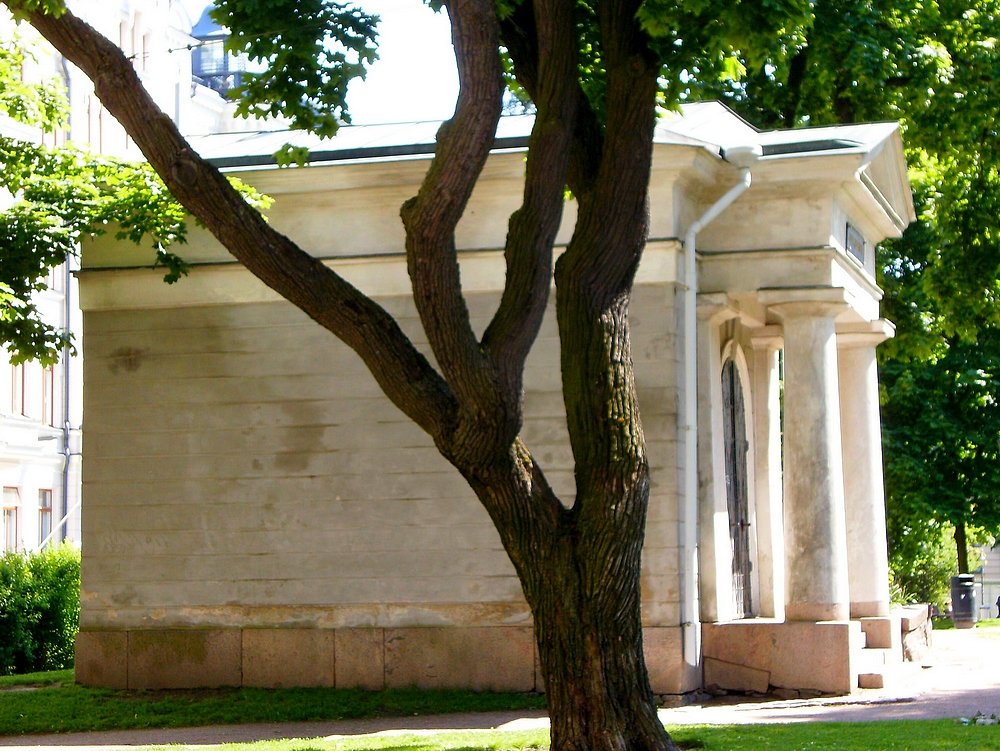
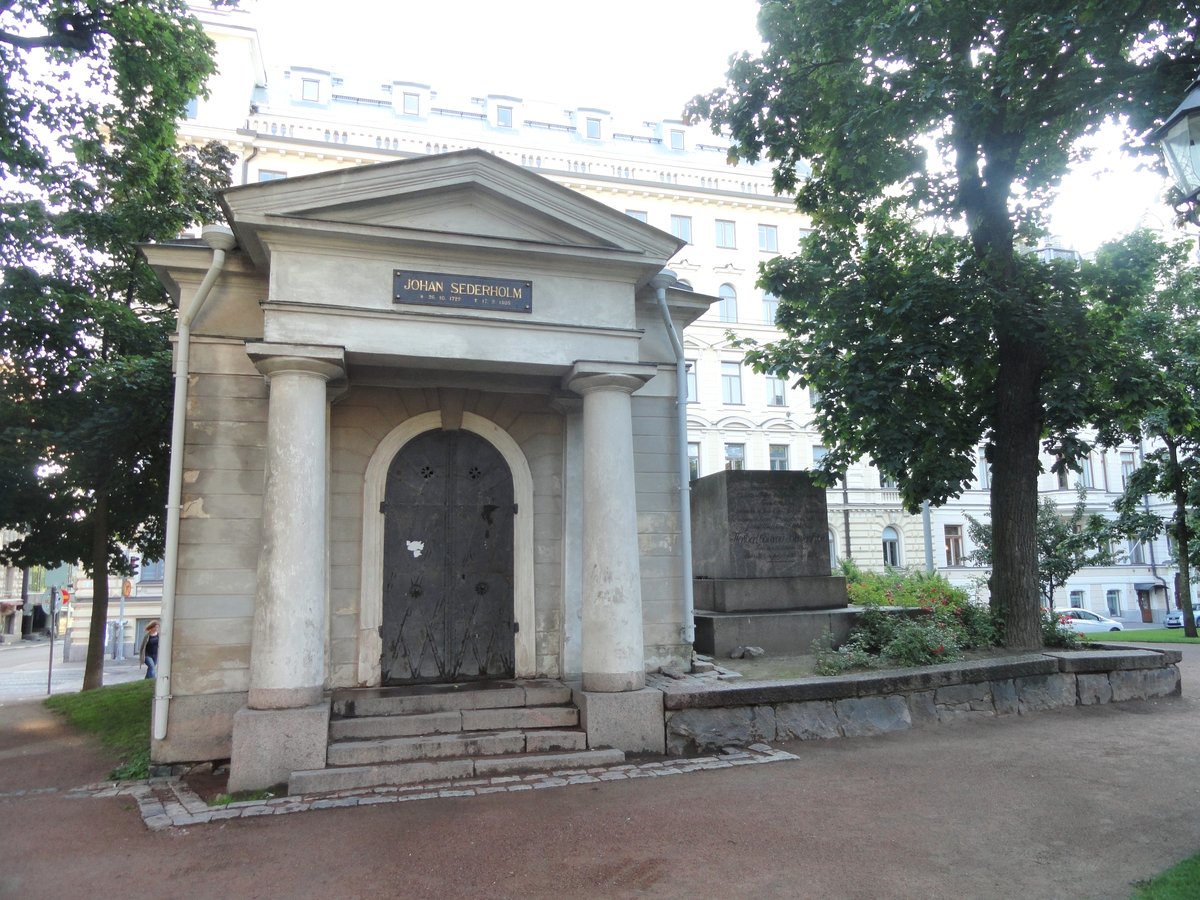
Upon his death in 1805, Johan Sederholm was initially buried at the Ulrika Eleonora Church cemetery, near present-day Senate Square. As Helsinki grew and the church was demolished for urban redevelopment, Sederholm’s remains were uniquely relocated to a new mausoleum in Old Church Park (Kamppi Cemetery) in 1827. The mausoleum, designed by Carl Ludvig Engel—chief architect of Helsinki’s neoclassical core—became Sederholm’s final resting place (blogs.helsinki.fi).
Architectural and Cultural Significance
The Sederholm Mausoleum is a rare private burial chapel from early 19th-century Helsinki. Its restrained neoclassical design, featuring symmetry, proportion, and minimal ornamentation, reflects both Engel’s architectural mastery and the values of Helsinki’s rising bourgeoisie. Its location in Vanha Kirkkopuisto, surrounded by mature trees and memorials, underscores its role in the city’s collective memory (historia.hel.fi).
The mausoleum's understated grandeur complements Engel's other works, such as Helsinki Cathedral and the Government Palace, forming part of Helsinki's celebrated neoclassical ensemble (cs.helsinki.fi).
Visitor Information
Visiting Hours & Tickets
- Mausoleum (Exterior Viewing): Accessible daily during park hours (typically 6:00 AM–10:00 PM, year-round).
- Mausoleum (Interior Access): Generally closed. Interior visits possible only during special events or guided tours arranged by heritage organizations. Check the Helsinki City Museum events page for schedules.
- Admission: No ticket required for exterior viewing. Fees may apply for special tours.
Guided Tours
Guided walking tours of historic Helsinki often include the Sederholm Mausoleum and its park setting. The Helsinki City Museum offers programs exploring the mausoleum, Sederholm House, and Senate Square.
Accessibility
- Old Church Park: Wheelchair accessible; well-maintained paths. Some areas may be uneven due to historic terrain.
- Sederholm House (Museum): Fully accessible and open Tuesday–Sunday, 11:00 AM–7:00 PM; closed Mondays. Admission is free (MyHelsinki: Sederholm House).
- Restrooms and Amenities: Available near the park and in the museum.
Etiquette and Photography
- Maintain respectful silence; the mausoleum is part of an active cemetery.
- Photography of the exterior and surroundings is allowed for personal use.
Nearby Attractions
- Sederholm House: Helsinki’s oldest stone building, now housing interactive city history exhibits (Museo-opas.fi).
- Senate Square: Neoclassical heart of Helsinki, surrounded by the Cathedral, Government Palace, and University.
- Old Church (Vanha kirkko): Adjacent to the park, open to visitors.
- Suomenlinna Fortress: UNESCO World Heritage site accessible by ferry from Market Square.
- Helsinki City Museum: Free exhibitions on city history and the Sederholm legacy.
Events and Public Engagement
Recent commemorations, such as the 300th anniversary of the Sederholm family’s arrival in Helsinki, have featured lectures, workshops, and guided tours that include the mausoleum (hel.fi). The Helsinki City Museum and local heritage groups organize further events, especially during city festivals and heritage weeks.
FAQs
Is the Sederholm Mausoleum open to the public?
The interior is generally closed. The exterior can be viewed year-round during park hours.
How can I join a guided tour?
Check schedules with the Helsinki City Museum or local tour operators.
Is there an entrance fee?
No, viewing the mausoleum outside is free. Guided tours may have a fee.
Is the site wheelchair accessible?
Yes, the park is accessible. The mausoleum interior may have limitations.
Can I take photographs?
Yes, of the mausoleum exterior and park; please do so respectfully.
Visitor Recommendations
- Start at the Sederholm House: Gain context about Helsinki’s 18th-century life before visiting the mausoleum.
- Visit in Spring or Summer: Enjoy pleasant weather and city events.
- Check for Special Tours: Plan visits to coincide with guided walks or cultural events for possible interior access.
- Combine with Other Sites: Explore Senate Square, Helsinki Cathedral, and Market Square for a full neoclassical experience.
- Use Public Transport: The area is pedestrian-friendly and accessible by tram and bus.
Visuals and Maps
- Seek out historical images and current photos of the mausoleum and Sederholm House via the Helsinki City Museum and MyHelsinki.
- Maps of the cemetery and Helsinki’s historical core are available at local tourist information points and online.
Summary
The Johan Sederholm Mausoleum is a dignified monument to one of Helsinki's most influential families and a significant piece of the city's neoclassical landscape. Its presence in Old Church Park, alongside landmarks like the Sederholm House and Senate Square, offers a multidimensional understanding of Helsinki’s mercantile, architectural, and cultural evolution. By combining a visit to the mausoleum with other historical sites and events, travelers can immerse themselves in Helsinki’s rich heritage. For the latest on tours and events, consult the Helsinki City Museum and consider downloading the Audiala app for curated audio guides.
Listen to the full story in the app
The whole Johan Sederholm Mausoleum,
told well.
Audio guides for 1,100+ cities across 96 countries. History, stories, and local insight — offline ready.
Verified, and shown.
Researched and written by the Audiala editorial team from historical records, architectural archives, and local expertise.
Researched from Wikidata, Wikipedia & official sources · fact-checked · How we make our guides →