Plan and listen to Johan Ludvig Runeberg Statue with Audiala.
Audio guide in your pocket, itinerary in your browser. Built for the way you actually visit.
Introduction: The Runeberg Statue’s Cultural and Historical Significance
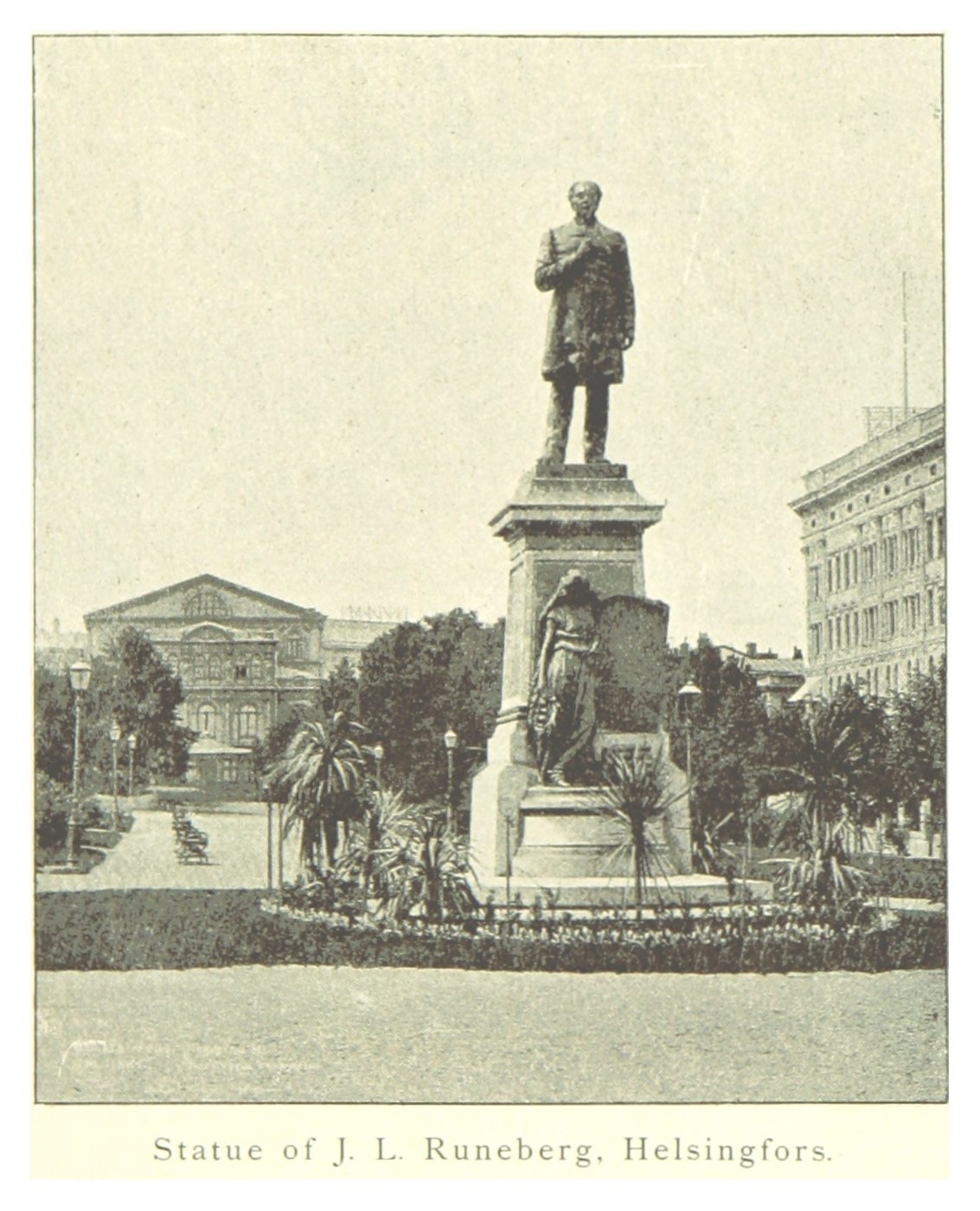
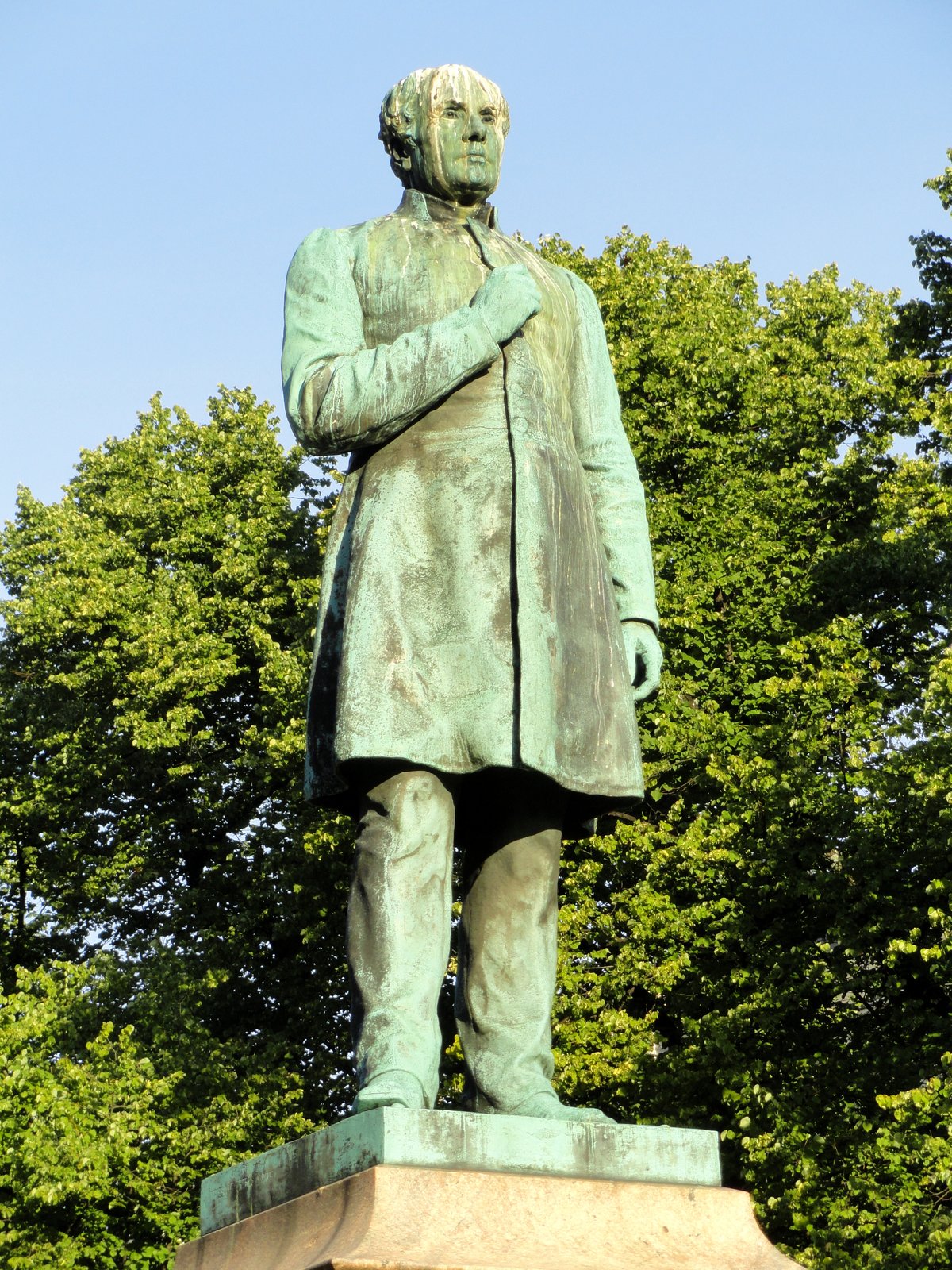
In the heart of Helsinki’s Esplanadi Park stands the Johan Ludvig Runeberg Statue, a powerful symbol of Finnish national identity. Commemorating the country’s beloved national poet, Johan Ludvig Runeberg (1804–1877), the monument is not only a tribute to his literary contributions but also a testament to Finland’s journey toward independence and cultural pride. Crafted by Walter Runeberg, the poet’s son, and unveiled in 1885, the statue is a central landmark that offers a gateway into Finnish heritage for both locals and visitors alike (Visit Finland, Helsinki City Museum, Evendo Helsinki Guide).
Runeberg’s legacy—reflected in his poetry and the Finnish national anthem—resonates through the statue’s neoclassical design and bilingual inscriptions. The monument’s setting in Esplanadi Park, surrounded by the city’s vibrant life, means visitors can easily combine history, art, and leisure. This guide provides detailed information on the statue’s history, visiting hours, accessibility, special events, travel tips, and nearby attractions.

Quick Reference: Essential Visitor Information
| Feature | Details |
|---|---|
| Location | Pohjoisesplanadi 29, 00100 Helsinki, Finland |
| Opening Hours | 24/7, year-round |
| Entry Fee | None |
| Accessibility | Wheelchair accessible, paved walkways |
| Nearest Transport | Tram (Lines 2, 3, 4), Bus (14, 20), Walking distance from city center |
| Nearby Amenities | Cafés, restaurants, shops, public restrooms |
| Best Time to Visit | Sunrise, sunset, or Runeberg Day (Feb 5) |
| Languages | Finnish, Swedish, English |
| Digital Guide | Evendo Helsinki Guide |
Historical Background: Runeberg, the Statue, and Finnish Identity
Johan Ludvig Runeberg is revered as Finland’s national poet. His works, most notably “Vårt land” (“Our Land”), which became the Finnish national anthem, and “The Tales of Ensign Stål,” helped foster a sense of national identity during a period of Russian rule. Despite writing in Swedish, Runeberg’s poetry united Finns with themes of patriotism and cultural pride.
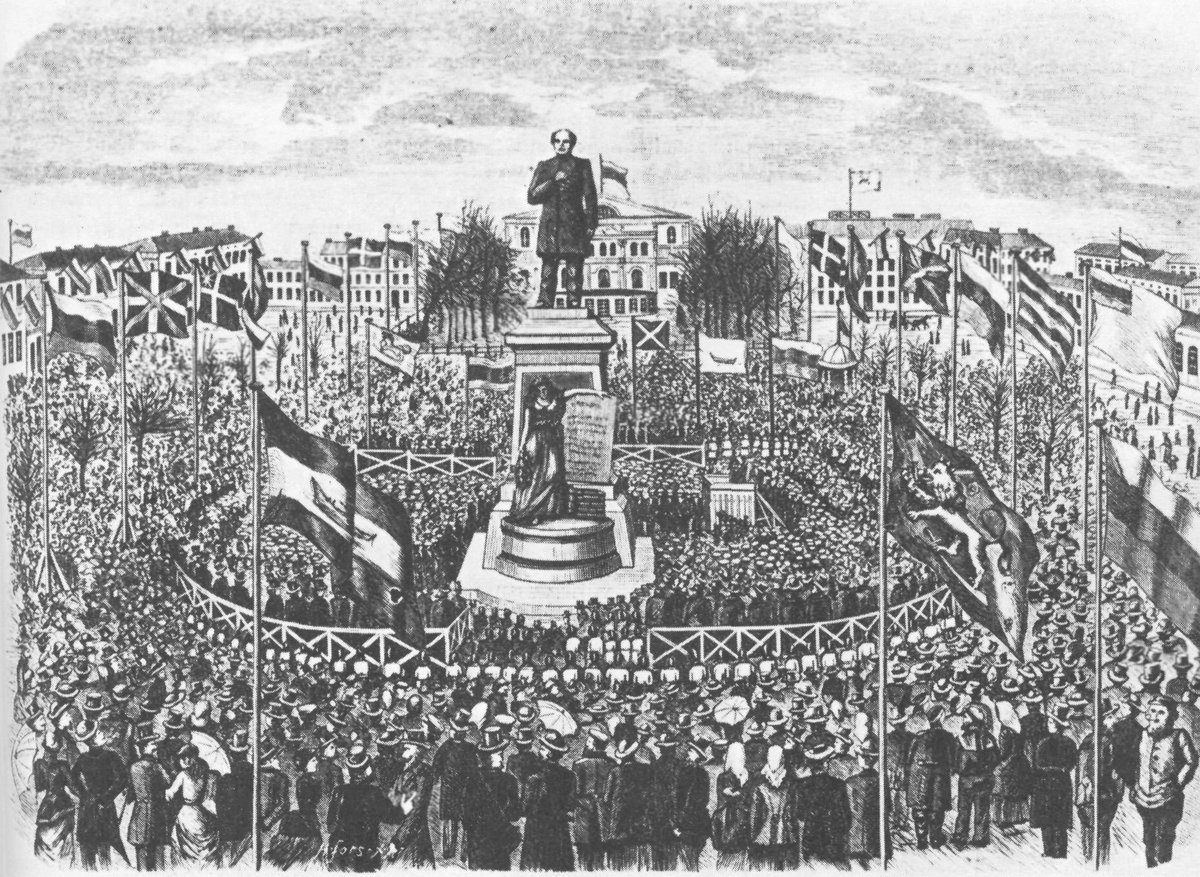
Commissioning and Creation: Shortly after Runeberg’s death, a memorial committee led by Zacharias Topelius initiated the project. Walter Runeberg, working in Paris, was chosen to create the monument. Unveiled on May 6, 1885, the statue marked Helsinki’s first public monument, drawing around 20,000 attendees and solidifying the poet’s lasting impact (Helsinki City Museum).
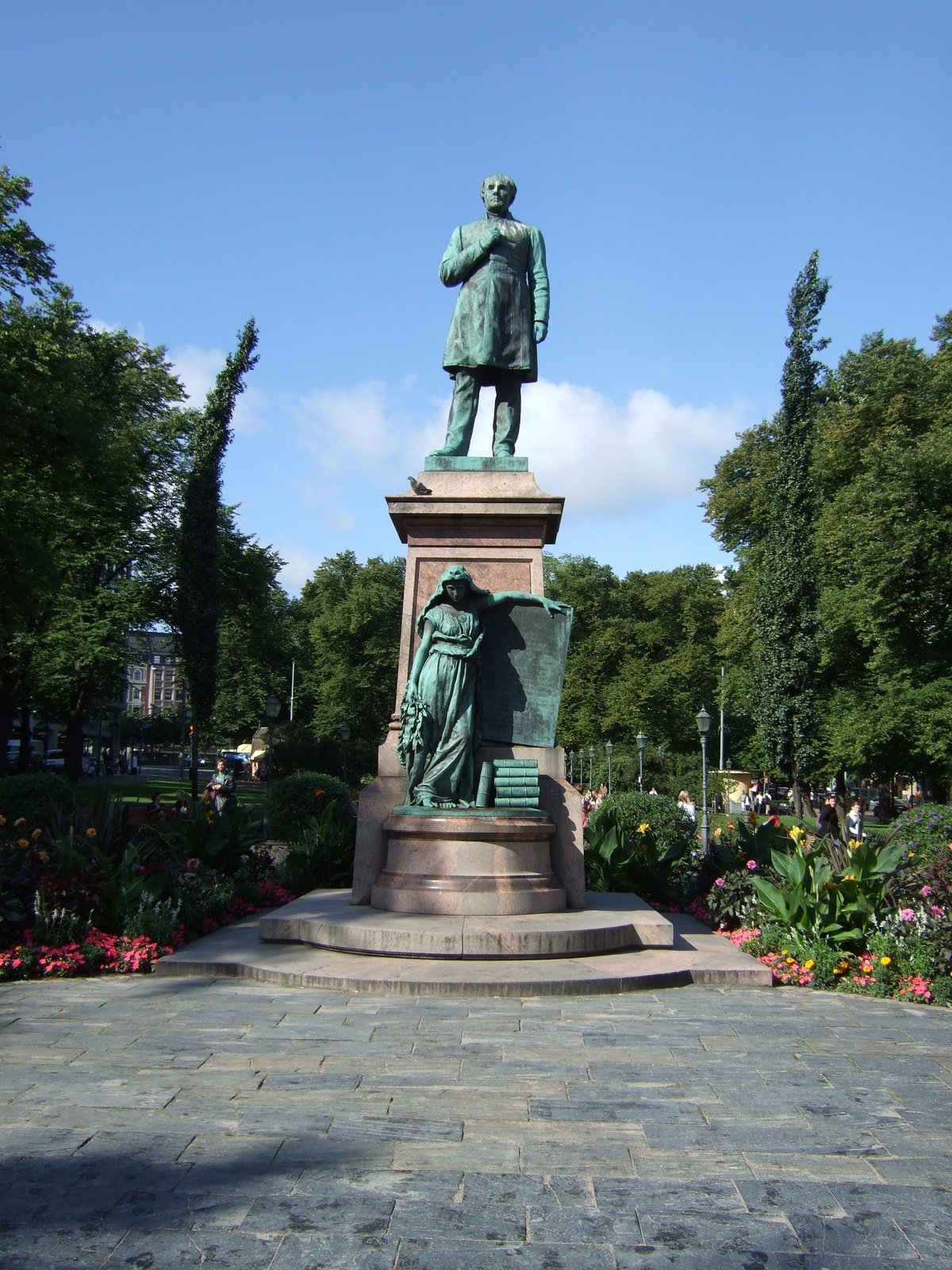
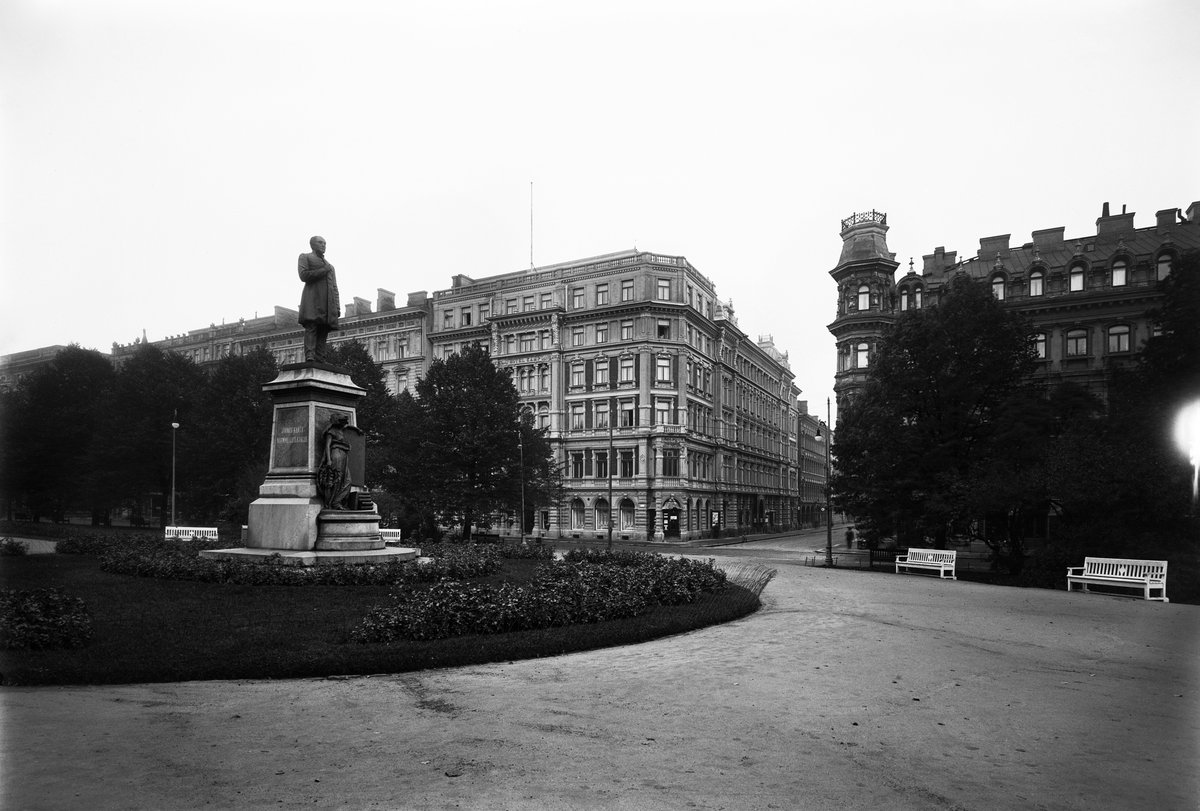
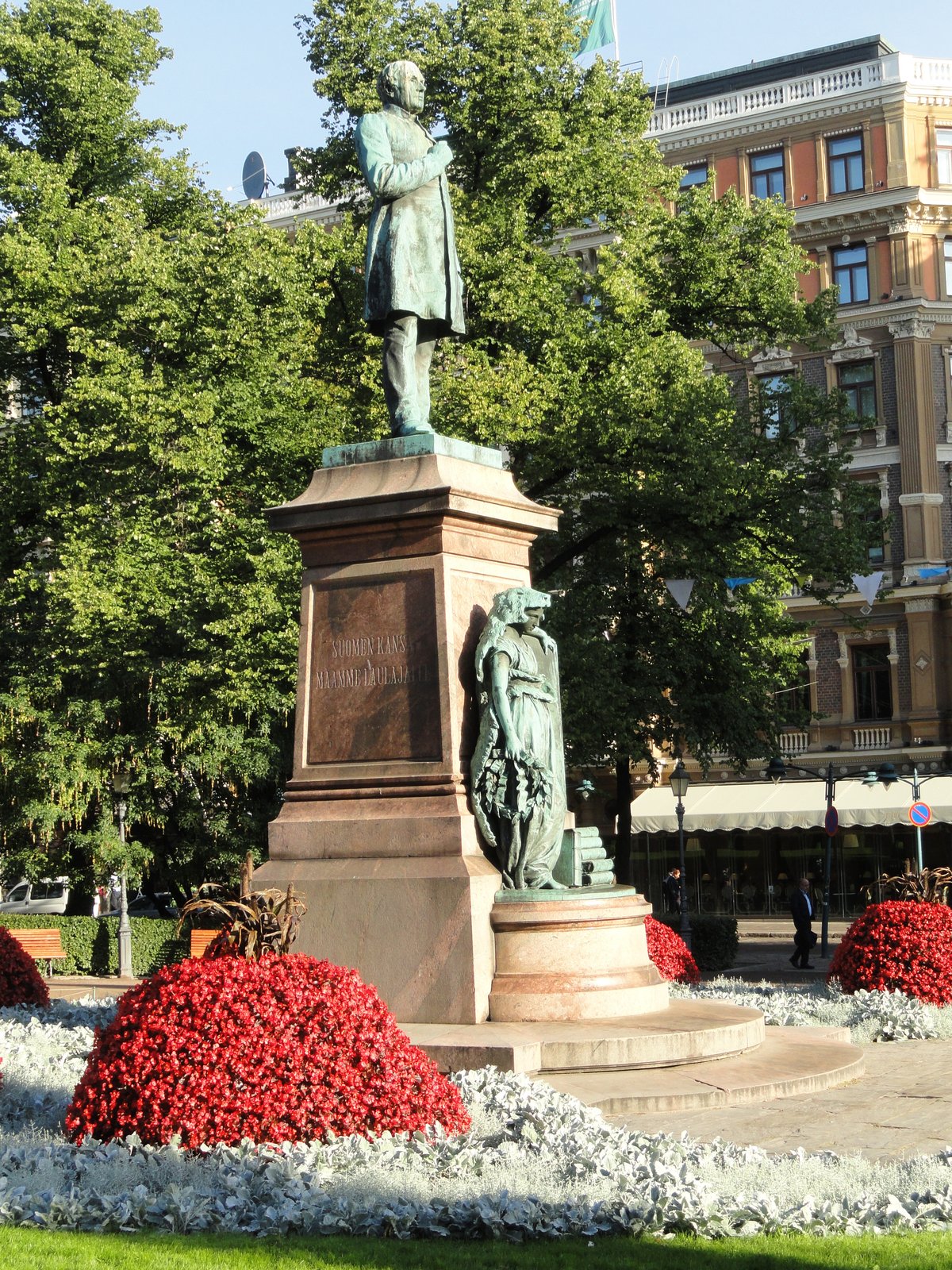
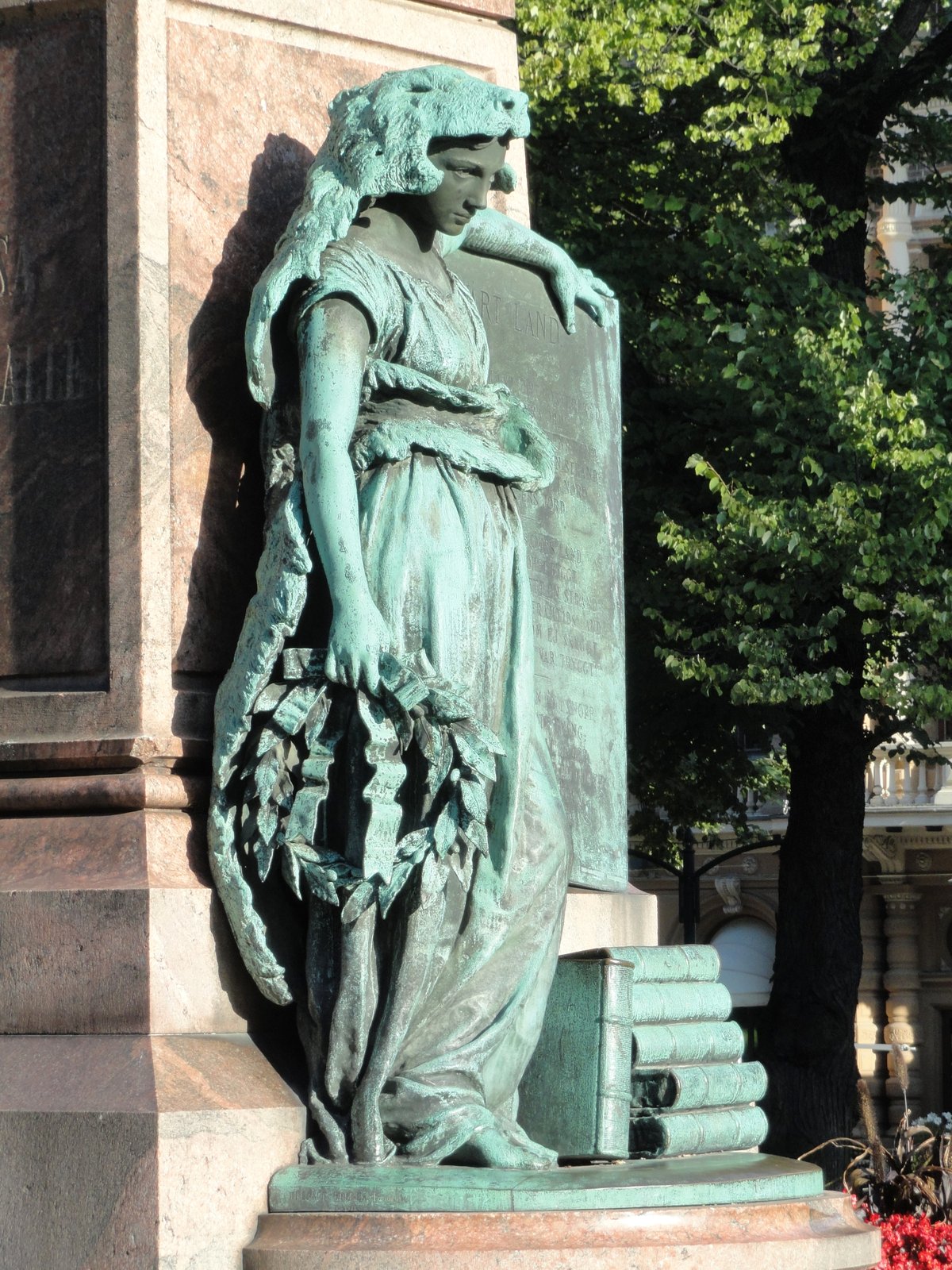
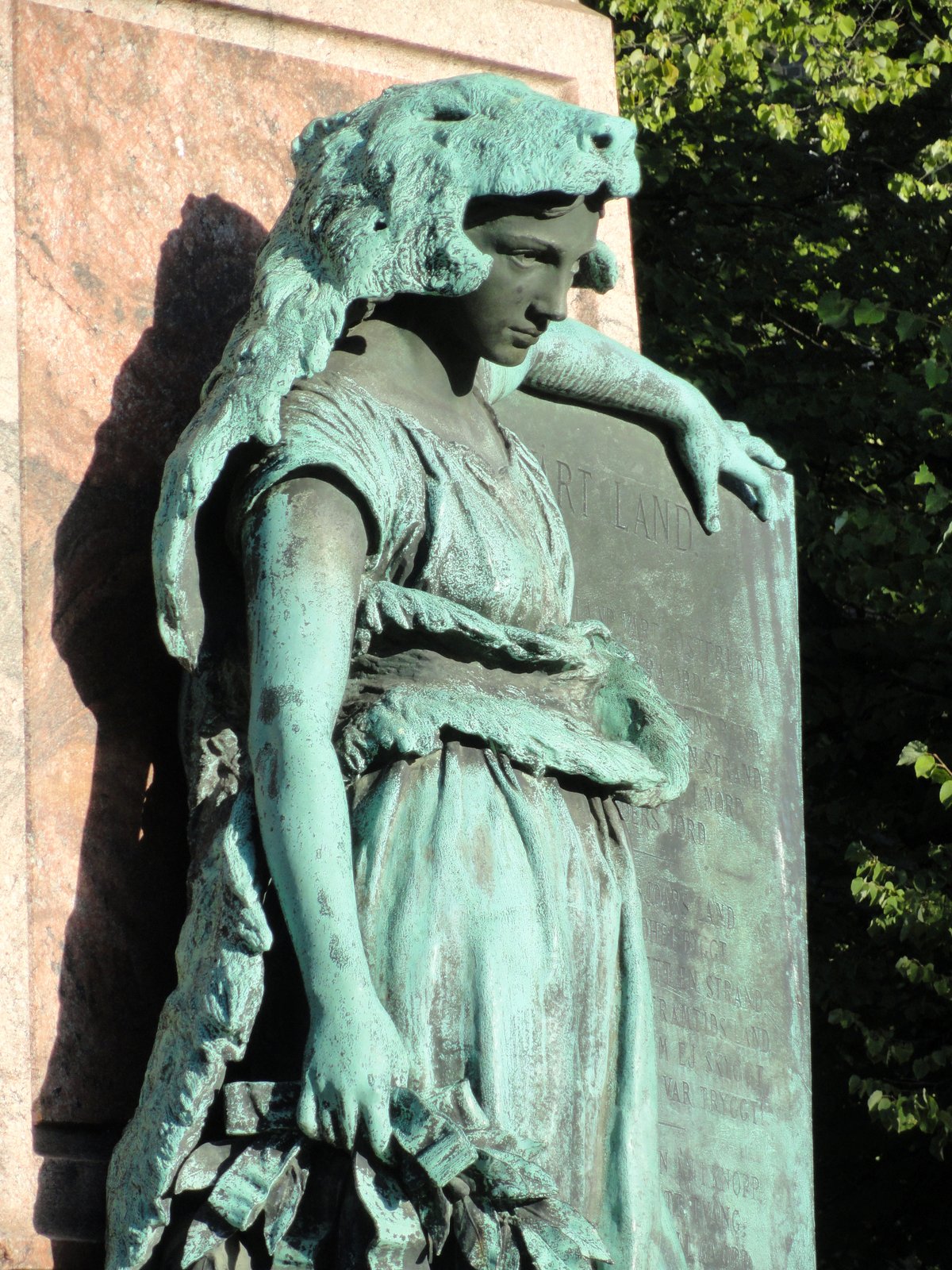
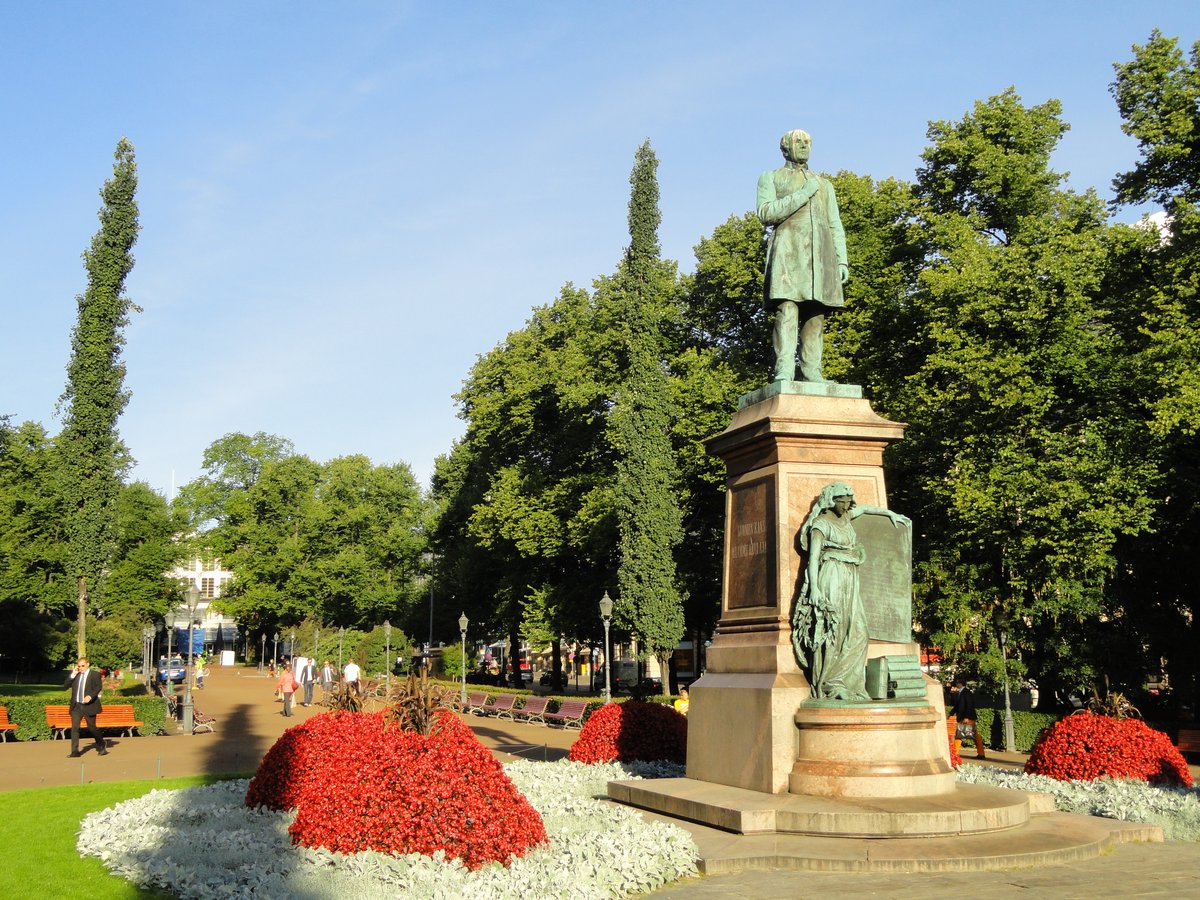
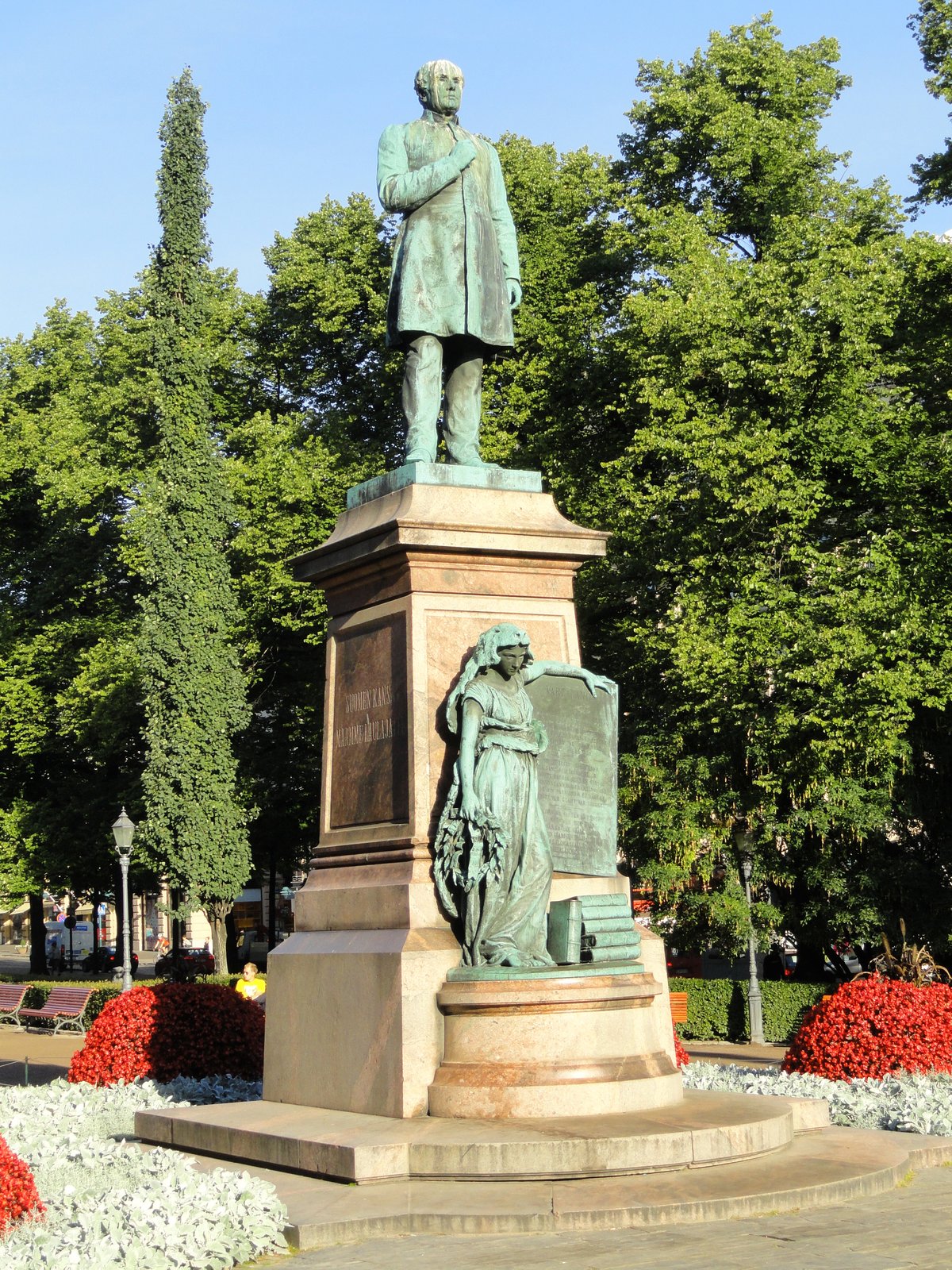
Artistic Features: The bronze statue depicts Runeberg as a dignified middle-aged man in a priest’s coat, right hand on his chest—signifying his spiritual and cultural leadership. At the base, the allegorical Maiden of Finland holds a laurel wreath and a tablet featuring the opening lines of “Maamme” in Swedish, symbolizing the poet’s influence. The pedestal's inscription, “Suomen kansa maamme laulajalle – Af Finlands Folk” (“From the Finnish people to the Singer of our Nation”), appears in both Finnish and Swedish, reflecting the country’s bilingual heritage (Helsinki Art Museum, National Biography of Finland).
Visiting the Runeberg Statue: Practical Information
Location and Directions
The statue is centrally located at the eastern end of Esplanadi Park, near Helsinki’s Market Square (Kauppatori) and within walking distance of most city-center hotels and attractions.
- On Foot: From Helsinki Central Railway Station, follow signs to Esplanadi Park; the statue is at the eastern end.
- By Tram: Lines 2, 3, and 4 stop at “Kauppatori” or “Esplanadi,” both a short walk away.
- By Bus: Routes 14 and 20 serve the Market Square area.
- By Car: Paid parking is available in the city center, but public transport is recommended (Evendo Helsinki Guide).
Hours and Accessibility
- Open: 24 hours a day, year-round.
- Entry Fee: None.
- Accessibility: The park and statue area have paved paths and ramps, making them fully wheelchair accessible. Public restrooms are available nearby, some of which may require a small fee or purchase.
What to Expect: The Visitor Experience
Setting and Atmosphere
Esplanadi Park is an urban oasis, featuring manicured lawns, tree-lined walks, and seasonal flowerbeds. The Runeberg Statue sits at the park’s heart, offering a peaceful setting ideal for contemplation, photography, or a relaxed break amidst city sightseeing.
Artistic Details
Pay special attention to the statue’s neoclassical details—the lifelike depiction of Runeberg and the symbolic elements at the base. The interplay of light on the bronze, especially during early morning or late afternoon, creates beautiful photo opportunities.
Cultural Events
- Runeberg Day (February 5): Locals honor the poet with flower offerings and traditional pastries (“Runeberg torte”). The day often includes recitals and cultural events in the park.
- Guided Tours: Many Helsinki walking tours feature the statue and provide fascinating context on Runeberg’s life and the monument’s symbolism. Check with local tourism offices or apps for schedules.
Nearby Attractions and Amenities
- Market Square (Kauppatori): Helsinki’s lively harbor market with local foods, crafts, and waterfront views.
- Helsinki Cathedral: Iconic neoclassical church, a short walk from the park.
- Ateneum Art Museum: Finland’s premier art collection.
- Historic Kappeli Restaurant: Established in 1867, offers classic Finnish cuisine and outdoor seating.
- Shops and Boutiques: Pohjoisesplanadi and adjoining streets are home to Finnish design stores and souvenir shops.
- Public Restrooms: Available in the park and in nearby cafés.
Practical Tips for Visitors
- Best Times to Visit: Spring through early autumn for vibrant gardens; winter evenings for festive lighting; February 5th for cultural events.
- Weather: Dress in layers and prepare for changeable conditions, especially in winter.
- Safety: The area is well-lit and safe, but always keep personal belongings secure.
- Etiquette: Maintain a peaceful atmosphere, avoid littering, and use recycling bins.
- Photography: Non-commercial photography is allowed; tripods are permitted.
Frequently Asked Questions (FAQ)
Q: What are the visiting hours for the Johan Ludvig Runeberg Statue?
A: The statue is accessible 24/7, year-round.
Q: Is there an entry fee or ticket required?
A: No, the monument is free to visit.
Q: Is the statue accessible to wheelchair users?
A: Yes, paved paths and ramps surround the statue.
Q: Are guided tours available?
A: Yes, several local and digital tours include the statue.
Q: What is special about Runeberg Day?
A: Celebrated every February 5th, it features cultural events and the popular Runeberg torte pastry.
Listen to the full story in the app
The whole Johan Ludvig Runeberg Statue,
told well.
Audio guides for 1,100+ cities across 96 countries. History, stories, and local insight — offline ready.
Verified, and shown.
Researched and written by the Audiala editorial team from historical records, architectural archives, and local expertise.
Researched from Wikidata, Wikipedia & official sources · fact-checked · How we make our guides →