Plan and listen to Helsinki Synagogue with Audiala.
Audio guide in your pocket, itinerary in your browser. Built for the way you actually visit.
Introduction
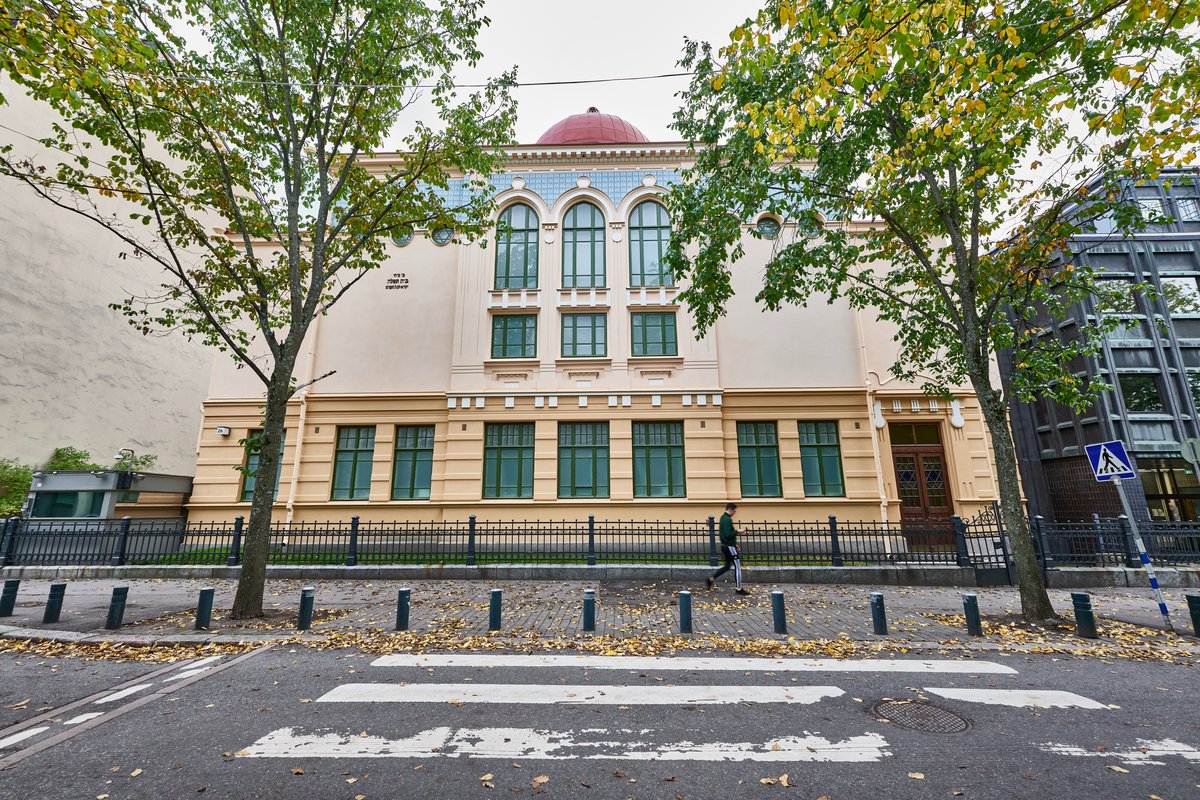
Situated in Helsinki’s Kamppi district, the Helsinki Synagogue is a landmark of profound cultural and historical significance. Established in 1906, this synagogue serves as a vibrant center for Finland’s Jewish community, embodying over a century of religious tradition, resilience, and integration into Finnish society. With its unique architectural blend—featuring National Romantic, Neo-Moorish, and Art Nouveau elements—the Helsinki Synagogue not only offers a place of worship but also stands as a testament to the enduring presence and contributions of the Jewish population in Finland.
This guide provides comprehensive, up-to-date information for visitors, including history, architectural features, visiting hours, ticketing, accessibility, travel tips, and nearby attractions. For the latest updates, visitors are encouraged to consult the official Jewish Community of Helsinki website, MyHelsinki, and Visit Helsinki.

Historical Background
Jewish Settlement in Finland
Jewish life in Finland began to take root in the late 18th and early 19th centuries, primarily with the arrival of Jewish cantonist soldiers stationed in Finland during its period as a Grand Duchy under the Russian Empire. Over time, these early settlers established a growing community, particularly in Helsinki and Turku.
The Helsinki Jewish Community and Synagogue Construction
By the late 19th century, Helsinki had become the focal point for Jewish life in Finland. In 1906, the Helsinki Jewish Congregation was formally established, and soon after, the Helsinki Synagogue was completed. This marked a significant moment for the community, reflecting expanding civil rights and greater social integration for Jews in Finland.
The Synagogue in the 20th Century and Beyond
Throughout the 20th century, including the tumultuous period of World War II, the Helsinki Synagogue remained a sanctuary for worship and community life. Despite Finland’s complex wartime alliances, the Jewish population was protected, and the synagogue continued to function. Postwar, the community grew, maintaining Ashkenazi Orthodox traditions while expanding cultural and educational activities.
Architectural Style and Key Features
Exterior and Interior Highlights
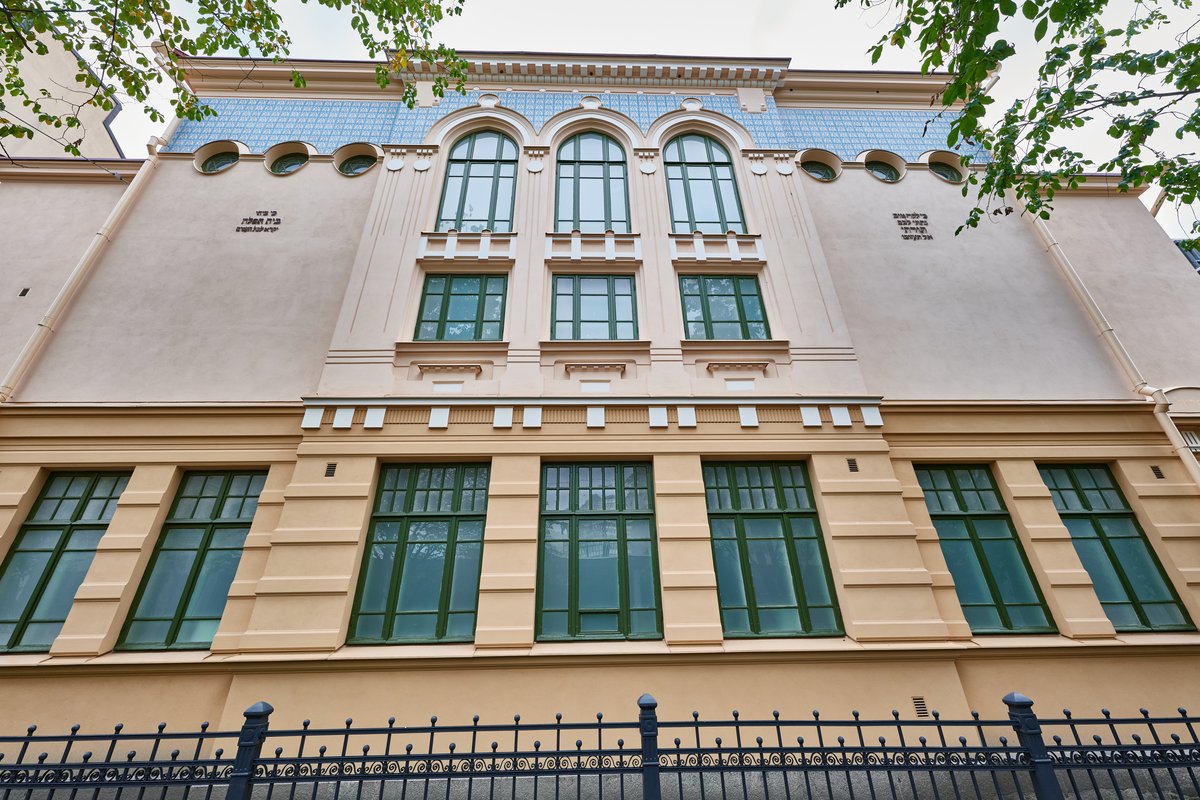
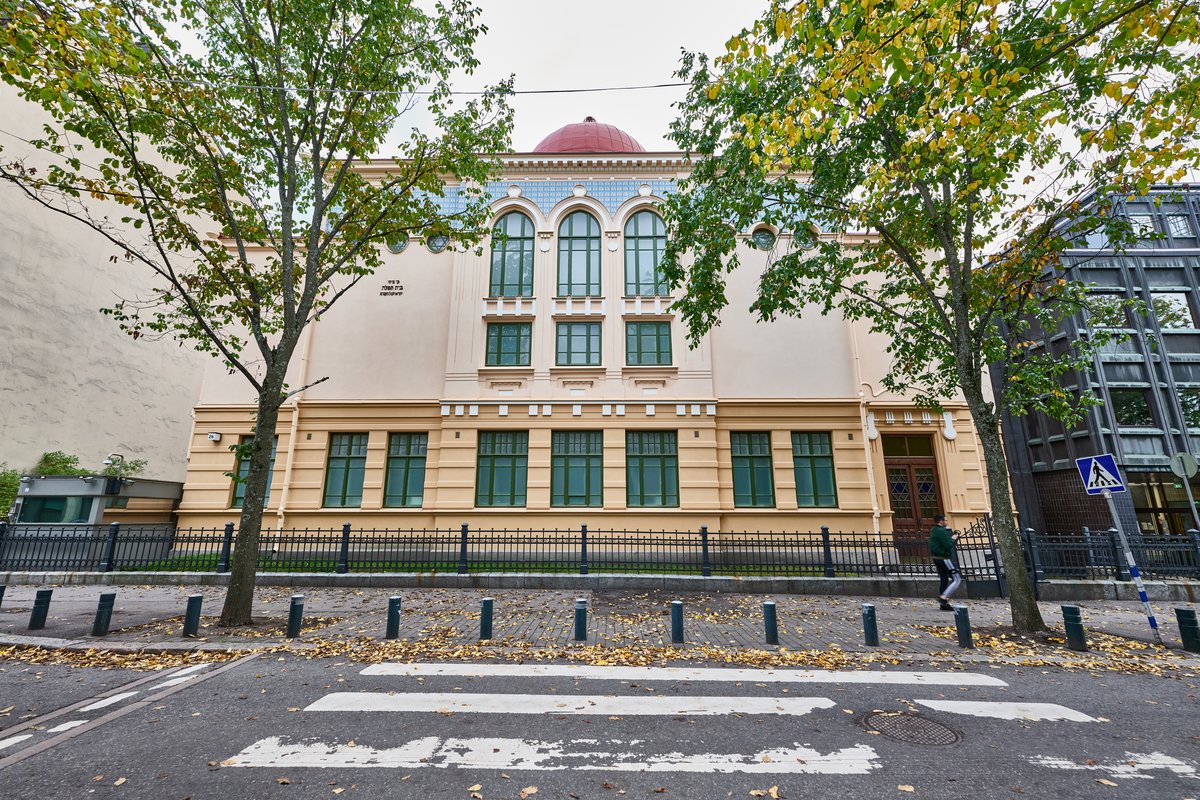
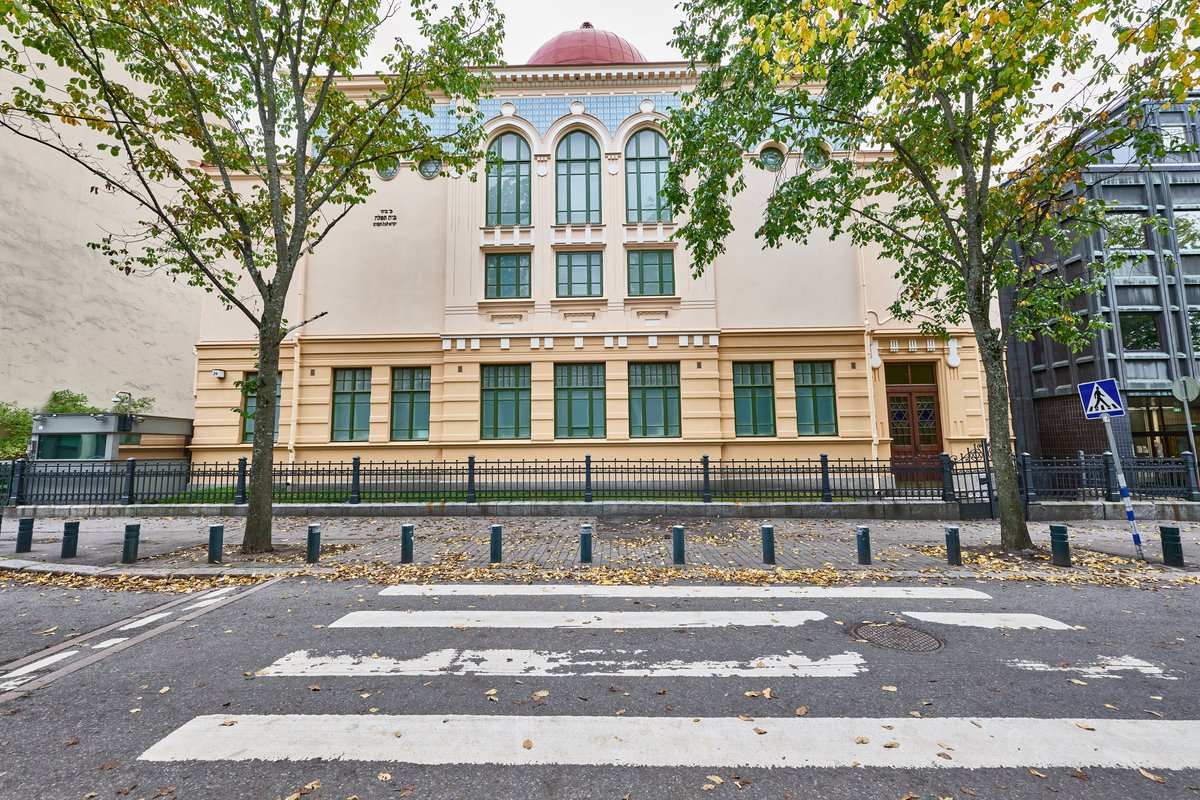
The synagogue is an outstanding example of early 20th-century architecture, designed by Jac. Ahrenberg. Its three-story structure incorporates elements from the National Romantic, Neo-Moorish, Byzantine Revival, and Art Nouveau styles (Wikipedia; Finnish Architecture). The most distinctive feature is the central red dome, added during a 1926 renovation, which serves as a visual landmark in the Kamppi district.
The façade is characterized by symmetrical, arched windows, including prominent Stars of David, which reinforce the building’s Jewish identity (JCHelsinki). Inside, the sanctuary seats up to 600 worshippers and centers around a traditional Ashkenazi bimah (reader’s platform) illuminated by a striking chandelier.
Symbolism and Artistic Motifs
Jewish symbolism is woven throughout the architecture. The Star of David features prominently in the windows and decorative elements. The deep blue backdrop of the Holy Ark and the rainbow motif above it evoke biblical themes and spiritual continuity. Restoration efforts have preserved these artistic details, restoring their original color palette and significance (Jewish Traveler).
Community Facilities
Beyond the main prayer hall, the synagogue complex includes a minyan room for smaller services and an adjacent community center (added in 1967). The center houses classrooms, an auditorium, a library, a mikveh (ritual bath), and a retirement home, supporting religious, educational, and social functions (JGuide Europe). A copper Torah ornament from Helsinki’s first wooden synagogue (1840) connects the present building to earlier generations.
Preservation and Security
Remarkably, the Helsinki Synagogue has survived the devastation that befell many European synagogues during World War II (JCHelsinki). Restoration projects, especially those marking the building’s centenary, have focused on maintaining its architectural authenticity. Modern security measures, including cameras and entry controls, are now standard to ensure the safety of worshippers and visitors (Jewish Traveler).
Visiting Information
Location and Access
- Address: Malminkatu 26, 00100 Helsinki, Kamppi district
- Public Transport: Easily accessible by tram, bus, and metro; within walking distance from the Helsinki Central Train Station (MyHelsinki).
Visiting Hours
- Guided Visits: Monday to Thursday, 11:00 am–3:00 pm (advance booking required).
- Closed: Jewish holidays, Finnish bank holidays, and annually from June 30–August 3 (summer closure).
- Booking: Email [email protected] at least one week in advance with names and details of all visitors (Jewish Community of Helsinki).
Tickets and Tours
- Entrance Fees:
- Adults: €10
- Groups (normal hours): €75
- Groups (outside normal hours): €100
- Groups of children/students: €25
- Additional €5 fee for invoice payments; US dollars accepted
- Tours: Offered in English (other languages possible with advance request). Tours cover history, architecture, and religious practices.
Accessibility
- The synagogue and community center are wheelchair accessible. Please specify accessibility needs when booking (Jewish Community of Helsinki).
Security and Visitor Etiquette
- Security: All visitors must provide personal details in advance and may undergo ID and bag checks on arrival.
- Dress Code: Modest attire; men are expected to cover their heads (kippahs provided).
- Behavior: Respectful conduct is required at all times.
Photography Policy
- Photography is generally permitted outside the synagogue. For interior photography, especially during services or events, always seek permission in advance.
Community Life and Events
The Helsinki Synagogue is a hub for religious, cultural, and educational activities. Regular Orthodox services are held, and the community center offers programs for all ages, from early childhood education to senior care. The synagogue also hosts public events, lectures, and participates in interfaith and cultural initiatives, such as the European Days of Jewish Culture.
Nearby Attractions
- National Museum of Finland
- Helsinki City Museum
- Kamppi Chapel of Silence
- Helsinki Central Library Oodi
- Design District and Market Halls
Combine your synagogue visit with these destinations for a broader Helsinki cultural experience (Destination Abroad).
Frequently Asked Questions (FAQ)
Can I visit the Helsinki Synagogue without a tour?
No; all visits require advance booking as part of a guided tour.
Are children welcome?
Yes, including school and student groups (discounted rates available).
Is photography allowed inside?
Photography is restricted inside, especially during services; always ask for permission.
What languages are tours offered in?
Tours are primarily in English; other languages can be arranged in advance.
Is it accessible for visitors with disabilities?
Yes, with prior notification.
When is the synagogue closed to visitors?
Closed on Jewish and Finnish holidays, and during summer (June 30–August 3, 2025).
Recommendations for a Respectful Visit
- Book your visit at least one week ahead.
- Arrive punctually and bring a valid photo ID.
- Dress modestly; men should cover their heads.
- Respect religious practices and security protocols.
- Request permission before photographing interiors.
Summary and Visitor Recommendations
The Helsinki Synagogue is a living monument to the rich heritage and resilience of Finland’s Jewish community. Its striking architecture, preserved interiors, and role as a center for worship and culture make it a must-visit Helsinki historical site. Due to regulated access and security, advance booking is essential. Visitors are encouraged to take guided tours to fully appreciate the synagogue’s history and significance. The central location allows easy access to other notable Helsinki attractions, offering a well-rounded cultural experience. For the latest visiting hours, ticket information, and event updates, consult the official Jewish Community of Helsinki website and consider the Audiala app for self-guided tours.
Listen to the full story in the app
The whole Helsinki Synagogue,
told well.
Audio guides for 1,100+ cities across 96 countries. History, stories, and local insight — offline ready.
Verified, and shown.
Researched and written by the Audiala editorial team from historical records, architectural archives, and local expertise.
Researched from Wikidata, Wikipedia & official sources · fact-checked · How we make our guides →