Plan and listen to Freemason'S Tomb with Audiala.
Audio guide in your pocket, itinerary in your browser. Built for the way you actually visit.
Introduction: A Unique Historical Landmark in Helsinki
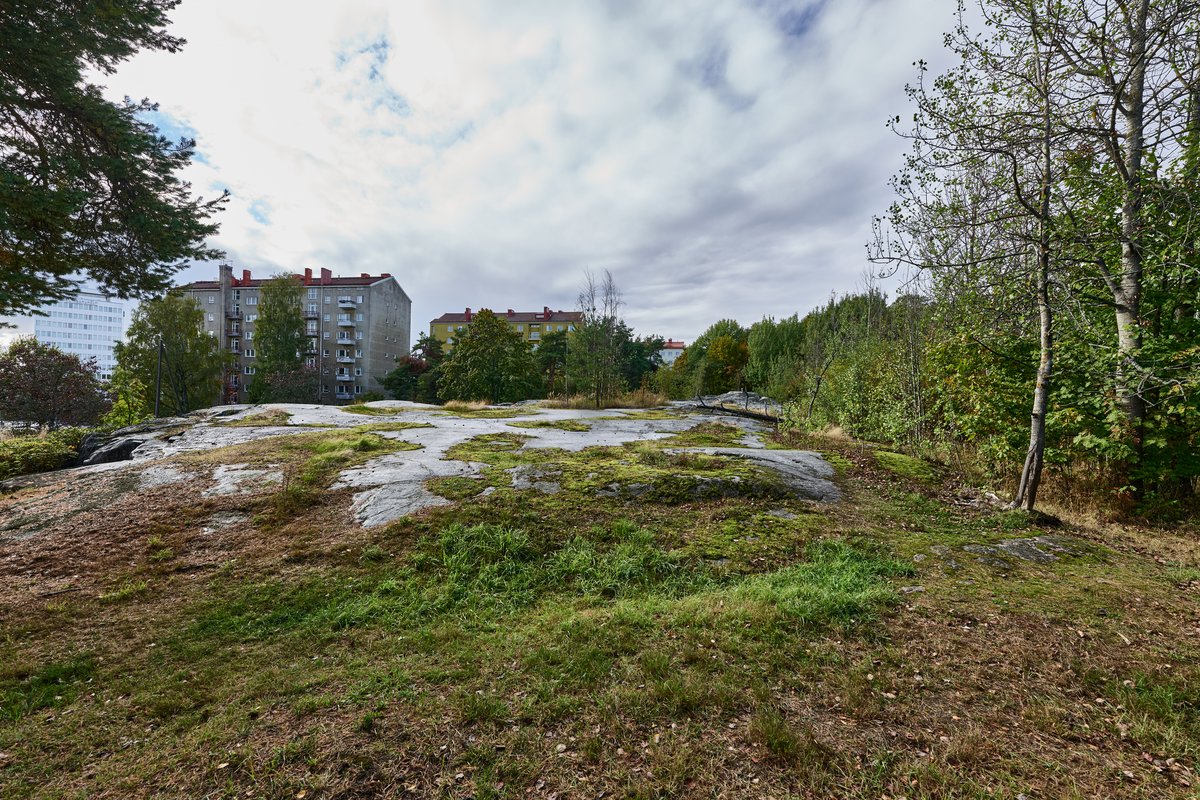
The Freemason’s Grave (Vapaamuurarin hauta) stands as one of Helsinki’s most distinctive and enigmatic historical monuments. Nestled on a serene grassy knoll northwest of the Kaisaniemi Botanical Gardens, this grave not only commemorates the life and philanthropy of Fredrik Granatenhjelm (1708–1784) but also offers a fascinating window into the city’s Enlightenment-era values, Masonic symbolism, and secret society traditions. Its exceptional location outside church grounds, coupled with its intricate iconography and royal sanction, marks it as a rare artifact of 18th-century Finnish culture.
This guide provides a comprehensive overview for visitors—covering the grave’s history, symbolism, cultural significance, practical travel advice, and answers to frequently asked questions. Whether you are a history enthusiast, a lover of cultural sites, or simply curious about Helsinki’s hidden gems, the Freemason’s Grave offers a tranquil and thought-provoking destination.

Historical Background
The Freemason’s Grave commemorates Fredrik Granatenhjelm, a Swedish Royal Knight and artillery officer who served at the Sveaborg Fortress (now Suomenlinna). Known for his philanthropy and military distinction, Granatenhjelm was a respected figure in Helsinki society (Wikipedia). Uniquely, he requested to be buried outside the churchyard, an unusual practice in 18th-century Finland. The quasi-masonic Walhalla-orden petitioned King Gustaf III of Sweden, who granted this exception, allowing Granatenhjelm’s interment in his favorite spot in Edbom’s decorative garden.
Monument Design, Symbolism, and Masonic Connections
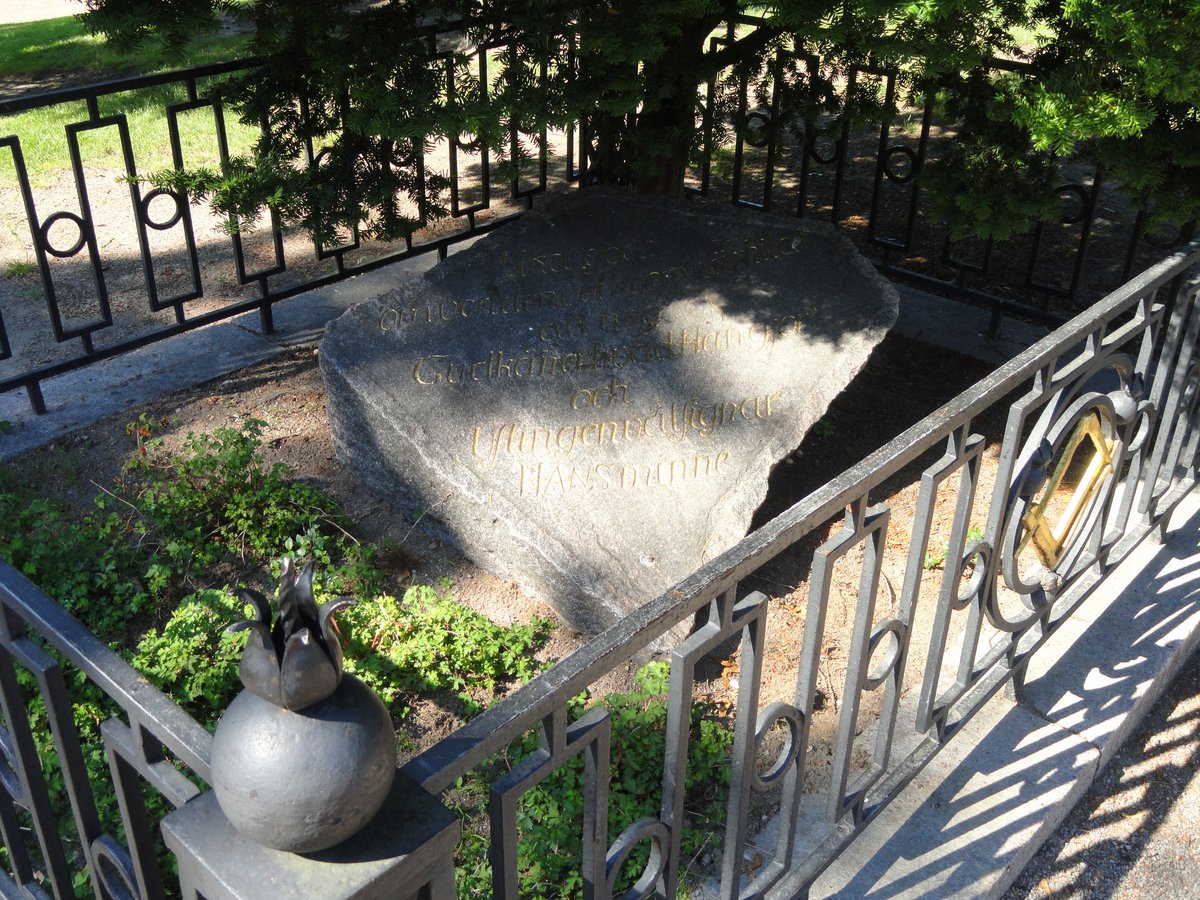
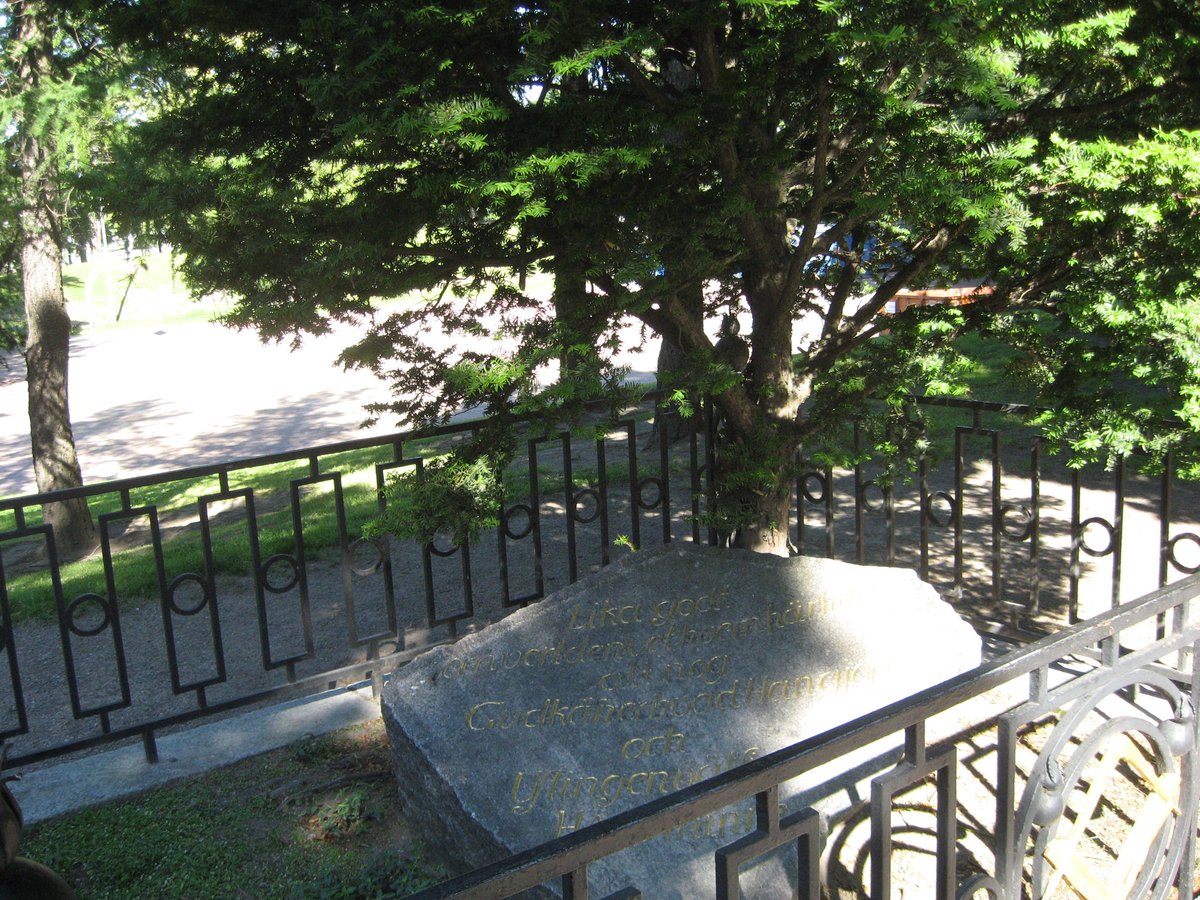
The monument features a commemorative stone surrounded by an ironwork guardrail adorned with the iconic square and compasses—symbols associated with morality and virtue in Freemasonry (The Square Magazine). Knobs shaped like grenades (a pun on Granatenhjelm’s name and a nod to his artillery background) accentuate the rail, while an evergreen conifer nearby symbolizes eternal life.
A Swedish inscription on the stone reads:
“Lika godt om verlden vet hvem här hvilar alt nog Gud käner hvad Han gjort och Uslingen välsignar HANS minne.” (“As little as the world cares who lies here, God will nevertheless know his deeds and the wretched bless HIS memory.”)
While there is no definitive evidence of Granatenhjelm’s Freemasonry, he was posthumously honored by the Walhalla-orden, and the grave’s rich symbolism reflects Enlightenment ideals and fraternal influence (Wikipedia).
The Role of the Walhalla-orden and Masonic Associations
The Walhalla-orden, a quasi-masonic order active in late 18th-century Finland and Sweden, played a pivotal role in securing Granatenhjelm’s exceptional burial site (History.com). Though not a formal Masonic lodge, the order adopted similar symbols and rituals, reflecting the broader influence of secret societies on philanthropy, intellectual inquiry, and social reform in the era (Today I Found Out).
Cultural and Social Significance
The Freemason’s Grave is unique within Helsinki’s urban landscape for its solitary placement outside consecrated grounds and its blend of military, personal, and Masonic symbolism. It exemplifies Enlightenment-era values—reason, philanthropy, and individual dignity—while highlighting the impact of secret societies in shaping the city’s social fabric (destinationabroad.co.uk). Over time, the grave has become a local landmark, maintained as a testament to Helsinki’s layered history.
Visiting Information
Location and Accessibility
- Address: Northwest of the Kaisaniemi Botanical Gardens, Helsinki.
- Access: Reachable by foot from the city center via paved paths. The grassy knoll may be uneven—sturdy shoes are advised.
- Public Transport: Tram lines 3 and 4 stop near the Kaisaniemi Gardens (HSL Journey Planner).
Visiting Hours and Admission
- Hours: Outdoor site, accessible year-round during daylight.
- Admission: Free; no tickets required.
Guided Tours
Some local operators include the Freemason’s Grave in historical walking tours. Inquire in advance for availability and schedules.
Nearby Attractions
- Kaisaniemi Botanical Gardens
- Helsinki University Library
- Helsinki city center and historic districts
Photography and Visitor Tips
- Best Lighting: Spring and summer offer lush surroundings; early morning or late afternoon light highlights the monument’s textures.
- Etiquette: Respect the grave’s memorial nature—avoid climbing or disturbing the monument and surrounding plants.
- Accessibility: Paved paths provide access, but winter conditions can be slippery.
The Grave’s Role in Helsinki’s Social and Religious History
The Freemason’s Grave stands as one of the city’s few solitary, non-churchyard burials—an exception reflecting both royal favor and the influence of secret societies. It symbolizes Helsinki’s adoption of Enlightenment and philanthropic ideals during a formative era (Wikipedia).
Freemasonry in Finland and 18th-Century Europe
Freemasonry, introduced to Finland in the mid-18th century, attracted military, intellectual, and noble elites (History.com). Societies like the Walhalla-orden adopted fraternal traditions, advancing philanthropy and moral philosophy. The Freemason’s Grave reflects this early influence and remains a touchstone for Masonic heritage in Finland (Today I Found Out).
Frequently Asked Questions (FAQ)
-
Is the Freemason’s Grave open to the public?
Yes, it is an outdoor monument accessible during daylight hours, year-round. -
Are there entrance fees or tickets?
No, the site is free to visit. -
How do I get there by public transport?
Use tram lines 3 or 4 to the Kaisaniemi Botanical Gardens stop and walk northwest. -
Is the site wheelchair accessible?
Paved paths lead toward the grave, but the immediate area may be uneven. -
Are guided tours available?
Yes, some walking tours include the grave; check with local operators for details. -
Can I take photographs?
Yes, respectful photography is encouraged.
Listen to the full story in the app
The whole Freemason'S Tomb,
told well.
Audio guides for 1,100+ cities across 96 countries. History, stories, and local insight — offline ready.
Verified, and shown.
Researched and written by the Audiala editorial team from historical records, architectural archives, and local expertise.
Researched from Wikidata, Wikipedia & official sources · fact-checked · How we make our guides →