Plan and listen to Eduskuntatalo with Audiala.
Audio guide in your pocket, itinerary in your browser. Built for the way you actually visit.
Introduction: The Symbol of Finnish Democracy
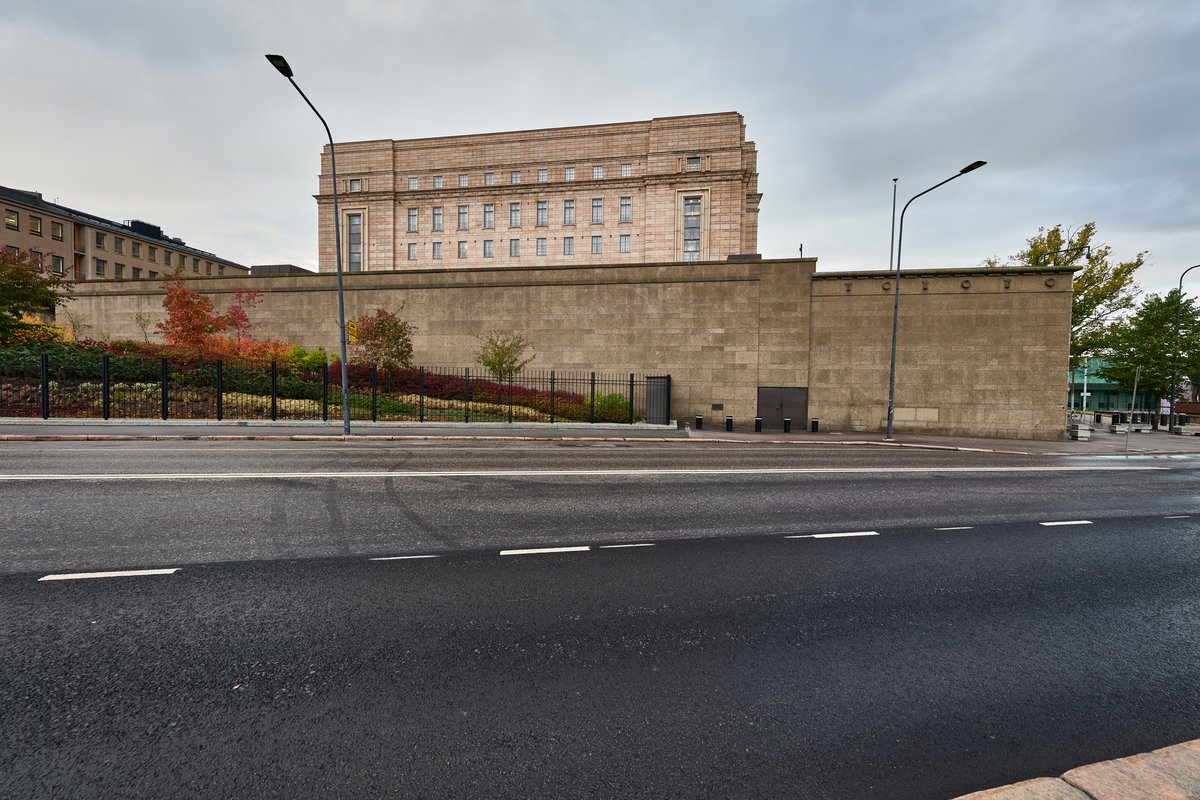
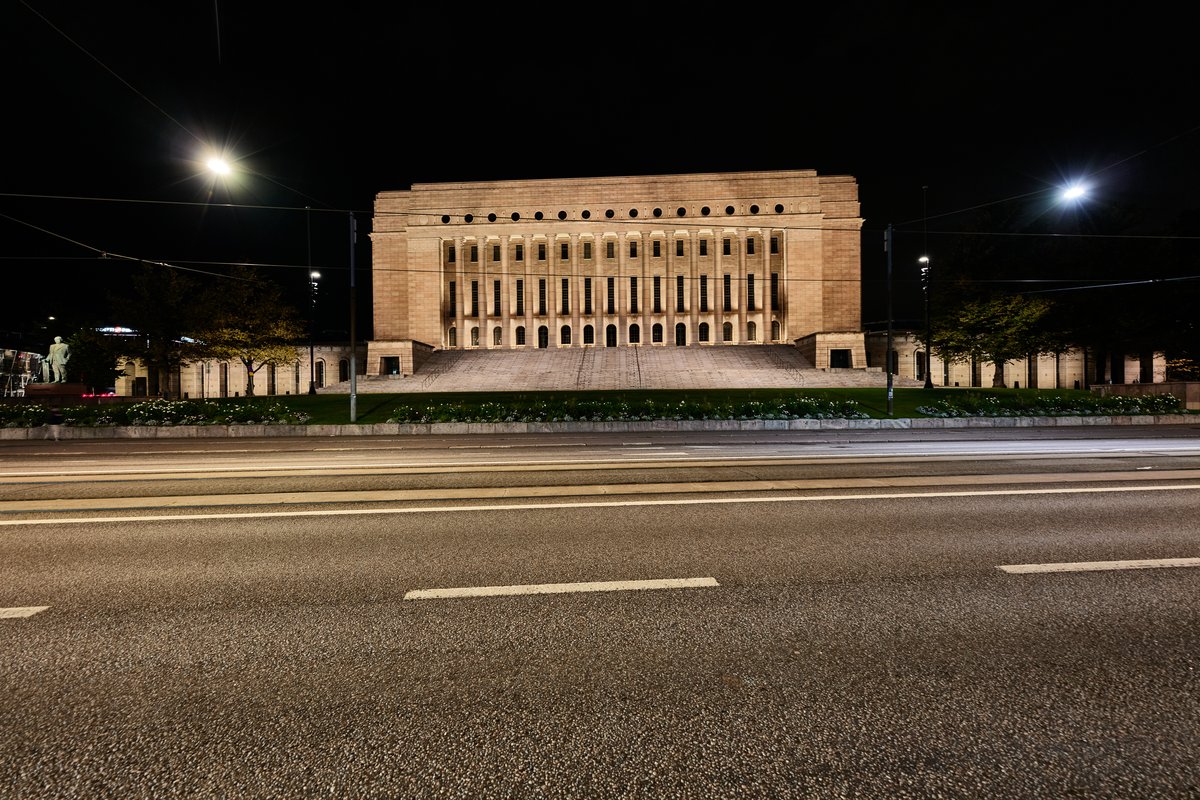
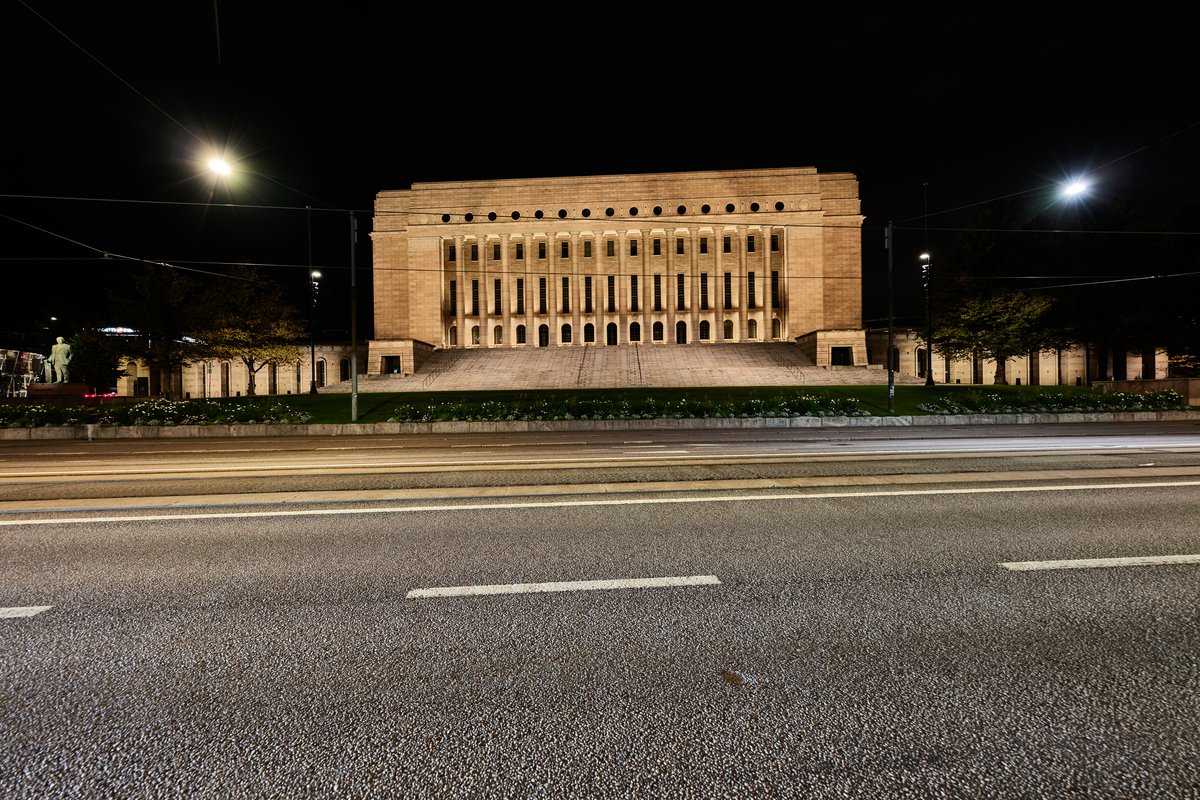
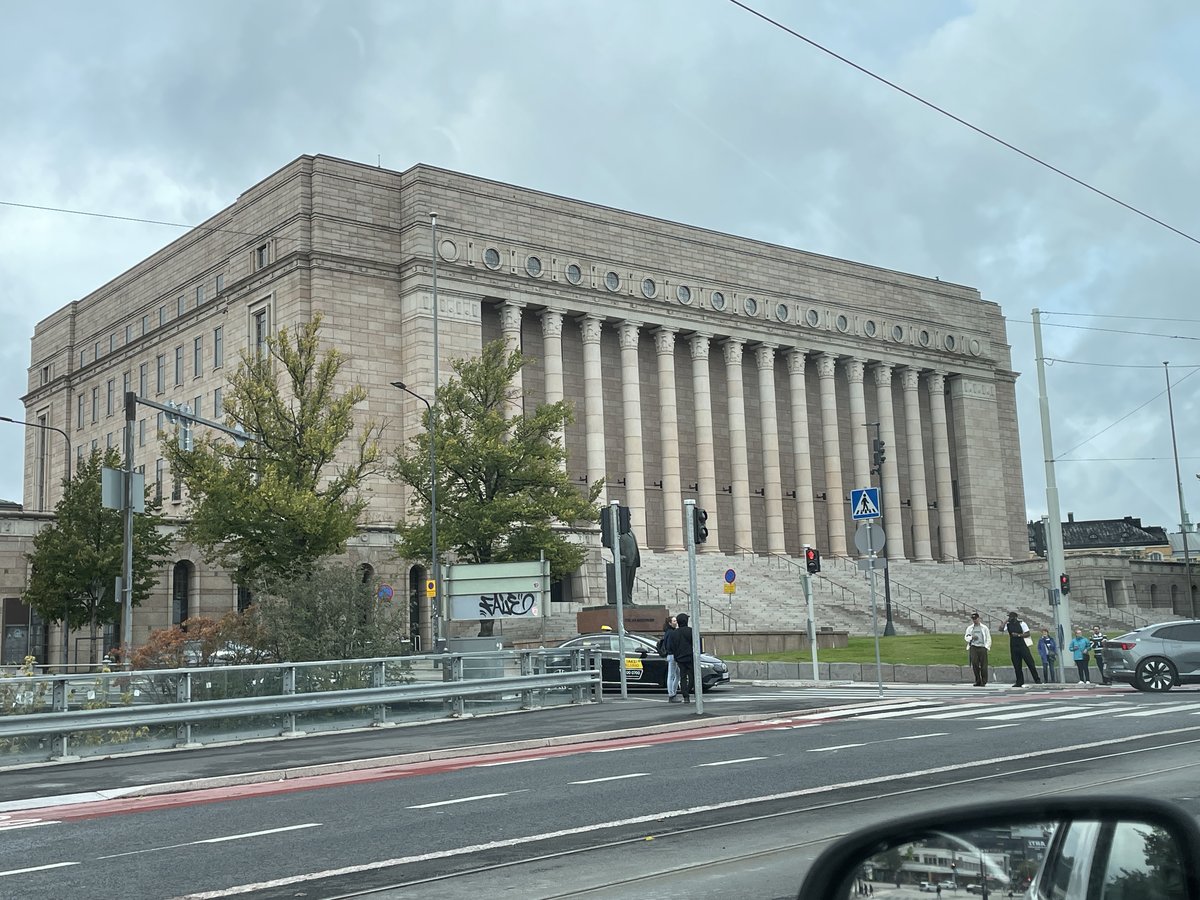
Eduskuntatalo, the Parliament House of Finland, stands as a monumental representation of Finnish democracy, national identity, and architectural achievement. Erected on Helsinki's Arkadianmäki hill after Finland gained independence in 1917, the building is not only the seat of the unicameral Parliament (Eduskunta) but also a living monument to the nation’s political evolution, civic engagement, and commitment to transparency. Its prominent location along Mannerheimintie—Helsinki’s main boulevard—places it at the heart of the city, surrounded by key cultural institutions and historical attractions.
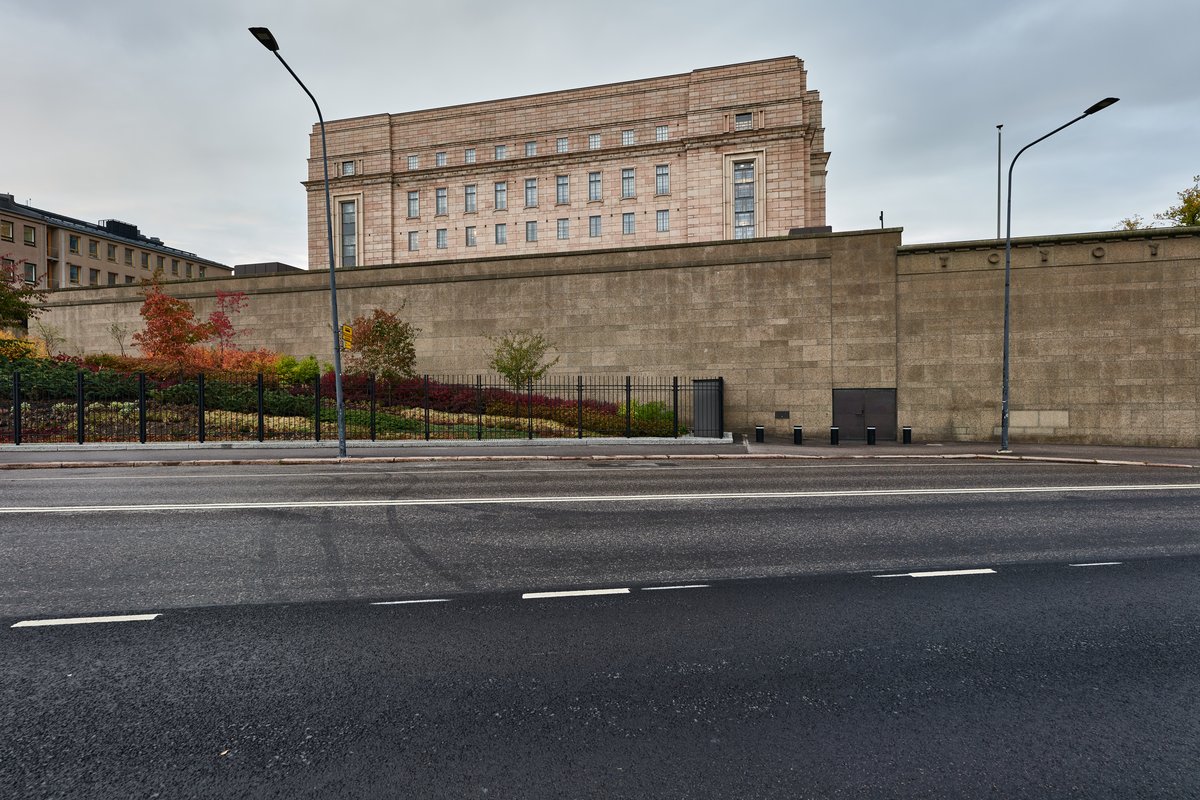
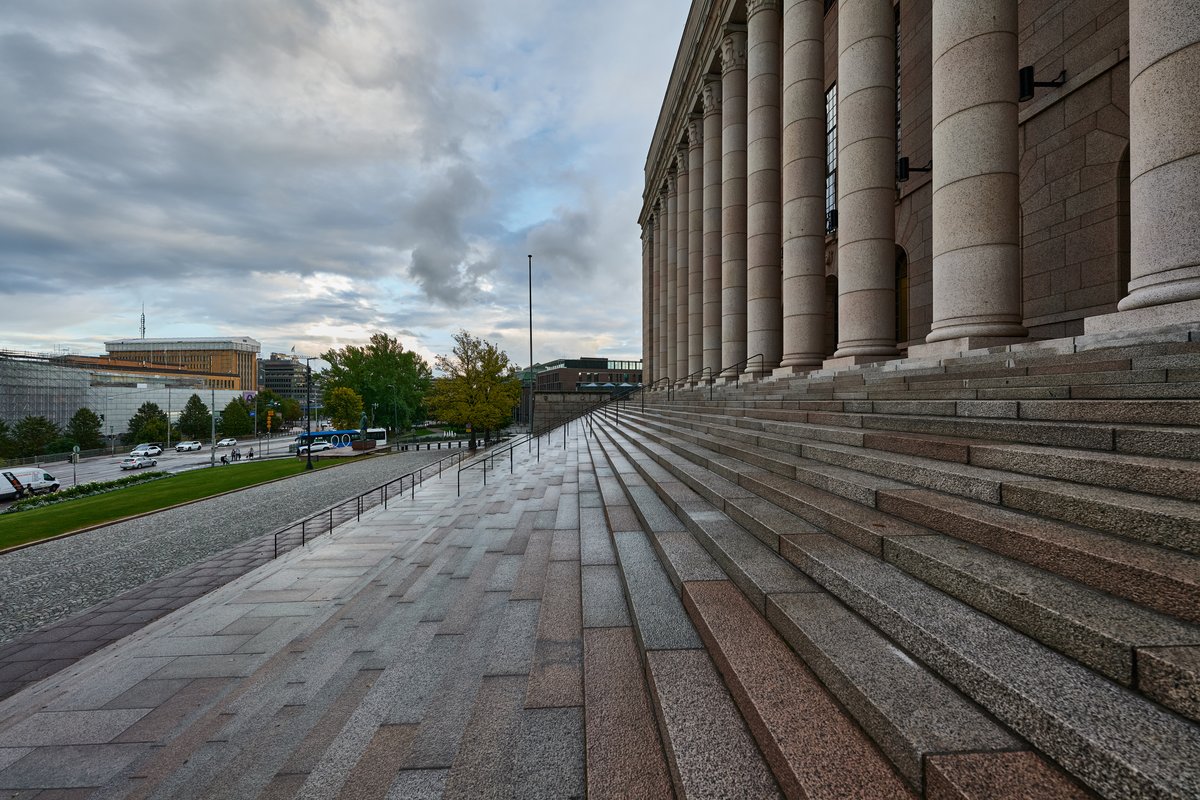
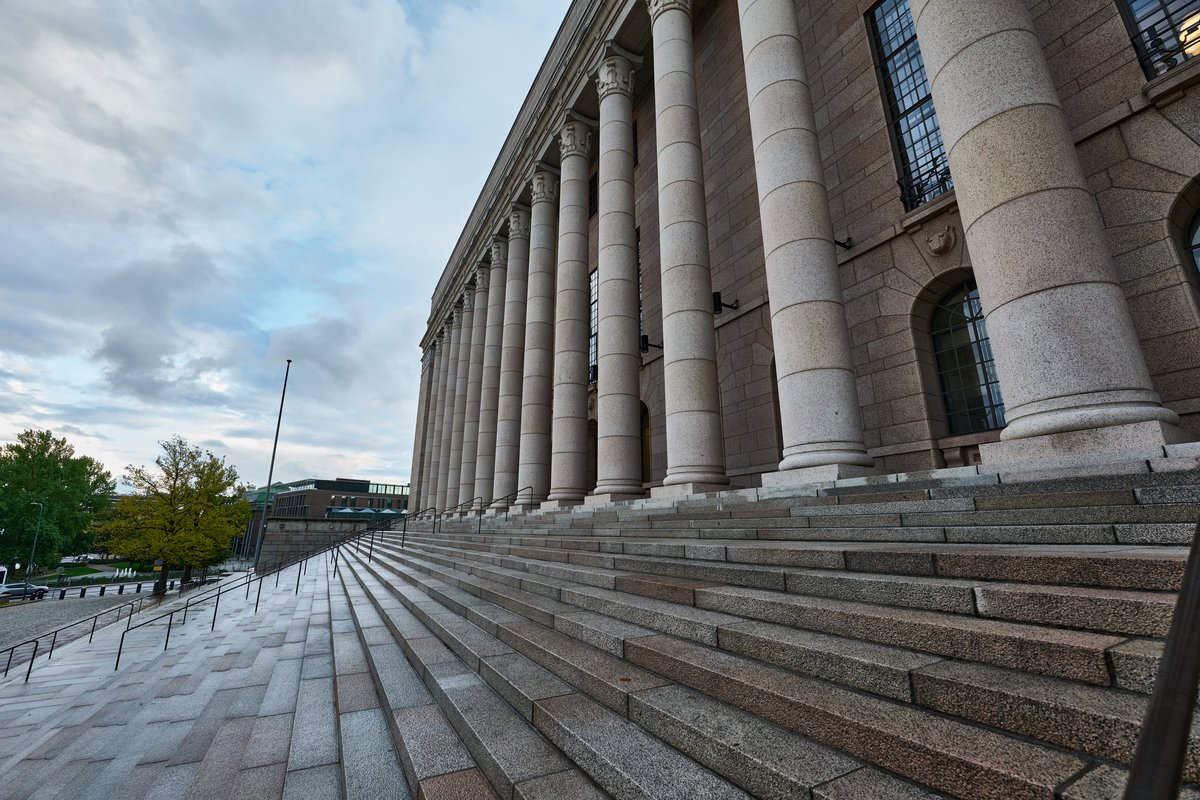
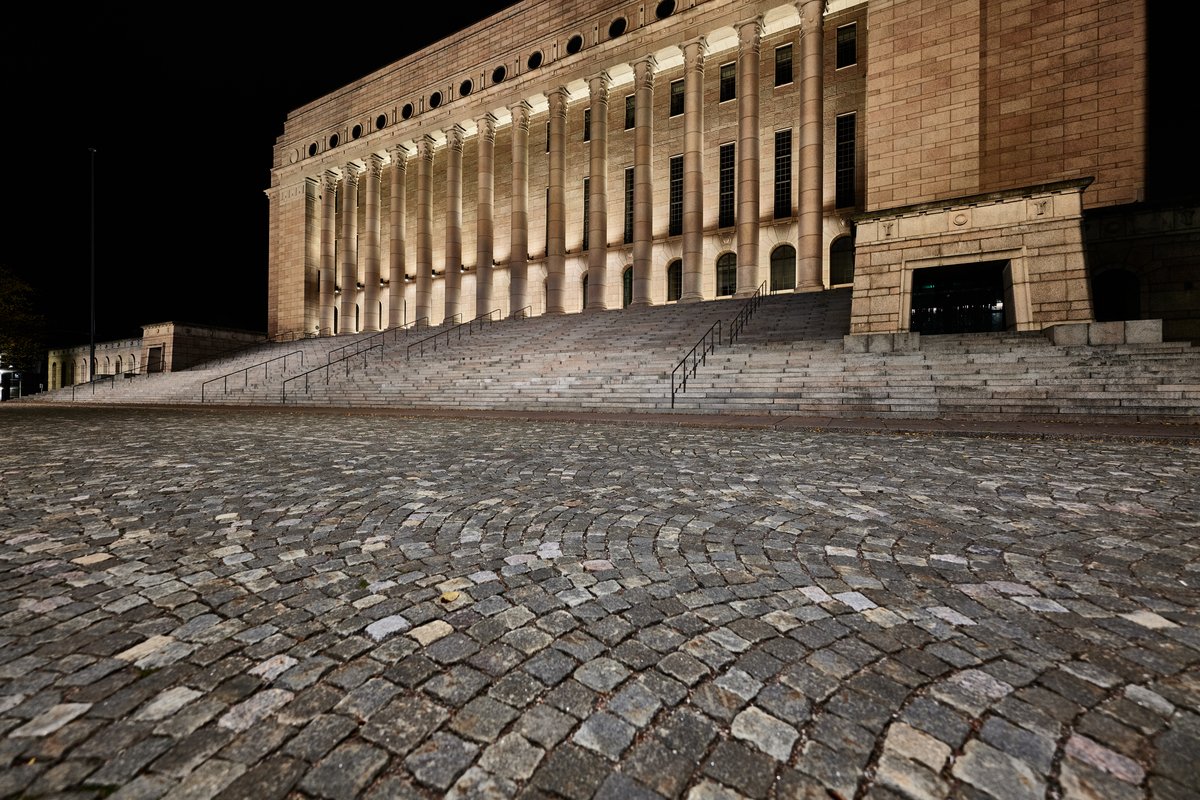
Designed by Johan Sigfrid Sirén, Eduskuntatalo fuses stripped Neoclassicism with early modernist elements, notably its grand red granite façade and iconic row of fourteen stylized Corinthian columns. Since its inauguration in 1931, it has been central to pivotal moments in Finnish history, including decisions made during the Winter and Continuation Wars. Today, the building welcomes visitors from around the world, offering guided tours that illuminate its architectural features, historical significance, and ongoing role in Finnish democracy (finnisharchitecture.fi, MyHelsinki, jasittenmatkaan.fi).

Origins and Site Selection
Following Finland’s independence in 1917, the need for a dedicated parliamentary building became urgent. The Parliament had previously convened in temporary locations, none of which were considered fitting for the young nation’s highest legislative body (jasittenmatkaan.fi). In 1923, after much debate, Arkadianmäki hill in the Töölö district was selected as the site for the new Parliament House due to its strategic central location and symbolic visibility (finnisharchitecture.fi).
Architectural Design and Features
An open architectural competition in 1924 yielded 27 entries, with the "Oratoribus" proposal by Johan Sigfrid Sirén and partners winning the commission (en.wikipedia.org). Sirén’s design embodies Nordic Classicism, with restrained Neoclassical forms and functionalist sensibilities. The red Kalvola granite façade, punctuated by fourteen 14-meter-high Corinthian columns, imparts both grandeur and durability. The building consists of six floors, interconnected by a marble staircase and a rare paternoster lift, while the interiors feature Finnish birch and custom-made furniture (opistostakasin.hel.fi).
Key public spaces include the grand lobby, the semi-circular Session Hall designed for optimal acoustics and democratic debate, and the State Hall. Artistic highlights, such as Wäinö Aaltonen’s "Work and the Future" sculpture series, reinforce the building’s civic symbolism (vesaloikas.com).
Construction and Inauguration
Construction began in 1926 and concluded with the building’s inauguration on March 7, 1931 (finnisharchitecture.fi). Sirén personally oversaw the design of both architectural and interior details, ensuring a unified style throughout. Over 3,000 original furniture pieces were crafted, many still in use, reflecting Finnish craftsmanship and material excellence.
Symbolism and National Importance
Eduskuntatalo is deeply entwined with Finland’s journey toward parliamentary democracy, which began with the 1906 reforms granting universal suffrage (evendo.com). The building’s imposing yet accessible architecture symbolizes transparency, stability, and civic engagement. It has served as the stage for crucial political decisions during wartime and periods of national transformation (en.wikipedia.org).
Visiting Eduskuntatalo: Practical Information
Location: Mannerheimintie 30, 00250 Helsinki—central and easily accessible by public transport.
Guided Tours:
- Availability: Free guided tours are offered Monday to Friday, typically between 10:00 AM and 4:00 PM. Additional tours may be scheduled during parliamentary recesses and summer months (Official Parliament Website).
- Languages: Tours are conducted in Finnish, Swedish, and English.
- Booking: Advance online reservation is essential due to security and group size limitations.
- Duration: Tours last approximately 45–60 minutes.
Public Galleries: Visitors may observe parliamentary sessions from the gallery without prior booking but must complete security screening.
Security: All visitors undergo airport-style security checks. Large bags and certain items may be restricted.
Accessibility: The building is fully wheelchair accessible, with ramps, elevators, and accessible restrooms. Assistance is available upon request (MyHelsinki Accessibility).
Photography: Allowed in public areas (e.g., entrance hall, grand staircase), but restricted in the Session Hall and during parliamentary sessions.
Cloakroom and Amenities: Cloakroom for coats and bags is available. For refreshments, visit the adjacent Pikkuparlamentti building, which houses a café and Citizens’ Info Center.
Nearby Attractions and Tips
Eduskuntatalo’s central location allows easy access to many of Helsinki’s top cultural and historical sites. Notable nearby attractions include:
- National Museum of Finland
- Finlandia Hall
- Helsinki Music Centre
- Kiasma Museum of Contemporary Art
- Parliament Park (featuring statues of notable Finnish presidents)
Helsinki’s efficient public transport and walkable city center make it easy to combine a visit to Eduskuntatalo with explorations of Töölö Bay, Kansalaistori square, and the Oodi Central Library (urbanNext). For accommodations, options range from luxury hotels to apartment-style lodging within walking distance.
Travel Tips:
- Book tours early, especially in summer and during parliamentary sessions.
- Arrive 15 minutes before your tour to allow time for security.
- Combine your visit with a stroll through Töölö Bay Park for scenic views.
Renovations and Modernization
Eduskuntatalo has undergone several upgrades to maintain its functionality and heritage. The most significant renovation, completed in 2017 by Helin & Co Architects, restored original interiors, upgraded technical systems, and improved accessibility (vesaloikas.com). The nearby Pikkuparlamentti annex, opened in 1999, offers additional facilities for both Parliament members and visitors (finnisharchitecture.fi).
Eduskuntatalo in Modern Finland
Today, Eduskuntatalo remains at the center of Finnish political life and civic engagement. It hosts public tours, educational events, and serves as a focal point for demonstrations and national celebrations (en.wikipedia.org). Events such as climate activism and centennial commemorations underscore its ongoing role as a venue for public discourse (Kymen Sanomat).
The Parliament House is also a leader in inclusivity, continuing Finland’s legacy as the first European country to grant women full political rights (en.wikipedia.org). Ongoing discussions around public art and symbols in the building reflect Finland’s commitment to evolving representation (The States of the Union).
Visual Highlights
High-resolution images and virtual tours of Eduskuntatalo are available on the official Parliament website and finnisharchitecture.fi. Look for photos of the impressive façade, grand staircase, and interior art, as well as interactive maps highlighting nearby attractions.
Frequently Asked Questions (FAQ)
Q: What are the visiting hours for Eduskuntatalo?
A: Guided tours are generally available Monday to Friday, 10:00 AM–4:00 PM. Check the official website for updates.
Q: How can I book a guided tour?
A: Tours are free but require advance booking online due to security and limited group sizes.
Q: Is the Parliament House accessible for visitors with disabilities?
A: Yes, it is fully accessible with ramps, elevators, and adapted restrooms. Assistance is available upon request.
Q: Are there entrance fees?
A: No, all tours and public access are free.
Q: Can I take photographs inside Eduskuntatalo?
A: Photography is allowed in designated public areas but restricted in the Session Hall and during plenary sessions.
Q: What are some nearby attractions?
A: National Museum of Finland, Finlandia Hall, Kiasma Museum of Contemporary Art, Helsinki Music Centre, and Parliament Park.
Planning Your Visit
To make the most of your Eduskuntatalo experience:
- Book your guided tour in advance through the Parliament’s official website.
- Arrive early to allow for security procedures.
- Explore nearby historical sites such as the National Museum and Oodi Central Library.
- Utilize accessibility options if required.
- Check the events calendar for special exhibitions or open days.
- Download the Audiala app for audio guides and live updates during your visit.
For accommodations, Helsinki offers a range of hotels and apartment-style stays within walking distance, including options with amenities like WiFi, breakfast, and sauna access (Helsinki University Conference Info).
Listen to the full story in the app
The whole Eduskuntatalo,
told well.
Audio guides for 1,100+ cities across 96 countries. History, stories, and local insight — offline ready.
Verified, and shown.
Researched and written by the Audiala editorial team from historical records, architectural archives, and local expertise.
Researched from Wikidata, Wikipedia & official sources · fact-checked · How we make our guides →