Plan and listen to Alexander Ii Memorial with Audiala.
Audio guide in your pocket, itinerary in your browser. Built for the way you actually visit.
Introduction
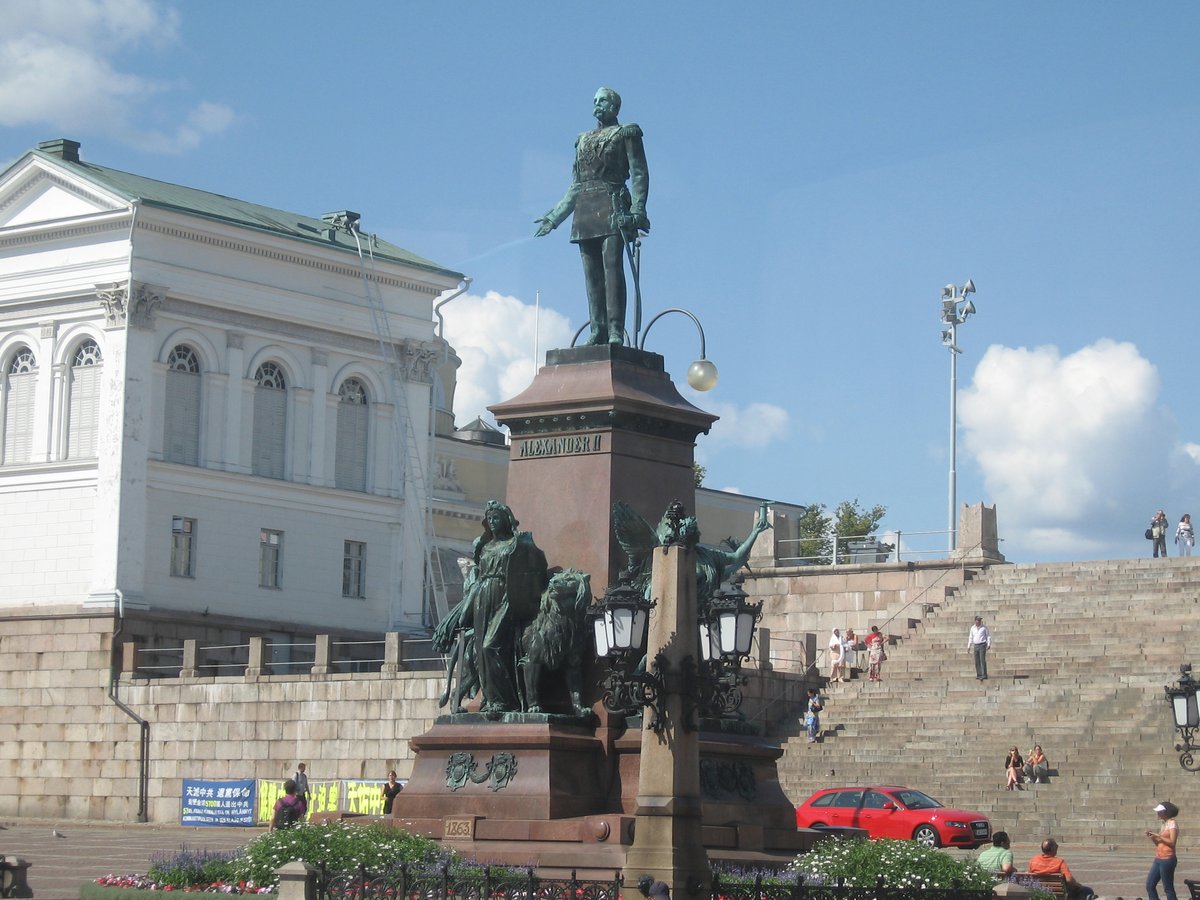
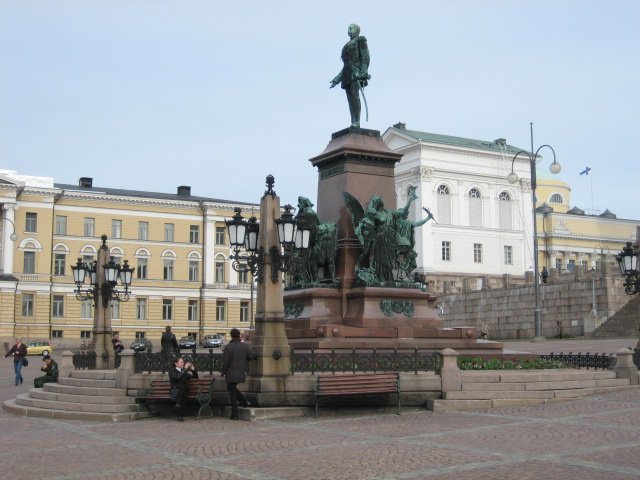
Prominently located in the heart of Helsinki’s Senate Square, the Alexander II Memorial honors one of Finland’s most influential historical figures. Erected in 1894 to commemorate Tsar Alexander II, the memorial is not only an artistic masterpiece but a symbol of Finland’s journey towards autonomy and national identity. This guide offers a detailed exploration of the memorial’s history, symbolism, visiting information, and its lasting significance in Finnish culture (HAM Helsinki; Wikipedia; Finland.fi; Audiala).

Origins and Commissioning
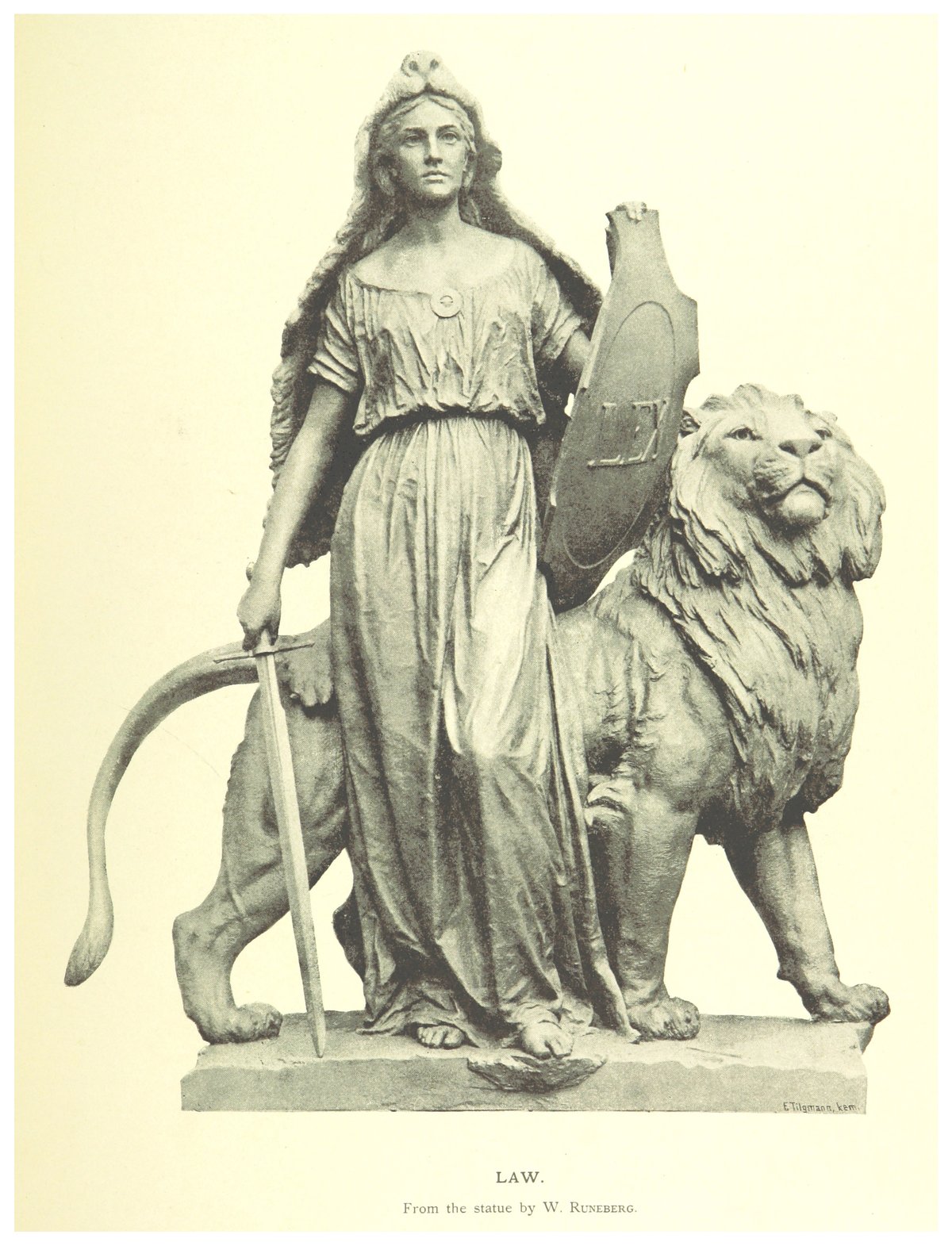
The Alexander II Memorial stands as a product of both artistic ambition and political sentiment in late 19th-century Finland. Following the assassination of Tsar Alexander II in 1881, Finnish society sought to honor the ruler who advanced their autonomy. A national design competition in 1884 drew Finland’s leading sculptors (HAM Helsinki). Johannes Takanen won the competition, with Walter Runeberg as runner-up. Due to the high quality of both entries, the commission was awarded jointly. Takanen began work but died before completion, and Runeberg finished the project. The statue was unveiled on April 29, 1894, Alexander II’s birthday, amid a patriotic demonstration (Wikipedia).
Alexander II’s Role in Finnish History
Alexander II (reigned 1855–1881), Tsar of Russia and Grand Duke of Finland, is remembered as a progressive ruler. His key reforms included:
- The reconvening of the Finnish Diet in 1863, which had been inactive for over 50 years, allowing Finns to participate in legislative processes.
- Official recognition of the Finnish language alongside Swedish, fostering national identity.
- The establishment of a Finnish currency and railway system under local control.
- Promotion of civil liberties.
These reforms distinguished him from his successors, who later pursued Russification (Finland.fi; Waymarking).
Artistic Features and Symbolism
The memorial is a striking example of late 19th-century realistic sculpture and neoclassical design. Key features include:
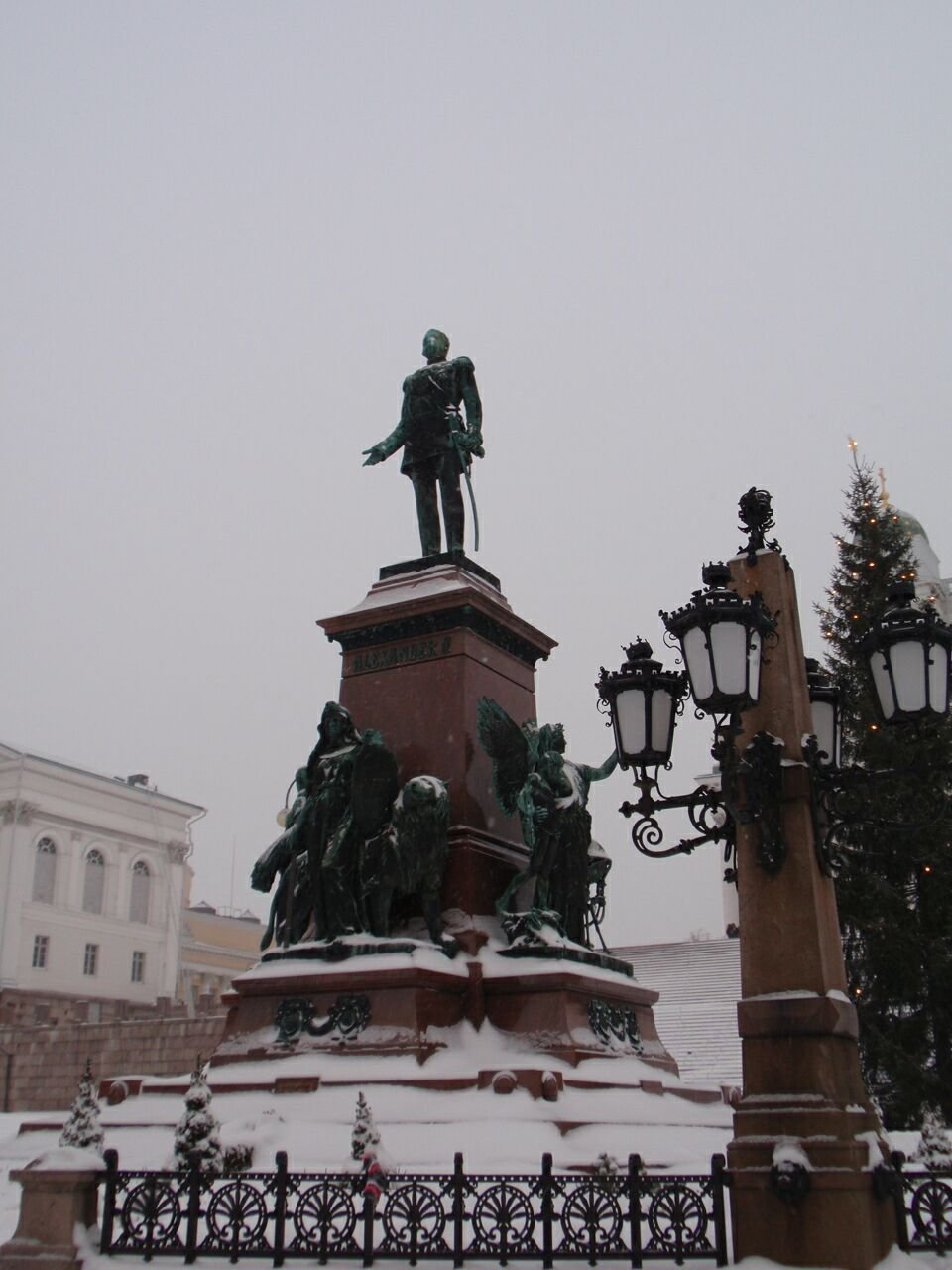
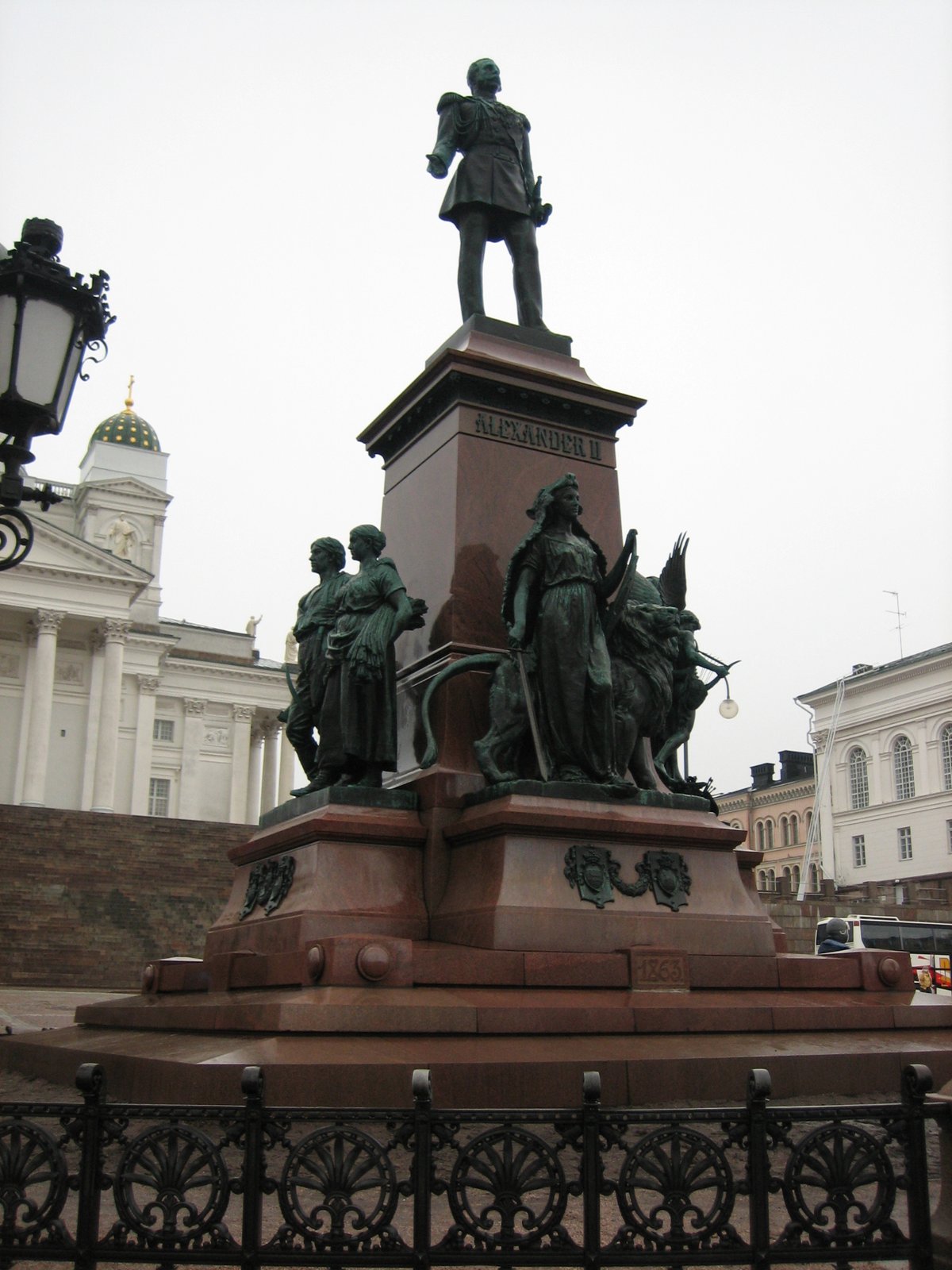
- Statue: The 3.23-meter bronze figure of Alexander II is depicted in the uniform of the Finnish Guard, referencing his support for Finland. He stands with his right hand extended, as if addressing the 1863 Diet (HAM Helsinki).
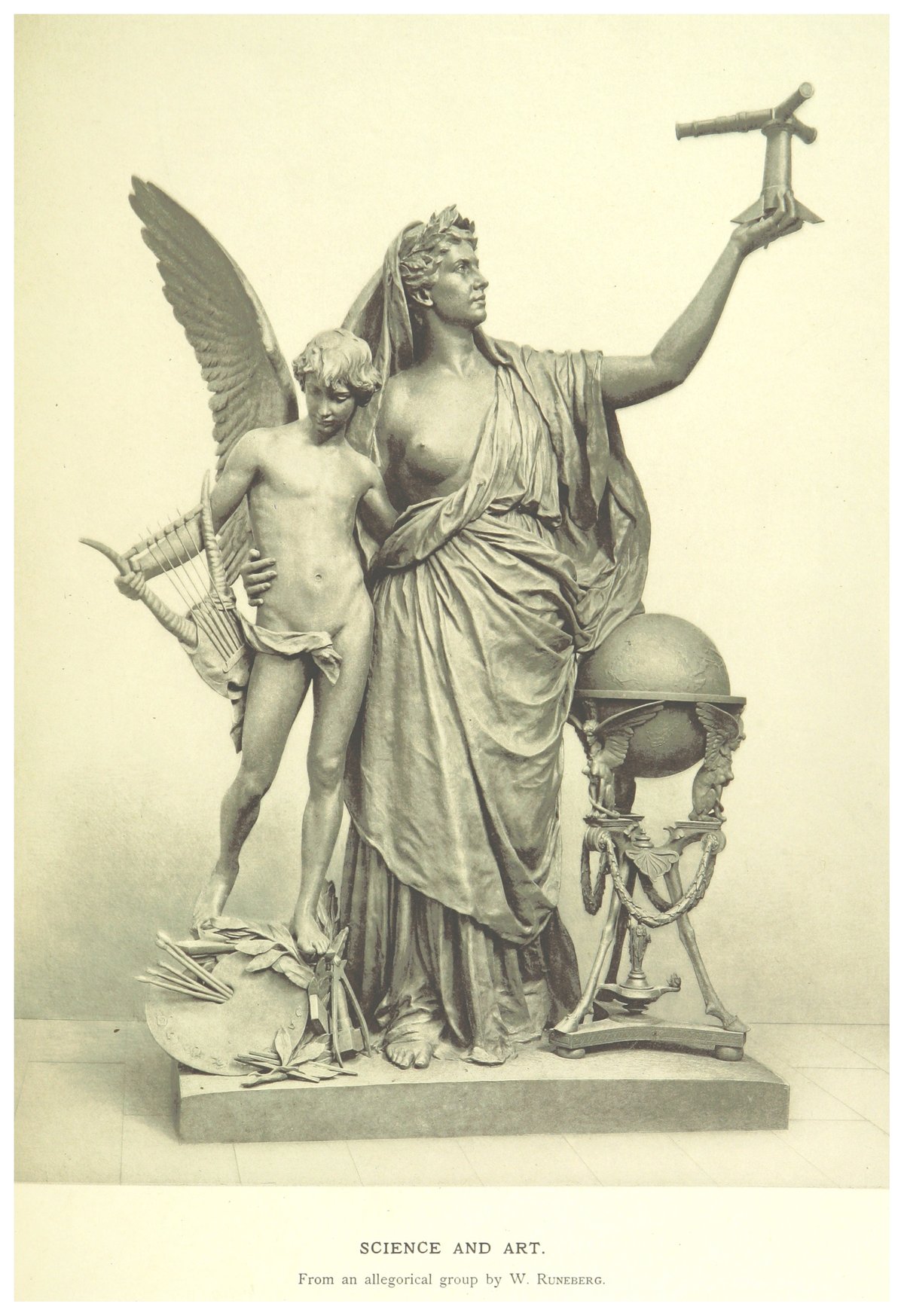
- Pedestal: Made from red granite, the base is surrounded by four allegorical bronze figures, each representing a core virtue:
- Law (Lex): The Maiden of Finland, holding scales and a sword.
- Work (Labor): Figures with tools, symbolizing industry and agriculture.
- Peace (Pax): A serene figure, embodying harmony.
- Light (Lux): Symbolizing enlightenment and education, facing the University of Helsinki (Finland.fi; Vashiva News).
Symbolic Interpretations:
Some interpretations see the lamp posts as obelisks, representing classical elements or virtues. Chains on the Work figures hint at perseverance and social struggle (Vashiva News).
Political and Cultural Significance
Originally a tribute to a Russian monarch, the memorial evolved into a symbol of Finnish resistance and identity, especially during the Russification period (1899–1917). During these years, Finns laid flowers at the statue as a silent protest against Russian policies (Finland.fi; Wikipedia). After independence in 1917, debates about the statue’s removal ended with its preservation, recognizing its role as an emblem of Finland’s progress and longing for autonomy.
Today, the memorial remains a focal point for public events, celebrations, and civic life, situated among government buildings, Helsinki Cathedral, and the University of Helsinki (Audiala).
Visiting Information: Hours, Tickets, Accessibility
Hours:
- The Alexander II Memorial is outdoors and can be visited 24/7.
Tickets:
- No entrance fee or ticket is required.
Accessibility:
- Senate Square is fully accessible for wheelchairs and those with mobility needs. Pathways are paved and public transport (trams, buses) stops nearby (Audiala; stromma.com).
Best Times to Visit:
- Daylight hours, especially early morning or late afternoon, are ideal for photography and fewer crowds.
Nearby Attractions and Travel Tips
Senate Square’s central location puts you within steps of:
- Helsinki Cathedral: The city’s most famous landmark.
- Government Palace
- University of Helsinki’s Main Building
- National Library of Finland
- Market Square and Esplanadi Park
Travel Tips:
- Use public transportation for ease.
- Combine your visit with a guided walking tour for richer historical context (stromma.com; triphobo.com).
Frequently Asked Questions (FAQ)
Is there an entrance fee?
No, visiting is free.
Best time for photography?
Golden hour (early morning or late afternoon).
Is the site wheelchair accessible?
Yes, the square and pathways are wheelchair-friendly.
Are guided tours available?
Yes, many city and walking tours include the memorial.
Are there plaques or information boards?
Some plaques are present; for detailed information, join a guided tour or use digital resources (Audiala).
Summary & Visitor Tips
- The Alexander II Memorial is a powerful symbol of Finnish autonomy, resilience, and evolving identity.
- Its artistic grandeur and historical significance make it a must-see.
- The memorial is accessible at all times, free of charge, and centrally located among Helsinki’s key landmarks.
- Combine your visit with nearby attractions and consider a guided tour for deeper insight.
- For the best experience, visit during daylight and plan ahead for public events.
Listen to the full story in the app
The whole Alexander Ii Memorial,
told well.
Audio guides for 1,100+ cities across 96 countries. History, stories, and local insight — offline ready.
Verified, and shown.
Researched and written by the Audiala editorial team from historical records, architectural archives, and local expertise.
Researched from Wikidata, Wikipedia & official sources · fact-checked · How we make our guides →