wb_twilight
Midnight Sun, Polar Night
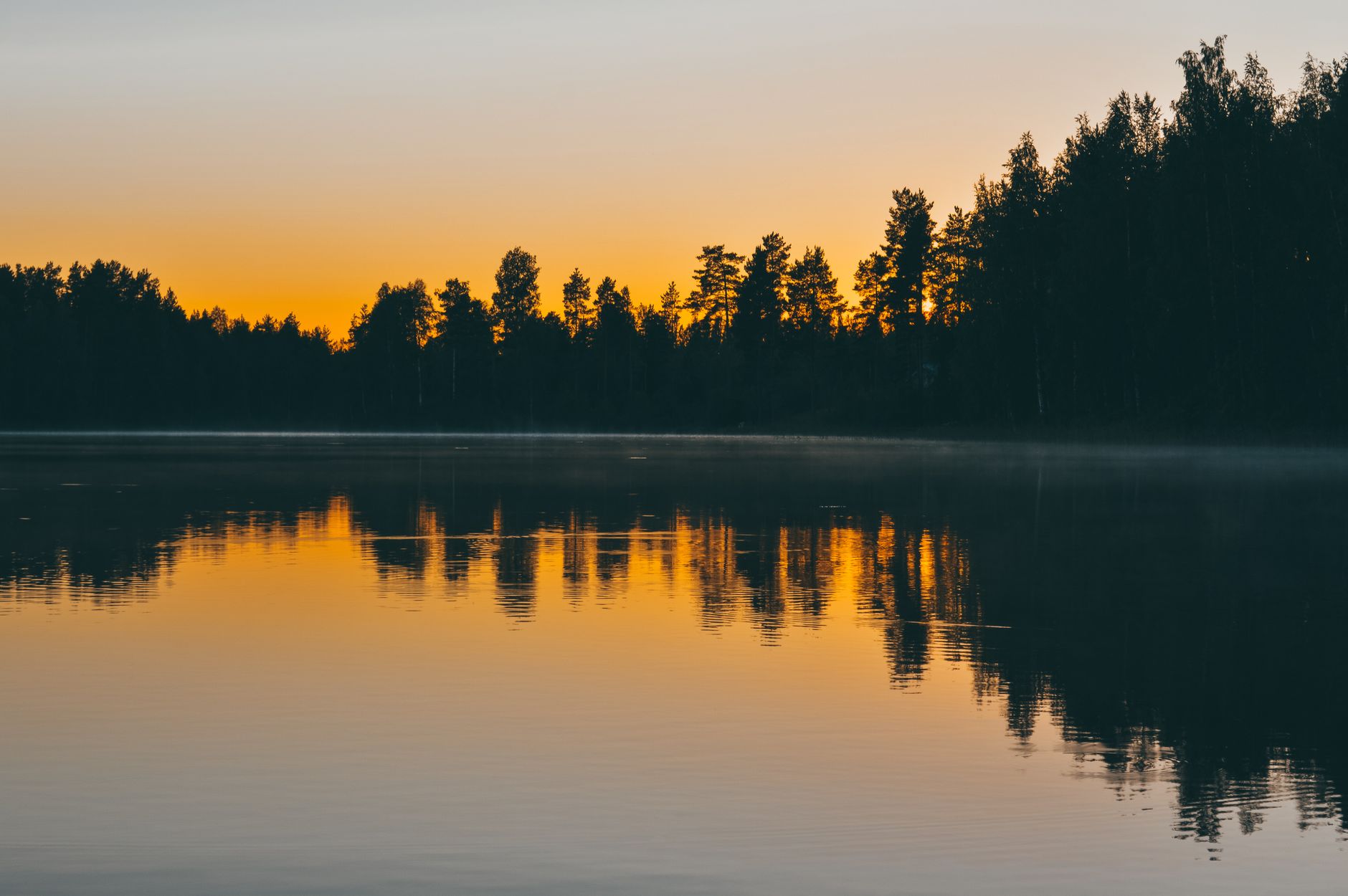
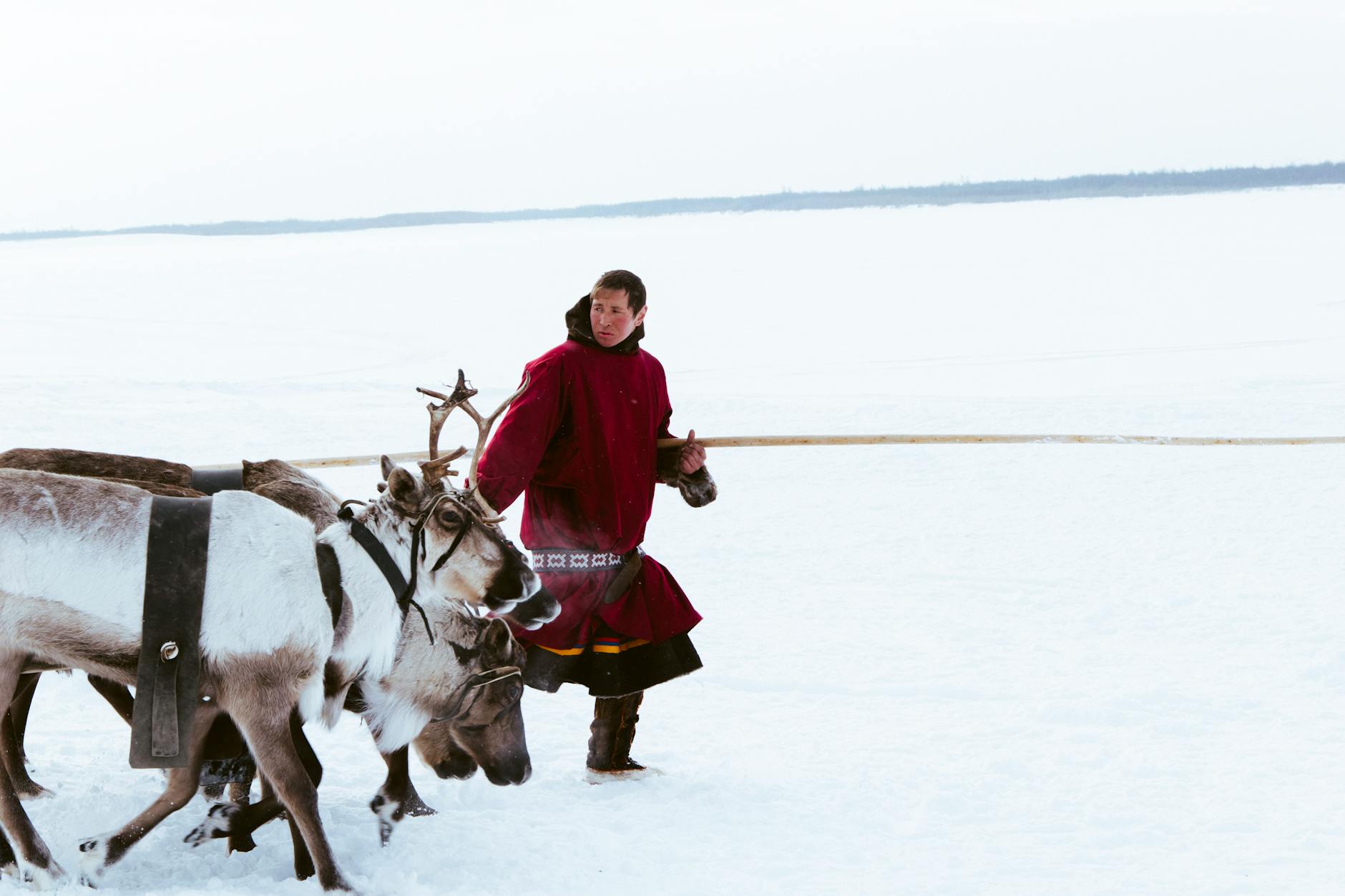
Light behaves differently here. In Lapland around Rovaniemi, Inari, and Kittilä, summer nights barely darken and winter days shrink to a blue-glow few European countries can match.
Finland rewards travelers who like substance over spectacle: a country where the capital runs on design and the north still lets weather, light, and silence set the terms.
 Finland
EntrySchengen rules; many non-EU visitors can stay 90 days in 180
FA Finland travel guide starts with one useful correction: this is not one country but three rhythms at once - Baltic capital, lake maze, Arctic north.
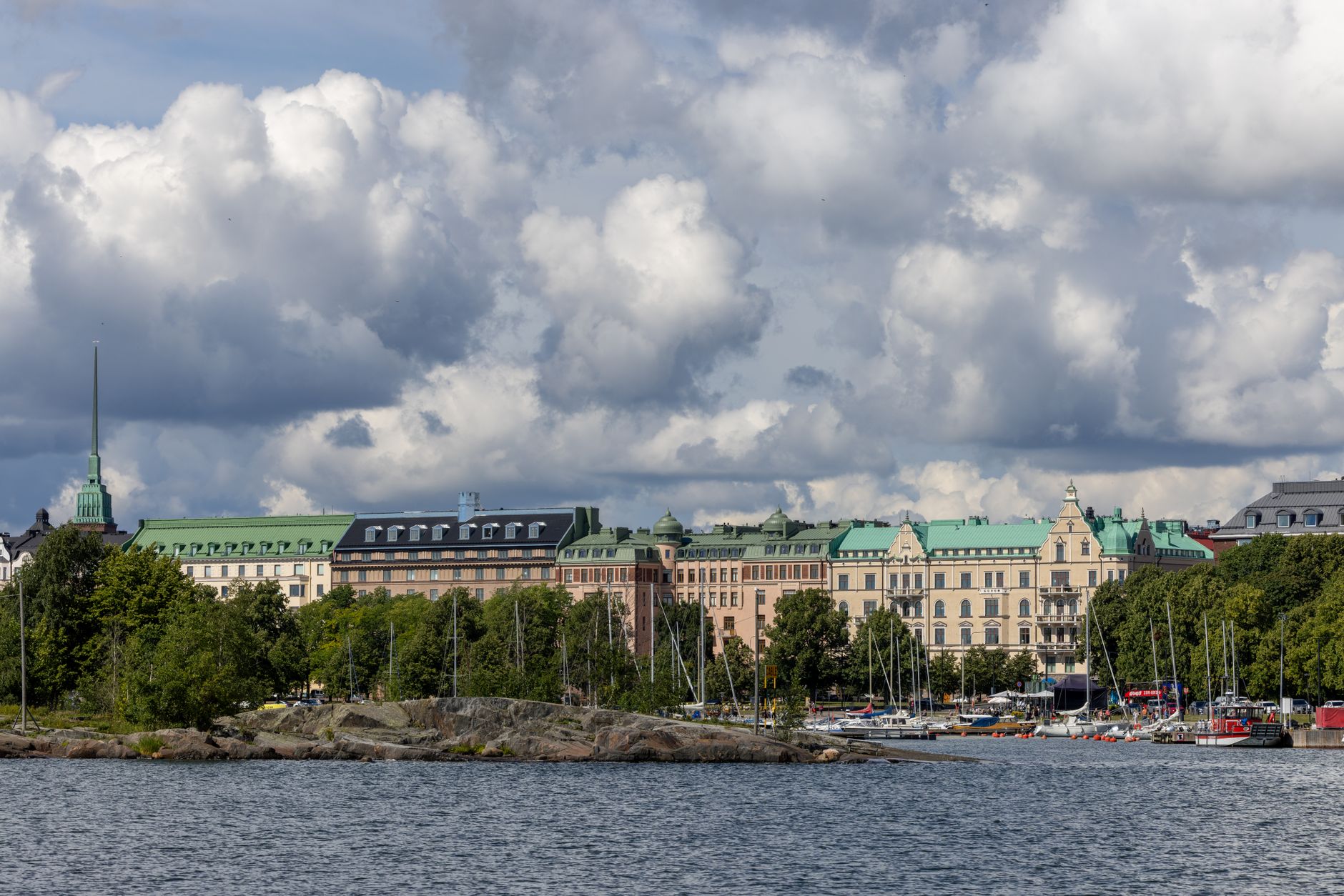
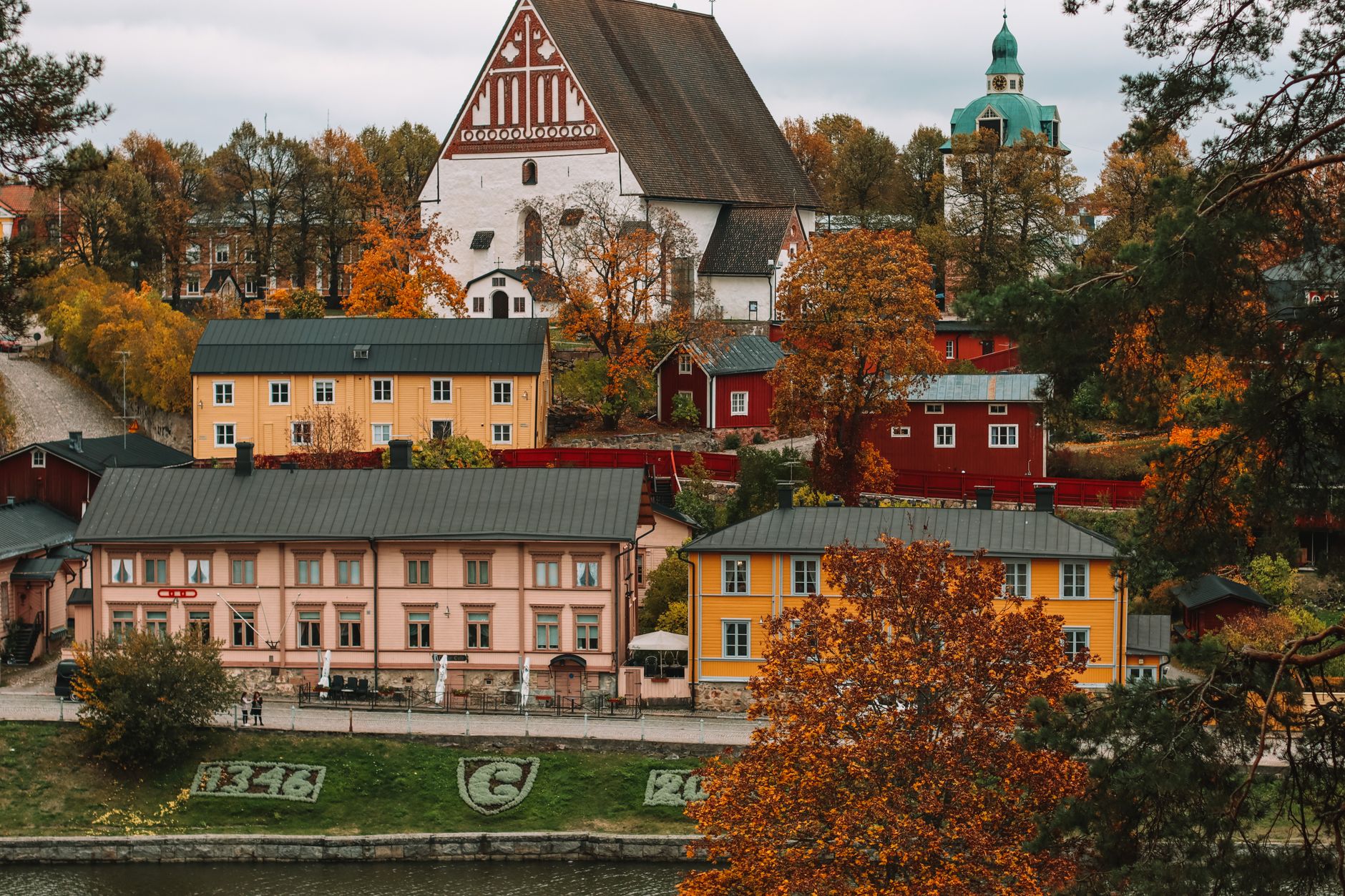
Most travelers start in Helsinki, and they should. The city sits on the Gulf of Finland with granite underfoot, trams rattling past Jugend facades, and a harbor that still feels like working infrastructure rather than stage set. Then the map opens fast. Two hours away, Porvoo gives you red shoreline warehouses and one of the country's oldest street plans; west in Turku, Finland's former capital, the riverfront carries 13th-century power without turning pious about it. This is the first reason Finland works so well as a trip: distances look large, but rail and domestic flights let you move from design-forward streets to medieval cores without wasting days in transit.
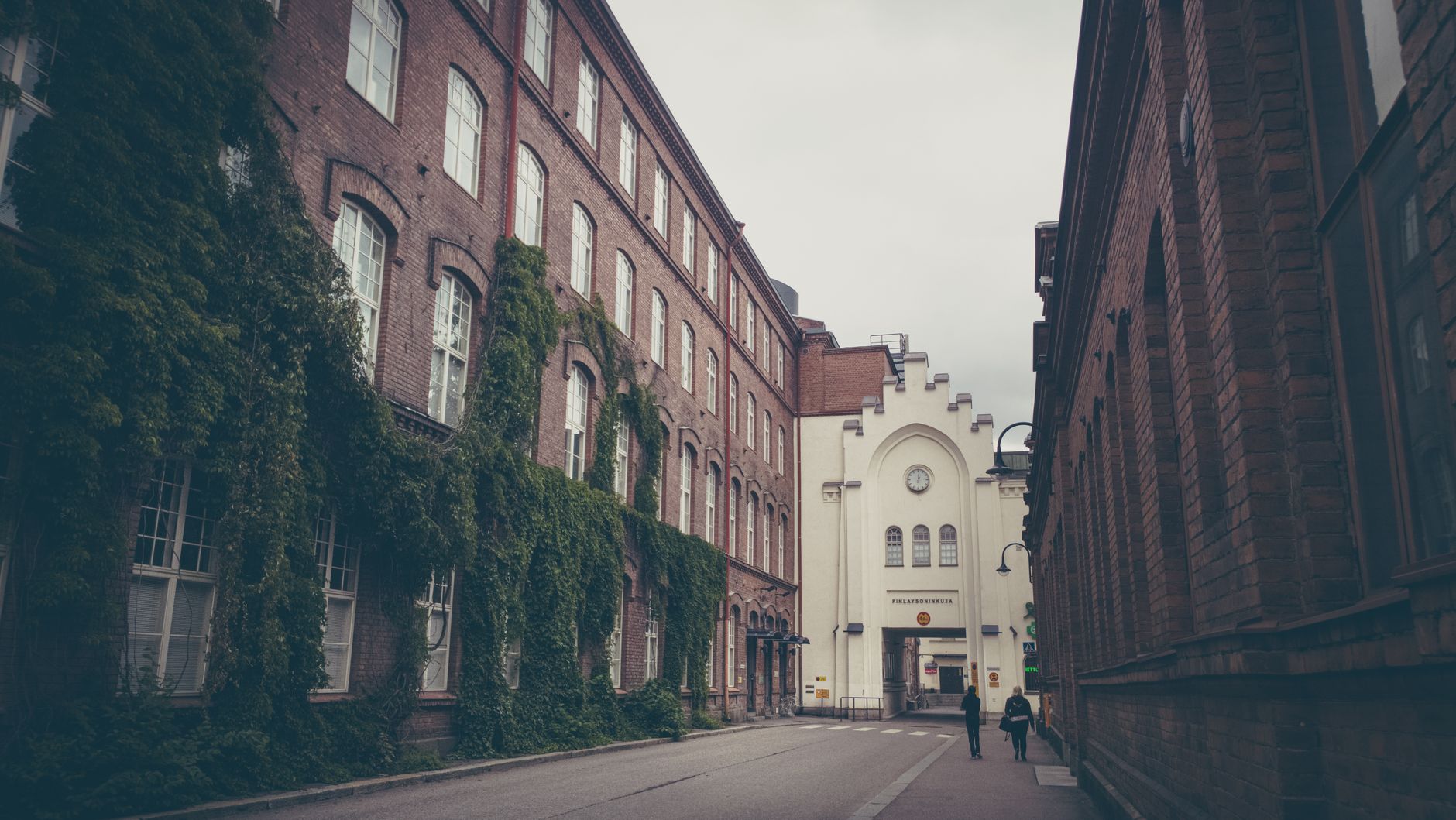
Then comes the landscape Finland is famous for, and the fame is deserved. About one-third of the country lies north of the Arctic Circle, yet the southern and central draw is just as strong: lake water, pine forest, smoke saunas, and long summer evenings that refuse to end on schedule. Tampere turns old brick factories into a surprisingly handsome urban stop between lakes Näsijärvi and Pyhäjärvi. Savonlinna adds a castle planted in the water like a military dare. Inari and Rovaniemi pull you into Sámi country and Lapland's hard light, where winter gives you blue twilight at noon and summer barely bothers with darkness.
Borderland of Crowns and Crosses, c. 1150-1809
A frozen river, a wooden church, a bishop traveling farther north than comfort advised: that is where Finland enters written drama. Medieval chronicles, mostly written elsewhere and with pious intentions, place the country inside the expanding orbit of the Swedish crown and the Latin Church from the 12th and 13th centuries onward. Ce que l'on ignore souvent, c'est que this was not a clean conversion scene with one sermon and one obedient people; it was a long negotiation of force, trade, language, and habit across forests, coasts, and river mouths.
Turku became the great hinge of that new order. A cathedral rose there in stone, not quickly and not cheaply, and the town grew into the administrative and ecclesiastical capital of what was then the eastern half of the Swedish realm. In the bishopric, in the market, in the law courts, one can already glimpse the durable Finnish pattern: local life lived in one language, power often expressed in another.
Then came the centuries of border anxiety. Finland was not an empire directing events from a gilded palace; it was the exposed flank of someone else's kingdom, facing Novgorod first, then Muscovy, then Russia. Castles such as Hämeenlinna and Savonlinna were not romantic ornaments at the edge of the water. They were arguments in stone.
The Reformation altered the country without the theatrical bloodshed seen elsewhere in Europe. Mikael Agricola, bishop, scholar, and stubborn man of letters, gave Finnish a written ecclesiastical form in the 16th century, which sounds dry until one remembers what it means: a people hearing faith and instruction in words closer to their own mouths. That is never a small revolution. It is how a language stops being merely spoken and begins to stand upright.
By the 18th century Finland had become the prize and the victim in repeated wars between Sweden and Russia. Towns burned, borders shifted, peasants paid, and officers drew lines on maps as if forests were empty. When Russian troops took Finland in the war of 1808-1809, the old Swedish chapter did not end in one dramatic curtain fall. It ended the way many northern histories end: in snow, exhaustion, and a treaty signed far from the people who would live with its consequences.
Mikael Agricola was not only a reformer in a robe; he was the man who helped turn Finnish from household speech into a written language with public dignity.
The murder of Bishop Henry by the peasant Lalli became one of Finland's most persistent legends, a tale so useful that myth and politics clung to each other for centuries.
Grand Duchy under the Romanovs, 1809-1917
Picture the scene in 1809: Emperor Alexander I receives Finland not as a wasteland but as a useful, strategic possession taken from Sweden, and he does something emperors do when they want loyalty on the cheap. He grants autonomy. Finland becomes a Grand Duchy within the Russian Empire, keeps its laws and institutions to a remarkable degree, and begins living the strange double life of many successful borderlands: obedient on paper, quietly self-defining in practice.
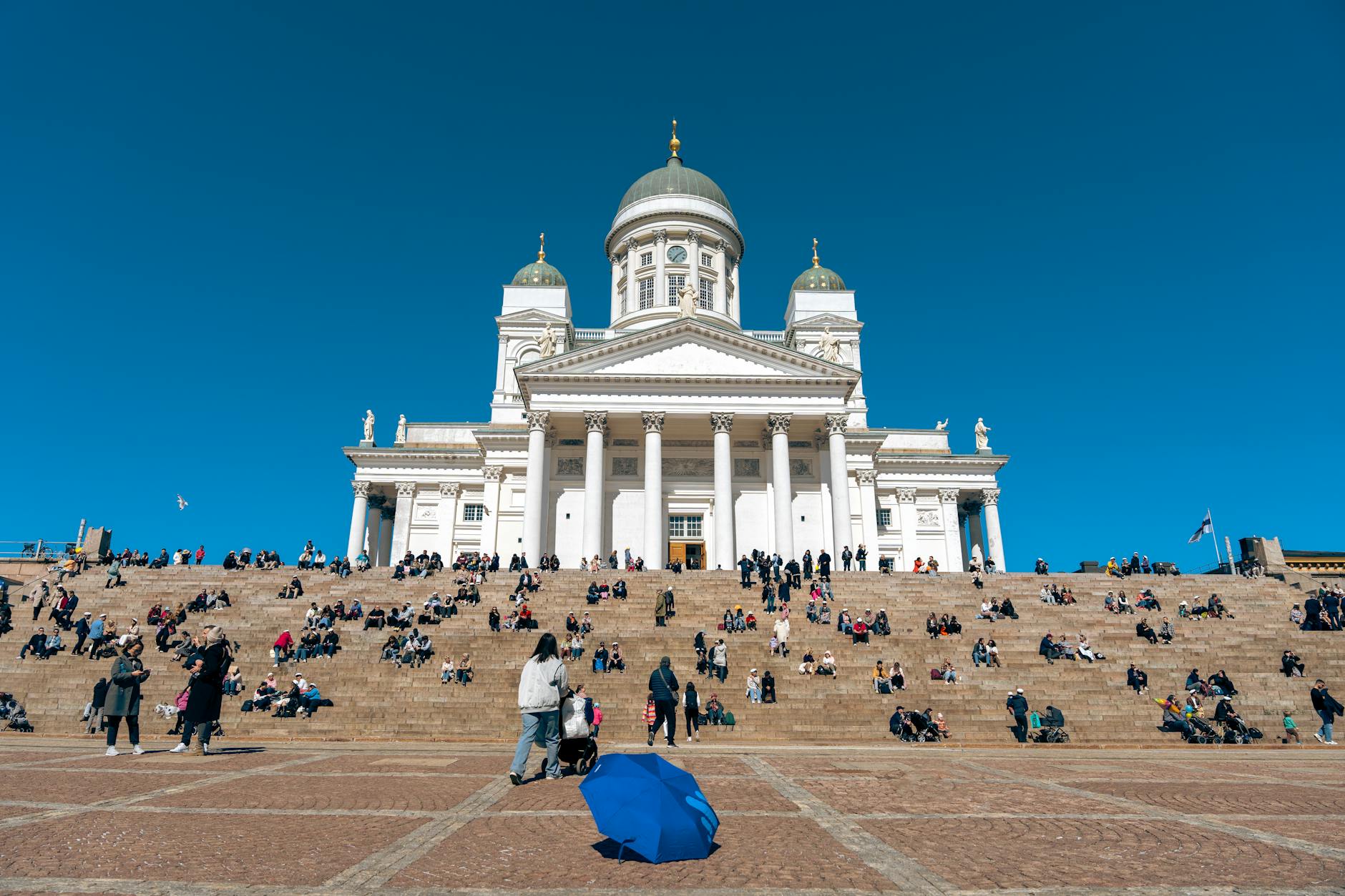
The capital moved from Turku to Helsinki in 1812, and that decision changed the visual grammar of the nation. Helsinki was rebuilt with a neoclassical severity that still feels faintly imperial, as if St Petersburg had sent over an architect with a ruler and a chilly disposition. Senate Square, the cathedral, the ordered facades: this was power arranging a city to look proper.
Yet the 19th century did more than reorganize administration. It created emotion. The publication of the Kalevala in 1835, assembled by Elias Lonnrot from oral poetry, offered Finland a mythic ancestry fit for a nation that did not yet possess full sovereignty. One must handle such epics carefully, because they are stitched, selected, and polished; but nations, like old families, often need a good legend before they get their coat of arms in order.
Writers, artists, and reformers followed. Johan Ludvig Runeberg gave patriotic verse its voice, Jean Sibelius later gave it sound, and women such as Minna Canth gave the country something even more inconvenient than romance: social criticism. Ce que l'on ignore souvent, c'est que Finnish nationalism was not only about flags and folklore. It was about language rights, schooling, class tension, and the stubborn insistence that ordinary people should count in the story.
Then Russia tightened its grip. Russification measures at the end of the 19th century and the start of the 20th tried to fold Finland more tightly into imperial control. The resistance could be legalistic, cultural, passive, or explosive. By the time the Russian Empire began collapsing in 1917, Finland already had the institutions, the educated class, and the sharpened nerves of a country ready to step through a suddenly open door.
Alexander I meant to secure a border province, but by leaving Finland room to breathe, he helped create the political habits that would one day let it leave the empire.
Helsinki's monumental center looks anciently inevitable today, yet much of what feels 'eternal' there is the result of one 19th-century imperial redesign after the capital was moved from Turku.
Independence, Civil War, and Wars of Survival, 1917-1945
Independence came on 6 December 1917, but no one should imagine church bells, grateful tears, and universal agreement. Russia was in revolution, power was breaking apart, and Finland's freedom arrived before Finland had settled what sort of country it wanted to be. Within months, the question turned murderous.
The Civil War of 1918 split the nation between the White government forces and the socialist Reds. This is one of those chapters polished too often into military summary, when its real tragedy was intimate: neighbors informing on neighbors, prison camps filling, families learning that victory and justice are not twins. A republic can be proclaimed in a day. Trust takes longer.
Out of that trauma rose figures of extraordinary authority, above all Carl Gustaf Emil Mannerheim, aristocrat, former officer of the tsar, horseman of old Europe, and eventually the granite face of Finnish survival. He belonged to the Swedish-speaking elite and had spent years in imperial Russian service, which sounds almost too ironic for history. Yet in crisis he became, for many Finns, the man who could hold a line when lines mattered.
The Winter War of 1939-1940 fixed Finland in the world's imagination. A small nation fought the Soviet Union through one of the cruelest winters in modern military memory, with white camouflage, skis, hunger, and a nerve the Finns call sisu. The phrase 'After us, the deluge' belongs elsewhere, but one feels the same fatal elegance here: they knew the scale of the adversary and fought anyway.
Peace brought losses, not relief. Finland ceded territory, then fought again in the Continuation War, navigating the poisoned geometry of the Second World War beside Germany yet for its own aims against the Soviet Union. By 1945 the country had kept its independence, which was no minor miracle, but it had done so at terrible human cost, with Karelia lost, graves filled, and a political realism that would shape every decade to come.
Mannerheim, impeccably aristocratic and often emotionally remote, became the improbable father figure of a republic built partly in revolt against old hierarchies.
The Molotov cocktail got its name in the Winter War, when Finns mocked Soviet foreign minister Vyacheslav Molotov's propaganda and gave his name to the bottle bomb meant to answer it.
The Careful Republic, 1945-1995
Postwar Finland had to perform a difficult dance in a room with very little space. The Soviet Union was next door, victorious, suspicious, and vastly stronger. Finland paid reparations, rebuilt its economy, resettled hundreds of thousands displaced from ceded Karelia, and learned the discipline of saying less than it knew. Silence, here, was not temperament alone. It was statecraft.
This is the age often described through the awkward word 'Finlandization,' a term outsiders used with a smirk and Finns heard with mixed feelings. The country remained democratic, market-oriented, and culturally Western, yet it calibrated foreign policy with exquisite care so as not to provoke Moscow. Ce que l'on ignore souvent, c'est que this balancing act demanded not passivity but constant judgment, the kind that rarely looks heroic on screen.
Urho Kekkonen dominated the period like an oak that shades everything beneath it. President from 1956 to 1982, he cultivated direct relations with Soviet leaders, centralized influence around himself, and turned longevity into a political instrument. Admirers saw prudence and mastery. Critics saw vanity, opportunism, and an unhealthy concentration of power. As often in history, both were right.
Meanwhile the republic transformed daily life. Industry expanded, education deepened, social protections widened, and design became a national calling card rather than a decorative afterthought. Alvar Aalto bent modernism into something warmer, Tove Jansson conjured Moomins who could be read as children's companions or subtle survivors of northern anxiety, and Finnish cities such as Tampere and Oulu moved steadily from mills and workshops toward a more technological future.
When the Soviet Union collapsed, Finland's long discipline did not vanish; it pivoted. Joining the European Union in 1995 was not a costume change but a reorientation made possible by half a century of careful endurance. The republic that had once survived by strategic modesty could now act more openly as what it had long been becoming: a northern European state fully at home in the West.
Urho Kekkonen could seem half headmaster, half court survivor, a democratic leader who understood that in Finland geography was always part of the cabinet meeting.
War reparations to the Soviet Union, harsh as they were, pushed Finnish industry to modernize faster than it otherwise might have done.
European Finland, Still Looking North, 1995-present
A conference room in Espoo, a Nokia handset on the table, engineers speaking in clipped practical sentences: late-20th-century Finland produced one of those rare national metamorphoses that feels sudden from abroad and painstaking from within. The country entered the European Union, adopted the euro, invested fiercely in education and technology, and briefly made mobile phones feel like a Finnish art form. For a while, the little northern republic seemed to have found a way to turn reserve into efficiency and remoteness into advantage.
But nations do not shed older layers simply because their exports become sleeker. Finland remained deeply marked by memory: of war, of border vulnerability, of the long etiquette imposed by Russia's proximity. Helsinki grew more international, cities such as Turku and Tampere sharpened their cultural confidence, and in the north places like Rovaniemi and Inari became central to the outside world's image of Finnish winter. Yet beneath the design shops, music festivals, and startup vocabulary, one still finds the older country of forests, lakes, and family cottages where the national temperament makes immediate sense.
The 21st century also widened the story Finland tells about itself. Sámi rights, environmental questions, and the unfinished work of facing the country's own internal hierarchies have all become harder to leave in footnotes. This matters. A mature nation is not one that repeats its myths with better lighting; it is one that can re-read them without panic.
Then Russia invaded Ukraine in 2022, and history, which so many Europeans had treated as a retired uncle, came striding back into the room. Finland's long policy of military non-alignment gave way with remarkable speed to a new conclusion. The country joined NATO in 2023, not out of fashion or enthusiasm for blocs, but because Finns know what it means to live beside a power capable of changing the weather of a continent.
And so the bridge to the next era is already visible. Finland remains modern, inventive, highly educated, and outward-looking, but its future will not be written by technology alone. It will be written, as so often before, by the meeting point between geography and character: the border, the winter, the language, the decision to endure without theatricality.
Finland's recent leaders inherited a country famous for calm, yet their greatest task has been to act quickly when history stopped rewarding calm alone.
Sauna culture was inscribed by UNESCO as intangible heritage, which means one of Finland's most serious cultural institutions is still, at heart, a very hot wooden room.
Finnish does not flirt with you. It stares, waits, and then hands you a word with fifteen endings as if this were the most natural thing in the world. In Helsinki you hear it on the tram in clipped, almost modest syllables; in Turku it softens at the edges; in Inari the presence of Sámi languages changes the air completely, as if the country had quietly admitted that one tongue was never enough for this latitude.
What astonishes is the democracy of address. No formal "you," no velvet curtain of etiquette hidden inside grammar. Everyone is sina in practice, yet nobody behaves casually by accident. Respect lives elsewhere: in timing, in the refusal to interrupt, in the tiny sacred pause before answering. Silence here is not awkward. Silence is thought made audible.
Then come the untranslatable trophies. Sisu, dragged abroad and mistranslated as optimism, when it is closer to endurance with its teeth showing. Kalsarikannit, which sounds comic until you realize a civilization cared enough to name the act of drinking at home in underwear and calling it an evening. A country is the words it bothers to invent. Finland has invented words for dignity, embarrassment, communal labor, and solitude. That is already a portrait.
Finnish cooking begins where vanity ends. Rye, fish, potatoes, berries, milk, mushrooms, reindeer: the pantry reads like a dare issued by weather. And yet the table in Finland, whether in a market hall in Helsinki or a wooden house outside Oulu, produces one of Europe's quiet miracles: food that tastes exactly of what it is, without disguise, without apology, without the cream-lacquered alibis that southern countries sometimes use when they lose faith in an ingredient.
Take the karjalanpiirakka. A thin rye shell, pleated by hand, holding rice porridge with the gravity of a relic. Then munavoi on top: butter worked with chopped hard-boiled egg until both substances lose their former identities and become something indecently good. Or lohikeitto, salmon soup, pale and fragrant with dill, the kind of bowl that makes winter seem less like punishment than method. Even the bread has a moral force. Ruisleipa is not a side note. It is architecture.
And the sweets are never innocent. Korvapuusti, the cardamom-heavy cinnamon bun whose name means slapped ear, turns coffee into ritual. Mummi would approve. So would any exhausted traveler stepping in from sleet. Then salmiakki arrives, black and mineral, tasting faintly of medicine and obstinacy. Foreigners recoil. Finns smile with the patience of people who know their nation cannot be understood through sugar alone.
Finnish manners are a relief for anyone tired of social theater. Nobody asks how you are unless they can bear the answer. Nobody interrupts your sentence to prove enthusiasm. In Porvoo and Tampere, in hotel saunas and train carriages heading north to Rovaniemi, you notice the same code: give people room, lower your volume, do not colonize the atmosphere with your personality. This is not coldness. It is hygiene.
Queues are straight. Shoes come off without drama. Doors are held, but modestly, as if even kindness should avoid spectacle. You thank the bus driver. You do not sit too close when the tram is empty. And in the sauna, that national chapel of heat and steam, hierarchy melts faster than snow on a ferry deck. Bodies become ordinary. Conversation thins out. Water hits hot stone with a hiss that sounds like a reprimand and a blessing at once.
The beginner's error is to mistake reserve for absence of feeling. Not even close. Emotion is present everywhere, only compressed, like the scent of birch leaves trapped in a summer sauna whisk or the force inside a person who says very little and still manages to rearrange the room. A Finn may not flatter you. Better. They are offering the harder gift of sincerity.
Finnish design has the decency not to simper. Aalto glass does not beg for admiration; it catches light and continues existing on its own terms. Marimekko prints, seen in Helsinki windows and on commuter trains with the authority of heraldry, commit the elegant crime of being both domestic and defiant. Even the most ordinary objects here seem designed by people who had endured winter and therefore lost interest in decorative nonsense.
This severity is not sterile. That is the surprise. Wood grain, wool, birch, linen, matte ceramic, clear glass: the national palette is tactile before it is visual. You want to run your hand along a chair back, wrap your fingers around a mug, sit still long enough to notice how afternoon light lands on a pale floor in February. The rooms teach you something almost moral: comfort does not require clutter. Precision can be tender.
What Finland understands, perhaps better than any country of similar size, is that usefulness can become style without changing its religion. A lamp must illuminate. A coat must survive sleet. A coffee cup must meet the hand properly at 7:12 in the morning when the sky over Turku is still the color of pewter and no human soul deserves unnecessary difficulty. Good design is not a luxury here. It is winter equipment with taste.
Finnish architecture behaves like the climate: restrained, exact, capable of sudden grandeur. In Helsinki, National Romantic granite buildings stand with the stern confidence of Nordic myths put into stone, while Alvar Aalto's modernism turns white surfaces, wood curves, and daylight into a form of secular mercy. Churches do not always rise by excess. Sometimes they descend into rock, as at Temppeliaukio, where raw stone and copper make worship feel geological.
Elsewhere the country changes material and keeps its character. In Rauma, wooden houses lean close along old streets with the accumulated intelligence of centuries of wind and trade. In Savonlinna, Olavinlinna Castle rises from water like a military hallucination in pale summer light. In Hameenlinna, brick takes over and history stiffens its back. Finland likes buildings that look as if they can survive weather, empire, and bad planning. A sensible preference.
What moves me most is the way light is treated as a construction material. Winter gives so little of it that windows become ethical decisions. Summer gives too much, and then whole facades seem built to receive the midnight day without embarrassment. Architecture here is never just shelter. It is negotiation with darkness, with thaw, with the long human need to remain civilized while the world outside freezes into iron.
Finnish literature knows that beauty and severity are not enemies. The Kalevala gave the country a national epic assembled from sung fragments, which is already a marvelous paradox: identity stitched from voices, not decrees. Then came writers who understood that forests, wars, class, and silence were not themes to decorate a page but forces that altered the pressure of every sentence. Read Finland long enough and you begin to suspect that understatement may be the most exact form of drama.
Tove Jansson, writing in Swedish from the Finnish archipelago, remains the sly genius of this emotional climate. The Moomin books look gentle until you notice how much they know about loneliness, weather, family irritation, and the small dignity of setting the table while catastrophe hovers offshore. That is Finland in miniature. A lamp lit. Coffee made. Existential dread waiting politely by the door.
Then the register darkens. Vaino Linna gives war and class their full weight. Sofi Oksanen writes with the cold blade of history itself, turning bodies and nations into territories of fear, desire, and memory. Even the children's shelves here carry metaphysical weather. It feels right. In a country where January light can resemble a rumor, literature is not ornament. It is one of the central heating systems.
Light behaves differently here. In Lapland around Rovaniemi, Inari, and Kittilä, summer nights barely darken and winter days shrink to a blue-glow few European countries can match.
Sauna in Finland is not a spa add-on. It is ordinary, social, and deeply rooted, from city apartments in Helsinki to lakeside cabins where the ritual ends with a jump into cold water.
Finland's geography is all water-framed edges: lake districts inland, then the island-heavy southwest coast. Around Turku, Naantali, and Rauma, ferries and shore roads matter as much as highways.
Finnish history shows up in compact, hard-edged places rather than grand imperial boulevards. Walk Turku Castle, the old streets of Porvoo, or Olavinlinna in Savonlinna and the country's borderland past comes into focus.
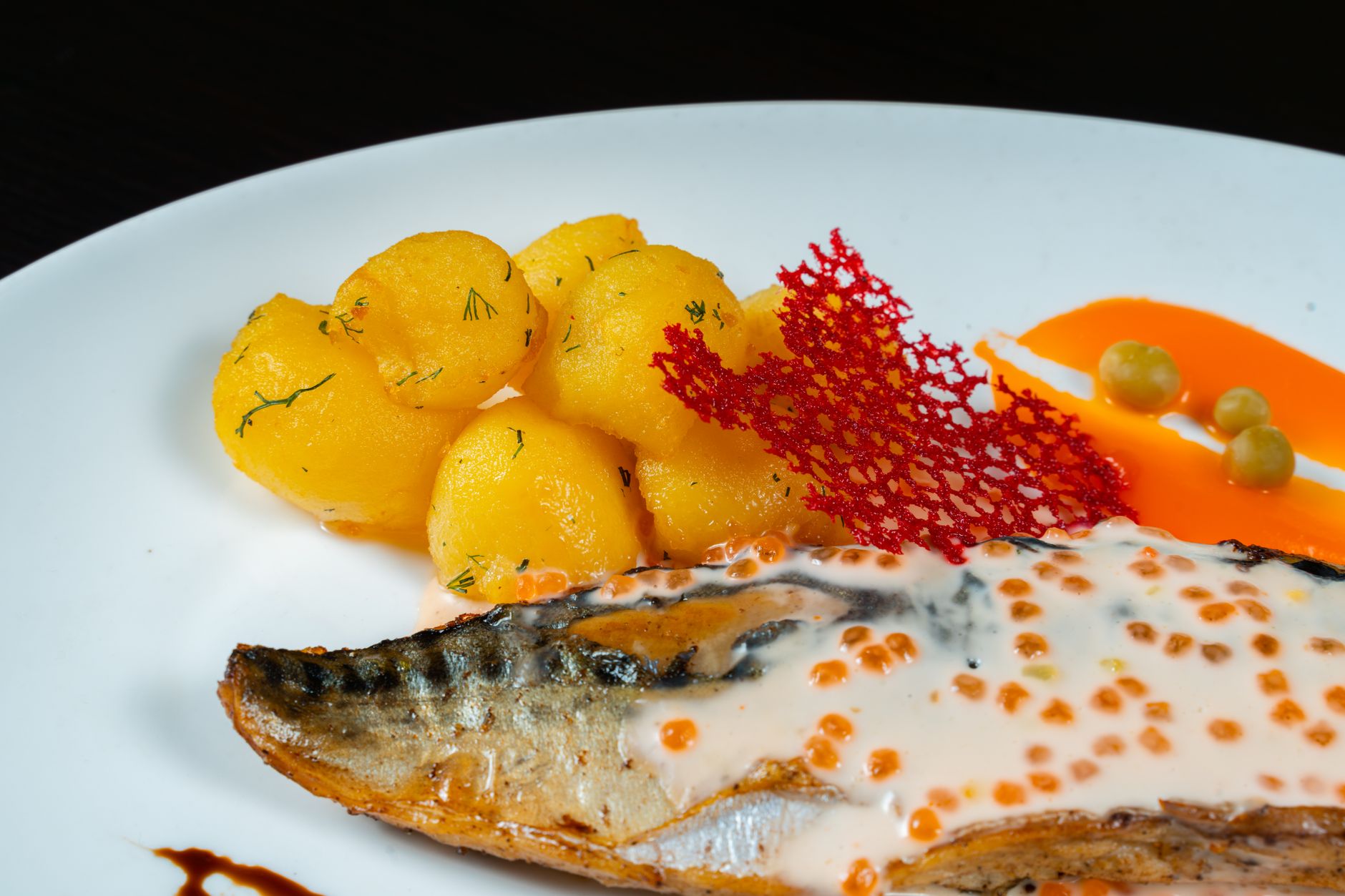
The food is built for climate, not theater. Expect dark rye bread, salmon soup, Baltic herring, Karelian pies, and wild berries that taste sharper and more northern than their supermarket cousins.
Few countries let you move from a city break to quiet forest this fast. Helsinki has shoreline trails within reach, while Oulu, Inari, and Lapland open into fells, bogs, and huge skies with very little friction.
12 cities — start with the ones we'd send you to first.
A compact Baltic capital where art nouveau facades on Esplanadi butt up against a brutalist Finlandia Hall and a harbor market that smells of smoked salmon at 7am.
Rebuilt on Alvar Aalto's reindeer-antler street plan after the Nazis burned it in 1944, it sits exactly on the Arctic Circle and receives more winter charter flights than its size has any right to justify.
Finland's oldest city and medieval capital, where the Aura River splits a cathedral town from a castle that has been a prison, a granary, and a royal residence since the 1280s.
A red-brick mill city wedged between two lakes, Näsijärvi and Pyhäjärvi, whose working-class identity survived deindustrialization well enough that the world's only Lenin museum still draws a quiet crowd.
The self-declared capital of Northern Finland runs more kilometers of urban cycling path per resident than almost anywhere in Europe, and holds an annual air guitar world championship with complete institutional seriousn
Ochre and sienna wooden warehouses lean over the Porvoonjoki river exactly as they did in the 18th century, making it the one Finnish town that looks like a painting before you've had your coffee.
A medieval castle, Olavinlinna, rises from a rocky islet in the middle of the Saimaa lake system and every July hosts an opera festival inside its courtyard walls, with the water visible from the stalls.
A village of roughly 500 people in Finland's far north that holds the Siida museum — the most serious institution in the world for Sámi cultural history — beside a lake that stays frozen into May.
The old convent town outside Turku where Finns have been taking the cure since the 15th century is now better known as the site of Moominworld, a theme park that is stranger and quieter than its name suggests.
Southern Finland is where first-time visitors usually land, but the point is not just convenience. Helsinki runs on ferries, trams, granite and sea light, and nearby Porvoo shows how quickly the pace changes once you leave the capital. This is the best region for short trips, museum-heavy days and year-round logistics that actually work.
The southwest carries older layers of Finnish statehood: castle, cathedral, shipping routes, Swedish-language traces and a coastline broken into islands. Turku has more historical weight than it first admits, Naantali adds polished wooden-town calm, and the sea is never far from the argument.
Western Finland is less shouted about and better for it. Rauma's old wooden core is not a stage set but a lived-in town with crooked lanes and shopfronts, while Oulu farther north trades heritage prettiness for a tougher maritime and tech-city mix. You come here for texture, not slogans.
This region explains modern Finland better than many prettier postcard spots. Tampere was built on rapids and mills, and the red-brick factory belt still shapes the city, while Hämeenlinna adds a quieter historical counterpoint with its lakeside castle and national-cultural associations. Good rail links make this the easiest inland Finland to reach without a car.
Lakeland is where the map stops behaving like dry land and turns into a maze of water, islands and forest. Savonlinna sits in the middle of that maze with Olavinlinna castle planted directly in the channel, and the whole region makes more sense if you slow down and accept that ferries, bridges and detours are part of the design.
Lapland is not one thing. Rovaniemi is the rail-and-air hinge, Kittilä serves the fell resorts and ski traffic, and Inari moves into Sámi country where distances grow longer and the landscape strips back to water, birch and tundra light. In winter the cold sets the rules; in summer the midnight sun does.
Helsinki's Orthodox cathedral was built from 700,000 bricks salvaged from a Crimean War fortress.
A Finnish story of border pressure, language, survival, and reinvention
Swedish and ecclesiastical influence begin reshaping Finland's coasts and river routes. Later legends simplify the story; the reality was slower, rougher, and entangled with trade, violence, and local adaptation.
Ecclesiastical authority consolidates around Turku, which grows into the religious and administrative center of medieval Finland. Stone, parchment, and taxation begin to travel together.
The castle marks Sweden's determination to fortify its eastern frontier. In the north, a fortress was never only military architecture; it was a claim written in masonry.
The balance of power east of Finland changes profoundly when Moscow absorbs Novgorod. Finland's frontier now faces a harder and more centralized neighbor.
Agricola's work helps establish written Finnish in the Reformation era. A language used in church and print acquires a new public authority.
Finland receives its first university, anchoring learned life in Turku. The institution would shape clergy, officials, and the educated class for generations.
The Treaty of Abo cedes southeastern territory to Russia and reminds Finland, once again, that great-power diplomacy rarely asks peasants for consent. Borderland existence grows harsher.
After Sweden's defeat, Finland is separated from the Swedish realm and incorporated into the Russian Empire as a Grand Duchy. Autonomy, limited but real, gives the country room to develop its own institutions.
The capital moves from Turku to Helsinki, closer to St Petersburg and easier for imperial oversight. The city's later neoclassical center will make that political decision visible in stone.
Elias Lonnrot publishes the first version of the Kalevala, assembling oral poetry into a national epic. Finland gains a mythic ancestry at the very moment nationalism needs one.
Language reforms and political reopening under Alexander II help Finnish advance in administration and public life. Identity now moves from folklore into institutions.
The February Manifesto signals tighter imperial control and alarms Finnish society. Resistance grows through petitions, cultural assertion, and a more urgent national politics.
Finland adopts a unicameral parliament and broad suffrage, including full political rights for women. For Europe at the time, this is startlingly advanced.
With the Russian Empire collapsing, Finland declares independence on 6 December. Freedom arrives quickly; internal reconciliation does not.
Reds and Whites fight a bitter civil war marked by executions, prison camps, and long memory. The republic survives, but innocence does not.
The Soviet Union invades, expecting an easier victory than it gets. Finland fights with desperate skill through snow, forest, and brutal cold, fixing 'sisu' in world memory.
Finland preserves independence but loses territory, including much of Karelia. Survival comes with grief, displacement, and a harsher understanding of geography.
After the Continuation War, Finland exits the conflict battered but sovereign. The country must pay reparations, adjust borders, and rebuild under Soviet scrutiny.
International recognition deepens as Finland enters the UN. The republic is no longer merely surviving; it is learning to act on a wider stage while still watching its eastern flank.
Kekkonen begins a long presidency that will define Finland's Cold War posture. His rule blends democratic legitimacy, personal dominance, and relentless geopolitical calculation.
EU membership marks a major strategic and economic reorientation after the Cold War. The move confirms Finland's place in Western Europe without erasing the habits learned from proximity to Russia.
Finland adopts euro cash, tying everyday transactions to a broader European framework. Even the coins in your pocket now tell a continental story.
Russia's invasion of Ukraine ends decades of military non-alignment. Finland chooses alliance not from abstract enthusiasm but from a very old understanding of what its geography requires.
Borderland of Crowns and Crosses
Mikael Agricola was not only a reformer in a robe; he was the man who helped turn Finnish from household speech into a written language with public dignity.
A frozen river, a wooden church, a bishop traveling farther north than comfort advised: that is where Finland enters written drama. Medieval chronicles, mostly written elsewhere and with pious intentions, place the country inside the expanding orbit of the Swedish crown and the Latin Church from the 12th and 13th centuries onward. Ce que l'on ignore souvent, c'est que this was not a clean conversion scene with one sermon and one obedient people; it was a long negotiation of force, trade, language, and habit across forests, coasts, and river mouths.
Turku became the great hinge of that new order. A cathedral rose there in stone, not quickly and not cheaply, and the town grew into the administrative and ecclesiastical capital of what was then the eastern half of the Swedish realm. In the bishopric, in the market, in the law courts, one can already glimpse the durable Finnish pattern: local life lived in one language, power often expressed in another.
Then came the centuries of border anxiety. Finland was not an empire directing events from a gilded palace; it was the exposed flank of someone else's kingdom, facing Novgorod first, then Muscovy, then Russia. Castles such as Hämeenlinna and Savonlinna were not romantic ornaments at the edge of the water. They were arguments in stone.
The Reformation altered the country without the theatrical bloodshed seen elsewhere in Europe. Mikael Agricola, bishop, scholar, and stubborn man of letters, gave Finnish a written ecclesiastical form in the 16th century, which sounds dry until one remembers what it means: a people hearing faith and instruction in words closer to their own mouths. That is never a small revolution. It is how a language stops being merely spoken and begins to stand upright.
By the 18th century Finland had become the prize and the victim in repeated wars between Sweden and Russia. Towns burned, borders shifted, peasants paid, and officers drew lines on maps as if forests were empty. When Russian troops took Finland in the war of 1808-1809, the old Swedish chapter did not end in one dramatic curtain fall. It ended the way many northern histories end: in snow, exhaustion, and a treaty signed far from the people who would live with its consequences.
The murder of Bishop Henry by the peasant Lalli became one of Finland's most persistent legends, a tale so useful that myth and politics clung to each other for centuries.
Grand Duchy under the Romanovs
Alexander I meant to secure a border province, but by leaving Finland room to breathe, he helped create the political habits that would one day let it leave the empire.
Picture the scene in 1809: Emperor Alexander I receives Finland not as a wasteland but as a useful, strategic possession taken from Sweden, and he does something emperors do when they want loyalty on the cheap. He grants autonomy. Finland becomes a Grand Duchy within the Russian Empire, keeps its laws and institutions to a remarkable degree, and begins living the strange double life of many successful borderlands: obedient on paper, quietly self-defining in practice.
The capital moved from Turku to Helsinki in 1812, and that decision changed the visual grammar of the nation. Helsinki was rebuilt with a neoclassical severity that still feels faintly imperial, as if St Petersburg had sent over an architect with a ruler and a chilly disposition. Senate Square, the cathedral, the ordered facades: this was power arranging a city to look proper.
Yet the 19th century did more than reorganize administration. It created emotion. The publication of the Kalevala in 1835, assembled by Elias Lonnrot from oral poetry, offered Finland a mythic ancestry fit for a nation that did not yet possess full sovereignty. One must handle such epics carefully, because they are stitched, selected, and polished; but nations, like old families, often need a good legend before they get their coat of arms in order.
Writers, artists, and reformers followed. Johan Ludvig Runeberg gave patriotic verse its voice, Jean Sibelius later gave it sound, and women such as Minna Canth gave the country something even more inconvenient than romance: social criticism. Ce que l'on ignore souvent, c'est que Finnish nationalism was not only about flags and folklore. It was about language rights, schooling, class tension, and the stubborn insistence that ordinary people should count in the story.
Then Russia tightened its grip. Russification measures at the end of the 19th century and the start of the 20th tried to fold Finland more tightly into imperial control. The resistance could be legalistic, cultural, passive, or explosive. By the time the Russian Empire began collapsing in 1917, Finland already had the institutions, the educated class, and the sharpened nerves of a country ready to step through a suddenly open door.
Helsinki's monumental center looks anciently inevitable today, yet much of what feels 'eternal' there is the result of one 19th-century imperial redesign after the capital was moved from Turku.
Independence, Civil War, and Wars of Survival
Mannerheim, impeccably aristocratic and often emotionally remote, became the improbable father figure of a republic built partly in revolt against old hierarchies.
Independence came on 6 December 1917, but no one should imagine church bells, grateful tears, and universal agreement. Russia was in revolution, power was breaking apart, and Finland's freedom arrived before Finland had settled what sort of country it wanted to be. Within months, the question turned murderous.
The Civil War of 1918 split the nation between the White government forces and the socialist Reds. This is one of those chapters polished too often into military summary, when its real tragedy was intimate: neighbors informing on neighbors, prison camps filling, families learning that victory and justice are not twins. A republic can be proclaimed in a day. Trust takes longer.
Out of that trauma rose figures of extraordinary authority, above all Carl Gustaf Emil Mannerheim, aristocrat, former officer of the tsar, horseman of old Europe, and eventually the granite face of Finnish survival. He belonged to the Swedish-speaking elite and had spent years in imperial Russian service, which sounds almost too ironic for history. Yet in crisis he became, for many Finns, the man who could hold a line when lines mattered.
The Winter War of 1939-1940 fixed Finland in the world's imagination. A small nation fought the Soviet Union through one of the cruelest winters in modern military memory, with white camouflage, skis, hunger, and a nerve the Finns call sisu. The phrase 'After us, the deluge' belongs elsewhere, but one feels the same fatal elegance here: they knew the scale of the adversary and fought anyway.
Peace brought losses, not relief. Finland ceded territory, then fought again in the Continuation War, navigating the poisoned geometry of the Second World War beside Germany yet for its own aims against the Soviet Union. By 1945 the country had kept its independence, which was no minor miracle, but it had done so at terrible human cost, with Karelia lost, graves filled, and a political realism that would shape every decade to come.
The Molotov cocktail got its name in the Winter War, when Finns mocked Soviet foreign minister Vyacheslav Molotov's propaganda and gave his name to the bottle bomb meant to answer it.
The Careful Republic
Urho Kekkonen could seem half headmaster, half court survivor, a democratic leader who understood that in Finland geography was always part of the cabinet meeting.
Postwar Finland had to perform a difficult dance in a room with very little space. The Soviet Union was next door, victorious, suspicious, and vastly stronger. Finland paid reparations, rebuilt its economy, resettled hundreds of thousands displaced from ceded Karelia, and learned the discipline of saying less than it knew. Silence, here, was not temperament alone. It was statecraft.
This is the age often described through the awkward word 'Finlandization,' a term outsiders used with a smirk and Finns heard with mixed feelings. The country remained democratic, market-oriented, and culturally Western, yet it calibrated foreign policy with exquisite care so as not to provoke Moscow. Ce que l'on ignore souvent, c'est que this balancing act demanded not passivity but constant judgment, the kind that rarely looks heroic on screen.
Urho Kekkonen dominated the period like an oak that shades everything beneath it. President from 1956 to 1982, he cultivated direct relations with Soviet leaders, centralized influence around himself, and turned longevity into a political instrument. Admirers saw prudence and mastery. Critics saw vanity, opportunism, and an unhealthy concentration of power. As often in history, both were right.
Meanwhile the republic transformed daily life. Industry expanded, education deepened, social protections widened, and design became a national calling card rather than a decorative afterthought. Alvar Aalto bent modernism into something warmer, Tove Jansson conjured Moomins who could be read as children's companions or subtle survivors of northern anxiety, and Finnish cities such as Tampere and Oulu moved steadily from mills and workshops toward a more technological future.
When the Soviet Union collapsed, Finland's long discipline did not vanish; it pivoted. Joining the European Union in 1995 was not a costume change but a reorientation made possible by half a century of careful endurance. The republic that had once survived by strategic modesty could now act more openly as what it had long been becoming: a northern European state fully at home in the West.
War reparations to the Soviet Union, harsh as they were, pushed Finnish industry to modernize faster than it otherwise might have done.
European Finland, Still Looking North
Finland's recent leaders inherited a country famous for calm, yet their greatest task has been to act quickly when history stopped rewarding calm alone.
A conference room in Espoo, a Nokia handset on the table, engineers speaking in clipped practical sentences: late-20th-century Finland produced one of those rare national metamorphoses that feels sudden from abroad and painstaking from within. The country entered the European Union, adopted the euro, invested fiercely in education and technology, and briefly made mobile phones feel like a Finnish art form. For a while, the little northern republic seemed to have found a way to turn reserve into efficiency and remoteness into advantage.
But nations do not shed older layers simply because their exports become sleeker. Finland remained deeply marked by memory: of war, of border vulnerability, of the long etiquette imposed by Russia's proximity. Helsinki grew more international, cities such as Turku and Tampere sharpened their cultural confidence, and in the north places like Rovaniemi and Inari became central to the outside world's image of Finnish winter. Yet beneath the design shops, music festivals, and startup vocabulary, one still finds the older country of forests, lakes, and family cottages where the national temperament makes immediate sense.
The 21st century also widened the story Finland tells about itself. Sámi rights, environmental questions, and the unfinished work of facing the country's own internal hierarchies have all become harder to leave in footnotes. This matters. A mature nation is not one that repeats its myths with better lighting; it is one that can re-read them without panic.
Then Russia invaded Ukraine in 2022, and history, which so many Europeans had treated as a retired uncle, came striding back into the room. Finland's long policy of military non-alignment gave way with remarkable speed to a new conclusion. The country joined NATO in 2023, not out of fashion or enthusiasm for blocs, but because Finns know what it means to live beside a power capable of changing the weather of a continent.
And so the bridge to the next era is already visible. Finland remains modern, inventive, highly educated, and outward-looking, but its future will not be written by technology alone. It will be written, as so often before, by the meeting point between geography and character: the border, the winter, the language, the decision to endure without theatricality.
Sauna culture was inscribed by UNESCO as intangible heritage, which means one of Finland's most serious cultural institutions is still, at heart, a very hot wooden room.
Finnish does not flirt with you. It stares, waits, and then hands you a word with fifteen endings as if this were the most natural thing in the world. In Helsinki you hear it on the tram in clipped, almost modest syllables; in Turku it softens at the edges; in Inari the presence of Sámi languages changes the air completely, as if the country had quietly admitted that one tongue was never enough for this latitude.
What astonishes is the democracy of address. No formal "you," no velvet curtain of etiquette hidden inside grammar. Everyone is sina in practice, yet nobody behaves casually by accident. Respect lives elsewhere: in timing, in the refusal to interrupt, in the tiny sacred pause before answering. Silence here is not awkward. Silence is thought made audible.
Then come the untranslatable trophies. Sisu, dragged abroad and mistranslated as optimism, when it is closer to endurance with its teeth showing. Kalsarikannit, which sounds comic until you realize a civilization cared enough to name the act of drinking at home in underwear and calling it an evening. A country is the words it bothers to invent. Finland has invented words for dignity, embarrassment, communal labor, and solitude. That is already a portrait.
Finnish cooking begins where vanity ends. Rye, fish, potatoes, berries, milk, mushrooms, reindeer: the pantry reads like a dare issued by weather. And yet the table in Finland, whether in a market hall in Helsinki or a wooden house outside Oulu, produces one of Europe's quiet miracles: food that tastes exactly of what it is, without disguise, without apology, without the cream-lacquered alibis that southern countries sometimes use when they lose faith in an ingredient.
Take the karjalanpiirakka. A thin rye shell, pleated by hand, holding rice porridge with the gravity of a relic. Then munavoi on top: butter worked with chopped hard-boiled egg until both substances lose their former identities and become something indecently good. Or lohikeitto, salmon soup, pale and fragrant with dill, the kind of bowl that makes winter seem less like punishment than method. Even the bread has a moral force. Ruisleipa is not a side note. It is architecture.
And the sweets are never innocent. Korvapuusti, the cardamom-heavy cinnamon bun whose name means slapped ear, turns coffee into ritual. Mummi would approve. So would any exhausted traveler stepping in from sleet. Then salmiakki arrives, black and mineral, tasting faintly of medicine and obstinacy. Foreigners recoil. Finns smile with the patience of people who know their nation cannot be understood through sugar alone.
Finnish manners are a relief for anyone tired of social theater. Nobody asks how you are unless they can bear the answer. Nobody interrupts your sentence to prove enthusiasm. In Porvoo and Tampere, in hotel saunas and train carriages heading north to Rovaniemi, you notice the same code: give people room, lower your volume, do not colonize the atmosphere with your personality. This is not coldness. It is hygiene.
Queues are straight. Shoes come off without drama. Doors are held, but modestly, as if even kindness should avoid spectacle. You thank the bus driver. You do not sit too close when the tram is empty. And in the sauna, that national chapel of heat and steam, hierarchy melts faster than snow on a ferry deck. Bodies become ordinary. Conversation thins out. Water hits hot stone with a hiss that sounds like a reprimand and a blessing at once.
The beginner's error is to mistake reserve for absence of feeling. Not even close. Emotion is present everywhere, only compressed, like the scent of birch leaves trapped in a summer sauna whisk or the force inside a person who says very little and still manages to rearrange the room. A Finn may not flatter you. Better. They are offering the harder gift of sincerity.
Finnish design has the decency not to simper. Aalto glass does not beg for admiration; it catches light and continues existing on its own terms. Marimekko prints, seen in Helsinki windows and on commuter trains with the authority of heraldry, commit the elegant crime of being both domestic and defiant. Even the most ordinary objects here seem designed by people who had endured winter and therefore lost interest in decorative nonsense.
This severity is not sterile. That is the surprise. Wood grain, wool, birch, linen, matte ceramic, clear glass: the national palette is tactile before it is visual. You want to run your hand along a chair back, wrap your fingers around a mug, sit still long enough to notice how afternoon light lands on a pale floor in February. The rooms teach you something almost moral: comfort does not require clutter. Precision can be tender.
What Finland understands, perhaps better than any country of similar size, is that usefulness can become style without changing its religion. A lamp must illuminate. A coat must survive sleet. A coffee cup must meet the hand properly at 7:12 in the morning when the sky over Turku is still the color of pewter and no human soul deserves unnecessary difficulty. Good design is not a luxury here. It is winter equipment with taste.
Finnish architecture behaves like the climate: restrained, exact, capable of sudden grandeur. In Helsinki, National Romantic granite buildings stand with the stern confidence of Nordic myths put into stone, while Alvar Aalto's modernism turns white surfaces, wood curves, and daylight into a form of secular mercy. Churches do not always rise by excess. Sometimes they descend into rock, as at Temppeliaukio, where raw stone and copper make worship feel geological.
Elsewhere the country changes material and keeps its character. In Rauma, wooden houses lean close along old streets with the accumulated intelligence of centuries of wind and trade. In Savonlinna, Olavinlinna Castle rises from water like a military hallucination in pale summer light. In Hameenlinna, brick takes over and history stiffens its back. Finland likes buildings that look as if they can survive weather, empire, and bad planning. A sensible preference.
What moves me most is the way light is treated as a construction material. Winter gives so little of it that windows become ethical decisions. Summer gives too much, and then whole facades seem built to receive the midnight day without embarrassment. Architecture here is never just shelter. It is negotiation with darkness, with thaw, with the long human need to remain civilized while the world outside freezes into iron.
Finnish literature knows that beauty and severity are not enemies. The Kalevala gave the country a national epic assembled from sung fragments, which is already a marvelous paradox: identity stitched from voices, not decrees. Then came writers who understood that forests, wars, class, and silence were not themes to decorate a page but forces that altered the pressure of every sentence. Read Finland long enough and you begin to suspect that understatement may be the most exact form of drama.
Tove Jansson, writing in Swedish from the Finnish archipelago, remains the sly genius of this emotional climate. The Moomin books look gentle until you notice how much they know about loneliness, weather, family irritation, and the small dignity of setting the table while catastrophe hovers offshore. That is Finland in miniature. A lamp lit. Coffee made. Existential dread waiting politely by the door.
Then the register darkens. Vaino Linna gives war and class their full weight. Sofi Oksanen writes with the cold blade of history itself, turning bodies and nations into territories of fear, desire, and memory. Even the children's shelves here carry metaphysical weather. It feels right. In a country where January light can resemble a rumor, literature is not ornament. It is one of the central heating systems.
Agricola matters because he did not merely preach; he gave Finnish the dignity of print. When he translated religious texts and fixed spellings that had barely existed on the page, he helped turn a spoken world into a written one, and that is the sort of quiet revolution countries remember for centuries.
Lonnrot traveled, listened, copied, compared, and then assembled the Kalevala from runic songs gathered in Finnish and Karelian regions. He did not discover a ready-made national epic in a chest; he crafted one from fragments, which makes his achievement more human and, in its way, more daring.
Canth wrote about poverty, women's position, hypocrisy, and the cruelty respectable society prefers to call order. Finland likes to honor its nation-builders, but she is valuable for a harsher reason: she insisted the nation was not worth much if it remained unjust at home.
Sibelius gave Finland music large enough to hold weather, forests, and national nerves all at once. During the years when autonomy and identity were under pressure, works such as 'Finlandia' did what speeches often cannot do: they made people feel the country before it was fully secure.
Mannerheim looked like a man carved for a different century, which is part of the reason he looms so powerfully in Finnish memory. Formerly an officer of the tsar, then commander in civil war and later marshal in the struggle against the Soviet Union, he became the stern face of a country trying not to disappear.
Gallen-Kallela painted Finland not as postcard scenery but as destiny, grief, magic, and northern force. His Kalevala scenes helped teach a young nation how to picture itself, with heroes who looked less like salon ornaments than people who had fought the forest and won only provisionally.
Aalto's buildings and objects gave Finland one of its most persuasive 20th-century signatures. He took modernism, which can so easily become doctrinaire, and softened it with wood, light, curve, and human scale, as though even efficiency in Finland ought to know how winter feels.
Jansson is often introduced through the Moomins, which is fair but incomplete. Beneath the charm lies a sharper intelligence about fear, exile, domestic fragility, and the odd courage required to remain gentle in a threatening world; that emotional climate is Finnish in a way no brochure could explain.
Kekkonen governed so long that he became almost part of the weather. He embodied Finland's balancing act with the Soviet Union: pragmatic, shrewd, occasionally overbearing, and always aware that one misjudgment on the eastern question could cost the country far more than an election.
This is the cleanest short break in Finland: one capital, one small town, no wasted hours. Start in Helsinki for design, ferries and serious museums, then shift to Porvoo for riverside warehouses, old streets and a slower rhythm that feels older than the timetable says.
This southwest route works well by a mix of rail and short road hops, and it avoids the usual capital-city bottleneck. Turku gives you Finland's old power center, Naantali adds archipelago air and wooden streets, Rauma brings a rare intact old town, and Tampere finishes with factories turned cultural muscle.
This inland route is built for travelers who want lakes, castles and long train-window views instead of airport queues. Hämeenlinna gives you a brick castle and national-history weight, Tampere adds industrial Finland at full scale, and Savonlinna shifts the mood completely with water, islands and Olavinlinna rising out of the lake.
Begin on the Gulf of Bothnia in Oulu, then move steadily north as the landscape thins out and the distances start to feel properly Nordic. Rovaniemi works as the hinge city, Kittilä opens the fell resorts and winter activity belt, and Inari is where the trip stops being a checklist and starts to feel like the far north.
Breakfast, station cafe, market hall counter. Warm rye crust, rice porridge, aggressive egg butter, coffee, standing up.
Lunch after cold air and wet shoes. Salmon, potato, leek, dill, cream, black pepper, rye bread, quiet table.
Mid-afternoon ritual in Helsinki or Turku. Cardamom bun, paper napkin, refill, window seat, rain on glass.
Dinner in Rovaniemi or Kittila after snow and darkness. Sauteed reindeer, mashed potato, lingonberry jam, beer, long pause.
Dessert or coffee-table offering in the north. Warm squeaky cheese, golden lakka, small spoon, almost no conversation.
Cafeteria line, home kitchen, military canteen. Yellow pea soup, mustard, rye bread, habit older than memory.
Bought at kiosks, gas stations, supermarket tills. Salty licorice after sauna, after beer, after one dare too many.








Finland follows Schengen rules. EU citizens can enter freely, while US, UK, Canadian and Australian passport holders can usually stay up to 90 days in any 180-day period without a visa. For non-EU visitors, the safe passport rule is less than 10 years old and valid for at least 3 months after you leave Schengen.
Finland uses the euro. Cards and contactless payments work almost everywhere, from Helsinki airport trains to small cafes in Porvoo, and cash totals are rounded to the nearest 5 cents because 1c and 2c coins are rarely used. Tipping is not expected; rounding up by a euro or two is enough for unusually good service.
Most international arrivals land at Helsinki Airport, the main gateway by a wide margin. Rovaniemi, Kittilä, Oulu and Turku also have useful international or seasonal connections, especially in winter. From Helsinki Airport, I and P trains run to central Helsinki in about 27 to 32 minutes with an ABC ticket.
Trains are the smart choice on the main south-to-north spine: Helsinki, Tampere, Turku, Oulu and Rovaniemi all sit on strong rail corridors. Use VR for long-distance rail and night trains, and Matkahuolto or OnniBus where buses fill the gaps. Rent a car for Lakeland, the archipelago and Lapland, not for central Helsinki.
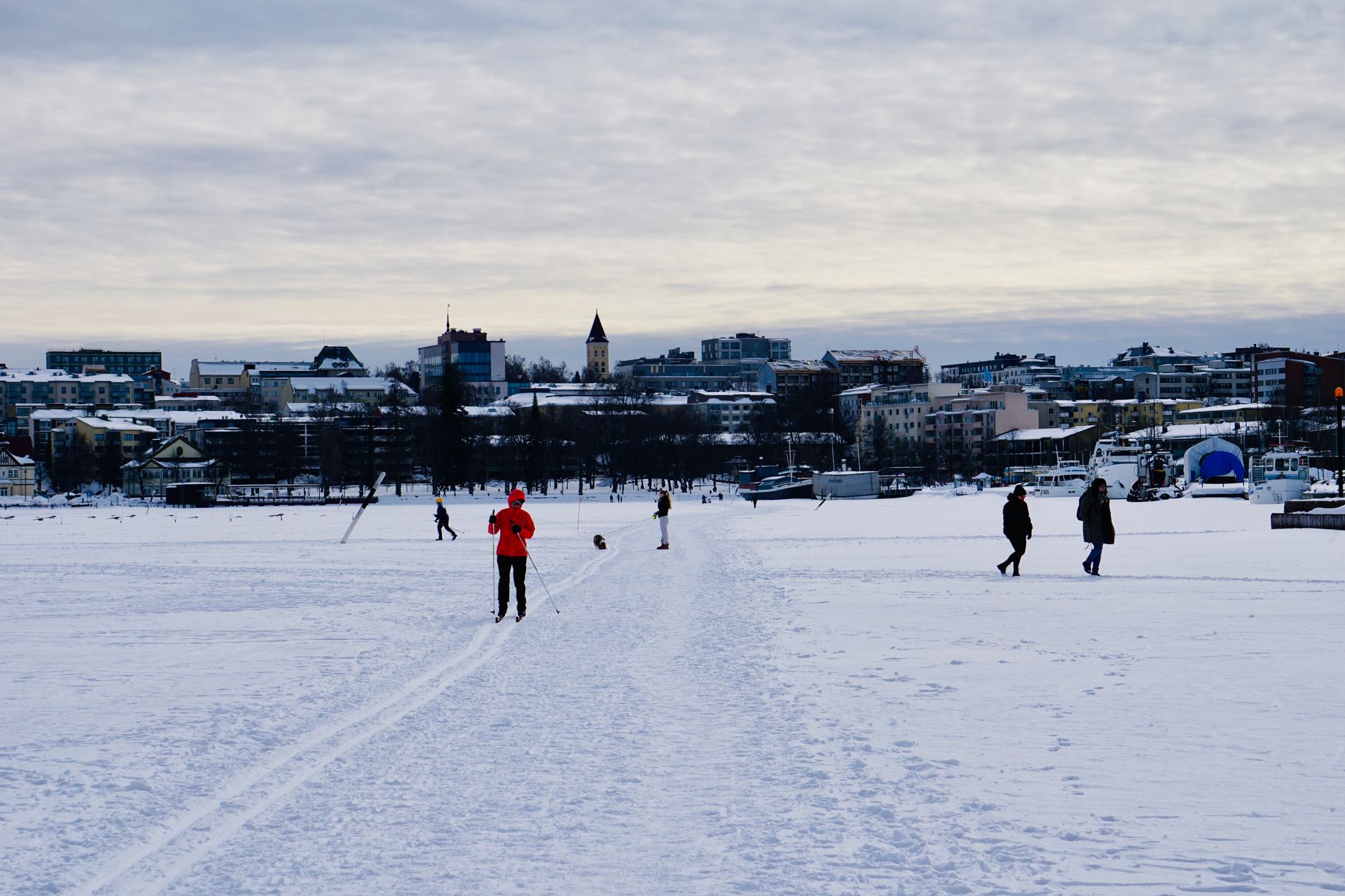
Finland changes character by latitude more than most countries. Helsinki can feel mild and rainy while Inari sits under deep snow and polar night, and summer daylight stretches absurdly long in the north. January to March is best for snow and aurora trips; June to August suits lakes, ferries and long evening walks.
Mobile coverage is strong and public Wi-Fi is easy to find in stations, hotels and cafes. The useful travel apps are HSL for Helsinki transport, VR Matkalla for trains, Matkahuolto Matkat for buses, Waltti Mobile for many regional transit systems, and 112 Suomi for emergencies with location sharing.
Finland is one of the easier countries in Europe for low-drama travel: violent crime is rare, tap water is reliable and streets feel calm late into the evening. The real risks are weather, ice and distance. In Lapland around Rovaniemi, Kittilä and Inari, winter roads, short daylight and cold injury matter more than petty theft.
Accommodation, alcohol, taxis and winter activities push costs up fastest. Save money with supermarket lunches, rail over short domestic flights, and fewer one-night stays.
VR sleeper cabins to Lapland can be good value, but the cheapest fares vanish first on winter and school-holiday dates. If Rovaniemi or Kolari is part of the plan, book as soon as your travel dates hold.
Rooms in Rovaniemi, Kittilä and Inari fill far ahead for December through March. Waiting for a weather forecast is a good way to pay more for worse choices.
HSL, VR Matkalla, Matkahuolto Matkat and Waltti Mobile remove most ticket friction. Finland is a phone-first country for transport, and paper tickets are rarely the easiest option.
Weekday lunch deals are often the best-value meal of the day, especially in Helsinki and Tampere. The same kitchen that costs real money at night may offer a fixed lunch for a fraction of the price.
Finnish politeness is quiet, not gushy. People queue properly, keep their voices down on public transport, and leave more space around strangers than you may expect.
A Lapland road trip sounds simple until you meet darkness at 3 pm, black ice and reindeer standing where they please. If you are not comfortable on winter roads, use trains, buses and airport transfers instead.
Explore Finland with a personal guide in your pocket
Audio guides for 1,100+ cities across 96 countries. History, stories, and local insight — offline ready.
No, US citizens can usually visit Finland visa-free for up to 90 days in any 180-day period under Schengen rules. Your passport should be less than 10 years old on entry and valid for at least 3 months after you leave the Schengen area.
Yes, Finland is expensive by most European standards, especially for hotels, alcohol, taxis and Lapland activities. A workable daily budget is roughly €85 to €130 for budget travel, €170 to €280 for mid-range, and much more once you add winter excursions in Rovaniemi, Kittilä or Inari.
Trains are best on the main routes, buses matter in the gaps, and a car only makes sense in regions with thin public transport. Helsinki, Tampere, Turku, Oulu and Rovaniemi work well by rail, while Lakeland and parts of Lapland reward drivers who know what they are doing.
It depends on what you want. June to August is best for cities, lakes and archipelago trips, while January to March is strongest for snow, ski travel and northern lights in Lapland. April and October are shoulder months with lower prices but less predictable conditions.
Yes, but you need the right region and season. Your odds improve sharply north of the Arctic Circle, especially around Inari, Kittilä and Rovaniemi between late autumn and early spring, and you still need clear skies and patience.
Yes, travelers can function easily in English, especially in Helsinki and other cities. Finnish and Swedish are the national languages, but staff in hotels, transport, museums and many restaurants usually switch to English without drama.
Usually no. Card and contactless payments are accepted almost everywhere, including public transport and many market stalls, though carrying a little cash can still help at small rural events or older kiosks.
Three days works for Helsinki and Porvoo, a week gives you one region properly, and 10 to 14 days lets you combine south and north without turning the trip into a luggage drill. Finland is long, and distances matter more than the map first suggests.
Yes, Finland is one of the safer countries in Europe for solo travel. The bigger problems are practical rather than criminal: icy pavements, winter weather, long distances between services, and the cost of a bad transport decision.
Last reviewed