Suva

Fiji

Suva

Suva isn’t a beach—it's Fiji’s rainy, multicultural capital where 60,000-seat rugby stadiums sit beside 1914 ocean canoes and curry stalls sell roti for a dollar.

location_on 15 attractions
calendar_month May–October (dry, cool)
schedule 2–3 days

Introduction

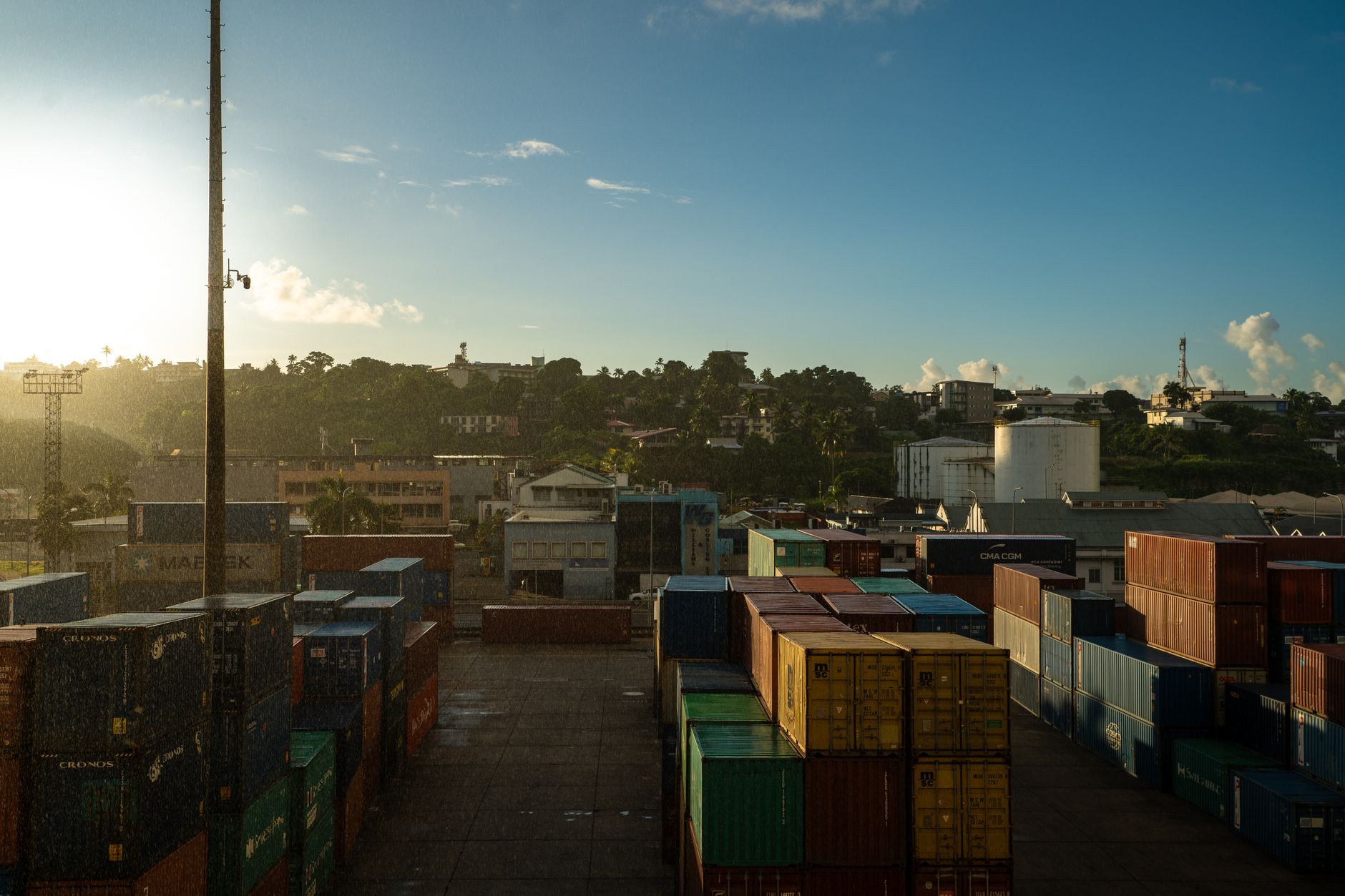
The air in Suva smells of Sunday earth ovens at noon and cardamom at midnight. Fiji’s capital isn’t the palm-fringed postcard you expect — it’s a wet-haired, diesel-scented port city where 19th-century stone arcades echo with Hindi film songs and the sea wall fills with car-meet exhaust at dusk. Come for the rainforest waterfalls twenty minutes away; stay because the market vendor remembers how you like your kokoda spiced.

Colonial arcades shoulder up against curry houses built from the same coral-block masonry that once held cannons. In the Municipal Market, morning light cuts through taro leaves and catches on gold bangles as Indo-Fijian aunties grind kava root to powder. The city’s soundtrack is gospel choir versus Bollywood bass, both leaking from open windows above sidewalks slick with afternoon rain.

Suva rewards pedestrians who don’t mind stray dogs outside the sea-wall loop. One block inland you’ll find the 1914 Grand Pacific Hotel where Queen Elizabeth II once danced, now hosting university students for $8 happy-hour rum. Keep walking and the pavement ends at Colo-i-Suva, a mahogany forest where you can swim under a waterfall and still be back in time for goat curry that’s been simmering since dawn.

What Makes This City Special

A Canoe That Crossed Oceans

The Fiji Museum’s 13-metre Ratu Finau drua is a 1914 working replica of the double-hulled war canoes that once carried 200 warriors 1,500 km across open Pacific water. Stand close enough and you’ll see the lashed coconut-fiber seams flex, proof that indigenous engineering beat Europe to the composite-hull idea by six centuries.

Kava Capital After Dark

Suva’s kava bars aren’t themed lounges—they’re fluorescent-lit concrete rooms where politics students, dock workers and parliamentarians sit cross-legged on the same split-sack floor, waiting for the peppery root to numb their tongues. Order a ‘high tide’ bowl and you’ll taste the exact drink that sealed village alliances 3,000 years ago.

Rainforest Pools 20 Minutes Away

Colo-i-Suva Forest Park is a 2.5 km² wedge of mahogany and dakua trees where orange doves flash like live coals above swimming holes the temperature of bathwater. Locals arrive at 6 a.m. to swing from rope vines before cruise crowds arrive; if you hear reggae drifting uphill, someone’s already fired up a portable speaker at the lower falls.

Historical Timeline

Capital on Swampy Ground

From hilltop fort to coup-scarred capital in 3,500 restless years

sailing
c. 1500 BCE

Lapita Canoes Beach

Salt-stained prows slide onto the mudflats where Suva’s harbour will later sprawl. The potters unload their stamped-red clay and a taste for oceanic risk that still runs in local blood. Their shards, 3 mm thick, lie under Thurston Gardens today.

person
c. 350 BCE

Tabanimakoveve Crosses the Divide

The war-chief leads his clan over Viti Levu’s mist-slick spine, chasing the echo of the snake-god Degei. They plant yams on the ridge above what will be Pratt Street and name the slope Uluvatu—‘stone of listening’. The city’s first skyline is a wooden stockade.

church
1822

Methodists Test the Water

Missionaries Cross and Cargill step ashore at Nubukalou creek, pockets stuffed with Fijian phrasebooks and smallpox the locals can’t spell yet. They find a town of 600 living inside a palisaded ditch where Government House lawns now sprout. Conversion stalls; they withdraw within a year.

local_fire_department
1843

The Town Burns

Firebrands from Rewa light Suva’s thatch on a wind-fed night. By dawn only blackened posts remain above the harbour; survivors relocate upriver to Draiba. The charred layer, 12 cm down, is still traced by archaeologists beneath the museum carpark.

gavel
1868

Cakobau Sells the Swamp

The Tui Viti, drowning in debt to American claims courts, signs away 575 km² around Suva to a Melbourne land company for £3,000. Surveyors drain mangroves, plant cotton, watch it fail. The ground, they complain, ‘burps when you walk’.

flag
1874

Union Jack over Korobaba

Under the banyan at Nasova, Chiefs hand Queen Victoria a country they’ve never seen. The Union Jack replaces the whale-tooth standard. Suva’s first Union Jack is sewn by the missionary’s wife on a treadle machine that still clacks in the museum attic.

sick
1875

Measles Silences the Drums

A royal visit gifts Fiji its first pandemic: one in three Fijians dead within months. Suva’s new hospital, timber-walled and fly-blown, overflows onto Albert Park. The mass graves outside town are still hit by roadworks.

flight
1879

The Leonidas Docks

The first coolies stagger down the gangway—Ganges dust in their lungs, girmit papers in their fists. Within weeks they’re cutting cane from Nausori to Sigatoka. By 1916 their grandchildren will own half the shops on Cumming Street and invent the curry-parcel lunch.

castle
1882

Capital Moves to the Marsh

The governor’s desk arrives by whaleboat—Levuka’s cliffs having proved too cramped for empire. Clerks nail together Government House on drained mud that smells of sulphur at noon. Suva’s first census: 1,200 humans, 3,000 mosquitoes per capita.

church
1902

Sacred Heart Rises

Coral-stone blocks, lugged up from the reef at low tide, lock into place above Victoria Parade. The bell, cast in Marseilles, still rings a semitone flat—blamed on the humidity that warps choir lungs every Sunday.

sailing
1914

Ratu Finau Launches

In a shed on Walu Bay, shipwrights lash two hulls and a crab-claw sail that can outrun steamers. The 25-metre drua is the last great ocean-going canoe of Polynesia; today it hangs ghost-like above museum visitors who still smell the kauri resin.

person
1926

Don Dunstan Born in the Hospital Annex

A red-haired boy enters the world in the Suva Colonial Hospital, third floor, sea-view ward. He will grow up to decriminalise homosexuality in South Australia and invent the political term ‘Dunstan Decade’. The ward is now the accounts office.

swords
1942

Allied Fleet Crowds the Harbour

Seaplanes darken the inner bay, their pontoons slapping against ferry wakes. 30,000 US servicemen turn Victoria Parade into a swing-juke blur of Lucky Strikes and spam. When they leave, the city keeps the neon and the taste for canned pineapple.

public
1953

The Queen’s Umbrella Shivers

Elizabeth II steps onto Albert Park at 11:04 a.m.; by 11:05 the ground jolts 6.8 on the Richter scale. The royal umbrella snaps shut like a gunshot. No deaths, but the Grand Pacific Hotel gains a permanent lean that bartenders still measure with spilt beer.

school
1968

USP Opens Its Doors

Temporary prefabs sprout on Laucala Bay ridge, promised for ‘five years max’. Fifty years on the same huts teach 12 Pacific nations how to argue about sovereignty. The library’s first book: a water-stained copy of ‘Decolonisation for Beginners’.

flag
1970

Midnight Flag Swap

At 12:00 a.m. 10 October the Union Jack descends; the Fijian sky-blue banner lifts into floodlights. Fireworks bounce off low cloud and set fire to the police band’s sheet music. Independence tastes of gunpowder and rain-soaked tapa.

swords
May 1987

Rabuka Storms Parliament

Soldiers in red berets seal the doors while MPs debate wheat subsidies. By sunset the elected Indian-led government is marched out at gunpoint. Suva’s streetlights flicker—power-cut or warning, nobody agrees. The first coup lasts ten minutes; the hangover, decades.

gavel
May 2000

Speight Locks the House

Businessman George Speight strolls into Parliament wearing a sulu and a pistol, orders the Prime Minister to the floor. Fifty-six days of stalemate follow; journalists camp on the lawn, live-feeding via satellite dishes that hum like cicadas. The hostage crisis ends with a whispered apology and eight life sentences.

swords
Dec 2006

Bainimarama Takes the Studio

At 6:00 p.m. the national broadcaster interrupts a Bollywood musical. Commodore Bainimarama, in full dress whites, declares ‘clean-up campaign’. The transmission cuts to a test pattern; when it returns, the news anchor is gone and the script has changed tense.

public
2016

Gold for Suva Sevens

At Rio’s Deodoro stadium, Suva-born Jerry Tuwai sidesteps the last English tackle. The final whistle sparks a national cacophony: pots, pans, taxi horns, church bells. For one night the city’s potholes feel like minor bruises on a golden body.

sick
2021

Covid Seals the Harbour

Cruise ships vanish; the sea wall becomes a jogging track for masked civil servants. At night the market smells only of bleach and over-ripe pawpaw. The city learns the sound of its own breath—no tourists, just fruit bats and curfew sirens.
schedule
Present Day

Notable Figures

Jimmy Snuka

1943–2017 · Pro-wrestler
Born here

The boy who dove off balcony rails at the old Capital Theatre became ‘Superfly’ in sold-out American arenas. He’d still recognise the sea-wall skyline—only the cinema is now a phone-shop.

Waisale Serevi

born 1968 · Rugby sevens legend
Born here

He learnt sidesteps dodging potholes on Ratu Sukuna Road and still returns to coach kids between shipping containers doubling as goal-posts. Ask any taxi driver—everyone has a Serevi story.

Don Dunstan

1926–1999 · Australian reformist premier
Born here

Conceived in a colonial bungalow now swallowed by government offices, he later decriminalised homosexuality half a continent away. His Suva birth certificate is filed in the same courthouse where coup trials still echo.

Ratu Sir Kamisese Mara

1920–2004 · Fiji’s founding PM
Died here

He negotiated independence over whisky in the Grand Pacific Hotel and named his residence ‘Tuisawau’ after the hill it sits on. The flag still flies half-mast there whenever Suva loses a statesman.

Craig Parker

born 1970 · Actor
Born here

Elf lord Haldir spent his first years chasing mongoose through Thurston Gardens; he claims the banyan roots taught him how to look mystical in Middle-earth close-ups.

Practical Information

flight

Getting There

Fly into Nausori Airport (SUV) 23 km northeast—Fiji Link and Northern Air run 30-minute hops from Nadi (NAN) for FJ$100–170 return. No rail line exists; overland, Queens Road is the sealed 190 km highway from Nadi, covered by express buses in 4–5 hrs for under FJ$25. Cruise ships dock at Kings Wharf, a ten-minute flat walk to the city centre.

directions_transit

Getting Around

Suva has no metro or tram—movement is by diesel bus, taxi and foot. Buses hub at the Municipal Market; buy an eTransport card from any Vodafone outlet (card cost FJ$2, then top up) and swipe for fares that rarely exceed FJ$2.50. Taxis start at FJ$1.50; insist on the meter inside city limits, negotiate everything beyond. Central Suva is walkable end-to-end in 35 minutes.

thermostat

Climate & Best Time

Suva sits on the windward coast and soaks up 3,000 mm of rain a year—expect afternoon downpours any month. May–October (dry season) brings 22–28 °C days and lower humidity; November–April climbs to 26–32 °C with sticky nights and cyclone potential. June–September is peak visitor window, but hotel rates drop 20 % in February–March if you pack a serious rain jacket.

translate

Language & Currency

English is the working language of government and universities, so you’ll navigate markets, taxis and nightclubs without phrasebook panic. The Fijian dollar (FJ$) is the only cash accepted at municipal markets; ATMs are plentiful, but carry small bills—vendors often can’t break FJ$50 notes before 9 a.m.

Tips for Visitors

directions_walk
Walk the Sea Wall

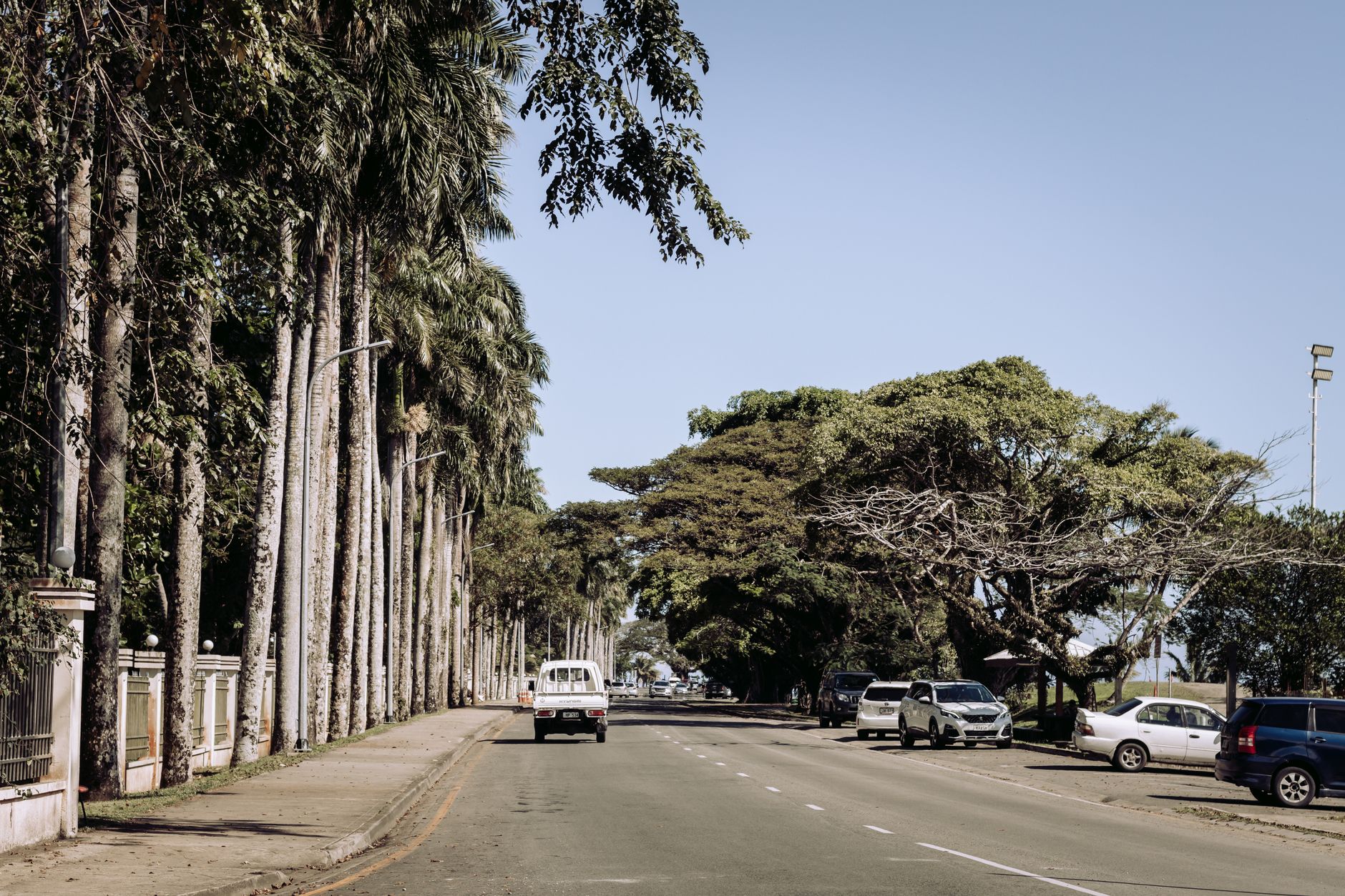
The 4 km sea wall is the only place joggers can outrun the city's stray dogs safely. Go at sunrise when the tide is high and the mangroves don't smell.

attach_money
Buy e-Transport Card

Pick up a disposable eTransport card at any Vodafone kiosk to ride the bright orange buses for under a dollar. No exact change needed, no tourist markup.

restaurant
Market Breakfast

Before 8 a.m. the Municipal Market sells roti parcels stuffed with curry for FJ$1.50 and pineapples carved into lollipops. Upstairs, kava vendors will let you sniff the peppery root before you buy.

warning
Skip Low Tide

The sea-wall path reeks at low tide when mud-crab hunters churn the flats. Check the tide chart in the Fiji Times before you set out.

photo_camera
Colo-i-Suva Early

Arrive at Colo-i-Suva Forest Park before 9 a.m. on weekdays and you'll have the rope-swing swimming holes to yourself. Cruise-ship days turn the trails into a conga line.

local_taxi
Negotiate Taxis

Meters work only inside city limits. Beyond the bridge to Suvavou, agree on the fare before you get in—FJ$8–10 to Mount Korobaba trailhead is fair.

Explore the city with a personal guide in your pocket

Your Personal Curator, in Your Pocket.

Audio guides for 1,100+ cities across 96 countries. History, stories, and local insight — offline ready.

smartphone

Audiala App

Available on iOS & Android

download Download Now

Join 50k+ Curators

Frequently Asked

Is Suva worth visiting compared to Fiji’s beach resorts? add

Yes—Suva is Fiji’s only real city, where Indo-Fijian curry houses share streets with kava bars and the national museum keeps a 14-metre ocean-going canoe built in 1914. You come here for rainforest swimming holes and conversations, not picture-postcard sand.

How many days should I spend in Suva? add

Two full days covers the museum, central markets, sea-wall sunset and a half-day trip to Colo-i-Suva’s waterfalls. Add a third day if you want to tube the Navua River or hike Mount Korobaba.

What’s the cheapest way from Nadi airport to Suva? add

The Sunbeam or Pacific Express bus follows the Queens Road for about FJ$20 and five hours. Domestic flights (30 min) run FJ$100–170 return if you book a week ahead.

Can I drink the tap water in Suva? add

City water is treated and generally safe at hotels, but tastes heavily chlorinated. Most locals drink boiled or bottled water—FJ$2 for a 1.5 L bottle at any corner store.

When is the best weather in Suva? add

May–October brings cooler, drier days (22–26 °C) and fewer mosquitoes. November–April is hot, humid and cyclone-prone; afternoon downpours are almost guaranteed.

Are there unsafe areas for tourists at night? add

Stick to the sea wall and well-lit central streets after dark. Aggressive stray dogs roam farther suburbs; take a taxi if your accommodation lies beyond the municipal market.

Do I need to tip in Suva? add

Tipping isn’t customary and bills rarely include service charges. Rounding up a taxi fare or leaving spare coins at a curry house is appreciated but never expected.

Sources

Last reviewed: