Introduction
A Federated States of Micronesia travel guide starts with a surprise: this country has 607 islands, one UNESCO ruin-city, and almost no crowds.
The Federated States of Micronesia is less a single destination than four distinct island worlds spread across a huge slice of the western Pacific. On Pohnpei, rain hammers breadfruit trees, sakau is poured with ceremony, and the basalt ruins of Nan Madol sit in tidal canals like an argument with gravity. Kolonia works as the practical base for that side of the country, while Palikir, the national capital, hides in the island's green interior rather than staking its claim on the coast.
Chuuk pulls divers toward Weno and the wrecks of Chuuk Lagoon, where freighters, aircraft, and oil tankers from Operation Hailstone now lie under coral and clear blue water. Farther west, Yap keeps a different tempo: stone money, village paths, and outer-island seafaring traditions that still shape daily life. Colonia is the usual entry point there. Then Kosrae shifts the mood again. Tofol, Lelu, and Okat sit on an island of steep forest, mangroves, and reef where the silence can feel almost engineered.
Come here for wreck diving, reef walls, and Pacific history that never quite left the shore. Stay long enough and the country starts to make sense through texture: the numb, earthy pull of sakau in Pohnpei, the wreck silhouettes off Weno, the ruined channels at Nan Madol, the humid green roads beyond Tofol, the far-flung names on the map such as Ulithi Atoll, Sapwuahfik Atoll, Tol Island, and Onoun that remind you how much of Micronesia still sits outside the usual travel script.
A History Told Through Its Eras
The Sea Road Before Any Throne
Voyaging Foundations, c. 2000 BCE-1100 CE
A canoe lifts on the dark Pacific, no compass in sight, only stars, swell, and memory. Long before anyone spoke of the Federated States of Micronesia, Austronesian navigators were already crossing water that looks, to an untrained eye, empty beyond reason.
What they carried was not only breadfruit shoots, taro, pigs, and fire. They carried a science held in the body. In the Caroline Islands, master navigators learned to read the angle of waves against the hull and to think in moving islands, the elegant logic later described as etak.
Ce que l'on ignore souvent, c'est que this was never a primitive prelude waiting for foreign maps to arrive. It was a complete world of rank, exchange, marriage, and ceremony spread across hundreds of islands, from the atolls of Ulithi Atoll and Onoun to the high islands farther east, with sea routes serving as roads, archives, and diplomatic channels all at once.
Yap, in particular, turned memory itself into currency. The famous rai stones, quarried in Palau and brought back over 450 kilometers of open sea, did not need to move in order to change hands. A stone could sink and still remain wealth, provided the community agreed on its story. That single detail tells you almost everything about Micronesia before empire: value lived in collective recognition, not in metal locked in a treasury.
Out of that oceanic order grew distinct island societies, each with its own language and etiquette, the ancestors of the worlds later centered on Weno, Kolonia, and Lelu. The sea connected them. It also prepared the stage for the first great court of basalt.
Weriyeng, remembered in Carolinian navigation lore, stands for the generations of master sailors who turned wave patterns into knowledge and knowledge into survival.
One celebrated Yapese stone money disk reportedly sank during transport, yet everyone agreed it still existed and still had an owner, so it remained valid wealth on the seabed.
Basalt, Tribute, and the Lords of Nan Madol
Saudeleur Pohnpei, c. 1100-1628
At dawn the tidal canals of Nan Madol fill with pale light, and the basalt walls rise as if they had grown there by some marine spell. They did not. On the reef off southeastern Pohnpei, near what travelers now reach from Kolonia, rulers of the Saudeleur dynasty assembled one of the Pacific's most astonishing ceremonial capitals, an urban complex of artificial islets built from columnar basalt and coral fill.
This was no picturesque ruin. It was a machine of power. Priests, retainers, nobles, and specialists occupied separate islets; tribute arrived by canoe; sacred turtles were kept under watch; rulers were buried in stone enclosures that still feel like royal theatre after eight centuries of rain.
According to tradition, the founding brothers Olosohpa and Olisihpa came from the west, magicians to some, engineers to others, and the island never forgot the drama of their arrival. Legend says the stones flew. Archaeology says an immense labor force moved perhaps hundreds of thousands of tons across tidal flats. Between the two versions lies the same truth: the achievement was so immense that memory reached for the language of wonder.
The Saudeleur court also knew how to make itself hated. Oral histories remember rigid tribute demands and taboos that reached into daily life itself, including the famous claim that commoners were forbidden to raise eels because the creature belonged to royal ritual. One law, almost absurd in its precision, and suddenly the dynasty becomes visible: power had entered the fishpond.
By the early seventeenth century, ceremony had hardened into burden. Nan Madol, today the great magnet of Pohnpei and one of the country's defining historical names, had become the perfect royal paradox: magnificent enough to awe the world, heavy enough to provoke its own overthrow.
Olosohpa, half founder and half legend, survives in memory as the stranger who finished the stone city and fathered a dynasty the island would one day curse.
Nan Madol's ruling complex was organized across nearly a hundred artificial islets, each with a role so specific that even sacred turtle keeping had its own architectural space.
Isokelekel, the Fall of the Basalt Court, and the Islands That Refused a Single Crown
Revolt and Island Polities, c. 1628-1885
A fleet appears off Pohnpei, 333 warriors according to tradition, and history takes the shape of an epic. Isokelekel, said to be the son of a thunder god and raised in Kosrae, came to topple the Saudeleur and did what conquerors always promise and seldom manage: he destroyed a tyranny, then broke power apart instead of hoarding it in one palace.
After Nan Madol fell, Pohnpei did not replace one absolute ruler with another. It developed a more distributed order of nahnmwarki chiefdoms, rooted in land, kinship, title, and ceremony. Ce que l'on ignore souvent, c'est que this political choice matters as much as the battle itself. Micronesian history is not merely a sequence of outside empires arriving by ship; it is also a long defense of local authority in forms foreigners rarely understood.
Elsewhere, the island worlds kept their own grammar of rank. Yap preserved its estate system and ceremonial exchanges, with stone money banks still marking villages around what is now Colonia and the outer island routes running through places such as Ulithi Atoll. Chuuk's lagoon communities, later focused in and around Weno, lived within a world of chiefly ties, matrilineal obligations, and sheltered maritime intimacy rather than monumental courts.
Kosrae, too, had its own aristocratic past. At Lelu, near present-day Tofol and Okat, coral causeways, walled compounds, and royal spaces formed another island capital, smaller than Nan Madol but no less revealing. Here again, power had a taste for enclosure, lineage, and spectacle.
Then the horizon changed. Whalers, missionaries, traders, disease, and firearms began arriving in uneven waves during the nineteenth century, and the old island orders found themselves negotiating with visitors who wrote contracts, preached salvation, and measured land with new greed. The age of clan diplomacy was about to meet the age of flags.
Isokelekel enters Pohnpeian memory as a liberator, but the haunting detail is his old age: oral tradition remembers the conqueror not only in triumph, but in frailty.
Some versions of the Isokelekel story preserve a late-life lament in which the victorious warrior mourns that younger men no longer see the man he once was.
From Imperial Outposts to the Birth of the Federated States
Flags, War, and a New Federation, 1885-1986
In 1885 the Spanish flag was raised over islands Madrid barely understood. A few years later Germany bought Spain's Micronesian possessions, then Japan seized them during the First World War, and after the Second came American trusteeship. Four empires in a century. On paper it looks brisk. On the ground, each transfer left schools, churches, roads, property claims, and new habits of power.
Japanese rule changed daily life more deeply than many visitors realize. Settlers, sugar schemes, commercial networks, and military installations remade parts of Chuuk and Pohnpei. In some communities around Weno, families still carry Japanese ancestry, the intimate afterlife of empire written not in treaties but in surnames, photographs, and grandmothers' stories.
Then came February 1944. In Chuuk Lagoon, the Japanese stronghold once called Truk was shattered by Operation Hailstone, a two-day American assault that sent ships and aircraft to the lagoon floor. The wrecks that divers now visit near Weno are not underwater décor. They are a war archive of oil, steel, porcelain, helmets, human ambition, and sudden death.
After 1945, the United States administered the islands as part of the Trust Territory of the Pacific Islands, and a new political language entered the conversation: constitutional convention, district government, self-government, federation. That process was not romantic. It involved distance, compromise, money, and the awkward truth that Yap, Chuuk, Pohnpei, and Kosrae did not naturally think as one state because history had trained them otherwise.
The Constitution was ratified in 1979, the Federated States of Micronesia formally entered into free association with the United States in 1986, and later the national capital was established at Palikir on Pohnpei rather than in coastal Kolonia. A quiet administrative decision, perhaps. Yet it says everything about the final chapter: out of scattered islands, colonial debris, and older sovereignties, a federation had been invented. Fragile, negotiated, very young, and entirely shaped by the centuries before it.
Tosiwo Nakayama became the federation's first president not because Micronesia had always been one country, but because he persuaded different island histories to sit at the same table.
Palikir became the capital only in 1989, replacing the more established coastal center of Kolonia with a purpose-built seat of government set inland on Pohnpei.
The Cultural Soul
When Grammar Bows Before a Chief
In the Federated States of Micronesia, language does not merely describe rank. It performs it. English keeps the airports, offices, and schoolrooms running, but daily life beats in Chuukese in Weno, in Pohnpeian around Kolonia and Palikir, in Yapese near Colonia, in Kosraean around Tofol and Lelu. You hear the shift before you understand it: softer vowels, longer pauses, a care with address that makes many European languages sound like doors slammed in a hallway.
Pohnpeian fascinates me most because it has the elegance to kneel. Honorific speech is not decorative lace stitched onto ordinary grammar. It changes the sentence itself when a chief, an elder, or ritual space enters the room. A language that keeps special forms for respect has grasped something modern societies keep trying to forget: words are physical acts.
Then comes "Kaselehlie." It gets translated as hello, goodbye, welcome, all-purpose politeness. Miserable reduction. Local explanations give it more tenderness than English usually dares: your presence makes something in me beautiful. A country is sometimes a sentence no translation survives.
Breadfruit, Coconut, and the Moral Weight of a Guest
Micronesian food begins with starch and saltwater. Breadfruit, taro, yam, banana, pandanus, reef fish, coconut milk. This is not peasant simplicity in the European sense. It is a grammar of sufficiency, precise and old, in which the softness of pounded taro, the smoke caught in roasted breadfruit, and the fat of coconut decide whether a meal is merely edible or worthy of memory.
On Pohnpei, around Kolonia and the road that bends toward Nan Madol, sakau changes the entire atmosphere of evening. The pepper root is pounded, strained through hibiscus bark, poured into a coconut shell, and swallowed in one dark movement. Conversation slows. Mouths go numb. Eyes brighten. Ritual does not announce itself with trumpets here. It sits cross-legged on a mat and waits for your pulse to lower.
Guests are fed first. That fact tells you almost everything. In much of the Federated States of Micronesia, hospitality is not a performance for outsiders and not a billable service with a smile attached. It is moral syntax. Who receives the first cup, the first fish, the better cut of pork at a feast in Tofol or Palikir is social text, and the table reads you back.
The Art of Speaking Softly While Meaning Everything
Public life in these islands has a low volume and a high charge. People tend to speak gently, especially where age, title, church standing, or clan history are present, and the effect on a visitor can be disorienting if one comes from a culture that mistakes bluntness for honesty. Silence is not emptiness here. Silence listens.
Watch a gathering in Weno or Colonia. Watch who sits first, who is served first, who waits without complaint, who does not interrupt. Etiquette in the Federated States of Micronesia is almost architectural: invisible beams, exact load-bearing points, one wrong movement and the whole room feels it. Seating order can tell you more than any introduction.
This can make an outsider restless. Good. Restlessness is often vanity with no place to sit. The wiser approach is slower: lower your voice, do not rush a refusal into becoming a yes, and understand that courtesy here is not a cosmetic layer placed over social life. It is social life.
Basalt Laid Like a Spell
Nan Madol, near modern Kolonia on Pohnpei, is one of the few places on earth where stone seems to have acquired intention. Basalt columns lie stacked in crossing patterns on artificial islets, canal by canal, wall by wall, as if a patient giant had discovered joinery. Numbers help and fail at once: nearly a hundred islets, hundreds of thousands of tons of stone, a ceremonial capital built on tidal flats between about the 12th and 17th centuries. The arithmetic is impressive. The feeling is stranger.
You arrive and the place refuses every lazy category. It is not ruin in the Mediterranean sense. Not fortress, not palace, not temple alone. It behaves more like a ritual machine built out of volcanic geometry and tidewater. Mangroves press close. Salt hangs in the air. The canals hold a silence that feels engineered.
Elsewhere in the country, architecture often prefers humility: meeting houses, church compounds, raised dwellings, practical concrete softened by breadfruit shade and rust. Then Nan Madol appears and all modesty ends. Every civilization has one place where it decides to become improbable.
Sunday White, Sakau Brown
Christianity runs deep in the Federated States of Micronesia, but it did not erase older orders. It entered them, argued with them, borrowed their timing, and now lives beside them in a negotiation of remarkable stamina. On Sunday in Tofol or Colonia, church clothes carry their own liturgy: pressed shirts, clean dresses, polished shoes on roads that do not always deserve them. Elegance becomes devotion.
Yet ancestral authority never entirely left the room. Chiefs still matter. Custom still matters. Ceremonial exchange still has force. On Pohnpei, sakau gatherings can feel almost monastic in their concentration, even when they are social, and a visitor begins to understand that religion here is not only what happens in a chapel. It is also what happens when a community agrees on the proper order of reverence.
This produces a seriousness I admire. Not gloom. Seriousness. The islands know that ritual is a technology for handling power, grief, gratitude, hierarchy, and weather. Europeans once had this knowledge and misplaced it somewhere between irony and convenience.
The Archive Kept in the Mouth
Micronesian literature does not begin on the page. It begins in the mouth, in chant, genealogy, origin story, navigational teaching, lament, and the repeated telling that keeps land and sea from becoming anonymous. Oral tradition is not a preliminary stage before writing arrives to civilize it. It is a high form with severe demands: memory, cadence, authority, timing, permission.
That is why stories around Nan Madol matter so much. The sorcerer-founders Olisihpa and Olosohpa, the tyranny of the Saudeleur, the arrival of Isokelekel from Kosrae, the old epic structure of invasion, legitimacy, and grief: these are not quaint tales left over after history finishes. They are one of history's principal instruments in the Federated States of Micronesia. Legend and record do not merge, but they sit very close, like relatives who disagree and keep attending the same funeral.
Modern writers from the region, including voices shaped by migration to Guam, Hawaii, or the continental United States, carry this oral inheritance into essays and poems that understand exile with painful precision. A small archipelago produces a large verb: to remember. On islands scattered this far apart, memory is transport.
What Makes Federated States of Micronesia Unmissable
Nan Madol Basalt City
Off the coast of Pohnpei, Nan Madol rises from tidal channels on artificial islets built with massive basalt columns. It is the country's great historical shock: ceremonial architecture on a reef, still half explained and impossible to confuse with anywhere else in the Pacific.
Chuuk Lagoon Wrecks
Weno is the gateway to one of the world's densest concentrations of WWII wreck dives. Ships and aircraft sunk in February 1944 now sit under coral growth, turning war debris into an underwater archive you can actually swim through.
Reefs Without Crowds
Sea temperatures stay warm year-round, visibility is often excellent in the drier months, and visitor numbers remain low by Pacific standards. That means cleaner reef experiences around Pohnpei, Kosrae, and the outer islands, without the queueing and boat traffic common elsewhere.
Four States, Four Cultures
Yap, Chuuk, Pohnpei, and Kosrae do not blur into one generic island story. Languages, rank systems, food traditions, and even the social pace shift from Colonia to Weno to Kolonia to Tofol, which gives country-wide travel real texture.
Sakau and Island Food
Meals here are built around breadfruit, taro, banana, fish, and coconut, with ceremony never far from the table. In Pohnpei, sakau matters as much socially as it does gastronomically, and drinking it properly tells you more than a museum label ever could.
Cities
Cities in Federated States of Micronesia
Kolonia
"Pohnpei's rain-soaked capital holds Spanish wall ruins, a morning market smelling of smoked fish, and the last cold beer before the road dissolves into jungle."
Nan Madol
"Ninety-two basalt-walled islets rising from a tidal flat, built without wheels or draft animals by a dynasty that banned commoners from keeping eels."
Weno
"Chuuk's main island is the unglamorous key to the Ghost Fleet below — dive shops and rusted rooftops masking one of the Pacific's most extraordinary underwater archives."
Colonia
"Yap's modest capital is where you walk past four-tonne limestone discs leaning against village paths, still legally owned, still never moved."
Tofol
"Kosrae's quiet administrative center sits at the foot of Mount Finkol, a starting point for a state so green and unhurried that travelers routinely miss their departing flight on purpose."
Okat
"A Kosraean harbor village near the ruins of Lelu, where basalt-walled royal compounds from the 13th century stand half-swallowed by mangrove."
Lelu
"Kosrae's ancient stone city predates European contact by centuries, its basalt corridors and royal tombs a quieter, less-visited answer to Nan Madol across the archipelago."
Sapwuahfik Atoll
"A Pohnpei-state outer atoll where a single violent 1837 massacre reduced the original population to one man and a handful of survivors, now resettled and rarely visited."
Ulithi Atoll
"A Yap outer-island atoll that served as the US Navy's largest forward anchorage in the Pacific during WWII, today holding fewer than 1,000 people and extraordinary traditional navigation knowledge."
Palikir
"FSM's purpose-built capital on Pohnpei is less a city than a cluster of government buildings in the jungle — notable precisely because it reveals how lightly the nation wears its statehood."
Tol Island
"The largest island inside Chuuk Lagoon rises to 443 metres and shelters villages where Japanese-Micronesian family lineages from the colonial period are still openly acknowledged."
Onoun
"A remote Chuuk outer island in the Mortlock group where traditional navigation, weaving, and canoe-building survive not as performance but as the unremarkable fabric of daily life."
Regions
Kolonia
Pohnpei Core
Kolonia is the country's most practical base and still the place where visitors first grasp how wet, green, and historically layered Pohnpei is. The roads are short, the rain arrives fast, and within an hour you can move from government offices in Palikir to the mangrove edge near Nan Madol. This is the best region for travelers who want history, logistics, and access to sakau evenings in the same day.
Weno
Chuuk Lagoon
Weno is busy by FSM standards, though that still means a small waterfront town where the day bends around boats, weather, and family obligations. The lagoon is the draw, but Chuuk becomes more interesting once you leave the dive briefings behind and look toward Tol Island and the smaller communities further out. Water dominates everything here, including the sense of distance.
Colonia
Yap Islands
Colonia is one of the few places in the Pacific where tradition still shapes the public mood in ways a visitor notices straight away. Stone money sites, village paths, and formal etiquette still matter, and the contrast with the outer islands is not theatrical but structural. If Pohnpei feels lush and inward, Yap feels composed, deliberate, and older in its social logic.
Tofol
Kosrae Coast and Ruins
Tofol is small, administrative, and useful, but Kosrae's real appeal lies in how quickly it turns from office hours to forest, reef, and old settlement remains. Lelu carries the state's deepest historical weight, while Okat gives you the softer rhythm of the coast. Travelers who like one-island immersion often end up preferring Kosrae to the more famous states.
Sapwuahfik Atoll
Remote Outer Atolls
Sapwuahfik Atoll is not a casual add-on. It stands for the part of FSM where transport becomes weather-dependent, supplies thin out, and the country finally looks as scattered on the ground as it does on the map. If you reach places like Sapwuahfik Atoll, Ulithi Atoll, or Onoun, you are traveling in the deep Pacific rather than skimming its edges.
Suggested Itineraries
3 days
3 Days: Pohnpei Basalt and Government
This is the shortest route that still explains why Pohnpei feels so different from the rest of the Pacific. Base yourself in Kolonia, make the quick run inland to Palikir, then give Nan Madol the half-day boat trip it deserves rather than treating it like a box to tick.
Best for: first-timers, history-focused travelers, short stopovers
7 days
7 Days: Kosrae's Quiet East Coast
Kosrae rewards people who prefer green mountains, old stonework, and a slower social rhythm. Start in Tofol for logistics, spend time around the ruins at Lelu, then move out toward Okat for village life, reef time, and the kind of silence that makes you hear the trade wind in the breadfruit trees.
Best for: slow travel, couples, walkers, travelers who want one island rather than four flights
10 days
10 Days: Chuuk Lagoon and the Outer Edge
Weno gives you the lagoon's transport links and dive boats, but the state makes more sense once you move beyond the airport town. Pair wreck dives or lagoon days from Weno with Tol Island's higher ground, then finish in Onoun if you want to see how quickly the country becomes quieter, smaller, and more self-contained.
Best for: divers, repeat Pacific travelers, people comfortable with loose schedules
14 days
14 Days: Yap Main Island to Ulithi
This route works best for travelers who understand that remoteness is the point. Spend a few days in Colonia for stone money sites, village protocol, and local flights, then continue to Ulithi Atoll for reef water, outer-island pace, and the kind of logistics that require patience rather than apps.
Best for: remote-island specialists, divers, travelers planning well ahead
Notable Figures
Isokelekel
fl. early 17th century · Warrior-liberator in oral traditionHe arrives in Micronesian memory with 333 warriors and the confidence of a man who believes the gods have already decided the matter. What makes him memorable is not only the victory at Pohnpei and the fall of Nan Madol, but the melancholy tradition that remembers him old, diminished, and painfully human after the glory had passed.
Olosohpa
legendary, date uncertain · Founder figure of Nan MadolAccording to Pohnpeian tradition, Olosohpa came from the west, built where others failed, and married into the island he would rule. He matters because Nan Madol is not just a ruin: it is his political idea in stone, ritual, and tidal geometry.
Sahkoneienlet
died c. 1628 · Last Saudeleur rulerOral history paints him as the ruler who pushed tribute too far and forgot the dangerous point at which reverence curdles into fury. He is the kind of king Stéphane Bern would relish: remote, ceremonial, and undone less by foreign invasion than by the weariness of his own people.
Henry Nanpei
1877-1963 · Merchant and political brokerNanpei understood earlier than most that foreign empires came with ledgers as much as flags. Trader, intermediary, and political operator, he moved through German and Japanese administrations with a fluency that turned survival into influence.
Tosiwo Nakayama
1931-2007 · Statesman, first President of the Federated States of MicronesiaBorn in what is now Chuuk State, Nakayama spent years doing the least glamorous historical work of all: persuading islands with different priorities to imagine a common future. Nations often celebrate battlefield heroes; Micronesia owes at least as much to a patient negotiator in a suit.
Bailey Olter
1929-1999 · President and constitutional leaderOlter came from Pohnpei and carried the federation through the difficult business of early statehood, when institutions were still young and expectations often exceeded the treasury. His importance lies in steadiness, which history books undersell because steadiness lacks theatrical costumes.
Manny Mori
born 1948 · President and public servantA son of Fefan in Chuuk, Mori represents the later generation that inherited not colonial transition but the long maintenance of a vulnerable island state. His career says something sober about modern Micronesia: after the flag-raising comes the harder task of keeping the machine running.
Miriam Stephen
born 1960 · Writer and poetIf political leaders explain how a country was built, writers reveal how it feels from the inside. Stephen's work matters because Micronesia is too often described by outsiders as scenery, when in fact it is a place of remembered language, migration, church life, obligation, and loss.
Photo Gallery
Explore Federated States of Micronesia in Pictures

Modernist architecture of Supreme Federal Court, Brasília under clear blue skies.
Photo by FILIPE COELHO on Pexels · Pexels License

An iconic modern structure set in a lush park landscape in Brasília, Brazil.
Photo by Kelly on Pexels · Pexels License

A modern architectural building with a dome and brick facade under a clear blue sky.
Photo by Kelly on Pexels · Pexels License

Tranquil beach scene with palm trees and dramatic clouds in Banten, Indonesia at sunset.
Photo by Tom Fisk on Pexels · Pexels License

Ornate stained glass ceiling in the Swiss Federal Palace, Bern.
Photo by Christian Wasserfallen on Pexels · Pexels License

Intricate stained glass dome in the Swiss Parliament building showcasing coats of arms and ornate designs.
Photo by Christian Wasserfallen on Pexels · Pexels License
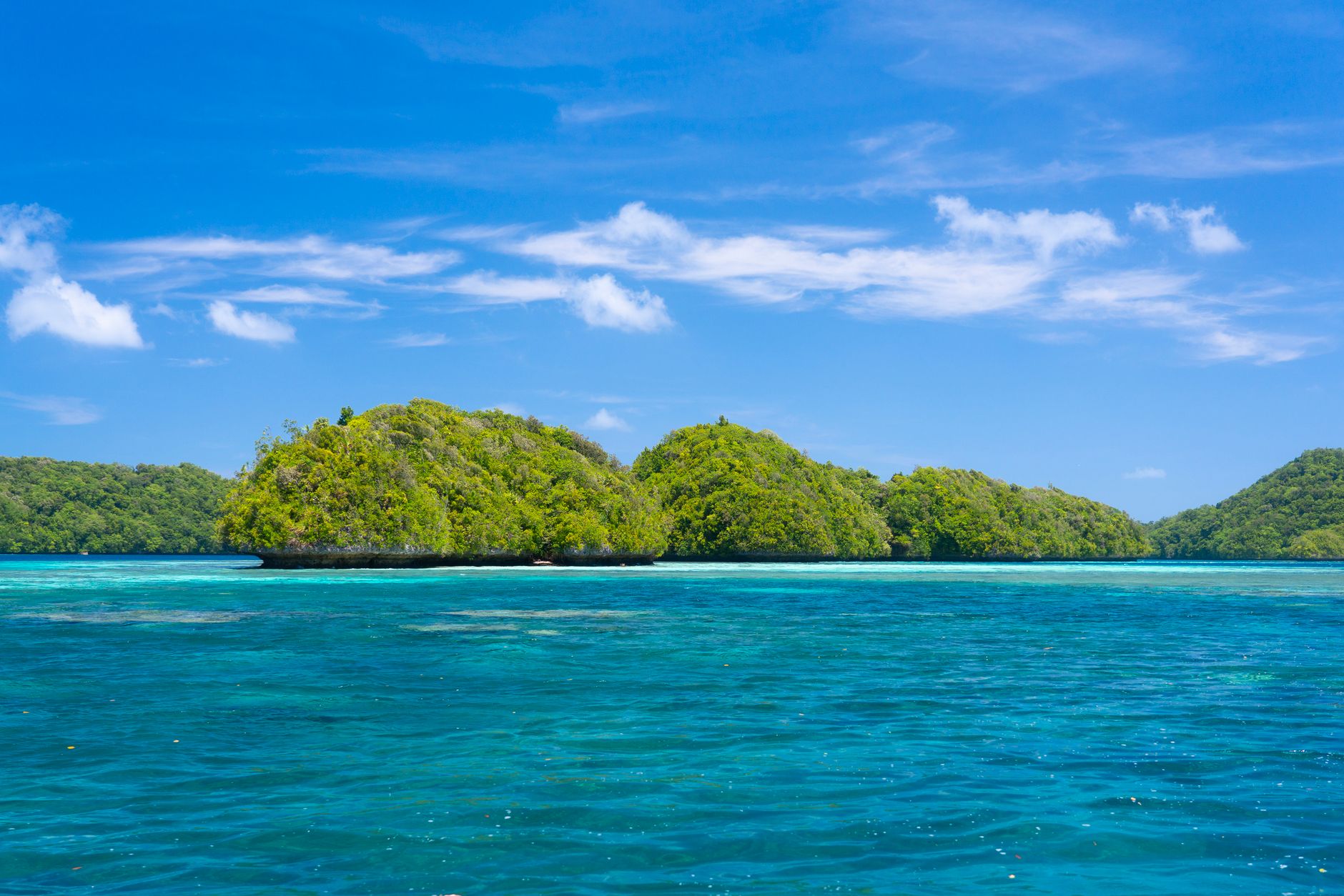
Serene island landscape with vivid green foliage and clear blue ocean under a bright sky.
Photo by Timo Volz on Pexels · Pexels License
Practical Information
Visa
U.S. citizens do not need a visa and may stay in the Federated States of Micronesia indefinitely under the Compact of Free Association. Many other passports receive short tourist stays on arrival, but the length varies by nationality, so check the FSM embassy or consulate before you book. Keep a passport valid for at least six months and carry proof of onward travel.
Currency
The country uses the U.S. dollar, and cash still runs the trip. ATMs are limited, airport machines are not something to rely on, and many small restaurants, boats, and guesthouses in Kolonia, Weno, Colonia, and Tofol prefer notes over cards. Bring enough small bills for taxis, departure taxes, and tips for dive crews if service is excellent.
Getting There
Most travelers arrive on United Airlines' Island Hopper, which links Guam and Honolulu with Kosrae, Pohnpei, Chuuk, and beyond. That makes flight timing part of the trip, not an afterthought. If you are aiming for Kolonia, Weno, or Tofol, build in buffer days because missed connections can cost you a full island segment.
Getting Around
Moving between states usually means another flight, while reaching Nan Madol, Ulithi Atoll, Sapwuahfik Atoll, Tol Island, or Onoun usually means a boat arranged locally. Taxis are common in Kolonia and Weno, car rental makes sense on Pohnpei and Kosrae, and schedules should be reconfirmed 24 to 48 hours ahead. Island time is real here.
Climate
January through April is the easiest window for a country-wide trip, with calmer seas and better odds for diving visibility. Pohnpei, including Kolonia, Palikir, and Nan Madol, is wet in every month of the year, while Yap and the western islands have a more noticeable dry season. Heat stays tropical year-round, usually around 24 to 31C.
Connectivity
Mobile data and prepaid Wi-Fi exist in the four state centers through FSM Telecom, and you can usually sort a SIM or eSIM in the main towns and airports. Speeds are workable for messages and basic booking, less reliable for heavy uploads or video calls. Once you leave Kolonia, Weno, Colonia, or Tofol for outer islands, expect weak service or none at all.
Safety
The main risks are practical rather than dramatic: strong currents, coral cuts, road hazards at night, and the limits of remote medical care. Petty theft does happen, especially around transport hubs, but sea conditions are what deserve your respect. Pack reef-safe sun protection, bug repellent, and medical evacuation insurance if you plan to dive or travel beyond the main islands.
Taste the Country
restaurantSakau
Evening mat. Coconut shell cup. One swallow, then silence. Friends, chiefs, suitors, reconciled enemies.
restaurantLihli
Fire-cooked breadfruit, pounded hot, coconut milk on top. Breadfruit season, family house, banana leaf, patient hands.
restaurantFahfah erah
Pounded taro, banana, coconut milk. Feast tables in Kosrae, shared serving bowl, spoons or fingers, no haste.
restaurantFeiren uuch
Grated banana, sugar, wrapper, boiling pot, coconut finish. Warm hands, afternoon visit, children nearby, conversation continuing.
restaurantMahi umw
Breadfruit over stones and coconut husks, then leaf steam. Fingers tear the crust. Smoke, starch, reef fish beside it.
restaurantCeremonial pig with yams and sakau
Wedding, funeral, major feast. Meat distribution shows rank. Everyone reads the plate.
restaurantRaw reef fish with pepper sauce
Thin slices, acid, pepper, almost no disguise. Lunch after the boat, rice or taro nearby, sea still in the mouth.
Tips for Visitors
Cash First
Carry enough U.S. dollars for several days, sorted into small bills. Cards are useful at some hotels and dive shops, but island transport, local meals, and departure fees often still happen in cash.
No Trains Here
FSM has no rail network, so timing is built around flights, boats, and whoever answers the phone. If a route on paper looks simple, add a day and you are closer to reality.
Book Early
Rooms are limited in Weno, Colonia, and Tofol, and outer-island lodging is tighter still. Reserve flights, dive days, and airport pickups before you land, especially if you are trying to reach Ulithi Atoll or Nan Madol on a fixed schedule.
Download Offline Maps
Do this before leaving Guam or Honolulu. Signal in Kolonia and Weno is one thing; signal once you leave the town center is another.
Mind Local Etiquette
Dress more conservatively than you would at a resort, ask before photographing ceremonies or village compounds, and keep your voice down in shared spaces. Courtesy is noticed quickly, and so is impatience.
Respect the Sea
Currents, swell, and sudden weather changes cancel plans faster than anything else in FSM. Keep dry bags, reef shoes, and a flexible afternoon, especially when boats are involved.
Pack for Distance
Bring any prescription medicine, basic first-aid supplies, and dive-safe ear care from home. Remote clinics can handle routine issues, but specialist treatment and evacuation are different matters.
Explore Federated States of Micronesia with a personal guide in your pocket
Your Personal Curator, in Your Pocket.
Audio guides for 1,100+ cities across 96 countries. History, stories, and local insight — offline ready.
Audiala App
Available on iOS & Android
Join 50k+ Curators
Frequently Asked
Do I need a visa for the Federated States of Micronesia? add
U.S. citizens do not need a visa, and many other travelers can enter for a short tourist stay. The exact rule depends on your passport, so confirm with an FSM embassy or consulate before booking because this is not a place where you want to discover an entry problem at the gate in Guam.
Is Federated States of Micronesia expensive for tourists? add
Yes, more than many travelers expect. Flights are limited, food is heavily imported, and once you add boats or diving around Weno, Nan Madol, or Ulithi Atoll, costs rise quickly even if your room is simple.
How do you get to Nan Madol from Kolonia? add
Most travelers go by road from Kolonia to the southeastern side of Pohnpei and then continue by boat, depending on tide and site access. You can arrange it through a hotel or local guide, and that is wiser than trying to improvise transport on the morning itself.
Can you island-hop around Micronesia without flying? add
In theory, yes, but it is slow and unreliable for most visitors. Boats do connect some places, yet if your trip matters on the calendar, you should assume flights between states and treat boats as local access rather than national transport.
What is the best month to visit Pohnpei and Chuuk? add
January through April is usually the safest answer for a multi-island trip. Seas are often calmer, visibility is better for diving, and although Pohnpei never really dries out, this period tends to be easier than the wetter, stormier part of the year.
Is Wi-Fi good in Weno and Kolonia? add
Good enough for messages and basic planning, sometimes. Speeds in Weno and Kolonia can still be patchy, and once you move beyond the main town or out to places like Tol Island or Sapwuahfik Atoll, you should expect service to drop sharply.
Do people use credit cards in the Federated States of Micronesia? add
Some hotels, airlines, and dive operators do, but cash is still the safer default. Small restaurants, taxis, local shops, and many boat arrangements in Kolonia, Weno, Colonia, and Tofol may not take cards at all.
Is the Federated States of Micronesia safe for solo travelers? add
Generally yes, if you travel with ordinary caution and respect local norms. The bigger issue is not violent crime but remoteness: missed boats, limited medical care, night driving, rough seas, and the cost of fixing a mistake.
Sources
- verified U.S. Department of State: Federated States of Micronesia International Travel Information — Entry rules, passport validity, safety advisory level, and practical departure notes.
- verified CDC Travelers' Health: Federated States of Micronesia — Vaccination guidance, disease risks, and current health precautions for travelers.
- verified United Airlines — Primary scheduled international air access to FSM via the Island Hopper network.
- verified FSM Telecom — Official information on mobile service, prepaid Wi-Fi, airport hotspots, and eSIM availability.
- verified UNESCO World Heritage Centre: Nan Madol — Authoritative background on Nan Madol's significance, chronology, and World Heritage status.
Last reviewed: