Introduction
Ethiopia travel guide starts with a shock of scale: rock-hewn churches, castle compounds, and the earliest human stories share one high-altitude country.
Start in Addis Ababa, one of the world's highest capitals at about 2,355 meters, where coffee ceremonies, Orthodox processions, and modern African politics all share the same thin air. Then the map opens fast: the rock-hewn churches of Lalibela feel less built than revealed, Gondar stacks royal ambition into 17th-century stone, and Axum ties Ethiopia to Red Sea trade, early Christianity, and the long afterlife of empire. Few countries hold this much recorded history in places that still feel lived-in rather than staged.
Ethiopia also rewards travelers who want movement, not just monuments. Harar folds 82 mosques and centuries of Islamic scholarship inside its walls, Bahir Dar gives you Lake Tana monasteries and the road toward the Blue Nile, and Arba Minch opens toward Rift Valley lakes and the south. Even the distances tell a story: cool highland cities can sit a short flight from furnace-hot lowlands, which is why timing matters here more than in many countries. October to January usually gives you the clearest skies and the easiest overland days in the north.
Come for Lalibela if you want, but don't stop there. Ethiopia is one of the few places where a trip can move from paleoanthropology to castle courts, from fasting-table lentils to raw kitfo, from Ge'ez liturgy to the call to prayer in Harar, without ever feeling patched together for visitors. That range is the point. You are not looking at a single headline destination, but a country whose history keeps changing shape as you cross it.
A History Told Through Its Eras
From Lucy's Bones to the Kingdom of Stone and Gold
Origins and Aksum, c. 3.2 million BCE-700 CE
A camp radio crackled in the Afar Depression in November 1974, and the Beatles were playing when the team realized what lay in the dust before them. Lucy, or Dinknesh in Ethiopia, was tiny enough to fit in a box, yet she made the country part of every human family album. Ce que l'on ignore souvent, c'est que Ethiopia does not begin with kings at all, but with bones, ash, riverbeds, and the long patience of geology.
Far to the south, near Jinka and the lower Omo, the landscape holds another shock: some of the oldest known Homo sapiens remains on earth. Stand there and the usual language of heritage starts to feel absurdly small. This is not old in the way a church is old. This is old enough to make empire look like yesterday.
Then the scene changes. In the northern highlands around Axum, stone rises where fossils once ruled the story, and a kingdom steps onto the Red Sea stage with the confidence of a court that knows its worth. By the 1st and 2nd centuries CE, Aksum was trading with Rome, Arabia, and India, minting its own coins, and planting obelisks that still look less like monuments than acts of royal will.
King Ezana gives this age its finest dramatic flourish. His inscriptions begin with older gods and end with the Christian cross, so one can watch a monarch change heaven almost in real time. That decision mattered far beyond doctrine: it tied Ethiopia to a sacred story all its own, and when Red Sea trade later shifted under Arab control, the kingdom lost sea power but kept something harder to kill, a courtly and religious memory that would shape Lalibela, Gondar, and Addis Ababa centuries later.
King Ezana feels startlingly human because his own inscriptions preserve the vanity, certainty, and political instinct of a ruler teaching the world how to read his power.
Lucy got her nickname because "Lucy in the Sky with Diamonds" was played again and again in camp on the night of the celebration.
Lalibela, Sheba's Heirs, and the Dream Carved Underground
Zagwe and Solomonic Restoration, c. 900-1529
At dawn in Lalibela, the rock is cold under the hand and the priests' white shawls catch the first light before the churches do. You do not approach these sanctuaries as you approach ordinary buildings, because they were not built upward. They were cut downward, freed from the mountain like a secret the earth had been keeping.
The centuries before that are darker, harsher, and half veiled by memory. Tradition speaks of Gudit, sometimes called Yodit, as the destroyer who helped bring old Aksum to ruin, burning churches and hunting royal heirs; documented fact and legend mingle here, and that mixture is part of the drama. Ethiopia's past often survives not only in chronicles, but in ceilings blackened by smoke and stories attached to stones.
Then comes the Zagwe dynasty and, with it, King Lalibela, who gave Roha his own name and an ambition bordering on the impossible. The churches are usually described as a New Jerusalem, but that phrase can sound tidy, almost pious. The reality is more theatrical: trenches, tunnels, courtyards, a sacred topography for pilgrims who could not reach the Holy Land. Ce que l'on ignore souvent, c'est que parts of the complex may first have had defensive or royal functions before they became fully sacralized.
In 1270 the Solomonic dynasty returned under Yekuno Amlak, and with it came one of the great acts of dynastic storytelling. The claim was dazzling: descent from King Solomon and the Queen of Sheba, given literary force in the Kebra Nagast. A genealogy became a throne. It also gave later rulers a language of divine inheritance that was powerful enough to survive war, reform, and royal scandal all the way to the modern court in Addis Ababa.
King Lalibela emerges less as a marble saint than as a ruler with a pilgrim's imagination and a sovereign's appetite for permanence.
Scholars suspect some areas of Lalibela may have begun as fortified or royal spaces before they were absorbed into the holy city visitors see today.
Fire from the East, Muskets from Europe, and the Castles of Gondar
Wars of Faith, Castles, and Encircled Courts, 1529-1855
In the 16th century, Ethiopia became a battlefield of sermons, sabers, and gunpowder. Ahmad ibn Ibrahim al-Ghazi, remembered as Ahmad Gragn, drove deep into the highlands with firearms and terrifying speed, while Christian Ethiopia fought for survival with Portuguese help. One can almost hear the crack of muskets in the mountain air. The old order held, but only just.
The human cost was immense. Churches burned, manuscripts vanished, and whole regions were pulled into war that was never only about doctrine. Behind the banners stood frightened courtiers, exhausted peasants, ambitious commanders, and women trying to keep households alive while kingdoms argued over heaven.
Out of that bruised century rose a different vision of monarchy. In Gondar, beginning in the 17th century, emperors built castles that surprise nearly every first-time visitor because they look, at first glance, almost European, then not European at all. Fasilides and his heirs created a court of walls, banquets, intrigues, and processions; a proper royal stage, with stone towers instead of wandering camps.
Yet stability came with its own poison. The court hardened into ritual, influence shifted to powerful nobles and palace factions, and later emperors were often reduced to splendid captivity in the Zemene Mesafint, the Era of the Princes. Splendor remained. Authority did not. That fracture set the stage for a violent 19th-century attempt to gather the realm back into one imperial hand.
Emperor Fasilides seems almost modern in instinct: after years of turbulence, he understood that architecture could perform sovereignty as effectively as any battlefield victory.
Fasilides broke with the Jesuit-backed Catholic experiment of his father, and the theological reversal reshaped the kingdom as decisively as a coup.
From Tewodros's Cannons to Addis Ababa's Red Terror
Empire, Invasion, Revolution, and Federal Ethiopia, 1855-1995
On a mountain at Maqdala in 1868, Emperor Tewodros II faced British troops, a collapsing dream of central power, and humiliation he would not survive. His life had begun like a romance of restoration, full of audacity and iron will; it ended in tragedy, with a pistol reportedly gifted by Queen Victoria and an empire still not securely his. Ethiopia's modern history often moves like this: grandeur, then shock.
Menelik II proved the more durable architect. With Empress Taytu Betul at his side, he founded Addis Ababa, drew the court southward, and in 1896 defeated Italy at Adwa, one of the great anti-colonial victories of the modern age. Ce que l'on ignore souvent, c'est que Taytu was not decoration beside the throne. She argued, maneuvered, saw through diplomatic traps, and pressed for a harder line when others hesitated.
The 20th century made the country both symbol and battlefield. Haile Selassie carried Ethiopia onto the world stage, then watched Mussolini's invasion in 1935 turn poison gas and modern empire against a sovereign African state. His return in 1941 looked almost biblical, but monarchy did not resolve hunger, inequality, or the bitterness of those far from court ceremony.
Then came the rupture. In 1974 the emperor fell, the Derg seized power, and Addis Ababa learned the vocabulary of revolutionary terror, prison cells, and disappearance. Families waited for footsteps on the staircase. Bodies appeared in the streets. By 1991 the regime itself collapsed, and in 1995 the Federal Democratic Republic of Ethiopia emerged, carrying all the grandeur and all the scars of what came before. That is why the country can feel so layered today: Axum in its memory, Lalibela in its soul, Gondar in its posture, Addis Ababa in its nerves.
Empress Taytu Betul was the sharp political mind in the room more often than foreign diplomats cared to admit, and Ethiopia paid attention even when they did not.
At Adwa, Taytu reportedly commanded artillery positions and made sure the imperial camp's logistics held together while the battle turned against Italy.
The Cultural Soul
A Greeting Begins With Peace
In Ethiopia, conversation does not begin with information. It begins with equilibrium. "Selam" means peace, and that is a better opening than hello: less noise, more intention. In Addis Ababa, you hear Amharic in taxis, Oromo in markets, Tigrinya near bus stations, Somali in trade corridors, and the country reveals one of its oldest habits at once: it prefers plurality to simplification.
Amharic looks carved even when it is written quickly. The fidel script, descended from Ge'ez, turns each syllable into a small architectural act; a receipt can resemble liturgy. Titles still matter. Ato, Woizero, Woizerit. Respect enters the sentence before the meaning does.
Then comes the masterpiece: the polite form is often plural. One person addressed as more than one. That grammatical courtesy says more about Ethiopian social intelligence than a chapter of sociology could. In Harar or Gondar, if someone asks after your health, then your family, then your work, then the road that brought you, they are not wasting time. They are building the room in which speech can happen.
The local phrase for double meaning is sem ena werq, wax and gold. Surface first, hidden value underneath. Ethiopia distrusts the single layer. Frankness exists, certainly, but it often arrives dressed for dinner.
Bread That Refuses To Stay Bread
Injera is not a side dish. It is tablecloth, plate, utensil, napkin, and final proof that civilization depends on fermentation. Made most famously from teff, sour with purpose rather than accident, it lands on the mesob wide as a small constellation, and every stew placed on top of it enters into a pact with time.
You eat with the right hand. That matters. You tear from the edge, never attack the center like a vandal, and pinch sauce, lentils, greens, or meat into one coherent bite. In Addis Ababa, a platter of shiro, misir wat, kik alicha, tibs, and collard greens can teach you more about Ethiopian order than a museum label ever will: heat beside mildness, velvet beside grain, restraint beside excess.
Then comes gursha, the intimate gesture in which someone wraps a bite for you and places it at your mouth. Affection becomes edible. Hospitality stops pretending to be abstract. If you are offered gursha in a family house in Lalibela or at a feast table in Bahir Dar, you are being told that distance has ended.
And coffee follows. Of course it does. A country that ferments bread into cutlery was never going to treat a beverage like background.
Time Wears A White Shawl
Religion in Ethiopia is visible at street level. Not as spectacle. As rhythm. In the highland cities, especially Lalibela, Gondar, and Axum, dawn can arrive with white cotton shawls moving toward church, the fabric called netela catching first light while priests, deacons, vendors, schoolchildren, and beggars all negotiate the same stone thresholds.
The Ethiopian Orthodox Church keeps one of the oldest Christian traditions on earth, and it does so with a theatrical seriousness that never feels theatrical. Drums sound. Sistra ring. Ge'ez survives in liturgy like a royal language that refused retirement. On major feast days, you do not merely watch belief. You hear leather on drumskin, smell incense in cold morning air, and feel that ceremony is a technology more durable than empire.
Fasting shapes daily life with equal force. Tsom is not private piety hidden in the kitchen. It changes menus, market stalls, and the smell of lunch. Whole neighborhoods pivot toward lentils, chickpeas, greens, oil, berbere. Appetite becomes calendar.
Islam is no footnote here, and Harar proves it with elegance. Eighty-two mosques inside the old walled city, narrow lanes, calls to prayer, and a social grammar in which scholarship, trade, and devotion learned long ago how to share the same bench. Ethiopia is not one faith speaking loudly. It is several traditions keeping time beside one another.
Five Notes And A Knife
Ethiopian music can sound as if the scale itself has developed a private life. The qenet modal system gives melodies their sideways motion, and if you come from Western habits of harmony, the first sensation is not confusion. It is seduction. The line does not go where you expect, which is another way of saying it goes somewhere worth following.
Listen to the masenqo, the one-string bowed lute, and you understand how little equipment sorrow needs. Listen to the krar and the sound turns lighter, more teasing, almost conversational. Addis Ababa made these traditions urban, electric, and nocturnal in the twentieth century; Ethio-jazz let brass and keyboards enter the room without dismissing the old spell. Mulatu Astatke did not merge worlds so much as prove they had been eyeing each other for years.
Then there is the voice. Not smooth. Never obedient. Ethiopian singing often bends, cracks, rises, and ornaments with a precision that feels close to speech and very far from politeness. A good singer sounds as if language itself has started remembering things.
In bars in Addis Ababa, at weddings in Dire Dawa, at festival gatherings in Mekelle when conditions allow, and in quiet recordings carried across the diaspora, music behaves like memory with percussion. It cuts. Sweetly, but still.
Courtesy Has Teeth
Ethiopian etiquette is generous, but it is not casual. That distinction matters. A guest is honored, fed, asked questions, poured coffee, and watched with more attention than most Europeans can tolerate without a minor identity crisis. The host is not intruding. The host is performing civilization.
Take greetings. They are longer than outsiders expect and shorter than they should be only if one is in a hospital corridor. You ask after the person. Then the family. Then the work. Then the road. In Addis Ababa, rushing this ritual can make you sound colder than insult would. Efficiency is not always a virtue; often it is just impatience wearing a watch.
Meals reveal the code with unnerving clarity. Shared platters assume trust. The right hand does the work. Gursha, when offered, turns affection into public fact. Refusing it too quickly can look like recoil, though a gentle smile and explanation will save you. Ethiopia has mastered the art of making intimacy ceremonial.
And dress still speaks. In churches, in family houses, at holidays, modesty is not a slogan but a form of literacy. A white shawl, washed and folded well, can say more than a paragraph of good intentions.
Stone That Learned Obedience
Ethiopian architecture has a severe imagination. It likes height, enclosure, carved faith, and fortification. In Lalibela, the churches are not built on the land but subtracted from it, as if the builders distrusted addition and preferred revelation by removal. A staircase descends. A trench opens. Suddenly a whole church stands below ground level, monolithic, patient, impossible in the way mountains are impossible.
Gondar answers with another temperament: castles, battlements, royal compounds, Indian and Portuguese echoes translated into highland stone. Fasil Ghebi does not flatter the visitor. It presents walls, towers, scale, and a royal appetite for permanence. The seventeenth century arrived there wearing armor and an embroidered cloak.
Axum speaks in stelae. Harar speaks in walls and gates. Addis Ababa, younger and more improvisational, stacks Italian traces, imperial ambition, concrete expansion, glass towers, tin roofs, and eucalyptus poles into an argument that is not resolved because cities should not be. The capital is an archive that never got the instruction to sort itself.
What ties these places together is discipline. Ethiopian buildings often seem to know what they are for. Worship. Defense. Rule. Memory. Even a modest rural tukul, circular and thatched, carries proportion with dignity. Form is never innocent here.
What Makes Ethiopia Unmissable
Rock-Hewn Faith
Lalibela's 11 medieval churches were cut from living rock, not assembled block by block. They still work as pilgrimage sites, which gives the stone a pulse most heritage complexes lose.
Royal Enclosures
Gondar's Fasil Ghebi turns Ethiopian imperial history into something you can walk through: battlements, banquet halls, and stone towers from the 17th and 18th centuries. It looks almost improbable in the Horn of Africa, which is exactly why it stays with people.
Human Origins
The Lower Omo Valley and the Afar Depression place Ethiopia near the center of the human story, from Lucy to some of the oldest known Homo sapiens remains. Few trips let you stand in landscapes that change your sense of time this sharply.
Walled Harar
Harar Jugol is a dense, inward-looking city of alleys, shrines, markets, and painted interiors, with 82 mosques inside its walls. It feels intellectually self-contained, shaped by trade, scholarship, and a strong sense of local identity.
Highlands to Rift
Ethiopia's terrain swings from cool plateaus to Rift Valley lakes and some of the hottest lowlands on Earth. That vertical drama shapes everything from weather and transport to what lands on the table.
Coffee and Table Rituals
Coffee here is not a quick caffeine stop but a social form with smoke, incense, and repeated pours. Meals do the same work: injera, shared platters, and gursha turn eating into a small public act of trust.
Cities
Cities in Ethiopia
Addis Ababa
"A capital at 2,355 metres where the smell of roasting bunna drifts past the bones of Lucy at the National Museum and the noise of a 128-million-strong nation negotiates every intersection."
Lalibela
"Eleven medieval churches carved downward into red volcanic rock in the 12th century, so that priests still descend into the earth to reach the altar."
Gondar
"The 17th-century Royal Enclosure holds six stone castles built by successive emperors who each refused to inherit their predecessor's palace and started their own."
Axum
"Granite obelisks up to 33 metres tall mark the graves of Aksumite kings who minted coins, traded with Rome, and converted to Christianity before most of Europe did."
Harar
"A walled Islamic city of 82 mosques packed into 48 hectares, where every evening men still call spotted hyenas by name and hand-feed them scraps at the city gate."
Bahir Dar
"Lake Tana's papyrus-fringed shore hides 20 island monasteries, and 30 kilometres south the Blue Nile drops over a 400-metre-wide curtain of water at Tis Abay falls."
Dire Dawa
"Ethiopia's second-largest city arrived fully formed in 1902 when the Franco-Ethiopian railway needed a depot, leaving an Art Deco grid marooned in the eastern lowland heat."
Jimma
"The forested highlands around this southwestern city are where Coffea arabica grows wild, making it the arguable birthplace of every cup of coffee ever drunk on earth."
Mekelle
"The gateway to the Danakil Depression sits at 2,084 metres, and from here the road descends to Erta Ale's permanent lava lake, one of the few places on the planet where the mantle is openly visible."
Arba Minch
"Perched above the twin lakes of Abaya and Chamo, this small town is the staging point for boat trips past Nile crocodiles and into the territories of the Dorze weavers in their towering bamboo houses."
Jinka
"The nearest town to the Omo Valley's most isolated communities, it functions as the last reliable fuel stop before roads dissolve into tracks through the territories of the Mursi, Banna, and Karo peoples."
Negele Borena
"Few itineraries reach this remote southern outpost, but it sits at the edge of the Liben Plain, the last confirmed habitat of the Liben lark, a bird so rare it may number fewer than 100 individuals."
Regions
Addis Ababa
Central Highlands and the Capital
Addis Ababa sits at about 2,355 meters, which means your first Ethiopian city comes with thin air, eucalyptus smoke, Orthodox churches, jazz clubs, and traffic that can turn a short ride into a lesson in patience. This is where museums explain deep time, the political capital sets the national tempo, and practical travel problems are easiest to solve before you head north, east, or south.
Gondar
Lake Tana and the Imperial North
The northwestern highlands are where Ethiopia looks most openly regal: island monasteries on Lake Tana, 17th-century castles in Gondar, and mountain light that makes the stone feel almost silver by late afternoon. Bahir Dar keeps the lake within reach, but Gondar gives the region its sharpest personality, equal parts court history and pilgrimage road.
Mekelle
Tigray and the Aksumite Heartland
Northern Ethiopia grows older as you travel through it. Mekelle is the practical base, but the pull is Axum, where inscriptions, stelae, and ruined compounds still carry the confidence of a kingdom that traded with Rome, crossed the Red Sea, and stamped its faith onto coinage people once carried in their pockets.
Harar
Eastern Gateways and Walled Cities
Harar feels unlike anywhere else in the country: a dense Islamic city inside old walls, with 82 mosques, tight alleys, and a trading history that linked the highlands to the coast and the interior to Arabia. Dire Dawa, lower and more modern, works as the transport hinge, but Harar is the place you remember when you get home.
Arba Minch
Southern Rift Valley and Omo South
The south is less about one monument than about movement through changing terrain: Rift Valley lakes, escarpments, market towns, and roads that keep altering the social map. Arba Minch is the sensible launch point, while Jinka pulls you toward the Omo Valley and Negele Borena opens the farther south where distances stretch and logistics matter more.
Jimma
Southwest Coffee Country
Jimma belongs to Ethiopia's wetter southwest, where coffee is not a tasting-note cliché but part of the economic and social structure of the region. The pace shifts here: greener hills, heavier rain in season, and a sense that Ethiopia is looking west and inward at the same time rather than toward the old northern capitals.
Suggested Itineraries
3 days
3 Days: Addis Ababa to Harar
This is the fast, smart route if you want Ethiopia's capital and its most atmospheric walled city without burning a week on transport. Start in Addis Ababa for museums, markets, and altitude adjustment, then fly east through Dire Dawa and continue to Harar for old lanes, hyena lore, and one of the most distinctive urban cultures in the Horn.
Best for: first-timers short on time, history lovers, city travelers
7 days
7 Days: Lake Tana, Castles, and Rock-Hewn Churches
This northern classic strings together monastery islands near Bahir Dar, the royal compound at Gondar, and the carved churches of Lalibela in one clean highland loop. It works best with domestic flights or a flight-and-driver mix, because the point is to spend your week inside the monuments rather than watching asphalt pass the window.
Best for: first-time Ethiopia trips, church history, architecture
10 days
10 Days: Tigray and the Aksumite North
This route focuses on Ethiopia's oldest imperial landscapes, where obelisks, ruined palaces, and highland churches carry the weight of very long memory. Base first in Mekelle, then continue to Axum for the former capital of the Aksumite kingdom and some of the country's deepest historical ground.
Best for: repeat visitors, archaeology, serious history readers
14 days
14 Days: Southern Rift Valley and Omo Frontier
Go south if you want a trip defined by lakes, market towns, changing languages, and road travel that feels like a slow shift across different Ethiopias. Arba Minch gives you the Rift Valley gateway, Jinka opens the Omo world, Negele Borena brings you farther into the south, and Jimma closes the route in the coffee country of the southwest.
Best for: slow travelers, overland routes, anthropology and landscapes
Notable Figures
Ezana
4th century · King of AksumEzana left inscriptions that let you watch a king change worlds in public, moving from older gods to Christianity in carved stone. He was not only converting; he was teaching his kingdom how to imagine power differently, from Axum outward.
Frumentius
c. 300-383 · Missionary and first bishop of AksumHe arrived as a foreign captive and became tutor, adviser, then bishop, which is the sort of career only antiquity could produce without blushing. Ethiopia's Christian story owes a startling amount to this man who entered court life by accident and stayed to alter it forever.
King Lalibela
12th-13th century · Zagwe king and sacred builderFew rulers anywhere have left behind a capital that feels excavated from revelation rather than built by masons. His name swallowed the older name Roha, which tells you how completely his ambition and the town became one another.
Yekuno Amlak
13th century · Founder of the restored Solomonic dynastyHe did not simply take a throne in 1270; he changed the story that justified the throne. By restoring the Solomonic line, he bound politics to sacred ancestry so tightly that later emperors would rule inside the echo of his claim.
Zara Yaqob
1399-1468 · Emperor and theologianZara Yaqob was brilliant, severe, and increasingly feared, the kind of ruler who writes theology and punishes dissent with the same conviction. He gave the monarchy sharper ideological force, though not always gentleness, and his intensity still unnerves the page.
Tewodros II
1818-1868 · Emperor and state-builderTewodros lived like a tragic hero who had read too many prophecies about himself. He dreamed of forging a strong, modern crown out of a fractured realm, but the dream ended at Maqdala in one of the 19th century's bleakest royal finales.
Empress Taytu Betul
c. 1851-1918 · Empress consort, strategist, and political actorTaytu saw empire with a colder eye than many of the men around her, and she distrusted foreign designs long before they became obvious. Addis Ababa owes part of its very existence to her taste for the Entoto slopes and the hot springs below, where court life shifted and a capital took root.
Menelik II
1844-1913 · Emperor and modernizerMenelik expanded, negotiated, railroaded, centralized, and then, when Italy misjudged him, defeated a European imperial army at Adwa in 1896. He is remembered as a victor, but also as the monarch who helped move the center of Ethiopian power into the city now called Addis Ababa.
Haile Selassie
1892-1975 · EmperorHe could seem almost theatrical in ceremony, yet when he spoke before the League of Nations after the Italian invasion, the performance gave way to something stark and real. For admirers he embodied sovereignty under siege; for critics at home he came to embody a court too far from famine, anger, and change.
Photo Gallery
Explore Ethiopia in Pictures

Ethiopian Orthodox church with distinct twin towers under a clear blue sky.
Photo by Valera Rychman on Pexels · Pexels License

A captivating view of Gondar, Ethiopia showcasing iconic architecture atop a verdant hillside under a cloudy sky.
Photo by Abenezer Muluken on Pexels · Pexels License
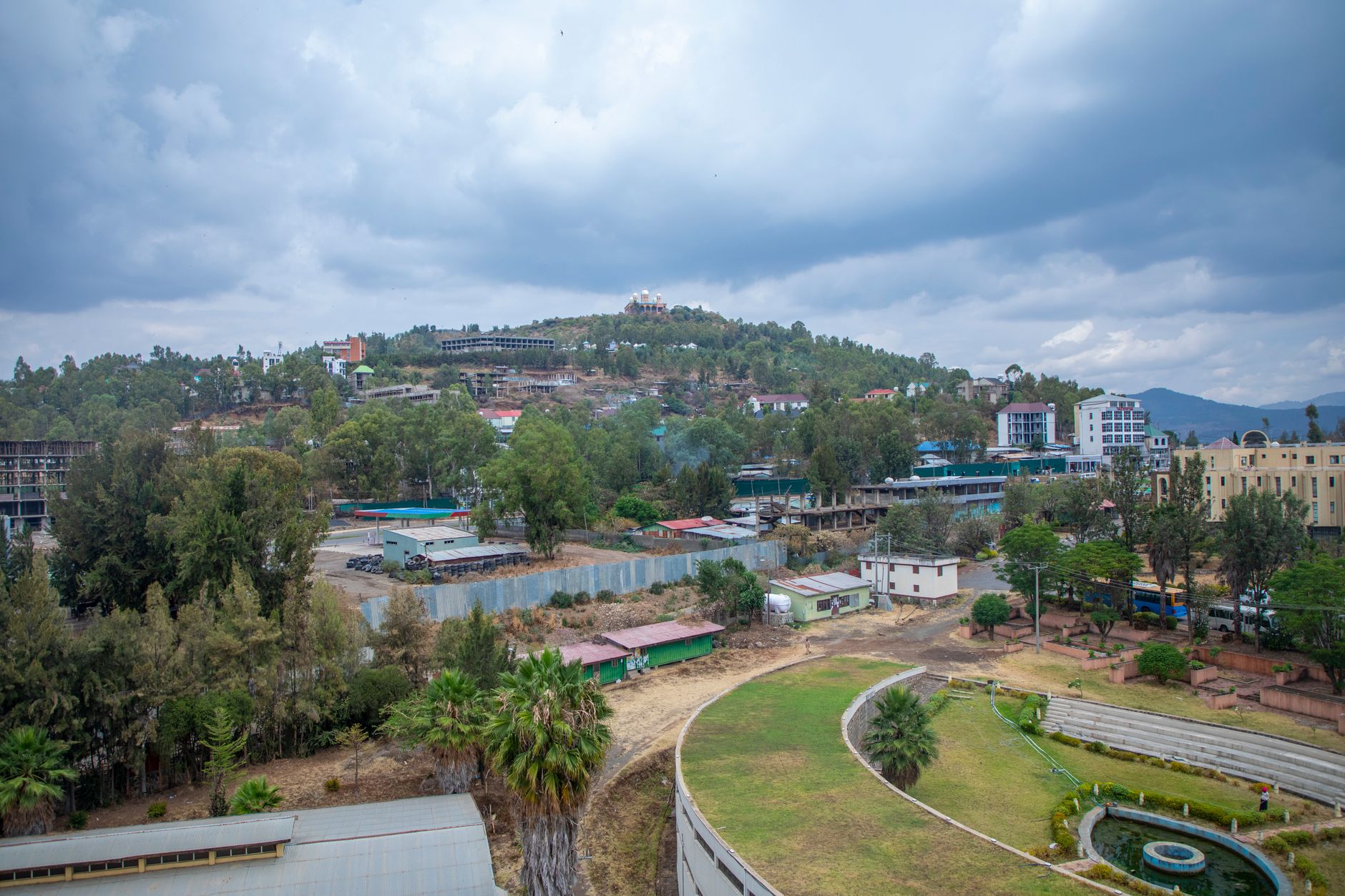
Captivating aerial view of Gondar, Ethiopia with lush greenery and architecture under a cloudy sky.
Photo by Abenezer Muluken on Pexels · Pexels License
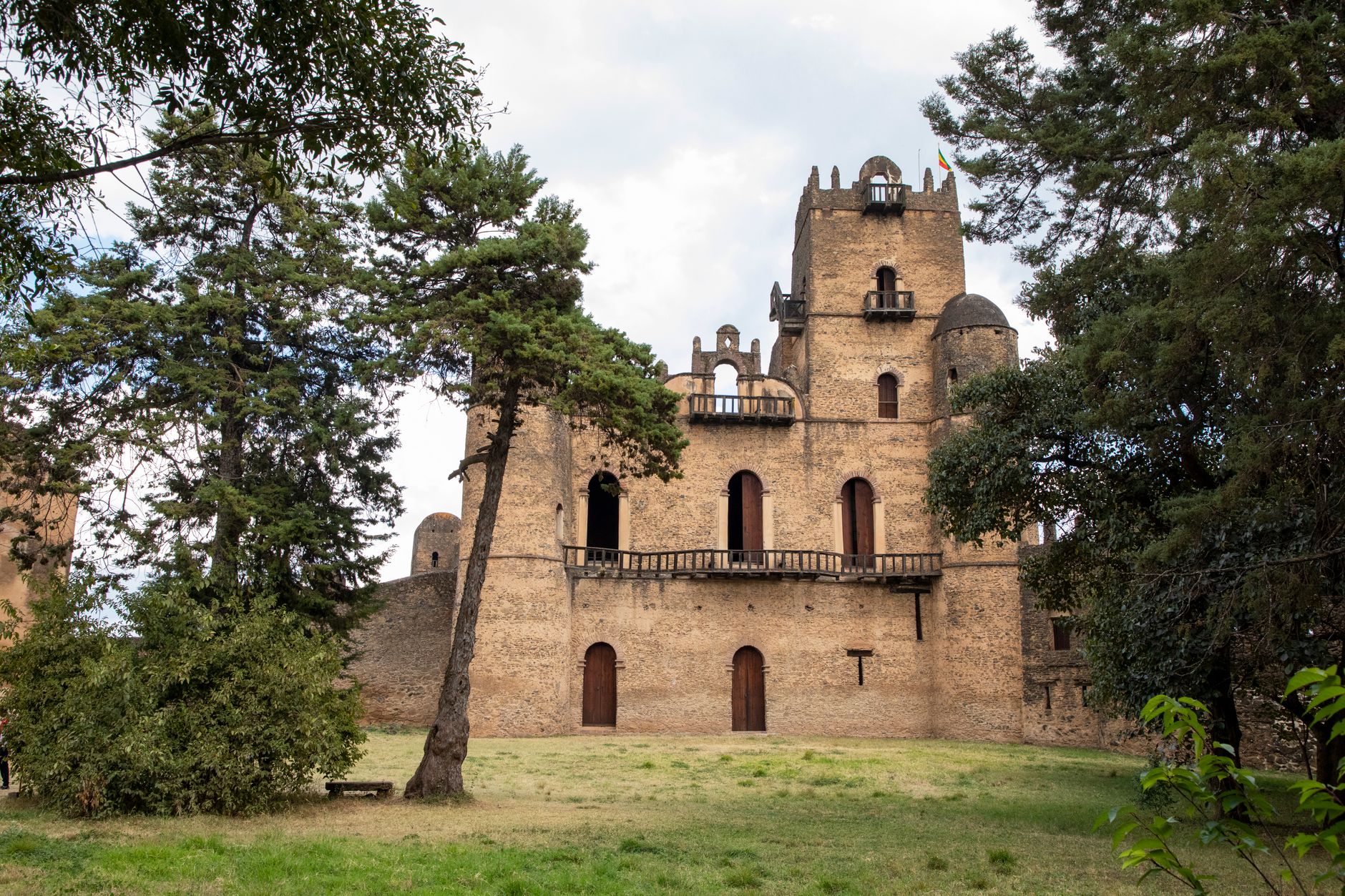
Explore the historic Fasil Ghebbi castle in Gondar, Ethiopia, surrounded by lush greenery.
Photo by Abenezer Muluken on Pexels · Pexels License

A bustling street scene in Gondar, Ethiopia, featuring auto rickshaws and palm trees with people walking along the road.
Photo by Abenezer Muluken on Pexels · Pexels License

Group of African men in traditional clothing participating in a cultural ceremony outdoors.
Photo by Christian Alemu on Pexels · Pexels License
Top Monuments in Ethiopia
Practical Information
Visa
Most travelers need a visa before entering Ethiopia, and the official e-visa portal is the cleanest way to get it done. Tourist e-visas are commonly issued for 30 or 90 days, your passport should be valid for at least six months after arrival, and Addis Ababa Bole Airport does still handle visa on arrival, though the airport queue is nobody's idea of a good first hour.
Currency
Ethiopia uses the Ethiopian birr, and this is still a cash country once you get beyond central Addis Ababa. Budget around USD 25-45 a day for simple independent travel, USD 70-130 for mid-range comfort, and check restaurant bills before tipping because a 10% service charge is often already there.
Getting There
Nearly every international trip starts at Addis Ababa Bole International Airport, the country's main air gateway and the place where airlines, banks, SIM desks, and visa counters are concentrated. If you are coming from Europe, North America, the Gulf, or elsewhere in Africa, the practical plan is simple: fly into Addis Ababa, then connect onward domestically.
Getting Around
Domestic flights save huge amounts of time in a country this large, especially for jumps between Addis Ababa, Lalibela, Gondar, Axum, Mekelle, Arba Minch, and Jinka. Buses are cheap but slow, roads can be rough in the rains, night travel is a bad bet, and self-drive is more hassle than freedom for most visitors.
Climate
October to January is the sweet spot for most first trips: clear skies in the highlands, greener scenery after the rains, and festival season in places such as Gondar and Lalibela. June to September brings the main rains across much of the north and center, while lowland areas such as Afar and the Omo route can turn brutally hot even when Addis Ababa stays mild.
Connectivity
Mobile coverage is decent in major cities, but speeds and reliability can drop fast once you leave urban corridors. Buy a local Ethio telecom SIM on arrival if you need maps, ride-hailing, or domestic booking apps, and do not assume hotel Wi-Fi outside Addis Ababa will handle heavy work calls or large uploads.
Safety
Ethiopia rewards close attention to current conditions because security can change by region, and what works in Addis Ababa may not apply in Tigray, border zones, or remote southern routes. Check official travel advisories before booking overland legs, use a driver or a short domestic flight for long distances, and avoid road travel after dark.
Taste the Country
restaurantInjera and wat
Shared platter. Right hand. Tear, pinch, scoop, eat. Family table, lunch, feast day.
restaurantDoro wat
Holiday dish. Chicken, egg, berbere, injera. Christmas, Timkat, long family meal.
restaurantShiro
Chickpea stew. Fast day, weekday, late lunch. Friends, workers, students, everyone.
restaurantKitfo with kocho
Minced beef, spiced butter, kocho. Shared plate, evening, close company. Appetite and trust.
restaurantFirfir
Torn injera, sauce, breakfast. Quick hands, hot pan, early start.
restaurantBunna ceremony
Green beans, roast, grind, pour, wait. Incense, three rounds, conversation, neighbors.
restaurantTej
Honey wine, glass flask, slow sip. Celebration, music, laughter, long night.
Tips for Visitors
Carry Small Cash
ATMs are easiest in Addis Ababa and other big cities, but cash still does the real work on the road. Break larger notes when you can, and keep your exchange receipt if you may want to change birr back before departure.
Price Flights Early
Domestic flights are the single biggest time-saver in Ethiopia, especially on the Addis Ababa-Lalibela-Gondar-Axum axis. If you are arriving internationally on Ethiopian Airlines, ask whether your ticket qualifies you for lower domestic fares.
Book Festival Dates
Rooms in Gondar around Timkat and in Lalibela around major Orthodox holidays can tighten fast. Reserve early if your trip lands near January 7 or January 19, because last-minute choice shrinks long before the town officially sells out.
Read the Bill
A 10% service charge is often already added in restaurants and hotels, and VAT may be listed separately. Add another tip only if service was genuinely good, not by reflex.
Use the Right Hand
Meals are communal, and injera is eaten with the right hand. If someone offers you a gursha, the hand-fed bite of welcome, accept it if you can; it reads as warmth, not theater.
Don't Build Around Rail
The Addis Ababa-Djibouti railway matters for freight and regional transport, but it is not the backbone of a normal Ethiopia trip. Plan around flights, drivers, and selective bus use instead of assuming rail will tie the country together for you.
Buy a SIM at Bole
The easiest moment to sort data is at Addis Ababa Bole Airport, before you start haggling with taxis or hunting hotel Wi-Fi. A local line helps with RIDE, Feres, flight updates, and maps in cities where street logic can get messy.
Avoid Night Roads
Long-distance road travel after dark is a poor gamble because of driving standards, animals on the road, patchy lighting, and shifting security conditions. If the trip looks long on the map, either leave early or fly.
Explore Ethiopia with a personal guide in your pocket
Your Personal Curator, in Your Pocket.
Audio guides for 1,100+ cities across 96 countries. History, stories, and local insight — offline ready.
Audiala App
Available on iOS & Android
Join 50k+ Curators
Frequently Asked
Do I need a visa for Ethiopia as a US, UK, EU, Canadian, or Australian traveler? add
Yes, in most cases you do. The standard route is the official Ethiopian e-visa system, your passport should usually be valid for at least six months after arrival, and applying before you fly is much smoother than relying on airport processing.
Is Ethiopia expensive for tourists? add
No, not by African long-haul standards, though costs rise fast once you add domestic flights and private drivers. A careful independent traveler can manage on about USD 25-45 a day, while a more comfortable trip with flights and better hotels often lands closer to USD 70-130 a day.
What is the best month to visit Ethiopia? add
January is one of the strongest months for a first trip because the highlands are usually dry, skies are clear, and Timkat can transform places such as Gondar. More broadly, October through January is the safest all-round window for weather in the north and center.
Is Addis Ababa worth visiting or should I go straight to Lalibela or Gondar? add
Yes, Addis Ababa is worth at least two nights. It gives you the National Museum, serious food, the country's best logistical base, and time to adjust to altitude before you head to Lalibela, Gondar, Harar, or the south.
Can you travel around Ethiopia by bus? add
Yes, but it is usually the cheapest option, not the best one. Buses are slow, early-start heavy, and less comfortable on long routes, so flights or a car with driver make more sense when time, safety, or road fatigue matter.
Is Ethiopia safe for tourists right now? add
It depends heavily on the region. Addis Ababa can feel manageable with normal city caution, but security conditions in some border and conflict-affected areas can change quickly, so check current government advisories before fixing any overland route.
Can I use credit cards in Ethiopia? add
Sometimes in larger hotels, better restaurants, and parts of Addis Ababa, but not reliably enough to travel cash-light. Outside the main cities, assume cash will still settle most transport, meals, and smaller lodging bills.
How many days do you need in Ethiopia? add
Seven to ten days is a realistic minimum if you want more than one region. Three days can cover Addis Ababa and Harar, but the country starts to make sense when you have enough time to pair one urban base with either the northern highlands or the southern Rift route.
Sources
- verified Ethiopian e-Visa — Official visa portal for entry rules, eligibility, and current application process.
- verified UK Foreign, Commonwealth & Development Office: Ethiopia Travel Advice — Government travel advice used for visa validity, overstay penalties, and safety context.
- verified Ethiopian Airlines — Main source for international gateway details and domestic network planning.
- verified UNESCO World Heritage Centre - Ethiopia — Authoritative list of Ethiopia's World Heritage sites and their official status.
- verified Ethiopian Meteorology Institute — Reference point for national season patterns and rainfall timing.
Last reviewed: