
Sibebe Rock
A 2-hour scramble up the world's second-largest granite monolith ends with views that stretch into Mozambique. Guides mandatory, 4WD recommended for the final approach.
The air in Mbabane smells of fermented marula and woodsmoke at 1,243 metres above sea level, where the capital of Eswatini clings to a granite ridge and the Monday produce market appears overnight in a car park that was empty on Sunday. You’ll sip sour milk from a calabash while watching clouds scrape the tops of blue-gum trees, and realise this is one of the few African capital cities you can still walk across in twenty minutes without ever losing sight of a mountain.
Researched from Wikidata, Wikipedia & official sources · fact-checked · How we make our guides →
MThe air in Mbabane smells of fermented marula and woodsmoke at 1,243 metres above sea level, where the capital of Eswatini clings to a granite ridge and the Monday produce market appears overnight in a car park that was empty on Sunday. You’ll sip sour milk from a calabash while watching clouds scrape the tops of blue-gum trees, and realise this is one of the few African capital cities you can still walk across in twenty minutes without ever losing sight of a mountain.
Mbabane doesn’t announce itself. It murmurs. Taxi vans share streets with women balancing bundles of amaranth; the river that gave the city its name slips under a concrete bridge then vanishes into forest. Government offices occupy 1960s brick blocks painted the colour of dust, but the post office still smells of vetkoek drifting from the craft market twenty metres away. Everything feels provisional, as if the city might decide tomorrow to fold itself back into the Mdzimba range.
Altitude shapes the clock. At dawn the air is sharp enough to make coffee steam linger; by noon the sun has weight, but the light stays thin and merciless, bleaching copper sculptures outside the House on Fire theatre until they look prehistoric. Dusk arrives suddenly, carrying the scent of eucalyptus from Mlilwane sanctuary and the sound of marimbas tuning up for winter concerts. The kingdom’s last absolute monarch rules from a valley twenty minutes south, yet here the monarchy feels less like spectacle and more like weather—always present, rarely explained.
What makes this place worth slowing down for.
A 2-hour scramble up the world's second-largest granite monolith ends with views that stretch into Mozambique. Guides mandatory, 4WD recommended for the final approach.
Behind the bus rank, tarps bloom with maroon amaranth and sugar cane while vendors call prices in Siswati. The smell of roasting peanuts overrides diesel exhaust by 9 a.m.
Nyonyane Mountain's bare granite crown served as both royal burial ground and rumored witch-execution site. The trail starts 20 minutes outside town; bring water, the summit is 1,243 m above sea level.
Fired-brick towers and mosaic lizards frame an open-air arena where winter marimba concerts echo off the Malkerns hills. Aloe-infused gin appears at pop-up bars between sets.
Where to wander, by quarter — each with its own rhythm.
The administrative heart beats around a single traffic light. Banks, the main post office and the craft arcades share one paved square where vendors unroll shweshwe fabric at 8 a.m. sharp. Follow the scent of frying dough to the back stalls—vetkoek costs 5 emalangeni and the woman at the green umbrella has been ladling sour milk here since 2003.
Behind the bus rank the tarmac turns into a patchwork of tarps every Monday before dawn. Amaranth the colour of wine, pineapples still wearing their crowns, and sacks of peanuts roasted in sand appear by 6:30 and are gone by noon. Bargaining is conducted in rapid-fire Siswati; arrive with small notes and a willingness to taste sugar cane cut fresh with a machete.
A fifteen-minute walk uphill from the post office brings you to the start of the gorge trail. Pine plantations give way to polished granite slabs and pools cold enough to make your skull ache. Locals come after work; tourists rarely bother asking directions. Bring shoes with grip—algae turns the rock into glass.
Technically outside city limits, but the valley begins where Mbabane’s last houses end. Lodges scatter across hillsides scented with wild sage; Mlilwane’s gate is twenty minutes by shared taxi. Sunset cycling past zebra feels like trespassing on a quieter century, and the House on Fire theatre’s fired-brick towers glow under fairy lights during winter concerts.
From 42,000-year-old mines to the world's youngest capital
At Ngwenya, 20 kilometers northwest, people quarry hematite for face paint. Archaeologists found their hammer stones still lying where they dropped them. This makes the Mbabane valley one of humanity's oldest industrial sites.
Bantu-speaking herders arrive with cattle and furnace technology. Their slag heaps still rust red along the Mbabane River. The valley learns its first lesson in transformation: earth becomes tools, tools become power.
King Ngwane III leads his people west from the Lubombo range, naming the territory bakaNgwane. The Mdzimba mountains—where Mbabane will rise—become the kingdom's granite backbone. Every stone remembers his footprints.
Fleeing Zulu pressure, King Sobhuza I moves north into the safety of these mountains. He adapts the Zulu regimental system, turning refugees into citizens. The valley becomes not just refuge, but crucible.
King Mswati II launches campaigns that swell Swazi territory to twice its modern size. His warriors return through this pass, cattle lowing, captives silent. The country will later take his name: eSwatini.
Mickey Wells builds a store at the Mbabane River crossing. He names it after Chief Mbabane Kunene, whose people watch from across the water. Three buildings: a shop, a church, a school. The valley begins forgetting its own language.
Land grants overlap like badly-shuffled cards. The same ground leased to three different companies. Chiefs sign papers they cannot read. Mbabane becomes the eye of a paper storm that will strip the kingdom bare.
The Union Jack rises over Mbabane. The British declare it capital of the Protectorate, moving administration from Bremersdorp. Black Swazis must carry passes to enter their own capital. The town learns segregation as architecture.
Mbabane gets electricity and running water—for the 500 European residents. African workers who built the grid walk home to candlelight. The town's first hospital opens. Two entrances: one clean, one around back.
The same mountain mined 42,000 years earlier becomes Africa's largest open-pit iron mine. Mbabane men ride buses to blast hematite their ancestors used for makeup. The mountain gives up 32 million tons before closing.
The Union Jack comes down. The Swazi flag rises. Mbabane wakes not to liberation but to continuity—the same buildings, same roads, same bureaucrats filling different forms. Independence tastes like the same morning coffee.
In a converted house on Allister Miller Street, Eswatini's first formal art gallery opens. Sculptor Thamsanqa Dlamini's granite figures stand where colonial administrators once signed eviction orders. Art begins speaking in the mountain's own voice.
Crown Prince Makhosetive becomes King Mswati III at 18. He'll rule longer than any of his predecessors—long enough to rename the country itself. Mbabane teenagers who watched his coronation now watch their children text in Siswati.
King Mswati III announces the kingdom's colonial name is dead. On April 19, television anchors stumble over "eSwatini" for the first time. Road signs change overnight. The pronunciation is new, but the name predates Mickey Wells' store.
300 runners climb the world's second-largest granite dome in 35-degree heat. The 13-kilometer route follows paths first traced by San hunters. Every footstep grinds ancient hematite into modern sweat. The mountain remembers everything.
The people who shaped the city — and were shaped by it.
When British trader Mickey Wells needed a name for his new river-crossing settlement in 1887, he borrowed it from the chief whose cattle grazed these slopes. Today Kunene’s name is on every road sign, yet no statue marks the man who unwillingly branded a capital.
Wells planted the first tin-roofed store at the Mbabane River drift, betting that ox-wagons heading to Mozambique would need supplies. His gamble became a capital; the original store footprint is now buried beneath the Central Bank parking lot.
Where locals actually book dinner — not the tourist menus.
Fat golden dough balls fried behind the craft stalls, split and stuffed with curried mince. The smell drifts as far as the post office by noon.
Thick maize porridge served with spinach and slow-cooked beef; eat it with your right hand for full effect. Most local lunch counters ladle it from 11 a.m. until it runs out.
Monday market vendors sell them still-warm in brown paper twists. Salt mingles with diesel in the air—an accidental Mbabane seasoning.
Small-batch gin steeped with indigenous aloe, poured over ice at pop-up bars during winter concerts. Smells like fynbos and tastes like the veld after rain.
Fresh-cut segments sold by the bus rank; chew the fibers and spit out the pulp. Instant highland energy for under five lilangeni.
Not food, but the indigo-print fabric is laid out like tapas at craft stalls. Buy a length and the vendor's wife will sew you a tote while you wait—lunchtime service at its finest.
Small things that change how the city treats you.
A guide is mandatory for Sibebe Rock and the access road is rough—book a 4WD tour from town and tip your guide in cash.
The bus-rank vetkoek stall fires dough at 6:30 a.m.; the smell reaches the post office and the queue is your timer.
Swazi lilangeni and South African rand trade 1:1 everywhere; rand saves you an ATM fee if coming from SA.
Come May–September for clear skies, cold nights and dry granite—afternoon storms vanish and hiking trails grip.
Wave a kombi down, state your stop, pay the conductor while rolling—private taxis quadruple the price after dark.
Always request permission for people or ceremonies; a polite “Ngicela” (please) and a handshake open most doors.
The city, as it actually looks.

A scenic elevated view of Mbabane, Eswatini, showcasing the city's commercial buildings nestled against a dramatic mountainous landscape.
Khaya Motsa on Pexels

A view of the Mzinene Centre in Mbabane, Eswatini, showcasing the local commercial architecture, busy road traffic, and the surrounding hilly landscape.
Khaya Motsa on Pexels

A view of the Swazi Plaza shopping and business district in Mbabane, Eswatini, set against a dramatic, overcast sky.
Khaya Motsa on Pexels

A bustling street view in Mbabane, Eswatini, showcasing the modern commercial architecture of the local shopping center and daily city life.
Khaya Motsa on Pexels
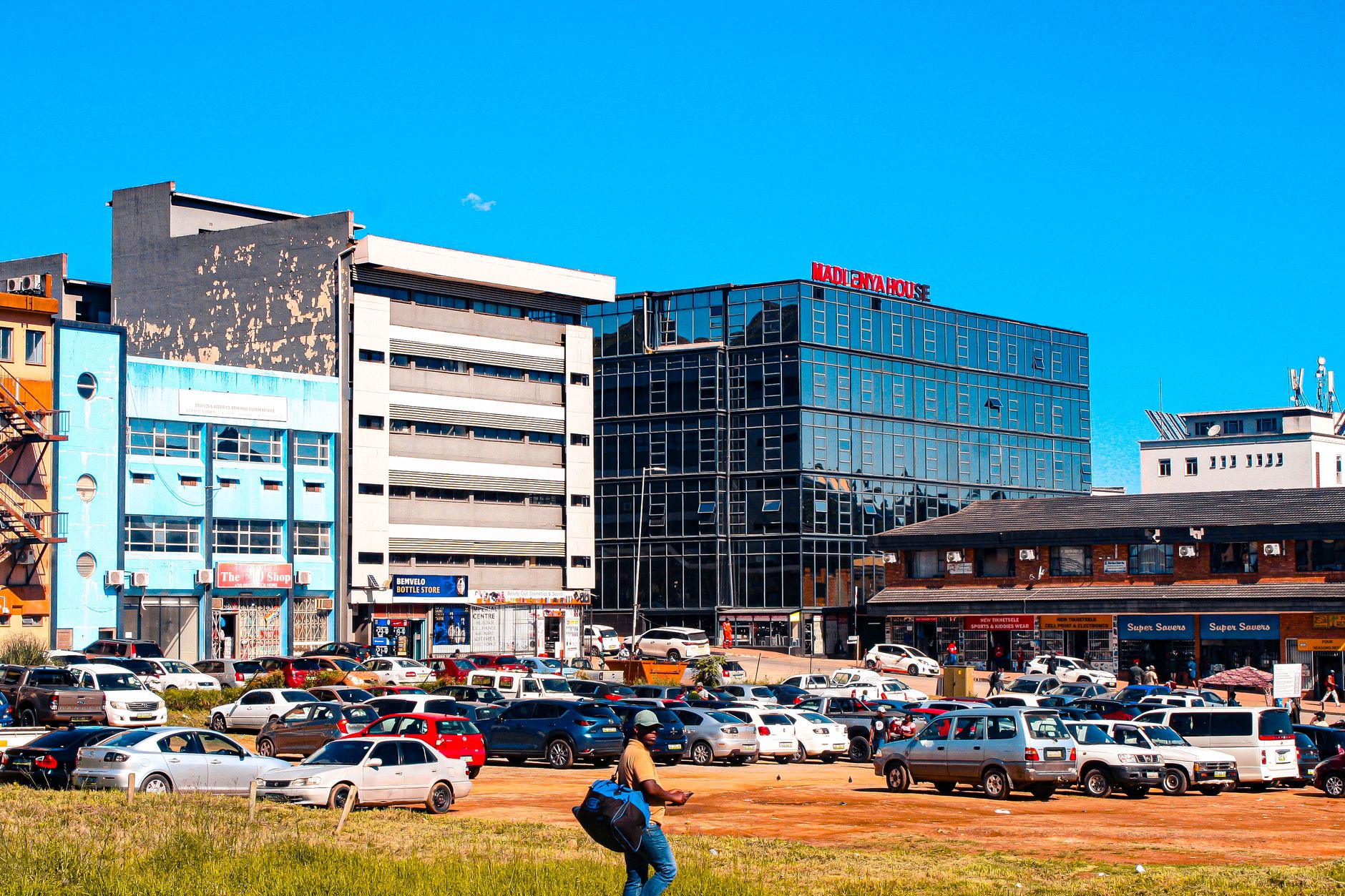
A vibrant street view of downtown Mbabane, Eswatini, showcasing the contrast between modern office architecture and the bustling activity of the city center.
Khaya Motsa on Pexels

A sunny day in Mbabane, Eswatini, captures the local atmosphere with street vendors, a parked minibus, and the storefronts of the Elethu Logoba Butchery.
Khaya Motsa on Pexels

A vibrant view of the city center in Mbabane, Eswatini, showcasing a mix of modern architecture, local businesses, and busy urban activity.
Khaya Motsa on Pexels

The modern, eye-catching architecture of the Hilton Garden Inn towers over a busy intersection in Mbabane, Eswatini.
Khaya Motsa on Pexels

A vibrant afternoon in Mbabane, Eswatini, where local commuters and market activity meet against the backdrop of the city's hilly landscape.
Khaya Motsa on Pexels

A bustling highway scene in Mbabane, Eswatini, captures the daily flow of traffic and pedestrians navigating the roadside.
Khaya Motsa on Pexels
Yes—Mbabane gives you second-largest granite monolith hikes, Monday produce chaos and mountain air 1,243 m above the lowveld heat. It’s a compact capital where you can breakfast on vetkoek, cycle past zebra at Mlilwane and still make the marimba set at House on Fire.
Plan 3–4 days: one for Sibebe Rock, one for Mlilwane cycling and Mantenga village, a morning for the craft-and-produce markets and an evening down-valley at House on Fire. Add an extra day if you want a safari dash to Hlane.
No—Mbabane’s altitude is too high for malaria vectors, but take prophylaxis if you’ll sleep in Big-Game Parks or the lowveld east. Consult a travel clinic before heading to Hlane or Lubombo.
Yes, rand and lilangeni trade at parity everywhere—from kombi fares to craft stalls—so you can skip airport exchange desks entirely. withdraw rand at home and you’re liquid the moment you cross the border.
Central streets around Swazi Plaza are busy until about 9 p.m.; after that take a private taxi rather than wandering uphill residential lanes. Standard urban vigilance—no flashy jewellery, stay in pairs—keeps risk low.
SiyeSwatini TransMagnific runs four daily coaches from OR Tambo to Mbabane in 4 h 40 min (R750 one-way). Book online, bring snacks for the border post and you’ll be in town before dinner.
Ready to book?
King Mswati III International Airport (SHO) sits 35 km south near Manzini; allow 60–120 minutes by road depending on construction delays. SiyeSwatini TransMagnific runs four daily coaches to Johannesburg (JNB) for R750 one-way, departing Mbabane at 08:00, 11:00, 14:30 and 16:30.
No metro or tram system exists. Shared kombi minibuses leave the central rank when full; pay the conductor on board. Private taxis negotiate fares up-front—essential after dark when kombis stop running.
At 1,243 m, nights drop to 4 °C in July; days peak around 17 °C. October–March brings afternoon thunderstorms and 25 °C highs. Visit May–September for dry skies and hiking weather, but pack a fleece for sunrise starts.
English is co-official and spoken in hotels, markets, and on all signage. South African Rand (ZAR) circulates alongside the Lilangeni (SZL) at 1:1; both are accepted everywhere.
Tap water is not recommended for visitors—stick to sealed bottles. LGBTQ+ travelers should keep affection private; public attitudes remain conservative. Arrange hotel pickup at the airport to dodge unofficial taxi touts.
0 places, one continuous walking route. Free with your first city.