history_edu
Ancient Mine, Living Memory
Ngwenya’s Lion Cavern is tied to ochre extraction dated to roughly 43,000 years ago, making it one of the oldest known mining sites on Earth. It gives Eswatini a time scale few destinations can match.
Eswatini is one of the few countries where prehistoric mining, living monarchy, mountain drives, and safari plains sit close enough to understand in a single trip. Small on the map, it feels densely made rather than scaled down.
 Eswatini
EntryMany nationalities get 30 days visa-free; Schengen rules do not apply
EThis Eswatini travel guide starts with a fact most maps hide: one small kingdom fits Africa's oldest mine, a royal capital, and safari country into a few hours' drive.
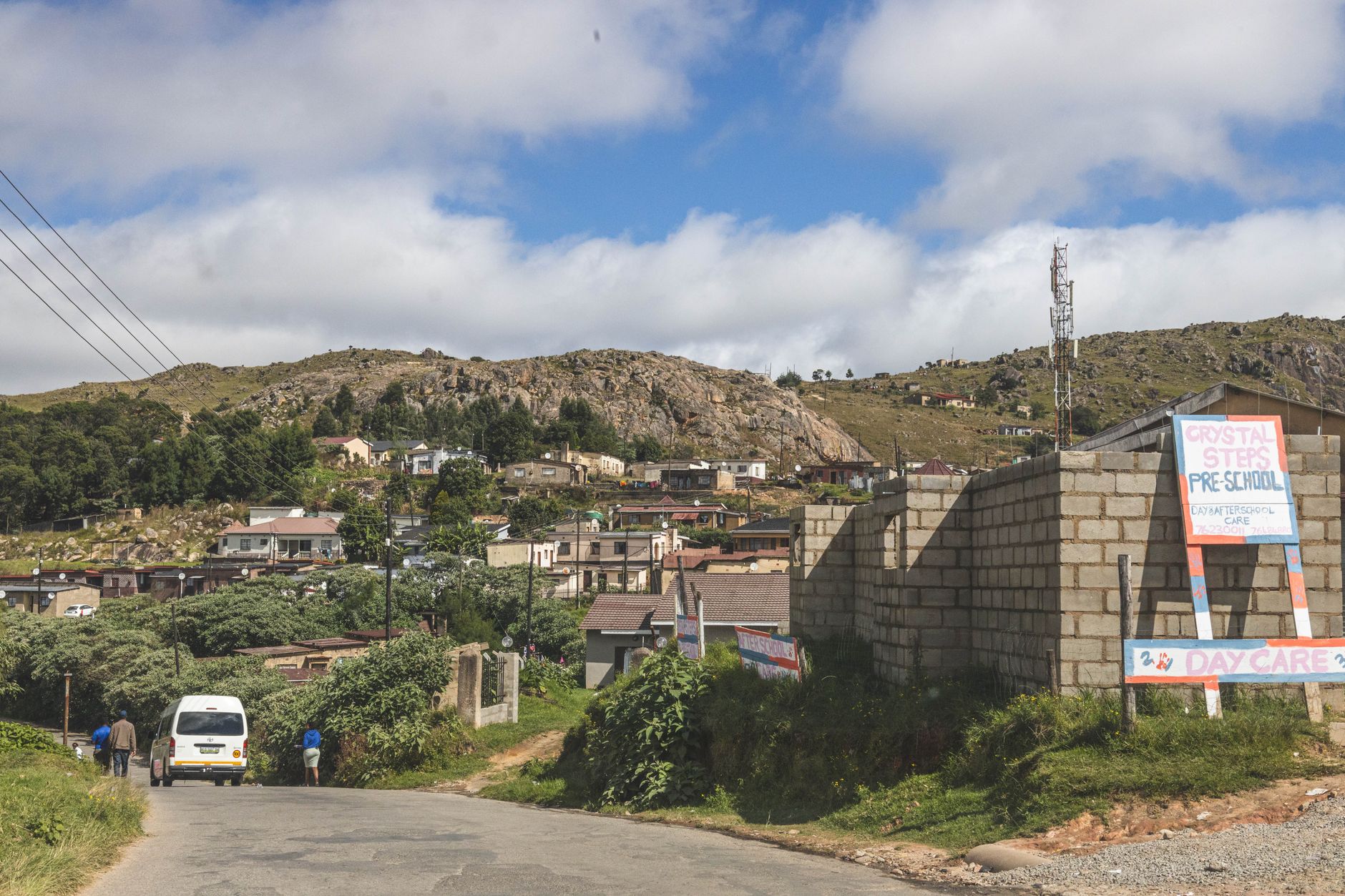
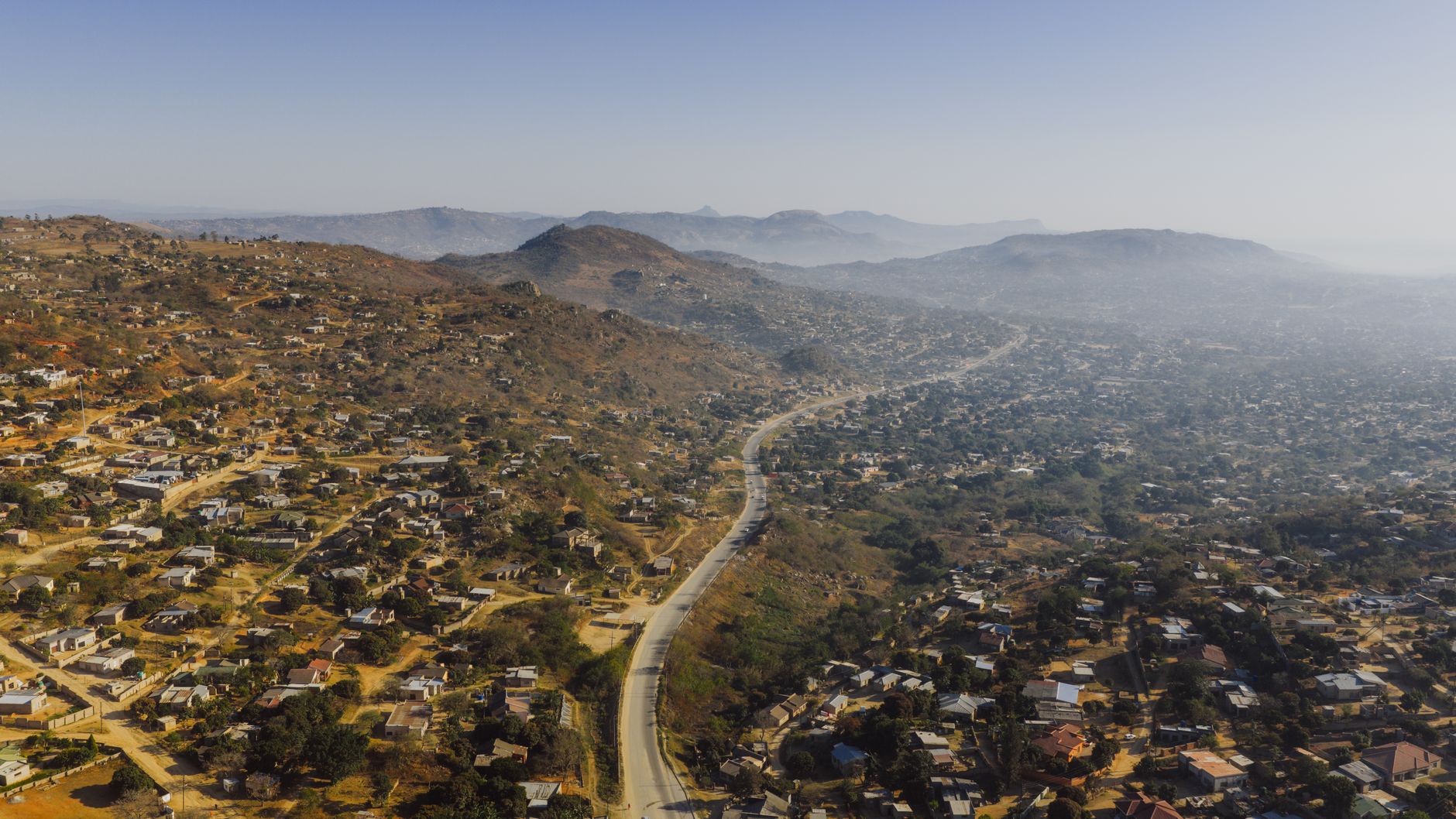
Eswatini works best when you stop treating it as a gap between South Africa and Mozambique. In the west, the high country around Mbabane and Bulembu rises into cool air, granite, pine slopes, and walking country; in the east, the land drops fast toward hotter bushveld and sugar estates near Big Bend and Simunye. That compressed geography is the country’s trick. You can stand at Ngwenya, where Lion Cavern preserves ochre mining dated to about 43,000 years ago, then end the same day in Ezulwini or Lobamba, where the monarchy still shapes public life in ways most African states left behind generations ago.
The history here does not sit behind glass. Lobamba remains the royal and legislative capital, and ceremonies such as Umhlanga and Incwala still give the calendar its deepest pulse. In practical travel terms, that means Eswatini offers something rare: living political ritual, not reenactment. Drive from Mbabane to Lobamba and the country starts to explain itself through royal compounds, memorials, craft markets, and the measured etiquette of daily life. Then Manzini brings the commercial counterweight: bus ranks, traders, taxis, banks, and the ordinary momentum that keeps the kingdom from becoming a museum of its own symbols.
Ochre and Ancestors, c. 43000 BCE-1700 CE
At Ngwenya, the story begins underground. In Lion Cavern, men and women were cutting red ochre from the rock roughly 43,000 years ago, driving into hematite seams with a persistence that still feels unnerving when you stand before the scarred stone. The earth here was not decoration. It was pigment, ritual, perhaps burial, perhaps power worn on skin.
Ce que l'on ignore souvent, c'est que this is not simply a prehistoric curiosity parked at the edge of modern Eswatini. The mine sits inside one of the oldest geological formations on the planet, and in the national imagination it behaves almost like a first archive: older than dynasties, older than praise poetry, older than every royal enclosure that would later rise around Lobamba. A small kingdom, yes. But one with a memory that begins in the Stone Age.
Long before the Dlamini line arrived, other communities lived across these valleys and ridges, among them clans later remembered as Nkosi, Matsebula and Hlophe. They left no Versailles, no marble horsemen, no flattering oil portraits. They left something harder to erase: settlement, cattle routes, ritual ground, names that survived the arrival of conquerors.
That matters. Because Eswatini did not appear from nowhere under a single heroic founder. It was layered, absorbed, negotiated. When the future Swazi monarchy took shape, it inherited a country already inhabited, already storied, already claimed by the living and the dead.
The unnamed ochre miners of Ngwenya remain the first known workers in Eswatini's story, their labor older than writing and somehow still visible in the rock.
Lion Cavern's ochre workings predate the cave paintings of Lascaux by around 26,000 years.
Founding of the Swazi Kingdom, c. 1745-1839
Picture a movement before it became a state: cattle pushed through grass dark with dew, children half asleep, elders watching the passes. Around the mid-18th century, Ngwane III led his people away from the lower Pongola valley under pressure from stronger neighbors, crossing toward the highveld that would become the first durable heartland of the Swazi polity. Nations are often born in proclamations. This one was born in flight.
His successor Sobhuza I, remembered as Somhlolo, understood that survival needed more than bravery. He shifted the royal center to Zombodze and bound clans together with force, marriage, ritual obligation and political patience, creating something more supple than a conquering camp and more durable than a war band. This was the real invention: not territory alone, but a hierarchy that could absorb difference without pretending difference had never existed.
Then comes the royal dream, which in Eswatini has the glow of a legend polished by generations. Sobhuza I is said to have foreseen white strangers arriving with a book, an animal and a round object, and to have urged his successors to accept the book but refuse the round thing, whether coin or wheel. History cannot prove the scene. Yet the monarchy treasured it because it cast the kingdom as neither naive nor submissive, but wary, selective, almost diplomatic before diplomacy had a foreign office.
And beneath the grandeur, one sees the man. Sobhuza I is said to have had scores of wives and children born when he was already an old ruler, which may sound like royal vanity, though in truth it was politics in its most intimate form. His death left an infant heir and a regency. The tenderness of the nursery, in this part of the world, could decide the fate of a kingdom.
Sobhuza I was not just a founder on a pedestal; he was an aging patriarch trying to hold together a fragile state by marrying bloodlines to strategy.
The kingdom's old name, eSwatini, predates the modern state name change by centuries and originally signaled the land of the Swazi people rather than a colonial territory.
Expansion and Royal Power, 1839-1868
Under Mswati II, the kingdom acquired the dangerous confidence of youth. Regiments of young men, organized through the libutfo age system, expanded Swazi authority across a territory far larger than present-day Eswatini, pushing influence deep into what is now Mpumalanga. A ruler rarely receives a greater compliment from history than this: the people themselves came to be called after him.
He ruled in a southern Africa that had become a chessboard played at spear-point. Zulu power pressed from one side, Boer settlers from another, British traders hovered nearby with ledgers and promises. Mswati's genius was to set one danger against the next, granting concessions here, seeking counterweights there, always postponing the moment when any outsider could dictate terms. It worked. For a time.
Ce que l'on ignore souvent, c'est que the royal spectacle carried its own logistics. Ceremonies later associated with national identity, including forms that fed into Umhlanga, were not simply picturesque survivals for cameras in Lobamba. They were methods of gathering bodies, ranking households, displaying fertility, loyalty and availability in a kingdom where politics ran through age, marriage and ritual service as much as through war.
European visitors, when they wrote about Mswati II, tended to admire and fear him in equal measure. That usually means a ruler had understood power perfectly. Yet his death in 1868 opened the door to men with maps, contracts and appetites. The kingdom had reached its widest span under the king whose name it carried. The shrinking would come after him.
Mswati II appears as a warrior in memory, but he was also a tactician who understood that the pen, the land grant and the marriage alliance could wound as sharply as any spear.
Eswatini takes its national name from Mswati II, a rare case of a modern country still carrying the memory of a 19th-century king so directly.
Concessions, Colonial Rule and Independence, 1868-1968
After Mswati II, the kingdom entered its most treacherous century. Concession hunters, Boer interests and British officials arrived with documents that looked administrative and behaved like theft, securing land and rights through treaties few Swazi could fully control. The drama was less theatrical than battle. That made it worse. Ink can be colder than iron.
By 1894, the South African Republic had taken Eswatini under its protection, and after the Anglo-Boer War the British replaced Boer oversight with their own. The kingdom survived, but hemmed in, managed, translated into imperial categories that never fit comfortably. In Mbabane and later administrative centers, colonial rule preferred files, boundaries and schedules. In Lobamba, royal ritual continued to insist that sovereignty also lived in cattle, kinship and the Queen Mother's authority.
This is where one of the great Swazi figures enters with almost theatrical inevitability: Sobhuza II, installed as a child in 1899 after the death of his father Ngwane V. Child kings invite regents, and regents invite intrigue, but Sobhuza II proved astonishingly durable. He spent decades pressing land claims, negotiating with British power, and presenting the monarchy as the one institution broad enough to hold the country together after empire had finished slicing it up.
Independence came on 6 September 1968, and it came not as the birth of an entirely new nation but as the political return of a very old one. That distinction matters in Eswatini. The flag rose over a modern state, yes, but the monarchy insisted that the deeper continuity ran back through regiments, royal villages and ancestors. The next chapter would ask the hardest question of all: how does an ancient crown behave inside a postcolonial constitution?
Sobhuza II, crowned as an infant, grew into the patient strategist who outlasted colonial administrators and turned royal persistence into independence.
Sobhuza II would go on to reign for more than 82 years, one of the longest documented reigns in world history.
Monarchy in the Modern Age, 1968-present
The constitutional experiment did not last long. In 1973, Sobhuza II repealed the independence constitution, banned party politics and gathered authority back into the monarchy with the certainty of a man who believed imported parliamentary forms had never matched Swazi political life. Admirers called it continuity. Critics called it autocracy. Both were seeing part of the truth.
Yet one cannot understand modern Eswatini through institutions alone. One must look at the ceremonial body of the nation: Incwala, Umhlanga, the royal residences around Lobamba and the symbolic geometry of power between king and Ndlovukati, the Queen Mother. In many countries such rituals would have become museum theater. Here they still carry political voltage.
King Mswati III, who succeeded in 1986, inherited not a tranquil throne but a heavily charged one, surrounded by expectation, inequality, devotion and resentment. The state modernized in fits and starts; towns such as Manzini, Mbabane and Ezulwini changed with commerce, roads and global media; yet the monarchy remained the emotional center of the public script. Ce que l'on ignore souvent, c'est que even the 2018 renaming from Swaziland to Eswatini was presented not as branding but as restoration, a reclaiming of an older indigenous name long used in siSwati.
And so the country lives in two tempos at once. The modern state asks for budgets, jobs, schools and rights. The older kingdom asks for continuity, ritual and obedience to inherited forms. That tension is not a side note. It is the present tense of Eswatini's history.
Mswati III stands not just as a reigning monarch but as the steward, beneficiary and target of a political tradition that still shapes daily life in Eswatini.
When the country was officially renamed Eswatini in 2018, the king framed it as a return to the name long used in siSwati rather than a break with the past.
In Eswatini, speech begins with recognition, not intention. You do not throw a question into the air and expect it to land. You greet. Sawubona for one person, Sanibonani for several. The words do not merely say hello. They perform the more serious act of admitting that another human being exists before your errand does.
SiSwati and English live side by side, but they do not govern the same kingdom. English signs the forms in Mbabane, labels the ministries, arranges the invoices. SiSwati does the subtler work: rank, tenderness, teasing, apology, caution. An exchange can begin in English and then, at the exact moment tact becomes necessary, slip into SiSwati like a hand changing knives at the table.
What moved me was the acoustic shape of respect. Older women become Make or Mama, older men Babe or Baba, and the title is not decoration but social architecture. In Manzini bus ranks, in the markets of Mbabane, outside shops in Ezulwini, voices rarely need to rise to prove anything. A loud voice is often an admission of defeat. A country is a grammar of distance.
Eswatini has the good sense to distrust abruptness. That alone makes it civilized. You notice it in doorways, in introductions, in the way a younger person offers a seat to an elder without turning the gesture into theater. Politeness here is not sugar. It is geometry.
The word inhlonipho is often translated as respect, which is like translating perfume as liquid. Respect in Eswatini becomes visible through the body: how you sit, how you receive food, how long you allow a greeting to breathe before rushing toward business, how you dress when Lobamba is preparing for ceremony, how you lower your tone instead of inflating your certainty. Every society has rules. Few make them look this graceful.
A traveler learns quickly that speed can feel childish. Interrupting an elder is worse. Barging in with efficiency, that northern disease, turns a person metallic. Better to proceed with ceremony, even in small matters. The reward is immediate. Doors open. Faces soften. And you begin to suspect that haste is not modernity but bad manners in expensive shoes.
The center of the table in Eswatini is not meat. It is starch. This is an important distinction. Sishwala, the thick maize porridge that anchors so many meals, arrives with the authority of a monarch and the humility of flour. You pinch it with the right hand, press it with the thumb, make a hollow, and gather stew or greens. A spoon would miss the point.
Then comes emasi, sour milk, one of the great foods of the world and one of the least boastful. Thick, cool, faintly sharp, it tastes of cattle, patience, and a domestic intelligence older than any refrigerator. Mixed with ground maize or sorghum, it becomes breakfast, field meal, comfort, memory. I mistrust societies that do not understand fermentation. Eswatini understands it intimately.
The table reveals the country better than any speech. Sidvudvu, pumpkin with maize meal, carries a soft sweetness that refuses dessert status. Tinkhobe, boiled maize kernels sold in cups and bowls, belong to roadside waiting and market gossip. Leafy relishes, beans, groundnuts, dried meat, sorghum beer, marula beer when the season permits: none of it performs for the outsider, which is precisely why it seduces. In Lobamba and Ezulwini, where hotels sometimes polish the edges, the old logic still survives. Food first sustains. Then it instructs.
Christianity is visible in Eswatini. Churches, hymnbooks, pressed collars, Sunday fabrics with their own theology of starch. But the country does not behave as if one system erased the other. The older kingdom remains present. Emadloti, often translated as ancestors, are not museum pieces from a completed past. They are active company.
This is where the atmosphere becomes interesting. A family may attend church and still speak of ancestral displeasure with complete seriousness. A misfortune can belong to medicine, prayer, and lineage at once. European minds dislike such coexistence because they crave a single shelf for every belief. Eswatini shelves nothing so crudely. It permits overlap, which is often the more intelligent arrangement.
In ritual centers near Lobamba, where monarchy and ceremony still shape the national imagination, the link between the living and the dead feels almost administrative in its force. The reed, the cattle, the homestead, the queen mother, the king: none of these are merely symbolic. They are channels. Religion here is not an abstract debate about doctrine. It is a lived diplomacy between visible and invisible powers, conducted with admirable seriousness and, now and then, a certain practical cunning.
Eswatini does not need monumental stone to create grandeur. Much of its deepest architecture begins with the homestead: circular forms, packed earth, timber, thatch, enclosure, cattle byres arranged with the logic of kinship rather than spectacle. A traditional compound is not simply a cluster of buildings. It is a social map. You can read authority, gender, hospitality, storage, and ancestry from the layout if someone patient is willing to teach you.
This makes the contrast with modern civic buildings in Mbabane almost comic. Offices square themselves off in the international bureaucratic style, as if paperwork had won. Yet the older spatial intelligence persists underneath. In the royal landscapes around Lobamba, where ceremony still organizes movement and attention, built form serves ritual before it serves comfort. That is a rarer thing than tourists realize.
Then there is Ngwenya, where the oldest mine on earth scrapes a hole straight through any smug idea of progress. Forty-three thousand years rearrange your sense of what counts as architecture. A tunnel cut for ochre before Lascaux had its horses is also a building of intention. It housed labor, ritual, extraction, desire. Human beings met stone there and persuaded it to yield color. Few cathedrals can claim a more ancient purpose.
Music in Eswatini does not always separate performance from participation, and this is its first elegance. A song can be praise, instruction, mourning, flirtation, discipline, or a way of keeping many bodies inside one rhythm. The royal and communal ceremonies make this obvious. Drum, voice, stomp, ululation, call and response: the body becomes both instrument and witness.
What impressed me most was the collective precision. Large groups of women in lutsango, large groups of men in regimental formations, voices moving together without dissolving into blandness. Unity, yes, but not anonymity. The grain of the individual voice remains audible inside the whole, rather like a chorus that has never suffered conservatory training and is better for it.
Church music introduces another current. Harmonies travel through the country with missionary history, then return altered by local breath and local tempo. In Mbabane you may hear gospel through speakers and traffic; in smaller places, hymn singing can arrive through open air with such steadiness that it seems architectural. Eswatini understands something many countries forget: rhythm is a form of government. It tells people when to enter, when to answer, when to carry one another.
Ngwenya’s Lion Cavern is tied to ochre extraction dated to roughly 43,000 years ago, making it one of the oldest known mining sites on Earth. It gives Eswatini a time scale few destinations can match.
Lobamba and Ezulwini place you close to the country’s ceremonial core, where royal institutions still shape the public year. This is monarchy as lived structure, not costume drama.
Few countries change this quickly. Misty western highlands, rolling middle country, dry eastern bushveld, and the Lubombo ridge all fit inside a short self-drive circuit.
Eswatini makes wildlife travel manageable for people who do not want marathon transfers. Dry-season game viewing pairs easily with cultural stops and mountain scenery in the same itinerary.
Sishwala, emasi, pumpkin leaves, beans, groundnuts, and sorghum still shape what the country tastes like. The table tells you as much about Eswatini as any monument does.
Main tar roads link Mbabane, Manzini, Lobamba, Ngwenya, and the Lowveld without wasting days in transit. For a short trip, that efficiency is a serious advantage.
12 cities — start with the ones we'd send you to first.
The administrative capital climbs a cool highveld ridge at 1,243 metres, where the Swazi Market on Allister Miller Street sells everything from dried herbs to carved wooden masks under corrugated iron roofs.
The legislative and royal capital sits in the Ezulwini Valley as the living nerve centre of the monarchy — home to the National Museum, the Houses of Parliament, and the royal kraal where Incwala and Umhlanga are perform
Eswatini's largest and most commercially raw city, where the morning market off Louw Street trades in emasi, dried fish, second-hand clothes, and the kind of noise that reminds you this is where the country actually does
The Valley of Heaven stretches between Mbabane and Lobamba as a ribbon of lodges, craft markets, and the Mantenga Cultural Village, where the valley's geography compresses the country's political and ritual geography int
Perched on the Lubombo escarpment at around 800 metres, this quiet eastern town looks west over a vast lowveld plain and serves as the practical gateway to the Shewula community reserve and the escarpment's long-ridge hi
The southernmost town of consequence, close to the South African border at Mahamba, where a weekly cattle market draws herders from surrounding homesteads and the surrounding middleveld rolls into sugarcane and commercia
Named after a prospector who found gold here in 1884, this small highveld town at roughly 1,200 metres sits inside Eswatini's commercial forestry belt and is the northern base for Malolotja Nature Reserve's waterfall tra
Less a town than a crossroads with a geological conscience — Lion Cavern here is dated to 43,000 BCE, making it among the oldest known mines on Earth, predating Lascaux's cave paintings by 26 millennia.
A lowveld sugar town on a wide curve of the Great Usutu River, where the heat drops the temperature gauge well past 35°C in summer and the surrounding cane fields explain why sugar accounts for a significant share of Esw
Lobamba, Ezulwini, Mbabane and Manzini sit close enough together to function as Eswatini's civic and cultural core, even if each town plays a different role. Lobamba carries the monarchy and parliament, Ezulwini handles much of the visitor infrastructure, Mbabane is the administrative capital, and Manzini is the trading pulse. If you want the country's fastest introduction, this is where it happens.
The air cools and the roads start climbing as soon as you move west of Mbabane toward Ngwenya, Pigg's Peak and Bulembu. This is old mine country and hiking country, with sharper light, heavier mist and longer views than the center of the country can offer. It feels tougher and quieter, which is exactly why many travelers remember it best.
Siteki is the hinge between the middle country and the east, where the land begins to drop and the road network starts pointing toward Mozambique. The pace is slower here, and the scenery feels more stretched out than dramatic, but that is part of its appeal. Use this region for community visits, birding and a less packaged side of Eswatini.
Simunye sits in the hotter northeast, where irrigated cane fields meet reserve country and the horizon opens up. This is practical, working Eswatini rather than ceremonial Eswatini, and the contrast is useful after Lobamba or Ezulwini. Travelers heading this way usually come for wildlife, wider skies and a road trip that feels more remote than the map suggests.
Big Bend and the southern lowveld are hotter, flatter and more agricultural than the highlands, with sugar estates and reserve roads replacing mountain passes. South and southwest from here, Nhlangano and Hluthi introduce a quieter borderland mood, less polished but more revealing. This part of Eswatini works well for travelers who like long drives, rural detours and fewer crowds.
From ochre miners at Ngwenya to a monarchy still shaping the present
At Ngwenya, people begin extracting red ochre from Lion Cavern in one of the oldest known mining operations on Earth. Eswatini's history starts not with a throne but with labor in the dark, pigment cut from stone for ritual and survival.
Oral tradition places the distant ancestors of the Dlamini line within the wider southward movement of Nguni-speaking peoples. The future rulers of Eswatini are still travelers at this stage, not yet kings of a settled realm.
Under pressure in the lower Pongola region, Ngwane III leads his people toward the highveld. The move creates the first recognizable Swazi political core and gives the kingdom its founding memory of survival through motion.
Under Sobhuza I, the royal capital shifts to Zombodze, where the monarchy builds a more stable center of power. This is the moment when conquest becomes statecraft and scattered loyalties are drawn toward one court.
Sobhuza I dies after consolidating the early kingdom through war, marriage and ritual authority. His passing leaves an infant heir and opens the familiar royal drama of regency, succession and faction.
Mswati II begins the reign that will define the kingdom's military height and diplomatic style. Under him, Swazi power expands dramatically while neighboring threats multiply.
Through campaigns and alliances, Mswati II extends Swazi authority across a territory much larger than present-day Eswatini. The nation will later take its very name from this king.
The death of Mswati II removes the ruler best able to balance Boer, British and Zulu pressure. The kingdom remains standing, but its room to maneuver begins to narrow fast.
External powers formally recognize Swazi independence, though recognition comes with growing interference. It is the sort of diplomatic compliment empires give just before they begin deciding too much.
The South African Republic places Swaziland under its protection. Protection, in southern African history, often meant supervision first and dispossession after.
After the death of Ngwane V, the infant Sobhuza II is installed as ruler. A long reign begins in the nursery, with regents and royal women guarding the continuity of the crown.
After the Anglo-Boer War, Britain assumes control of Swaziland. Colonial rule prefers maps, districts and files, while the monarchy fights to preserve authority through ritual and land claims.
Sobhuza II comes of age and begins to rule in his own right. He will spend decades arguing, petitioning and maneuvering to recover land and defend royal sovereignty against colonial constraints.
On 6 September 1968, Swaziland becomes independent. For the monarchy, this is not the invention of a nation from scratch but the political restoration of an older kingdom under modern international form.
Sobhuza II suspends the constitution, dissolves parliament and bans political parties. The move reshapes the country decisively, placing royal authority above the imported constitutional order.
Sobhuza II dies after one of the longest documented reigns in modern history. He leaves behind a state whose independence he secured and whose politics he had bent firmly back toward the crown.
Mswati III ascends the throne and begins a reign defined by ceremonial continuity, international scrutiny and rising domestic pressure for political reform. The monarchy remains the central fact of national life.
King Mswati III announces the country's official name change to Eswatini. Presented as a restoration of the siSwati name long used locally, the change binds modern state identity back to older historical language.
Ochre and Ancestors
The unnamed ochre miners of Ngwenya remain the first known workers in Eswatini's story, their labor older than writing and somehow still visible in the rock.
At Ngwenya, the story begins underground. In Lion Cavern, men and women were cutting red ochre from the rock roughly 43,000 years ago, driving into hematite seams with a persistence that still feels unnerving when you stand before the scarred stone. The earth here was not decoration. It was pigment, ritual, perhaps burial, perhaps power worn on skin.
Ce que l'on ignore souvent, c'est que this is not simply a prehistoric curiosity parked at the edge of modern Eswatini. The mine sits inside one of the oldest geological formations on the planet, and in the national imagination it behaves almost like a first archive: older than dynasties, older than praise poetry, older than every royal enclosure that would later rise around Lobamba. A small kingdom, yes. But one with a memory that begins in the Stone Age.
Long before the Dlamini line arrived, other communities lived across these valleys and ridges, among them clans later remembered as Nkosi, Matsebula and Hlophe. They left no Versailles, no marble horsemen, no flattering oil portraits. They left something harder to erase: settlement, cattle routes, ritual ground, names that survived the arrival of conquerors.
That matters. Because Eswatini did not appear from nowhere under a single heroic founder. It was layered, absorbed, negotiated. When the future Swazi monarchy took shape, it inherited a country already inhabited, already storied, already claimed by the living and the dead.
Lion Cavern's ochre workings predate the cave paintings of Lascaux by around 26,000 years.
Founding of the Swazi Kingdom
Sobhuza I was not just a founder on a pedestal; he was an aging patriarch trying to hold together a fragile state by marrying bloodlines to strategy.
Picture a movement before it became a state: cattle pushed through grass dark with dew, children half asleep, elders watching the passes. Around the mid-18th century, Ngwane III led his people away from the lower Pongola valley under pressure from stronger neighbors, crossing toward the highveld that would become the first durable heartland of the Swazi polity. Nations are often born in proclamations. This one was born in flight.
His successor Sobhuza I, remembered as Somhlolo, understood that survival needed more than bravery. He shifted the royal center to Zombodze and bound clans together with force, marriage, ritual obligation and political patience, creating something more supple than a conquering camp and more durable than a war band. This was the real invention: not territory alone, but a hierarchy that could absorb difference without pretending difference had never existed.
Then comes the royal dream, which in Eswatini has the glow of a legend polished by generations. Sobhuza I is said to have foreseen white strangers arriving with a book, an animal and a round object, and to have urged his successors to accept the book but refuse the round thing, whether coin or wheel. History cannot prove the scene. Yet the monarchy treasured it because it cast the kingdom as neither naive nor submissive, but wary, selective, almost diplomatic before diplomacy had a foreign office.
And beneath the grandeur, one sees the man. Sobhuza I is said to have had scores of wives and children born when he was already an old ruler, which may sound like royal vanity, though in truth it was politics in its most intimate form. His death left an infant heir and a regency. The tenderness of the nursery, in this part of the world, could decide the fate of a kingdom.
The kingdom's old name, eSwatini, predates the modern state name change by centuries and originally signaled the land of the Swazi people rather than a colonial territory.
Expansion and Royal Power
Mswati II appears as a warrior in memory, but he was also a tactician who understood that the pen, the land grant and the marriage alliance could wound as sharply as any spear.
Under Mswati II, the kingdom acquired the dangerous confidence of youth. Regiments of young men, organized through the libutfo age system, expanded Swazi authority across a territory far larger than present-day Eswatini, pushing influence deep into what is now Mpumalanga. A ruler rarely receives a greater compliment from history than this: the people themselves came to be called after him.
He ruled in a southern Africa that had become a chessboard played at spear-point. Zulu power pressed from one side, Boer settlers from another, British traders hovered nearby with ledgers and promises. Mswati's genius was to set one danger against the next, granting concessions here, seeking counterweights there, always postponing the moment when any outsider could dictate terms. It worked. For a time.
Ce que l'on ignore souvent, c'est que the royal spectacle carried its own logistics. Ceremonies later associated with national identity, including forms that fed into Umhlanga, were not simply picturesque survivals for cameras in Lobamba. They were methods of gathering bodies, ranking households, displaying fertility, loyalty and availability in a kingdom where politics ran through age, marriage and ritual service as much as through war.
European visitors, when they wrote about Mswati II, tended to admire and fear him in equal measure. That usually means a ruler had understood power perfectly. Yet his death in 1868 opened the door to men with maps, contracts and appetites. The kingdom had reached its widest span under the king whose name it carried. The shrinking would come after him.
Eswatini takes its national name from Mswati II, a rare case of a modern country still carrying the memory of a 19th-century king so directly.
Concessions, Colonial Rule and Independence
Sobhuza II, crowned as an infant, grew into the patient strategist who outlasted colonial administrators and turned royal persistence into independence.
After Mswati II, the kingdom entered its most treacherous century. Concession hunters, Boer interests and British officials arrived with documents that looked administrative and behaved like theft, securing land and rights through treaties few Swazi could fully control. The drama was less theatrical than battle. That made it worse. Ink can be colder than iron.
By 1894, the South African Republic had taken Eswatini under its protection, and after the Anglo-Boer War the British replaced Boer oversight with their own. The kingdom survived, but hemmed in, managed, translated into imperial categories that never fit comfortably. In Mbabane and later administrative centers, colonial rule preferred files, boundaries and schedules. In Lobamba, royal ritual continued to insist that sovereignty also lived in cattle, kinship and the Queen Mother's authority.
This is where one of the great Swazi figures enters with almost theatrical inevitability: Sobhuza II, installed as a child in 1899 after the death of his father Ngwane V. Child kings invite regents, and regents invite intrigue, but Sobhuza II proved astonishingly durable. He spent decades pressing land claims, negotiating with British power, and presenting the monarchy as the one institution broad enough to hold the country together after empire had finished slicing it up.
Independence came on 6 September 1968, and it came not as the birth of an entirely new nation but as the political return of a very old one. That distinction matters in Eswatini. The flag rose over a modern state, yes, but the monarchy insisted that the deeper continuity ran back through regiments, royal villages and ancestors. The next chapter would ask the hardest question of all: how does an ancient crown behave inside a postcolonial constitution?
Sobhuza II would go on to reign for more than 82 years, one of the longest documented reigns in world history.
Monarchy in the Modern Age
Mswati III stands not just as a reigning monarch but as the steward, beneficiary and target of a political tradition that still shapes daily life in Eswatini.
The constitutional experiment did not last long. In 1973, Sobhuza II repealed the independence constitution, banned party politics and gathered authority back into the monarchy with the certainty of a man who believed imported parliamentary forms had never matched Swazi political life. Admirers called it continuity. Critics called it autocracy. Both were seeing part of the truth.
Yet one cannot understand modern Eswatini through institutions alone. One must look at the ceremonial body of the nation: Incwala, Umhlanga, the royal residences around Lobamba and the symbolic geometry of power between king and Ndlovukati, the Queen Mother. In many countries such rituals would have become museum theater. Here they still carry political voltage.
King Mswati III, who succeeded in 1986, inherited not a tranquil throne but a heavily charged one, surrounded by expectation, inequality, devotion and resentment. The state modernized in fits and starts; towns such as Manzini, Mbabane and Ezulwini changed with commerce, roads and global media; yet the monarchy remained the emotional center of the public script. Ce que l'on ignore souvent, c'est que even the 2018 renaming from Swaziland to Eswatini was presented not as branding but as restoration, a reclaiming of an older indigenous name long used in siSwati.
And so the country lives in two tempos at once. The modern state asks for budgets, jobs, schools and rights. The older kingdom asks for continuity, ritual and obedience to inherited forms. That tension is not a side note. It is the present tense of Eswatini's history.
When the country was officially renamed Eswatini in 2018, the king framed it as a return to the name long used in siSwati rather than a break with the past.
In Eswatini, speech begins with recognition, not intention. You do not throw a question into the air and expect it to land. You greet. Sawubona for one person, Sanibonani for several. The words do not merely say hello. They perform the more serious act of admitting that another human being exists before your errand does.
SiSwati and English live side by side, but they do not govern the same kingdom. English signs the forms in Mbabane, labels the ministries, arranges the invoices. SiSwati does the subtler work: rank, tenderness, teasing, apology, caution. An exchange can begin in English and then, at the exact moment tact becomes necessary, slip into SiSwati like a hand changing knives at the table.
What moved me was the acoustic shape of respect. Older women become Make or Mama, older men Babe or Baba, and the title is not decoration but social architecture. In Manzini bus ranks, in the markets of Mbabane, outside shops in Ezulwini, voices rarely need to rise to prove anything. A loud voice is often an admission of defeat. A country is a grammar of distance.
Eswatini has the good sense to distrust abruptness. That alone makes it civilized. You notice it in doorways, in introductions, in the way a younger person offers a seat to an elder without turning the gesture into theater. Politeness here is not sugar. It is geometry.
The word inhlonipho is often translated as respect, which is like translating perfume as liquid. Respect in Eswatini becomes visible through the body: how you sit, how you receive food, how long you allow a greeting to breathe before rushing toward business, how you dress when Lobamba is preparing for ceremony, how you lower your tone instead of inflating your certainty. Every society has rules. Few make them look this graceful.
A traveler learns quickly that speed can feel childish. Interrupting an elder is worse. Barging in with efficiency, that northern disease, turns a person metallic. Better to proceed with ceremony, even in small matters. The reward is immediate. Doors open. Faces soften. And you begin to suspect that haste is not modernity but bad manners in expensive shoes.
The center of the table in Eswatini is not meat. It is starch. This is an important distinction. Sishwala, the thick maize porridge that anchors so many meals, arrives with the authority of a monarch and the humility of flour. You pinch it with the right hand, press it with the thumb, make a hollow, and gather stew or greens. A spoon would miss the point.
Then comes emasi, sour milk, one of the great foods of the world and one of the least boastful. Thick, cool, faintly sharp, it tastes of cattle, patience, and a domestic intelligence older than any refrigerator. Mixed with ground maize or sorghum, it becomes breakfast, field meal, comfort, memory. I mistrust societies that do not understand fermentation. Eswatini understands it intimately.
The table reveals the country better than any speech. Sidvudvu, pumpkin with maize meal, carries a soft sweetness that refuses dessert status. Tinkhobe, boiled maize kernels sold in cups and bowls, belong to roadside waiting and market gossip. Leafy relishes, beans, groundnuts, dried meat, sorghum beer, marula beer when the season permits: none of it performs for the outsider, which is precisely why it seduces. In Lobamba and Ezulwini, where hotels sometimes polish the edges, the old logic still survives. Food first sustains. Then it instructs.
Christianity is visible in Eswatini. Churches, hymnbooks, pressed collars, Sunday fabrics with their own theology of starch. But the country does not behave as if one system erased the other. The older kingdom remains present. Emadloti, often translated as ancestors, are not museum pieces from a completed past. They are active company.
This is where the atmosphere becomes interesting. A family may attend church and still speak of ancestral displeasure with complete seriousness. A misfortune can belong to medicine, prayer, and lineage at once. European minds dislike such coexistence because they crave a single shelf for every belief. Eswatini shelves nothing so crudely. It permits overlap, which is often the more intelligent arrangement.
In ritual centers near Lobamba, where monarchy and ceremony still shape the national imagination, the link between the living and the dead feels almost administrative in its force. The reed, the cattle, the homestead, the queen mother, the king: none of these are merely symbolic. They are channels. Religion here is not an abstract debate about doctrine. It is a lived diplomacy between visible and invisible powers, conducted with admirable seriousness and, now and then, a certain practical cunning.
Eswatini does not need monumental stone to create grandeur. Much of its deepest architecture begins with the homestead: circular forms, packed earth, timber, thatch, enclosure, cattle byres arranged with the logic of kinship rather than spectacle. A traditional compound is not simply a cluster of buildings. It is a social map. You can read authority, gender, hospitality, storage, and ancestry from the layout if someone patient is willing to teach you.
This makes the contrast with modern civic buildings in Mbabane almost comic. Offices square themselves off in the international bureaucratic style, as if paperwork had won. Yet the older spatial intelligence persists underneath. In the royal landscapes around Lobamba, where ceremony still organizes movement and attention, built form serves ritual before it serves comfort. That is a rarer thing than tourists realize.
Then there is Ngwenya, where the oldest mine on earth scrapes a hole straight through any smug idea of progress. Forty-three thousand years rearrange your sense of what counts as architecture. A tunnel cut for ochre before Lascaux had its horses is also a building of intention. It housed labor, ritual, extraction, desire. Human beings met stone there and persuaded it to yield color. Few cathedrals can claim a more ancient purpose.
Music in Eswatini does not always separate performance from participation, and this is its first elegance. A song can be praise, instruction, mourning, flirtation, discipline, or a way of keeping many bodies inside one rhythm. The royal and communal ceremonies make this obvious. Drum, voice, stomp, ululation, call and response: the body becomes both instrument and witness.
What impressed me most was the collective precision. Large groups of women in lutsango, large groups of men in regimental formations, voices moving together without dissolving into blandness. Unity, yes, but not anonymity. The grain of the individual voice remains audible inside the whole, rather like a chorus that has never suffered conservatory training and is better for it.
Church music introduces another current. Harmonies travel through the country with missionary history, then return altered by local breath and local tempo. In Mbabane you may hear gospel through speakers and traffic; in smaller places, hymn singing can arrive through open air with such steadiness that it seems architectural. Eswatini understands something many countries forget: rhythm is a form of government. It tells people when to enter, when to answer, when to carry one another.
Ngwane III is the man at the moment of movement, leading his people away from the lower Pongola under pressure and into the highveld that would anchor the kingdom. He matters less for grand monuments than for a decision made on the move: when to leave, where to settle, whom to fight and whom to absorb.
Sobhuza I, called Somhlolo, turned a migrating chiefdom into a political organism with a center, a court and a strategy. Tradition credits him with the dream of the book and the coin, which made him, in royal memory, the first great reader of Europe's intentions.
Mswati II gave the kingdom scale and swagger, extending its power far beyond today's borders while balancing Boer, British and Zulu pressures with uncommon nerve. That Eswatini still carries his name tells you how deeply his reign entered the country's self-image.
Tsandzile Ndwandwe, remembered with the honorific LaYaka, belonged to that formidable category so often underestimated by outsiders: the royal woman who makes succession possible. In a kingdom where marriage, clan diplomacy and regency shaped survival, figures like her held the state together while men received the praise songs.
Ngwane V inherited a kingdom already cornered by concession-seekers and imperial ambition, and he spent his reign facing the slow violence of paper claims. His death left the throne to a child, Sobhuza II, at precisely the moment Eswatini needed both caution and endurance.
Labotsibeni is one of the great women of southern African statecraft, and she deserves better than footnote status. As regent, she steered the monarchy through colonial pressure, defended royal interests with remarkable political intelligence, and ensured that the crown did not dissolve into someone else's administrative convenience.
Crowned as an infant and ruling for more than eight decades, Sobhuza II combined patience with an almost dynastic instinct for survival. He pressed land claims, negotiated with empire, then reasserted monarchical supremacy after independence with the calm confidence of a man who believed history had vindicated him.
Mswati III inherited a throne that is both ancient symbol and living political force. His reign has been marked by ceremonial continuity, strong criticism from pro-democracy voices, and the 2018 restoration of the country's indigenous name, Eswatini.
This is the compact first-timer route: monarchy, markets, museums and the easiest logistics in the country. Base yourself between Lobamba and Ezulwini, with time in Mbabane for the city edge and Sibebe country. You spend less time on the road and more time understanding how Eswatini actually works.
The northwest is the Eswatini people remember in their knees: steep roads, colder air and views that keep changing shape. Start at Ngwenya for the ancient mine country, then move north through Pigg's Peak and finish in Bulembu, where old mining history and mountain scenery sit side by side.
This route shows how quickly Eswatini shifts from urban bustle to escarpment roads and hotter sugar country. Begin in Manzini, then run east to Siteki, north to Simunye and south through Big Bend for wildlife country, estates and longer, quieter drives. It suits travelers who want variety without doubling back too much.
The south gets fewer casual visitors, which is part of the point. Build a slower trip through Nhlangano and Hluthi, then arc toward Big Bend for warmer lowveld country and a final contrast in landscape and pace. This is the route for travelers who do not need every night to feel polished.
Right hand. Small ball. Thumb hollow. Stew, greens, beans. Family table. Noon, evening.
Clay bowl or enamel mug. Spoon or sip. Breakfast, heat, aftermath. Elders, children, everyone.
Pumpkin, maize meal, pot, wooden spoon. Warm side dish. Meat days, harvest days, ordinary days.
Boiled maize kernels. Cup, bowl, fingers, salt. Bus rank, market, roadside. Waiting made edible.
Communal vessel. Shared pour. Ceremony, visit, talk, laughter. Slow drinking, long memory.
Marula fruit, fermentation, season. Women's work, gathering, ceremony. Cup after cup, never haste.
Pumpkin leaves, groundnuts, simmering pot. Relish beside porridge. Supper, homestead, hand to mouth.

Many travelers can enter Eswatini visa-free for 30 days, including UK and US passport holders; extensions of another 30 days can be requested from the Ministry of Home Affairs. Your passport should be valid for at least 3 months after arrival and carry 2 blank pages, plus 2 more if you are also crossing back into South Africa. Yellow fever proof is required only if you arrive from, or transit more than 12 hours through, a yellow-fever-risk country.
Eswatini uses the lilangeni, code SZL, and the South African rand circulates at a 1:1 rate. Cards work in many hotels and larger restaurants in Mbabane, Ezulwini and Manzini, but fuel stations, bus ranks and smaller rural businesses still often expect cash. Keep small notes for petrol attendants, market buys and tips.
The main gateway is King Mswati III International Airport near Manzini. As of April 2026, Eswatini Air lists direct flights to Johannesburg, Cape Town, Durban, Harare and Lusaka, while Airlink also connects Eswatini with Johannesburg. For long-haul arrivals from Europe or North America, Johannesburg is still the cleanest flight plan, then a short hop or road transfer into Eswatini.
Self-drive is the most useful way to see Eswatini because distances are short and the main tar roads between Mbabane, Lobamba, Ezulwini and Manzini are manageable. Kombis and buses connect the main towns, but they are not built around tourist timetables and can be crowded. Avoid night driving: livestock, pedestrians and occasional carjacking risk make daylight arrivals the safer call.
Eswatini is small but the weather shifts fast with altitude. The high western side around Mbabane and Ngwenya runs cooler and wetter, while the eastern and southern lowveld around Big Bend and Simunye is hotter and drier. May to September is the easiest season for self-drive, hiking and wildlife; November to March is greener, stormier and more humid.
Mobile data is usually fine in Mbabane, Manzini, Ezulwini, Siteki and along the main highways. MTN Eswatini and Eswatini Mobile are the licensed operators, and both sell local SIM or data options; coverage gets thinner in mountain areas, deep reserves and some rural stretches. Hotel Wi-Fi exists, but speed is uneven enough that a local data plan is the better backup.
Most trips are trouble-free, but petty crime, armed robbery and sporadic unrest do occur, especially around demonstrations and after dark. Keep plans flexible, do not stop near political gatherings, and use arranged transport if you arrive late. Basic healthcare exists in Eswatini, though serious cases are often referred to South Africa, so evacuation-capable travel insurance is worth the extra cost.
Carry SZL or rand for fuel, tips, bus fares and smaller restaurants. In rural areas, cash is not a backup plan; it is the plan.
Do not assume every station takes foreign cards reliably. Fill up in Mbabane, Manzini, Nhlangano or Big Bend before reserve roads and keep small cash for attendants.
Eswatini Railways is a freight system, not a traveler network. Build your route around flights, road transfers, self-drive or kombis.
Rooms in Ezulwini and around the major wildlife areas tighten quickly during Umhlanga, Incwala-adjacent periods and South African school holidays. Reserve early if those dates matter to you.
Roaming works, but a local SIM is cheaper and more predictable for maps and WhatsApp. Set it up in Mbabane, Manzini or at the airport rather than hoping for a quick fix in the countryside.
Plan intercity drives for daylight. Night roads are the wrong place to discover an unlit pedestrian, cattle in the lane or a missed turn on gravel.
Greet people before asking for directions or prices. In Eswatini, a quick Sawubona or Sanibonani is not ceremony for show; it is basic social competence.
Explore Eswatini with a personal guide in your pocket
Audio guides for 1,100+ cities across 96 countries. History, stories, and local insight — offline ready.

Usually no, for trips of up to 30 days. UK and US official travel guidance says tourists can enter visa-free for 30 days, and extensions can be requested in Eswatini if you need more time.
No, not by southern African standards, unless you sleep in high-end safari lodges every night. A careful traveler can get by on roughly E900-E1,500 a day, while lodge-heavy trips in Ezulwini or private reserves push the budget up fast.
Yes, easily. The rand circulates at par with the lilangeni, so South African cash works for everyday spending across the country.
Yes in daylight, with normal caution, and no if you are casual about night driving. Main roads are manageable, but gravel approaches, livestock, pedestrians and occasional crime risk make late arrivals a bad bet.
May to September is the easiest all-round season. You get drier weather, better wildlife visibility, cooler hiking conditions in the west and fewer storm disruptions on the roads.
Three days is enough for Lobamba, Ezulwini and Mbabane; a week starts to feel satisfying. If you want the highlands, lowveld reserves and eastern towns in one trip, aim for 7 to 10 days.
Yes, but it will cost time. Buses and kombis link towns such as Mbabane, Manzini, Siteki and Nhlangano, though schedules are loose and reserve access is much easier with a car or arranged transfer.
No Uber, but there is a local equivalent. Leap Taxi is the app-based option mentioned by the official tourism site, and it is the most useful choice for airport or town rides.
Yes, especially if you want wildlife without spending Kenya or Botswana money. The country is small, road transfers are shorter, and reserves near Big Bend and Simunye fit well into a broader cultural trip.
Last reviewed