Tallinn

Estonia

Tallinn

Europe’s best-preserved medieval city runs on contactless trams, black bread, and a café culture so deep even Parliament watches the clock by a 14th-century tower flag.

location_on 12 attractions
calendar_month May–September for long daylight; December for Christmas markets
schedule 2–3 days

Introduction

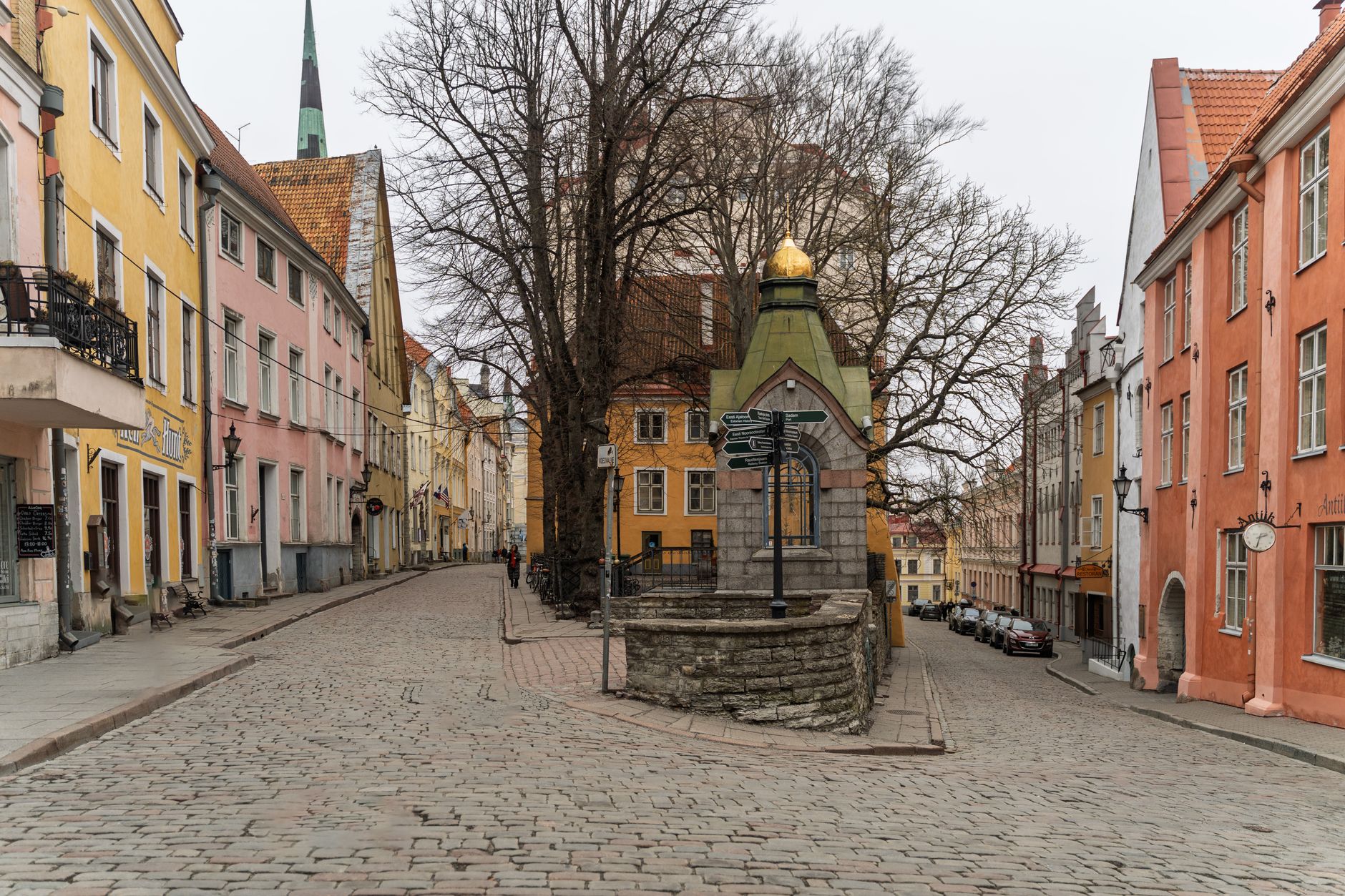
The first thing that catches you off guard in Tallinn, Estonia is the silence inside the medieval walls. No cars, no amplified music, just the echo of your own footsteps on cobblestones laid in the 13th century. Then you notice the smell — woodsmoke drifting from chimneys, rye bread cooling in bakery windows, and something sharper, metallic, that might be the past itself.

This is the only European capital where the Hanseatic street grid survives intact, plot by plot, down to the width of the alleys. You can walk the entire circumference of the old merchant city in 22 minutes, but it will take you three days if you stop to read every Latin inscription, touch every iron door-knocker shaped like a lion's paw, and climb the 115 steps of Pikk Hermann tower where the Estonian flag has been raised every sunrise since 1989.

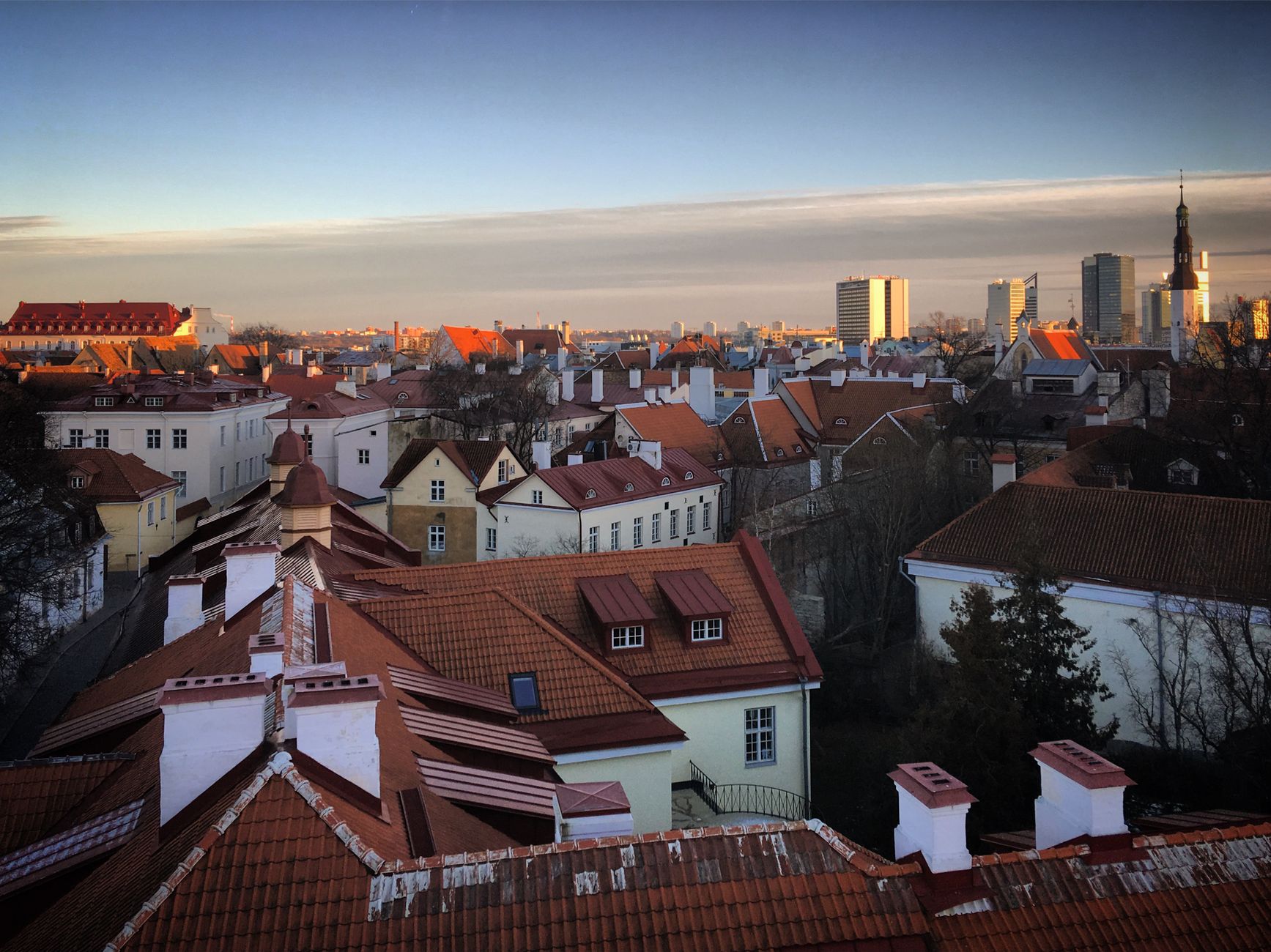
Beyond the walls, the city flips personality like a coin. One side is Kalamaja, where pastel wooden houses built for 19th-century factory workers now host third-wave coffee roasters and a bakery that sells black bread so dense it could sink a ship. The other side is Noblessner, a former Tsarist submarine plant where you eat two-Michelin-star dinner while looking out at the same sea where the Russian fleet once trained. Between these poles, Tallinn keeps its secrets: a 14th-century pharmacy still dispensing medicine, a Soviet KGB office preserved exactly as the agents left it in 1991, and a song festival ground that once held 300,000 voices — a quarter of the entire nation singing itself free.

What Makes This City Special

Medieval Time-Capsule

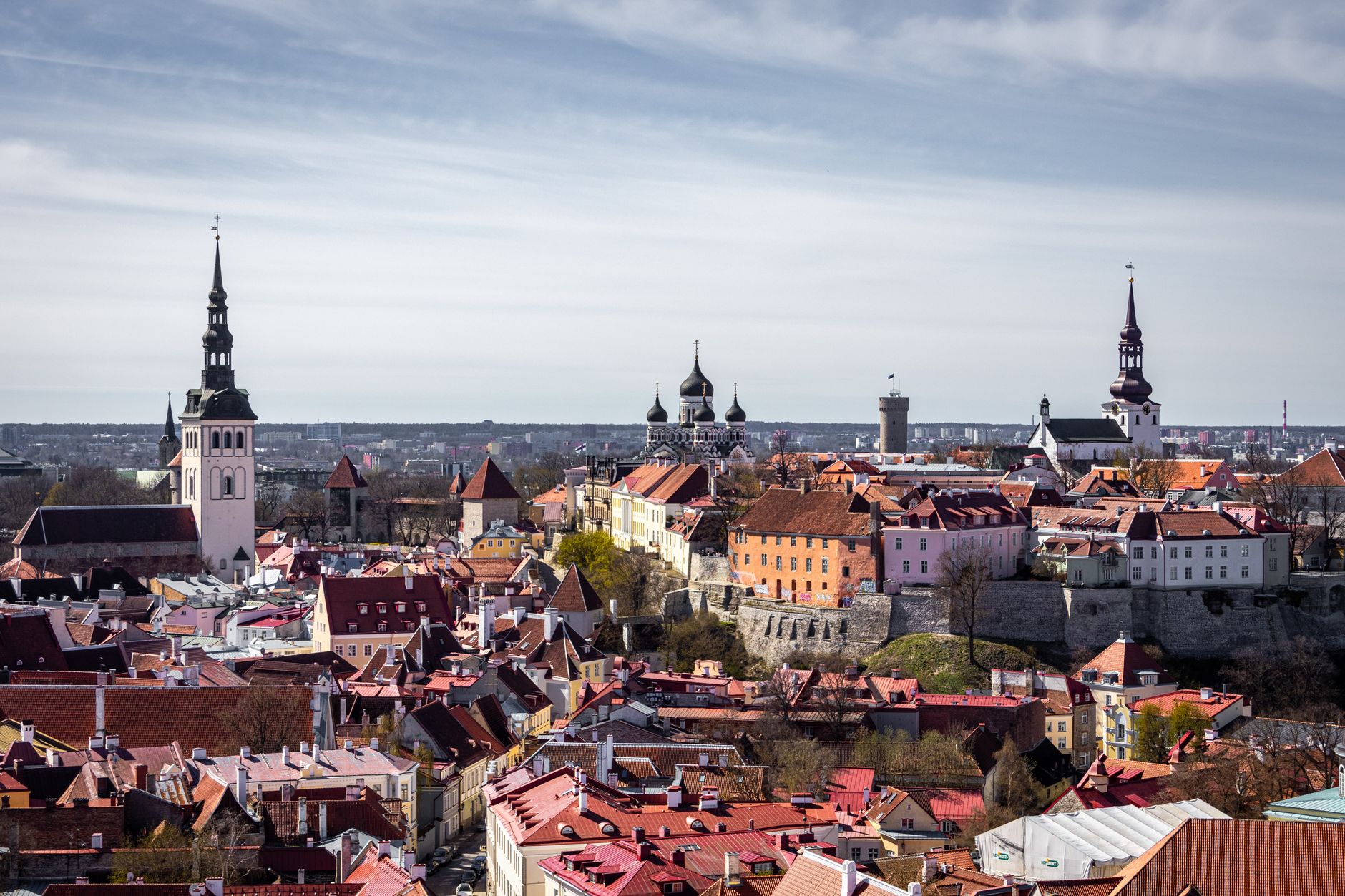
Tallinn’s Old Town is the only Baltic capital whose 13th-century street grid survives intact—down to the pharmacy that has filled prescriptions since 1422. Walk the wall at Nunna Tower and you’ll see the same gabled roofs the Teutonic Knights watched.

Soviet-Industrial Remix

Telliskivi Creative City turned a 19th-century railway factory into 200 studios, craft-beer bars and Baltic street art so fresh the paint still smells. On the same night you can catch a punk gig in a boiler room and gallery opening in a former transformer station.

Bog-Within-Reach

Forty minutes east, the Viru Bog boardwalk floats you above a rust-coloured swamp that crackles with cranberries and dwarf pines. Morning mist lifts to reveal a mirror-still lake and the sound of nothing but your own heartbeat.

Historical Timeline

From Iron-Age Hillfort to Digital Capital

Tallinn’s story is a palimpsest of Vikings, Danes, Teutons, Tsars, Soviets—and Wi-Fi passwords.

castle
c. 1050

Lindanise Fort Rises

Estonian elders raise a timber stronghold on the limestone bluff they call Toompea. From here they command the Gulf of Finland’s narrowest crossing, taxing passing longships and swapping furs for Scandinavian silver. The site is already ringed by offerings: amber beads, bear claws, and the smell of pine-tar fires that never quite leave the rock.

swords
1219

Dannebrog Falls from the Sky

King Valdemar II’s Danish fleet beaches below Toompea. During the slaughter that follows, a red-and-white cross banner is said to drift down from the clouds—an omen the Danes interpret as divine approval. By nightfall they hold the hill; Tallinn (now ‘Reval’) is born in blood and legend.

gavel
1248

Lübeck Rights Unleash Merchants

Erik IV issues the city charter that matters most: Lübeck law. Overnight, Tallinnians gain the right to hold markets, mint coins, and hang thieves. German-speaking traders pour in, their cog ships cramming the harbor with Rhenish wine and Flemish cloth. The town council records everything on parchment that still smells of seal-skin.

factory
1285

Hanseatic League Welcomes Reval

Tallinn becomes the northernmost cog in the Hanseatic machine. Warehouse basements along Pikk Street fill with sealskins, hemp, and grain bound for Lübeck, Bergen, Bruges. The city’s fat years begin—so does the smell of tar, salt fish, and ambition.

castle
1404

Gothic Town Hall Completed

Craftsmen finish the slender limestone hall that still anchors Raekoja plats. Its 64-metre tower sprouts a weather-cock named Old Thomas, a joke that becomes a mascot. Inside, councillors toast with imported Rhine wine while outside, traders argue over herring prices in four languages.

science
1422

Europe’s Oldest Pharmacy Opens

The Raeapteek’s doors swing wide, dispensing mummy powder and burnt hedgehog ash. In the back room, the apothecary distills rose water that smells better than the street’s open sewers. The shop never closes; five centuries later it still sells marzipan and cough drops from the same oak counter.

castle
1475

Kiek in de Kök Aims South

The new artillery tower rises 38 metres, walls four metres thick—enough to bounce back any cannonball yet invented. From its slit windows guards joke they can peek into Lower-Town kitchens, hence the mocking name. The smell of gunpowder replaces incense; the city’s skyline is now bristle, not spire.

swords
1561

Swedes Hoist the Triple-Tail

As the Teutonic Order collapses, Stockholm swallows Tallinn without a siege. Lutheran hymns replace Latin chants; parishioners watch priests marry and monks pack for Poland. The language in council minutes switches from Low German to Swedish, but the beer stays Baltic dark.

local_fire_department
1684

Great Toompea Fire Scorches Nobility

A kitchen spark leaps into the wooden attics of the ruling class. By dawn, half the hill is ash; archives curl like autumn leaves. Rebuilding in stone begins immediately—explaining the pastel Baroque you see today.

swords
1710

Plague Surrenders City to Peter

Black-Flagged corpses pile outside Viru Gate while Russian cannons roll closer. The remaining 3,000 citizens—down from 10,000—hand the keys to Tsar Peter I. Moscow’s rule starts with a funeral bell that tolls for three days without pause.

castle
1719

Peter Builds Kadriorg for Catherine

Peter the Great lays out a Baroque summer palace in Italian limestone, naming it ‘Catherine’s Valley’ after his empress. Gardens descend in symmetrical fountains toward the sea, where the royal yacht waits. Tallinn is now a resort town for Romanovs—and a naval base for their enemies.

person
1761

August von Kotzebue Born

In a narrow house on Lai Street, the future Europe’s most performed playwright takes his first breath. By twenty he’ll have a hit comedy in Vienna; by forty he’ll be assassinated for political satire. Tallinn remembers him with a plaque tourists walk past on the way to marzipan.

church
1900

Onion Domes Pierce Toompea

Alexander Nevsky Cathedral rises opposite the castle, five gold cupolas gleaming like Orthodox exclamation marks. Estonians hate it—an imperial billboard in their capital. They cheer when plans to demolish it surface in 1924; the cathedral survives only because of cost, not affection.

public
24 Feb 1918

Blue-Black-White Flies from Pikk Hermann

As Bolshevik guns echo from the port, the Estonian Salvation Committee unfurls a tricolor no larger than a tablecloth. The flag catches a sideways sleet storm yet stays aloft—photographers call it divine timing. Independence is declared in a candle-lit council chamber; outside, tram wires snap under ice.

person
1929

Lennart Meri Born

In a Kadriorg apartment overlooking Peter’s fountains, the boy who will name the Singing Revolution first hears Estonian lullabies banned by censors. His father, a diplomat, disappears into the Gulag; the son turns exile into films, then presidency. Tallinn’s airport now bears his slow, smiling voice.

local_fire_department
9-10 Mar 1944

Soviet Bombs Ignite 757 Funerals

A thousand incendiaries turn Harju Street into a tunnel of fire visible from Helsinki. St. Nicholas Church burns for three days; its Danse Macabre painting curls like dead skin. Survivors remember the smell of burnt bread from the ruined Maiasmokk bakery more than any speech.

public
1980

Olympic Sails Fill Pirita Bay

Moscow outsources yachting to Tallinn, erecting a 314-metre TV tower that still pokes the clouds. Western journalists discover Hotel Viru’s 60th-floor KGB listening suite—cables snaking into every room. The regatta ends; the surveillance equipment stays.

music_note
1989

Singing Crowd Reclaims Pikk Hermann

Two million Baltic voices link Tallinn to Riga to Vilnius in a human chain 675 km long. At sunset, the Estonian flag climbs the Hermann tower while Soviet border guards watch, hands on holsters, doing nothing. The Singing Revolution has no martyrs—only choristers.

gavel
1991

Supreme Soviet Votes Itself Out

In a limestone chamber built for tsarist governors, deputies dissolve the Estonian Soviet and restore the 1938 constitution. Outside, tram drivers ring bells; couples dance in the drizzle. The USSR still exists—but not here.

castle
1997

UNESCO Seals the Time-Capsule

Old Town’s 13th-century street plan—untouched by post-war planners—earns World Heritage status. City officials must now ask permission to repaint a door. The medieval smells of tar and bread return, this time as marketing.

person
2002

Kelly Sildaru Learns to Ski

At the city’s edge, a four-year-old straps onto plastic skis while her father times runs on a stopwatch. By thirteen she’ll own Winter-X gold; by twenty she’ll teach Tallinn kids that mountains are optional. The half-pipe glows under floodlights once used for Soviet tank parades.

person
2021

Kaja Kallas Becomes PM

Born in the same hospital year the KGB vacated its Viru hotel suite, she now governs from the pink palace Peter the Great rebuilt. Her first act: declaring a digital state of emergency—cyber-russians instead of Red Army tanks. Tallinn’s Wi-Fi password is longer than its city wall.
schedule
Present Day

Notable Figures

Lennart Meri

1929–2006 · Writer-President
Born and died in Tallinn

As a boy he hid in cellars during Soviet bombs; as president he welcomed NATO jets from the same Toompea windows. Today the airport bearing his name still smells of pine and paper—the scent of his childhood exile memoirs.

Arvo Pärt

born 1935 · Composer
Worked at Radio Estonia 1960s–80s; Arvo Pärt Centre nearby

He wrote the spare, bell-like tintinnabuli style in a tiny Tallinn attic, dodging censors who thought silence was subversive. Stand in St Nicholas Church at 5 p.m. and you’ll hear his ‘Fratres’ echoing off the same stone that once absorbed wartime choirs.

Carmen Kass

born 1978 · Supermodel & Chess President
Born in Tallinn

She walked Chanel runways but still returns to play blitz in the Kalamaja park where she first learned chess between castling wooden houses. Vogue never photographed the cracked linoleum of her childhood bakery—yet that rye scent follows her like a signature.

Tommy Cash

born 1991 · Rapper-Artist
Born in Tallinn; filmed videos in Telliskivi

His surreal Eastern-European satire was born in Soviet blocks on the city’s edge, filmed inside abandoned warehouses now turned techno clubs. When Eurovision 2025 sent his ‘Espresso Macchiato,’ Tallinn cafés served the drink with a wink—no extra foam needed.

Practical Information

flight

Getting There

Lennart Meri Tallinn Airport (TLL) sits 4 km from the Old Town—tram 4 whisks you to Viru gate in 18 min for €2. Balti Jaam railway station handles domestic Elron trains to Tartu and Pärnu; major highways E20 (east to Narva) and E67 (south to Riga) start at the city ring-road.

directions_transit

Getting Around

No metro here—trams, buses and trolleybuses share a €2 flat fare paid by contactless card. Green-striped tram 1 and 3 link Kadriorg palace and the beach at Pirita; Bolt e-scooters and bike lanes radiate from Telliskivi. Tallinn Card (€29/48 h) bundles public transport with 50 museum entries.

thermostat

Climate & Best Time

May–August hovers 15–23 °C and daylight stretches past 11 pm; July is driest (50 mm rain). Winter hangs around –1 to –7 °C with only six sunlit hours—perfect for saunas and Christmas markets. Shoulder seasons (late April, September) give 12 °C days and half the hotel rates.

translate

Language & Currency

Estonian is the official tongue, but English works everywhere except the oldest market stalls. Cards beat cash— Estonia is 99 % cashless, so even a €1 coffee is tap-and-go. Euro coins still come in handy for public toilets and flower stalls outside Viru Gate.

Where to Eat

local_dining

Don't Leave Without Trying

Verivorst (blood sausage) Sült (jellied pork aspic) Mulgipuder (potato and barley porridge) Kama (roasted grain mix) Smoked/pickled fish Fish soup with Baltic trout Rye bread (leib) Cinnamon rolls (especially at PullaBakery) Vana Tallinn (spiced rum liqueur) Kali (fermented bread drink)

Restaurant Rataskaevu 16

fine dining
Estonian Modern €€ star 4.8 (6070)

Order: The elk dish is a must-try, served with local honey beer for a true Estonian experience

A historic brick-lined restaurant with a vintage vibe, offering elevated Estonian fare and an excellent wine selection. Perfect for a special night out in Old Town.

schedule

Opening Hours

Restaurant Rataskaevu 16

Monday 12:00–23:00
Tuesday 12:00–23:00
Wednesday 12:00–23:00
map Maps language Web

Väike-rataskaevu​

local favorite
Estonian €€ star 4.8 (1479)

Order: The signature elk stew and blue cheesecake are standout dishes, showcasing local flavors

A cozy, intimate sibling to Rataskaevu 16, with the same dedication to traditional Estonian cuisine. The staff's knowledge and passion make every dish a delight.

schedule

Opening Hours

Väike-rataskaevu​

Monday 18:00–23:00
Tuesday 18:00–23:00
Wednesday 18:00–23:00
map Maps language Web

Veinirestoran Dominic

fine dining
Estonian Fine Dining €€€ star 4.8 (606)

Order: The shrimp dish with pouring broth and tuna-grapefruit starter, followed by the duck pate amuse-bouche

A must-visit for fine dining in Tallinn, with impeccable service and dishes that highlight Estonian ingredients with a refined touch. The elegant setting in Old Town adds to the experience.

schedule

Opening Hours

Veinirestoran Dominic

Monday 12:00–23:00
Tuesday 12:00–23:00
Wednesday 12:00–23:00
map Maps language Web

PullaBakery

local favorite
Estonian Bakery €€ star 4.9 (1322)

Order: The cinnamon rolls (especially the classic and cardamom flavors) are legendary—freshly baked and served right to the customer

A local institution for baked goods, with a rustic charm and a focus on quality. The cinnamon rolls alone are worth the visit, but the focaccia and pastries are equally impressive.

schedule

Opening Hours

PullaBakery

Monday 9:00–18:00
Tuesday Closed
Wednesday 9:00–18:00
map Maps

RØST Bakery

cafe
Nordic Bakery €€ star 4.8 (2752)

Order: The grilled pepper sandwich with black olive tapenade and cream cheese, or the cardamom bun

A standout bakery with a focus on fresh, high-quality ingredients. The coffee is expertly prepared, and the pastries are some of the best in Tallinn. Expect a queue, but it's worth the wait.

schedule

Opening Hours

RØST Bakery

Monday 8:30–18:00
Tuesday 8:30–18:00
Wednesday 8:30–18:00
map Maps language Web

Crustum Bakery

local favorite
Estonian Bakery €€ star 4.9 (449)

Order: The eclairs, cinnamon rolls, and fresh baguettes—everything is made with care and tastes amazing

A hidden gem with a cozy atmosphere and a fantastic selection of bread and pastries. The quality is consistently high, and the place has a real boutique feel.

schedule

Opening Hours

Crustum Bakery

Monday 9:00–18:00
Tuesday 9:00–18:00
Wednesday 9:00–18:00
map Maps language Web

Kohvituba

cafe
Estonian Coffee House €€ star 5.0 (31)

Order: The oat latte and any of the freshly baked pastries—especially the smell when you walk in is incredible

A tiny, cozy coffee shop with a retro-charm that feels like a secret hideaway. Perfect for a quiet coffee date or a moment of solitude with a good book.

schedule

Opening Hours

Kohvituba

Monday Closed
Tuesday 10:00–17:00
Wednesday 10:00–17:00
map Maps language Web

Mathilda on the Hill

local favorite
Estonian Bakery €€ star 4.9 (80)

Order: The cinnamon and cardamom buns, plus the artisan hot chocolate

A warm, inviting café with homemade treats and a cozy atmosphere. The owners' passion for baking shines through in every bite, and the prices are very reasonable.

schedule

Opening Hours

Mathilda on the Hill

Monday Closed
Tuesday 9:00–16:00
Wednesday 9:00–16:00
map Maps language Web
info

Dining Tips

  • check Estonian breakfasts often include rye bread with butter, cheese, or cold cuts, plus strong coffee.
  • check Fish soup with Baltic trout and dill is a classic summer dish.
  • check The food culture is deeply seasonal, with lighter dishes in summer and hearty pork and meat dishes in winter.
  • check Fermentation, smoking, pickling, and drying are central to Estonian cooking year-round.
  • check Coffee is consumed throughout the morning and is a staple in daily life.
Food districts: Old Town for traditional taverns and historic dining Kalamaja for working-class heritage and local food traditions Telliskivi for creative/industrial spaces and contemporary Estonian cuisine Noblessner for waterfront dining and fish soup Kopli for innovative chefs in repurposed industrial spaces North Tallinn for newer food spots, including French bakeries

Restaurant data powered by Google

Tips for Visitors

payments
Skip the tip

Locals rarely tip; rounding up a taxi or leaving 10% for stellar restaurant service is plenty. No one will glare if you don’t.

directions_transit
Tap and ride

Tram 4 from the airport costs €2—just tap your contactless card at the front door. No apps, no tickets, no drama.

local_cafe
Coffee + pastry rule

Estonians never drink coffee alone; order a cinnamon bun or slice of rye cake with it. Cafés expect you to linger for hours on one cup.

block
Avoid bicycle taxis

The city tourism board explicitly warns against velotaxis—prices are opaque and complaints are common. Use Bolt instead.

shopping_bag
Buy bread at the market

Muhu Pagarid’s dense black rye at Balti Jaama Turg costs half what hotels charge and stays fresh for days.

photo_camera
Golden hour on Toompea

Be on Kohtuotsa platform 30 min before sunset—amber light ignites the pastel roofs and the Baltic beyond.

Explore the city with a personal guide in your pocket

Your Personal Curator, in Your Pocket.

Audio guides for 1,100+ cities across 96 countries. History, stories, and local insight — offline ready.

smartphone

Audiala App

Available on iOS & Android

download Download Now

Join 50k+ Curators

Frequently Asked

Is Tallinn worth visiting? add

Yes—its medieval core is intact down to 14th-century street widths, yet you can dine at Estonia’s only two-Michelin-star restaurant the same night. One day gives you Hanseatic rooftops, Soviet-era hipster docks, and a café culture deeper than anywhere else in the Baltics.

How many days do I need in Tallinn? add

Two full days cover the UNESCO Old Town, Telliskivi Creative City, and a meal at Balti Jaama Turg. Add a third if you want day-trips to Kadriorg Palace or the cliffs at Pakri.

Is Tallinn safe to walk at night? add

Extremely. Violent crime is rare; the main risk is cobblestones in heels. Stick to lit streets after bar-closing (3 a.m.) and you’ll be fine.

Can I use euros and cards everywhere? add

Estonia is almost cashless—cards work on trams, in market stalls, even for €1 coffees. ATMs exist but you’ll rarely need them.

What’s the cheapest way from the airport to Old Town? add

Tram 4: €2, 18 minutes, drops you at Viru Gate. Bolt rides run €5–10 if you’re luggage-heavy or landing after midnight when trams thin out.

Do I need to book restaurants in advance? add

For Black Bread (2 stars) yes—weeks ahead. Most Kalamaja and Telliskivi spots accept walk-ins before 8 p.m.; still, reserve for Friday or Saturday.

Is English widely spoken? add

Among anyone under 40, absolutely. Museum staff, baristas, and even market vendors switch to fluent English without prompting.

Sources

Last reviewed: