Destinations

El Salvador

"El Salvador feels like Central America compressed into one taut, volcanic country. You can move from Maya domestic history to crater-lake light to Pacific surf in a single well-planned day."

location_city

Capital

San Salvador

translate

Language

Spanish

payments

Currency

U.S. dollar (USD)

calendar_month

Best season

Dry season (November-April)

schedule

Trip length

7-10 days

badge

EntryVisa-free for many travelers; CA-4 rules apply

Introduction

An El Salvador travel guide starts with the country's oddest advantage: crater lakes, surf beaches, volcano hikes, and Maya ruins sit just hours apart.

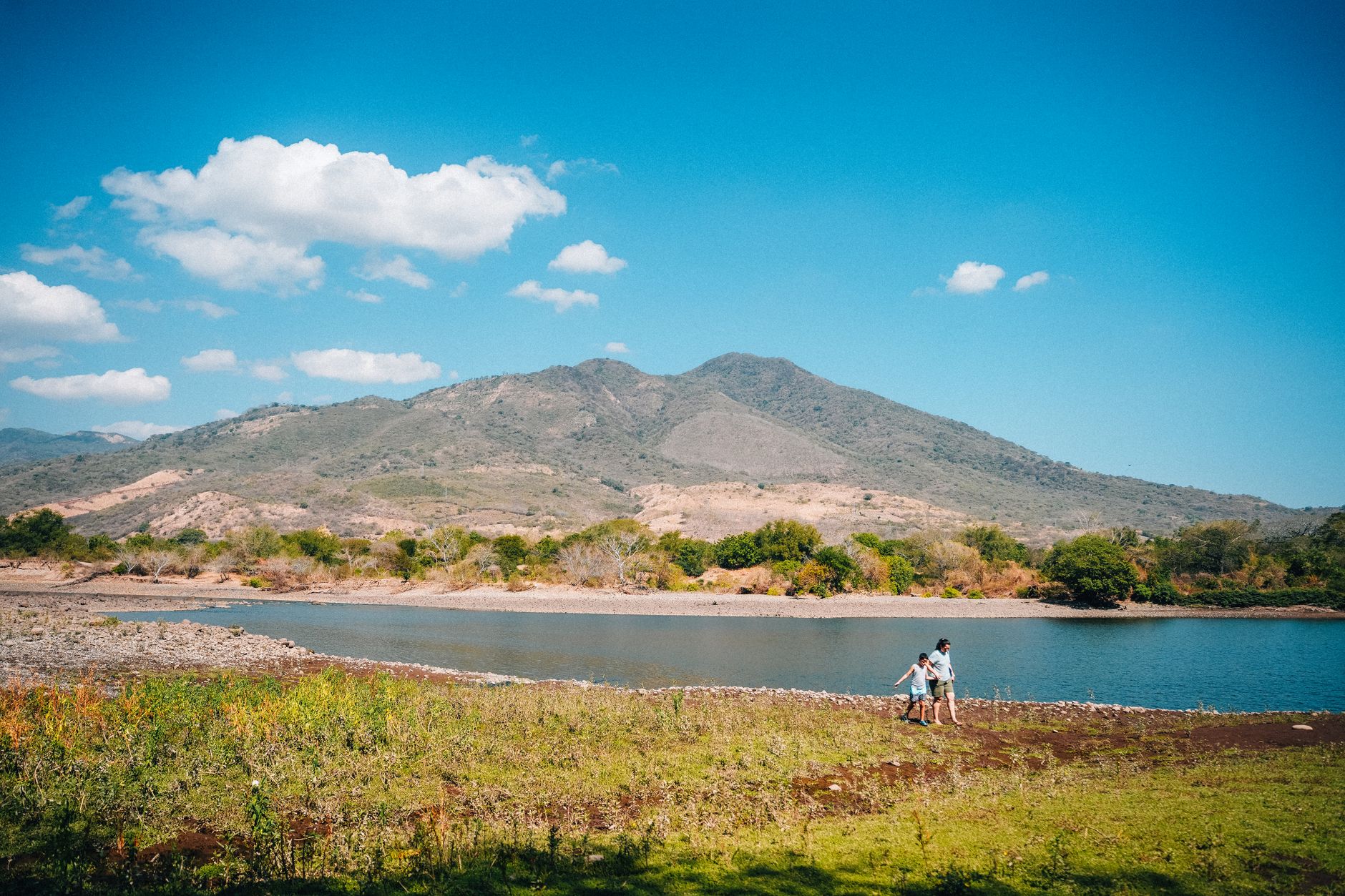
El Salvador is the smallest country in mainland Central America, which is exactly why it works so well for travelers. Distances stay short, landscapes change fast, and the shifts feel dramatic rather than gradual: breakfast in San Salvador, coffee-country air by lunch, sunset on the Pacific after dark volcanic sand has warmed all day. The country has 17 Holocene volcanoes, uses the U.S. dollar, and runs on a dry season from November to April that makes route planning pleasantly simple. What gives the place its charge, though, is contrast. Joya de Cerén preserves an ordinary Maya village under ash. Lake Coatepeque looks almost unreal in clear light. El Tunco turns the coast into a lesson in Pacific rhythm.

A smart first trip usually mixes cities, landscapes, and one place with historical weight. Start in San Salvador for museums, markets, and the country's political nerve center, then move west to Santa Ana, where grand 19th-century architecture sits within striking distance of Santa Ana Volcano and Lake Coatepeque. Suchitoto offers a slower register: cobbled streets, indigo craft, and a long memory of the civil war years. If you want the country at its most compact and convincing, add Joya de Cerén for archaeology and Ruta de las Flores for coffee towns, murals, and roadside food that tastes like someone still cooks the old way. Few countries give you this much range without wasting days in transit.

A History Told Through Its Eras

Ash, maize, and the kingdom the conquerors did not expect

The Buried World of Cuzcatlán, c. 900 BCE-1524

A clay pot sits over a hearth, beans still inside, as if supper might resume at any moment. That is the shock of Joya de Cerén: not a pyramid, not a king's tomb, but an ordinary village buried under volcanic ash around the 6th or 7th century. UNESCO later gave it the dignity of world heritage, yet its power is more intimate than monumental. You are looking at a family interrupted.

Ce que l'on ignore souvent, c'est que this is one of the rare places in the Americas where archaeology preserves the daily choreography of common people with almost indecent clarity: agave fields, storage jars, sleeping spaces, even the imprint of a hand in plaster. No royal inscriptions came to rescue memory here. A cooking fire did.

Centuries later, Nahuatl-speaking Pipil groups shaped the region the Spanish would call El Salvador into Cuzcatlán, the Place of Jewels. The name matters. It does not sound like a war cry. It sounds like a courtly image, a country that understood adornment, trade, and ceremony as forms of power. Most scholars place its political center in the zone now absorbed by San Salvador, though the old capital itself survives more in fragments and inference than in standing stone.

Then came the first great test. When Pedro de Alvarado entered in 1524, he did not sweep through an empire already collapsing under its own weight. He met resistance. Twice. In a continent where the Spanish advance often seemed terrifyingly fast, the defense of Cuzcatlán was stubborn enough to force retreat, and that alone explains why the memory of Atlacatl still lives less as biography than as legend.

Atlacatl survives in Salvadoran memory as the war leader who turned resistance into national myth, precisely because the written record leaves so much unsaid.

At Joya de Cerén, archaeologists found food left in place and no human remains, which suggests the villagers fled fast enough to save themselves.

The wound of Alvarado and the blue wealth of the colony

Conquest, Indigo, and the First Cry of Independence, 1524-1821

On 8 June 1524, at Acajutla, an arrow struck Pedro de Alvarado in the thigh so deeply that it reached the bone. He survived, of course. Conquistadors so often do in the first act. But the wound never quite left him, and El Salvador became the conquest that marked his body as well as his ambition.

His brother Diego would continue the work of subjugation after the first invasion faltered. Yet the prize was not gold. That disappointment shaped the whole colony. What the Spanish extracted instead was añil, indigo, the deep blue dye that fed European fashion and colonial fortunes. Wealth here did not glitter. It stained hands, lungs, vats, and river water.

The colonial towns that later became places such as Suchitoto and Santa Ana grew inside that order of parish, estate, and trade route, all under the shadow of church bells and forced labor. And church bells mattered. In the Spanish empire, bells did not merely announce Mass. They summoned obedience, warned of unrest, measured time, and staged authority in sound.

So when Father José Matías Delgado rang the bells of La Merced in San Salvador on 5 November 1811, the gesture had perfect theatrical intelligence. The priest took the empire's own instrument and used it to call rebellion. The uprising failed in the short term. But that peal remained in national memory because it changed the script: after 1811, independence was no longer an abstraction discussed by creole elites. It had a sound.

José Matías Delgado was not a plaster saint but a politically agile cleric who understood that symbolism can move a city faster than a decree.

Alvarado limped for the rest of his life after the campaign in El Salvador, a rare case in which the conquest physically marked the conqueror.

Land, lineage, and the republic of a few surnames

The Coffee Republic and the Broken Promise of the Nation, 1821-1979

Independence arrived in 1821, but freedom did not spread evenly across the countryside. The decisive scene comes later, in the 1880s, not in a proclamation hall but on communal land: surveyors, titles, signatures, and the quiet violence of legal paper. President Rafael Zaldívar abolished ejidos between 1881 and 1882, and with that stroke many indigenous communities lost the ground that had sustained them for generations.

Coffee was the new sovereign. It climbed the volcanic slopes around Santa Ana and beyond, elegant in the cup and pitiless in its social consequences. The families who controlled plantations, credit, and export houses became the country's unofficial dynasty. People still speak of Las Catorce Familias, the Fourteen Families, though the network was broader than the legend. The legend survived because it felt true.

Ce que l'on ignore souvent, c'est que Salvadoran history in this period is full of figures who seem to step out of opera. Anastasio Aquino, the Nonualco rebel of 1833, entered a church, took the crown from the statue of Saint John the Baptist, and placed it on his own head. The image is magnificent because it is both political and theatrical: an indigenous leader borrowing the symbols of sanctity to expose the fragility of republican authority.

The great rupture came in 1932. After an uprising in the west, the military regime of Maximiliano Hernández Martínez responded with La Matanza, a massacre that killed tens of thousands, many of them Indigenous Pipil. After that, traditional dress, language, and public identity became dangerous. A nation that had promised modernity chose fear instead, and the silence imposed then would echo for decades.

Anastasio Aquino remains unforgettable because he understood that power is not only held with rifles but performed with symbols, costume, and nerve.

Aquino crowned himself with the processional crown of a saint, a gesture so audacious that the republic never quite stopped being haunted by it.

From the assassinated altar to a country rewriting itself

War, Memory, and the Uneasy Reinvention of El Salvador, 1979-present

A chapel, a microphone, a thin man in glasses speaking directly into the fear of the nation: that is where modern Salvadoran history acquires its moral center. Archbishop Óscar Arnulfo Romero spent 1979 and 1980 denouncing repression with a clarity that made him intolerable to the powerful. On 24 March 1980, he was shot while saying Mass. One can hardly imagine a more brutal message.

The civil war that followed, and in truth had already begun to gather force, lasted from 1980 to 1992. Its geography is written across places that still carry the memory in their streets and museums, above all Perquín in Morazán, where the insurgent story is preserved with an intimacy that official capitals rarely permit. Villages were emptied. Families disappeared across borders. And the state, the guerrillas, foreign powers, and local elites all left fingerprints on the catastrophe.

Then came the peace accords of 1992. They ended the war, not the wound. San Salvador entered a new era of reconstruction, migration, remittances, evangelical growth, and gang violence that would define the country's reputation abroad for a generation. The tragedy is that the outside world often stopped reading El Salvador after the headline of danger, as if a country of volcanoes, poets, market women, coffee growers, and survivors could be reduced to one crime statistic.

The last decade has brought another violent turn in the narrative: a security transformation that many Salvadorans describe in practical, immediate terms because daily life changed, while critics warn about the cost to rights and institutions. History has not ended. It rarely does in places this compressed, where Joya de Cerén, Suchitoto, Santa Ana, and San Salvador all sit within a country small enough to cross in hours and heavy enough to contain centuries of unfinished argument.

Óscar Romero became the conscience of the nation because his voice grew more precise, not more grandiose, as the violence closed in around him.

Romero was shot during Mass, turning the altar itself into one of the defining crime scenes of modern Latin American history.

The Cultural Soul

A Greeting Is a Door Left Open

Salvadoran Spanish begins with a courtesy that feels almost liturgical. You enter a waiting room in San Salvador, a bakery in Santa Ana, a hardware shop in Suchitoto, and you say buenos to everyone at once. The room answers. For one second, commerce stops being commerce and becomes recognition. A country is a table set for strangers.

Then comes voseo, that beautiful grammatical tilt in which vos replaces tú and the sentence lands differently in the mouth. It is less a variant than a posture. Softer than command, warmer than distance. Listen closely and you hear how Salvadorans lower the voice at the end of a phrase, as if discretion were the final consonant.

The vocabulary has its own private weather. Bicho for a child. Goma for the misery after too much aguardiente. Mara, which can mean tenderness or threat depending on the temperature of the air. Words here do not stay in their lanes. They behave like volcanoes: quiet, then not quiet at all.

Corn, Pork, Fire, Repeat

The center of Salvadoran life is not an abstract identity. It is a disc of masa on a hot comal. The pupusa arrives with the seriousness of a sacrament: thick, sealed by hand, blistered in patches, opened by your fingers, never by a fork if you value your dignity. Cheese stretches, beans hold, chicharron salutes, curtido cuts through the richness with a sourness so exact it feels composed rather than fermented.

At dawn, markets smell of atol de elote, wet corn, metal counters, coffee, frying oil, and the first impatience of the day. By noon, yuca frita with chicharron takes over. By Sunday morning, sopa de pata appears, gelatinous and unapologetic, as if the nation had decided that healing should be edible. It is a sensible decision.

And then loroco enters the scene, that green flower bud with its almost indecent perfume, halfway between herb and rumor. Once you taste it in a pupusa or folded into cheese, you understand something essential about El Salvador: this is a cuisine that distrusts blandness the way a cat distrusts water. Quite right.

The Ceremony of Not Rushing

Salvadoran politeness has muscle. It does not simper. It slows the room by insisting that every encounter pass through greeting, eye contact, and a small verbal offering before business begins. Foreigners who arrive with efficient questions and naked purpose discover, within two minutes, that efficiency is not the highest social good here. Recognition is.

Con mucho gusto appears everywhere. The phrase should be trivial. It is not. Said at a counter in San Salvador or by a driver on the road to El Tunco, it carries a faint grandeur, as if service could still preserve the idea of pleasure. That is rare. Most countries have industrialized courtesy until it tastes of cardboard.

Even refusal tends to arrive wrapped. A direct no is often delayed, softened, angled through explanation or possibility. This can unsettle visitors trained to admire bluntness. They mistake delicacy for vagueness. The error is theirs. El Salvador knows that speech can wound, and chooses, more often than not, to keep the knife sheathed.

Walls That Remember Ash

El Salvador builds under volcanic threat and seismic memory, which gives its architecture a peculiar modesty. Houses do not strut when the ground itself has opinions. In Suchitoto, white facades and tiled roofs keep their composure in the heat, while courtyards hide shade, water jars, and the domestic intelligence of survival. Beauty here often prefers the inward gesture.

Then Joya de Cerén overturns every monument habit you may have acquired. No kings. No triumphal scale. A farmstead buried under ash between the sixth and seventh centuries, with beans in pots, tools by walls, a household interrupted rather than erased. Archaeology usually flatters power. This site flatters ordinary life. That is much harder.

Churches and civic buildings in San Salvador and Santa Ana carry the marks of rebuilding, repair, improvisation, and stubborn return. A facade survives. A nave changes. A city shifts after each shock and still insists on ceremony, market days, school uniforms, evening light on the plaza. Permanence, in El Salvador, is not stone. It is repetition.

Incense, Ash, and Public Devotion

Catholic ritual in El Salvador is not a museum piece. It still occupies the street. Processions move with candles, flowers, drums, children, grandmothers, teenagers pretending indifference, and men carrying saints with the solemnity of dockworkers. Faith here is bodily. Knees, smoke, heat, waiting.

You feel it most clearly in ordinary churches at ordinary hours. A woman enters, touches the pew, crosses herself, sits in silence for three minutes, and leaves. No spectacle. Yet the gesture alters the room. Religion in this country is rarely pure doctrine. It is habit, grief, gratitude, fear, inheritance, and neighborhood memory sharing the same bench.

Monseñor Óscar Arnulfo Romero remains impossible to separate from this landscape. In San Salvador, his name still changes the air because it binds piety to witness and prayer to danger. El Salvador has learned, at great cost, that sanctity may wear dusty shoes and speak into microphones. The saints do not always stay in statues.

Color Against Gravity

Salvadoran art has a practical streak I admire. It does not wait for permission from institutions to exist. It appears on walls, buses, market signs, embroidered cloth, painted wood, church banners, festival masks, and the bright naive forms associated with La Palma, where color behaves less like decoration than like civic resistance.

In La Palma, the visual language developed by Fernando Llort turned seeds, birds, hills, houses, suns, and human figures into a grammar of joy so disciplined that outsiders often mistake it for innocence. It is not innocence. It is selection. To choose brightness in a country acquainted with war is an aesthetic act with backbone.

Even the artisan markets of Ruta de las Flores reveal this tension between tenderness and hardness. Painted objects smile. The hands that made them know coffee harvests, migration, and volcanic soil. That contrast gives the work its voltage. Pretty things are easy. Pretty things with memory are rarer.

What Makes El Salvador Unmissable

volcano

Volcano Country

Seventeen Holocene volcanoes shape the skyline and the itinerary. Santa Ana Volcano gives you the country's signature climb: black rock underfoot, then a crater lake the color of oxidized copper.

surfing

Pacific Surf Coast

El Salvador has no Caribbean side, so the country faces the Pacific with full commitment. El Tunco and nearby breaks draw surfers for consistent waves, dark sand, and a coast that still feels more worked-in than polished.

history_edu

Ash-Preserved Maya Life

Joya de Cerén matters because it preserves ordinary life rather than royal spectacle. You see kitchens, storehouses, crops, and the daily architecture of a farming village buried around the 6th to 7th century.

restaurant

Pupusas And Coffee

Pupusas are not a snack to tick off but the national center of gravity: masa, cheese, beans, pork, curtido, and a hot griddle. Add high-grown Salvadoran coffee and the country's flavor profile starts to make sense.

photo_camera

Short-Distance Variety

This is the rare country where compact size improves the trip. You can pair San Salvador with Suchitoto, Ruta de las Flores, or Lake Coatepeque without spending half your holiday trapped in transit vans.

Cities

Cities in El Salvador

San Salvador

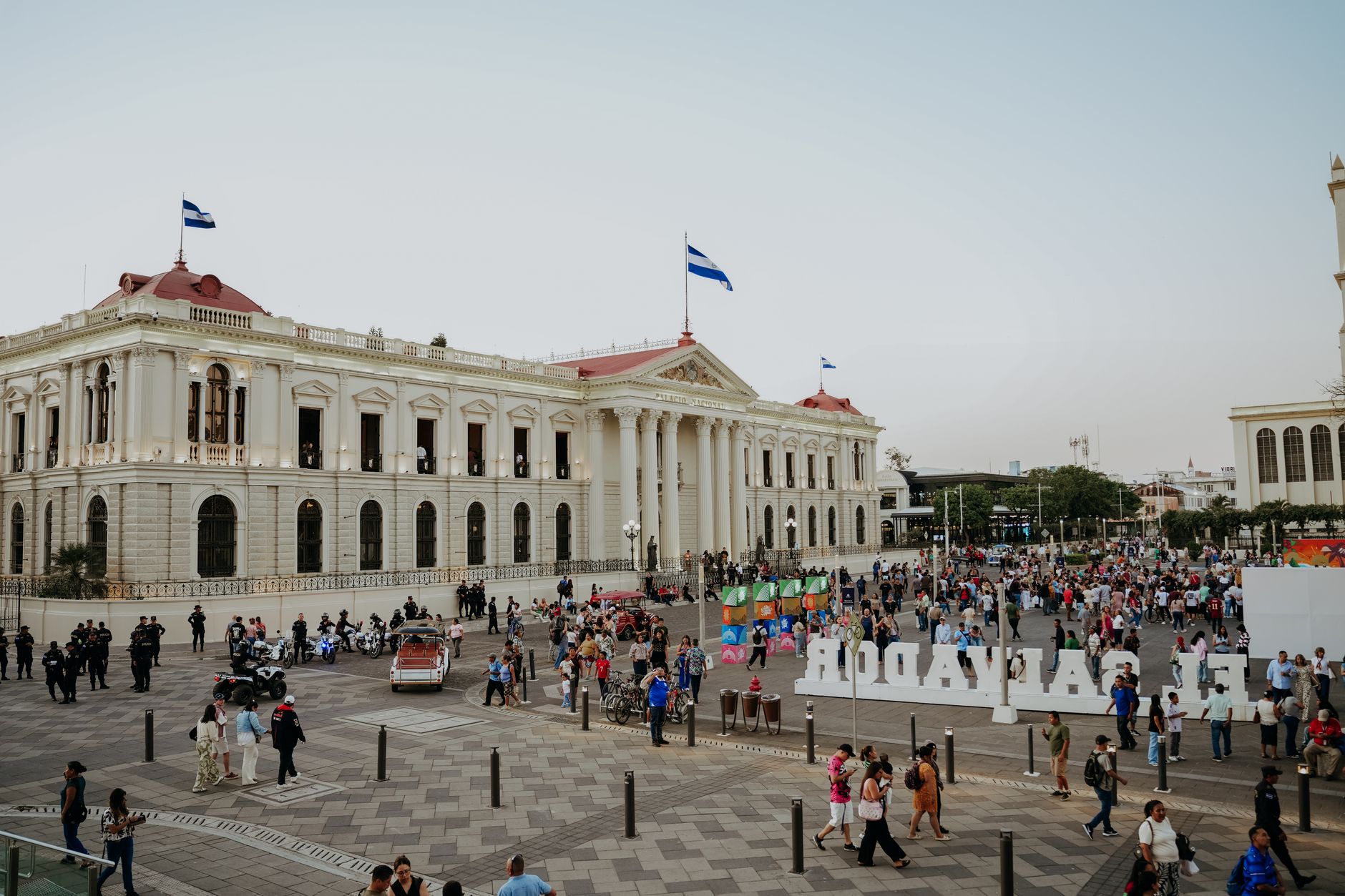
"A capital rebuilt so many times by earthquakes that its layers of trauma and reinvention are visible in a single city block — colonial ruins beside modernist concrete beside gleaming Bitcoin-era glass."

Santa Ana

"El Salvador's second city still wears its coffee-boom confidence in a neo-Gothic cathedral and a French Renaissance theater that would not look out of place in Lyon."

Suchitoto

"Cobblestone streets, indigo-blue doorways, and a crater lake visible from the church steps — the colonial town the civil war accidentally preserved by scaring away developers for two decades."

Joya De Cerén

"A 6th-century Maya farming village buried mid-meal by volcanic ash, where excavators found carbonized beans still in the pot and a child's handprint pressed into a plaster wall."

Ruta De Las Flores

"Four small towns — Nahuizalco, Salcoatitán, Apaneca, Juayúa — strung along a coffee-growing ridge where the weekend food markets run on the logic of abundance rather than tourism."

El Tunco

"The flat-rock reef break that turned a fishing cove into Central America's most concentrated surf village, where the road ends at a black-sand beach and the day starts before dawn."

Lake Coatepeque

"A volcanic crater filled with warm, improbably blue water ringed by weekend houses built so close to the shoreline that the only way to swim is to walk through someone's garden."

Santa Ana Volcano

"Ilamatepec's summit crater holds a sulfurous acid lake that shifts color from turquoise to yellow depending on the day, sitting inside one of the most geometrically perfect calderas in Central America."

Perquín

"A mountain town in Morazán that was FMLN guerrilla headquarters for twelve years of civil war and now houses a museum where the rebels archived their own history before the peace accords were even signed."

La Palma

"A highland village where a single painter, Fernando Llort, invented a folk-art style in the 1970s that spread to every wall, door, and workshop in town and eventually onto the doors of the Metropolitan Cathedral in San S"

Los Cóbanos

"El Salvador's only coral reef system sits just offshore here, largely unknown outside the country, in water warm enough to snorkel year-round without a wetsuit."

Alegría

"A cool-climate town on the flank of Tecapa volcano where the crater lake changes color with the weather and the coffee grown on the surrounding slopes is among the most awarded in the country."

Regions

San Salvador

Central Plateau and Historic Core

This is where modern El Salvador feels loudest and oldest at the same time. San Salvador gives you markets, museums, traffic, and serious food; Joya de Cerén turns the clock back 1,400 years without the usual royal mythology; Suchitoto offers a cooler, slower counterpoint above Lake Suchitlán.

placeSan Salvador placeJoya de Cerén placeSuchitoto

Santa Ana

Western Volcano Belt

The west is the country's most complete weeklong circuit. Santa Ana still carries coffee-era wealth in its architecture, Lake Coatepeque looks almost unreal in clear weather, and the Santa Ana Volcano crater gives you the volcanic scale that shapes half the national map.

placeSanta Ana placeLake Coatepeque placeSanta Ana Volcano placeRuta de las Flores placeLos Cóbanos

El Tunco

Pacific Surf Coast

The Pacific side is all black sand, hard light, and a rhythm built around tides rather than monuments. El Tunco is the obvious anchor, but the real appeal is how easily the coast shifts from surf-town breakfasts to empty-looking stretches where the ocean does most of the talking.

placeEl Tunco placeLos Cóbanos

La Palma

Northern Highlands and Border Country

The north feels cooler, greener, and more self-contained than the coast and capital. La Palma brings mountain air and craft traditions near the Honduran border, while Perquín carries the memory of the civil war in a landscape that now looks almost deceptively calm.

placeLa Palma placePerquín

Alegría

Eastern Hills and Volcanic Lagoons

Eastern El Salvador gets less attention, which is part of the point. Alegría sits in coffee country with a crater lagoon and cooler evenings, and it makes a good base for travelers who want hills, small-town pace, and fewer people performing vacation for each other.

placeAlegría

Suggested Itineraries

3 days

3 Days: San Salvador, Ash and Colonial Streets

This is the short first-timer route: one base in San Salvador, one archaeological stop at Joya de Cerén, one slower finish in Suchitoto. You get the capital's everyday energy, the country's most human-scale UNESCO site, and a hill town where the lake and cobbles change the tempo completely.

San SalvadorJoya de CerénSuchitoto

Best for: first-timers, short breaks, culture over beach time

7 days

7 Days: Volcano Rim to Coffee Country

Western El Salvador packs absurd range into a single week. Start with Santa Ana's faded grandeur, move out to Lake Coatepeque and the Santa Ana Volcano crater, then keep west through Ruta de las Flores and finish on the Pacific at Los Cóbanos.

Santa AnaLake CoatepequeSanta Ana VolcanoRuta de las FloresLos Cóbanos

Best for: scenic road-trippers, hikers, coffee drinkers

10 days

10 Days: Surf Coast and Eastern Hills

This route links salt air with the cooler, less visited east. Begin in El Tunco for Pacific surf and sunset routines, then cross the country to Alegría for crater-lake views and continue to Perquín for war history, pine slopes, and a side of El Salvador most visitors never reach.

El TuncoAlegríaPerquín

Best for: repeat visitors, surfers, travelers who want a wider map

14 days

14 Days: North to Capital, Slowly

Two weeks gives you room to travel by mood instead of checklist. Start in La Palma in the northern highlands, drop south to San Salvador for museums and food, then finish with long Pacific days in El Tunco where the trip can end without a timetable pressing on your shoulder.

La PalmaSan SalvadorEl Tunco

Best for: slow travelers, remote workers, people mixing mountains, city, and coast

Notable Figures

Atlacatl

fl. early 16th century · Legendary Pipil war leader
Associated with the defense of Cuzcatlán against the Spanish

Atlacatl matters in El Salvador less as a fully documented man than as a national memory of refusal. The chroniclers left only fragments, but the legend endured because someone had to embody the moment when Cuzcatlán pushed the invaders back and proved the conquest would not be effortless.

Pedro de Alvarado

c. 1485-1541 · Conquistador
Led the 1524 invasion of Pipil territory

He is inseparable from El Salvador because this was the campaign that wounded him for life. An arrow at Acajutla gave the conqueror a limp, and that detail has the sting of justice: even in victory, the land marked him.

José Matías Delgado

1767-1832 · Priest and independence leader
Led the 1811 uprising in San Salvador

Delgado understood theater as well as politics. When he rang the bells of La Merced in San Salvador, he turned a religious signal into a revolutionary one, and the country has heard that echo ever since.

Anastasio Aquino

1792-1833 · Indigenous rebel leader
Led the Nonualco uprising against the Salvadoran state

Aquino did not ask to be admitted into the republic's story; he stormed it. By crowning himself with a saint's crown in Santiago Nonualco, he exposed how thin official authority could look when faced with charisma, rage, and memory.

Rafael Zaldívar

1834-1903 · President and coffee-state architect
Drove the liberal reforms that transformed land ownership

Zaldívar helped build modern El Salvador, but the bill was paid by rural communities stripped of communal land. His reforms made coffee king and turned legal modernization into one of the country's deepest historical grievances.

Maximiliano Hernández Martínez

1882-1966 · Military ruler
Presided over the 1932 massacre known as La Matanza

Martínez governed with the chill certainty of a man convinced he was restoring order. Instead, he left behind one of the most traumatic silences in Salvadoran history, a silence that taught Indigenous communities to hide what they were in order to survive.

Óscar Arnulfo Romero

1917-1980 · Archbishop and martyr
The moral voice of the country during the opening of the civil war

Romero's importance lies in the transformation itself: a cautious churchman became the clearest public witness against state violence. His assassination at the altar fixed him forever in the national imagination, not as a distant saint, but as a man who changed because events forced him to see.

Prudencia Ayala

1885-1936 · Writer, activist, and feminist pioneer
Salvadoran public intellectual who challenged political exclusion

Prudencia Ayala had the insolence of arriving before the law was ready for her. In 1930 she ran for president even though women could not yet vote, turning her candidacy into a brilliant act of exposure: the republic liked the language of citizenship more than its consequences.

Roque Dalton

1935-1975 · Poet and revolutionary writer
One of El Salvador's defining literary voices

Dalton wrote with wit, tenderness, and a dangerous refusal to separate poetry from politics. He remains essential because he captured Salvadoran absurdity from the inside, loving the country enough to mock it and suffer for it.

Top Monuments in El Salvador

Practical Information

passport

Visa

U.S. passport holders do not need a visa for short tourist stays, but they usually buy a USD 12 tourist card on arrival. EU travelers are generally visa-exempt as well. Treat six months of passport validity beyond arrival as the safe rule, and remember CA-4 time in Guatemala, Honduras, Nicaragua, and El Salvador is often counted as one regional stay.

payments

Currency

El Salvador runs on U.S. dollars. Cards work in San Salvador, El Tunco, Santa Ana, and better hotels, but cash still matters for buses, markets, small pupuserías, and rural guesthouses. IVA is 13 percent, and a 10 percent service charge is sometimes already on the restaurant bill.

flight_takeoff

Getting There

Most travelers arrive through Monseñor Óscar Arnulfo Romero International Airport near San Luis Talpa. It is the only practical scheduled international gateway, with the strongest links through U.S. hubs, Panama City, Mexico City, Guatemala City, San José, and Bogotá. Ilopango is not a normal commercial alternative.

directions_car

Getting Around

There is no useful passenger rail network, so trips are built around shuttles, rental cars, Uber, and intercity buses. Uber is the easiest option in San Salvador, Santa Ana, and the airport corridor. A rental car makes the most sense for Ruta de las Flores, Lake Coatepeque, and the eastern hills, but avoid night driving between cities.

wb_sunny

Climate

The dry season runs from November to April, and the rainy season from May to October. The coast stays hot, while the volcanic uplands around Santa Ana and Alegría feel milder. Montecristo can drop into cool cloud-forest temperatures, but most visitors to the main circuit only need light layers for evenings and summit starts.

wifi

Connectivity

Mobile coverage is solid in the main travel corridor from San Salvador to El Tunco, Santa Ana, and Suchitoto, then patchier in mountain and border areas. Hotels and cafes usually offer workable Wi-Fi, but not always fast enough for heavy uploads. Download maps before heading into Perquín, La Palma, or remote beach stretches.

health_and_safety

Safety

Security has improved sharply in the main visitor corridor, but caution still matters. Use hotel transfers, Uber, or trusted shuttles after dark, keep cash split up, and do not treat public buses as the default option if you are carrying luggage. Volcano hikes, surf breaks, and remote roads are safer when you start early and plan transport in advance.

Taste the Country

restaurantPupusa revuelta

Night. Plastic stool. Hand, curtido, salsa. Family, friends, driver, student, everyone.

restaurantPupusa de loroco con queso

Evening counter. Steam, flower, cheese, fingers. Talk slows. Second round follows.

restaurantYuca frita con chicharron

Late afternoon. Street stand. Cassava, pork, curtido, lime. Beer or cola beside it.

restaurantSopa de pata

Sunday morning. Large bowl. Family table, hangover, church clothes, patience.

restaurantTamal de elote with coffee

Breakfast. Market bench. Corn sweetness, black coffee, newspaper, dawn traffic.

restaurantAtol de elote

Cold highland morning in Alegría or on the road to Santa Ana. Clay cup, slow sip, warm throat, quiet hands.

restaurantPan con pavo

December, but not only December. Sauce drips. Napkin fails. No one complains.

Tips for Visitors

euro
Carry Small Bills

Bring plenty of USD 1, 5, and 10 notes. Small shops, buses, and market stalls often struggle to change a USD 50 bill, especially outside San Salvador and Santa Ana.

train
Skip Trains

Do not build an itinerary around rail. El Salvador has no useful passenger train network, so compare shuttle costs against car rental from the start.

restaurant
Pupusa Timing

The cheapest good meal in the country is still the local pupusería. Go early in the evening for the freshest comal and shorter waits, especially in small towns where places close earlier than Google suggests.

hotel
Book Weekends Early

Beach hotels around El Tunco and lake-view rooms at Lake Coatepeque fill first on weekends and holiday periods. Reserve ahead if you want a specific place rather than whatever is left by Friday afternoon.

calendar_month
Use the Dry Season Well

November to April is the cleanest window for moving between regions without weather slowing you down. If you travel in the rains, leave long transfer days for morning and keep afternoon plans flexible.

directions_bus
Choose Shuttles Over Guesswork

Public buses are cheap, but they cost time, comfort, and sometimes peace of mind. Shared shuttles or Uber usually save enough friction to be worth the extra money on short trips.

health_and_safety
Start Early Outdoors

Volcano hikes and long drives work best before the heat builds and afternoon weather turns. Early starts also cut the risk of finishing a remote road or trail after dark.
Explore El Salvador with a personal guide in your pocket

Your Personal Curator, in Your Pocket.

Audio guides for 1,100+ cities across 96 countries. History, stories, and local insight — offline ready.

smartphone

Audiala App

Available on iOS & Android

download Download Now

Join 50k+ Curators

Frequently Asked

Do U.S. citizens need a visa for El Salvador? add

No, not for a normal short tourist stay. Most U.S. travelers enter with a tourist card that costs USD 12, and CA-4 rules can affect how long that stay really lasts if you are also crossing into Guatemala, Honduras, or Nicaragua.

Is El Salvador expensive for tourists? add

No, not by regional standards. Budget travelers can get by on roughly USD 35 to 60 a day, while a comfortable mid-range trip usually lands around USD 80 to 140 once you add private rooms, shuttles, and paid activities.

Can you use dollars in El Salvador? add

Yes, U.S. dollars are the everyday currency. Cards are common in San Salvador, Santa Ana, and the surf corridor, but cash is still the practical choice for markets, buses, small restaurants, and many rural stops.

Is Uber available in El Salvador? add

Yes, and for most visitors it is the easiest urban transport option. It is active in San Salvador, Santa Ana, San Miguel, and the airport area around San Luis Talpa, which covers a large part of the usual travel map.

How many days do you need in El Salvador? add

Seven days is the sweet spot for a first proper trip. That gives you enough time to combine San Salvador or Suchitoto with the western volcano circuit or the Pacific coast without spending the whole week in transit.

What is the best time to visit El Salvador? add

November to April is the easiest season for most travelers. Roads are simpler, skies are clearer, and volcano, town, and coast itineraries fit together better than they do in the wetter months from May to October.

Is El Salvador safe for tourists in 2026? add

Safer than its old reputation suggests, especially on the main visitor corridor, but not a place to switch off completely. Use trusted transport after dark, keep your route organized, and be more cautious with public buses and isolated areas.

Can you travel around El Salvador without a car? add

Yes, but you need to choose your route carefully. San Salvador, El Tunco, Santa Ana, and Suchitoto are manageable with Uber and shuttles, while places like Alegría, Perquín, and some lake or volcano stops are much easier with a rental car or arranged driver.

Sources

Last reviewed: