
Historical Context of the Pyramid of Ameny Qemau
The Middle Kingdom Revival of Pyramid Building
The Pyramid of Ameny Qemau represents the Middle Kingdom’s attempt to revive pyramid construction after the grandeur of the Old Kingdom. Built during the 13th Dynasty, a time marked by political instability and short reigns, this pyramid was constructed with more modest resources, using a mudbrick core encased in limestone. The site at Dahshur was a deliberate choice, aligning Ameny Qemau’s final resting place with earlier, illustrious pharaohs (wonders-of-the-world.net).
Political and Religious Significance
Although the pharaoh’s absolute power had diminished by the Middle Kingdom, pyramid construction remained a statement of royal divinity and legitimacy. The pyramid’s design and orientation reinforced the king’s divine status and his journey to the afterlife. The form symbolized the primeval mound of creation, and the sloping sides were associated with the sun’s rays, linking the monarch to the gods (wonders-of-the-world.net).
Construction and Architectural Features
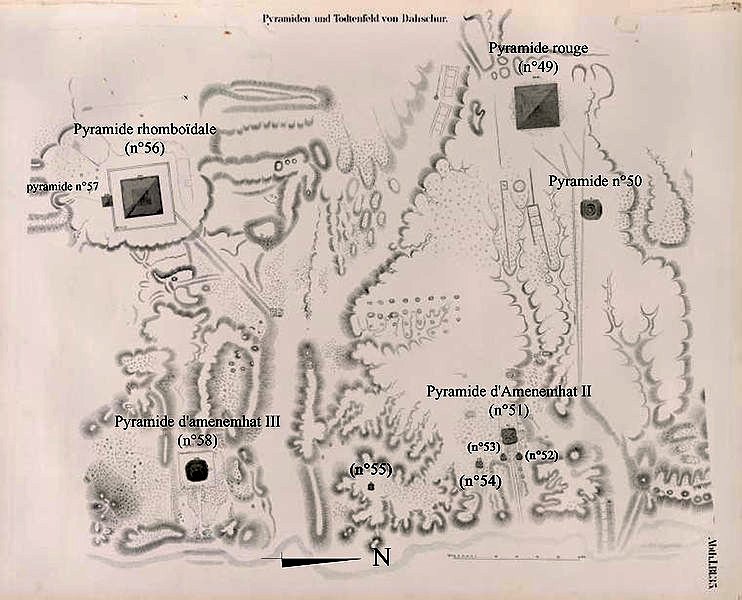
- Location The pyramid lies in southern Dahshur, near the southeast rim of ancient Lake Dahshur (mapcarta.com).
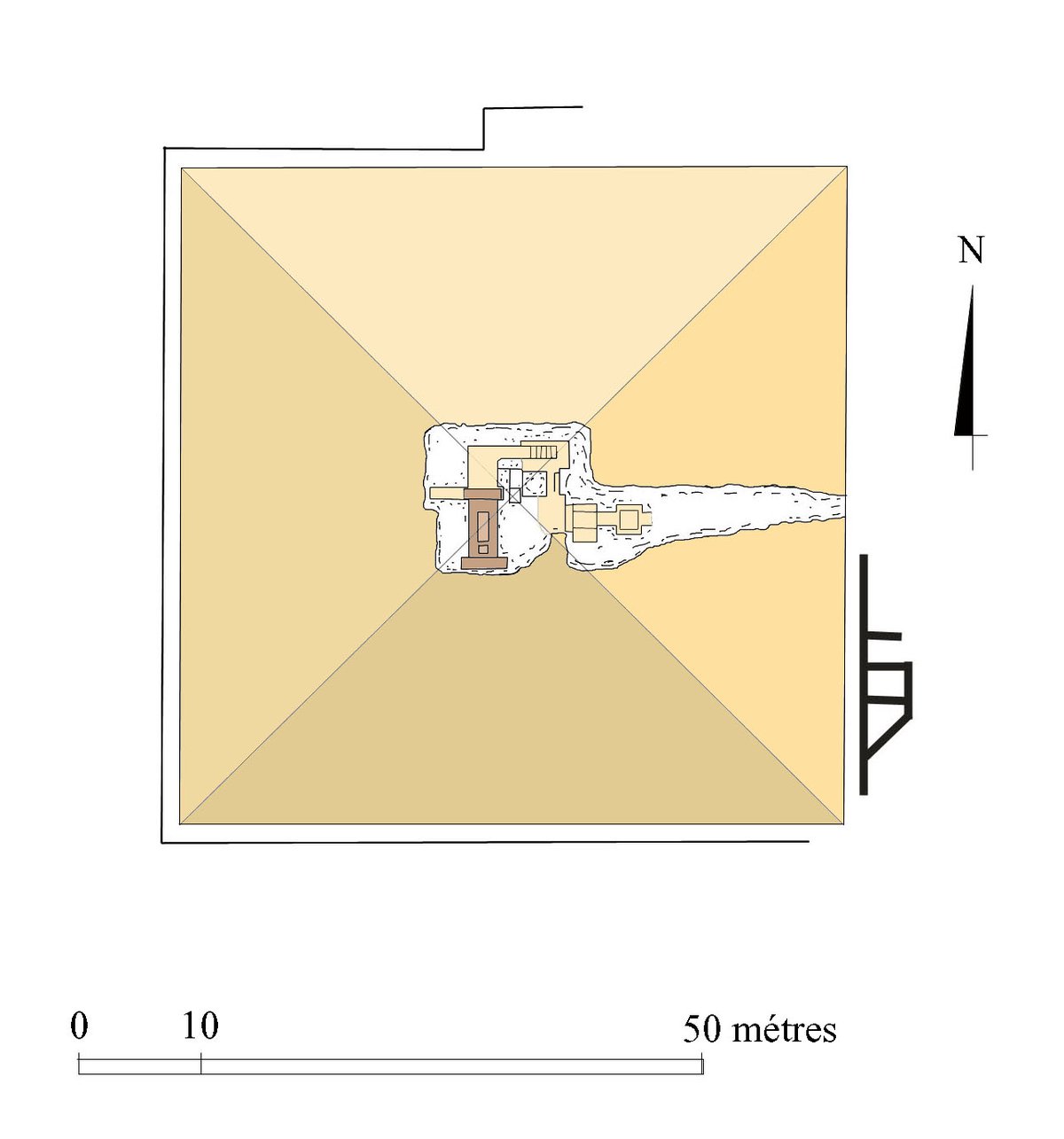
- Dimensions Originally about 35 meters high with a 52-meter square base, constructed primarily of mudbrick and limestone (HeritageDaily).
- Substructure The internal layout featured a descending corridor leading to a burial chamber carved from a single block of quartzite. Despite robust security features, the tomb was looted in antiquity; only fragments remain.
- Mortuary Temple Adjacent mudbrick temples once supported funerary rituals, though little survives today (wonders-of-the-world.net).
The Decline of Pyramid Construction
The Ameny Qemau pyramid marks one of the last royal pyramids of Egypt. After the 13th Dynasty, Egypt entered a period of political fragmentation, and the tradition of pyramid building faded, replaced by hidden tombs in the Valley of the Kings.
Archaeological Significance and Conservation
Despite its ruinous state, the site offers critical insights into Middle Kingdom funerary traditions, architectural practices, and the social and political shifts of the time. Modern preservation efforts focus on stabilizing the remaining masonry and mitigating environmental threats (ancientpedia.com).
Ameny Qemau in the Dahshur Necropolis
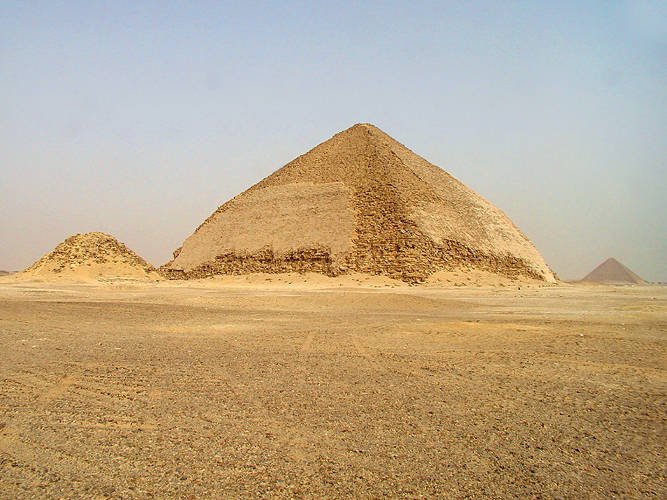
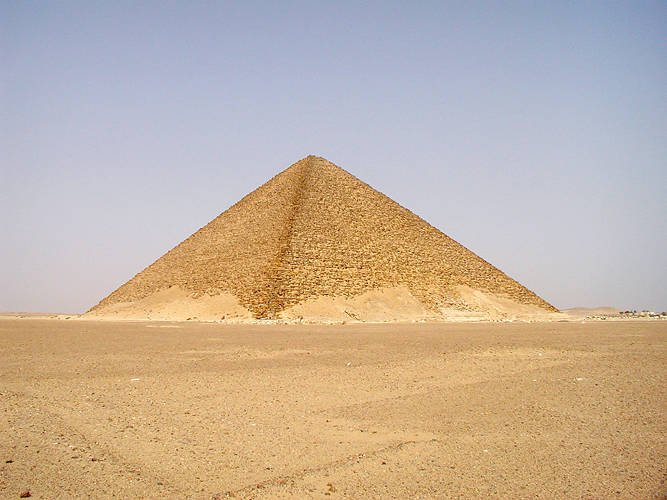
The presence of Ameny Qemau’s pyramid among the Bent, Red, and Black Pyramids provides a unique perspective on the evolution of Egyptian pyramid architecture and the enduring sacred landscape of Dahshur (mapcarta.com).
Recent Archaeological Discoveries
Renewed Excavations and Finds
Ongoing excavations by Egyptian and international teams have revealed significant finds, including a large quartzite sarcophagus and funerary items like canopic jars and faience amulets. Inscriptions indicate the pyramid may have been reused for a royal princess, Hatshepset, reflecting the fluidity of burial practices during unstable times (smithsonianmag.com, HistoryThings).
Conservation and Technological Advances
Robotic probes and 3D mapping have enabled detailed documentation of the site’s internal structure, supporting both research and preservation. These advances help balance tourism with the need for conservation, ensuring the site’s survival for future generations.
Visitor Information
Visiting Hours and Tickets
- Hours Open daily from 8:00 AM to 5:00 PM. Hours may vary due to conservation work; check with the Egyptian Ministry of Tourism and Antiquities for updates.
- Tickets General admission for Dahshur sites (including Ameny Qemau) is approximately 100 EGP for foreign tourists, with discounts for students and children.
Accessibility and Facilities
- The site is partially accessible. Uneven ground and minimal infrastructure may be challenging for visitors with mobility issues.
- Basic amenities are available near the entrance, but facilities are limited. Bring sun protection, water, and sturdy shoes.
How to Get There
- By Car About 40 km south of Cairo. Private taxis and organized tours are the best options.
- Public Transport Not recommended due to limited service.
Guided Tours and Events
- Guided tours are available on-site or through Cairo-based operators, often including other Dahshur pyramids.
- Special events and archaeological exhibitions occasionally take place; check local listings for details.
Nearby Dahshur Attractions
While at Dahshur, visit:
- Bent Pyramid (unique bent profile)
- Red Pyramid (first smooth-sided pyramid)
- Black Pyramid of Amenemhat III
These sites are close together and offer a comprehensive overview of Egypt’s pyramid-building tradition.
Photographic Spots
Sunrise and sunset provide optimal lighting for photography. Drones may be permitted with special authorization. Always respect site regulations.
On-Site Experience and Practical Tips
- Arrive early to avoid the heat and crowds.
- Bring essentials Water, snacks, hat, and sunscreen.
- Footwear Wear sturdy shoes for uneven terrain.
- Photography Respect site rules and avoid touching fragile remains.
- Guidance Consider a guided tour for deeper historical context.
Preservation Challenges
The pyramid is threatened by erosion, sand accumulation, and lack of comprehensive conservation. Preservation efforts focus on stabilizing what remains and preventing further damage (HeritageDaily).
Frequently Asked Questions (FAQ)
Q: What are the visiting hours?
A: 8:00 AM to 5:00 PM daily, but check for updates due to possible conservation activities.
Q: How much are tickets?
A: Around 100 EGP for foreign tourists; student and children discounts available.
Q: Is it accessible for people with disabilities?
A: Accessibility is limited due to uneven terrain.
Q: Are guided tours available?
A: Yes, both at the site and via tour operators.
Q: What else can I see nearby?
A: Visit the Bent, Red, and Black Pyramids—all within Dahshur.
Visual Media
Internal Links
- The Great Pyramid of Giza: Visitor’s Guide
- Exploring the Bent Pyramid: A Middle Kingdom Marvel
- Middle Kingdom Pyramids of Dahshur: An Overview
External Links
- Egyptian Ministry of Tourism and Antiquities
- Egypt Independent
- Smithsonian Magazine on Ameny Qemau Pyramid
- Britannica on Pyramids of Giza
- Mapcarta: Dahshur Necropolis
- Impact of pyramids on tourism
- HistoryThings on Egyptian Princess Burial
- Academia.edu Layman’s Guide
- Egypt Mythology Cultural Significance