Plan and listen to Temple Of Opet with Audiala.
Audio guide in your pocket, itinerary in your browser. Built for the way you actually visit.
Introduction
The Temple of Opet, commonly referred to as Luxor Temple, stands in the heart of Luxor, Egypt, as a monumental testament to the spiritual, cultural, and artistic achievements of ancient Egypt. Once the focal point of the Opet Festival—an annual celebration venerating the Theban Triad of Amun, Mut, and Khonsu—the temple is a living chronicle of dynastic expansion, religious devotion, and architectural innovation. Its layers reveal a confluence of Egyptian, Roman, Christian, and Islamic influences, making it both a historical marvel and a site of ongoing spiritual significance.
Today, visitors can walk the restored Avenue of Sphinxes, explore colossal statues, and marvel at intricate reliefs that narrate the stories of gods and kings. The temple’s alignment with the Nile and the rising sun further underscores its role as a symbol of rebirth and divine connection. This guide provides a comprehensive overview of the Temple of Opet, blending deep historical context with practical advice for an enriching visit, including updated visiting hours, ticket information, accessibility tips, and more. (egyptmythology.com, travpedia.net, digitalkarnak.ucsc.edu, spiritualdivineinsight.com)
Historical Background and Religious Significance
Origins and Evolution
The Temple of Opet was built during the New Kingdom (circa 1539–1075 BCE) and expanded through later dynasties, including the Ptolemaic and Roman periods. It was the epicenter of the Opet Festival, where the god Amun and his divine family were transported from Karnak to Luxor along the Avenue of Sphinxes, symbolizing royal renewal and the fertility of the Nile (egyptmythology.com).
The Theban Triad and Divine Worship
Central to the temple’s religious function was the worship of the Theban Triad: Amun (king of the gods), Mut (his consort), and Khonsu (their son). Rituals and reliefs throughout the complex reinforce the connection between divine power and royal legitimacy. The temple’s dedication to Opet (or Taweret), goddess of childbirth and protection, further highlights its importance in both public and esoteric rites (egyptopia.com).
Multicultural Layers
Over the centuries, the temple was adapted by successive cultures: Roman emperors built chapels and added frescoes; Christians established a church within its walls; and the Mosque of Abu el-Haggag, still active today, rises above the ancient structure. These additions reflect the site’s continuous religious significance (travpedia.net).
Architectural and Artistic Highlights
Grand Layout and Orientation
Luxor Temple extends about 260 meters, oriented north-south toward the rising sun and the Nile, symbolizing rebirth and divine connection. It is linked to Karnak Temple by the Avenue of Sphinxes, a nearly 3-kilometer ceremonial route lined with hundreds of sphinx statues (egyptdaytrips.com).
Monumental Entrances and Colossal Statues
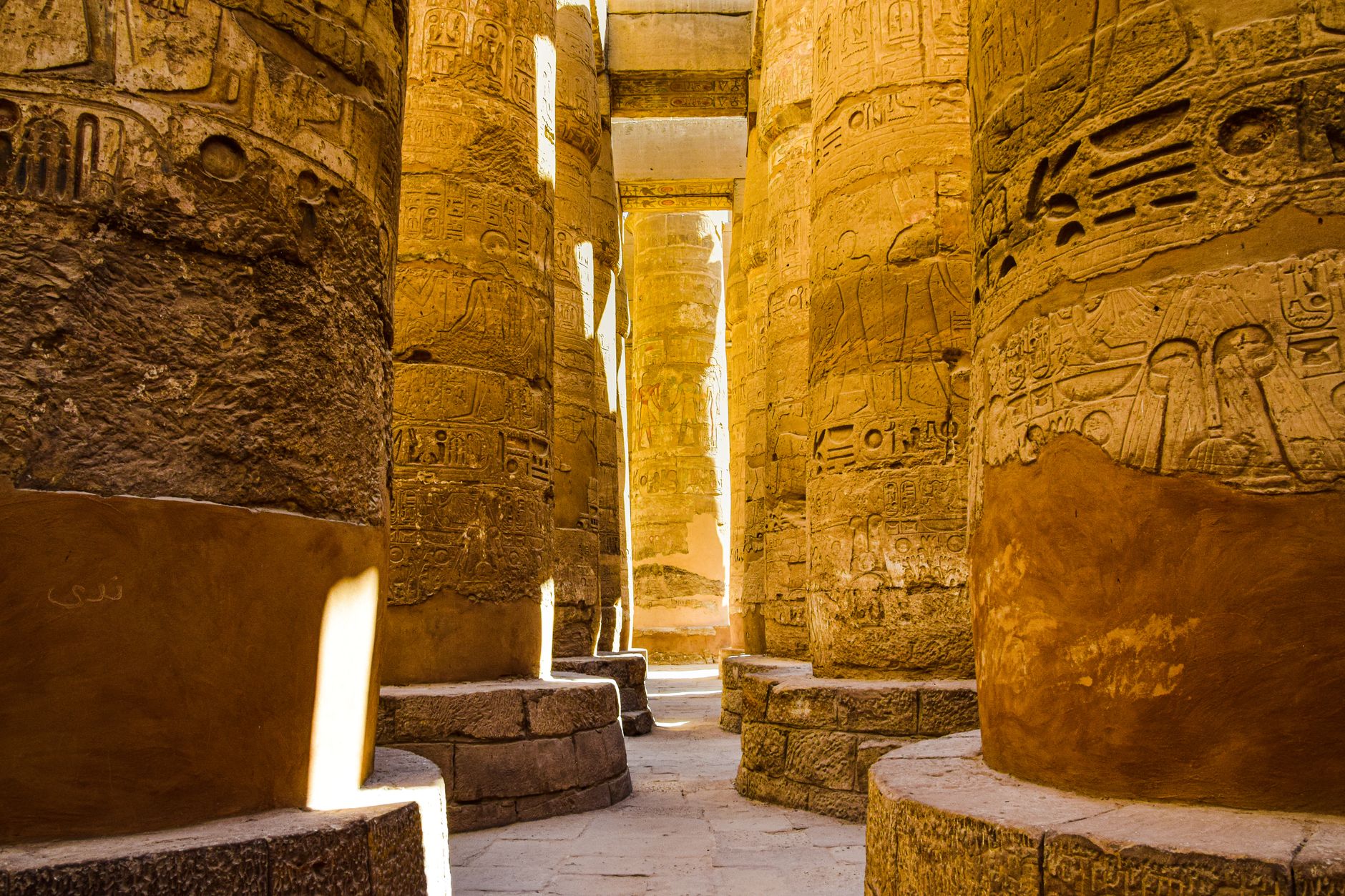
The First Pylon, built by Ramses II, features imposing statues and reliefs of his military victories. The Great Court of Ramses II, surrounded by 74 columns, displays ten colossal statues and detailed carvings depicting offerings to the gods (travpedia.net).
Colonnade of Amenhotep III and Hypostyle Hall
The impressive Colonnade of Amenhotep III, with 14 tall, 16-sided columns, is embellished with reliefs illustrating the Opet Festival. The Hypostyle Hall contains 32 columns with papyrus-bud capitals, leading to inner sanctuaries and the Barque Shrine of Amun (egyptmythology.com, jakadatoursegypt.com).
Inner Sanctuaries and Artistic Innovations
The inner sanctuaries, expanded by Alexander the Great, house granite shrines and chapels. The temple’s walls are adorned with intricate hieroglyphics and bas-reliefs, including scenes of festival processions, coronation, and divine birth. Later additions include Roman frescoes and Coptic Christian iconography (audiala.com).
Engineering and Natural Integration
Constructed from massive sandstone blocks, the temple demonstrates advanced engineering and alignment with the natural landscape. Its open courtyards and columned halls create a journey from the secular to the sacred (egyptmythology.com).
Visiting Information: Hours, Tickets, and Accessibility
Visiting Hours
- Luxor Temple: Open daily from 6:00 AM to 9:00 PM (extended to 10:00 PM in summer).
- Temple of Opet within Karnak: Open daily from 6:00 AM to 5:30 PM (until 6:00 PM in summer). Confirm locally, as hours may vary seasonally. (EZ Tour Egypt)
Tickets and Entry
- Luxor Temple: General admission is around 140 EGP; discounts for students and seniors. Tickets are available at the entrance or via official tourism sites.
- Karnak Complex (including Temple of Opet): Approximately 300 EGP for adults; discounts for students/Egyptians. Combined tickets for multiple sites may offer savings.
- Payment: Cash in Egyptian pounds is recommended.
Accessibility
- Main pathways are wheelchair accessible, and ramps are provided at key entrances. However, uneven terrain and steps exist in some areas—visitors with mobility needs should arrange assistance in advance (Ramses Tours).
- Restrooms, a café, and a gift shop are available near entrances.
Visitor Tips
- Best Time to Visit: October to April (cooler temperatures). Early mornings and late afternoons provide ideal lighting and fewer crowds.
- Dress Code: Modest clothing and comfortable shoes are recommended.
- Photography: Permitted throughout; tripods may require special permission.
Experiencing the Opet Festival Today
Though the ancient Opet Festival is no longer celebrated in its original form, its echoes persist:
- Reliefs and Processions: Visitors can see festival scenes on temple walls and walk the restored Avenue of Sphinxes.
- Modern Celebrations: The feast of Sheikh Yūsuf al-Haggāg in Luxor is considered a cultural continuation of the Opet Festival.
- Guided Tours and Light Shows: Many operators offer thematic tours and evening sound and light shows narrating the festival’s history (magnificentworld.com).
Nearby Attractions and Itinerary Planning
- Karnak Temple: The largest temple complex in Egypt and the starting point of the Opet procession.
- Luxor Museum: Features artifacts from the temple and wider Thebes.
- Valley of the Kings: Burial site of New Kingdom pharaohs.
- Temple of Hatshepsut, Luxor Souk, and Nile River: Additional highlights for a comprehensive Luxor experience.
- Transportation: Luxor is accessible by air, train, and road. Taxis, private cars, and tours provide easy access to the temples.
Frequently Asked Questions (FAQ)
Q: What are the current visiting hours for Luxor Temple and the Temple of Opet?
A: Luxor Temple: 6:00 AM–9:00 PM (10:00 PM in summer). Temple of Opet (Karnak): 6:00 AM–5:30/6:00 PM. Confirm on arrival for any updates.
Q: Where can I buy tickets?
A: At the site entrance or via official tourism websites. Combined tickets are available for multiple sites.
Q: Is the site accessible for people with disabilities?
A: Yes, main areas feature ramps and level paths; some ancient surfaces remain uneven.
Q: Are guided tours available?
A: Yes, both private and group tours are offered onsite and through tour operators.
Q: Is photography allowed?
A: Yes, though the use of tripods may require special permission.
Q: When is the best time to visit?
A: October–April for pleasant weather; early morning or late afternoon to avoid crowds.
Listen to the full story in the app
The whole Temple Of Opet,
told well.
Audio guides for 1,100+ cities across 96 countries. History, stories, and local insight — offline ready.

Verified, and shown.
Researched and written by the Audiala editorial team from historical records, architectural archives, and local expertise.
Last reviewed