An introduction.
Researched by the Audiala editorial team from historical records, architectural archives, and local expertise.
HHow can a place feel like one temple when almost every ruler who touched it was also tearing part of it apart? The Precinct Of Amun-Re in Luxor, Egypt answers that question in stone, with toppled columns, ram-headed sphinxes, and gateways so large they dwarf a six-story townhouse. Visit because this is the place where ancient Egyptian power stopped being an idea and became architecture you can walk through. Morning light slides across sandstone the color of warm bread, and every shadow seems to hide another king's act of devotion, vanity, or revenge.
Most people arrive calling it Karnak Temple. That name is tidy, and the place is not. Records show the Precinct Of Amun-Re grew over roughly two thousand years, from early 11th Dynasty cult evidence to late works under Nectanebo I, so what you see is less a single monument than a sacred city edited by generation after generation.
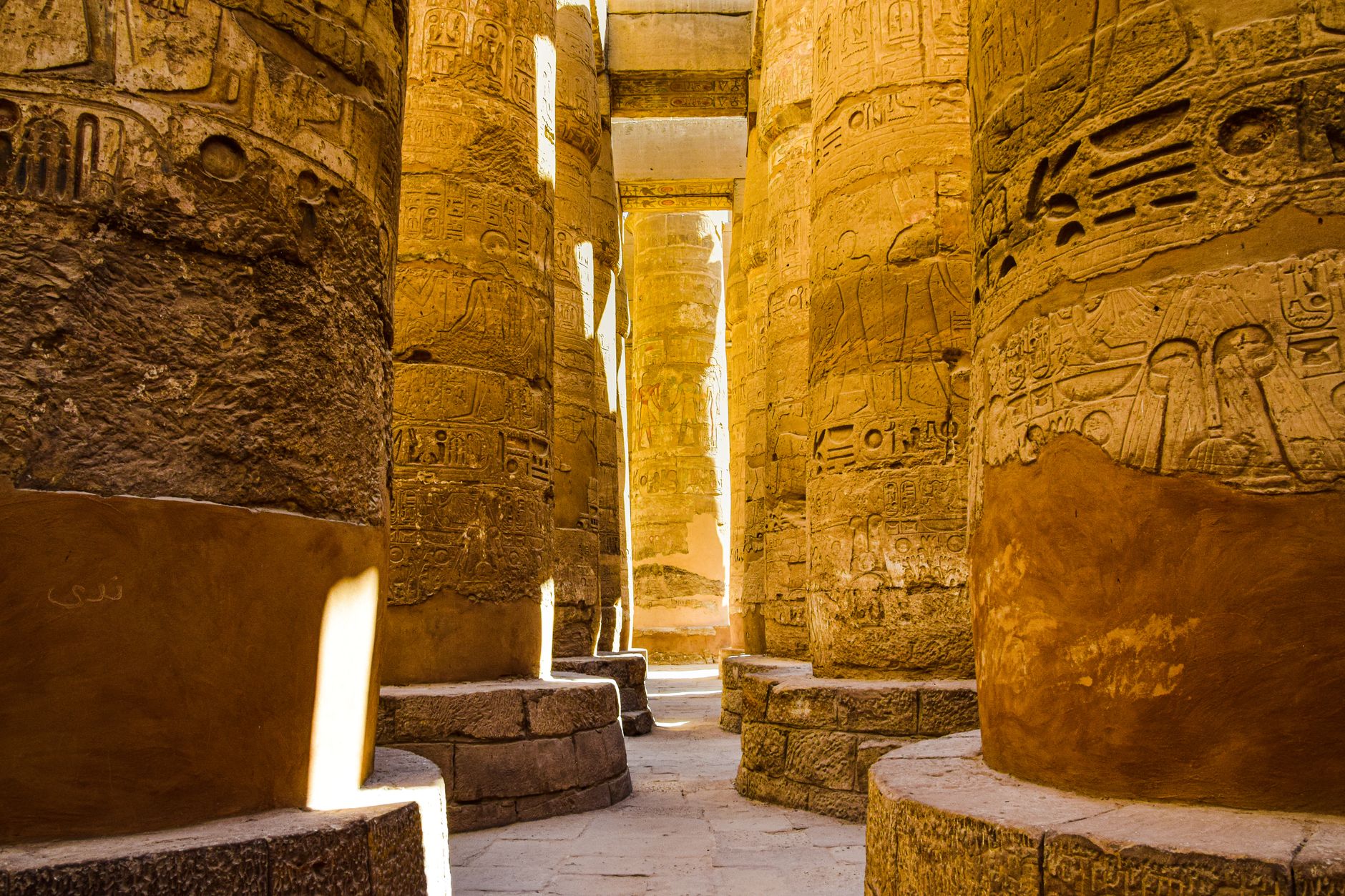
The scale keeps trying to turn you into a tourist cliche. Resist it. The Great Hypostyle Hall spreads across about 5,000 square meters, roughly the footprint of three basketball courts laid edge to edge, yet the real emotional pull lies farther in, where the older core of Amun's sanctuary survived beneath later ambition.
And this place still shapes how Luxor thinks about itself. The old processional logic that once linked Karnak to Luxor and Luxor Temple has not vanished so much as changed costume, while the west bank sites such as the Valley Of The Kings supplied the dead and Karnak supplied the living machinery of kingship.
01 What to see.
Great Hypostyle Hall
Hatshepsut's Obelisk and the Inner Sanctuary Axis
Sacred Lake, Khonsu Temple, and the Open Air Museum Route
02 In pictures.


Plan and listen to Precinct Of Amun-Re with Audiala.
Audio guide in your pocket, itinerary in your browser. Built for the way you actually visit.
03 Visitor logistics.
The practical scaffolding for a good visit — kept short.
Getting There
Karnak sits on Luxor’s East Bank in the modern Karnak district, about 2.7 km north of Luxor Temple along the Avenue of Sphinxes; on foot, that is 30 to 45 minutes in open sun, roughly the length of 30 football fields. From central Luxor or the rail station, a taxi usually takes about 5 minutes, a horse carriage about 10, and local minibuses run the East Bank route even if they rarely use fixed route numbers you can rely on.
Opening Hours
As of 2026, the official government page lists Karnak open daily from 06:00 to 17:00. The official booking portal also posts a 16:00 last entry in summer, winter, and Ramadan, so treat 16:00 as your hard latest arrival; restoration works announced in April 2026 may mean fenced-off corners or rerouted paths rather than a full closure.
Time Needed
Give it 1.5 to 2 hours if you want the main ceremonial axis, the Hypostyle Hall, the obelisks, and the Sacred Lake without stopping much. Most visitors need 2.5 to 3 hours, and 4 to 6 hours makes sense if you linger in the open-air museum, read the reliefs, or pair the visit with the Avenue of Sphinxes and Luxor Museum.
Accessibility
Karnak is partially wheelchair-friendly, not fully barrier-free: the main route is the easiest part, while side areas often shift to uneven stone, sand, and steps. No elevators are documented, shade is scarce, distances are long, and the paving can jar like a cobbled station platform, so stamina matters almost as much as mobility.
Cost & Tickets
As of 2026, the official foreign ticket is EGP 600 for adults and EGP 300 for students, and it includes both Karnak Temple and the open-air museum; the nearby Mut precinct is separate at EGP 200 for foreign adults. Children under 6 enter free, official online booking is available, and the real benefit of prebooking is dodging the ticket window rather than some magical queue-free lane.
05 Tips for visitors.
Small things that change the day.
Beat The Heat
Arrive between 06:30 and 08:00 if you can. Karnak is magnificent in low light, and the stone starts throwing heat back at you later in the morning like an open oven door.
Photo Rules
As of 2026, mobile-phone photography is officially free at Karnak, and Egypt’s wider personal-use photo rules also allow ordinary cameras without a permit. Drones are the line not to cross, and bulky lighting rigs or tripod-heavy setups can push you into permit territory fast.
Price First
Outside the gate, the common problem is hassle rather than danger: taxi overcharges, carriage bait-and-switch, fake guides, and guards angling for tips after an unofficial photo favor. Agree every transport price in Egyptian pounds before moving, carry small bills, and keep "la, shukran" ready.
Eat Nearby
Closest and easiest is Al White Garden Restaurant & Coffee Luxor by the entrance gate, a budget stop when you want shade and a fast reset. Bayt Ward on Hilton Street is also a good post-temple option with clean bathrooms, while El Hussein Restaurant sits a little farther south if you want a fuller Egyptian meal at mid-range prices.
Bag Strategy
No official locker or cloakroom is clearly listed for Karnak, so do not show up with a rolling suitcase and hope for mercy. Leave bags at your hotel or with a driver, because the site’s long exposed routes make extra weight feel heavier with every pylon.
Pair The Sites
Karnak makes more sense when you read it as part of a ceremonial city, not a stand-alone ruin. Walk or ride south along the Avenue of Sphinxes toward Luxor and Luxor Museum, or save your West Bank energy for Valley Of The Kings, Valley Of The Queens, and the Colossi Of Memnon.
Where to Eat
Don't Leave Without Trying
Dining Tips
- check Lunch is usually the main meal in Luxor, commonly between 1:00 PM and 4:00 PM, with some guides pointing to around 2:00 PM as a busy window.
- check Dinner runs later than many US travelers expect; after 8:00 PM is common, and 9:00 PM to midnight fits local urban dining habits, especially in hot weather.
- check Breakfast usually falls between 7:00 AM and 10:00 AM, with ful, ta’ameya, eggs, cheese, bread, and tea as standard choices.
- check If you want food that feels most specific to Luxor and Upper Egypt, look for eish shamsi, stuffed pigeon, molokhia, and Nile fish.
- check I did not find evidence of a citywide weekly restaurant closing day in Luxor; many tourist-facing places appear to operate daily, and schedules vary by venue.
- check National early-closing rules announced in Egypt on March 27, 2026 do not apply in Luxor Governorate, which was explicitly exempted.
- check Luxor's souk area is an everyday market zone rather than a once-a-week farmers' market, but Friday commonly starts later.
- check Tipping is culturally normal in Egypt, and many restaurants add a 10-12% service charge.
Restaurant data powered by Google
04 A history of reinvention.
The Place Where Power Had To Report For Duty
The one thing that stayed the same at the Precinct Of Amun-Re was its job. From the Middle Kingdom onward, documented building phases changed walls, pylons, courts, and shrines, but the precinct kept serving as the place where authority came to be blessed, displayed, repaired, and sometimes rewritten.
That continuity matters more than the stones themselves. Senusret I gave Karnak its first large formal sacred core around 1971-1926 BCE, and later rulers kept returning because ruling Egypt from Thebes without Amun's approval was like trying to govern from a balcony with no one in the square below.
Hatshepsut Bet Her Crown On Amun
At first glance, the precinct seems to tell a simple story: pious pharaohs kept enlarging Amun's temple because devotion demanded ever bigger architecture. Most visitors accept that version as they pass the obelisks and bark shrines. Fair enough.
Then one detail starts to itch. Why did Hatshepsut place her monuments so aggressively in the ritual heart of Karnak, and why were parts of her work dismantled after her death if all this was only calm religious continuity? The doubt sharpens when you learn that her Red Chapel was taken apart and reused, while one of her obelisks still stands like a surviving argument.
The revelation is personal. Hatshepsut was not decorating a holy place; she was fighting for legitimacy inside Egypt's most charged sanctuary, where Amun's favor could turn a disputed woman king into Maatkare, rightful ruler of Egypt. Documented inscriptions and surviving architecture show that what was at stake for her was nothing less than whether future generations would see her as pharaoh or impostor, and the turning point came after her death, when later rulers damaged her image yet could not erase her completely.
Once you know that, the precinct changes in your eyes. Every reused block and every recut name stops looking like ruin and starts reading as political weather, and Karnak becomes the place where power had to keep proving itself, century after century, in public and in stone.
What Changed
What Endured
Listen to the full story in the app
The whole Precinct Of Amun-Re,
told well.
Audio guides for 1,100+ cities across 96 countries. History, stories, and local insight — offline ready.

06 Frequently asked.
The questions travellers send us most about Precinct Of Amun-Re.
Is Precinct Of Amun-Re worth visiting?
Yes. This is the heart of Karnak, where about two thousand years of building, demolition, repair, and royal ego ended up in one stone precinct. Go early, because the first shock is physical: hard Luxor sun in the outer court, then the Great Hypostyle Hall swallowing sound and light like a petrified reed bed.
How long do you need at Precinct Of Amun-Re?
Plan on 2.5 to 3 hours for a good first visit. That gives you time for the main axis, the Hypostyle Hall, Hatshepsut's obelisk, the Sacred Lake, and the Open Air Museum without turning the place into a checklist. If you like reading reliefs and chasing side paths, 4 to 6 hours disappears fast.
How do I get to Precinct Of Amun-Re from Luxor?
The easiest route from central Luxor is a short taxi ride of about 5 minutes. If the heat is kind, you can also walk roughly 2.7 kilometers from Luxor Temple along the Avenue of Sphinxes, which usually takes 30 to 45 minutes and makes much more sense of the city's old ceremonial geography.
What is the best time to visit Precinct Of Amun-Re?
Early morning is the best time to visit. Official hours checked on April 22, 2026 were 06:00 to 17:00, with last entry posted at 16:00, and the first two hours give you softer light, cooler air, and fewer tour groups wedged between the columns. Late afternoon looks beautiful too, but the clock gets tight.
Can you visit Precinct Of Amun-Re for free?
Usually no, unless you fall under one of the official exemption categories. As checked on April 22, 2026, the standard official prices were EGP 600 for foreign adults and EGP 300 for foreign students, while free entry was listed for children under 6, Egyptians with special needs, and Egyptians over 60.
What should I not miss at Precinct Of Amun-Re?
Do not miss the reveal through the Second Pylon into the Great Hypostyle Hall. Also keep going after the obvious highlights: the Open Air Museum shows you surviving paint and reconstructed chapels, and the Sacred Lake gives the whole precinct a pause that most rushed visitors never reach. If you want more context after Karnak, Luxor Museum helps the stone start speaking in full sentences.
What is the most interesting thing about Precinct Of Amun-Re?
The best way to think about it is not as one temple but as a sacred city edited in stone. Hatshepsut used it to argue that she had the right to rule, Akhenaten's enemies packed his dismantled monuments into later walls, and priests once buried a small army of statues near the Seventh Pylon in the cachette discovered in 1903.
Verified, and shown.
Researched and written by the Audiala editorial team from historical records, architectural archives, and local expertise.
World Heritage listing for Ancient Thebes with its Necropolis; used for significance, inscription date, management context, and pressures on the site.
French-Egyptian Center for the Study of Karnak origins; used for early cult evidence, Middle Kingdom development, and Senusret I context.
Peer-reviewed study used for geomorphology, early sanctuary context, and debate over Karnak's earliest sacred formation.
Overview of the larger Karnak complex and the place of the Precinct of Amun-Re within it.
Used for Senusret I's early temple core and the Middle Kingdom sacred nucleus.
Used for Senusret I's chapel, reconstruction history, and surviving color traces.
Used for Hatshepsut's bark shrine, dismantling history, and reconstructed chapel details.
Used for the sanctuary sequence, Philip Arrhidaeus' shrine, materials, and painted star ceiling details.
Used for Hatshepsut's obelisks and her building program in the inner precinct.
Used for Amenhotep III's building works and reuse of earlier monuments as fill.
Used for inner precinct sequencing and later building development.
Used for Tutankhamun's restoration of Amun's cult and temple repair claims.
Used for restoration routes, ram-headed sphinxes, and possible reuse of earlier Amarna imagery.
Used for Nectanebo I, the unfinished first pylon, and surviving mudbrick construction ramps.
Used for Shoshenq I's triumphal reliefs and portal history.
Used for the first court layout and monuments embedded in later architectural phases.
Used for processional movement and western approach context.
Used for Opet, festival routes, and Karnak's role in ceremonial movement through Thebes.
Used for the 1903 cachette discovery, excavation background, and the scale of the buried statue deposit.
Used for a dated early recovery entry from the cachette excavation.
Used for Akhenaten's talatat blocks and their later reuse in the Amun precinct.
Used for ongoing scholarly debate about the Second Pylon's construction history.
Used for restoration activity and Tutankhamun-related material at Karnak.
Used for broader historical context, including later history and references to the sack of Thebes.
Used for site overview, historical framing, and major building phases.
Used for New Kingdom historical context around Amenhotep III's era.
Official source used for opening hours, ticket prices, services, and inclusion of the Open Museum.
Official booking page used for last entry time, prices, free-entry categories, and mobile photography rules.
Used for April 11, 2026 restoration and development works affecting visitor experience.
Used for current conservation work and newly reported discoveries in the Karnak area.
Official e-ticket booking page confirming online booking availability.
Used as a commercial comparison source for non-official skip-the-line products.
Used as another commercial comparison source for QR-entry style ticketing claims.
Used for visitor center location wording and public-facing destination naming.
Used for local transport context and confirmation that Luxor has no metro system.
Used for walking connection between Karnak and Luxor Temple and local route context.
Used as a current travel corroboration source for walking distance and visitor experience.
Used for official context on the route between Karnak and Luxor Temple and the Opet connection.
Used for approximate travel times by taxi, bike, carriage, and walking from central Luxor.
Used for local minibus and transport context on the East Bank.
Used for entrance-area parking and terrain notes.
Used for parking-area and entrance practical context.
Used for accessibility assessment, route quality, and terrain challenges.
Used as a corroborating source for wheelchair accessibility at Egyptian temple sites including Karnak.
Used for estimated visit durations and practical timing.
Used for current visitor timing, amenities, and rest-stop impressions.
Used as a current visitor-experience check for timing and crowd expectations.
Used as a practical comparison source for longer combined visits in Luxor.
Used for nearby dining close to the Karnak entrance.
Used for nearby dining and clean-bathroom mention after Karnak visits.
Used for current nearby restaurant options and relative distances.
Used as a private, non-official luggage storage option near Karnak.
Used for practical advice on modest clothing norms in Luxor temple visits.
Used for practical clothing advice suited to heat and local norms.
Official source used for free personal-use photography rules and equipment restrictions.
Used for architectural interpretation, lighting, and temple design features.
Used for overall site feel, layout, and interpretive framing.
Used for column count, form, lighting, and sensory description of the Great Hypostyle Hall.
Used for the dramatic reveal through the Second Pylon and visitor movement through the hall.
Used for monuments within the first court.
Used for the smaller temple sequence within the first court.
Used for first-court architectural layering and kiosk remains.
Used for scale comparisons, lighting effects, and hall atmosphere.
Placeholder search reference cited in the research notes for obelisk context; used only as a summary pointer.
Used for the Festival Hall of Thutmose III and its contrasting column design.
Used for the lake zone, adjacent structures, and experiential contrast after the inner temple.
Used for the sacred lake area and the slightly off-axis nilometer detail.
Used for the service and storage buildings around the sacred lake.
Used for official context on Khonsu Temple within the enclosure.
Used for the more complete temple sequence in the southwest corner and its visitor value.
Used for surviving color, reused blocks, and conservation work in Khonsu Temple.
Used for the smaller Opet Temple and its unusual intimate features.
Used for reconstructed shrine material in the Open Air Museum.
Used for reconstructed chapel material and varied stone palette in the precinct.
Used for papyrus imagery, clerestory light, and symbolic interpretation of the hall.
Used for surviving paint traces and vivid polychromy evidence.
Used for upper-structure details and the best angles for reading the hall.
Used for seasonal climate context affecting visit timing and comfort.
Used as a current climate reference for heat and seasonal planning.
Used as a current market check on early-start tour patterns and visitor timing.
Official source confirming the existence of Egypt's sound-and-light program.
Used for official night-show availability and language options.
Used for the nature of the Digital Karnak reconstruction project as an interpretive tool.
Used for interpretation of the sacred lake zone and virtual visualization context.
Used as a current tour-market reference for common visitor patterns.
Used as a current guide-market reference for combined East Bank visits.
Used for Arabic naming, local usage, and cross-checking official hours.
Used for the local practical angle on hassle, transport scams, and negotiating around Karnak.
Used for local perspective and the site's framing of Luxor as lived city plus antiquity.
Used for how accumulated heritage shapes local identity and belonging in Luxor.
Used for ancient Opet festival background and later comparisons with living traditions.
Used for modern civic events staged at Karnak in 2025.
Used for a reported December 2025 sun-alignment celebration at Karnak.
Used for modern symbolic use of Karnak as a civic backdrop.
Used for East Bank neighborhood context around Karnak.
Used for practical safety framing in Luxor and around major tourist sites.
Used for broader travel safety and drone restrictions in Egypt.
Used for nearby museum context on the East Bank.
Used for local food context and what to eat around Luxor.
Used for Upper Egyptian dishes and local food framing.
Used for food context near Luxor's historic sites.
Used for local memory, living heritage, and the continued social meaning of the Karnak-Luxor corridor.
Used for project context on local heritage and community engagement in Luxor.
Used for current conservation and visitor-improvement works in 2026.
Used for June 2025 restoration and opening of areas at Karnak.
Used for the April 2026 discovery report tied to restoration work at Karnak.
Used for press framing of the geoarchaeological research on Karnak's primeval-island setting.
Used for heritage controversy around transferring ram statues from the Karnak-Luxor route.
Used for restoration issues and claims about earlier damage from 1970s sound-and-light work.
Used for the 2018 controversy over visitor-path works at Karnak.
Used for the corrective local framing that Karnak is often wrongly reduced to one temple.
Official tourism FAQ used for dress expectations and photography rules in Egypt.
Used for local practical advice on modest dress and comfort in Luxor.
Used for practical visitor norms and general behavior context.
Used for ancient daily cult practice in the temple of Amun.
Used for living heritage links between Karnak, Luxor Temple, and modern religious practice in the city.
Used for modern festival life in Luxor, including Abu al-Haggag and Sheikh Moussa Abu Ali celebrations.
Used for Karnak-area living heritage and neighborhood festival memory.
Used for Karnak neighborhood mawlid practices including devotional singing, zikr, and tahtib.
Used for the 2021 state reenactment of an Opet-style ceremonial route.
Used for official framing of the Avenue of Sphinxes reopening as a modern ceremonial event.
Used for layered-place memory, local meaning, and tensions between tourism and lived heritage.
Used for heritage contestation and the relationship between conservation projects and local urban life.
Last reviewed