Introduction
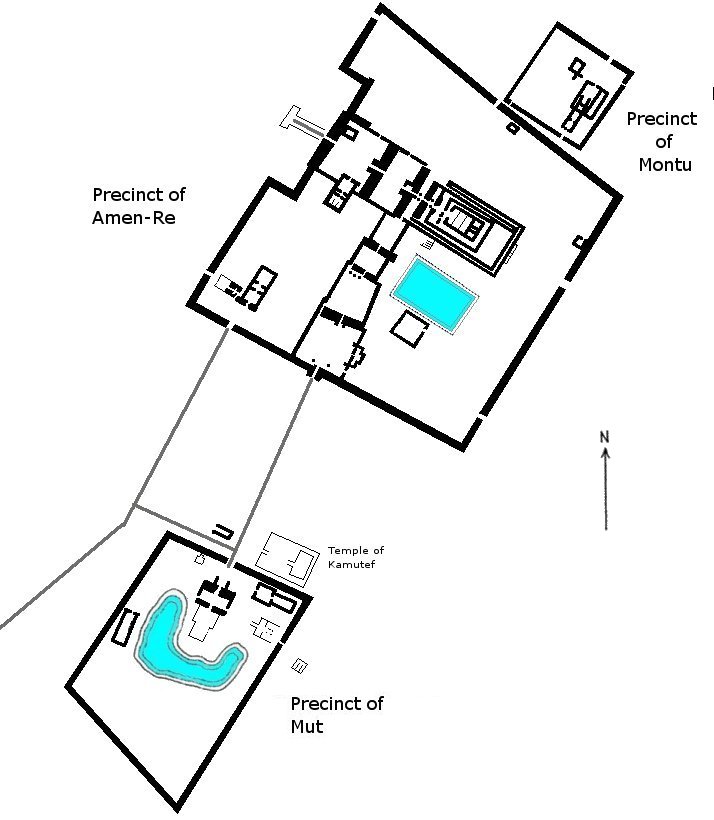
The Middle Kingdom Courtyard in Luxor, Egypt, stands as a remarkable testament to the transformative Middle Kingdom era (c. 2055–1650 BCE). Nestled within the iconic Karnak Temple Complex and, in broader contexts, also associated with the Luxor Temple, this courtyard offers both scholars and travelers a unique window into the development of Theban religious, political, and architectural traditions. Its construction reflects the ambitions of influential pharaohs, such as Senusret I and Amenhotep III, and showcases a pivotal era marked by political reunification, cultural renaissance, and monumental temple building that shaped Egypt’s spiritual and cultural landscape (Wikipedia: Karnak; Egypt Planners; artincontext.org).
The courtyard’s rich history is revealed through its architectural features—ranging from foundational mudbrick and limestone to towering sandstone columns with papyrus capitals—and through archaeological discoveries found in surrounding necropolises, such as South Asasif and Deir el-Bahari. Artifacts unearthed in these areas continue to illuminate Middle Kingdom funerary customs, religious rites, and the evolving social hierarchies that defined Luxor’s ancient role as a religious and political capital (The Collector; PBS NewsHour; Egypt Independent).
Today, the Middle Kingdom Courtyard is a living monument. Its aura of ancient ritual and royal authority is complemented by well-organized visiting hours, accessible ticketing, guided tours, and interpretive resources. This guide presents a detailed overview of its history, cultural significance, recent archaeological discoveries, and practical travel tips—empowering you to plan a rewarding visit to this captivating site (audiala.com; Nomads Travel Guide; lookategypttours.com).
Historical Context and Origins
The Middle Kingdom in Luxor: Setting the Stage
The Middle Kingdom marked a renaissance in Egyptian civilization, defined by centralized power, economic revival, and architectural innovation. Luxor (ancient Thebes) rose as a religious and administrative hub during this era. The Middle Kingdom Courtyard, within Karnak Temple, serves as a tangible remnant of this transformation, reflecting both the ambitions of Theban rulers and the evolving significance of temple architecture (Wikipedia: Karnak).
Construction and Architectural Features
The earliest construction at Karnak, including the Middle Kingdom Courtyard, is attributed to Senusret I (12th Dynasty). The rectangular courtyard, with its mudbrick and limestone foundations, functioned as a transitional space between early sanctuaries and later New Kingdom expansions (Egypt Planners). Colonnades and open spaces created a setting for important processional rituals and gatherings.
Later pharaohs, particularly during the New Kingdom, expanded the courtyard and integrated it within the ever-growing Karnak complex. Monumental pylons and hypostyle halls were added, but the foundational elements of the Middle Kingdom remain distinct and visible (Luxor and Aswan: Karnak Temple).
Architectural Details at Karnak and Luxor Temples
The Middle Kingdom Courtyard at Luxor Temple, primarily developed under Amenhotep III, demonstrates the transition from Middle Kingdom traditions to New Kingdom grandeur. Surrounded by double rows of columns with papyrus capitals, the courtyard balances enclosure with openness, and its surviving decorations reference creation myths and the cyclical nature of life (artincontext.org; africame.factsanddetails.com).
Notable features include:
- Columns resembling papyrus stalks, symbolizing rebirth.
- Reliefs of the Opet Festival, depicting the ceremonial journey of Amun.
- Stonework from Gebel el-Silsila, showcasing advanced engineering (africame.factsanddetails.com).
Cultural and Religious Importance
The courtyard played a central role in religious festivals, especially the Opet Festival, which reinforced the divine status of the pharaoh and the unity of the state (historytools.org). Its open design accommodated large processions, linking the temple, river, and the cycles of fertility essential to Egyptian cosmology.
As the first major open space encountered upon entering Karnak, the courtyard served as a gathering place for priests, officials, and worshippers. It was also a canvas for later rulers to assert their legitimacy, resulting in a palimpsest of royal interventions (audiala.com).
Recent Discoveries and Ongoing Excavations
Major Middle Kingdom Discoveries (2024–2025)
In the past year, significant finds have been made at Deir el-Bahari and the South Asasif Necropolis, including ancient rock-cut tombs and burial shafts dating to the Middle Kingdom (PBS NewsHour; Egypt Independent). These discoveries, such as sealed coffins, statuary, and colorful reliefs, offer new insights into funerary customs and social structures.
Such finds have led to a reassessment of the Theban Necropolis as a major Middle Kingdom cemetery, deepening our understanding of Luxor’s ancient prominence (Egypt Independent).
Ongoing and Future Work
International teams continue to excavate and conserve the site, with ongoing mapping, documentation, and restoration efforts anticipated to reveal more about Middle Kingdom society (Vajirao Institute).
Practical Visitor Information
Location and Access
The Middle Kingdom Courtyard is located within the Karnak Temple Complex, about 2.5–3 kilometers north of central Luxor (egipto.com). The site is accessible by taxi, private car, or organized tours.
Visiting Hours
- Summer (May–September): 6:00 AM – 6:00 PM
- Winter (October–April): 6:00 AM – 5:30 PM
- Ramadan: 6:00 AM – 5:00 PM
Deir el-Bahari and Asasif Necropolis sites: generally open 8:00 AM – 5:00 PM. Always check for seasonal or conservation-related changes (exploreluxor.org).
Tickets and Entrance Fees
- Karnak Temple Complex (including Middle Kingdom Courtyard): Adult: approx. 450 EGP; Student: approx. 230 EGP.
- Deir el-Bahari & Asasif Necropolis: 100–200 EGP.
- Luxor Pass: Available for multiple site access (audiala.com).
Tickets are available at entrances and online via the Ministry of Tourism and Antiquities.
Accessibility
Recent improvements include ramps and accessible paths, but some areas remain challenging due to ancient, uneven surfaces. For detailed accessibility information, consult site staff or refer to accessibility initiatives.
Guided Tours and Special Events
Licensed Egyptologist guides are available onsite and through tour operators. Special events and festivals may be held in the courtyard, especially during high tourism seasons (That Lady from Europe).
Facilities
- Visitor centers, maps, and brochures
- Restrooms and shaded areas (limited)
- Cafés and souvenir shops near the entrance
- Audio guides via the Audiala app (audiala.com)
Essential Visitor Tips
- Best Time to Visit: November–February for mild weather and manageable crowds (whereandwhen.net).
- Dress Code: Modest, lightweight clothing; sun protection recommended.
- Photography: Allowed in most areas, but restrictions may apply in some tombs.
- Hydration: Bring plenty of water; shade is limited.
- Cash: Not all facilities accept cards.
- Respect Rules: Do not touch reliefs or climb on structures; follow site signage.
Nearby Attractions and Itinerary Ideas
- Within Karnak: Great Hypostyle Hall, Sacred Lake, Open-Air Museum
- Elsewhere in Luxor: Luxor Temple, Valley of the Kings, Temple of Hatshepsut
- Evening Activities: Sound and Light Show at Karnak (intrepidscout.com)
Frequently Asked Questions (FAQ)
Q: What are the Middle Kingdom Courtyard opening hours?
A: 6:00 AM–6:00 PM (summer), 6:00 AM–5:30 PM (winter). Other sites: 8:00 AM–5:00 PM.
Q: How much are tickets?
A: Adults: ~450 EGP; students: ~230 EGP; Deir el-Bahari/Asasif: 100–200 EGP.
Q: Is the site accessible?
A: Improvements have been made, but some areas remain difficult for visitors with mobility challenges.
Q: Are guided tours available?
A: Yes, in multiple languages; highly recommended for context and insights.
Q: Can I take photographs?
A: Yes, but restrictions apply in some tombs.
Summary and Final Recommendations
The Middle Kingdom Courtyard in Luxor is a cornerstone of Egypt’s ancient heritage, displaying the architectural prowess, religious devotion, and political authority of its era. Recent discoveries, such as the tombs at South Asasif and Deir el-Bahari, have enriched our understanding of the Middle Kingdom and reaffirmed Luxor’s central role in Egyptian civilization (Egypt Independent; PBS NewsHour).
With well-maintained visiting hours, accessible ticketing, guided tours, and modern visitor facilities, the courtyard offers an immersive experience for travelers. Its proximity to other world-renowned sites makes it an essential stop on any Luxor itinerary. For the best experience, consult official resources, utilize travel apps like Audiala for up-to-date information, and consider combining your visit with other major historical landmarks.
Listen to the full story in the app
Your Personal Curator, in Your Pocket.
Audio guides for 1,100+ cities across 96 countries. History, stories, and local insight — offline ready.
Audiala App
Available on iOS & Android
Join 50k+ Curators
Sources
- verified
- verified
- verified
- verified
- verified
- verified
- verified
- verified
- verified
- verified
- verified
Last reviewed: