An introduction.
Researched by the Audiala editorial team from historical records, architectural archives, and local expertise.
WWhy does Luxor feel less like a dead capital than a living argument about who inherits the sacred? In Luxor City, Egypt, visit to see sandstone pylons catch pink light while Nile ferries chug past, mosque calls rise, and temple shadows stretch across ordinary streets. History stays outdoors.
UNESCO inscribed Ancient Thebes with its Necropolis in 1979. Records show that Waset became Egypt's political and religious center under Mentuhotep II around 2055 BCE, then reached imperial power during the New Kingdom. The Nile was its axis.
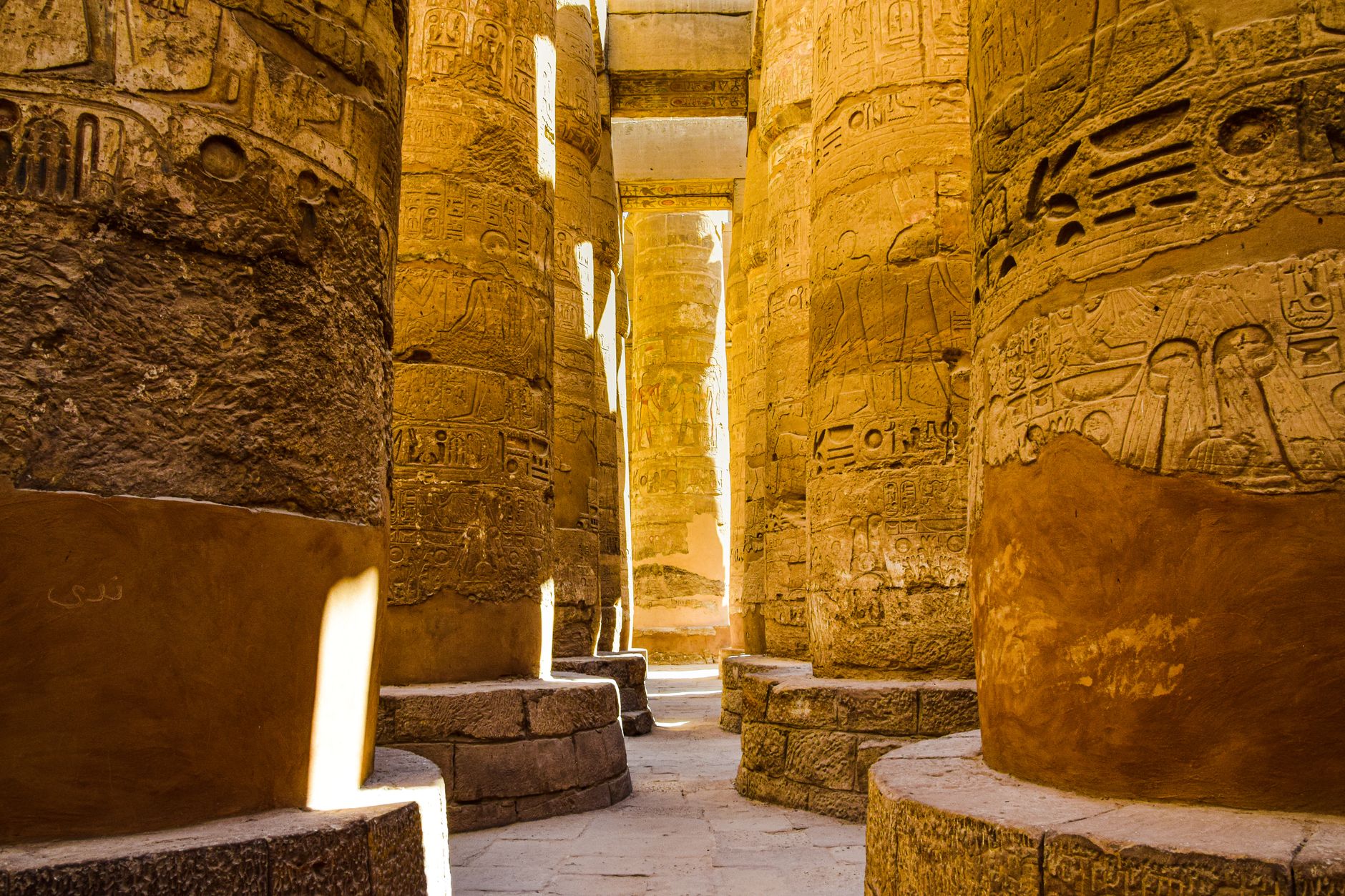
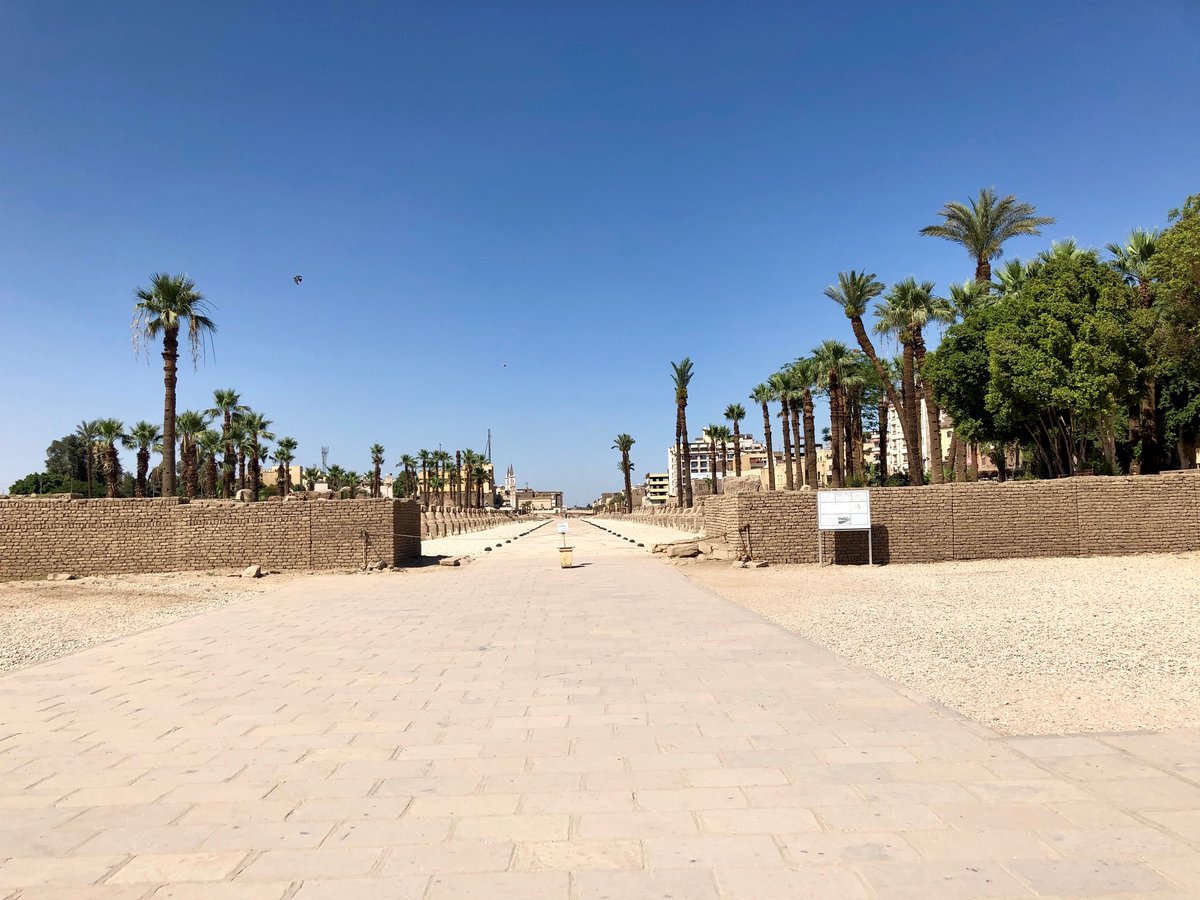
Walk east along the restored Avenue of Sphinxes and the city seems to assemble itself around ritual movement. At Karnak, columns and reliefs point toward Luxor Temple; across the river, the Valley of the Kings and Hatshepsut Temple turn the dry hills into a theatre of royal ambition. Then cross the river.
At Abu al-Haggag Mosque, daily Muslim prayer continues above the buried court of Ramesses II, while the Sha'ban moulid fills nearby streets with boats, drums, and Sufi zikr. The stone changes. Old routes remain.
3 Days in Luxor, Egypt with a Nat Geo Egyptologist | Temples, Tombs & Tutankhamun
Fit Nomads01 What to see.
Luxor Temple
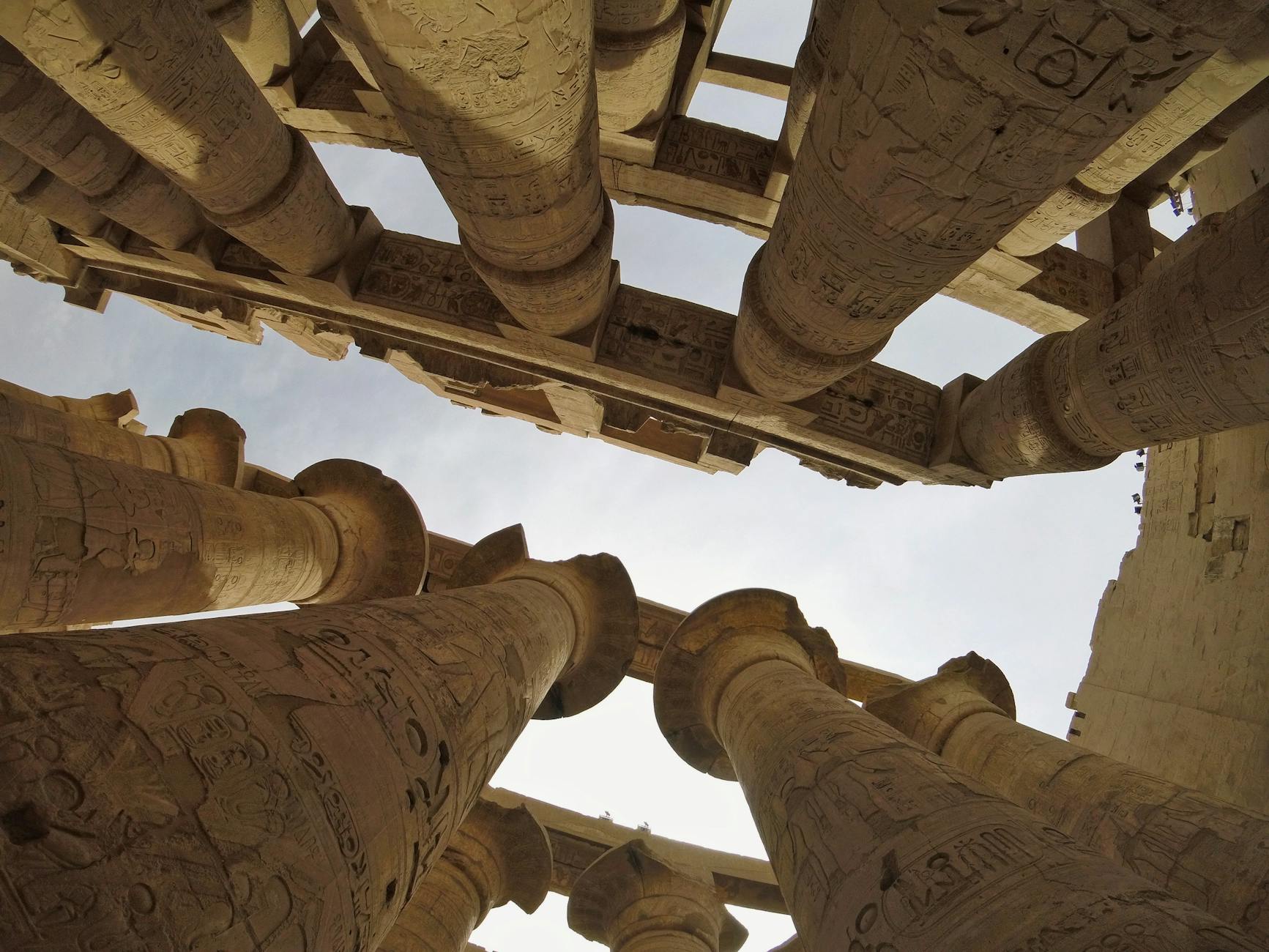
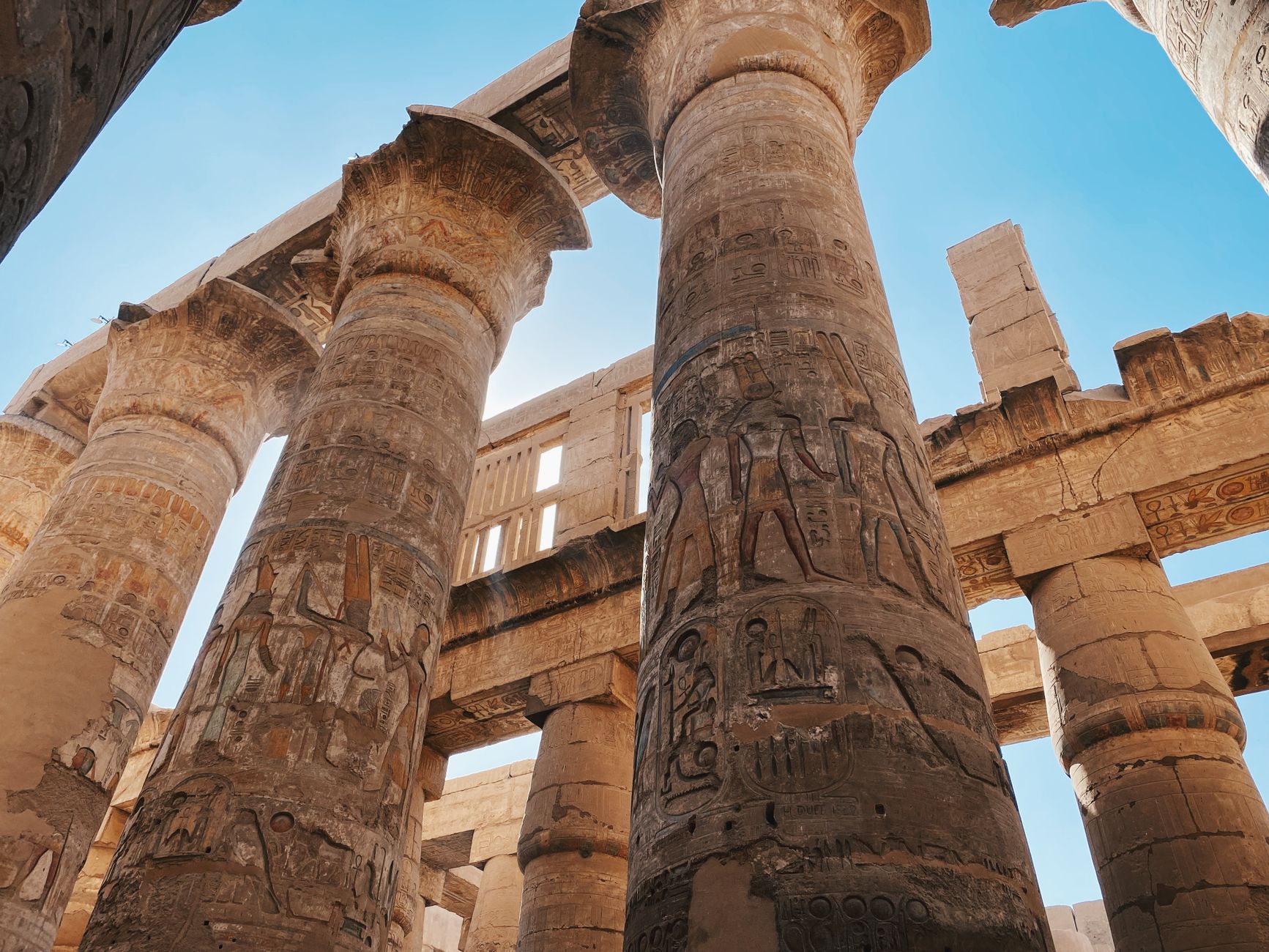
Karnak Temple Complex
A West Bank morning among kings, officials and gods
02 In pictures.




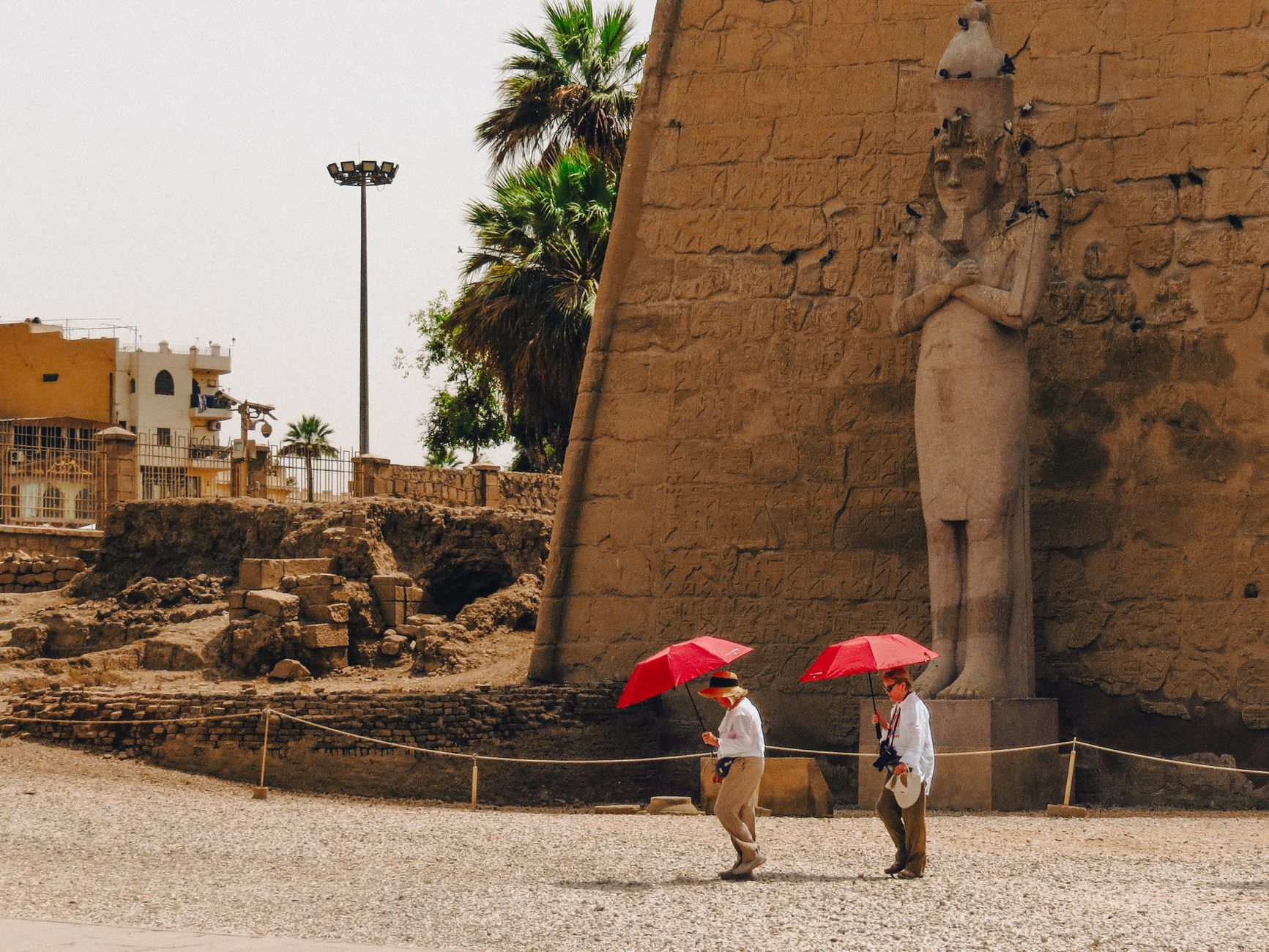
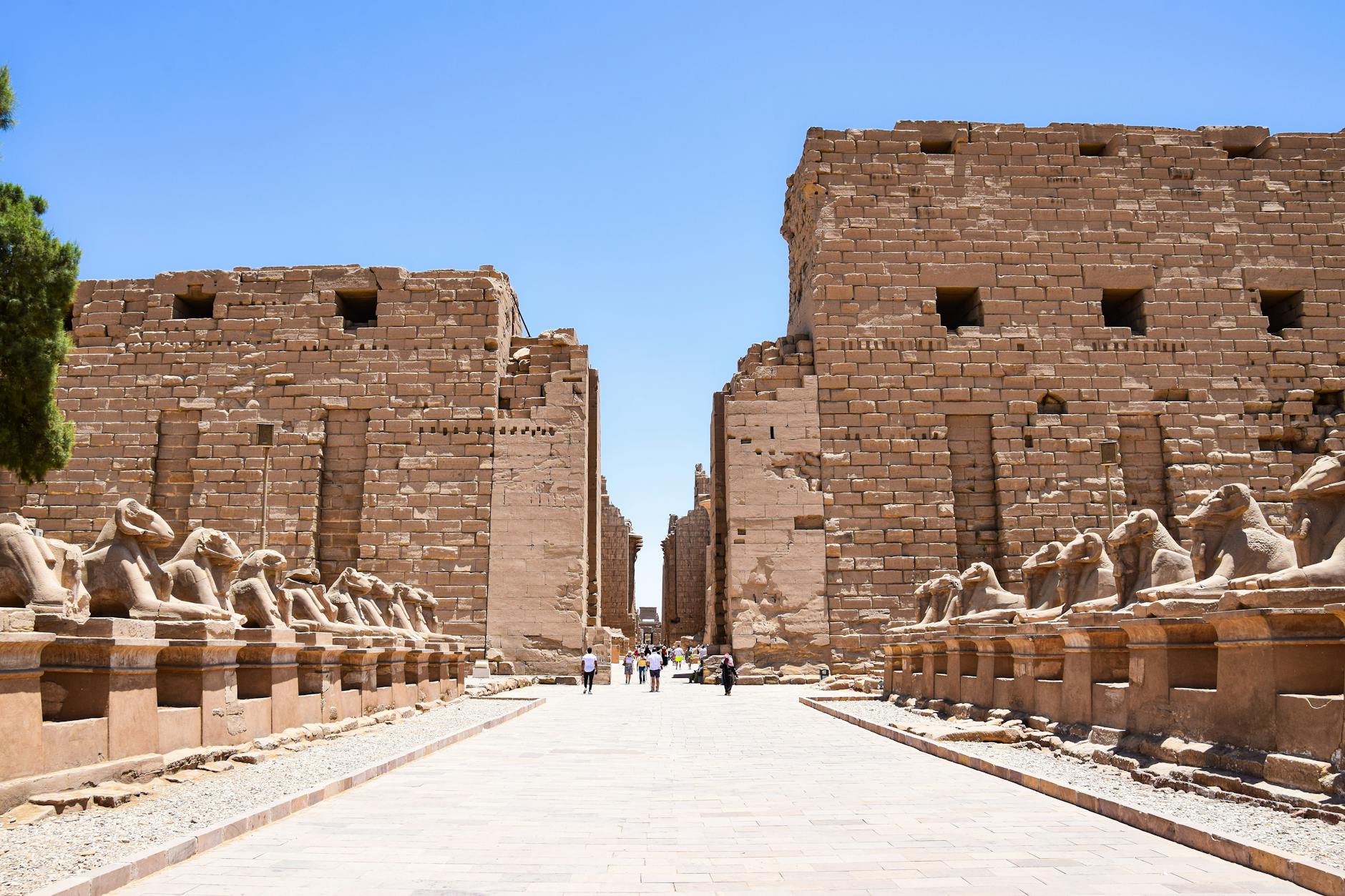


Watch & Explore Luxor.
Plan and listen to Luxor with Audiala.
Audio guide in your pocket, itinerary in your browser. Built for the way you actually visit.
03 Visitor logistics.
The practical scaffolding for a good visit — kept short.
Getting There
Luxor International Airport (LXR) sits about 7 km east of downtown; a taxi via Airport Road takes 15–20 minutes and typically costs EGP 200–250. Luxor Railway Station is central, with the Corniche roughly 800 m away—a 10–15-minute walk. For the West Bank, take the public passenger ferry from the Corniche near Luxor Museum: the crossing takes 5–10 minutes, with boats reported every 15–20 minutes around the clock; the road bridge lies about 10 km south and takes 30–45 minutes by taxi.
Hours by Site
As of 2026, Luxor Temple opens daily 06:00–21:00, usually with last entry at 20:00; Karnak runs 06:00–17:30 in winter and 06:00–18:30 in summer, with last ticket entry listed at 16:00. Luxor Museum uses a split schedule, 09:00–14:00 and 17:00–21:00, while West Bank sites generally open 06:00–17:00. Ramadan schedules may shorten late-afternoon hours by 1–2 hours, and security or conservation closures can override published times, so check the official Ministry of Tourism and Antiquities portal before setting out.
Choose Your Pace
A compressed highlights visit needs 1.5–2 days: allow about 2.5 hours for Karnak, 1.5 hours for Luxor Museum and 1.5 hours for Luxor Temple, then a full West Bank morning for three royal tombs and Hatshepsut. Give Luxor 3–4 days for the quieter Tombs of the Nobles, Valley of the Queens, Deir el-Medina, Medinet Habu and a Nile sunset; one day makes the monuments blur into painted stone and hot air.
Mobility Notes
Luxor Museum has smooth tiled floors, ramps and elevators, while Luxor Temple’s main courts and colonnades are mostly flat and paved; Karnak’s main route is manageable, though sandy side courts are harder. At the Valley of the Kings, an electric tram reaches the valley plaza, and KV2 and KV6 offer the gentlest access, but deep stairways in KV9, KV11, Tutankhamun’s KV62 and Seti I’s KV17 exclude many wheelchair users. Hatshepsut Temple has entrance golf carts and long ramps, with thresholds on the upper terrace.
Tickets and Passes
As of 2026, foreign adult admission is listed at EGP 500 for Luxor Temple, EGP 600 for Karnak, EGP 400 for Luxor Museum and about EGP 600 for the standard Valley of the Kings ticket covering three tombs; valid foreign student cards generally halve those prices. Tutankhamun, Seti I and Nefertari require supplementary tickets. A Standard Luxor Pass is listed at US$130/€120, or US$70/€60 for students, while the Premium Pass is US$250/€230; an active Cairo Pass can reduce a Luxor Pass by 50%, and official sites generally require card payment for admission.
04 Tips for visitors.
Small things that change the day.
Dress for Context
Wear lightweight clothing covering shoulders and knees in town, village streets and the necropolis. At Abu al-Haggag Mosque inside Luxor Temple, women need covered arms, long trousers or a maxi skirt and a headscarf; everyone removes shoes, and prayer services deserve quiet rather than sightseeing.
Protect the Paint
Handheld phone and personal-camera photography is generally allowed, but flash is strictly forbidden inside the tombs. Tripods and professional lighting need a Ministry permit, while unauthorized drones are prohibited across Egypt and may be confiscated at customs.
Set the Fare
Agree on the total in Egyptian pounds before taking a taxi, calèche or felucca; carriage drivers sometimes turn a quoted “20 pounds” into euros or a horse-food demand at the end. Decline unsolicited tomb guides, prop-photo sellers and alabaster-factory detours with a firm “La, shukran,” and call tourist police on 126 if pressure becomes threatening.
Eat Like a Local
For budget koshari, try Koshari El Zaeem or a local stall near the train station; Al-Sahaby Lane above the Nefertiti Hotel gives rooftop views at budget-to-mid-range prices. Sofra is the better mid-range choice for stuffed pigeon and slow-cooked tagines, while 1886 at the Winter Palace is the splurge option and expects jackets or collared shirts for men.
Start Before Heat
Reach the West Bank at the 06:00 opening, when the limestone still holds the cool of night and tomb interiors are less humid; save illuminated Luxor Temple for after sunset. October through April usually offers the kindest sightseeing weather, while summer afternoons make the exposed courtyards punishing.
Build Two Days
On the East Bank, pair Karnak with Luxor Museum and Luxor Temple, then use the 2.7 km Avenue of Sphinxes as the historical thread between them. Reserve the next morning for the Valley of the Kings, Hatshepsut Temple and the Colossi of Memnon; the public ferry costs only EGP 5–10, and EGP 5–20 notes help with toilets, luggage and small services.
05 The City That Refused to Stop Being Sacred
Luxor's deepest continuity is sacred use. Archaeology and records show Thebes serving as Egypt's political and religious center under Mentuhotep II around 2055 BCE, then as the ceremonial heart of New Kingdom rule. The names change.
That continuity has never been tidy. Records show the same precinct becoming a Roman fortress, a Christian church complex, and a mosque built above buried pharaonic courts; today's worship does not erase those earlier layers. It adds one more.
The Boats That Refused to Disappear
At first glance, Luxor's sacred calendar seems to have ended with the pharaohs: the Opet Festival survives in carved scenes, while the modern Moulid of Abu al-Haggag looks like a separate Islamic celebration. The old boats seem gone.
But the clean break fails. According to archaeological and living-heritage research, both ceremonies use boats, music, public procession, and the route between Karnak and Luxor Temple; scholars still cannot prove an uninterrupted line through Roman military use and Christian conversion. The pattern is real.
The better explanation is adaptation. Inscribed titles show Amenhotep, son of Hapu, rising from non-royal origins to oversee works for Amenhotep III; the evidence suggests that, for him, rank, reputation, and access to the king were at stake in making royal theology visible in stone. The turning point came when Akhenaten moved the court to Akhetaten around 1353 BCE and suppressed Amun's priesthood; Tutankhamun's restoration around 1332–1323 BCE brought Thebes back into the ritual center.
Look again at the northeastern court. According to local tradition, Yusuf Abu al-Haggag made Luxor his religious home; after his death, followers established a mosque at medieval ground level above Ramesses II's buried court. It did not destroy it. Once you know this, the moulid's boats feel less like a historical reenactment and more like a present-day echo of a city habit: gathering, carrying, praying, and moving sacred meaning through public streets. The layers speak.
What Changed
What Endured
Listen to the full story in the app
The whole Luxor,
told well.
Audio guides for 1,100+ cities across 96 countries. History, stories, and local insight — offline ready.

06 Frequently asked.
The questions travellers send us most about Luxor.
Is Luxor worth visiting?
Yes, Luxor is worth visiting for its extraordinary concentration of temples, tombs, museums, and living religious history along both banks of the Nile. Ancient Thebes, inscribed by UNESCO in 1979, brings together the Karnak Temple Complex, Luxor Temple, and the West Bank necropolis, where sandstone walls still hold sharp traces of colour. The city is demanding in the heat, but few places let you hear a modern call to prayer echo above a 3,000-year-old temple court.
How long do you need at Luxor?
Plan on 3 full days in Luxor for a satisfying visit, while 1.5 to 2 days covers the headline monuments at a faster pace. Use one day for Karnak, Luxor Museum, and Luxor Temple; give another to the Valley of the Kings, Hatshepsut Temple, and Medinet Habu. A fourth day allows time for the Valley of the Queens, Deir el-Medina, the Tombs of the Nobles, and an unhurried Nile sail rather than a heroic contest with the midday sun.
How do I get to Luxor from Cairo?
The easiest ways to get to Luxor from Cairo are a domestic flight to Luxor International Airport or a train to Luxor Railway Station. The airport lies about 7 km east of downtown, roughly 15 to 20 minutes by taxi, while the railway station sits in the East Bank city centre near the Corniche. Once in Luxor, use the public ferry to cross to the West Bank and arrange a driver for the scattered tombs and temples.
What is the best time to visit Luxor?
The best time to visit Luxor is from November to February, when daytime temperatures generally sit around 22–26°C and outdoor sightseeing is far less punishing. March, April, and October offer a useful compromise, with warmer days around 30–35°C and fewer peak-season crowds. From May to September, temperatures can exceed 40°C, so visit major sites at opening time around 06:00 or after sunset where evening access is available.
Can you visit Luxor for free?
You can explore parts of Luxor for free, but the major temples, tombs, and museums require admission tickets. Walking the Corniche, browsing the city streets, and viewing parts of the Avenue of Sphinxes from public areas cost nothing, while the public Nile ferry costs only about 5–10 EGP each way. Budget separately for special tombs such as Tutankhamun’s, Seti I’s, and Nefertari’s, which carry supplementary charges.
What should I not miss at Luxor?
Do not miss Karnak, Luxor Temple after dark, three carefully chosen tombs in the Valley of the Kings, Hatshepsut Temple, and Medinet Habu. At Luxor Temple, look for the 16-metre columns of the Amenhotep III Colonnade, the Roman frescoes layered over Egyptian reliefs, and the mosque doorway suspended about 8 metres above the excavated floor. On the West Bank, the Colossi of Memnon take minutes but make a fine first stop, while the Luxor Museum gives the city's enormous ruins a human scale.
Verified, and shown.
Researched and written by the Audiala editorial team from historical records, architectural archives, and local expertise.
Used for Luxor’s UNESCO status, the historical importance of Ancient Thebes, and the East Bank and West Bank monument ensemble.
Used for Luxor Temple’s construction history, major rulers, and current admission information.
Used for the history of Thebes, including its role as a capital and the rise of the New Kingdom.
Used for West Bank opening times, transport options, ferry and driver costs, and suggested sightseeing durations.
Used for airport and railway-station locations, taxi times, and practical arrival information.
Used for the compact two-day East Bank and West Bank sightseeing framework.
Used for the recommendation of three days for a broader, less hurried Luxor visit.
Used for longer-stay ideas, including lesser-visited West Bank sites and a felucca outing.
Used for winter temperatures, seasonal crowd patterns, and the most comfortable months.
Used for seasonal comparisons and shoulder-season travel guidance.
Used for summer heat conditions and advice to schedule outdoor sightseeing early or late.
Used for Luxor Temple evening opening information and visit timing.
Used for Karnak’s opening hours and official site information.
Used for Luxor Museum opening hours and admission information.
Used for information about Luxor Pass options and supplementary access to premium tombs.
Used for architectural details at Luxor Temple, including the colonnade, sanctuary, mosque doorway, and layered history.
Used for details on Ramesses II’s additions, the temple’s obelisk, colossi, and architectural sequence.
Used for the Roman, Christian, and Islamic layers within Luxor Temple and the active mosque’s position above the ancient complex.
Researched from Wikidata, Wikipedia & official sources · fact-checked · How we make our guides →