Plan and listen to Abu Haggag Mosque with Audiala.
Audio guide in your pocket, itinerary in your browser. Built for the way you actually visit.
Introduction
The Abu Haggag Mosque is a one-of-a-kind landmark, seamlessly blending Egypt’s Pharaonic, Christian, and Islamic histories within the monumental Luxor Temple complex. As an active place of worship and a testament to over 3,500 years of evolving religious practice, the mosque offers visitors a rare opportunity to witness the architectural and spiritual continuity of Egyptian civilization. Dedicated to the revered Sufi saint Sheikh Yusuf Abu al-Haggag, the site remains a focal point for local devotion and pilgrimage while inviting travelers to experience its living heritage.
This comprehensive travel guide covers everything you need to know for a meaningful visit, including historical context, architectural highlights, practical details on visiting hours and tickets, travel tips, nearby attractions, and essential FAQs. Whether you are a history buff, spiritual seeker, or curious explorer, Abu Haggag Mosque stands as an essential stop on any Luxor itinerary.
Historical Background
Ancient Foundations: Luxor Temple’s Sacred Legacy
The origins of Abu Haggag Mosque are deeply rooted in the ancient Luxor Temple, built during Pharaoh Amenhotep III’s reign in the 14th century BCE. The temple, dedicated to the Theban Triad—Amun, Mut, and Khonsu—was central to the Opet Festival, a grand procession celebrating renewal and divine kingship (Scene Traveller). Subsequent expansions by Ramesses II added monumental statues and columns, many of which remain in situ today.
Roman and Christian Transformations
After its Pharaonic era, Luxor Temple underwent transformations under Roman rule, serving as a fortified imperial sanctuary. In late antiquity, part of the temple was converted into a Christian basilica, with remnants of Coptic frescoes still visible, reflecting the site's ongoing religious significance through the ages (Egyptian Streets).
The Advent of Islam and the Birth of Abu Haggag Mosque
With the Islamic conquest, Luxor’s sacred landscape was reshaped yet again. In the 13th century CE, the Abu Haggag Mosque was constructed atop the ancient temple ruins, honoring Sheikh Yusuf Abu al-Haggag—a Sufi saint believed to be a descendant of the Prophet Muhammad. The mosque’s establishment exemplifies the adaptation of earlier sacred sites for new religious purposes, a practice common throughout Egyptian history (ISAC, University of Chicago).
Architectural Integration and Unique Features
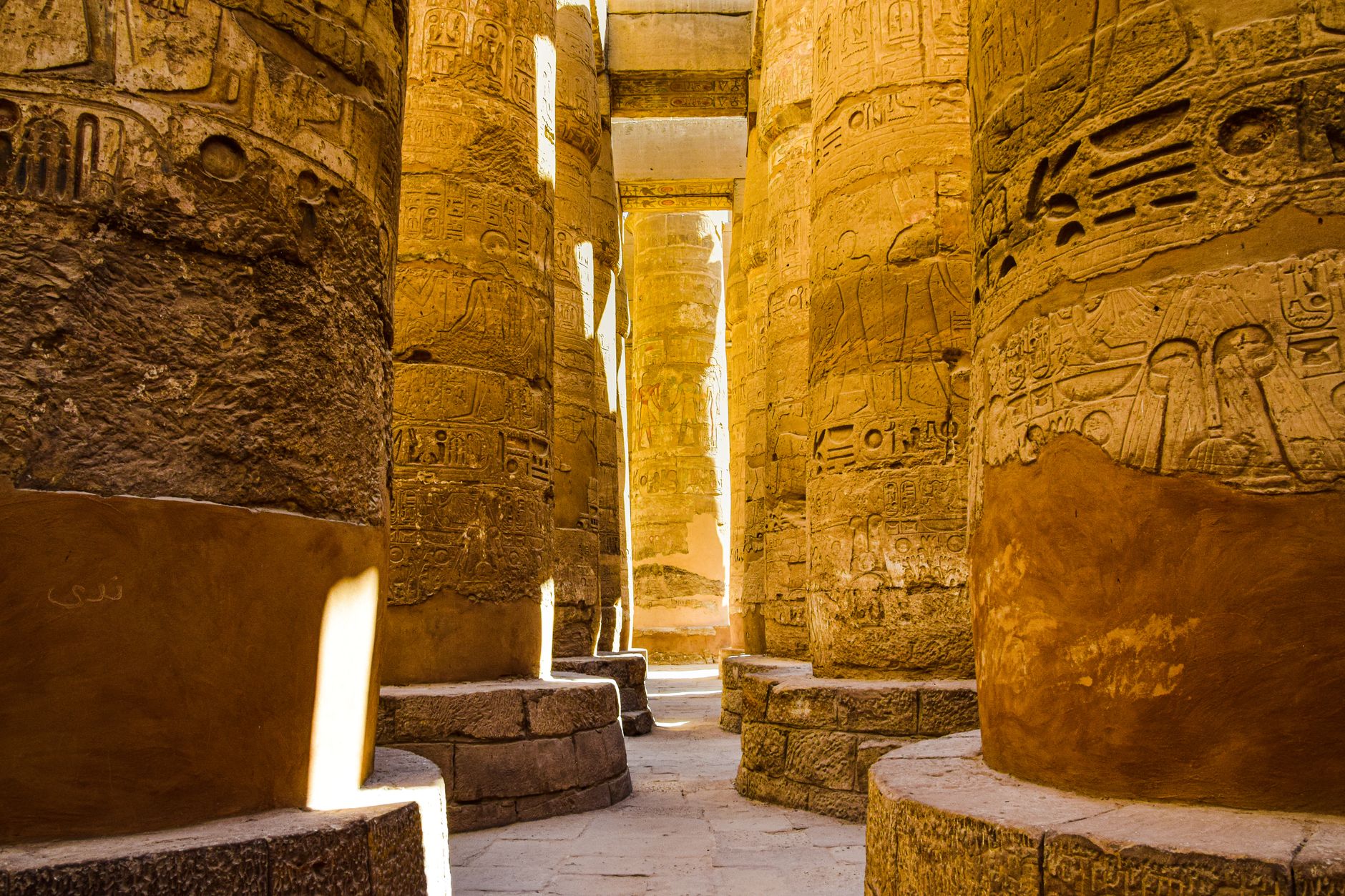
Abu Haggag Mosque’s architecture is a remarkable fusion of styles and eras. Its mudbrick structure, pointed arches, and minaret are unmistakably Islamic, yet these elements are literally built atop—and incorporate—Pharaonic columns and walls inscribed with hieroglyphs. The mosque’s elevated position, caused by centuries of Nile silt accumulation, means visitors enter several meters above the original temple floor, passing from the ancient into the present (Cairo Top Tours).
Inside, 18 columns with preserved hieroglyphs support the prayer hall, while the minaret—rising over 40 meters—bears traces of Mamluk, Abbasid, and Fatimid influence. The mosque’s mihrab and minbar are simple yet meaningful, reflecting the Sufi tradition’s spiritual focus. Restoration efforts have carefully preserved both Islamic and ancient Egyptian features, making the mosque a living museum and a working sanctuary (ETB Tours Egypt; Her Asian Adventures).
Visiting Abu Haggag Mosque: Hours, Tickets, and Guidelines
Visiting Hours
- General Opening Hours: Daily, 8:00 AM to 5:00 PM
- Closed: During major Islamic holidays and sometimes during the Mawlid festival.
- Note: Access may be restricted during prayer times, especially on Fridays and during religious celebrations. Always check locally or with your guide for the latest information.
Tickets and Entrance Fees
- Ticket Requirement: Entry to Abu Haggag Mosque is included with the Luxor Temple ticket.
- Price: Approximately 140 EGP for foreign adults; discounts may be available for students, children, and groups.
- Where to Buy: Tickets can be purchased at the Luxor Temple entrance or via the official Luxor Tourism Board website.
Visitor Guidelines
- Dress Code: Modest attire is required. Shoulders, arms, and knees should be covered. Women should bring a scarf to cover their hair inside the mosque.
- Shoes: Remove shoes before entering prayer areas; racks are provided.
- Photography: Allowed in most areas unless otherwise indicated. Always ask before photographing worshippers or religious activities.
- Etiquette: Respect prayer times and avoid disrupting services. Remain quiet and observe local customs.
- Accessibility: The mosque is accessed via stairs and ancient stone surfaces, which may be challenging for those with limited mobility.
Travel Tips for Visiting Abu Haggag Mosque and Luxor Historical Sites
- Best Times to Visit: Early mornings and late afternoons offer cooler temperatures, softer light for photography, and fewer crowds.
- Guided Tours: Highly recommended for historical context and access to less obvious features. Many Luxor Temple tours include the mosque; audio guides are also available.
- Festivals: The Mawlid of Abu Haggag is a vibrant annual event with processions and celebrations; expect high attendance and restricted access for sightseers during this time.
- Essentials to Bring: Comfortable footwear, sun protection, water, and a scarf or shawl.
- Language: While Arabic is spoken locally, English is widely understood among guides and staff.
Nearby Attractions in Luxor
- Karnak Temple: The largest ancient religious complex in Egypt, a short distance north.
- Luxor Museum: Houses artifacts from Luxor Temple and nearby sites.
- Valley of the Kings: The famous royal necropolis is a must-see, located on the West Bank.
- Nile Corniche: Offers scenic walks and river views, ideal for relaxing after sightseeing.
Combine your visit to Abu Haggag Mosque with these landmarks for a comprehensive Luxor experience.
Special Events: The Mawlid Festival
The annual Mawlid of Sheikh Abu al-Haggag is one of Luxor’s most colorful religious events, held fifteen days before Ramadan. Festivities include boat processions, music, and communal meals, echoing the ancient Opet Festival’s spirit. During the Mawlid, the mosque becomes the heart of citywide celebrations (Egyptian Streets).
Frequently Asked Questions (FAQ)
Q: What are the mosque’s visiting hours?
A: Generally, 8:00 AM to 5:00 PM daily, with variations during religious events.
Q: Is there a separate ticket for the mosque?
A: No. Entry is included with the Luxor Temple ticket.
Q: Can non-Muslims visit the mosque?
A: Yes, outside of prayer times. All visitors should dress modestly and behave respectfully.
Q: Are guided tours available?
A: Yes. Many Luxor Temple tours include the mosque; audio guides are also offered.
Q: Is photography allowed?
A: In most areas, yes. Always ask permission before photographing people or religious ceremonies.
Q: Is the mosque accessible for people with disabilities?
A: Access involves stairs and uneven stone surfaces; there are no ramps or elevators.
Discover More
The Abu Haggag Mosque is a living testament to Egypt’s enduring spiritual and cultural legacy—a place where ancient and modern worlds converge in harmony. Its unique position atop Luxor Temple invites visitors to reflect on millennia of faith, adaptation, and resilience. Whether you’re drawn by architectural wonder, spiritual atmosphere, or cultural celebration, a visit to Abu Haggag Mosque will deepen your appreciation of Egypt’s rich heritage.
Plan your visit today!
For updated information, guided tours, and expert travel tips, download the Audiala app and follow us on social media. Explore related guides on Karnak Temple, the Valley of the Kings, and more to craft your perfect Luxor adventure.
Listen to the full story in the app
The whole Abu Haggag Mosque,
told well.
Audio guides for 1,100+ cities across 96 countries. History, stories, and local insight — offline ready.

Verified, and shown.
Researched and written by the Audiala editorial team from historical records, architectural archives, and local expertise.
Last reviewed