An introduction.
Researched by the Audiala editorial team from historical records, architectural archives, and local expertise.
TThe man who built the largest stone monument on Earth left behind a single confirmed portrait of himself — a 7.5-centimeter ivory thumbnail. The Giza plateau, on the Nile's west bank thirteen kilometers from central Cairo, is the only place in Egypt where you can still walk inside a Wonder of the Ancient World. Come for the engineering — 2.3 million blocks per pyramid, faces aligned to true north within 0.05 degrees. Stay for the strangeness.
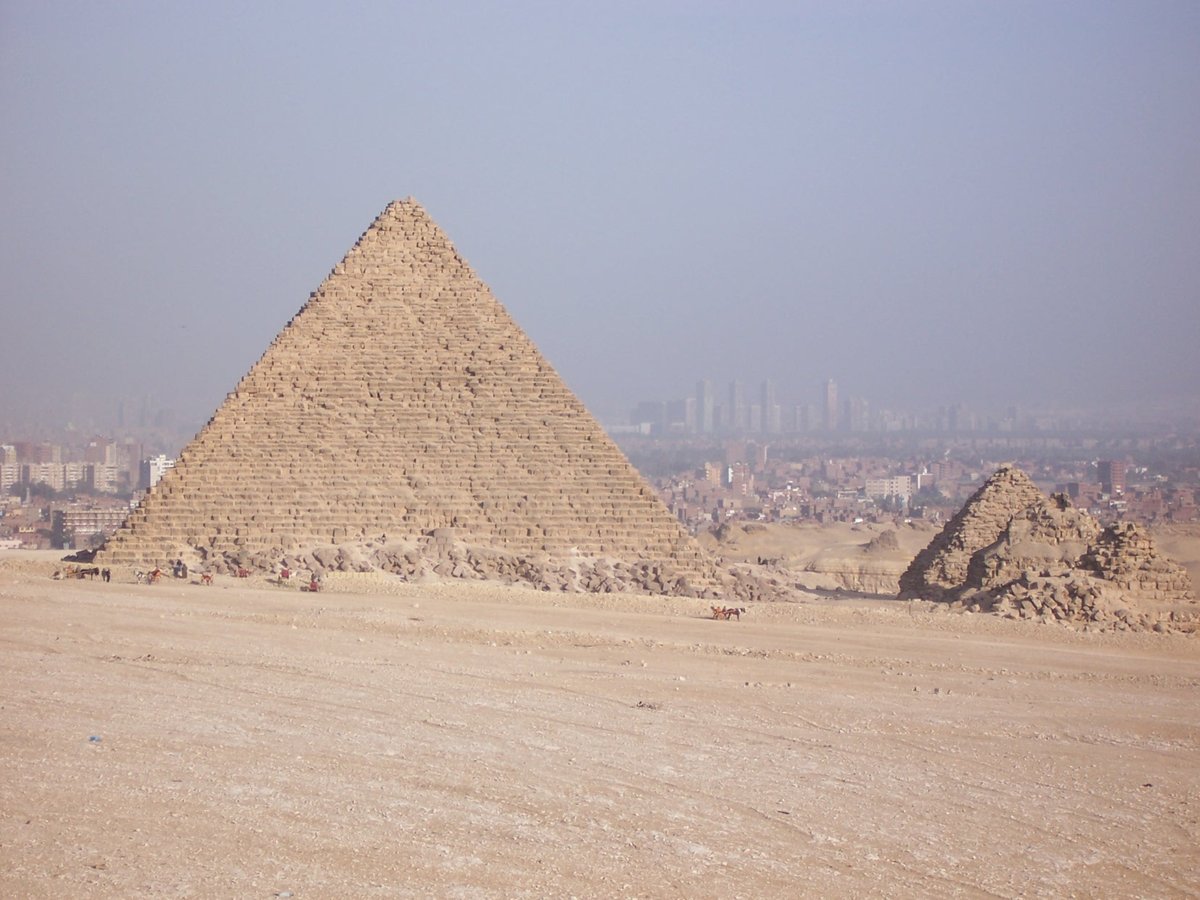
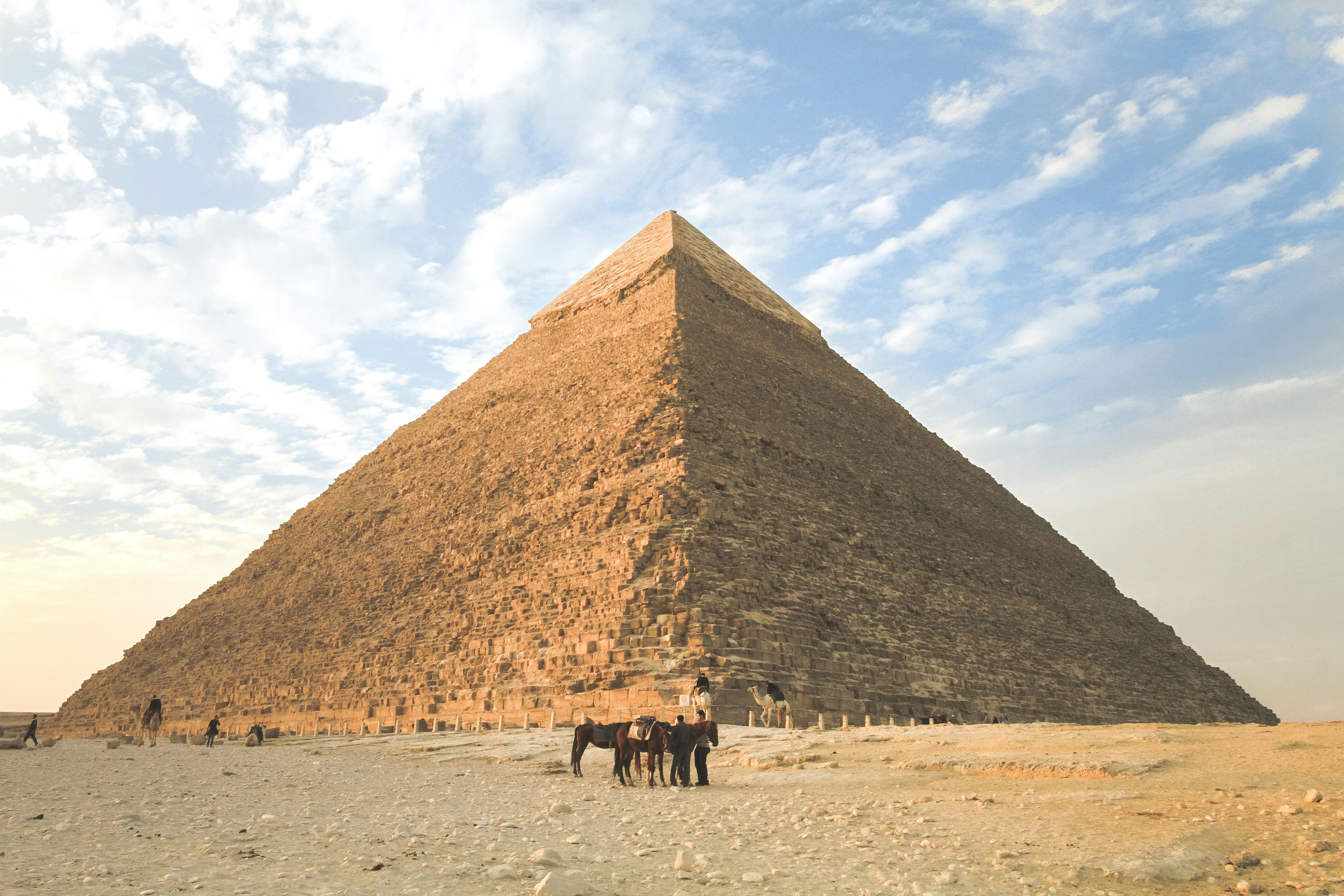
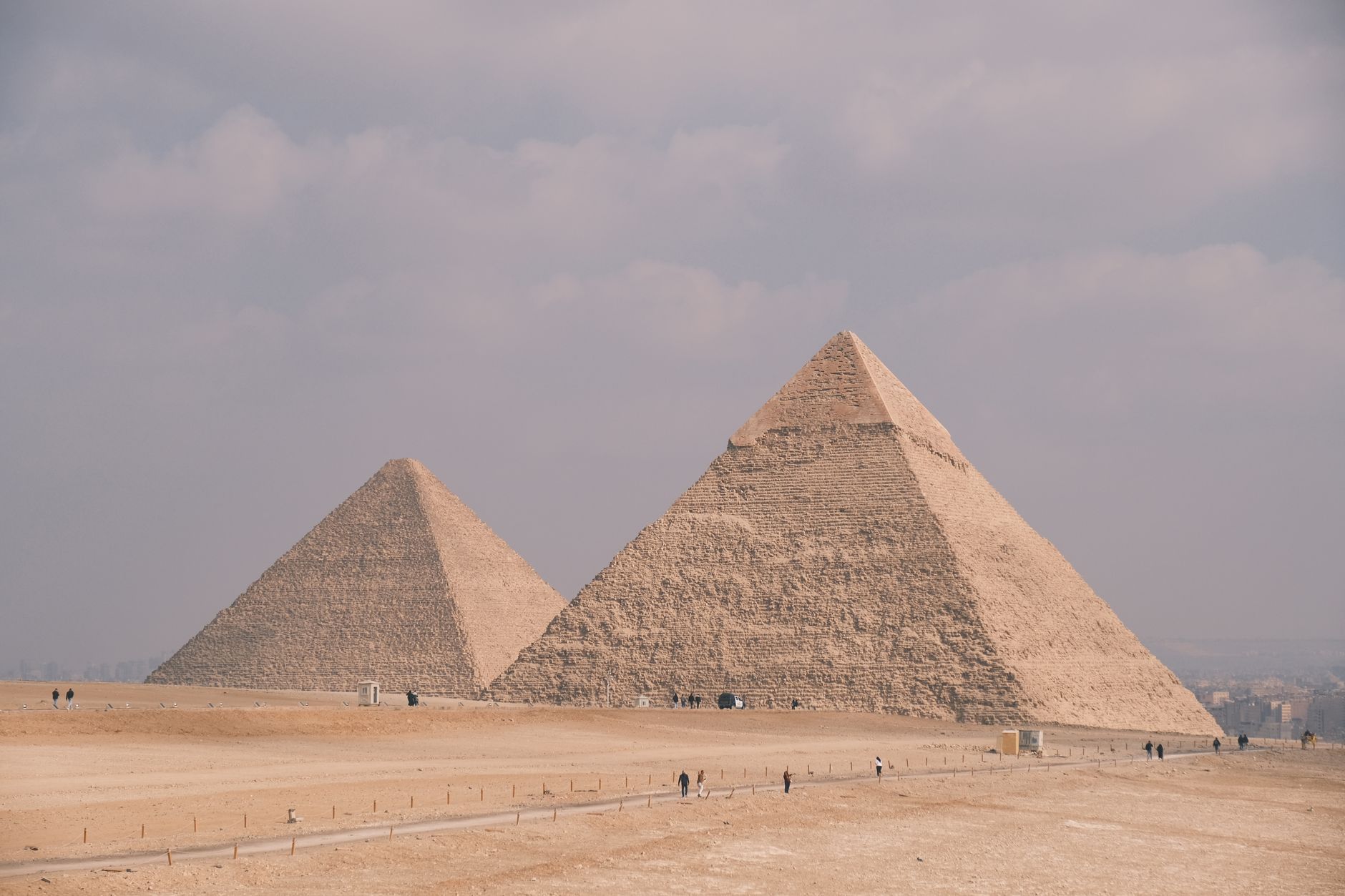
Three pyramids, one family. Khufu raised the Great Pyramid around 2580–2560 BCE; his son Khafre and grandson Menkaure followed within a single century. Together they form the last intact survivor of the original Seven Wonders — the Hanging Gardens are rubble, the Lighthouse of Alexandria is rumor, the Colossus of Rhodes is gone. Only Giza is still standing.
Records show roughly 20,000 paid workers built the Great Pyramid, not the 100,000 slaves of Hollywood and Herodotus. Their bones, recovered from cemeteries excavated by Mark Lehner from 1990 onward, show healed surgical fractures and a diet rich in beef. They were craftsmen, fed and buried with honor near the king they served. The slave myth dies hard. But it dies.
Plan around the heat. Gates open around 7am; by ten the limestone radiates like a hot sheet pan and the tour buses arrive in convoy. Go early, walk the eastern cemetery field while the shadows are still long, and save the Sphinx for last — the Dream Stela between its paws is easier to read when the light is low.
The mysteries of Egyptian Pyramids and the Great Sphinx | Graham Hancock and Lex Fridman
Lex Clips01 What to see.
The Great Pyramid of Khufu — and the climb inside it
Khafre's pyramid and the Sphinx complex
Tomb of Queen Meresankh III — the plateau's quietest secret
02 In pictures.

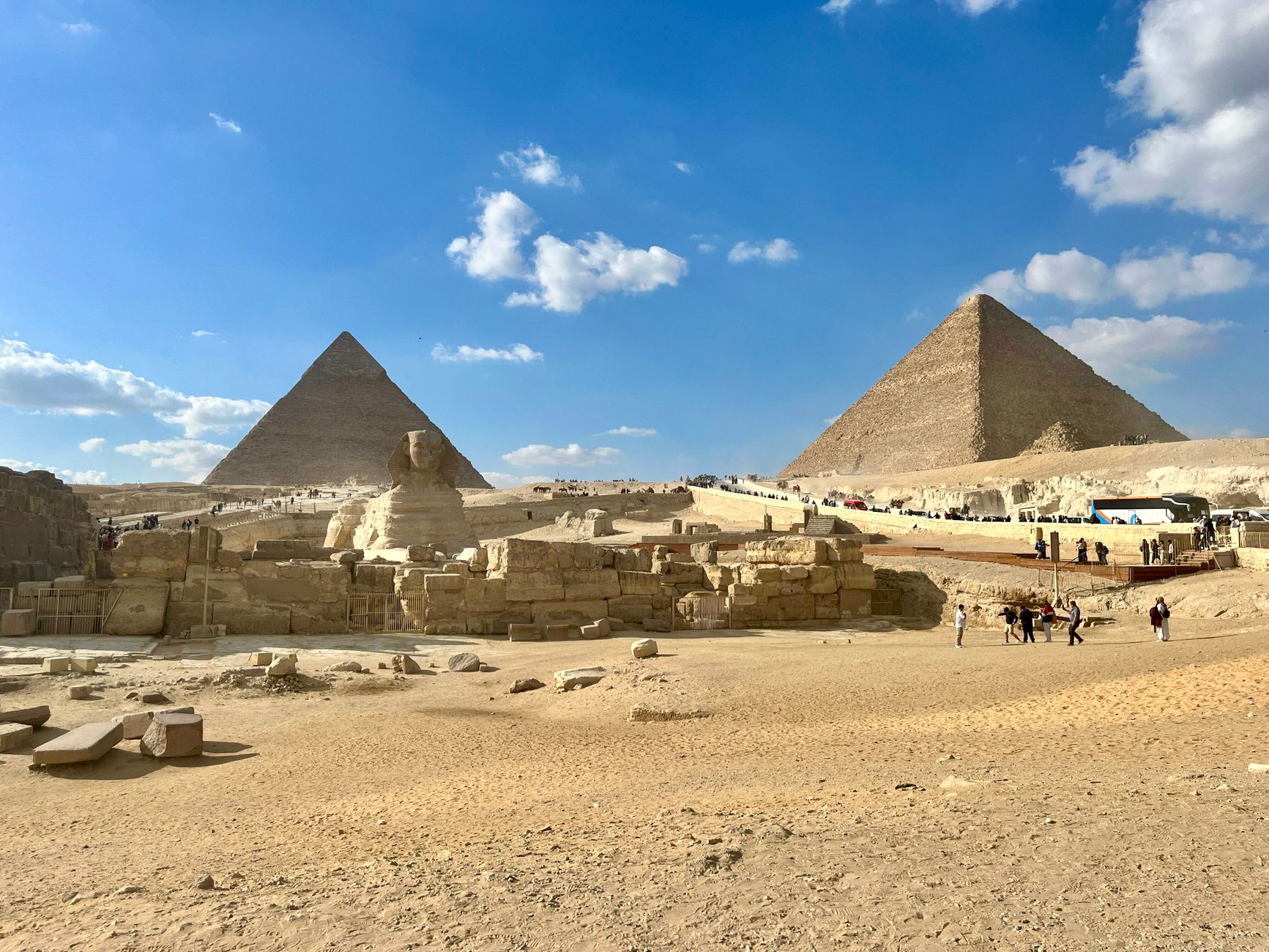


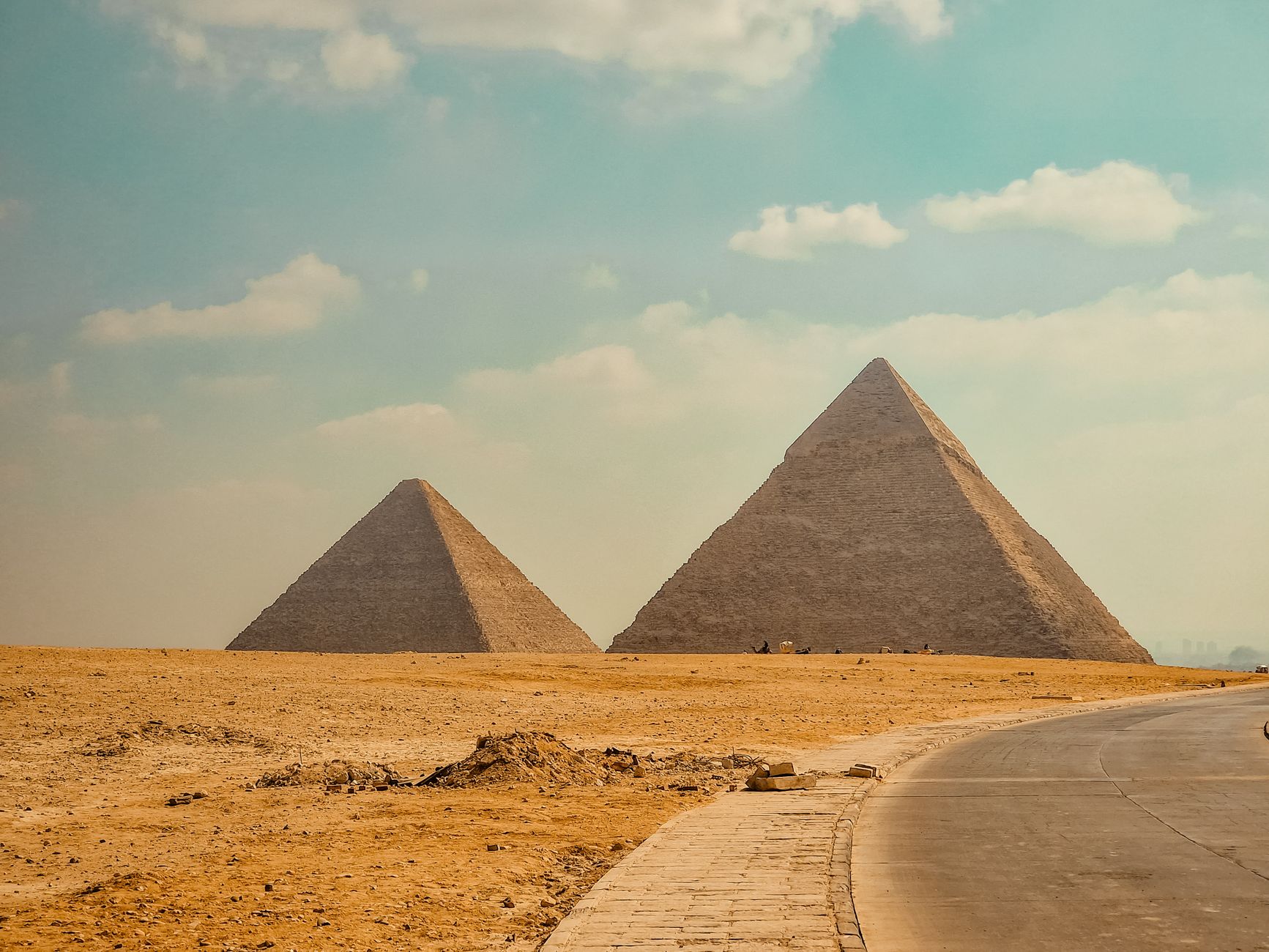
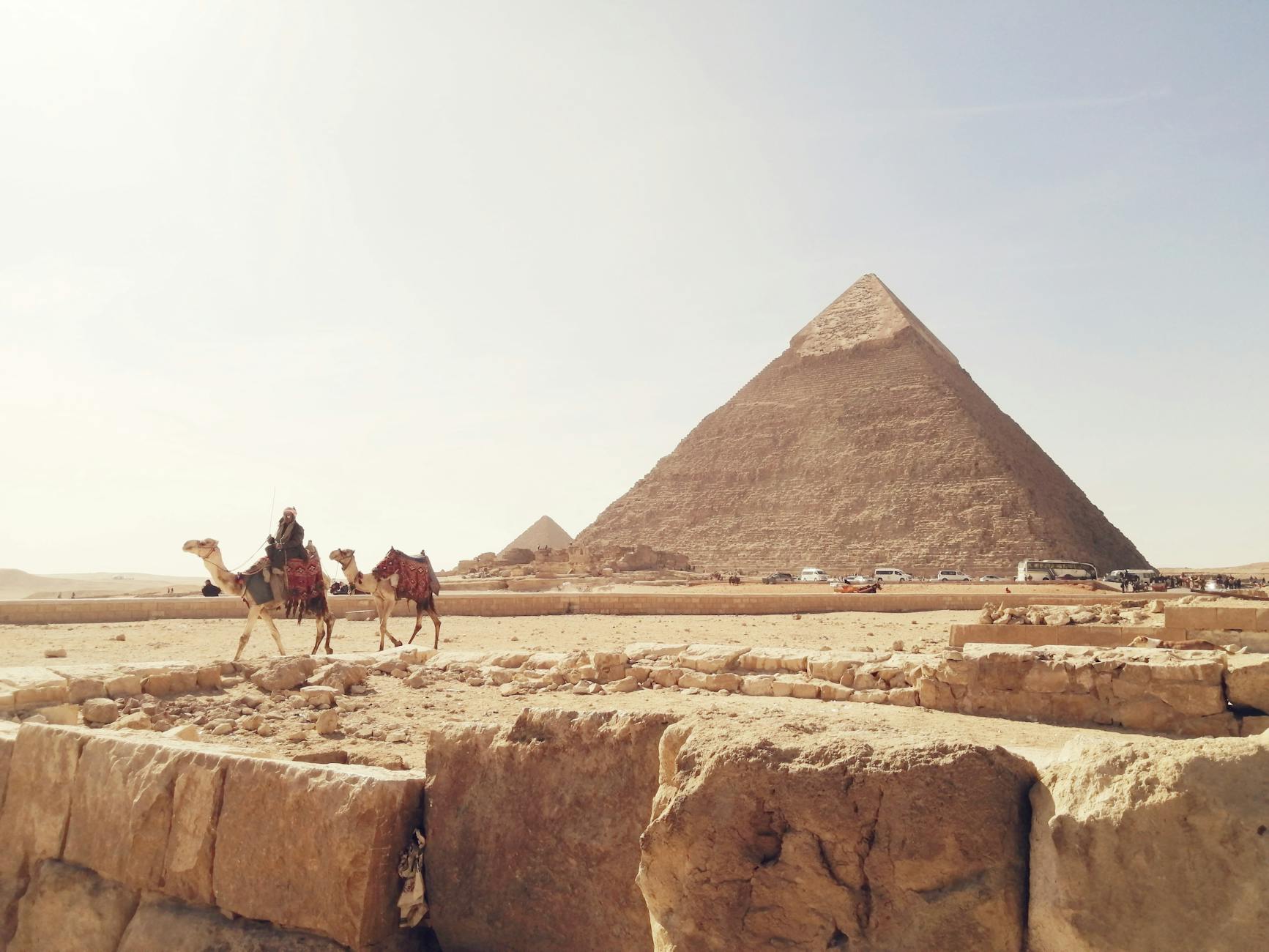
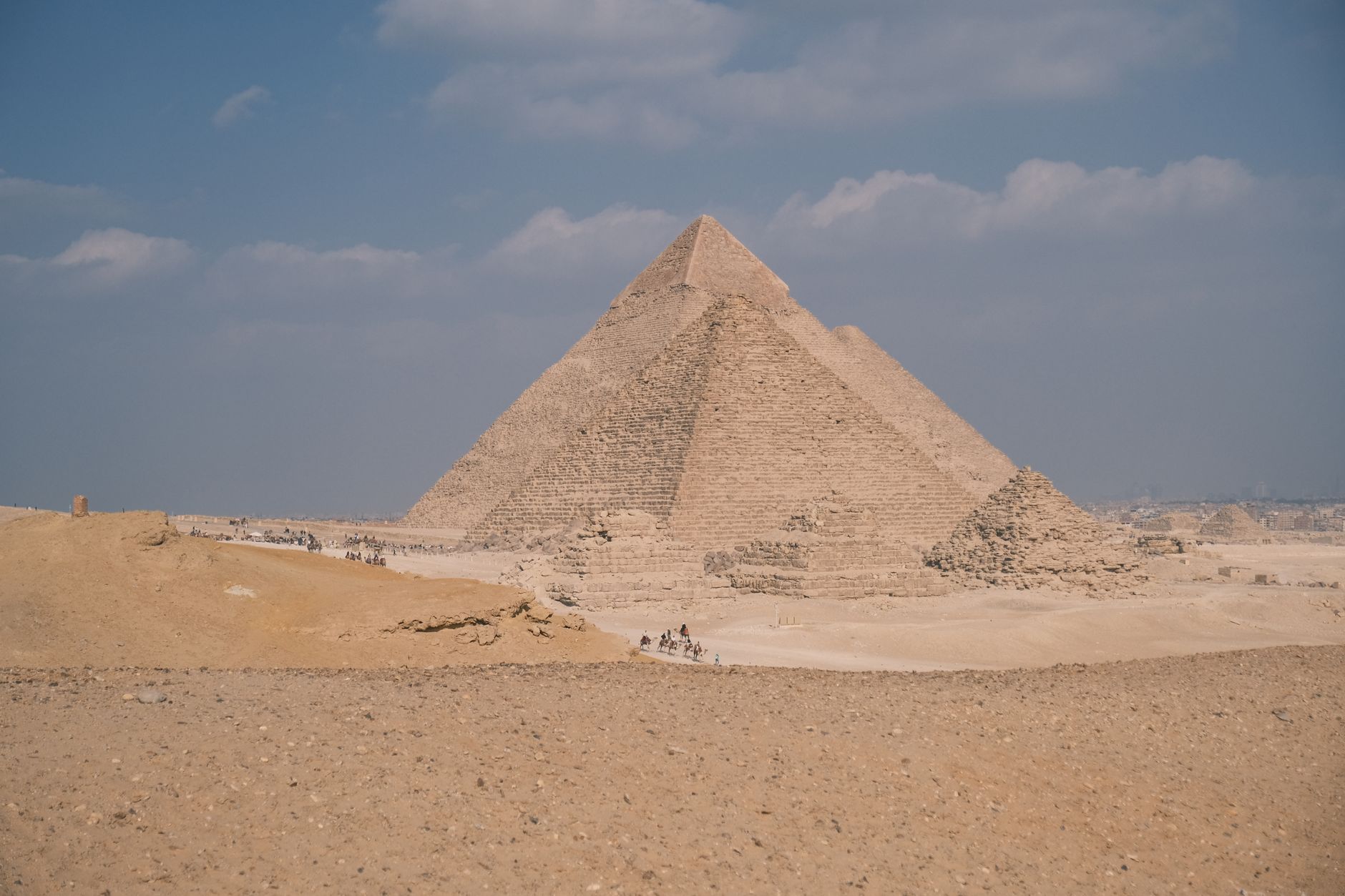

Watch & Explore Egyptian Pyramids.
Plan and listen to Egyptian pyramids with Audiala.
Audio guide in your pocket, itinerary in your browser. Built for the way you actually visit.
03 Visitor logistics.
The practical scaffolding for a good visit — kept short.
Getting There
From central Cairo, Uber or Careem run 30–45 minutes to the Mena House (E1) or Sphinx (E2) gates — fixed in-app pricing avoids the Al-Haram Street taxi shakedown. Cheapest option: Cairo Metro Line 2 to Giza Station, then a 15-minute taxi the final 8 km. From Cairo Airport, budget 45–60 minutes for the 29.5 km drive.
Opening Hours
As of 2026, the plateau opens daily 07:00–17:00, with last entry at 16:00 — the old guidebook claim of "sunrise opening" is wrong. Ramadan trims hours; verify on egymonuments.com close to your date. No weekly closure day.
Time Needed
Plan 3–4 hours for the standard loop: Khufu, Khafre, Menkaure, the Sphinx, and the panoramic viewpoint. Add 1–2 hours if you're going inside Khufu. Pairing it with the Grand Egyptian Museum across the road turns it into a full day, which is honestly what the site deserves.
Cost & Tickets
As of 2026, general entry is 700 EGP (~$14.50); inside the Great Pyramid adds 1,500 EGP. Critical change: the plateau is now cashless — credit/debit card only at the gate, or book mobile tickets at egymonuments.com to skip the queue. Bring small EGP bills anyway for tips and taxis.
Accessibility
Paved roads link the main viewpoints and the free shuttle bus is wheelchair-accessible, so the plateau loop and Sphinx area are doable. Pyramid interiors are not — passages are narrow, steep crawls with no ramps. Powered chairs handle the sandy stretches around Khafre and Menkaure better than manual.
04 Tips for visitors.
Small things that change the day.
Arrive at 7am
Touts wake up late, the light is gentler, and the temperature on the plateau is bearable — by 11am the stone radiates heat and there's no shade anywhere. The Sphinx Gate (E2) sees fewer hustlers than the main Mena House entrance.
Skip the camel ride
The cheap quoted price becomes a hostage situation when the handler refuses to make the camel kneel until you pay hundreds more. Egyptian animal-welfare advocates also ask tourists to refuse rides outright. If you want the iconic photo, walk to the panorama point west of the plateau yourself — it's free.
Ignore "helpful" strangers
Anyone who approaches you near the metro or gate claiming the entrance has moved, the ticket office is closed, or offering to "show you the way" is steering you to a commission shop or fake gate. Real ticket inspectors sit behind glass booths under Ministry of Antiquities signage. Walk straight, headphones in.
Drones will be confiscated
Egypt's Law 216 of 2017 bans drones without a Ministry of Defense permit — penalties run 5,000–50,000 EGP and 1–7 years' imprisonment, and tourist permits effectively don't exist. Customs will take it at Cairo airport. Phones, DSLRs, and mirrorless are fine across the plateau; tripods and external flashes need a permit.
Dress for sun, not modesty
Not a religious site, so no headscarf needed, but tank tops and short shorts attract aggressive touting on top of the staring. Long lightweight sleeves, hat, sunglasses, and closed shoes — the sand hides glass shards and is brutally hot. Pack 1.5L of water; the on-site cafés mark it up sharply.
Where locals actually eat
Plateau-view restaurants exist for tourists — food's mid, prices high. Splurge: 9 Pyramids Lounge inside the plateau ($30–50, reserve ahead) or Khufu's ($60–100). Authentic budget: Koshary Abou Tarek in downtown Cairo (~$2–4 a bowl) or Felfela for ful and ta'ameya. Cairenes eat before or after, and only order hibiscus tea at the view spots.
Five Arabic phrases
Learn these and the touting eases noticeably: la shukran (no thanks), khalas (enough), bekam? (how much?), mumkin sura? (may I take a photo?), shukran (thanks). Using Khufu instead of "Cheops" also marks you as someone who's done the homework.
Pair it with GEM
The Grand Egyptian Museum opened fully on 1 November 2025, two km from the plateau, and now houses the complete Tutankhamun collection. The new Cairo move: GEM in the morning, pyramids 3–5pm for golden-hour light when crowds thin before the 4pm last entry.
Where to Eat
Don't Leave Without Trying
farsha pyramids cafe&restaurant
local favoriteOrder: The mixed grill is legendary—locals keep coming back for it. Pair it with fresh baladi bread and shisha for the real Giza experience.
This is where Egyptians actually eat, not tourists hunting for Instagram shots. Open round-the-clock with genuine pyramid views, honest prices, and no velvet ropes. The mixed grill alone is worth the trip.
139 Pyramids Lounge
fine diningOrder: Cakes and mojitos are stellar. The food balances traditional Egyptian dishes with international options—pick what matches your appetite.
With 1,652 reviews, this is the gold standard for pyramid-side dining. Live cultural entertainment and spiritual performances are genuinely rooted in local tradition, not tourist theater. Rooftop views are spectacular and the staff genuinely care.
Master Roof Top
cafeOrder: The Penne Arrabbiata is excellent. Come for sunset mojitos, desserts, and complimentary mint tea—a small gesture that makes you feel genuinely valued.
Staff here—especially manager Raheem and server Sama—treat you like family. One solo traveler came back two nights just for the service. Fresh hookah, sunset views over the pyramids, and rare genuine hospitality.
Heightopia Lounge
fine diningOrder: Almond Soup and Seafood Soup are exceptional starters. Mains like Chicken Butter Lemon and Lamb Shank are reliably excellent. Fresh shisha is smooth and impeccably maintained.
Highest-rated venue in the area (4.9/5)—every person on staff goes above and beyond. The pyramid views are breathtaking, food quality matches the service, and this is the place for a truly special evening.
Dining Tips
- check Lunch (1:00 PM – 6:00 PM) is the main meal. Dinner doesn't start until 8:00 PM or later—plan accordingly.
- check Tip 10–15% of the bill; many restaurants add 10–12% service charge automatically, but locals still tip extra in cash since service money doesn't always reach staff.
- check Always check your bill to see if service charge is included before adding a tip.
- check Pay tips in small Egyptian pound bills—cash is strongly preferred over adding to a card.
- check Friday is traditionally family breakfast day; expect leisurely, communal dining.
- check Breakfast is acceptable any time between 8:00 AM and noon.
Restaurant data powered by Google
05 The Vizier and the Mountain
Three pyramids, three pharaohs, three generations — all 4th Dynasty, all on the same plateau, all built within roughly ninety years. The math at Giza is simple. The history isn't.
Old Kingdom Egypt invented monumental stone architecture in about a century, then never built at this scale again. What happened on this plateau between 2580 and 2490 BCE is the most concentrated burst of engineering ambition in human prehistory — and it was personal. Each pyramid had a name, a project manager, and a deadline measured against a single mortal lifespan.
Hemiunu's Wager
Hemiunu was Khufu's nephew, son of Prince Nefermaat, and bore the title Overseer of All King's Works. Records show he was the chief engineer of the Great Pyramid: 2.3 million blocks, 5.75 million tons, faces aligned within 0.05 degrees of true north. The job was new. There was no precedent at this scale, and the stakes were not professional reputation but the eternal afterlife of a god-king. The cautionary corpse of his predecessor's failure stood thirty kilometers south at Dahshur, where Sneferu's Bent Pyramid changes angle mid-construction because someone realized, halfway up, that it was going to collapse.
He got it right. Whether he lived to see the capstone set is unclear; his tomb at mastaba G 4000, on the eastern field beside the pyramid he designed, was sealed before any dated graffiti can confirm.
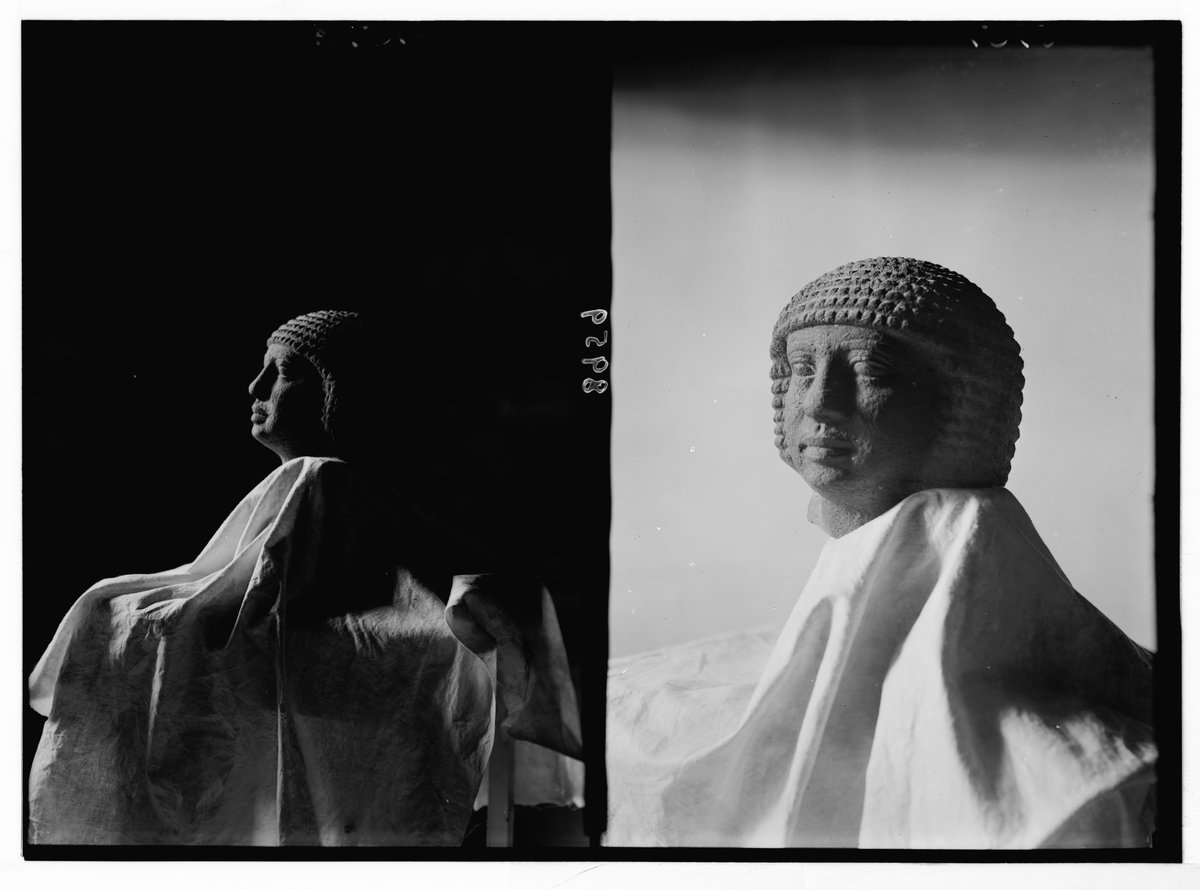
The turning point in his story came in 1912, when Hermann Junker's German-Austrian expedition opened that mastaba and found a near-life-size limestone statue — the only securely identified portrait of a 4th-Dynasty noble. He sits obese, sober, contemptuous: a man who knew what he was carrying. His eyes had been gouged out in antiquity, probably by tomb robbers who feared he could still see them. The statue now lives in Hildesheim's Roemer- und Pelizaeus-Museum, four thousand kilometers from the mountain he built.
How the Smooth White Skin Vanished
Napoleon and the Birth of Egyptology
Listen to the full story in the app
The whole Egyptian pyramids,
told well.
Audio guides for 1,100+ cities across 96 countries. History, stories, and local insight — offline ready.
06 Frequently asked.
The questions travellers send us most about Egyptian pyramids.
Are the Pyramids of Giza worth visiting?
Yes — they're the only surviving Wonder of the Ancient World and the experience earns the hype, especially at sunrise. The corner blocks are taller than you, the King's Chamber granite resonates when you hum, and the scale only registers when you stand at the base. Pair it with the Grand Egyptian Museum (opened November 2025) for the full picture.
How long do you need at the Pyramids of Giza?
Plan 3–4 hours for a standard visit covering all three pyramids, the Sphinx, and the Valley Temple without going inside. Add 2 hours if you want to enter the Great Pyramid and the Tomb of Meresankh III. A full day lets you combine the plateau with the Grand Egyptian Museum across the road.
How do I get to the Pyramids of Giza from Cairo?
Take Cairo Metro Line 2 to Giza Station, then an Uber or Careem the final 8 km to the plateau — about 45–60 minutes total. A direct Uber from downtown takes 30–45 minutes depending on traffic. Avoid street taxis on Al-Haram Street; touts there will try to redirect you to camel handlers.
What is the best time to visit the Pyramids of Giza?
Arrive at 07:00 opening in winter (November–February), when daytime temperatures sit at 18–22°C and the light is pink-gold. Summer pushes the plateau past 40°C with no shade, and the King's Chamber becomes a sauna. Spring brings khamasin dust storms that can swallow the pyramids whole.
How much does it cost to enter the Pyramids of Giza?
General plateau entry is 700 EGP (about $14.50), and going inside the Great Pyramid is an additional 1,500 EGP (about $30). Menkaure's interior costs 280 EGP, and the Tomb of Meresankh III is 200 EGP. As of 2026, the site accepts credit and debit cards only — no cash at the gate.
Can you go inside the Great Pyramid of Giza?
Yes, with a separate 1,500 EGP ticket capped at roughly 300 visitors per day across morning and afternoon slots. Expect a stooped, sweating crawl up a 1.05 m high ascending passage before the Grand Gallery opens above you. Skip it if you struggle with claustrophobia or knee pain — the passage is 40+ meters of crouch-walking.
What should I not miss at the Pyramids of Giza?
The Tomb of Meresankh III in the Eastern Cemetery — ten life-size rock-cut statues and painted scenes of beer-making and musicians, often empty of tourists. Also walk to Panorama Point on the southwest ridge for the full nine-pyramid lineup at sunset, and look for the vertical scar on Menkaure's north face — the trace of Sultan Al-Aziz Uthman's failed 1196 demolition attempt.
Is it safe to visit the Pyramids of Giza?
Violent crime against tourists is rare and tourist police are heavily present — the real risk is commercial scams. Camel handlers quote 50 EGP then demand hundreds more to make the animal kneel so you can dismount, and fake guides in semi-uniforms loiter near the gates. Book tickets online at egymonuments.com, refuse all unsolicited help, and keep your hands out of strangers' offered trinkets.
Verified, and shown.
Researched and written by the Audiala editorial team from historical records, architectural archives, and local expertise.
Official opening hours, last entry times, and ticket categories for the Giza Plateau.
Official online booking page for skip-the-queue mobile tickets.
Government PDF listing ticket prices in EGP, last updated 11 January 2024.
Updated 2026 entry fees and confirmation of the cash-free, card-only policy at the plateau.
Transport options from Cairo, including Metro Line 2 to Giza Station and onward taxis.
On-site logistics: shuttle buses, food options, dress recommendations, photography rules.
Interior chamber details, passage dimensions, and what to expect inside the Great Pyramid.
Accessibility notes confirming free site shuttle is wheelchair-accessible and interior chambers are not.
Inscription details for Memphis and its Necropolis (1979) including the Giza pyramid fields.
2024 conservation report flagging urban encroachment and groundwater concerns at the buffer zone.
Official ticketing portal for the GEM, the adjacent museum housing Khufu's solar boat and Tutankhamun's collection.
Construction dates, dynastic context, and worker labor estimates revising Herodotus's claims.
Detailed dimensions of the Grand Gallery, King's Chamber, and Aswan granite construction.
Architectural specifications, alignment data, and chamber descriptions for Khufu's pyramid.
Reign and construction dates for Khafre's pyramid and surviving Tura limestone casing at the apex.
Modern context for Giza as Egypt's third-largest city and Giza Governorate capital.
Passage dimensions, slope angles, and chamber-by-chamber breakdown of Khufu's interior.
Official details on the painted Eastern Cemetery tomb with ten rock-cut statues.
Visitor account of accessing the Eastern Cemetery tomb at Giza.
Vantage points including Panorama Point and the desert ridge southwest of the plateau.
Photography vantage points and seasonal light conditions on the plateau.
Drone prohibition under Law 216 of 2017 and penalties for unauthorized possession.
Rules on tripods, professional gear, and personal phone photography on the plateau.
Catalog of common scams: fake guides, gift-trinket guilt trips, and ticket-window deceptions.
On-the-ground reporting on the Al-Haram Street taxi ambush and Giza Metro tout patterns.
Camel-ride dismount fee scam and animal-welfare warnings.
Practical avoidance tips for camel handlers and freelance guides at Giza.
Schedule and language rotation for the nightly Sphinx and Pyramids show.
Government-operated panoramic restaurant inside the plateau.
Restaurant rankings near the plateau, including Felfela, Abou El Sid, and Koshary Abou Tarek.
Background on construction myths, casing-stone stripping, and modern archaeological consensus.
Cultural significance of the pyramids in modern Egyptian national identity.
Researched from Wikidata, Wikipedia & official sources · fact-checked · How we make our guides →