Giza
location_on 5 attractions
calendar_month Winter (Dec-Feb)
schedule 2-3 days

Introduction

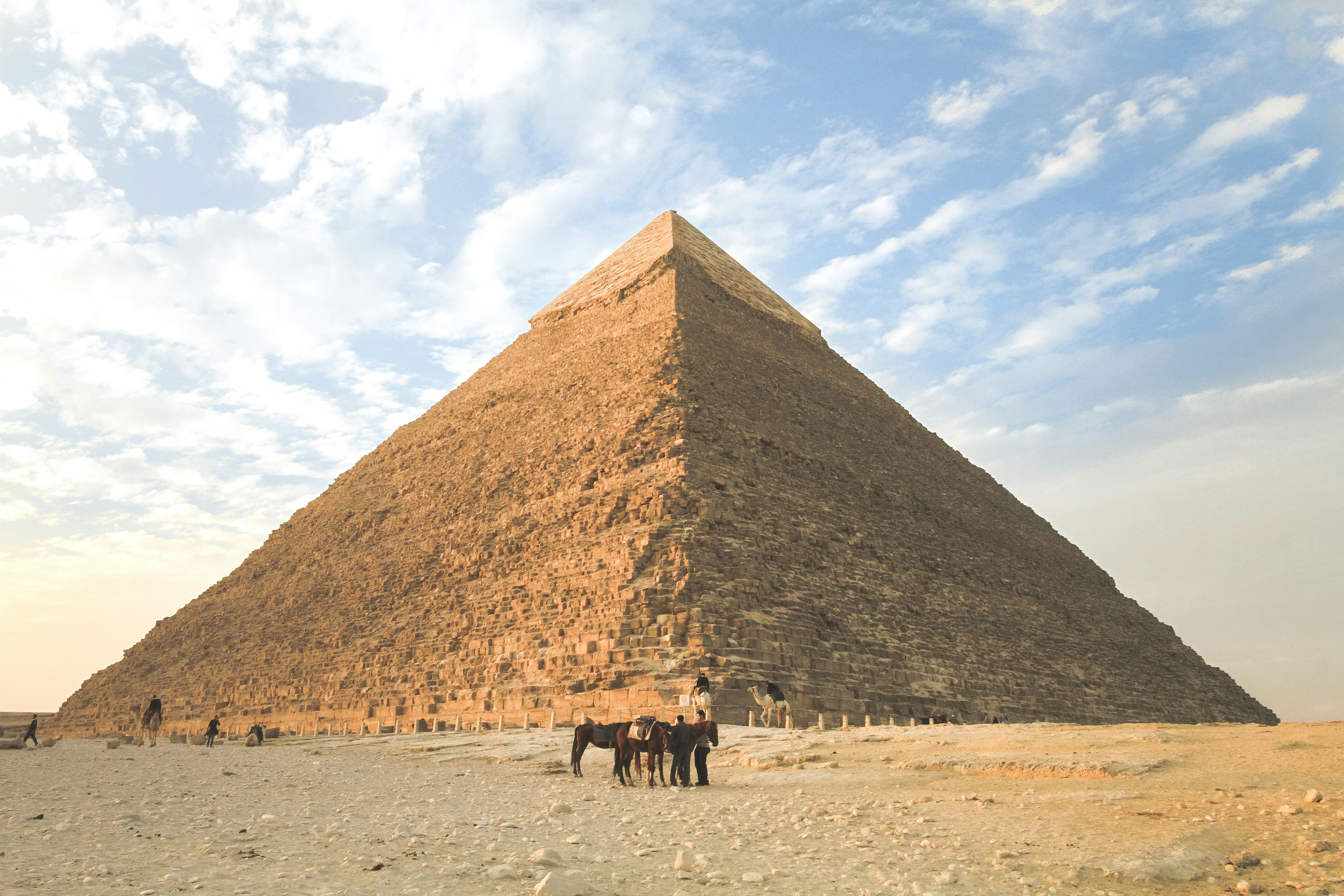
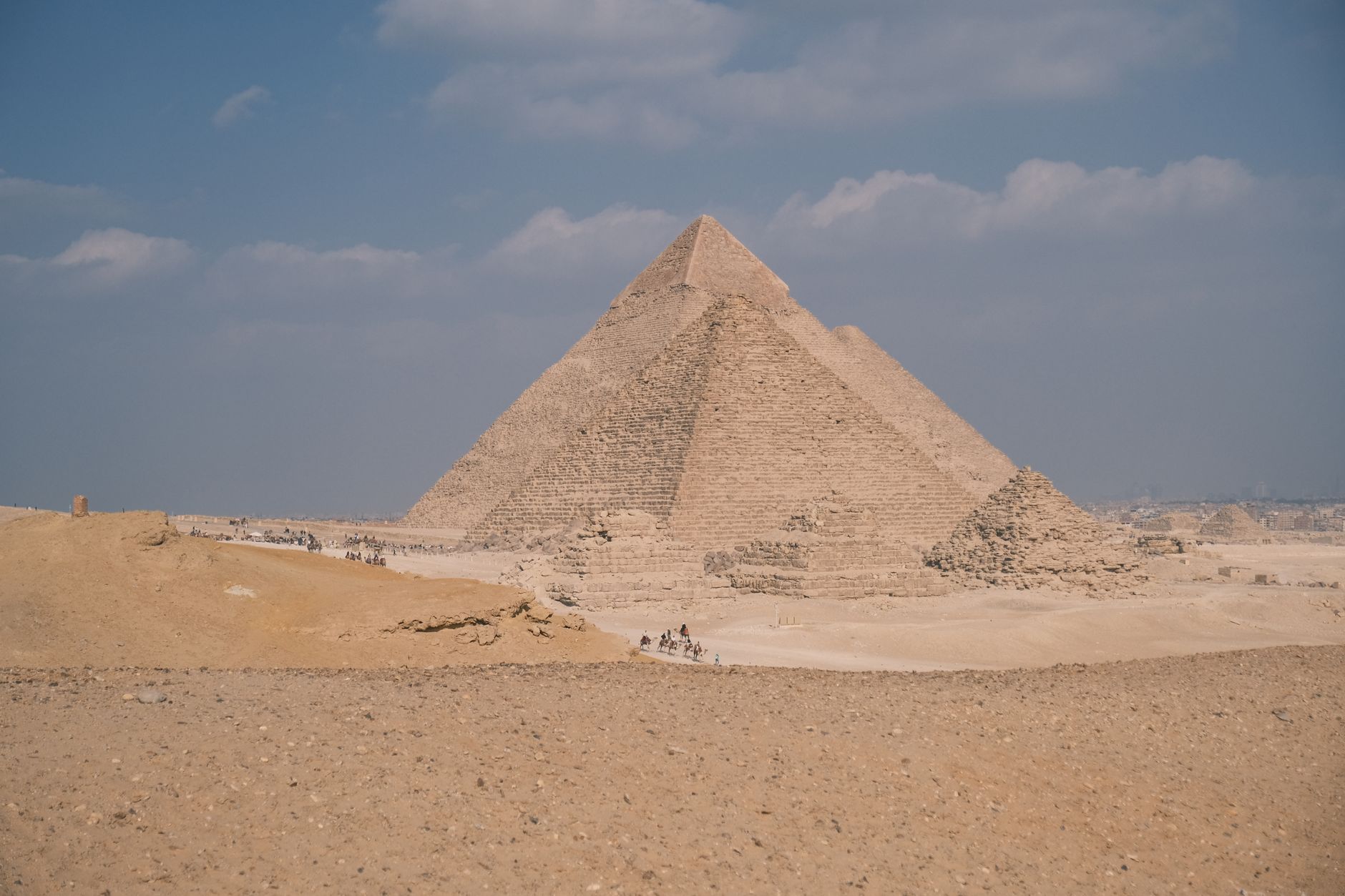
The first time the Great Pyramid of Khufu fills your windshield at dawn, it doesn't look real. One moment you're crawling through Giza's honking traffic with its diesel tang and bleating taxis, the next this 146-meter-tall limestone mountain invented in 2580 BCE blocks out half the sky. Egypt's modern capital presses right up against these 4,500-year-old tombs, and the contrast never stops feeling like a glitch in reality.

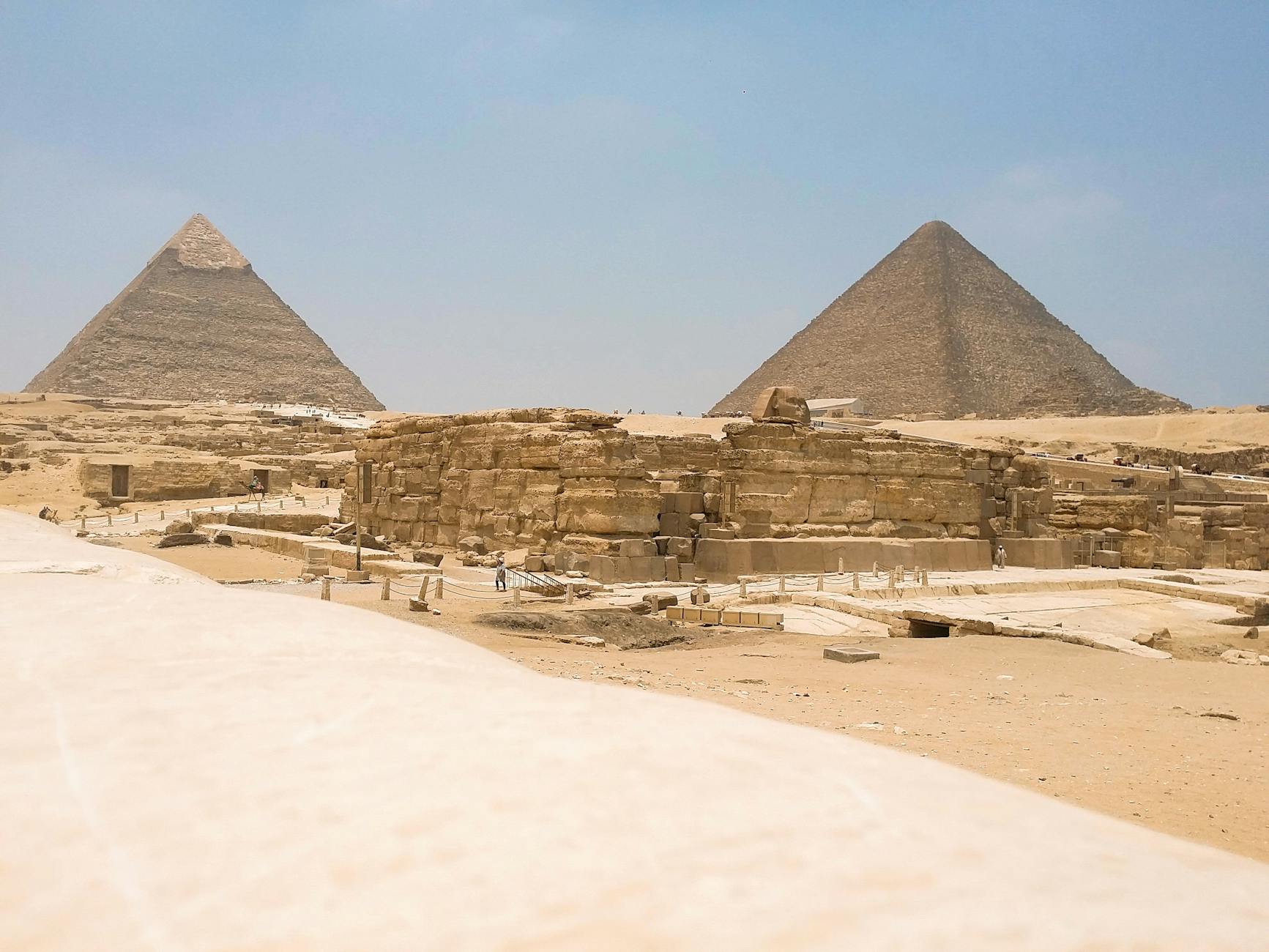
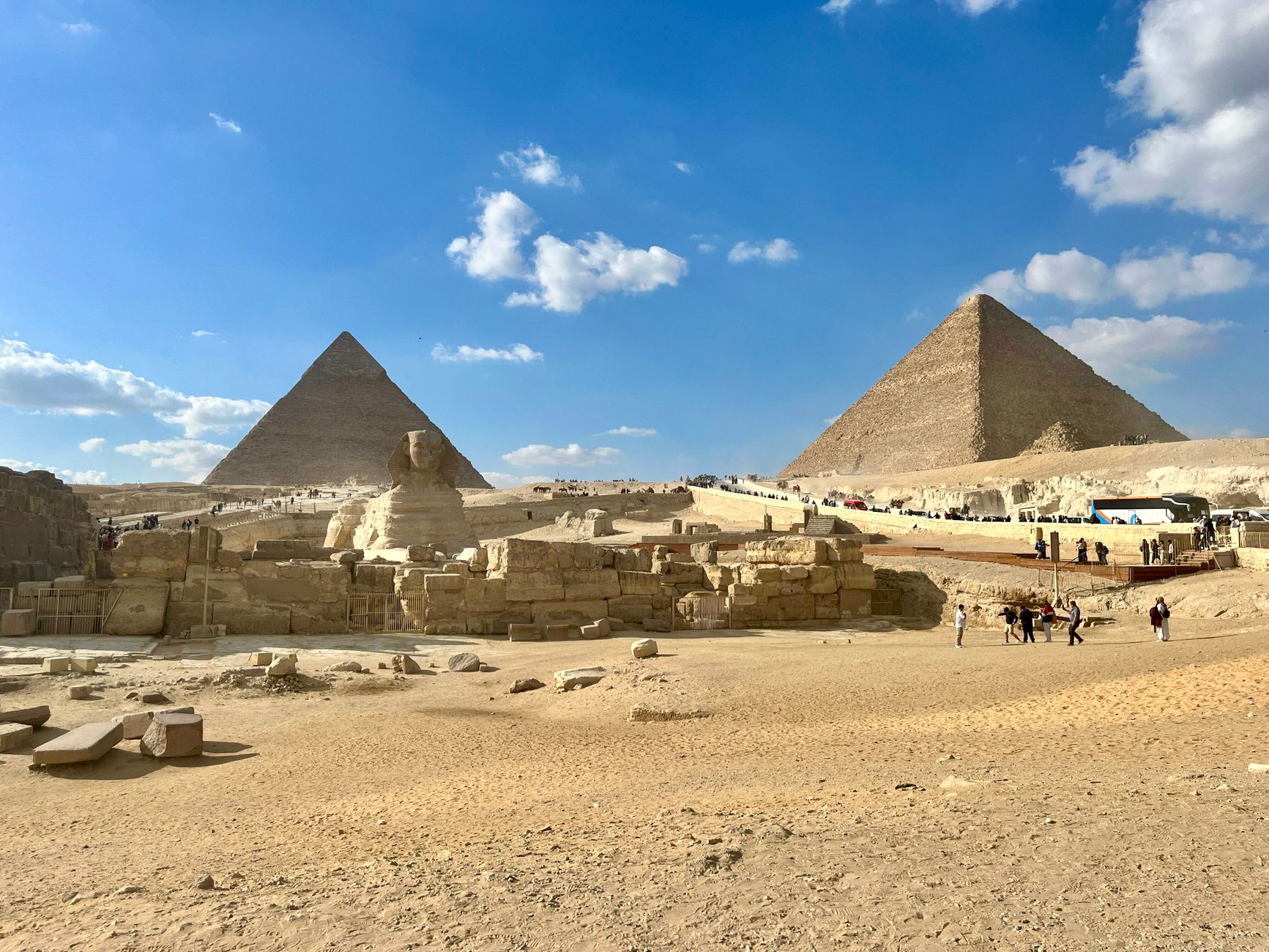
The Giza Plateau isn't a dead monument. Watch the light change across the Sphinx's ruined face at sunset and you'll understand why ancient Egyptians considered this ground sacred. The pyramids were never meant to be alone; they formed part of a vast necropolis that stretched from here through Saqqara all the way to Dahshur. Stand at the base of Khafre's pyramid and you can still see the original polished casing stones near the top, glowing pink when the sun drops low enough.

What moves me is how ordinary life continues right next door. Families picnic in the shadow of the monuments while camel drivers haggle in Arabic that hasn't changed much since the pharaohs. The new Grand Egyptian Museum, fully open in 2026, sits a short distance away with its enormous glass walls and the complete 5,000-piece Tutankhamun collection. One building holds what tomb robbers missed; the other holds what they didn't.

Come here and your understanding of time shifts. These stones were already ancient when Alexander the Great arrived. They were ancient when Caesar met Cleopatra. They were ancient when your grandparents were born. Few places make the present feel so temporary.

Places to Visit

The Most Interesting Places in Giza

Pyramid of Menkaure

Pyramid of Menkaure

The Pyramid of Menkaure, the smallest yet captivating monument among the iconic pyramids on the Giza Plateau, represents a unique blend of architectural…

Mosque of Amr Ibn Al-As

Mosque of Amr Ibn Al-As

Nestled in the heart of Old Cairo’s historic district of Fustat, the Mosque of Amr Ibn Al-As holds an unparalleled position as the first mosque established in…

Egyptian Geological Museum

Egyptian Geological Museum

The Egyptian Geological Museum, located in the Giza Governorate near Cairo, stands as a premier institution dedicated to unveiling Egypt's rich geological and…

Church of St. George

Church of St. George

The Church of St. George in the Giza Governorate, Egypt, stands as a profound testament to the country’s rich Christian heritage, architectural splendor, and…

landscape

Mostafa Mahmoud Mosque

The Mostafa Mahmoud Mosque, situated in the vibrant Mohandessin district of Giza, Egypt, stands as a remarkable fusion of religious devotion, cultural…

Saints Sergius and Bacchus Church

Saints Sergius and Bacchus Church

The Church of Saints Sergius and Bacchus, widely known as Abu Serga, stands as one of the most historically and spiritually significant Christian monuments in…

Pyramid of Khentkaus I

Pyramid of Khentkaus I

Nestled within the iconic Giza Necropolis, the Pyramid of Khentkaus I stands as a remarkable yet often overlooked testament to ancient Egyptian royalty,…

Taha Hussein Museum

Taha Hussein Museum

Nestled in the heart of Cairo, the Taha Hussein Museum stands as a beacon of cultural heritage, offering visitors an intimate glimpse into the life and works…

landscape

Saint Barbara Church in Coptic Cairo

Nestled within the historic heart of Coptic Cairo in the Giza Governorate, Saint Barbara Church stands as one of Egypt’s most venerable and spiritually…

landscape

Mohamed Nagy Museum

Situated in the culturally rich city of Giza, Egypt, the Mohamed Nagy Museum stands as a distinguished tribute to Mohamed Nagy (1888–1956), a seminal figure…

landscape

Valley Temple of Khafre

The Pyramids of Giza, one of the Seven Wonders of the Ancient World, are a must-see for anyone visiting Cairo, Egypt.

Dream Stele

Dream Stele

The Dream Stele, prominently positioned between the paws of the Great Sphinx on the Giza Plateau, stands as a captivating emblem of ancient Egyptian history,…

What Makes This City Special

The Pyramids at Dusk

Stand on the Giza Plateau at closing time and watch the last light slide down the face of Khufu’s pyramid. The stone, warmer than you expect, still carries heat from the day while the Sphinx sits in its own pool of shadow. Most visitors have left by then. The silence that follows changes how you see 4,500 years.

Grand Egyptian Museum

Fully open in 2026, the GEM lines up its six-storey staircase so that every visitor walks through time toward the complete Tutankhamun collection. Sunlight filters through the angled facade exactly as the architects intended, falling on 5,000-year-old gold without a single electric spotlight. The building itself feels like a modern counterpart to the pyramids it faces.

Ramses Wissa Wassef Centre

Tucked behind a mud-brick wall in Harraniya, this art centre still uses the same looms and natural dyes introduced in the 1950s. Watch weavers turn raw wool into tapestries that sell for less than dinner in most capitals. The quiet concentration inside is the opposite of the plateau’s chaos.

Saqqara and Dahshur

A 45-minute drive south takes you to the Step Pyramid of Djoser, the first large stone building on Earth, and the bent pyramid at Dahshur that still keeps its original casing stones. Fewer coaches, softer sand underfoot, and the chance to watch falcons ride the thermals above 4th-dynasty tombs.

Historical Timeline

Stones That Outlasted Empires

From pharaohs' tombs to a city's living edge

castle
3000 BCE

Memphis Rises on the Nile

The unification of Upper and Lower Egypt created the capital of Memphis. Its necropolis spread across the desert plateau we now call Giza. Planners laid out worker towns and quarries with military precision. The smell of fresh-cut limestone still hung in the air centuries later.

castle
2580 BCE

Khufu Orders the Great Pyramid

Pharaoh Khufu commanded the largest stone structure ever attempted. Twenty thousand workers dragged 2.3 million blocks across the sand. Each stone weighed more than a family car. When the capstone finally caught the morning sun, the pyramid became a second horizon.

castle
2558 BCE

Khafre Builds His Legacy

Khufu's son raised a slightly smaller pyramid but gave it higher ground. He also carved the Great Sphinx from a single outcrop of bedrock. The creature stares east across the Nile floodplain. Its face still bears the scars of later target practice.

castle
2530 BCE

Menkaure Completes the Trio

The smallest of the three main pyramids finished the royal ensemble. Its granite casing stones arrived from Aswan, 500 miles upstream. The sound of sledges grinding over wet sand echoed for decades. By the time the last block settled, Giza had become the permanent silhouette of eternity.

factory
c. 2500 BCE

Heit el-Ghurab Workers' Town

Archaeologists later uncovered a carefully planned settlement that housed the pyramid builders. Bakeries produced thousands of loaves daily. The smell of bread and beer drifted across the plateau each dawn. This was no slave camp but a state-run city of specialists.

local_fire_department
2181 BCE

Old Kingdom Collapses

Central authority fractured. The desert began to reclaim the edges of the necropolis. Priests still lit lamps inside the temples but the grand machinery of pyramid construction never restarted. Giza became a sacred ruin almost overnight.

public
30 BCE

Rome Claims the Necropolis

After Cleopatra's death, Egypt became a Roman province. Greek tourists scratched their names on the pyramids. The monuments stood silent while emperors collected obelisks for their own cities. Light still struck the capstones at the exact same angles.

swords
640 CE

Arab Conquest Reaches Giza

Muslim armies took the fortress of Babylon and continued upriver. They found the pyramids already ancient beyond memory. Some soldiers tried to dismantle the smallest one but gave up after removing only a few stones. The structures remained, indifferent.

castle
820 CE

Caliph al-Ma'mun Tunnels In

The Abbasid caliph ordered his men to break into the Great Pyramid. They heated stones with fire then doused them with vinegar until they cracked. The tunnel they carved still serves as the tourist entrance today. Inside they found dust, not treasure.

person
1863

Ismail Pasha Claims Giza

The ambitious khedive built a palace on the edge of the plateau to house his growing collection of antiquities. For years the Egyptian Museum lived here before moving to Tahrir Square. The palace later became the nucleus of the modern university district. History has a habit of repurposing its own real estate.

science
1922

Tutankhamun's Tomb Discovered

Though the tomb lay in the Valley of the Kings, its treasures would eventually transform Giza's identity. The Grand Egyptian Museum, built to hold every object, now sits at the foot of the pyramids. The golden mask that once traveled by camel now rests in climate-controlled silence less than two miles from the Sphinx.

person
1978

Mohamed Aboutrika is Born

In the shadow of these ancient stones, a boy arrived who would later become Egypt's footballing conscience. The pyramids watched him grow up kicking a ball on dusty pitches. When he refused to wear sponsor logos during the African Cup of Nations, millions remembered that Giza had always produced men who stood apart.

music_note
1987

Hassan Shakosh Comes Into the World

Another Giza child who would reshape Egyptian sound. The singer grew up hearing both the call to prayer and the distant tourist buses. Years later his mahraganat beats would blast from car speakers circling the plateau at night, a new rhythm layered over four-and-a-half thousand years of silence.

gavel
1995

UNESCO Master Plan Approved

After years of expert missions, UNESCO helped draft a protection plan for the entire Memphite necropolis. Urban sprawl had crept dangerously close. The new plan drew a hard line between concrete and sand. For once, the bureaucrats moved faster than the developers.

swords
2011

Revolution Reaches the Plateau

During the Arab Spring, protesters marched past the Sphinx on their way to Tahrir Square. Some climbed the perimeter walls at night to plant Egyptian flags on the pyramids. The stones, older than every ideology, simply absorbed the new echoes.

palette
2026

Grand Egyptian Museum Finally Opens

After decades of delays, the vast museum designed by Heneghan Peng opened its doors. Its north and south walls align perfectly with the Great Pyramid. Inside, Tutankhamun's entire collection rests under one roof for the first time. The afternoon light through the enormous windows still falls on gold exactly as it did on the desert outside.

schedule
Present Day

Notable Figures

Ismail Pasha

1830–1895 · Khedive of Egypt
Lived here

Ismail Pasha built a palace in Giza to temporarily house Egypt’s growing collection of antiquities while the Cairo museum was constructed. The palace later became part of the university. One wonders what he would make of the Grand Egyptian Museum finally opening in 2026, its walls aligned with the very pyramids he once overlooked.

Mohamed Aboutrika

born 1978 · Footballer
Born here

Born in Giza in 1978, Aboutrika became the heartbeat of Egyptian football and a national symbol of quiet integrity. He scored the winning goal in the 2006 African Cup of Nations final right here in Cairo. Locals still speak of him as the player who made an entire country believe again. The plateau’s shadow and the roar of a football crowd feel strangely connected in Giza memory.

Practical Information

flight

Getting There

Cairo International Airport (CAI) is 45 minutes east. Official airport taxis cost 200–300 EGP while Uber or Careem usually run 150–250 EGP in 2026. Pre-book a private transfer through your hotel if arriving after dark. The journey ends at the foot of the plateau or directly at the Grand Egyptian Museum depending on traffic.

directions_transit

Getting Around

Cairo Metro Line 2 (orange) drops you at Giza station, then combine with Uber or a microbus for the final stretch to the plateau. Within the site itself, electric golf carts and camel rides are the only practical options across 2 km of sand. In 2026 rideshares remain the cleanest way to reach Saqqara or the Wissa Wassef Centre.

thermostat

Climate & Best Time

January and February average 9–19 °C with almost zero rain. July and August hit 34–38 °C in the open desert. Shoulder months October–November and March–April offer 20–28 °C days and far smaller crowds. Visit between late October and early April or accept that the pyramids look best before 10 a.m. or after 4 p.m.

shield

Safety

The plateau is safe during daylight hours if you buy tickets only from official kiosks. Ignore anyone offering unsolicited guiding or “special access.” Police presence increased after the GEM opening. Keep small notes in local currency for minor services and avoid walking alone on the plateau after sunset.

Where to Eat

local_dining

Don't Leave Without Trying

Koshary—rice, macaroni, lentils, chickpeas, tomato sauce, and crispy onions Ful Medames—mashed fava beans with olive oil, garlic, lemon, and cumin Ta'meya (Falafel)—Egyptian-style falafel made from fava beans Kebab and Kofta—grilled lamb or beef with spices Molokhia—traditional green stew made from jute leaves Aish Baladi—Egyptian flatbread, the staple of every meal Baklava—filo pastry with nuts and honey Konafa—pastry with cream and nuts Umm Ali—Egyptian bread pudding with milk and nuts Fresh grilled fish—caught daily from the Nile

مشويات ابو عمرو

local favorite
Grilled Meats & Kebabs €€ star 5.0 (6)

Order: The grilled kebab and kofta are exceptional—charred on the outside, juicy inside. Pair with fresh bread and their house salad.

This is where locals actually eat, especially late night. No frills, no tourists—just perfectly grilled meat and honest Egyptian hospitality. Open until 3 AM, so it's your move after midnight.

schedule

Opening Hours

مشويات ابو عمرو

Monday–Wednesday 10:00 AM – 3:00 AM
map Maps

اسماك ابو هريره

local favorite
Seafood €€ star 5.0 (6)

Order: Fresh grilled fish of the day—ask what arrived this morning. The shrimp and calamari are also pristine. Simple olive oil and lemon is all you need.

Located on Gazirat Ad Dahab (the island neighborhood), this spot serves the freshest catch in Giza. It's a genuine neighborhood seafood joint where fishermen and families gather.

schedule

Opening Hours

اسماك ابو هريره

Monday–Wednesday 10:00 AM – 11:30 PM
map Maps

ابناء سوهاج

local favorite
Egyptian Traditional €€ star 5.0 (2)

Order: Try the molokhia (traditional green stew) or the ful medames for breakfast. The slow-cooked dishes are authentic and deeply satisfying.

A true local institution open around the clock, serving the kind of honest Egyptian food that locals crave at 3 AM or 3 PM. No pretense, just generations of family cooking.

schedule

Opening Hours

ابناء سوهاج

Open 24 hours
map Maps

مخبوزات الثورة 2

quick bite
Bakery €€ star 5.0 (5)

Order: Grab warm aish baladi (Egyptian flatbread) straight from the oven. The pastries and croissants are excellent if you arrive early.

A 24-hour neighborhood bakery where you'll see locals lining up for fresh bread at all hours. The smell of baking bread is your welcome to Giza.

schedule

Opening Hours

مخبوزات الثورة 2

Open 24 hours
map Maps language Web

كافية المعلم

cafe
Cafe €€ star 5.0 (3)

Order: Strong Egyptian coffee (ahwa) and a sweet pastry. The mint tea is also excellent if you prefer something lighter.

A classic neighborhood cafe on the island where locals gather to chat, play backgammon, and watch the world go by. Authentic Cairo atmosphere without the tourist crush.

مخبوزات أبو على

quick bite
Bakery €€ star 5.0 (2)

Order: The fresh aish baladi and any warm pastry just out of the oven. Come early morning for the best selection.

A beloved neighborhood bakery running 24/7, serving the El Omraniya district with quality bread and pastries. The kind of place where regulars know the baker by name.

schedule

Opening Hours

مخبوزات أبو على

Open 24 hours
map Maps

مخبز الحاج محمود سليم

quick bite
Bakery €€ star 5.0 (2)

Order: Warm aish baladi and fresh pastries. The consistency and quality here are what keep locals coming back.

A family-run bakery open around the clock, serving El Omraniya with traditional Egyptian bread and pastries. The hallmark of a true neighborhood institution.

schedule

Opening Hours

مخبز الحاج محمود سليم

Open 24 hours
map Maps

Yasmine Café

cafe
Cafe €€ star 5.0 (1)

Order: Egyptian coffee, mint tea, or fresh juice. Pair with a light pastry or sandwich for a casual afternoon.

A welcoming neighborhood cafe on the island with a relaxed vibe, perfect for a break during your Giza explorations. Friendly staff and a genuine local feel.

schedule

Opening Hours

Yasmine Café

Monday–Wednesday 10:00 AM – 10:00 PM
map Maps
info

Dining Tips

  • check Tipping is essential and a social dictate. In sit-down restaurants, 10–15% is standard; in casual eateries, rounding up or leaving 50–100 EGP is appreciated.
  • check Always tip in cash and hand it directly to the person rather than leaving it on the table. Small denominations of EGP are preferred.
  • check Cash is king, especially for street food and tips. While some upscale restaurants accept credit cards, confirm whether they accept tips on card (many do not).
  • check Dining out is a late-night affair in Giza—restaurants stay busy well into the night. Many local spots are open 24 hours.
  • check For street food, prioritize high-traffic stalls with long lines or high turnover to ensure freshness.
  • check Breakfast staples like Ful and Ta'meya are best eaten early in the day.
  • check Do not haggle over a tip—it is considered disrespectful to service workers who depend on tips as part of their income.
Food districts: Gazirat Ad Dahab (Ad Dahab Island)—the heart of local dining with seafood, grilled meats, and neighborhood cafes El Omraniya—home to beloved neighborhood bakeries and casual eateries serving residents Al Munib—bakeries and quick bites for the working neighborhood

Restaurant data powered by Google

Tips for Visitors

wb_sunny
Visit in winter

December to February brings 15–25°C days perfect for the plateau. Avoid July and August when highs hit 38°C and the sand reflects every degree.

payments
Master baksheesh

Carry small EGP notes. Expect 10–20 EGP for photos with camel drivers or helpers at the pyramids. Hand tips directly; never toss coins.

no_accounts
Skip fake guides

Ignore anyone offering tours outside the official ticket kiosks. Buy tickets only from Ministry of Tourism windows and book reputable operators in advance.

restaurant
Eat like locals

Head to high-turnover street stalls for fresh ta’ameya made from fava beans and koshary with extra crispy onions. Leave a small amount on your plate to show you’re satisfied.

directions_car
Use Careem or Uber

From Cairo International Airport, rides cost 150–250 EGP and avoid overcharging taxi drivers. Metro Line 2 gets you close but combine with rideshare for the final stretch to the plateau.

photo_camera
Light direction matters

The Sphinx faces east; golden hour from the southeast catches the pyramids with long shadows at 5:30 a.m. in winter. The Grand Egyptian Museum’s six-story staircase is best photographed before 10 a.m.

Explore the city with a personal guide in your pocket

Your Personal Curator, in Your Pocket.

Audio guides for 1,100+ cities across 96 countries. History, stories, and local insight — offline ready.

smartphone

Audiala App

Available on iOS & Android

download Download Now

Join 50k+ Curators

Frequently Asked

Is Giza worth visiting? add

Yes, but only if you treat it as an archaeological site rather than a theme park. The scale of Khufu’s pyramid still shocks in person. Most visitors feel changed after standing where 4th Dynasty engineers calculated true north within 0.05 degrees. The surrounding touts and traffic are real, yet the monuments cut through all of it.

How many days do you need in Giza? add

Two full days work for most people. Use one for the Giza Plateau at sunrise and sunset, another for the Grand Egyptian Museum and a side trip to Saqqara. Three days lets you add Dahshur’s bent and red pyramids without rushing. One day feels like you barely arrived.

How do you get from Cairo airport to Giza? add

Book a Careem or Uber for 150–250 EGP. Official airport taxis charge 200–300 EGP but sometimes add surprise fees. Pre-arranged hotel transfers are safest at night. The journey takes 45 minutes outside rush hour.

Is Giza safe for tourists? add

Safer than its reputation suggests if you avoid obvious scams. Stick to official entrances and ignore unsolicited guides. Petty overcharging remains the main nuisance. Women traveling alone report standard big-city precautions suffice during daylight hours.

How much does visiting the Pyramids cost? add

Plateau entry is 480 EGP for adults, 240 EGP for students. Khufu’s interior costs extra at 600 EGP. The Grand Egyptian Museum charges around 300 EGP. Budget 1500–2000 EGP per person for a full day including transport and a basic guide.

Can you go inside the Great Pyramid? add

Yes, but tickets are limited and sold separately. The 8.4-meter Grand Gallery still has the power to silence a crowd. claustrophobes should think twice. The experience lasts about 30 minutes once you clear the narrow ascending passage.

Sources

Last reviewed:

All Places to Visit

15 places to discover

Pyramid of Menkaure

Pyramid of Menkaure

Mosque of Amr Ibn Al-As

Mosque of Amr Ibn Al-As

Egyptian Geological Museum

Egyptian Geological Museum

Church of St. George

Church of St. George

photo_camera

Mostafa Mahmoud Mosque

Saints Sergius and Bacchus Church

Saints Sergius and Bacchus Church

Pyramid of Khentkaus I

Pyramid of Khentkaus I

Taha Hussein Museum

Taha Hussein Museum

photo_camera

Saint Barbara Church in Coptic Cairo

photo_camera

Mohamed Nagy Museum

photo_camera

Valley Temple of Khafre

Dream Stele

Dream Stele

Coptic Cairo

Coptic Cairo

Helmy Zamora Stadium

Helmy Zamora Stadium

Statue of Ramesses Ii

Statue of Ramesses Ii