
An introduction.
Researched by the Audiala editorial team from historical records, architectural archives, and local expertise.
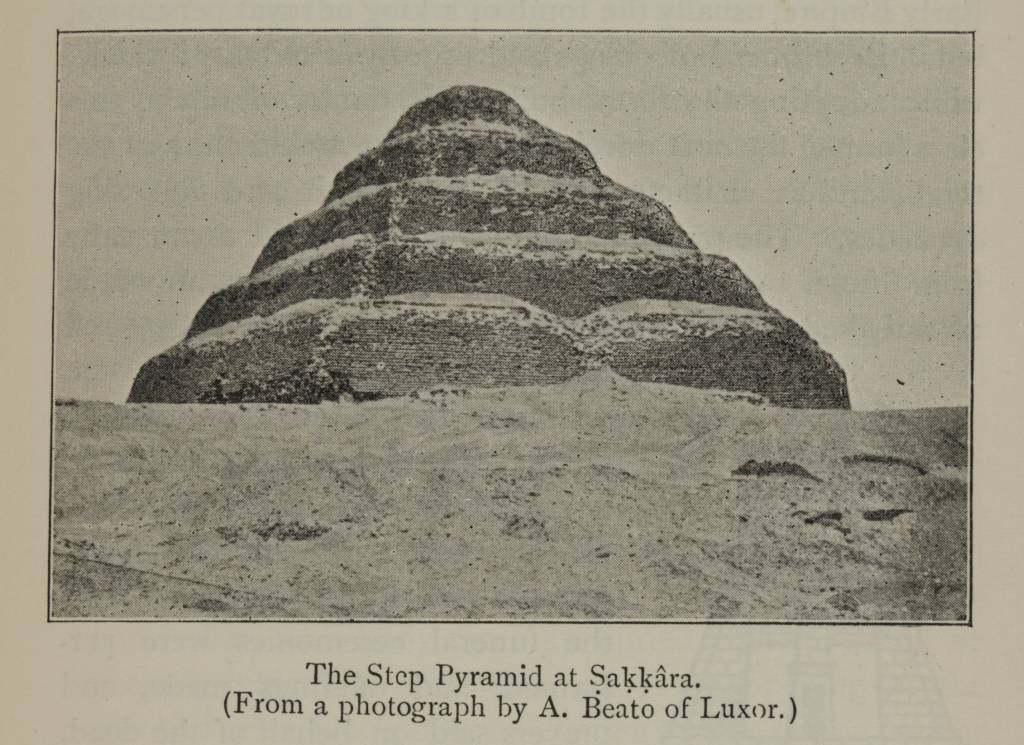
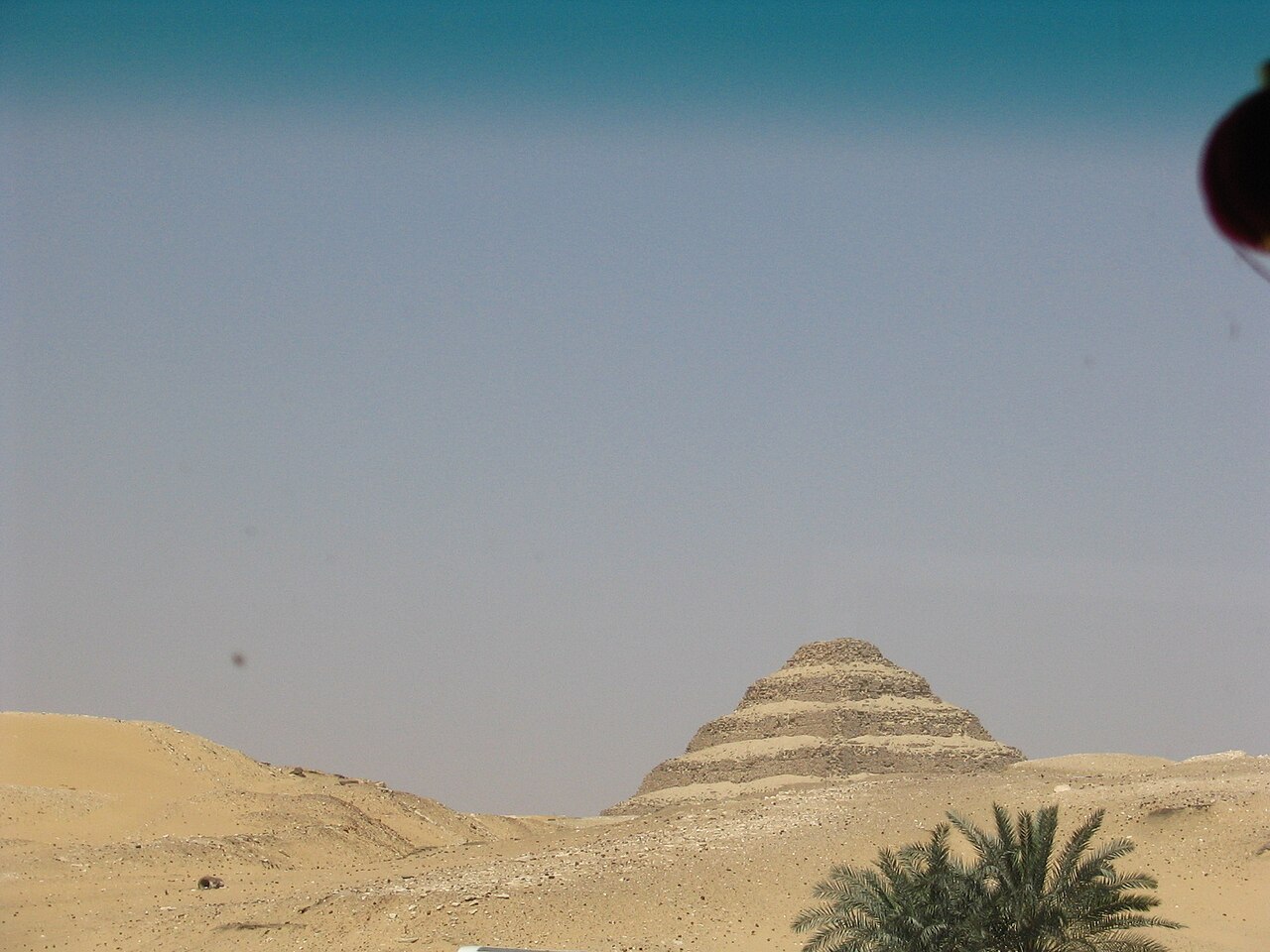
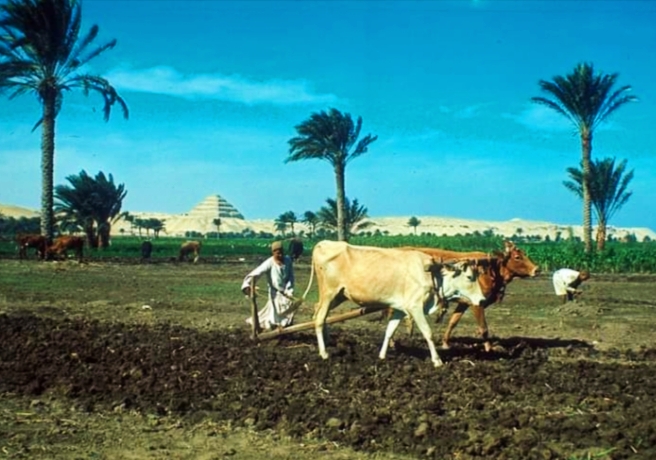
TThe pharaoh who ordered this monument built it to guarantee his own immortality — and was forgotten within centuries. His architect, a commoner, needed no monument at all, and became a god. The Pyramid of Djoser rises 62.5 metres — taller than a twenty-storey building — above the Saqqara plateau near Torah, Egypt, six rough-hewn limestone tiers that form the oldest large-scale stone structure ever built.
What you see from the entrance looks deceptively simple: a stepped mass against an enormous sky. The Step Pyramid was never designed as a step pyramid. It began as a mastaba — a flat-topped rectangular tomb — and was rebuilt at least six times during Djoser's reign, around 2667–2648 BC.
The complex sprawling around it — 15 hectares, larger than twenty football pitches — is stranger than the pyramid itself. Stone facades with no rooms behind them line a ceremonial courtyard: dummy buildings, frozen in permanent performance. Underground, 5.7 kilometres of corridors — over an hour's walk — connect roughly 400 rooms, and after a century of excavation most remain unmapped.
And then there is Imhotep: vizier, architect, physician, high priest — a commoner who held more titles than most princes, and whose name was carved beside the king's on a statue base. The Greeks would later identify him with Asclepios, their god of healing. Djoser built the pyramid to be remembered forever; Imhotep, who needed nothing, is the one we remember.
01 What to see.
The Step Pyramid
Six limestone tiers rising 62 meters — roughly the height of a twenty-storey building — and every single stone was an act of invention. Before Imhotep stacked mastaba upon mastaba around 2667 BC, nobody in the world had built a monumental structure entirely from cut stone. The pyramid began as a flat-topped tomb, was redesigned at least five times, and ended as something no human eye had ever seen. Stand at its base and look up: you're staring at the oldest large-scale stone building on Earth, older than Stonehenge by a thousand years, older than the Great Pyramid at Giza by a full century.
What strikes you first isn't grandeur — it's texture. The casing stones have weathered into a rough honeycomb, each block about the size of a thick paperback, far smaller than the massive slabs Khufu's architects would later use. That's the giveaway that this was experimental. Imhotep's masons were figuring out stone construction in real time, cutting small blocks because nobody yet trusted limestone to hold weight at scale. The result looks less polished than Giza, and that's exactly why it's more interesting.
The Funerary Complex and Colonnade Entrance
The pyramid is the headline, but Imhotep's real genius lives in the 15-hectare walled enclosure surrounding it — a space larger than six football pitches, ringed by a limestone wall that originally stood over 10 meters high with fourteen false doors and a single real entrance. Walk through that entrance and you pass into a narrow colonnade of forty ribbed columns, each carved to mimic bundled papyrus reeds. They're the oldest known columns in architecture. And here's the detail that changes everything: they aren't freestanding. Imhotep attached every column to the wall, as if he didn't quite trust stone to stand on its own. He was translating reed-and-mud architecture into stone for the first time, hedging his bets.
Beyond the colonnade, a ceremonial courtyard opens up where Djoser was meant to perform the Heb-Sed festival for eternity — a ritual of royal renewal. The courtyard's eastern edge holds a row of chapels with façades but no interiors, stage-set architecture built for a dead king's eternal audience. The morning light here is extraordinary, falling across the reconstructed walls at a low angle that picks out every joint and shadow.
The Subterranean Chambers
Walking the Saqqara Plateau: Pyramid to Serapeum
02 In pictures.




Plan and listen to Pyramid Of Djoser with Audiala.
Audio guide in your pocket, itinerary in your browser. Built for the way you actually visit.
Tickets & tours.
These are guided options from our partners — same price as booking direct.
Prices are indicative — final pricing and availability are confirmed at checkout. Audiala may earn a commission from bookings made through these links.
03 Visitor logistics.
The practical scaffolding for a good visit — kept short.
Getting There
No public transport reaches Saqqara — your options are a private taxi, Uber, or an organized tour from Cairo, about 45–60 minutes south through agricultural villages and then desert. Agree a round-trip fare with your driver before leaving, and have them wait on-site. From the ticket windows, a 2 km ramp leads up to the pyramid complex itself, so save some energy for the walk in.
Opening Hours
As of 2026, the site opens daily from 8:00 AM to 5:00 PM, with Ramadan hours shortened to 8:00 AM–3:00 PM. No seasonal closures. The Unas Pyramid nearby shuts at 11:00 AM, so if that's on your list, go there first.
Time Needed
A quick circuit of the Step Pyramid exterior, the Serdab peephole, and the main courtyard takes 1.5–2 hours. But the full complex — Heb Sed Court, Southern Tomb with its blue faience tiles, the Imhotep Museum — demands a solid half-day, 3–4 hours minimum. Buy the comprehensive ticket and you'll fill an entire day across the broader Saqqara necropolis.
Tickets & Cost
As of 2026, the official Pyramid of Djoser entry is EGP 150 for foreign adults, EGP 75 for students. A broader Saqqara ticket (EGP 200) covers the Step Pyramid complex, Imhotep Museum, Unas Pyramid, and New Kingdom tombs. The comprehensive ticket at EGP 440 adds the Serapeum, Teti Pyramid, and Tomb of Mereruka — worth it if you're spending the day. Underground gallery access requires a separate fee. Buy all tickets at the official window; ignore anyone offering to 'help' you purchase.
Accessibility
This is a tough site for anyone with limited mobility. The 2 km ramp from ticket windows to the complex crosses open desert terrain — uneven, sandy, and shadeless. The underground galleries involve a 28-metre descent via wooden ladders and narrow tunnels, ruling out wheelchair access entirely. No elevators or accessible routes exist anywhere on site.
05 Tips for visitors.
Small things that change the day.
Arrive at Opening
Get there at 8:00 AM sharp. By midday the desert plateau is a furnace with almost zero shade — temperatures routinely pass 40°C in summer — and the tour buses from Cairo start arriving around 10:00. Early birds get both cooler air and the complex nearly to themselves.
Photography Rules
Personal cameras and phones are free to use outdoors. Flash is banned inside the underground chambers to protect 4,600-year-old pigments, and drones are strictly prohibited — Egypt's antiquities police will confiscate your equipment. Tripods technically need a permit, though enforcement is relaxed for tourist-level gear.
Dodge the Scams
Three classics operate here: camel operators who quote a low price then demand far more at dismount, men offering a 'free tour' who expect aggressive payment at the end, and guards inside who request unofficial fees for photos. For guides, hire through the official entrance. For everything else, if there's no receipt, there's no obligation.
Eat Off the Plateau
Djoser Oasis, steps from the front gates, serves honest Egyptian home cooking at budget prices — ask the security guards for directions. For something with more character, Saqqara Oasis Restaurant has an outdoor bread oven and grilled lamb kabobs. Skip the tourist-priced options and do what Cairo day-trippers do: pack fuul sandwiches and eat them with a pyramid view.
Bring Extra Water
Local advice is blunt: carry at least five small bottles of water per person in summer, plus snacks. Vendors inside the site charge inflated prices, and there are no cafes on the plateau. The toilets require small change, so keep coins handy.
Don't Skip the Serdab
On the pyramid's north face, two small holes in a stone box let you peer at a replica of Djoser's seated statue — the original, now in Cairo's Egyptian Museum, is the oldest known life-size royal sculpture. The encounter feels strangely intimate: a pharaoh staring back at you through 4,600 years of darkness.
04 A history of reinvention.
The Commoner Who Became a God
Before Imhotep, no one in Egypt had stacked cut stone higher than a single storey. Mud brick and timber were the materials of permanence — even for kings. When Djoser ascended the throne around 2667 BC, he entrusted his afterlife to a man whose official title was 'overseer of sculptors and painters.'
No contemporary document credits Imhotep as the builder. The attribution rests on a statue base bearing his name beside Djoser's, his known titles, and the 3rd-century BC historian Manetho — writing 2,400 years after the fact — who called him 'the inventor of building in stone.' Most Egyptologists accept the credit, but the evidence is indirect.
The Blueprint That Kept Changing
The story most visitors accept is clean: Imhotep designed a revolutionary step pyramid, workers built it, and a masterpiece emerged. A genius with a vision, executed in stone. But look at the base, and the narrative falls apart.
Jean-Philippe Lauer, the French archaeologist who spent 75 years excavating Saqqara until his death in 2001 at age 99, identified six construction phases in the pyramid's fabric. Phase M1 was a square mastaba 63 metres per side — longer than an Olympic swimming pool; the final form reached 109 by 121 metres, roughly a football pitch, and rose six tiers. Imhotep was not executing a blueprint — he was inventing one while thousands of workers moved stone around him.
Djoser's ka — his vital essence — needed an adequate dwelling for eternity. Imhotep's name carved beside the king's was extraordinary royal favour, the kind that becomes a record of blame if the project fails. The flat-topped mastaba became a staircase to heaven because someone refused to stop at what tradition demanded.
Stand at the southeast corner and look up. Each of those six tiers is a decision, not a design feature. The irregularities in the stonework are not flaws — they are the visible record of a mind working faster than stone could follow.
A Commoner's Impossible Rise
From Mortal to Myth
Listen to the full story in the app
The whole Pyramid Of Djoser,
told well.
Audio guides for 1,100+ cities across 96 countries. History, stories, and local insight — offline ready.

06 Frequently asked.
The questions travellers send us most about Pyramid Of Djoser.
Is the Pyramid of Djoser worth visiting?
Yes — and for most visitors interested in ancient Egypt, it's more rewarding than Giza. This is the oldest monumental stone structure on Earth, built around 2667 BC, predating the Great Pyramid by roughly a century. The 15-hectare complex includes underground tunnels stretching 5.7 km, a replica of Djoser's seated statue peering through two eye-holes in a sealed stone box, and ceremonial courts frozen in limestone for 4,600 years. Crowds are a fraction of what you'll face at Giza.
How long do you need at the Pyramid of Djoser?
Budget at least three hours, and a full half-day if you want to do it properly. The Step Pyramid exterior alone takes 30–45 minutes, but the complex sprawls across an area roughly the size of 20 football pitches — with the Heb-Sed Festival court, the Southern Tomb, a cobra-frieze wall, and the Imhotep Museum all included in your ticket. If you add the comprehensive ticket sites (Serapeum, Tomb of Mereruka, Teti Pyramid), plan a full day.
How do I get to the Pyramid of Djoser from Cairo?
There is no public transport from Cairo to Saqqara — you'll need a taxi, Uber, or organized tour. The drive from central Cairo takes 45–60 minutes through agricultural villages and desert, covering roughly 25 km south. Hire a car that will wait on-site while you visit, and negotiate the full price before you leave. An Egyptologist guide, booked through a tour operator, adds real value here — the site has minimal signage and the stories behind each structure are half the point.
What is the best time to visit the Pyramid of Djoser?
Arrive at 8:00 AM when the gates open — the desert heat builds fast, and shade across the plateau is almost nonexistent. October through March offers the most comfortable temperatures. If you visit during Ramadan, hours shorten to 8:00 AM–3:00 PM. Summer visits (May–September) are punishing; bring at least five small bottles of water per person, a hat, and sunscreen.
Can you go inside the Pyramid of Djoser?
Yes, since the March 2020 reopening after a 14-year restoration, visitors can access parts of the underground galleries with a special ticket. The burial chamber sits at the bottom of a 28-metre vertical shaft — deeper than a seven-storey building — reached via tunnels and wooden ladders. This is not accessible for anyone with mobility limitations. Ask at the ticket window about current interior access availability; it sometimes requires permission from the on-site Antiquities Inspectorate.
How much does it cost to visit the Pyramid of Djoser?
The Pyramid of Djoser ticket costs EGP 150 for foreign adults and EGP 75 for students with valid ID. A broader Saqqara "normal ticket" (EGP 200) adds the Imhotep Museum, Unas Pyramid until 11:00 AM, and New Kingdom tombs. The comprehensive ticket at EGP 440 opens up the Serapeum, Tomb of Mereruka, and several other sites — genuine value if you have the time. Photography with phones and cameras is free throughout the outdoor areas.
What should I not miss at the Pyramid of Djoser?
Walk around to the north face and find the serdab — a tilted limestone box at ground level with two small holes drilled at eye height. Inside sits a replica of the oldest known life-sized royal statue in Egypt, oriented so Djoser's soul can watch the stars that never set. Most visitors photograph the pyramid from the south and never see it. The Southern Tomb interior, decorated with blue faience tiles and a carved relief of Djoser running the Heb-Sed race, is the other piece people overlook.
Is the Pyramid of Djoser older than the Pyramids of Giza?
By about a century, yes. Djoser's Step Pyramid dates to around 2667–2648 BC; the Great Pyramid of Khufu was built around 2560 BC. But the difference runs deeper than dates. The Step Pyramid began as a flat-topped mastaba and was redesigned mid-construction at least five times before reaching its six-tiered form — you can read the decision to invent the pyramid shape in the stones themselves. Giza refined the concept; Saqqara invented it.
Verified, and shown.
Researched and written by the Audiala editorial team from historical records, architectural archives, and local expertise.
Official Egyptian government source for opening hours, ticket prices, Djoser's reign dates, and architectural description of the complex
Construction phases, Imhotep's role and titles, Djoser's Horus name Netjerikhet, underground gallery dimensions, 2020 reopening, and Manetho's attribution
Serdab description, underground corridor extent (5.7 km, ~400 rooms), and complex layout details
World Heritage Site inscription details covering the Giza-to-Dahshur pyramid fields including Saqqara
Imhotep's name inscription beside Djoser's, stone vessel count, and nearby site descriptions
Coverage of the March 2020 reopening after the 14-year restoration project
Restoration completion reporting and visitor access details
Practical visitor information: transport options, ticket tiers, best visiting times, food/water advice, and on-site logistics
Visitor reviews of nearby dining options including Saqqara Oasis Restaurant and Restaurant Pharous
Biographical details on Imhotep's origins and later deification
Scholarly source for pyramid dimensions (62.5 m height, 109 m × 121 m base) cited in Wikipedia
Interior access requirements, special permit process, and underground gallery visitor information
Local recommendation for Djoser Oasis Restaurant near Saqqara entrance
Last reviewed


