Plan and listen to Salihiyya Madrasa with Audiala.
Audio guide in your pocket, itinerary in your browser. Built for the way you actually visit.
Introduction
The Salihiyya Madrasa, nestled on Cairo’s bustling al-Muizz li Din Allah Street, stands as a monumental testimony to Egypt’s medieval Islamic heritage. Built in the mid-13th century by Sultan al-Salih Najm al-Din Ayyub, this pioneering institution was the first in Egypt to teach all four Sunni schools of Islamic law—Hanafi, Maliki, Shafi‘i, and Hanbali—reflecting both religious inclusivity and a strategic shift toward Sunni orthodoxy in a city long shaped by Fatimid Shi‘ite influences (Museum With No Frontiers; Wikipedia).
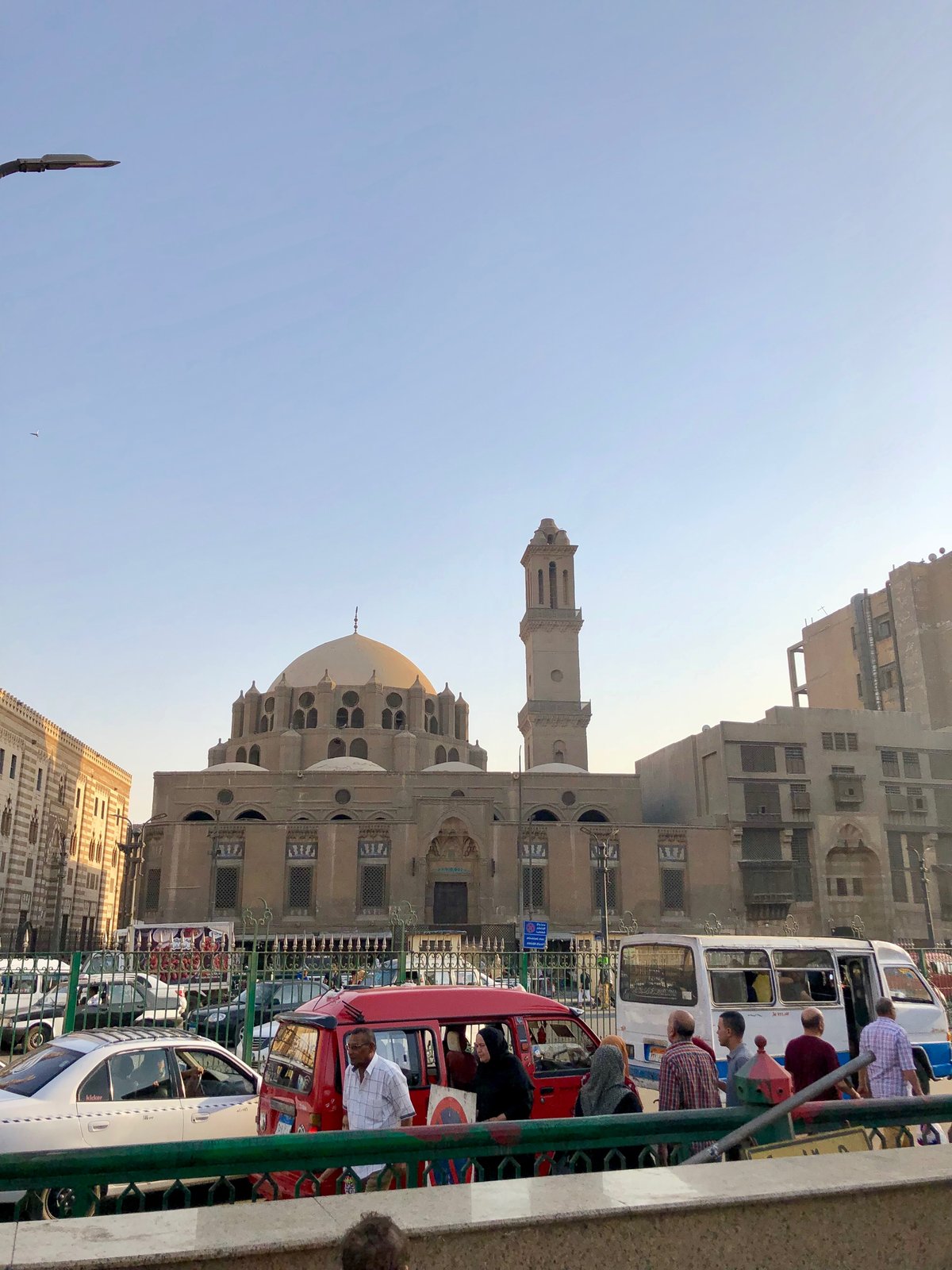
Architecturally, the madrasa is celebrated for its innovative four-iwan plan, its integration of a mausoleum, and the only surviving Ayyubid minaret in Cairo, known as “al-mabkhara” for its distinctive incense-burner shape (Archnet; ASR Journal PDF). Today, it remains a vibrant stop for those exploring Cairo’s Islamic history, offering visitors a chance to experience the city’s rich architectural and educational legacy.
This detailed guide covers everything you need to know for your visit: historical context, architectural highlights, religious significance, practical visitor information, and tips for making the most of your time at this iconic site (Egypt Monuments; Egipto Exclusivo).

Foundations and Patronage
Commissioned in 1242 CE (AH 639) by Sultan al-Salih Najm al-Din Ayyub, the Salihiyya Madrasa was constructed on a site of high symbolic value: part of the former Fatimid Eastern Palace in the Bayn al-Qasrayn district. Its founding was both a political and religious act, aiming to solidify Sunni authority in a city transitioning from Shi‘a Fatimid to Sunni Ayyubid rule (Museum With No Frontiers; ASR Journal PDF).
The madrasa’s establishment was state-funded, and historical records note the use of Frankish prisoners in its construction—an echo of the Ayyubid dynasty’s broader military and social strategies (ASR Journal PDF).
Architectural Innovation and Urban Impact
Four-Iwan Plan and Functional Design
The Salihiyya Madrasa’s layout was groundbreaking for Cairo. It comprised two mirrored blocks, each with two iwans (vaulted halls), arranged around open courtyards. This four-iwan plan, with each iwan dedicated to a specific Sunni madhhab, became a prototype for later Mamluk religious complexes (ASR Journal PDF).
A public passageway divided the wings, integrating the madrasa with the city’s street network—a deliberate move from royal enclosure to communal learning space (Everything Explained).
Minaret and Facade
Unique among its peers, the madrasa boasts Cairo’s only surviving Ayyubid minaret. Constructed of brick and coated in white plaster, the minaret’s octagonal shaft, wooden balcony, and lobed dome earned it the “al-mabkhara” moniker (Museum With No Frontiers). Its placement above the entrance was a novel departure from Ayyubid norms and set a precedent for subsequent Mamluk mosque-madrasas (Academia.edu).
The facade is adorned with stone carvings, geometric motifs, and calligraphy, particularly evident on the western iwan.
Integration of Mausoleum
A defining feature was the addition of Sultan al-Salih’s mausoleum, commissioned by Shajar al-Durr in 1249 CE. This fusion of funerary and educational architecture inspired a tradition of patron burials in Mamluk religious complexes (Archnet).
Educational and Religious Significance
The Salihiyya Madrasa was the first in Egypt to offer instruction in all four Sunni legal traditions, promoting intellectual pluralism and Sunni unity (Museum With No Frontiers). At a time when Cairo hosted 24 Sunni madrasas, it stood out for its inclusivity and scale.
Beyond legal studies, the madrasa was a hub for advanced scholarship in logic, grammar, and rhetoric, attracting students from across the Islamic world. Its endowments (waqf) ensured scholarships, housing, and stipends, democratizing education and enhancing Cairo’s role as a scholarly capital (Egipto Exclusivo).
The Mausoleum of al-Salih Najm al-Din Ayyub
The mausoleum, built adjacent to the madrasa and completed in 1250 CE, became Sultan al-Salih’s final resting place. It was architecturally integrated with the madrasa, symbolizing the sultan’s dual legacy as ruler and patron of learning (Museum With No Frontiers). The domed chamber, adorned with marble cenotaph and intricate tilework, is a highlight of any visit.
Preservation and Later History
While many Ayyubid and early Mamluk madrasas have vanished, the Salihiyya Madrasa’s western iwan, facade, entrance, and iconic minaret survive, thanks to restoration efforts—most notably a minaret restoration in 1995 (Museum With No Frontiers). Though its educational role declined after the Ottoman conquest, its architectural and historical value continues to attract visitors and scholars (Wikipedia).
Visiting the Salihiyya Madrasa: Essential Information
Visiting Hours
- General hours: 9:00 AM to 5:00 PM daily
- Special closures: Hours may change during religious holidays and Ramadan—always check ahead on the Ministry of Tourism and Antiquities.
Ticket Information
- Included in: General al-Muizz Street monuments ticket
- Prices (2024):
- Foreign adults: EGP 150
- Foreign students: EGP 75
- Egyptian adults: EGP 10
- Egyptian students: EGP 5
- How to buy: Onsite ticket offices or via official tourism websites (Ministry of Tourism and Antiquities, 2024)
Accessibility
- Physical access: The madrasa’s medieval structure includes steps, uneven floors, and narrow passageways. No elevators or ramps.
- Assistance: Visitors with mobility challenges should seek help from local operators or companions.
Getting There
- Metro: Ataba station (15-minute walk)
- Taxi/Ride-hailing: Drop-off at Bab al-Futuh or Bab al-Nasr, followed by a short walk
- Walking tours: Many guided tours of al-Muizz Street include the madrasa
Best Time to Visit
- Season: October–April (cooler temperatures)
- Time of day: Early mornings or late afternoons for fewer crowds and pleasant weather
- Fridays: Quieter in the morning; local visitors increase in the afternoon
Guided Tours
- Available through licensed local agencies and tour operators (Egypt Tailor Made; Walk Like an Egyptian). Tours offer deeper insights into the site’s history and architecture.
Nearby Attractions
- Sultan Qalawun Complex: Mamluk architectural gem
- Mosque of al-Hakim: One of Cairo’s oldest surviving mosques
- Khan el-Khalili Bazaar: Iconic market for souvenirs, crafts, and food
- Bayt al-Suhaymi: Ottoman-era house museum
Visitor Facilities and Etiquette
- Facilities: No on-site restrooms or cafes; options are available along al-Muizz Street and near Khan el-Khalili
- Dress code: Modest attire required; women should carry a scarf
- Shoes: May need to be removed in certain sections
- Behavior: Maintain a respectful demeanor; avoid loud conversations and touching historic surfaces
- Photography: Allowed, but flash and tripods are often restricted
Frequently Asked Questions (FAQ)
Q: What are the opening hours?
A: 9:00 AM to 5:00 PM daily; hours may vary during holidays (Egipto Exclusivo).
Q: How much are tickets?
A: Tickets range from EGP 5 to 150, depending on nationality and student status. Included in the al-Muizz Street monuments ticket (Ministry of Tourism and Antiquities, 2024).
Q: Is the madrasa accessible for disabled visitors?
A: Accessibility is limited; assistance is recommended.
Q: Are guided tours available?
A: Yes, through many local agencies and operators.
Q: Can I take photos inside?
A: Photography is allowed, but check on-site for restrictions regarding flash and tripods.
Summary and Planning Tips
The Salihiyya Madrasa, with its pioneering four-iwan plan, unique minaret, and integrated mausoleum, is a cornerstone of Cairo’s Islamic architectural and educational legacy (Museum With No Frontiers; Archnet). Visiting the site offers a profound journey into the heart of medieval Cairo, surrounded by other iconic monuments along al-Muizz Street.
Tips for Your Visit:
- Check current hours and ticket information before your trip
- Dress modestly and wear comfortable shoes
- Consider joining a guided tour for deeper insight
- Bring water and sun protection, especially in warmer months
- Allocate at least 30–45 minutes for the madrasa and combine with nearby attractions
For official updates, consult the Ministry of Tourism and Antiquities and reputable tour operators.
Listen to the full story in the app
The whole Salihiyya Madrasa,
told well.
Audio guides for 1,100+ cities across 96 countries. History, stories, and local insight — offline ready.
Verified, and shown.
Researched and written by the Audiala editorial team from historical records, architectural archives, and local expertise.
Researched from Wikidata, Wikipedia & official sources · fact-checked · How we make our guides →