Plan and listen to Mosque of Ulmas al-Hajib with Audiala.
Audio guide in your pocket, itinerary in your browser. Built for the way you actually visit.
Introduction
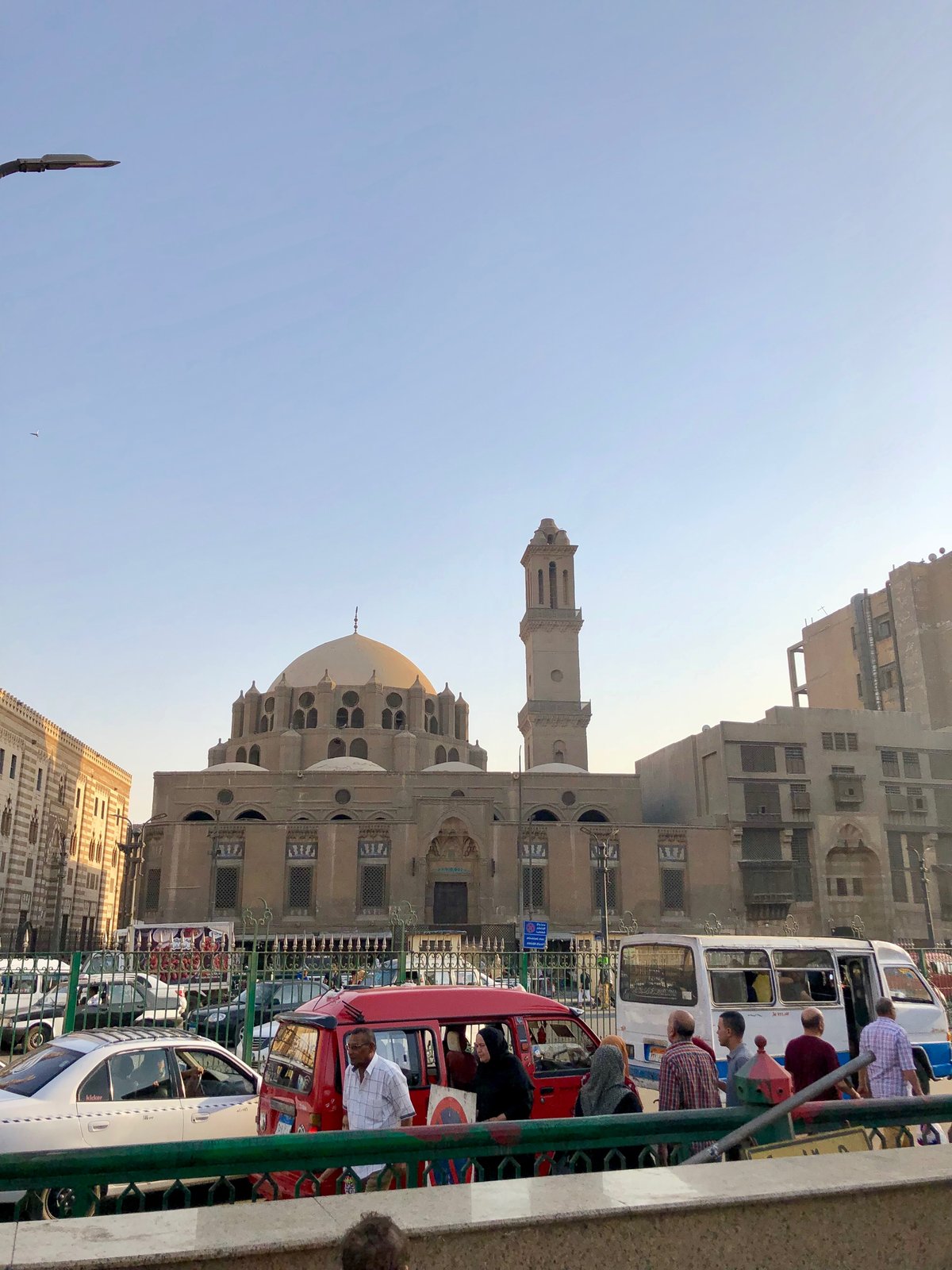
Nestled in the heart of historic Cairo, the Mosque of Ulmas al-Hajib stands as a magnificent testament to the artistry, religious devotion, and cosmopolitan culture of the Mamluk era. Built between 1329 and 1330 CE under the patronage of Seif al-Din Ulmas al-Hajib—a prominent Mamluk amir and viceroy during the reign of Sultan al-Nasir Muhammad—the mosque-mausoleum is both a place of worship and a symbol of its founder’s enduring legacy. With its striking stone façades, pioneering "flat" muqarnas vault, and ornately decorated interiors, this monument offers invaluable insights into 14th-century Islamic architecture in Cairo.
Today, the mosque is not only an active religious site but also a highlight for visitors seeking to explore Cairo’s rich Islamic heritage. This guide provides detailed information on its history, architectural features, visiting hours, ticketing, accessibility, etiquette, and nearby attractions, ensuring a rewarding and respectful experience. For more, see resources from the Victoria and Albert Museum collection and Everything Explained Today.

Historical Background and Founder
Origins of the Mosque-Mausoleum
Commissioned by Seif al-Din Ulmas al-Hajib al-Nasiri, a powerful Mamluk amir and court official, the mosque was constructed during the reign of Sultan al-Nasir Muhammad ibn Qalawun. The building reflects the grandeur and religious devotion of the Bahri Mamluk period and is situated in a neighborhood renowned for its concentration of Islamic monuments.
Who Was Seif al-Din Ulmas al-Hajib?
Ulmas al-Hajib served as chamberlain and viceroy under Sultan al-Nasir Muhammad, one of the most influential rulers of the Mamluk dynasty. His mosque-mausoleum functioned as both a religious foundation and a lasting testament to his social and political status. Although his life ended abruptly in 1333 CE, his architectural patronage remains a significant part of Cairo’s heritage (everything.explained.today).
Architectural Highlights
Exterior Features
- Façade and Entrance: The mosque’s grand entrance showcases robust limestone masonry, pointed arches, and intricate stone carvings. Its monumental portal is adorned with the earliest known "flat" muqarnas vault in Mamluk architecture, a feature that inspired later monuments (everything.explained.today).
- Minaret and Dome: The minaret rises from a square base to an octagonal shaft in classic Mamluk style. The mausoleum dome, covered in elaborate stucco with geometric and floral motifs, symbolizes both spiritual ascent and artistic mastery.
Interior Features
- Prayer Hall and Qibla Wall: The rectangular prayer hall is oriented toward Mecca, featuring a richly decorated qibla wall. The mihrab is crafted from imported marble and inlaid with colored stones from Syria and Anatolia, highlighting the founder’s wealth and cosmopolitan connections.
- Mihrab and Minbar: The mihrab’s semi-dome is adorned with delicate stucco reliefs, while the minbar (pulpit), originally stone-carved, was replaced in later periods with a wooden version. The original minbar fragments are housed in the Museum of Islamic Art in Cairo.
- Mausoleum Chamber: Serving as Ulmas al-Hajib’s final resting place, the mausoleum is richly decorated with carved stucco and marble panels, underscoring its dual religious and commemorative functions.
Decorative Elements and Materials
- Stucco Ornamentation: Lime and gypsum stucco is used extensively for high-relief geometric and floral designs, especially around the mausoleum and prayer hall.
- Marble and Stone Inlay: Polished marbles and colored stone inlays, imported from across the Islamic world, create intricate mosaics and floor patterns.
- Woodwork: Doors, window screens, and the current minbar are crafted from hardwoods, featuring geometric and arabesque motifs.
Visitor Information
Visiting Hours
- Open to visitors Monday through Saturday, 8:00 AM to 5:00 PM. Closed on Fridays for congregational prayers.
- Hours may vary during religious holidays; check locally for updates.
Tickets and Entry Fees
- Entry is free for all visitors. Donations to support maintenance and restoration are appreciated.
Location and How to Get There
- Situated in central Cairo’s Hadarat al-Baqar neighborhood, west of the Citadel.
- Accessible by taxi or public transport. The nearest Metro stations are Sadat or Al-Shohadaa, followed by a short taxi ride or walk.
Accessibility
- The mosque’s historic structure includes uneven floors and steps. Some areas are accessible, but visitors with mobility challenges should plan ahead and may require assistance.
Travel Tips and Nearby Attractions
- Guided Tours: Enhance your visit with a guided tour to appreciate the mosque’s history and architecture.
- Dress Code: Modest attire is required. Men should wear long trousers and sleeved shirts; women should cover arms, legs, and hair (ShunVogue, Alhannah Blog).
- Shoes: Remove shoes before entering the prayer hall. Bring socks if desired.
- Photography: Allowed in most areas, but always ask permission, especially when photographing people.
- Best Time to Visit: Early mornings and late afternoons offer cooler temperatures and fewer crowds.
- Nearby Sites: Visit the Sultan Hassan Mosque, Al-Azhar Mosque, Al-Rifa’i Mosque, Khan el-Khalili bazaar, and Al-Muizz Street for a broader exploration of Cairo’s Islamic heritage.
Cultural and Religious Importance
The Mosque of Ulmas al-Hajib continues to serve as an active place of worship and community gathering. Its integration of religious, funerary, and charitable functions reflects the multifaceted role of Mamluk mosques in medieval Cairo, fostering both spiritual life and social welfare (everything.explained.today). Today, it remains a living monument, connecting visitors to centuries of Islamic tradition.
Conservation Efforts
Over time, environmental factors such as pollution and salt crystallization have threatened the mosque’s stonework and stucco. Restoration and conservation efforts—including a major project completed in 2010—have preserved much of its original artistry, ensuring its continued role as a cultural and historical landmark (everything.explained.today).
Frequently Asked Questions (FAQ)
Q: Are there any entrance fees?
A: Entry is free; donations are welcome.
Q: What are the mosque’s visiting hours?
A: Open Monday to Saturday, 8:00 AM to 5:00 PM; closed Fridays. Hours may vary during holidays.
Q: Is the mosque accessible for people with disabilities?
A: Accessibility is limited due to historic architecture; plan ahead and seek assistance if needed.
Q: Can visitors take photos inside?
A: Photography is generally allowed (no flash). Always ask permission, especially for photographing people.
Q: Are guided tours available?
A: Yes, local operators offer guided tours.
Plan Your Visit
For a rewarding experience, plan your visit around prayer times, wear modest clothing, and consider hiring a guide. Combine your trip with nearby historic sites and use official resources for the latest updates on opening hours and accessibility.
Download the Audiala app for more travel tips, and follow us on social media for the latest updates on Cairo’s historical sites.
Visual Gallery
Façade and dome featuring muqarnas vaulting (Victoria and Albert Museum)
Interior showcasing intricate stone carvings and calligraphy (Bruce Allardice’s Flickr)

Entrance of the Funerary Mosque of Ulmas al-Hajib (Victoria and Albert Museum)
Key Dates and Figures
- Founder: Seif al-Din Ulmas al-Hajib al-Nasiri (d. 1333 CE)
- Patron Sultan: al-Nasir Muhammad ibn Qalawun (reigned 1293–1341 CE)
- Construction Date: 1329–1330 CE (AH 730)
- Location: Hadarat al-Baqar, Cairo, Egypt
- Monument Number: Islamic Monument #130
Listen to the full story in the app
The whole Mosque of Ulmas al-Hajib,
told well.
Audio guides for 1,100+ cities across 96 countries. History, stories, and local insight — offline ready.
Verified, and shown.
Researched and written by the Audiala editorial team from historical records, architectural archives, and local expertise.
Researched from Wikidata, Wikipedia & official sources · fact-checked · How we make our guides →