Plan and listen to Mosque Of Qanibay Al-Muhammadi with Audiala.
Audio guide in your pocket, itinerary in your browser. Built for the way you actually visit.
Introduction
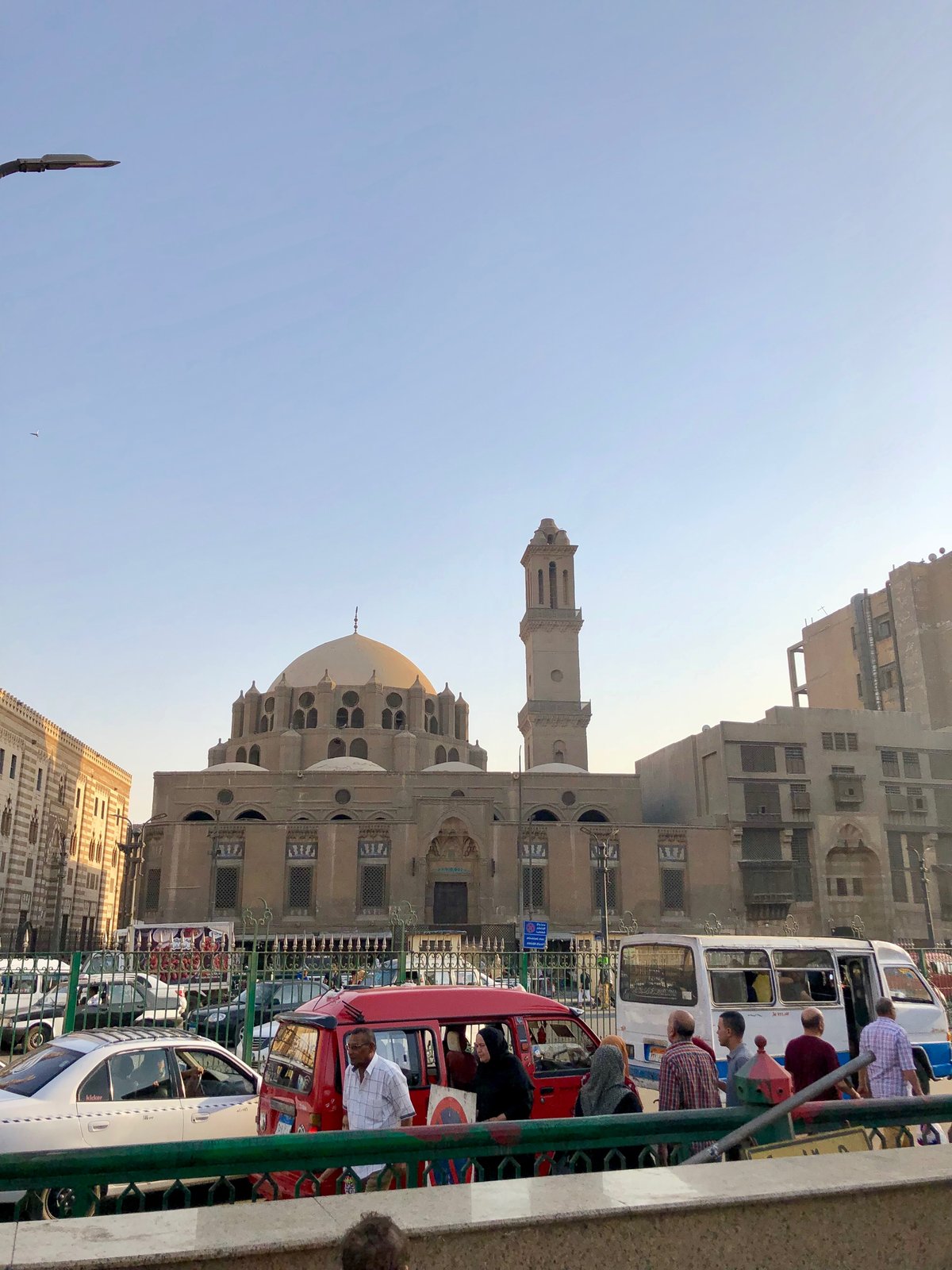
The Mosque of Qanibay al-Muhammadi is a treasured monument in Cairo’s historic district, reflecting the artistry, piety, and architectural mastery of the late Mamluk period. Built in 1413 CE during the Burji dynasty, this mosque stands as a testament to the enduring religious and cultural legacy of its founder, Qanibay al-Muhammadi, a notable Mamluk amir. Its position on Al-Saleeba Street places it at the heart of Cairo’s medieval Islamic landscape, surrounded by a tapestry of notable monuments and bustling urban life.
This comprehensive guide delivers detailed historical context, practical visiting tips, and an overview of the mosque's architectural and social significance. Whether you’re an architecture lover, a cultural traveler, or a history enthusiast, this article will help you make the most of your visit to this exceptional site.
For supplementary architectural and historical information, refer to Wikiwand, Archnet, and the World Heritage Site.
Foundation and Patronage
Commissioned in 1413 CE (816 AH), the Mosque of Qanibay al-Muhammadi was the initiative of its namesake patron, a distinguished Mamluk amir with close ties to Sultan al-Mu’ayyad Shaykh. His endowment of the mosque was both a personal act of devotion and a strategic investment in social prestige, following the Mamluk tradition of establishing religious and charitable complexes to enshrine legacy and spiritual merit. The choice of Al-Saleeba Street, a major artery in Islamic Cairo, reflects careful placement within a thriving urban and religious context (Wikiwand).
Historical Context: The Mamluk Era
The late Mamluk period (Burji dynasty, 1382–1517 CE) was marked by a flourishing of arts, scholarship, and monumental architecture. Cairo, as the seat of the Mamluk Sultanate, became a center for Islamic learning, trade, and religious innovation. Mosques of this era often integrated madrasas, mausoleums, and sabils within their complexes, serving as multifunctional hubs for worship, education, and charity (World Heritage Site).
Architectural Features and Innovations
Layout and Structure
Reflecting Mamluk architectural norms, the mosque likely features a rectangular plan oriented towards Mecca, with a central prayer hall and possibly an open courtyard (sahn) surrounded by arcaded porticoes. The use of iwans (vaulted halls) and harmonious spatial proportions are characteristic of the period (World Heritage Site).
Minaret and Decorative Elements
The minaret, while less elaborate than some contemporaries, sports geometric and arabesque motifs in carved stone. Mamluk ablaq masonry—alternating bands of light and dark stone—may adorn portals and windows, while muqarnas (stalactite vaulting) accent transitional areas such as entrances and niches.
Inscriptions and Foundation Plaques
Elegant Arabic calligraphy records the mosque’s patron and construction date above the main entrance, integrating historical documentation with religious artistry (Wikiwand).
Religious and Social Significance
The mosque was more than a place of worship; it served as a center for religious learning, Sufi gatherings, and community welfare. Endowed madrasas promoted Islamic jurisprudence and theology, while charitable activities such as food and alms distribution reinforced its social role (Archnet). The mosque’s inclusive atmosphere, welcoming various Islamic rites and Sufi practices, fostered communal unity and spiritual diversity.
The Mosque in Historic Cairo’s Urban Fabric
Al-Saleeba Street, where the mosque stands, is lined with medieval monuments, forming a corridor of Mamluk and Ottoman architecture. The proximity to landmarks such as the Mosque and Khanqah of Shaykhu and the Khanqah of Sanjar and Salar underscores its significance within Cairo’s historical network (Wikiwand). The urban context highlights the mosque’s role in monumentalizing the cityscape and anchoring communal identity.
Visiting Information
Visiting Hours
The mosque is generally open daily from 8:00 AM to 5:00 PM, with closures during prayer times and on religious holidays. Friday midday is reserved for Jummah prayers, so tourist visits are restricted during these hours. Confirm exact timings in advance, especially during Ramadan or other festivities.
Tickets and Entrance Fees
Entry to the Mosque of Qanibay al-Muhammadi is free. Donations to support maintenance and preservation are appreciated but not mandatory.
Accessibility and Guided Tours
- Access: Located on Al-Saleeba Street in the Sayyidah Zainab district, the mosque is reachable by taxi, ride-hailing apps, or public transport. The nearest metro stations are Sayyida Zeinab and Bab al-Louq.
- Guided Tours: Local guides can be arranged through agencies or near the mosque for in-depth historical and architectural insights. Cairo historical tours often include this mosque as a highlight.
- Mobility: As a historic structure, the mosque has limited accessibility for visitors with mobility issues due to staircases and uneven flooring.
Dress Code and Etiquette
- Women: Headscarves, long sleeves, and ankle-length skirts or trousers.
- Men: Long pants and sleeved shirts.
- All visitors: Remove shoes before entering prayer halls; slip-on footwear is recommended.
- Behavior: Maintain quiet, respect worshippers, and avoid entering prayer areas during services.
Facilities
There are no onsite restrooms or cafes, but amenities are available nearby in the Sayyidah Zainab district.
Nearby Attractions
- Mosque and Khanqah of Shaykhu
- Mosque-Madrassa of Sultan Hassan
- Saladin Citadel of Cairo
- Al-Rifa’i Mosque
- Khanqah of Sanjar and Salar
- Khan el-Khalili Bazaar
This cluster offers a rich exploration of Cairo’s Islamic heritage.
Photography Tips
Photography is generally allowed, but seek permission before photographing people or religious activities. Early morning or late afternoon provides the best light for capturing intricate stonework and architectural details.
Preservation and Legacy
The Mosque of Qanibay al-Muhammadi is recognized as part of the UNESCO World Heritage Site of Historic Cairo (World Heritage Site). Ongoing restoration and conservation efforts ensure its continued role as a vibrant place of worship and a living emblem of Mamluk artistry and Cairo’s urban legacy.
Frequently Asked Questions (FAQ)
Q: What are the mosque’s visiting hours?
A: Generally 8:00 AM to 5:00 PM daily, but closed during prayer times and on Fridays around midday.
Q: Is there an entrance fee?
A: No, entry is free; donations are welcome.
Q: Are guided tours available?
A: Yes, through local agencies or as part of historical Cairo tours.
Q: Is the mosque wheelchair accessible?
A: Accessibility is limited due to the building’s historic design.
Q: How do I get there?
A: By taxi, ride-hailing app, or public transport to Al-Saleeba Street; nearest metro stations are Sayyida Zeinab and Bab al-Louq.
Q: What is the dress code?
A: Modest attire for all visitors; headscarves for women.
Q: Are there nearby facilities?
A: Not within the mosque, but available in the surrounding district.
Listen to the full story in the app
The whole Mosque Of Qanibay Al-Muhammadi,
told well.
Audio guides for 1,100+ cities across 96 countries. History, stories, and local insight — offline ready.

Verified, and shown.
Researched and written by the Audiala editorial team from historical records, architectural archives, and local expertise.
Researched from Wikidata, Wikipedia & official sources · fact-checked · How we make our guides →