Plan and listen to Mosque-Madrassa Of Sultan Barquq with Audiala.
Audio guide in your pocket, itinerary in your browser. Built for the way you actually visit.
Introduction
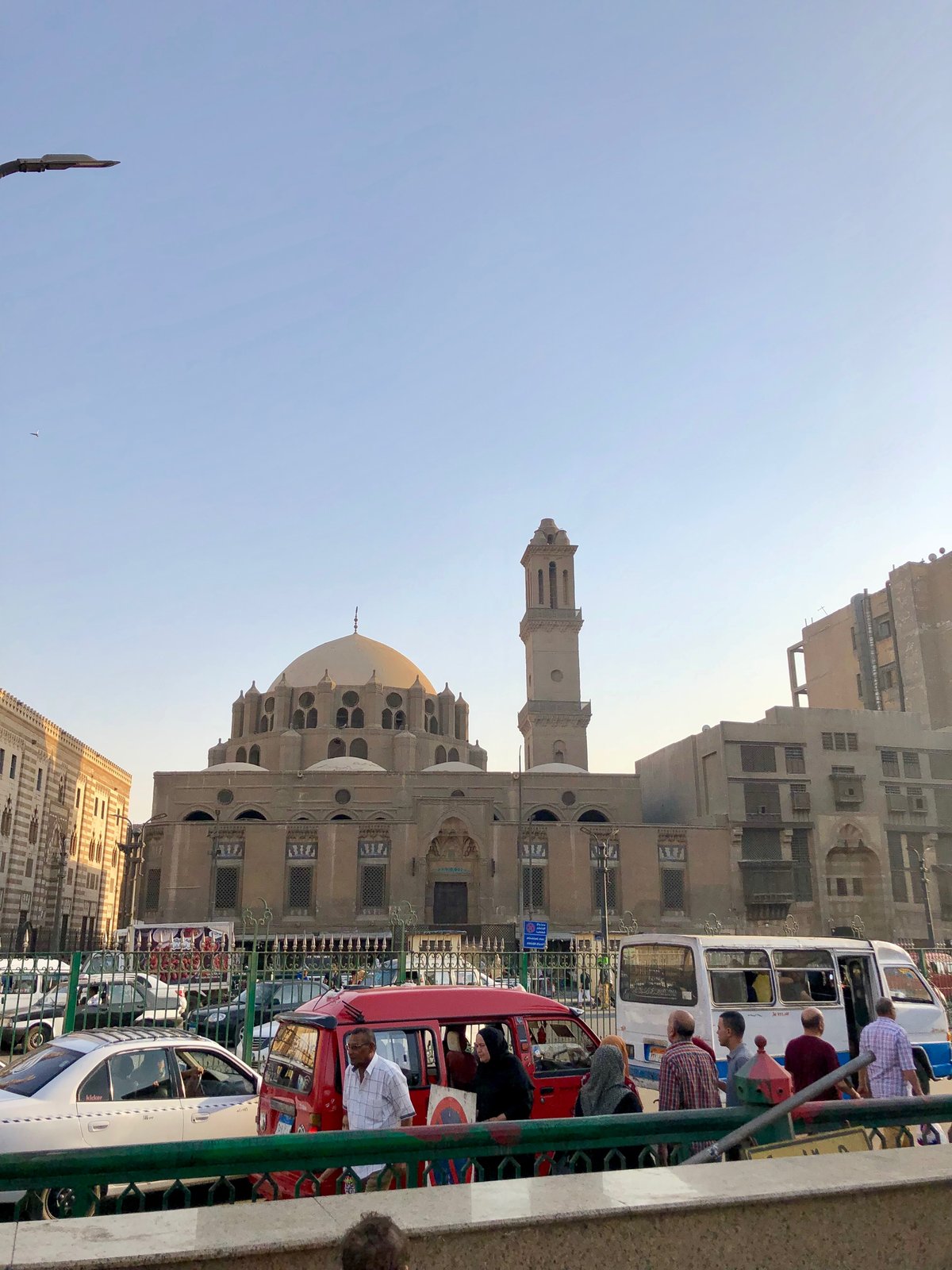
Nestled within the historic core of Islamic Cairo, the Mosque-Madrassa of Sultan Barquq stands as a magnificent testament to Mamluk architectural brilliance, religious devotion, and educational ambition. Built between 1384 and 1386 CE by Sultan al-Zahir Barquq, the first Circassian (Burji) Mamluk sultan, this complex uniquely blends the functions of mosque, madrassa (school), khanqah (Sufi lodge), and mausoleum. Its strategic location on al-Muizz li-Din Allah Street, a vibrant artery lined with monumental Islamic architecture, underscores its dynastic and urban significance.
This guide provides a thorough overview of the mosque’s history, architectural features, visiting hours, ticketing, accessibility, and practical travel tips, ensuring an enriching experience for history enthusiasts, architecture lovers, and cultural explorers alike.
For further reading, consult Assignment Point, Archnet, and UNESCO.


Historical Background and Significance
Foundation and Urban Context
The Mosque-Madrassa of Sultan Barquq, also known as the Mosque-Madrassa-Khanqah of Az-Zaher Barquq (Arabic: مسجد ومدرسة وخانقاه الظاهر برقوق), was commissioned by Sultan Barquq as a means of asserting legitimacy for his new Circassian (Burji) Mamluk dynasty. The construction, which commenced in 1384 and concluded in 1386, was overseen by architect Shihab al-Din Ahmad ibn Muhammad al-Tuluni, with contributions from court officials such as Jarkas al-Khalili (Assignment Point).
Strategically located in the Bayn al-Qasrayn district along al-Muizz Street, the complex sits amidst a concentration of monumental Islamic architecture. This placement was deliberate, as Barquq sought to align his dynasty with the Qalawunid sultans—his predecessors—by choosing a site adjacent to their own grand edifices (Egyptopia).
Role in Cairo’s Social and Religious Life
Beyond its architectural grandeur, the complex played a vital role in the community. As with many Mamluk monuments, it was deeply embedded in Cairo’s social fabric—serving as a hub for worship, education, Sufi practices, and even temporary housing during the 20th century (Assignment Point).
Architectural Program and Innovations
Multifunctional Complex
Barquq’s foundation deed (waqf) endowed a complex designed for multiple purposes:
- Congregational Mosque: For Friday prayers and daily worship.
- Madrassa: Education in all four Sunni legal schools, supporting over 120 students.
- Khanqah: Lodging for 60 Sufi practitioners, reflecting the rising influence of Sufism.
- Mausoleum: Housing the tombs of Barquq’s family, integrating religious and commemorative functions (Assignment Point; Archnet).
Architectural Features
- Courtyard Layout: Four iwans (vaulted halls) frame a central courtyard, with each iwan dedicated to one Sunni school of law (Assignment Point).
- Octagonal Minaret: A pioneering design that influenced subsequent Cairene minarets (Archnet).
- Dome and Mausoleum: The domed tomb is adorned with intricate stone carving and muqarnas; the interior blends marble, stucco, and painted ornamentation (Archnet).
- Ornamentation: Lavish marble inlays, carved wood ceilings, and bronze-plated doors with geometric patterns and calligraphic inscriptions.
- Royal Blazon: Sultan Barquq’s emblem is featured throughout, marking the sultan’s patronage (Archnet).
These features set a new standard for Mamluk architectural decoration and symbolized the sultan’s religious and dynastic authority.
Visiting Information
Visiting Hours
The mosque is open daily from 9:00 AM to 5:00 PM. Hours may vary during Ramadan or Islamic holidays—verify locally or with official websites before your visit.
Tickets and Fees
- Standard Entry: 100 to 200 EGP for foreign visitors (as of July 2025), often included in a combined al-Muizz Street monuments ticket.
- Discounts: Available for students, children, and Egyptian nationals.
- Payment: Cash in Egyptian pounds is preferred; card acceptance may be limited (Assignment Point).
Accessibility
- Mobility: The site’s historic architecture means uneven surfaces and steps; wheelchair access is limited, but some ramps are available. Contact ahead for assistance.
- Restrooms: Limited on site; nearby cafes and monuments offer alternatives.
Guided Tours and Travel Tips
- Guided Tours: Available at the entrance and through reputable operators. Guides provide valuable context on history, architecture, and religious life.
- Photography: Allowed (except during prayers); tripods may require permission.
- Transport: Located on al-Muizz Street, easily reached by taxi, ride-hailing apps, or a short walk from Ataba metro station.
Cultural Etiquette and Practical Tips
- Modest Dress: Shoulders, arms, and knees must be covered; women are encouraged to wear a headscarf. Remove shoes before entering prayer halls.
- Behavior: Maintain quiet respect, especially during prayers or religious ceremonies.
- Cash: Carry small denominations for tickets and purchases.
- Timing: Visit early morning or late afternoon for a quieter experience.
- Local Interaction: Greet locals with “Salam Alaikum” and support nearby artisans.
Nearby Attractions
Combine your visit with other iconic sites in Islamic Cairo:
- Sultan Qalawun Complex: Includes a mosque, madrassa, hospital, and mausoleum.
- Mosque of al-Nasir Muhammad
- Khan el-Khalili Bazaar: Cairo’s famous market, perfect for souvenirs and local cuisine.
- Al-Azhar Mosque: A major center of Islamic scholarship (UNESCO).
Frequently Asked Questions (FAQ)
Q: What are the visiting hours?
A: Daily, 9:00 AM–5:00 PM; hours may vary on holidays.
Q: How much do tickets cost?
A: 100–200 EGP for foreign visitors, with discounts for students and children.
Q: Is there a dress code?
A: Yes, modest attire is required. Women should bring a headscarf.
Q: Are guided tours available?
A: Yes, on-site and through tour operators.
Q: Is the mosque accessible for disabled visitors?
A: Accessibility is limited; some ramps provided, but uneven ground and stairs are common.
Q: Can I take photos inside?
A: Photography is generally allowed, but avoid disturbing worshippers and ceremonies.
Discover More
The Mosque-Madrassa of Sultan Barquq is a cornerstone of Cairo’s Islamic heritage, showcasing Mamluk artistry, dynastic history, and enduring spiritual life. Its architectural innovations and rich cultural context make it an essential stop for anyone exploring Cairo’s historic heart. For an immersive experience, download the Audiala app for guided audio tours and up-to-date visitor information.
Plan your visit today to experience the splendor and significance of this Mamluk masterpiece. For further details, consult Archnet, Assignment Point, and UNESCO.
Listen to the full story in the app
The whole Mosque-Madrassa Of Sultan Barquq,
told well.
Audio guides for 1,100+ cities across 96 countries. History, stories, and local insight — offline ready.
Verified, and shown.
Researched and written by the Audiala editorial team from historical records, architectural archives, and local expertise.
Researched from Wikidata, Wikipedia & official sources · fact-checked · How we make our guides →