Plan and listen to Mashyakhat Al-Azhar with Audiala.
Audio guide in your pocket, itinerary in your browser. Built for the way you actually visit.
Introduction
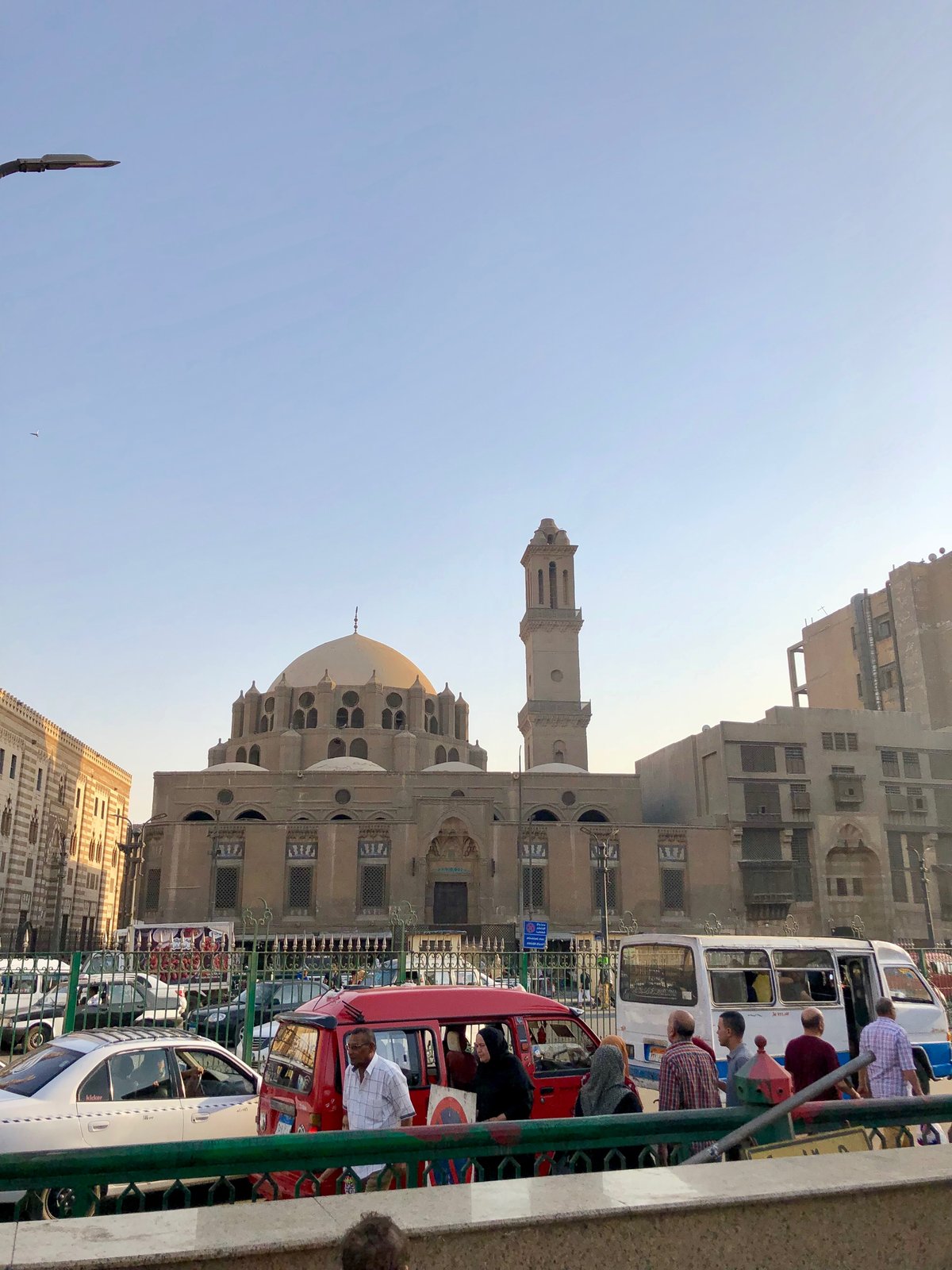
Mashyakhat Al-Azhar, encompassing both Al-Azhar Mosque and University, stands as one of Cairo’s most enduring symbols of Islamic scholarship, spiritual devotion, and cultural heritage. Since its founding in 970 CE, Al-Azhar has evolved from a modest Fatimid congregational mosque into a world-renowned center of Sunni Islamic learning and jurisprudence. Its architectural splendor and layered history make it a must-visit for travelers interested in Cairo’s Islamic heritage, architectural marvels, and vibrant cultural life (Siwa Travel; egyptplanners.com).
This guide offers in-depth information on Al-Azhar’s historical significance, practical visitor details—including visiting hours, ticketing, dress code, and accessibility—and highlights nearby attractions such as Khan El Khalili Bazaar and Al-Azhar Park. Whether you are a history enthusiast, architecture lover, or spiritual seeker, this resource will help you make the most of your visit to one of Cairo’s most treasured sites (egypt-uncovered.com; vanillatravels.net).
Foundation and Early Development
Al-Azhar Mosque was established in 970 CE under the patronage of the Fatimid Caliphate, shortly after the founding of Cairo. Its name, “Al-Azhar,” honors Fatimah al-Zahra, the daughter of the Prophet Muhammad, reflecting the Shi’a roots of its founders (Academia.edu; Egypt Trips Guide). Initially, the mosque served as a center for Isma‘ili Shi‘a doctrine and communal worship.
Transformation into an Intellectual Powerhouse
By 975 CE, Al-Azhar had begun functioning as a madrasa—one of the earliest in the Islamic world—offering instruction in Islamic law, theology, and the Arabic language (TripXL). This marked the inception of what would become the oldest continuously operating university globally (Egypt Uncovered). The mosque’s open lecture system and ijazah (certification) model attracted scholars and students from across the Muslim world, soon establishing Al-Azhar as a beacon of Islamic knowledge (Siwa Travel).
Architectural and Institutional Growth
Al-Azhar’s architecture reflects centuries of expansion and renovation under successive dynasties—Fatimid, Ayyubid, Mamluk, Ottoman, and modern Egyptian (Egypt Uncovered). Five minarets, a grand courtyard, and intricate decorative patterns showcase the layering of artistic influences (Siwa Travel). Institutionally, Al-Azhar evolved into the leading center for Sunni Islamic jurisprudence and theology, with its leadership (the Mashyakhat) emerging as a powerful religious authority (CairoScene).
Al-Azhar’s Role in Society and Beyond
Al-Azhar has long been a central force in Egyptian society, advocating for unity, social justice, and religious moderation. It has played key roles during periods of political upheaval and continues to influence social and religious issues at both national and international levels (Al-Azhar Official; Egypt Trips Guide).
Today, the Mashyakhat Al-Azhar, led by the Grand Imam, maintains its global reputation for promoting moderate Islamic thought, interfaith dialogue, and comprehensive education—including modern sciences and the humanities (World Scholarship News; Opportunities Radar).
Visiting Al-Azhar Mosque: Essential Information
Visiting Hours
- Standard Hours: Daily, 6:00 AM to 7:00 PM (may vary by season and during religious holidays) (egypt-uncovered.com).
- Restricted Access: Non-Muslim visitors may be asked to refrain from entering during Friday prayers and major religious festivals.
Entry and Ticketing
- Admission: Free for all visitors. Donations are appreciated and support mosque maintenance.
- Guided Tours: Available via local tour operators, often for a fee. Booking in advance is recommended for English-speaking guides (misstourist.com).
Dress Code and Etiquette
- Men: Long trousers, covered shoulders.
- Women: Long skirts or trousers, covered arms, headscarf (provided if needed).
- General: Remove shoes before entering prayer areas. Maintain a respectful silence and avoid disruptive behavior (egypt-uncovered.com).
Accessibility
While Al-Azhar Mosque is accessible to most visitors, some areas have uneven floors or steps. Wheelchair users may find certain sections challenging; contacting the visitor center ahead of time is recommended for specific accessibility information (egypt-uncovered.com).
Security Procedures
All visitors pass through security checks at the entrance. Remain vigilant with personal belongings, especially in crowded areas outside the mosque (egypt-uncovered.com).
Architectural Highlights
Fatimid Foundations
The original mosque, built during the Fatimid era, featured a rectangular prayer hall and a central courtyard (sahn), with horseshoe arches and stucco decorations reflecting early Islamic artistry (muslimheritage.com; agatetravel.com). Some original columns and the mihrab date to this period.
Mamluk and Ottoman Enhancements
Mamluk sultans expanded the mosque, adding madrasas and the famed Qaitbay Minaret, characterized by its elegant shaft and stone carvings. The Ottomans contributed further minarets and domes, most notably the Al-Gohari Minaret (agatetravel.com).
Courtyard, Porticos, and Decorative Arts
The serene central courtyard is encircled by arcaded porticos supported by marble columns—some repurposed from earlier structures. The mosque exhibits masterful calligraphy, carved stucco, and marble inlay throughout its prayer halls (muslimheritage.com).
Mihrabs and Minbars
Al-Azhar’s mihrabs and minbars are masterpieces of Islamic art. The main mihrab is distinguished by intricate carved stucco and marble columns, while the minbar is an ornate wooden pulpit inlaid with mother-of-pearl (agatetravel.com).
Navigating the Mosque and Engaging with Living Heritage
- Main Entrance: Barber’s Gate (Bab al-Muzayinin), a historic Ottoman-era portal (vanillatravels.net).
- Layout: Includes the main courtyard, multiple prayer halls, and historic minarets.
- Educational Spaces: Integrated madrasas offer glimpses of ongoing religious instruction and scholarly debate.
Al-Azhar is a living institution; visitors will often see students and scholars in discussion. Observing quietly is encouraged, but avoid interrupting classes or prayers (egyptholidaymakers.com).
Practical Travel Tips
- Best Times: Early morning or late afternoon for fewer crowds and cooler temperatures.
- Shoes: Bring socks, as shoes must be removed in prayer areas.
- Language: Arabic is predominant; some staff and students speak English.
- Photography: Allowed in non-prayer spaces; always ask before photographing people.
- Facilities: No cafes or restrooms inside the mosque; amenities are available nearby.
Nearby Attractions
- Khan el-Khalili Bazaar: Cairo’s famous market for souvenirs, spices, and crafts.
- Al-Azhar Park: Landscaped gardens offering stunning city views (holidify.com).
- Moez Street: Lined with medieval mosques, madrasas, and palaces.
- Historic Islamic Cairo: The district is a UNESCO World Heritage Site, rich in architectural and cultural treasures (archtene.com).
Frequently Asked Questions (FAQ)
Q: What are Al-Azhar Mosque’s visiting hours?
A: Open daily from 6:00 AM to 7:00 PM; hours may shift during religious holidays.
Q: Is there an entry fee or ticket required?
A: Entry is free; donations are welcomed. Guided tours may have fees.
Q: What is the dress code?
A: Modest attire; shoulders, arms, and knees covered. Women must cover hair.
Q: Are guided tours available?
A: Yes, through external providers and local agencies; advance booking is recommended.
Q: Is the mosque accessible for visitors with disabilities?
A: Some areas are accessible, but others may have steps or uneven surfaces.
Q: Can I take photographs?
A: Photography is allowed in most areas, except during prayers and in spaces with posted restrictions.
Summary and Final Thoughts
Mashyakhat Al-Azhar is not only an architectural marvel but also the spiritual and intellectual heart of Islamic Cairo. Its centuries-old legacy of learning, advocacy for moderation and social justice, and stunning blend of Fatimid, Mamluk, and Ottoman art make it a must-visit destination. By respecting local customs, adhering to the dress code, and exploring its nearby historic sites, visitors can gain a deep appreciation for Cairo’s vibrant Islamic heritage (muslimheritage.com; agatetravel.com).
For updated travel information, guided tour options, and curated itineraries, consider downloading the Audiala app. Follow our social channels for the latest insights and stories from Egypt’s historical treasures.
Listen to the full story in the app
The whole Mashyakhat Al-Azhar,
told well.
Audio guides for 1,100+ cities across 96 countries. History, stories, and local insight — offline ready.

Verified, and shown.
Researched and written by the Audiala editorial team from historical records, architectural archives, and local expertise.
Researched from Wikidata, Wikipedia & official sources · fact-checked · How we make our guides →