Plan and listen to Madrasah Al Kamiliya with Audiala.
Audio guide in your pocket, itinerary in your browser. Built for the way you actually visit.
Introduction
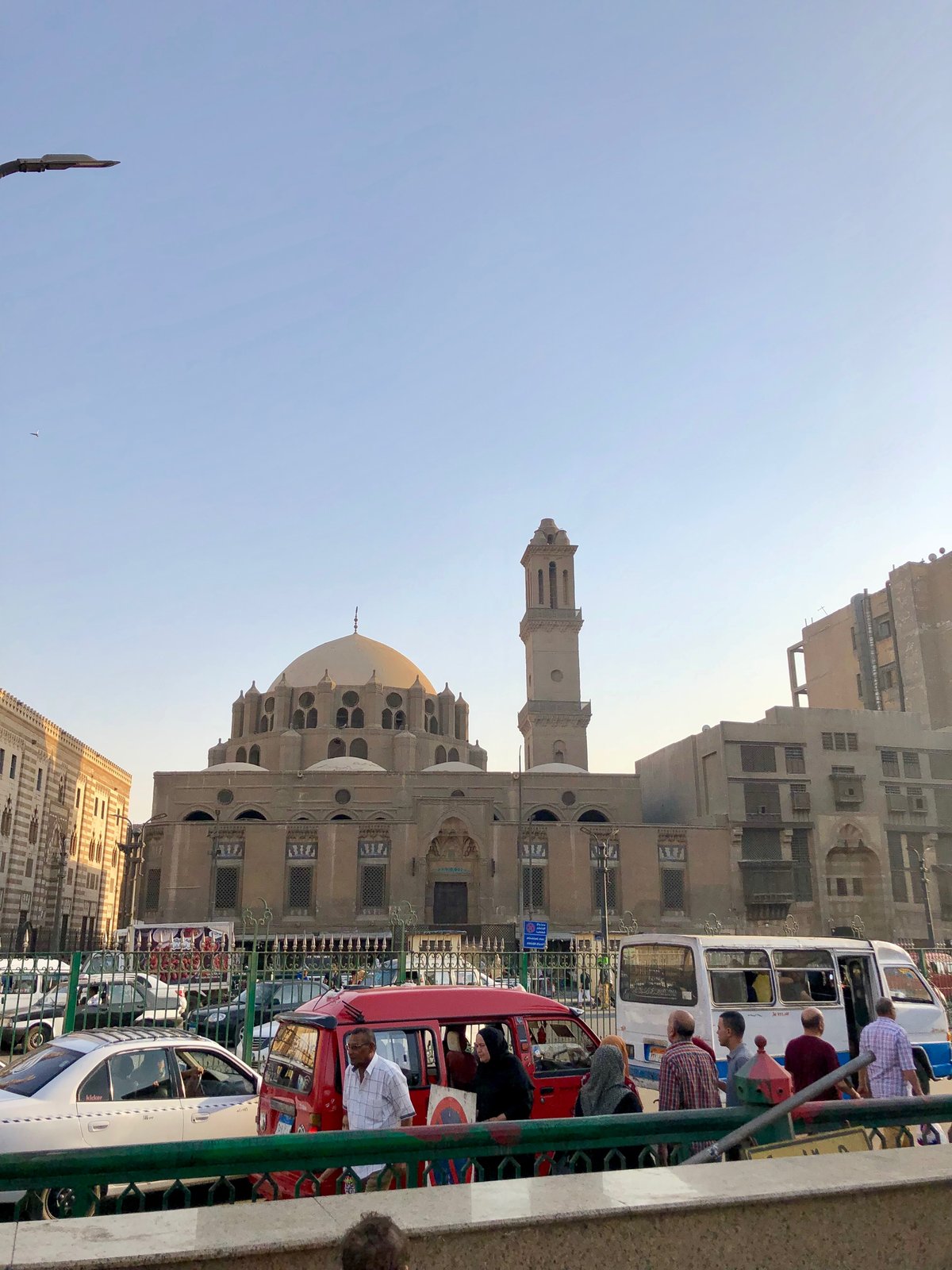
Madrasah Al Kamiliya stands as a distinguished emblem of Cairo’s medieval Islamic heritage, offering visitors an evocative journey through the city’s architectural, educational, and religious past. Nestled in the heart of Islamic Cairo, this early Ayyubid-era madrasa is celebrated for its historic significance, architectural ingenuity, and enduring cultural impact. Commissioned by Fatima Khantun, daughter of Sultan al-Malik al-Kamil, between 1230 and 1237 CE, it is among Egypt’s earliest surviving madrasas—an enduring testament to the pivotal role of elite patronage in fostering centers of Islamic learning (Archnet).
Whether you are a history enthusiast, architecture aficionado, student, or traveler, Madrasah Al Kamiliya invites you to connect with Cairo’s vibrant historical layers. This comprehensive guide covers the madrasa’s history, architectural features, visitor information, nearby attractions, and practical travel tips, ensuring a rewarding and well-prepared visit.
Historical Background
Origins and Patronage
Madrasah Al Kamiliya was established during the Ayyubid era, a transformative period in Egypt’s Islamic history marked by the consolidation of Sunni orthodoxy and the proliferation of waqf-endowed institutions. Commissioned by Fatima Khantun, daughter of Sultan al-Malik al-Kamil, its foundation reflects the influential role of elite female patronage in medieval Cairo (Archnet). The Ayyubid dynasty’s educational strategy sought to legitimize rule and foster religious learning by establishing madrasas as centers for Qur’anic study, Islamic law, and theology (Academia.edu).
Architectural Context and Layout
Located just outside Cairo’s medieval city walls, approximately 300 meters south of Bab al-Maqam, Madrasah Al Kamiliya is emblematic of early Ayyubid architectural principles (Archnet). The complex features a rectangular layout with a central courtyard, an octagonal basin for ablutions, a domed prayer hall, and residential quarters for students and teachers. The main entrance is distinguished by a muqarnas-vaulted portal—a hallmark of Islamic architecture—and leads through a vaulted corridor before opening onto the courtyard (Encyclopedia.com).
Educational and Religious Significance
As an educational institution, Madrasah Al Kamiliya offered instruction in the Qur’an, Islamic jurisprudence, theology, and Arabic language, typical of the medieval madrasa curriculum (Academia.edu). The inclusion of mausolea for the founder and other patrons within the complex illustrates the dual role of madrasas as both centers of learning and sites of commemoration.
Historical Developments and Transformations
Over the centuries, Madrasah Al Kamiliya witnessed periods of neglect, restoration, and adaptation in response to the evolving urban and social landscape of Cairo (Archnet). While some original features have been lost, key architectural elements such as the muqarnas portal, domed prayer hall, and courtyard basin remain as enduring links to Cairo’s medieval past.
Madrasah Al Kamiliya in Islamic Education
The madrasa’s establishment is set within the broader narrative of Islamic education, which evolved from informal study circles to waqf-endowed institutions. By the 13th century, madrasas were integral to the transmission of Sunni orthodoxy and the intellectual life of Cairo, attracting scholars and students from across the Islamic world (Academia.edu).
Architectural Features
Madrasah Al Kamiliya exemplifies the fusion of Ayyubid and later Mamluk architectural traditions:
- Courtyard: The central open space, often paved with marble, features a decorative octagonal basin and is surrounded by arcaded galleries (Encyclopedia.com).
- Prayer Hall: The domed prayer hall, with mihrab and minbar, anchors the southern side of the courtyard.
- Mausolea: Domed chambers on the eastern and western sides commemorate the founder and patrons.
- Student Quarters: Residential rooms, arranged on two levels, provided accommodation for students.
- Ornamentation: Intricate stone carvings, calligraphic inscriptions, and muqarnas vaulting highlight the artistic richness of the period (ArchDaily).
Adaptations to Cairo’s urban context led to asymmetrical layouts and the integration of the madrasa with adjacent streets and markets.
Cultural Significance
Educational and Religious Role
Madrasah Al Kamiliya served as a hub for advanced Islamic studies, reinforcing Sunni orthodoxy and shaping generations of scholars (Encyclopedia.com). The institution’s curriculum reflected pluralism in legal and theological traditions, while the mausoleum underscored the intertwining of religious, educational, and commemorative functions.
Political and Social Functions
Founding a madrasa was a means for rulers and elites to demonstrate piety, legitimize authority, and secure a lasting legacy through charitable endowments (Encyclopedia.com). Madrasahs also served as community centers, providing space for prayer, scholarship, and civic gatherings.
Artistic and Urban Impact
Madrasah Al Kamiliya contributed to the urban identity of Islamic Cairo, with its decorative facades, domes, and portals serving as city landmarks (ArchDaily).
Preservation and Contemporary Relevance
Preserved as part of Cairo’s UNESCO World Heritage-listed core, the madrasa is a vital repository of Islamic art, architecture, and intellectual history. Restoration efforts and academic interest underscore its ongoing relevance (ArchDaily).
Visiting Information
Visiting Hours & Tickets
- Opening Hours: Daily, 9:00 AM – 5:00 PM (check for changes during holidays/Ramadan) (ToTravelToo).
- Entry Fee: Usually free, though donations for maintenance are welcome. Guided group tours may incur a fee; inquire in advance.
- Tickets: Available on-site; discounts may apply for students and groups.
Accessibility & Amenities
- Location: Latitude 30.05036, longitude 31.26130; within Islamic Cairo’s historic district (AroundUs).
- Transport: Accessible via metro (Ataba/Bab El Shaariya stations), taxis, or by foot via El Moez Street (ToTravelToo).
- Amenities: No restrooms or cafés on-site; facilities available nearby along El Moez Street and Khan el-Khalili.
- Accessibility: Some uneven stone flooring; partial accessibility for visitors with mobility challenges.
Guided Tours & Travel Tips
- Guided Tours: Recommended for historical and architectural insights; book via reputable local operators or on-site (ArchitectureCourses.org).
- Best Times to Visit: Early mornings or weekdays for fewer crowds and cooler temperatures.
- Dress Code: Modest attire required; women should bring a scarf for mosque areas.
- Photography: Permitted in most areas, but avoid photographing during prayers or in sacred spaces.
Nearby Attractions
- Al-Azhar Mosque: Oldest Islamic university, tranquil courtyards (ArchitectureCourses.org).
- Khan El-Khalili Bazaar: Historic marketplace for crafts, jewelry, and local cuisine (EgyptUnitedTours).
- Qalawun Complex: Magnificent Mamluk mosque-madrasa-mausoleum ensemble (KhanElKhaliliCairo).
- Mosque-Madrasa of Sultan Barquq: Known for intricate architectural details.
- El Moez Street: Lined with medieval monuments; a UNESCO World Heritage site (ToTravelToo).
- Saladin Citadel & Mosque of Muhammad Ali: Panoramic city views, military museums (EgyptUnitedTours).
- Museum of Islamic Art: World-class collection of Islamic artifacts (Holidify).
FAQs
What are the visiting hours for Madrasah Al Kamiliya?
Open daily from 9:00 AM to 5:00 PM; check for updates during holidays and Ramadan.
Is there an entry fee?
Entry is generally free; donations for upkeep are welcome. Guided tours may have additional charges.
Are guided tours available?
Yes, local guides offer in-depth tours in multiple languages.
Is photography allowed?
Yes, except in prayer areas or during religious services.
Is the madrasa accessible for visitors with mobility issues?
Some areas may be challenging due to historic flooring; inquire in advance or bring support as needed.
Legacy and Current Status
Madrasah Al Kamiliya remains a vital link to Cairo’s medieval Islamic past, encapsulating the city’s architectural innovation, educational traditions, and cultural richness. Its proximity to other landmarks and ongoing preservation efforts highlight its importance as a monument of education, religion, and artistry. Scholars, students, and travelers continue to draw inspiration from its enduring legacy (Archnet).
Visitor Recommendations & Summary
Madrasah Al Kamiliya offers a unique historical and spiritual encounter amid the vibrant streets of Islamic Cairo. With easy access, modest entry arrangements, and opportunities for guided exploration, it is well-suited to visitors seeking an authentic experience of Cairo’s Islamic heritage. Its location near other significant sites such as Al-Azhar Mosque and Khan El-Khalili Bazaar enables a comprehensive exploration of Cairo’s layered history (ToTravelToo).
For the best experience:
- Dress modestly and respect religious customs.
- Visit in the morning or late afternoon for comfort and photography.
- Consider a guided tour for deeper context.
- Use digital maps (Google Maps; OpenStreetMap) for navigation.
- Support ongoing conservation with a donation if possible.
Listen to the full story in the app
The whole Madrasah Al Kamiliya,
told well.
Audio guides for 1,100+ cities across 96 countries. History, stories, and local insight — offline ready.

Verified, and shown.
Researched and written by the Audiala editorial team from historical records, architectural archives, and local expertise.
Researched from Wikidata, Wikipedia & official sources · fact-checked · How we make our guides →