Plan and listen to Madrasa Of Uljay Al-Yusufi with Audiala.
Audio guide in your pocket, itinerary in your browser. Built for the way you actually visit.
Introduction
In the heart of Cairo's historic al-Darb al-Ahmar district stands the Madrasa of Uljay al-Yusufi—a hidden gem illuminating the grandeur of 14th-century Egypt. Built around 1373 CE during the Mamluk Sultanate, this mosque-madrasa-mausoleum complex is an enduring testament to the era’s religious, cultural, and architectural sophistication. Founded by Uljay al-Yusufi, a prominent Mamluk amir and military commander, the complex not only served as an educational and religious center but also as a symbol of its patron’s social and political stature.
This guide provides a comprehensive overview for visitors: from historical and architectural highlights to practical information on visiting hours, tickets, accessibility, etiquette, and nearby attractions. It also offers travel tips and resources for a fuller exploration of Cairo’s medieval Islamic heritage.
For further scholarly information and virtual tours, explore resources like UNESCO, Archnet, and Google Arts & Culture.


Historical Background and Patronage
Context of 14th-Century Cairo
The Mamluk Sultanate (1250–1517) was a period of remarkable urban and cultural development. By the 14th century, Cairo had emerged as a center for trade, scholarship, and architectural innovation. The reign of Sultan al-Ashraf Sha'ban (1363–1377) witnessed a proliferation of monumental religious and educational buildings, often commissioned by powerful amirs to assert their influence.
Uljay al-Yusufi: The Founder
Uljay al-Yusufi rose through the Mamluk military hierarchy, using strategic alliances—including marriage into the royal family—to attain high office. His legacy is enshrined in this madrasa, reflecting his devotion, ambition, and status within Cairo’s ruling elite (Wikipedia).
Foundation, Architecture, and Artistic Features
Site and Structure
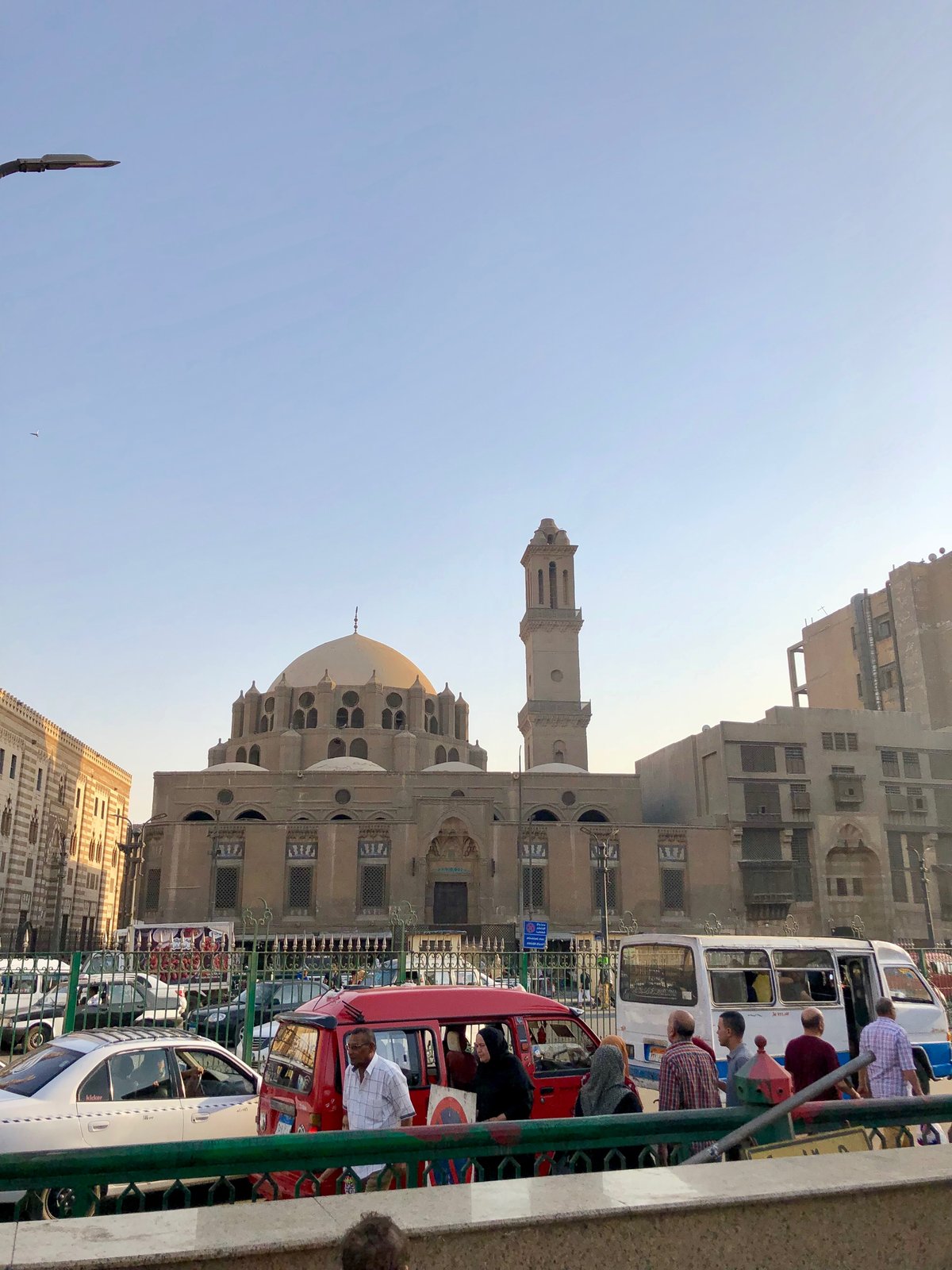
Located between Bab Zuwayla and the Cairo Citadel, the Madrasa of Uljay al-Yusufi occupies a strategic position along a historical thoroughfare. The complex features classic Bahri Mamluk architectural elements: a four-iwan courtyard, a distinctive ribbed dome, a tall minaret, and intricate stonework with ablaq patterns and muqarnas (stalactite) ornamentation (Archnet).
Interior Highlights
Inside, visitors can admire marble and mother-of-pearl inlays on the mihrab, a finely carved wooden minbar with ivory and ebony, stucco arabesques, Quranic calligraphy, and colored stained glass windows. The founder’s mausoleum, adjacent to the prayer hall, is crowned by a dome with painted and gilded motifs.
Educational and Religious Functions
The madrasa served as a center for Sunni Islamic learning, providing instruction in the Shafi‘i and Hanafi legal schools. It also included a sabil (public water fountain) and a kuttab (Qur’anic school for children), underscoring its charitable and community functions. Renowned scholars taught here, and the complex fulfilled roles in both worship and education (Academia.edu).
Practical Visitor Information
Visiting Hours
- Open: Daily, 9:00 AM – 5:00 PM
- Closed: Fridays and select religious holidays (hours may vary during Ramadan and festivals; always check ahead)
Tickets
- Entry Fee: Approximately 50 EGP for adults (discounts for students/seniors)
- Where to Buy: On-site at the entrance (advance booking not required except during peak seasons)
- Donation: If no formal fee is collected, a small donation to the caretaker is customary and appreciated
Accessibility
- Transport: Easily reached by taxi, ride-hailing apps, or public transport (nearest metro: Bab El Shaariya or Al-Azhar, followed by a walk or short ride)
- Mobility: Entry involves steps and uneven floors; wheelchair access is limited
- Facilities: No on-site restrooms or cafés; public facilities available nearby
Guided Tours and Photography
- Tours: Official guided tours are not always available, but many local guides include the madrasa in broader Islamic Cairo itineraries (Travel2Egypt)
- Photography: Permitted, but always ask permission before photographing people or during prayers; avoid flash to protect decorations
Visitor Etiquette and Cultural Sensitivity
- Dress Code: Modest attire is required—long pants/skirt and covered shoulders; women should cover hair with a scarf
- Shoes: Remove before entering prayer halls or carpeted areas
- Behavior: Maintain silence and a respectful demeanor; observe prayer times
- Supporting Preservation: Entrance fees and donations support conservation efforts
(The Intrepid Guide, Lonely Planet)
Travel Tips and Best Times to Visit
- Weather: October–April is most pleasant; July can reach 35°C (95°F) (Global Highlights), so visit in the morning or late afternoon
- Safety: The area is lively and generally safe during the day, but use standard urban precautions
- What to Bring: Bottled water, sun protection (hat, sunglasses, sunscreen), small cash for tips/donations, comfortable shoes
Nearby Attractions
Combine your visit with other Islamic Cairo highlights:
- Mosque-Madrasa of Sultan Hassan: A majestic Mamluk monument
- Al-Rifa’i Mosque: Known for royal tombs
- Al-Azhar Mosque: Historic university and religious center
- Khan el-Khalili Bazaar: Vibrant market for shopping and local cuisine
- Museum of Islamic Art: Extensive collection of Islamic artifacts
Preservation Efforts
The Madrasa of Uljay al-Yusufi has benefited from restoration initiatives by local and international organizations. These efforts are vital for protecting its unique features from urban encroachment and environmental damage, ensuring its continued role as a religious and cultural landmark (UNESCO).
Frequently Asked Questions (FAQ)
What are the opening hours?
9:00 AM to 5:00 PM daily, closed Fridays and certain holidays.
Is there an entrance fee?
Usually 50 EGP for foreign visitors; if not, a small donation is appreciated.
Are guided tours available?
Local guides frequently include the site in broader tours; inquire in advance or at nearby major monuments.
Can non-Muslims visit?
Yes, but access may be limited during prayers or religious events.
Is photography allowed?
Yes, with discretion—ask permission for people and during worship.
Is the site wheelchair accessible?
Accessibility is limited; contact ahead for possible assistance.
Visuals and Maps
- Include high-quality images with captions such as “Madrasa of Uljay al-Yusufi façade in Cairo” and “Intricate stonework and ribbed dome.”
- A location map showing proximity to other Islamic Cairo landmarks.
- Virtual tour via Google Arts & Culture
Listen to the full story in the app
The whole Madrasa Of Uljay Al-Yusufi,
told well.
Audio guides for 1,100+ cities across 96 countries. History, stories, and local insight — offline ready.
Verified, and shown.
Researched and written by the Audiala editorial team from historical records, architectural archives, and local expertise.
[https://www.archnet.org/sites/2229]
[https://trek.zone/en/egypt/places/887137/madrasa-of-uljay-al-yusufi-cairo]
[https://en.wikipedia.org/wiki/Madrasa_of_Uljay_al-Yusufi]
[https://whc.unesco.org/en/list/89/]
[https://artsandculture.google.com/asset/mosque-madrasa-of-uljay-al-yusufi-in-historic-cairo-0001/KQGw0w24DYcEWg]
Researched from Wikidata, Wikipedia & official sources · fact-checked · How we make our guides →