Plan and listen to Madrasa Of Sarghatmish with Audiala.
Audio guide in your pocket, itinerary in your browser. Built for the way you actually visit.
Introduction
Nestled in the heart of Cairo’s Islamic district, the Madrasa of Sarghatmish is a masterwork of Mamluk architecture and a vital symbol of the city’s religious and intellectual heritage. Founded in 1356 CE by Amir Sayf al-Din Sarghatmish al-Nasiri, this monument functioned both as an educational institution and the founder’s mausoleum, embodying the close ties between piety, scholarship, and political prestige in medieval Cairo (Archnet; UNESCO).
This guide provides detailed insights into the madrasa’s historical background, architectural features, cultural significance, and practical visitor information—including opening hours, ticketing, accessibility, and travel tips—so you can make the most of your visit to one of Cairo’s lesser-known treasures.

Historical Background
Origins and Patronage
Commissioned in 1356 CE, the Madrasa of Sarghatmish was established by Amir Sarghatmish, a prominent military commander under Sultan an-Nasir Hasan. Sarghatmish’s meteoric rise from mamluk soldier to vizier was matched by his devotion to the Hanafi school of Islamic jurisprudence, for which he founded the madrasa (Archnet). The institution attracted scholars from across the Islamic world, especially Persia, reflecting Cairo’s cosmopolitan character in the Mamluk era (Discover Islamic Art).
Political Context and Sarghatmish’s Downfall
Despite his influence, Sarghatmish’s fortunes waned amid allegations of corruption. Imprisoned and executed in 1358, just two years after the madrasa’s completion, his legacy endured through this enduring monument, which served both as a hub of scholarship and his final resting place (UNESCO).
Architectural Significance and Features
Site Plan and Organization
The madrasa’s cruciform layout centers on a marble-paved courtyard (sahn), surrounded by four iwans (vaulted halls). The largest iwan, facing the qibla, serves as the main prayer hall. Student quarters, or cells, are positioned around the courtyard, with many featuring windows that open to the street, integrating the structure into the urban landscape (Archnet; Cairo Top Tours).
Mausoleum Integration
A distinctive feature is the mausoleum, located adjacent to the qibla iwan and crowned by a striking double-shell dome. This combination of religious, educational, and funerary functions typifies Mamluk architecture, ensuring continued prayers for the founder (Discover Islamic Art).
Façade, Portal, and Decorations
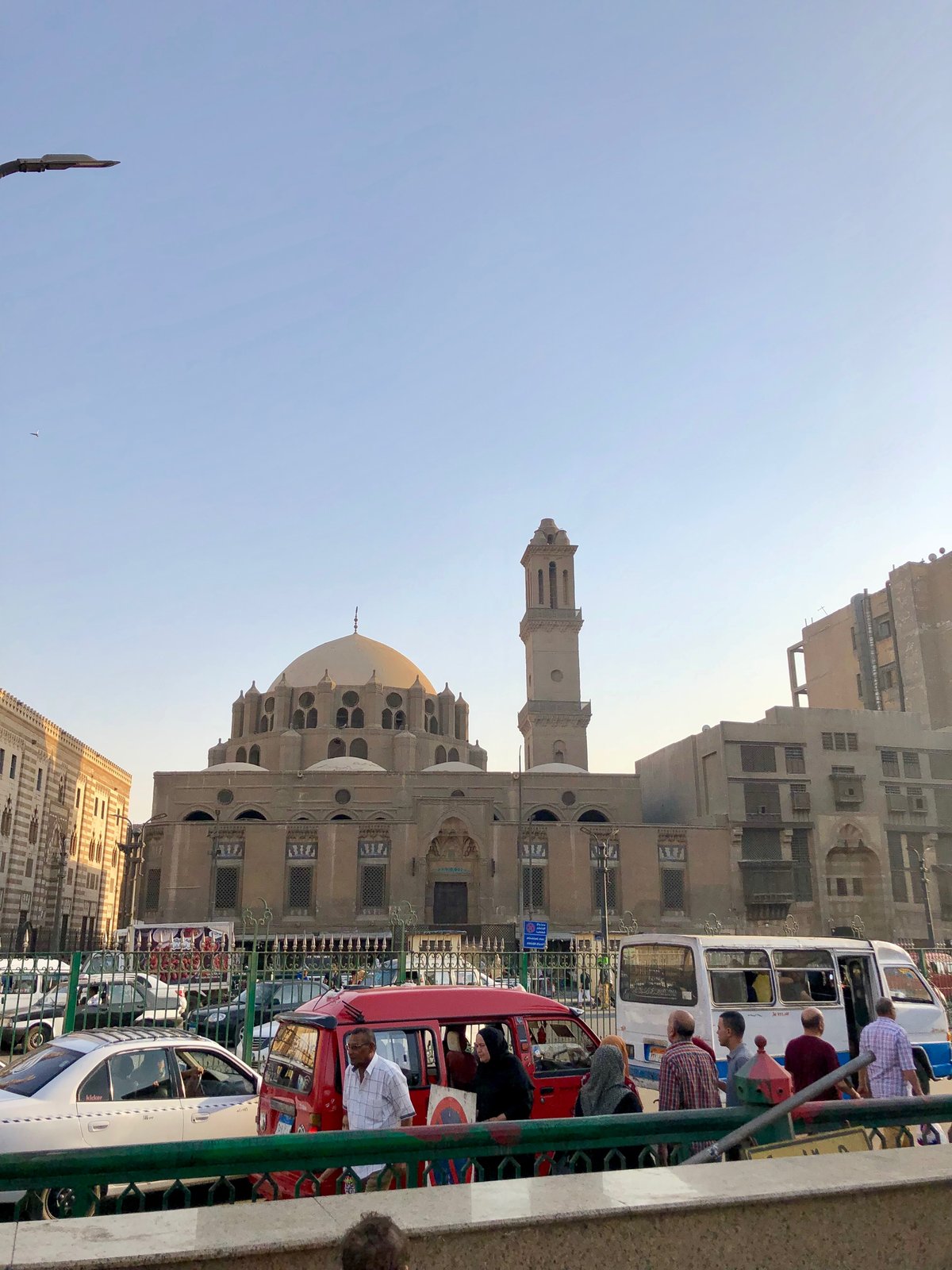
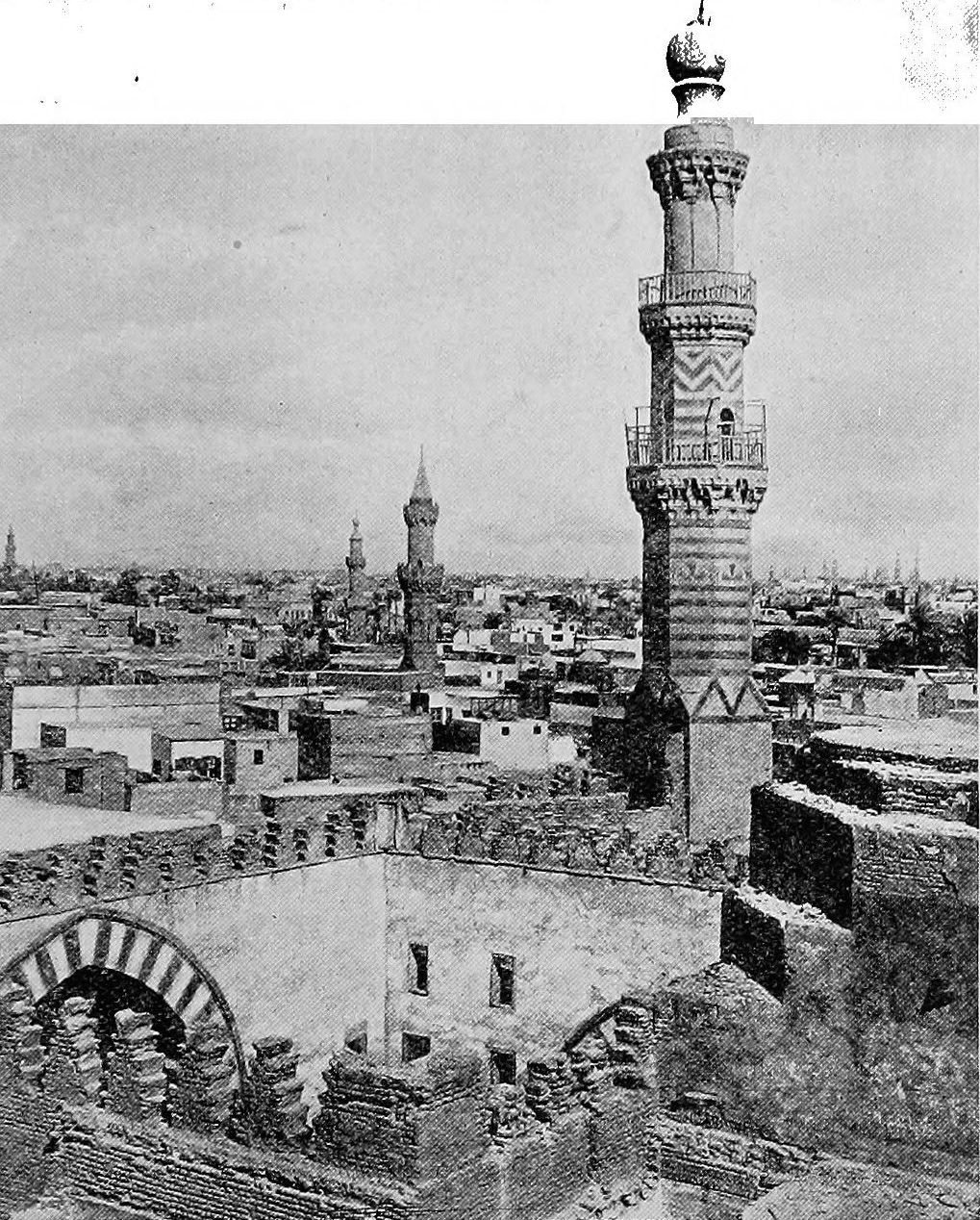
The limestone façade, 15.5 meters wide, features a monumental portal ornamented with muqarnas (stalactite vaulting) and ablaq masonry (alternating light and dark stone courses), hallmarks of the Bahri Mamluk style. The prominent minaret, rising above the entrance, is adorned with geometric and floral motifs, and the main façade includes black mashrabiyya (latticework) windows (Archnet; ETL Travel).
Inside, the mihrab (prayer niche) is inlaid with carved marble and mother-of-pearl, while stucco panels display Quranic inscriptions in thuluth and kufic scripts. Some marble panels and decorative elements are now preserved in the Museum of Islamic Art (Cairo Top Tours).
Courtyard, Iwans, and Dome
The central courtyard, once featuring a domed ablution fountain, is surrounded by four iwans with pointed arches. The mausoleum dome is notable for its Persian-inspired elongated bulbous form and is considered the earliest example in Cairo to feature an exterior stalactite cornice (Assignment Point). The combination of limestone and brick allows for complex shapes and intricate ornamentation.
Cultural and Educational Role
Historically, the madrasa was a key center for Hanafi legal studies and attracted scholars and students from across the Islamic world. At its height, it housed several teachers and up to sixty students, with an annexed orphanage school providing Quranic and academic instruction to local children (ETL Travel). The building’s design, praised by historian al-Maqrizi, reflects the Mamluks’ emphasis on beauty, learning, and piety. The madrasa influenced subsequent educational and architectural developments, including the design of later madrasas and the curriculum at institutions such as Al-Azhar University (Egyptopia).
Visiting Information
Location and Accessibility
The madrasa is situated on Saliba Street, adjacent to the Mosque of Ibn Tulun and within walking distance of the Gayer-Anderson Museum, Sultan Hassan Mosque, and the Cairo Citadel (Trek Zone). The nearest metro station is Sayyida Zeinab, about a 15-minute walk away. Taxis and public transport serve the area well. While the entrance and courtyard are at ground level, some areas (such as the mausoleum and upper floors) may be less accessible due to steps and uneven surfaces.
Opening Hours and Ticketing
- Opening Hours: Saturday to Thursday, 9:00 AM to 5:00 PM. Closed on Fridays and some public holidays. Check locally for updates, as hours may vary during restoration or religious events.
- Tickets: Entry is often free or requires a modest fee (typically 50–60 EGP for adults, with discounts for students and seniors). Children under 12 are often admitted free. Tickets can be purchased on-site; donations for maintenance are appreciated (GPSmyCity).
Facilities, Dress Code, and Photography
- Facilities: There are no on-site restrooms or cafés, but Saliba Street offers a range of local shops and eateries. Bring bottled water, especially in hot weather.
- Dress Code: Modest attire is required—shoulders and knees should be covered, and women may wish to bring a scarf for prayer areas. Shoes must be removed in the prayer hall and mausoleum.
- Photography: Permitted in most areas without flash. For professional photography or use of tripods, seek prior permission.
Guided Tours and Travel Tips
- Guided Tours: Local agencies offer guided tours, sometimes combined with visits to nearby monuments. Self-guided audio tours are available via apps like GPSmyCity.
- Travel Tips: Wear comfortable shoes, visit in the morning to avoid crowds, and consider combining your trip with other nearby attractions. The area is generally safe by day, but standard urban precautions apply.
Nearby Attractions
- Mosque of Ibn Tulun: Famous for its spiral minaret and spacious courtyard.
- Gayer-Anderson Museum: Showcases historic domestic architecture and decorative arts.
- Sultan Hassan Mosque: Renowned for its monumental scale and elaborate ornamentation.
- Cairo Citadel: Offers panoramic views and houses several museums.
- Al-Sayeda Zainab and Al-Sayeda Nafisa Mosques: Important pilgrimage sites.
Frequently Asked Questions (FAQ)
Q: What are the Madrasa of Sarghatmish's visiting hours?
A: Saturday to Thursday, 9:00 AM–5:00 PM; closed Fridays and some public holidays.
Q: Is there an entrance fee?
A: Entry is often free or costs around 50–60 EGP for adults. Discounted rates for students/seniors.
Q: Are guided tours available?
A: Yes, local agencies and self-guided apps offer tours with historical and architectural commentary.
Q: Is the madrasa accessible for people with disabilities?
A: The main courtyard is accessible, but some areas involve steps and uneven surfaces.
Q: Can I take photographs inside?
A: Yes, photography is allowed in most areas; avoid flash and respect the site's spiritual nature.
Discover More
The Madrasa of Sarghatmish stands as a testament to the artistic mastery, scholarly ambition, and spiritual devotion of the Mamluk era. Its innovative design, richly decorated interiors, and historic role as both an educational and religious center make it a must-visit for those interested in Islamic architecture and history. Plan your visit by checking current opening hours, dress modestly, and explore the surrounding treasures of Islamic Cairo.
For more tips, interactive maps, and updates on Cairo’s cultural landmarks, download the Audiala app and follow our social media channels. Enhance your journey with guided tours and discover the enduring legacy of Cairo’s Mamluk heritage.
Listen to the full story in the app
The whole Madrasa Of Sarghatmish,
told well.
Audio guides for 1,100+ cities across 96 countries. History, stories, and local insight — offline ready.
Verified, and shown.
Researched and written by the Audiala editorial team from historical records, architectural archives, and local expertise.
Researched from Wikidata, Wikipedia & official sources · fact-checked · How we make our guides →