Giza Governorate and EELU
Giza Governorate brings together ancient landmarks, including the Pyramids of Giza and the Great Sphinx, and modern institutions such as the Egyptian E-Learning University (EELU). EELU is Egypt’s first national university dedicated to e-learning and distance education. It operates primarily online, with its main office in Dokki.
EELU’s mission is to deliver education and training through e-learning, developing students’ academic expertise and digital skills. Its vision is to foster innovation, lifelong learning, and social development in Egypt and the Arab region. Flexibility, digital literacy, and sustainable educational advancement are central to its approach.
The university offers undergraduate and postgraduate programs through the Faculty of Computers and Information Technology; the Faculty of Commercial Studies and Business Administration; and the Faculty of Educational Studies, which offers specialized diplomas and master’s degrees in e-learning. Its online model serves students across Egypt and the Arab world, including people in remote or underserved areas and working professionals seeking flexible study options.
EELU’s curriculum emphasizes digital literacy and lifelong learning, and the university participates in national projects such as the Egyptian Knowledge Bank. It uses platforms including Moodle and interactive virtual classrooms to support digital teaching. Its work supports workforce development and aims to bridge educational gaps between urban and rural communities.
Programs are regularly reviewed by the National Authority for Quality Assurance and Accreditation of Education (NAQAAE), with national and international recognition. In 2023, EELU was shortlisted for the Times Higher Education Awards MENA’s “Student Recruitment Campaign of the Year.” As of 2024, the university was led by Dr. Ahmed Abu Al-Magd, University Director, and Khaled Hashem, Director of Student Affairs.
Challenges include broader accreditation for online degrees, disparities in digital infrastructure, and faculty development. Increasing internet penetration and sustained government support are among the factors cited in the university’s growth prospects.
History and significance
Egyptian E-Learning University
The Egyptian E-Learning University, officially the National Egyptian E-Learning University (الجامعة المصرية للتعلم الإلكترونى الأهلية), was established in 2008 by Presidential Decree No. 233. It was created as part of efforts to modernize higher education and expand access through digital innovation. The Egyptian Education Initiative (EEI) and the National E-Learning Project helped lay the groundwork for its establishment.
Pyramids of Giza
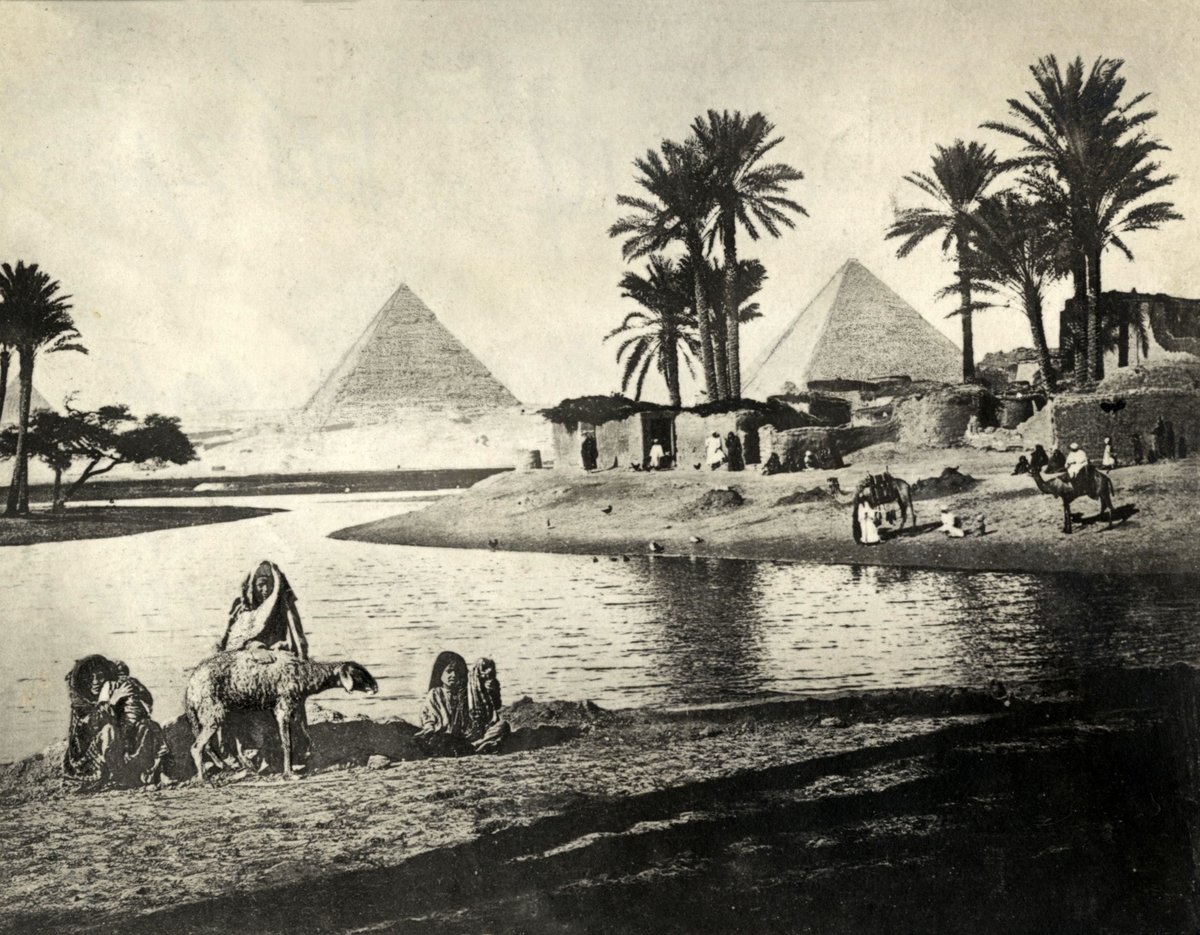
Built more than 4,500 years ago during Egypt’s Fourth Dynasty, the Pyramids of Giza served as tombs for Pharaohs Khufu, Khafre, and Menkaure. The Great Pyramid, built for Khufu around 2580–2560 BCE, is the largest and oldest of the Giza pyramids and the only surviving Ancient Wonder of the World. It was the world’s tallest man-made structure for centuries. The pyramids and the Great Sphinx form part of a UNESCO World Heritage site.
What to see
The Giza plateau includes the pyramids of Khufu, Khafre, and Menkaure, as well as the Great Sphinx, which stands adjacent to the pyramids. Near the Great Pyramid, the Solar Boat Museum features Khufu’s reconstructed boat.
Popular photographic locations include the area near the Solar Boat Museum for panoramic pyramid views, the area around the Sphinx for close-up photographs, and the western edge of the plateau for sunset views. Photography is allowed, but drones require permits and tripods may be restricted.
Camel and horseback rides are also available for views and photographs of the site.
Practical visiting information
Hours and tickets
The Giza pyramids site is open daily, 8:00 AM–5:00 PM. Summer hours may extend to sunset. Last entry is usually one hour before closing, approximately 4:00 PM.
General admission is approximately 200 EGP for adults. Entry to the interior of the Great Pyramid costs an additional approximately 400 EGP and requires a separate ticket. Discounts are available for students, children, and nationals. Daily visitor numbers for entry to the Great Pyramid are limited. Tickets can be purchased onsite or online.
Guided tours and facilities
Licensed guides are available at the entrance and can be booked in advance. Tours can also be booked through official operators or onsite, usually at extra cost. Guided tours may include the Sphinx and museums.
Facilities near the entrance include restrooms, shaded areas, food vendors, cafes, and souvenir shops.
Evening Sound and Light Shows are held periodically, illuminating the pyramids and narrating their history. Night visits are possible only during special events.
Getting there and accessibility
The pyramids are in Giza Governorate, about 20 km southwest of central Cairo. From Cairo, visitors can take Cairo Metro Line 2 to Giza Station and then take a short taxi ride. Taxis and ride-share services travel directly from central Cairo and are described as the most convenient option. Tour buses are offered by many agencies; public transport is possible but less direct. Buses, metro services, and taxis connect the area. Parking is available near the site.
The plateau is partially accessible, including partial wheelchair access. The pyramid interiors are not fully accessible; their narrow, steep passages can be challenging and may not be suitable for all visitors.
EELU location and admissions
EELU’s main office is at 33 El Messaha Street, Dokki A, Dokki, Giza Governorate. It is also described as being at 33 Al-Masaha Street, Dokki. Administrative services, student services, and occasional in-person functions are managed from this location.
Prospective students apply online through EELU’s website. Admission requirements vary by program but generally include a high school certificate, often with a science or mathematics focus. Support services assist applicants, and tuition information is available through the university website.
Tips
Early morning and late afternoon are recommended for favorable lighting and fewer crowds. Sunrise and sunset offer dramatic views, and October–April is also cited as a good period to visit.
Wear comfortable shoes and clothing, use sun protection, and bring water and a hat. Modest dress is recommended. Use official guides; keep valuables secure and be aware of your surroundings. Traveling during non-peak hours is described as safer.
Large bags and tripods may be restricted. Children can visit, but some areas are uneven and require supervision.
Nearby places
The Grand Egyptian Museum (GEM) is nearby and is described as set to be the world’s largest archaeological museum. Its attractions include immersive exhibitions and archaeological treasures.
Other nearby places include Orman Garden, a botanical oasis near EELU; the Pharaonic Village, an interactive living museum; and Dream Park, described as Egypt’s largest theme park. Dokki, where EELU is located, has cafes, bookstores, and cultural venues. Restaurants and street vendors offer local Egyptian cuisine.
FAQs
How can I apply to EELU?
Apply online through the EELU website. Requirements vary by program.
Are EELU degrees recognized?
EELU programs are reviewed by NAQAAE. The university’s FAQ states that its degrees are accredited by NAQAAE.
What are EELU’s fees?
Fees vary by program; tuition information is available through the university website.
Does EELU support online learners?
Yes. Support includes academic advising and technical help.
Can international students enroll at EELU?
Yes. EELU welcomes students from the Arab region and beyond.
Can visitors enter the Great Pyramid?
Yes, with a separate ticket. Daily visitor numbers are limited.
What are the Giza pyramids’ visiting hours?
The site is open daily from 8:00 AM to 5:00 PM, with last entry usually around 4:00 PM. Summer hours may extend to sunset.
How can visitors buy tickets?
Tickets are available onsite or online.
Are guided tours available?
Yes. Licensed guides are available at the entrance, and tours can be booked in advance, through official operators, or onsite. They are available at extra cost.
Is the site accessible?
The plateau is partially accessible, including partial wheelchair access. Pyramid interiors are not fully accessible, and their passages may be challenging for some visitors.
Are there restrooms and cafes?
Basic facilities are available near the entrance, including restrooms and cafes.
What can visitors bring?
Large bags and tripods may be restricted. Drones require permits.
Is the site suitable for children?
Yes, but some areas are uneven and require supervision.
Are night visits possible?
Only during special events, such as the periodic evening Sound and Light Shows.
When is the best time to visit?
October–April is cited as a good period. Early morning and late afternoon are recommended for lighting and fewer crowds.