Plan and listen to Al-Fath Mosque with Audiala.
Audio guide in your pocket, itinerary in your browser. Built for the way you actually visit.
Introduction
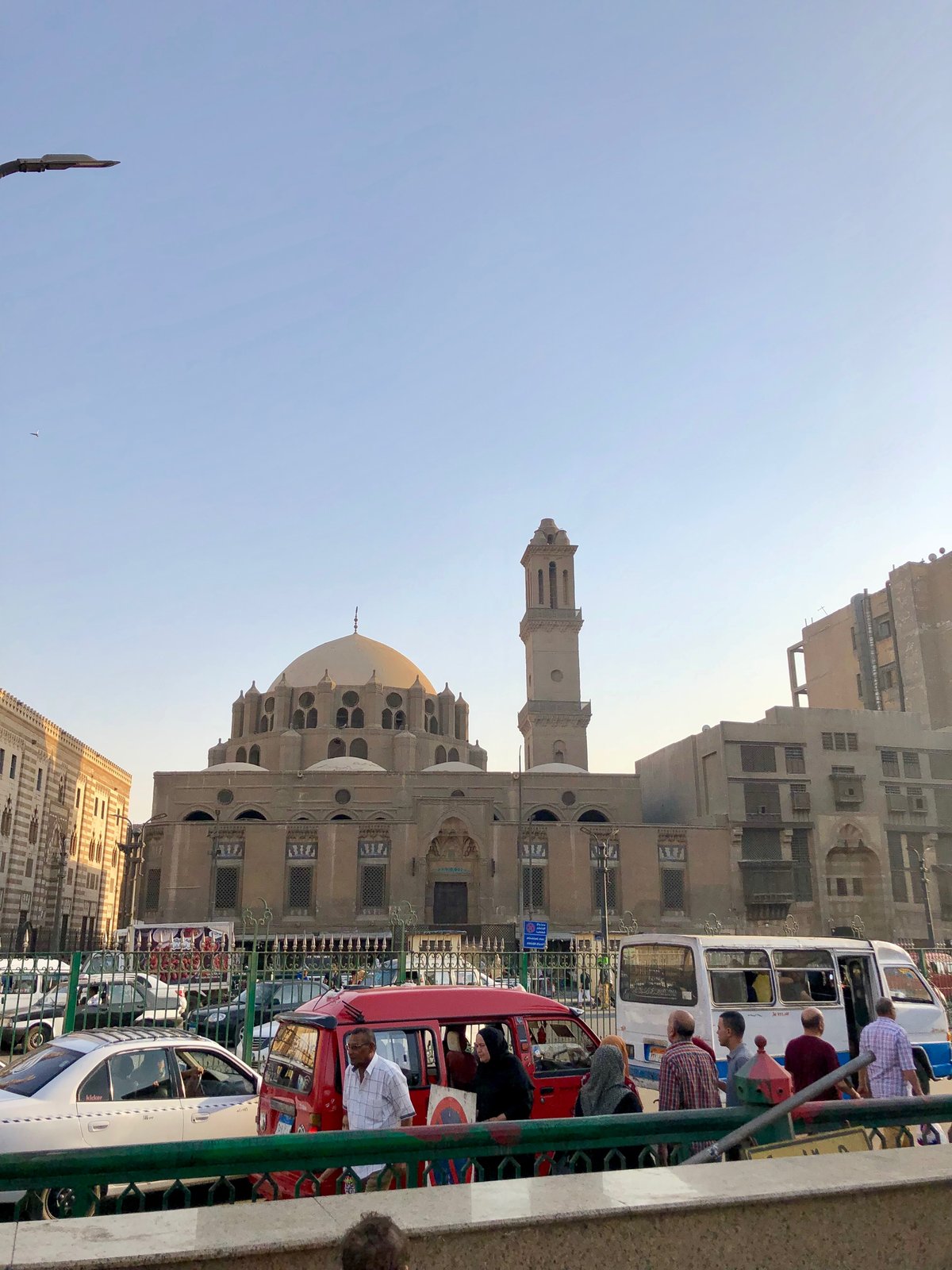
Located in the bustling Ramses Square in central Cairo, Al-Fath Mosque stands as a testament to Egypt’s enduring Islamic heritage and modern urban vitality. Renowned for its towering 130-meter minaret—the tallest in Cairo—the mosque serves as both a spiritual beacon and a vibrant community hub. Its layered history, from early Islamic foundations through cycles of destruction and rebirth, offers invaluable insights into Cairo’s religious, architectural, and civic evolution (EES; Local Guides Connect; Sphinx Tours Egypt).
This detailed guide will provide essential visitor information, including visiting hours, ticketing, accessibility, etiquette, travel tips, and highlights of nearby attractions. Whether you are interested in history, architecture, spirituality, or cultural immersion, Al-Fath Mosque is a remarkable window into Cairo’s rich heritage (Lonely Planet; ETB Tours Egypt).
Historical Background
Early Origins
The roots of Al-Fath Mosque trace back to the early Islamic conquest of Egypt in 642 CE under General Amr ibn al-As. The original mosque, established to serve the nascent Muslim community, became a spiritual and social anchor in what would evolve into central Cairo (EES).
Destruction and Transformation
During the 1798 French occupation, the mosque was demolished in the course of the Cairo Revolt, disrupting its religious function (EES). The site was subsequently used for military purposes and underwent various transformations through the 19th and 20th centuries.
Modern Revival
Amidst Egypt’s urban renewal initiatives, the current Al-Fath Mosque was constructed and inaugurated in 1990. The modern structure was designed to accommodate large congregations and symbolize Cairo’s resilience and continuity (EES).
Architectural Evolution
Minaret and Layout
Al-Fath Mosque’s most striking feature is its 130-meter minaret, the tallest in Cairo, which dominates the city skyline and serves as a landmark (EES). The mosque’s architecture blends traditional Islamic motifs with modern construction. The spacious prayer hall, expansive courtyard, and marble columns—many repurposed from earlier structures—demonstrate both function and artistry (Sphinx Tours Egypt).
Artistic Features
While the mosque’s architecture is generally austere, it incorporates Mamluk-era panels, intricate calligraphy, and decorative stonework, especially around the Qibla wall. Continuous restoration ensures these historical elements remain preserved (Lonely Planet).
Religious and Community Significance
Al-Fath Mosque functions as a vital religious center, hosting five daily prayers, Friday congregational prayers, and special events such as Ramadan and Eid celebrations. Its name, meaning "The Opening" or "The Victory," commemorates the triumphs and resilience of the Muslim community throughout Cairo’s history (Local Guides Connect).
Beyond worship, the mosque is a hub for educational lectures, Quranic recitations, social gatherings, and charitable activities, reinforcing its role as a focal point for Cairo’s diverse population (Egypt Planners).
Visitor Information
Visiting Hours
- General Hours: Open daily, approximately 8:00 AM to 8:00 PM. The mosque may be closed or have restricted access during prayer times, especially on Fridays and Islamic holidays.
- Best Times: For quieter visits, aim for mid-morning or mid-afternoon outside major prayer times.
Entry and Tickets
- Admission: Free for all visitors. Donations are appreciated to support mosque maintenance.
- Entry Procedures: Expect security checks at the entrance, especially during holidays or large gatherings (egypttoursbylocals.com).
Accessibility
- Wheelchair Access: Ramps and accessible facilities are available at main entrances. Some interior areas may have steps or uneven surfaces—assistance can be arranged upon request (arabmls.org).
- Facilities: Separate ablution areas for men and women, basic restrooms, and shoe racks at entry.
Etiquette and Dress Code
- Dress Code: Modest clothing required—arms and legs covered; women should wear a headscarf inside the prayer hall.
- Shoes: Removed before entering prayer areas. Carry a small bag for shoes.
- Behavior: Maintain quiet and respect; avoid loud conversations, eating, or drinking inside. Photography allowed in courtyards; avoid photographing worshippers without consent.
Guided Tours
- Availability: Local tour operators offer guided tours focusing on Al-Fath Mosque’s history and architecture. No official mosque-run tours, but arrangements can be made through agencies (ETB Tours Egypt).
Practical Travel Tips
- Getting There: Easily reached via Cairo Metro (Al-Shohadaa station), Ramses railway station, taxis, or ride-share services.
- Weather: Cairo can be hot; bring water (not for inside mosque), sun protection, and dress appropriately (magnificenttravel.com).
- Safety: Ramses Square is well-patrolled and generally safe; remain vigilant with personal belongings.
Nearby Attractions
- Egyptian Museum: World-class collection of ancient Egyptian artifacts, a short distance from Ramses Square.
- Khan El Khalili Bazaar: Famous market offering souvenirs, spices, and crafts.
- Downtown Cairo: Explore Tahrir Square and historic neighborhoods.
Frequently Asked Questions (FAQ)
Q: What are the visiting hours of Al-Fath Mosque?
A: The mosque is open daily from approximately 8:00 AM to 8:00 PM; avoid peak prayer times for sightseeing.
Q: Is there an entry fee?
A: No, entry is free; donations are welcome.
Q: Can non-Muslims visit?
A: Yes, outside prayer times and when observing mosque etiquette.
Q: Is the mosque accessible for people with disabilities?
A: Yes, ramps and accessible facilities are available.
Q: Are guided tours available?
A: Yes, via local tour agencies.
Q: Can I take photographs?
A: Yes, in designated areas and courtyards; avoid photographing worshippers without permission.
Discover More
Al-Fath Mosque is more than a place of worship; it is a living symbol of Cairo’s resilience, faith, and community life. With free entry, comprehensive accessibility, and a location amidst other historical landmarks, it remains a highlight for visitors and locals alike. By observing proper etiquette and planning your visit around mosque hours, you can fully appreciate this monument’s spiritual and cultural significance.
For the latest updates, tour bookings, and interactive guides, download the Audiala app and follow us on social media. Start your journey into the heart of Cairo’s Islamic history today!
Listen to the full story in the app
The whole Al-Fath Mosque,
told well.
Audio guides for 1,100+ cities across 96 countries. History, stories, and local insight — offline ready.

Verified, and shown.
Researched and written by the Audiala editorial team from historical records, architectural archives, and local expertise.
Researched from Wikidata, Wikipedia & official sources · fact-checked · How we make our guides →