Introduction to Al-Azhar Park and Its Significance
Al-Azhar Park is one of Cairo’s most celebrated green spaces, seamlessly merging the city’s rich historical legacy with a commitment to environmental renewal and community engagement. Situated atop the historic Al-Darassa Hill, the park was once a neglected landfill that has been transformed into a vibrant 30-hectare oasis. Overlooking the city’s iconic skyline and adjacent to the storied Darb al-Ahmar district, Al-Azhar Park offers visitors meticulously landscaped gardens inspired by traditional Islamic designs, restored medieval fortifications, and sweeping views of Cairo’s most famous monuments, including Al-Azhar Mosque and the Citadel of Saladin.
Initiated by the Aga Khan Trust for Culture in the 1980s, the park’s creation not only revitalized a crucial green lung within Cairo but also sparked the regeneration of neighboring historic neighborhoods. Today, Al-Azhar Park is a prime destination for both locals and tourists, offering recreational facilities, cultural venues, and educational opportunities. This comprehensive guide provides all you need to know about visiting Al-Azhar Park, including its history, significance, practical travel information, and highlights of nearby attractions (egypttoursportal.com, cairotoursplanner.com, archnet.org).
Photo Gallery
Explore Al-Azhar Park in Pictures
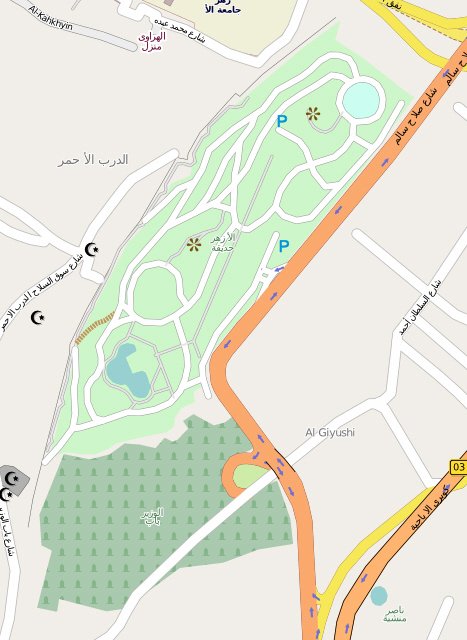
Detailed map of Al Azhar Park in Cairo illustrating different sections, pathways, and landmarks within the park
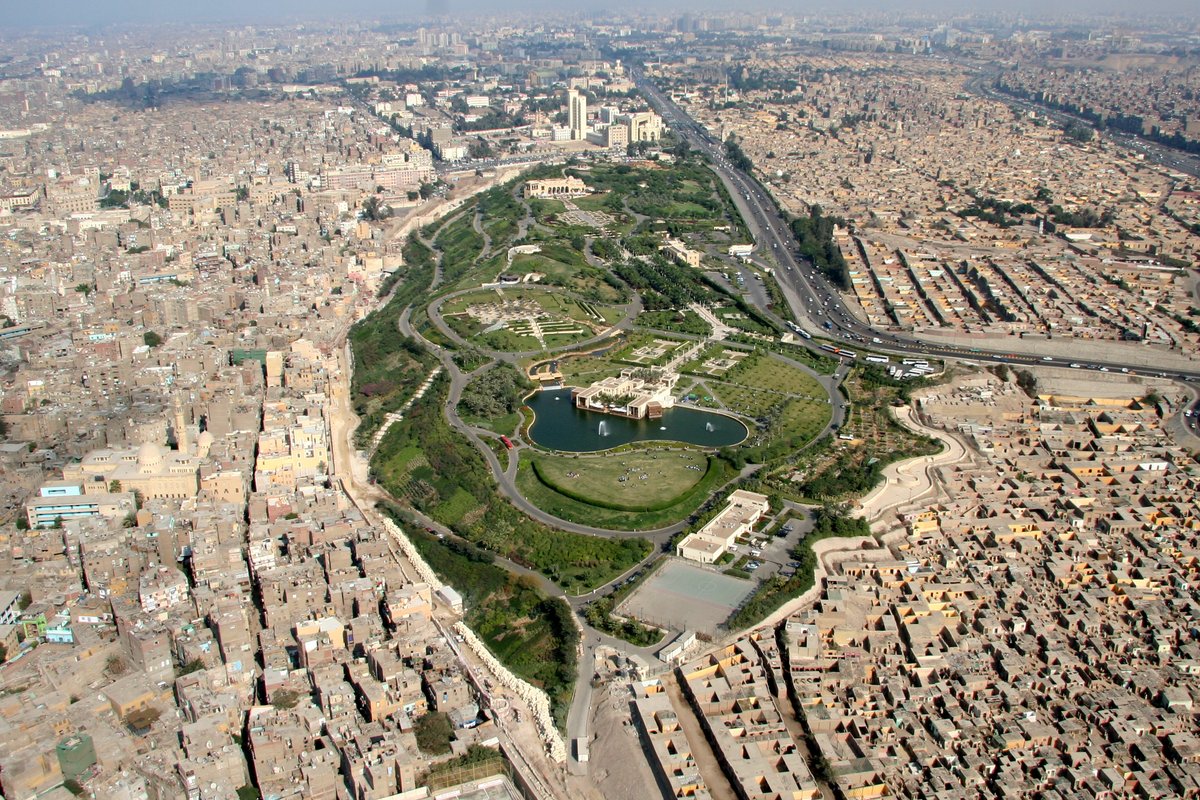
View of Al Azhar Park featuring lush green gardens and historic buildings including a mosque in Cairo, Egypt
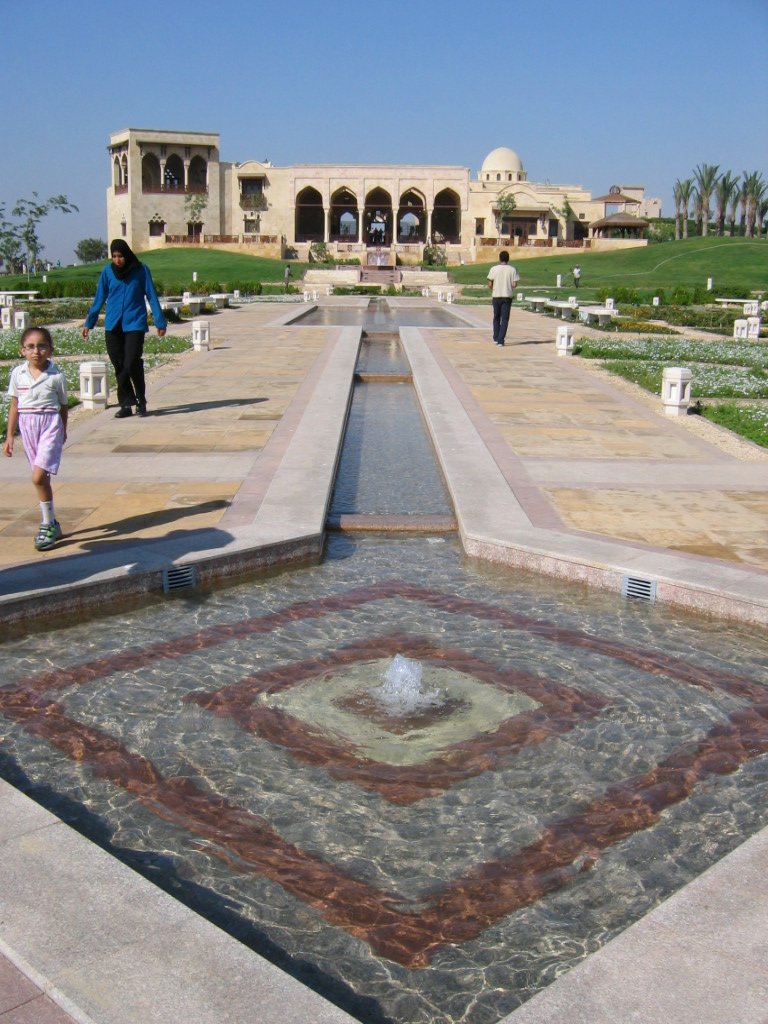
View of Azhar Park showcasing its lush green landscape with the Cairo city buildings visible in the distance, highlighting the blend of nature and urban life.
Origins and Historical Context
Al-Azhar Park occupies a site of profound significance in Cairo's urban history. The land, once a 500-year-old debris mound, was part of the historic Fatimid City, established in the 10th century. Over centuries, this area accumulated refuse, becoming a large landfill even while surrounded by some of Cairo’s most revered Islamic monuments (houses-apartments.com, egypttoursportal.com).
In 1984, Aga Khan IV recognized the site’s potential and, through the Aga Khan Trust for Culture (AKTC), invested in transforming it into a green oasis. This project, with a budget of $30 million, sought not only to create a park but to reclaim the lost heritage and invigorate the surrounding neighborhoods (araburban.org).
Archaeological Discoveries and Heritage Preservation
The park’s development involved the removal of approximately 1.5 million cubic meters of rubble, revealing significant archaeological finds. Most notably, the 12th-century Ayyubid Wall, constructed during the reign of Saladin, was unearthed and restored, becoming an integral feature of the park (thrillophilia.com). The park’s design incorporates these historic elements, blending them with traditional Islamic landscaping—geometric gardens, water channels, and shaded walkways—to honor Cairo’s architectural and cultural heritage (cairotoursplanner.com).
Urban Renewal and Community Revitalization
Al-Azhar Park is a central achievement in urban renewal for the Middle East. Before its construction, Cairo had one of the world’s lowest green space ratios per capita (archnet.org). The park’s creation increased public green space and spurred the revitalization of the adjacent Darb al-Ahmar district. The Aga Khan Historic Cities Programme collaborated with local residents, restoring historic homes, creating jobs, and enhancing the quality of life for the community (araburban.org, houses-apartments.com).
Environmental and Social Significance
Transforming a polluted landfill into a sustainable park required innovative environmental engineering. The park now boasts a wide variety of native and exotic plants, rolling lawns, and water features that help cool the urban microclimate (thrillophilia.com, egypttoursportal.com). Socially, Al-Azhar Park has become a lively gathering place, offering playgrounds, cafes, cultural events, and educational activities, accessible to all residents and visitors (cairotoursplanner.com).
Economic Impact and Sustainable Development
Al-Azhar Park has stimulated economic growth, attracting new businesses and supporting local artisans through venues like the Handicraft Gallery (thrillophilia.com). The park’s revenues are reinvested into maintenance and community projects, serving as a model for sustainable urban management. Its achievements earned international recognition, including the Global Vision Innovation Award from Travel + Leisure magazine in 2005 (egypttoursportal.com).
Architectural and Landscape Design
Designed by Sites International, Al-Azhar Park reflects the principles of classical Islamic gardens—symmetry, geometric patterns, and water elements. The central spine connects formal gardens, open lawns, and the Hilltop Restaurant, designed in Fatimid style, which provides panoramic city views (thrillophilia.com). Restored historic structures and modern amenities highlight the park’s mission to bridge Cairo’s past and present.
Visiting Information
Opening Hours
- Sunday to Wednesday: 9:00 AM – 10:00 PM
- Thursday to Saturday: 9:00 AM – 11:00 PM
(Holidify, Prices2Day)
Ticket Prices (as of 2025)
- Adults:
- Sunday to Wednesday: 40 EGP
- Thursday to Saturday: 50 EGP
- Children (ages 2–8):
- Sunday to Wednesday: 30 EGP
- Thursday to Saturday: 40 EGP
Children under 2 enter free. Tickets are available at the entrance, with possible special rates for groups or events (Prices2Day).
Getting There
Al-Azhar Park is located in the Darb al-Ahmar district. The main entrance is on Salah Salem Street. Access is easy by taxi, ride-hailing apps, or public transport; nearby metro stations include Sadat and Mar Girgis, followed by a short taxi ride (Prices2Day).
Accessibility
The park features paved paths and ramps, ensuring accessibility for wheelchair users and visitors with mobility needs.
Travel Tips
- Best Time to Visit: November–February offers cooler weather; early mornings and late afternoons provide comfortable temperatures and beautiful lighting (Directionally Challenged Traveler).
- Dress Code: Modest, lightweight clothing and comfortable shoes are recommended.
- Food Policy: Outside food in plastic containers is allowed; metal containers are prohibited (Prices2Day).
- Photography: Photography is permitted throughout the park, though drone use may require special permission.
- Facilities: The park offers restrooms, paid parking, and security personnel.
Attractions and Activities
Landscaped Gardens
Al-Azhar Park’s gardens feature over two million plants, including more than 325 species. Themed areas, geometric designs, and water features evoke the essence of classical Islamic gardens (Egypt Uncovered, Holidify).
Panoramic City Views
Elevated terraces provide exceptional views of Cairo’s skyline, including the Citadel and Al-Azhar Mosque—especially stunning at sunset (Directionally Challenged Traveler).
Family-Friendly Facilities
Children’s play areas, shaded lawns, and open picnic spots make the park ideal for families (Egypt Uncovered).
Dining
Enjoy Egyptian and international cuisine at the Citadel View Restaurant, or relax at casual cafés and kiosks throughout the park (TripHobo, Prices2Day).
Cultural Events
The park regularly hosts concerts, art exhibitions, and festivals celebrating Egypt’s heritage and arts (Directionally Challenged Traveler). Open-air performances and special events enrich visitors’ experiences.
Walking, Jogging, and Birdwatching
The park provides extensive walking and jogging paths, as well as opportunities for birdwatching and nature observation (Holidify, Egypt Uncovered).
Nearby Cairo Historical Sites
- Al-Azhar Mosque: A center of Islamic learning and one of Cairo’s oldest mosques.
- Citadel of Saladin: Medieval fortress with museums and panoramic city views.
- Khan el-Khalili Bazaar: Famous for shopping, souvenirs, and local crafts.
- Al-Muizz Street: Known for its medieval Islamic architecture (Directionally Challenged Traveler).
Special Events
Al-Azhar Park’s calendar features cultural festivals, art exhibitions, music performances, and educational workshops. Check the official website for the latest event updates.
Top Photographic Spots
- Terraces near the Hilltop Restaurant for panoramic cityscapes.
- Along the historic Ayyubid Wall for architectural backdrops.
- Geometric gardens and water features for landscape photography.
Frequently Asked Questions (FAQ)
Q: What are Al-Azhar Park’s visiting hours?
A: Sunday to Wednesday: 9:00 AM – 10:00 PM; Thursday to Saturday: 9:00 AM – 11:00 PM.
Q: How much are tickets?
A: Adults: 40–50 EGP; children (2–8): 30–40 EGP, depending on the day.
Q: Is the park accessible to wheelchair users?
A: Yes, it features paved paths and ramps.
Q: Can I bring outside food?
A: Yes, but only in plastic containers.
Q: Are guided tours available?
A: Yes, via local tour operators.
Q: Are pets allowed?
A: Generally, pets are not permitted.
Listen to the full story in the app
Your Personal Curator, in Your Pocket.
Audio guides for 1,100+ cities across 96 countries. History, stories, and local insight — offline ready.
Audiala App
Available on iOS & Android
Join 50k+ Curators
Sources
- verified
- verified
- verified
- verified
- verified
Last reviewed: