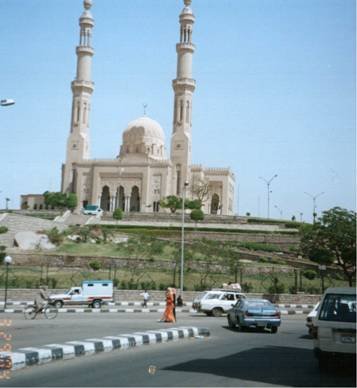
Plan and listen to Mausoleum Of Aga Khan with Audiala.
Audio guide in your pocket, itinerary in your browser. Built for the way you actually visit.
Introduction
The Mausoleum of Aga Khan in Aswan, Egypt, is a landmark of spiritual reverence, architectural grandeur, and historical depth. Perched atop a tranquil hill on the west bank of the Nile, it commemorates Sir Sultan Muhammed Shah, Aga Khan III—the 48th Imam of the Nizari Ismailis—and, since 2025, Aga Khan IV. Drawing on Fatimid architectural traditions and deeply rooted in the city’s peaceful atmosphere, the mausoleum is both a site of pilgrimage and a highlight for travelers seeking to explore Aswan’s rich Islamic and cultural heritage (Wikipedia; The Star).
This guide offers detailed insights into the mausoleum’s history, architectural features, visitor information, travel tips, and nearby attractions—helping you plan a meaningful visit to one of Aswan’s most treasured sites.


Historical Background
Origins and Historical Context
Commissioned by Begum Om Habibeh after Aga Khan III’s passing in 1957, the mausoleum was constructed between 1956 and 1960. Aga Khan III’s choice of Aswan as his resting place stemmed from his affection for its restorative climate and peaceful scenery, which he experienced during convalescence in the 1950s (Wikipedia; The Star; Tribune).
Connection to the Fatimid Legacy
The mausoleum’s placement on Aswan’s west bank underscores the Ismaili Imams’ historical and spiritual ties to Egypt’s Fatimid Caliphate (909–1171 CE). This connection is reflected in both the site’s location and its architectural motifs, honoring the Ismaili community’s enduring relationship with Egypt (Wikipedia; El Shai).
Architectural Design and Symbolism
Designed by renowned Egyptian architect Farid Shafi’e, the mausoleum draws heavily on Fatimid architectural traditions:
- Materials: Built from pink limestone and granite, with a tomb of white Carrara marble adorned with Quranic inscriptions.
- Structure: Features a large central dome on an octagonal base, four smaller corner domes, crenellated parapets, and arched doorways reminiscent of medieval Islamic fortifications.
- Windows: Arched tracery with intricate geometric patterns allows soft natural light inside, while a mihrab on the eastern wall indicates the direction of Mecca.
- Symbolism: The elevated hilltop setting and the structure’s vertical emphasis evoke the spiritual journey from life to eternity (Nile Cruise Trips; Trek Zone).
The mausoleum’s exterior glows warmly at sunrise and sunset, while the gardens provide a serene backdrop for contemplation and photography.
The Aga Khan Family and Legacy
The mausoleum is the final resting place of Aga Khan III, Begum Om Habibeh (interred in 2000), and Aga Khan IV (Prince Karim Aga Khan, laid to rest in 2025) (The Star; El Shai). The adjacent Villa Nour El Salam—Aga Khan III’s winter residence, designed by Hassan Fathy—further cements the family's ties to Aswan (Wikipedia).
A distinctive tradition begun by Begum Om Habibeh is the daily placement of a red rose on Aga Khan III’s tomb, a gesture now carried on by the mausoleum’s caretakers (Hurghada Lovers).
Visitor Information
Visiting Hours
- Mausoleum Grounds: Open daily from 9:00 AM to 5:00 PM.
- Interior Access: Closed to the public since 1997 to preserve its sanctity (The Star).
Entrance Fees and Tickets
- Entry: No official entrance fee; grounds and gardens are freely accessible.
- Guided Tours: Fees may apply if booked through local operators.
Accessibility
- The mausoleum is reached via a moderate uphill walk, which may be challenging for visitors with mobility impairments. Wheelchair users will require assistance.
Guided Tours
- Local operators offer guided tours that often include the mausoleum as part of broader Aswan heritage itineraries. These provide detailed insights into the site’s history and symbolism.
Photography
- Photography is allowed in the gardens and exterior areas but not inside the mausoleum.
Travel Tips
- Best Time: October to March offers the most pleasant weather.
- Dress: Modest attire is recommended.
- Footwear: Wear comfortable shoes for walking on uneven terrain.
- Sun Protection: Bring hats, sunscreen, and water.
- Combine Visits: Include the mausoleum in a tour of nearby Aswan historical sites for a richer experience.
Nearby Attractions
Enhance your visit by exploring other nearby historical treasures:
- Monastery of St. Simeon
- Tombs of the Nobles
- Aswan Botanical Garden
- Philae Temple
- Unfinished Obelisk
These sites are easily accessible and offer a broader perspective on Aswan’s rich history (ETB Tours Egypt).
Practical FAQs
Q: What are the visiting hours?
A: The mausoleum grounds are open daily from 9:00 AM to 5:00 PM.
Q: Is there an admission fee?
A: No, entry to the exterior and gardens is free.
Q: Can I enter the mausoleum’s interior?
A: No, the interior has been closed to the public since 1997.
Q: How do I get there from Aswan city?
A: Take a taxi or ferry across the Nile to the west bank, then walk up the hill.
Q: Is the site accessible for wheelchair users?
A: The ascent is challenging; assistance is recommended.
Q: Are guided tours available?
A: Yes, local tour agencies offer guided visits with historical context.
Q: Is photography allowed?
A: Yes, in the gardens and exterior, but not inside the mausoleum.
Listen to the full story in the app
The whole Mausoleum Of Aga Khan,
told well.
Listen to sourced travel stories with local history and practical context — ready offline.
Verified, and shown.
Researched and written by the Audiala editorial team from historical records, architectural archives, and local expertise.
Built from cited sources · see the method · How we make our guides →