Plan and listen to El-Mursi Abul Abbas Mosque with Audiala.
Audio guide in your pocket, itinerary in your browser. Built for the way you actually visit.
Introduction
The El-Mursi Abul Abbas Mosque is a cornerstone of Alexandria’s religious and cultural landscape. Located in the historic Anfoushi district, near the city’s eastern harbor, this mosque commemorates the Andalusian Sufi saint Abu al-Abbas al-Mursi. Over the centuries, the mosque has become both a spiritual center and an architectural marvel, attracting worshippers and visitors from Egypt and beyond. This guide provides a detailed overview of the mosque's history, architectural features, visitor information—including visiting hours and ticketing—and its place among Alexandria’s historical sites. Whether you are passionate about Islamic heritage, architecture, or cultural travel, this comprehensive resource will help you plan a meaningful and informed visit (Egypt Tours Portal, Landious Travel, Sacred Destinations).

Historical Background
The Saint and Early Pilgrimage
Abu al-Abbas al-Mursi, born in 1219 in Murcia (Andalusia, Spain), was a prominent Sufi mystic whose teachings influenced generations of Islamic scholars and practitioners. Fleeing the Christian reconquest, his family migrated first to Tunisia and then, in 1242, to Alexandria. There, Abu al-Abbas became a spiritual leader, teaching and guiding disciples for over four decades until his passing in 1286. His burial site soon drew pilgrims from Egypt, North Africa, and beyond, establishing a tradition of veneration that continues to this day (Egypt Tours Portal, The Complete Pilgrim).
In 1307, a mausoleum and a small mosque were constructed over his tomb, funded by a wealthy Alexandrian merchant. The site became Alexandria’s foremost Muslim pilgrimage destination, and annual festivals celebrating the saint’s birthday still attract large crowds (Alexandria Governorate).
Architectural Evolution
The mosque has witnessed several major reconstructions. The modest original structure was replaced in 1775 by a grander mosque, courtesy of Algerian Sheikh Abu el Hassan El Maghreby (Alexandria Governorate). It was expanded further in the 19th century, with the most significant restoration occurring in 1943 under King Farouq I. This project, led by Italian architects Eugenio Valzania and Mario Rossi, established the mosque as the focal point of Mosque Square (Midan el Masged), surrounded by a large plaza and several other mosques (Egypt Tours Portal, Touristlink).
Architectural Highlights
Exterior and Structural Features
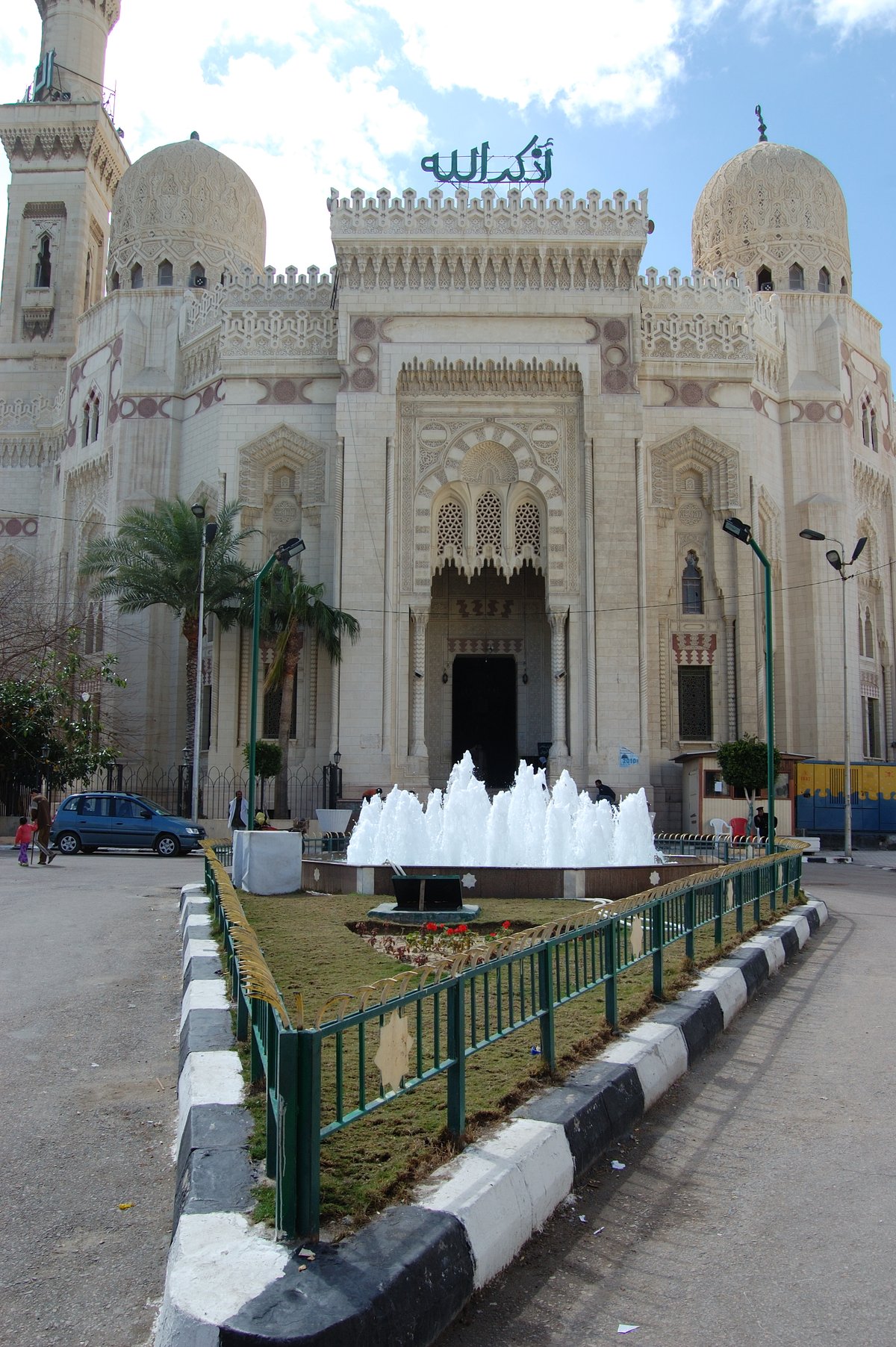
- Setting and Layout: The mosque is elevated on a platform in the Anfoushi district, forming the centerpiece of a 43,200-square-meter plaza with five companion mosques (Wikipedia, Sacred Destinations).
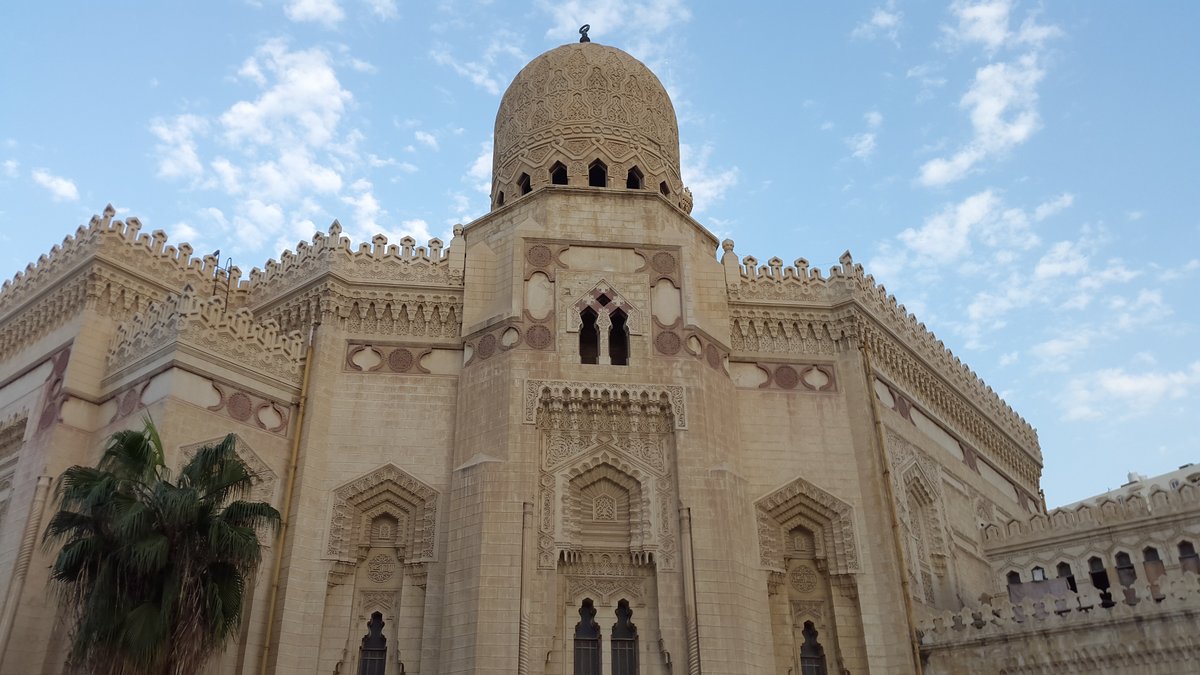
- Facade: Cream-colored artificial stone gives the building a luminous appearance. The main building rises 23 meters, while the Ayoubid-style minaret soars to 73 meters, making it a city landmark visible from both land and sea (Islamic Architectural Heritage).
- Entrances: Two grand entrances face Mosque Square, adorned with arches, geometric patterns, and Arabic calligraphy (Islamic Architectural Heritage).
- Domes: The central dome is surrounded by four smaller domes, representing the saint and his disciples (Wikipedia).
Interior Artistry and the Mausoleum
- Prayer Hall: The octagonal prayer hall features a 5.6-meter-high mosaic band, white marble flooring, and a high ceiling with intricate arabesque patterns. A central octagonal skylight (Shokhsheikha) bathes the hall in colored light through ornate glass windows (Sacred Destinations).
- Mihrab and Minbar: The mihrab is flanked by granite columns and inscribed in Kufic calligraphy. The minbar is carved from exotic woods and decorated with Qur’anic verses (Sacred Destinations).
- Mausoleum: The tomb of Abu al-Abbas al-Mursi sits beneath the central dome, surrounded by the tombs of his disciples (Wikipedia).
- Additional Features: The mosque contains a library, museum with Islamic artifacts, and tranquil courtyards with fountains and gardens (Flying Carpet Tours).
Visiting Information
Visiting Hours and Tickets
- Hours: The mosque is generally open daily from 8:00 AM to 6:00 PM. Hours may vary during Ramadan, religious holidays, or special events (The Complete Pilgrim, Egypt Tours Portal).
- Tickets: Entry is free; no tickets or reservations are required. Donations are welcome but not obligatory (egypttoursinfo.com).
Dress Code, Accessibility, and Etiquette
- Dress Code: Modest attire is required. Women should cover their hair, arms, and legs; men should wear long trousers and sleeves. Scarves are often available at the entrance (egypttoursplus.com).
- Etiquette: Remove shoes before entering the prayer hall. Maintain a quiet, respectful demeanor, especially during prayer times.
- Accessibility: Ramps and accessible entrances are provided, though some areas may have steps or uneven flooring (encounterstravel.com).
Facilities and Guided Tours
- Facilities: Restrooms and ablution areas are available. A separate prayer area for women is accessible via a dedicated entrance (Sacred Destinations).
- Guided Tours: Local tour operators and the Alexandria tourism office offer guided tours, particularly useful for those interested in the mosque’s history and architecture (Landious Travel).
- Photography: Permitted in most areas, but flash should be avoided, and visitors should respect worshippers’ privacy (egypttoursplus.com).
Nearby Attractions & Suggested Itineraries
El-Mursi Abul Abbas Mosque is ideally situated for exploring Alexandria’s other historical and cultural treasures:
- Qaitbay Citadel: A 15th-century fortress on the site of the ancient Lighthouse of Alexandria.
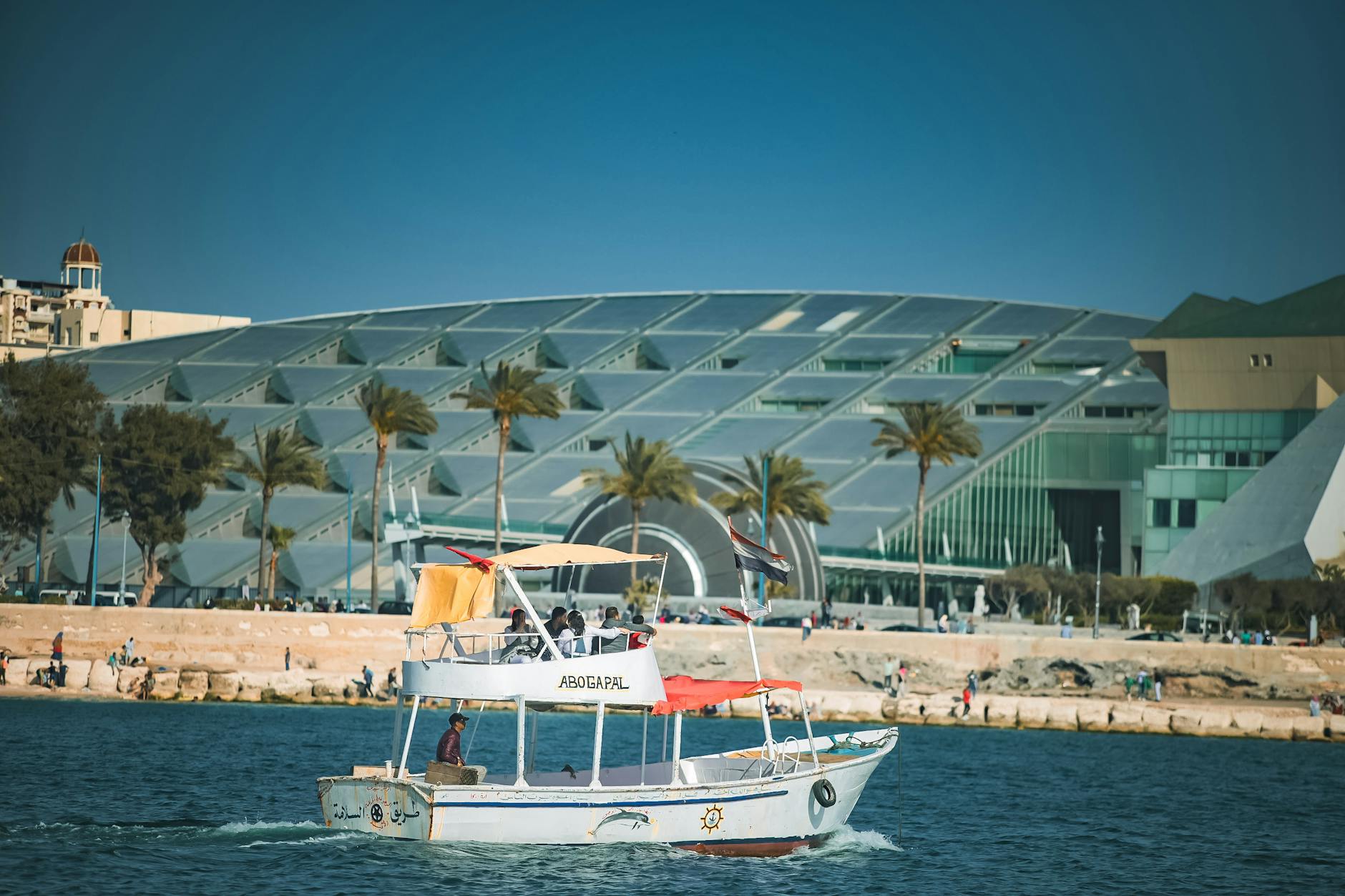
- Bibliotheca Alexandrina: The modern library and cultural center.
- Catacombs of Kom El Shoqafa: A unique blend of Egyptian, Greek, and Roman funerary architecture.
- Montaza Palace: Royal gardens and sea views.
Combining a mosque visit with these sites offers a comprehensive look at Alexandria’s layered past (egypttoursinfo.com, toptenegypt.com).
Visitor Tips & Frequently Asked Questions (FAQ)
Q: Are tickets required to visit El-Mursi Abul Abbas Mosque?
A: No, entry is free for all visitors.
Q: What are the mosque’s visiting hours?
A: Typically 8:00 AM to 6:00 PM daily; check ahead for possible changes during holidays.
Q: Is photography allowed?
A: Yes, but use of flash is discouraged and some areas may have restrictions.
Q: Is the mosque accessible for people with disabilities?
A: The mosque is generally wheelchair accessible; some areas may have steps or uneven surfaces.
Q: What is the dress code?
A: Modest dress is required for all; women should cover their hair, arms, and legs.
Q: Are guided tours available?
A: Yes, through local operators and the Alexandria tourism office.
Q: How long do visitors typically spend at the mosque?
A: Most spend 30–60 minutes, though those interested in architecture or history may stay longer (triphobo.com).
Listen to the full story in the app
The whole El-Mursi Abul Abbas Mosque,
told well.
Listen to sourced travel stories with local history and practical context — ready offline.
Verified, and shown.
Researched and written by the Audiala editorial team from historical records, architectural archives, and local expertise.
Built from cited sources · see the method · How we make our guides →