Plan and listen to Eastern Port Of Alexandria with Audiala.
Audio guide in your pocket, itinerary in your browser. Built for the way you actually visit.
Introduction
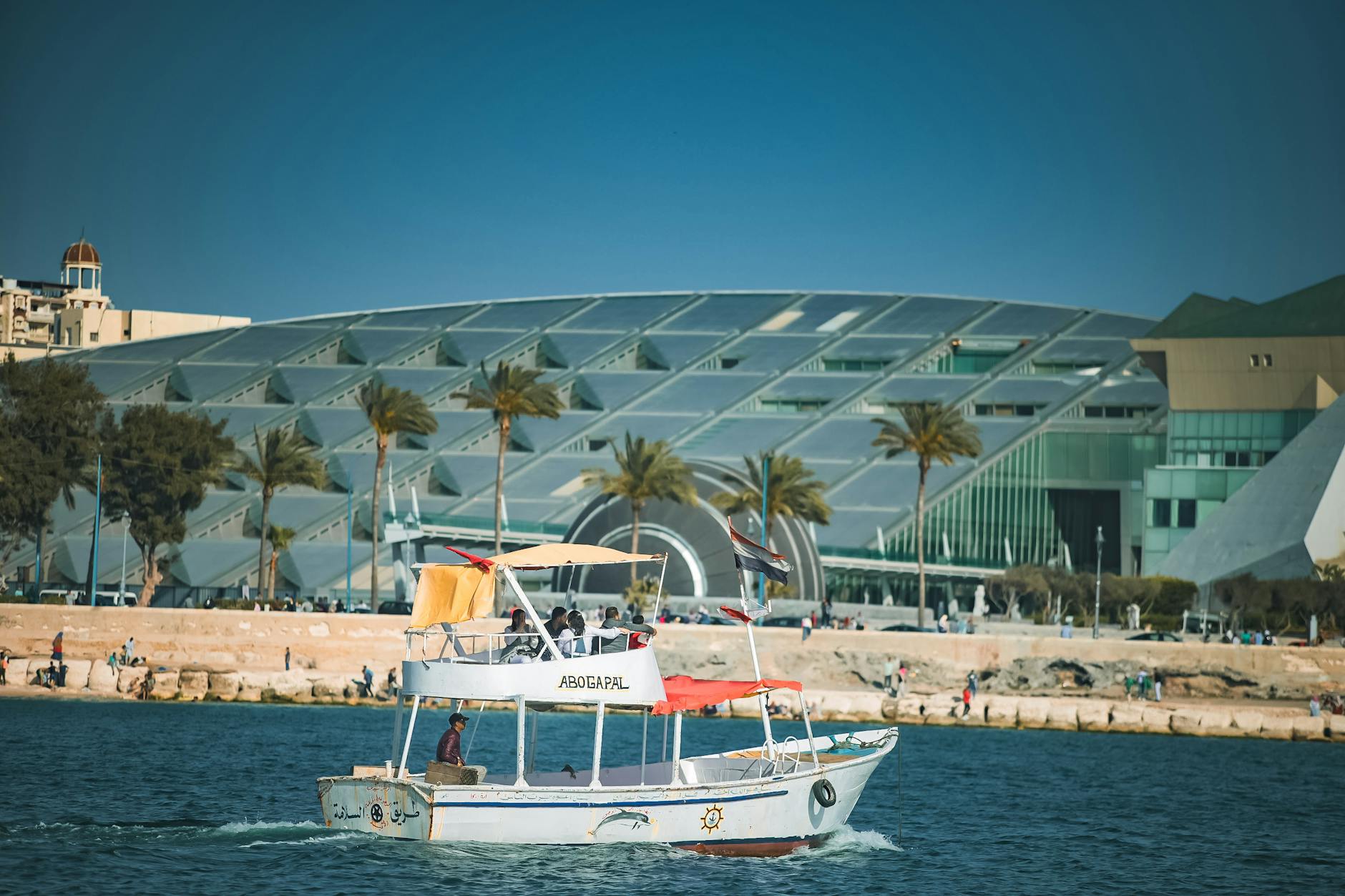
The Eastern Port of Alexandria, also known as the Eastern Harbour, is a living testament to Egypt’s rich maritime legacy. Its evolution from a humble fishing village named Rhakotis around 1900 BCE to a strategic and cultural epicenter under Alexander the Great has made it one of the Mediterranean’s most historically significant ports. Today, the port area—framed by the imposing Citadel of Qaitbay, the modern Bibliotheca Alexandrina, and a lively marina—invites visitors to explore layers of ancient, medieval, and modern history while enjoying the vibrant atmosphere of a contemporary waterfront (egypttoursportal.com, wikipedia.org).
This comprehensive guide provides essential information on visiting the Eastern Port, including hours, ticketing, accessibility, travel tips, nearby attractions, and its pivotal role in Alexandria’s development. Whether you’re fascinated by underwater archaeology, seeking panoramic sea views, or planning a cultural itinerary, the Eastern Port offers an immersive experience at the crossroads of civilizations.


Origins and Ancient Foundations
The port’s earliest chapter began with Rhakotis, a coastal settlement and trading post, flourishing as early as 1900 BCE. Its strategic placement between the Mediterranean Sea and Lake Mariut made it a natural hub for commerce. In 331 BCE, Alexander the Great established the city of Alexandria here, commissioning architect Dinocrates to harness the area’s natural harbors. The monumental Heptastadion causeway, linking the city to Pharos Island, divided the coastline into the Eastern and Western Harbours, laying the groundwork for Alexandria’s rise as a global maritime gateway (jamoroki.com, wikipedia.org).
Hellenistic and Roman Eras
During the Ptolemaic dynasty, Alexandria became Egypt’s capital and a beacon of Hellenistic culture. The Eastern Port served as the city’s ceremonial and military harbor, famously hosting the Pharos Lighthouse—one of the Seven Wonders of the Ancient World (givemehistory.com). Roman rule transformed Alexandria into a linchpin of Mediterranean trade, with vast quantities of grain exported to Rome and later Constantinople. Intellectual life thrived nearby at the ancient Library and Mouseion, attracting scholars from across the world (jamoroki.com, tripways.com).
Decline and Transformation
A series of natural disasters—earthquakes, tsunamis, and land subsidence—between the 3rd and 7th centuries CE led to the submergence of much of the ancient city, including sections of the port and the Pharos Lighthouse (watanserb.com). While the Western Port became the primary commercial hub, the Eastern Port’s role shifted to local fishing and recreational use (vacationsinegypt.com).
Modern Revival
In the 19th and 20th centuries, Alexandria’s maritime infrastructure was revitalized, notably with the construction of the Mahmoudiyah Canal and the establishment of the Alexandria Shipyard. Today, the Western Port handles Egypt’s commercial shipping, while the Eastern Port is a scenic marina and cultural destination (egyptatours.com, wikipedia.org).
Archaeological and Cultural Significance
Underwater Heritage
The Eastern Port is renowned for its underwater archaeological sites. Excavations since the 1950s have revealed statues, columns, and the submerged remains of ancient buildings, including Cleopatra’s palace and the foundations of the Pharos Lighthouse. Proposals for an underwater museum highlight the port’s unique status as a window into Alexandria’s sunken past (watanserb.com).
The Port’s Role in Alexandria’s Urban Life
From its inception as a ceremonial harbor to its function today as a leisure marina, the Eastern Port has shaped Alexandria’s urban landscape and identity. It is now lined with cafes, seafood restaurants, and promenades, offering locals and tourists alike a chance to enjoy the Mediterranean breeze while gazing at historic landmarks (egyptatours.com).
Visiting the Eastern Port: Hours, Tickets, and Accessibility
General Access
- Marina and Promenade: Open daily, 8:00 AM – 6:00 PM. No entry fee for the general marina area.
- Citadel of Qaitbay: Daily, 9:00 AM – 5:00 PM. Tickets: ~60 EGP for foreign adults; discounts available for children and students.
- Alexandria Aquarium: Weekdays 9:00 AM – 4:00 PM, weekends 9:00 AM – 5:00 PM; ticket prices vary (Trip101).
- Bibliotheca Alexandrina: Sunday–Thursday 10:00 AM – 7:00 PM; Friday–Saturday 12:00 PM – 7:00 PM. Entry is free; fees apply to special exhibits.
Accessibility
- Mobility: The promenade and major attractions like the Citadel offer ramps and paved walkways; some archaeological sites and underwater tours may require physical fitness.
- Guided Tours: Available for most major sites and through local operators. Underwater archaeological tours require diving certification (muslimsolotravel.com).
Tickets and Booking
- Tickets for major attractions can be purchased onsite or through official websites.
- Combined tickets and guided packages are available for convenience (paliparan.com).
Notable Landmarks and Nearby Historical Sites
Qaitbay Citadel
A fortress built in 1477 CE on the site of the ancient Pharos Lighthouse, the Citadel offers panoramic views of the harbor and city. Inside, visitors can explore historic chambers and a small maritime museum (Wide World Trips, Wundrfly).
Bibliotheca Alexandrina
A modern architectural marvel, this library is a hub of knowledge and culture, honoring the legacy of the ancient Great Library. Guided tours are available in multiple languages.
Kom El-Dikka
A well-preserved Roman amphitheatre and archaeological park featuring mosaics, lecture halls, and remnants of Greco-Roman urban life (The Egyptian Traveler).
Catacombs of Kom El Shoqafa
Subterranean burial chambers blending Egyptian, Greek, and Roman art. Noted for spiral staircases and mythological reliefs (Memphis Tours).
El Attarine Souk
A bustling market district famed for antiques, spices, and textiles. Ideal for souvenir shopping and cultural immersion (Wanderlust Magazine).
Activities and Travel Tips
- Best Time to Visit: Spring (March–May) and autumn (September–November) offer mild weather and fewer crowds.
- Dining: Enjoy Alexandria’s famed seafood—try sayadeya (fish and rice) or grilled calamari at waterfront eateries (Travel2Egypt).
- Photography: The Citadel towers, Corniche promenade at sunset, and lively marina are top spots.
- Dress Code: Modest, breathable clothing is recommended, especially for religious or historic sites.
- Local Customs: Dress modestly, respect photography restrictions, and observe local etiquette.
Getting There and Transportation
- By Air: Borg El Arab Airport (HBE), 40 km from city center.
- By Train: Frequent trains connect Cairo and Alexandria (approx. 2.5–3 hours).
- By Road: Buses and minibuses link Alexandria to Cairo and other cities.
- By Cruise: Alexandria is a regular Mediterranean cruise stop; passengers disembark at the Eastern Port (CruisePorts.co).
- Local Transport: Taxis, Uber, Careem, and public minibuses are widely available. The Corniche offers scenic walking and driving routes.
Facilities and Services
- Restrooms: Available at major sites and port terminals.
- Currency Exchange: ATMs and exchange offices near the port; EGP is the currency.
- Wi-Fi: Offered in hotels, cafes, and some port lounges. Local SIM cards are recommended for data (Egypt Tours Portal).
- Luggage Storage: Available at cruise terminals and select hotels.
Health, Safety, and Essential Information
- Water: Drink bottled water.
- Food: Choose reputable restaurants, especially for seafood.
- Medical Services: Pharmacies and hospitals are accessible; travel insurance is advised.
- Personal Safety: The area is generally safe; exercise normal caution.
- Emergency Contacts: Police 122, Ambulance 123, Tourist Police 126.
Environmental and Cultural Considerations
Alexandria faces environmental challenges from sea level rise and coastal erosion, which threaten historic sites (Find a Property Egypt). Responsible tourism—respecting preservation efforts and minimizing waste—is encouraged.
Frequently Asked Questions (FAQ)
Q: What are the visiting hours for the Eastern Port and nearby sites?
A: The marina and promenade are generally open 8:00 AM–6:00 PM. Major attractions like the Citadel of Qaitbay and museums typically operate 9:00 AM–5:00 PM.
Q: Is there an entry fee for the Eastern Port?
A: The general marina area is free; tickets (50–100 EGP) apply to historical sites.
Q: Are guided tours available?
A: Yes, for most major sites and through local tour agencies.
Q: Is the port accessible for visitors with disabilities?
A: The promenade and some major attractions are accessible; certain archaeological sites and underwater tours may have limitations.
Q: What is the best time to visit?
A: Spring and autumn for pleasant weather and fewer crowds.
Top Photographic Spots
- Qaitbay Citadel: Panoramic harbor and sea views.
- Corniche Promenade: Sunset photography.
- Historic Marina: Traditional fishing boats and lively scenes.
Summary and Final Tips
The Eastern Port of Alexandria masterfully blends the city’s ancient heritage with its dynamic present. From exploring the legacy of the Pharos Lighthouse and the formidable Qaitbay Citadel to discovering submerged archaeological wonders, the port offers a journey through time. Its proximity to renowned landmarks, museums, and vibrant markets, combined with modern amenities and accessibility, makes it an unmissable destination for all travelers (Wide World Trips, The Egyptian Traveler).
For an optimal experience, plan your visit during mild seasons, secure tickets in advance for popular sites, and consider guided tours or diving excursions for deeper insights. Embrace local customs and sustainability for a meaningful and respectful journey.
Plan Your Visit
Ready to explore Alexandria’s legendary Eastern Port?
- Download the Audiala app for curated guides and real-time updates.
- Follow us on social media for itineraries, travel inspiration, and exclusive tips.
- Consult these resources for more details:
Audiala2024
Listen to the full story in the app
The whole Eastern Port Of Alexandria,
told well.
Listen to sourced travel stories with local history and practical context — ready offline.
Verified, and shown.
Researched and written by the Audiala editorial team from historical records, architectural archives, and local expertise.
Built from cited sources · see the method · How we make our guides →