Introduction
The Attarine Mosque in Alexandria, Egypt, stands as a living testament to the city’s layered religious and architectural history. Located in the bustling Attarine district, the mosque is not only an active place of worship but also a monument reflecting over a millennium of transformation—from a late Roman church to a remarkable example of Islamic architecture. This guide details the mosque’s historical significance, architectural evolution, practical visitor information, and tips for exploring both the mosque and the vibrant Attarine district.
For further historical and architectural context, see Islamic Architectural Heritage, archiqoo.com, and Muslim Solo Travel.
Photo Gallery
Explore Attarine Mosque in Pictures
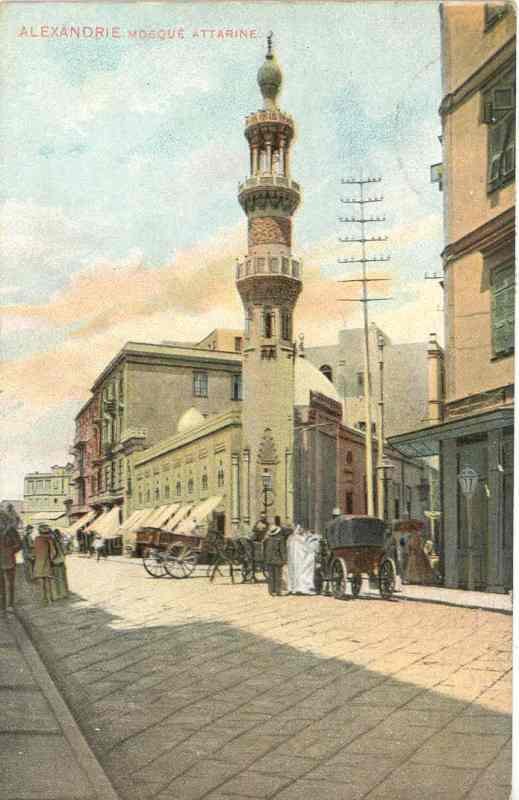
Vintage postcard from 1907 showing the Attarine Mosque in Alexandria with historic architectural features, part of the MAS museum collections.
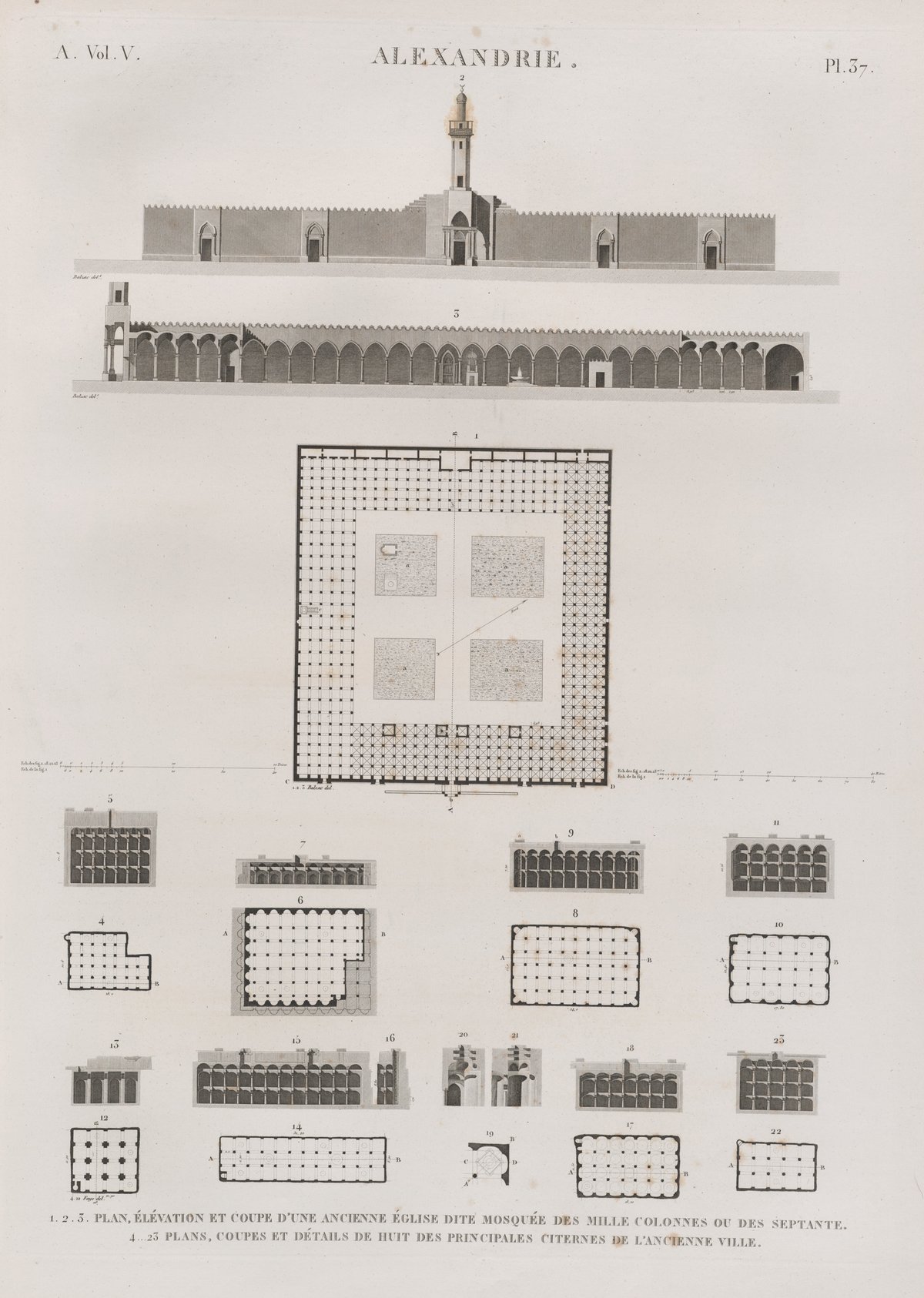
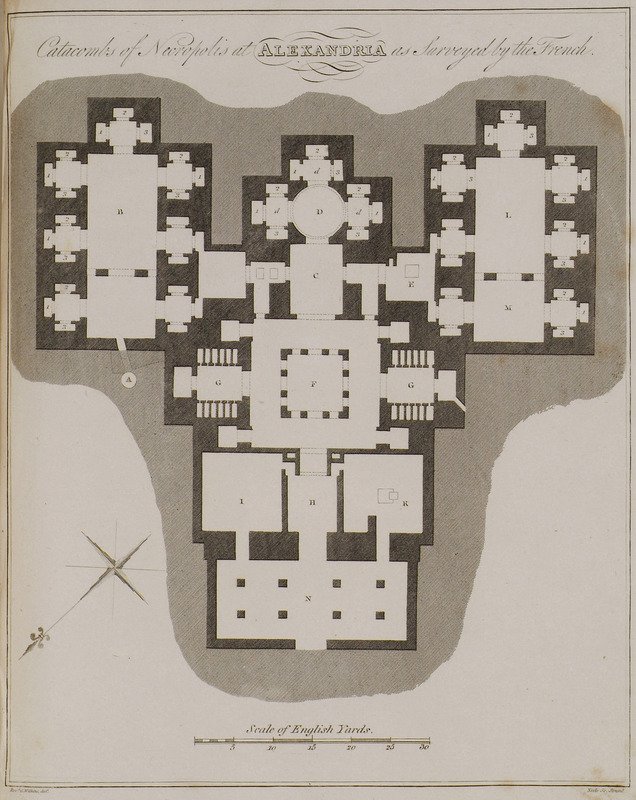
Architectural drawings depicting plans, elevations, and sections of the ancient Thousand Columns Mosque and detailed layouts of eight major cisterns in Alexandria.
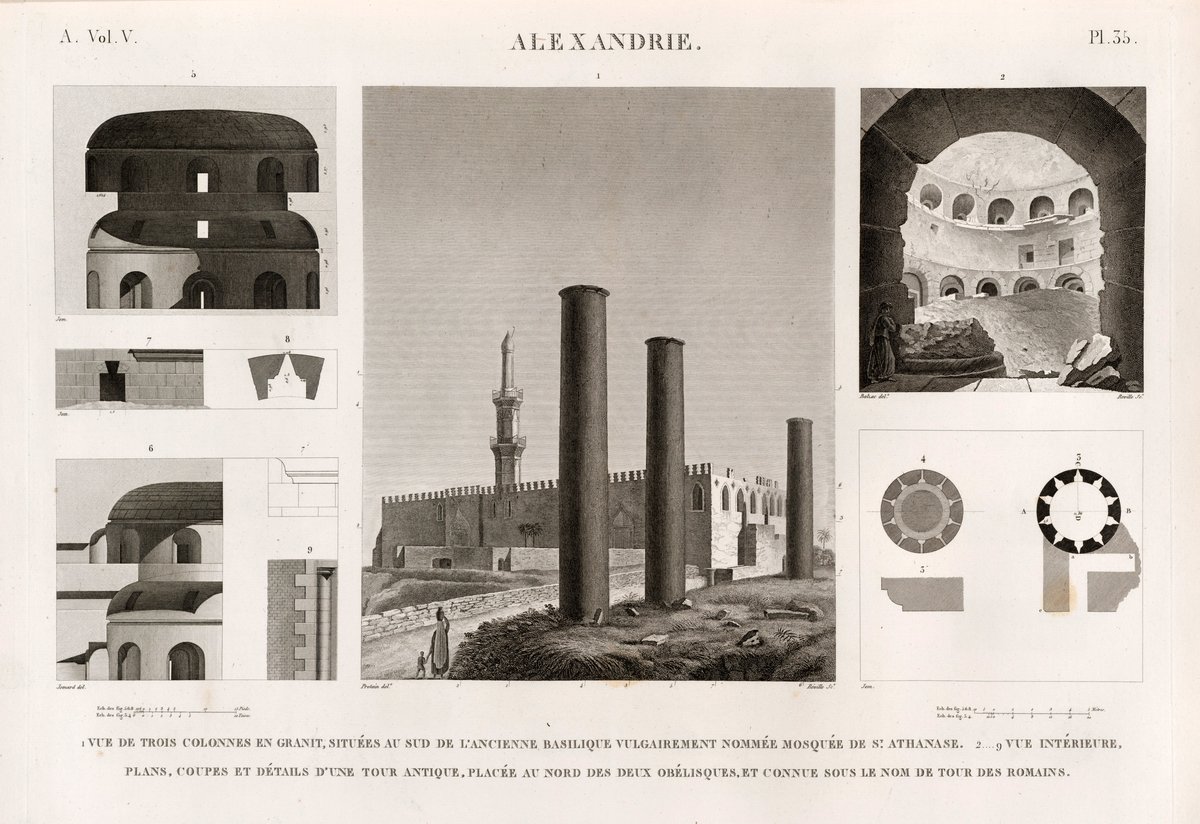
View of three granite columns located south of the ancient basilica popularly known as the Mosque of St. Athanase in Alexandria. Includes interior views, architectural plans, sections, and detailed illustrations of an ancient tower north of two obelisks, referred to as the Tower of the Romans.
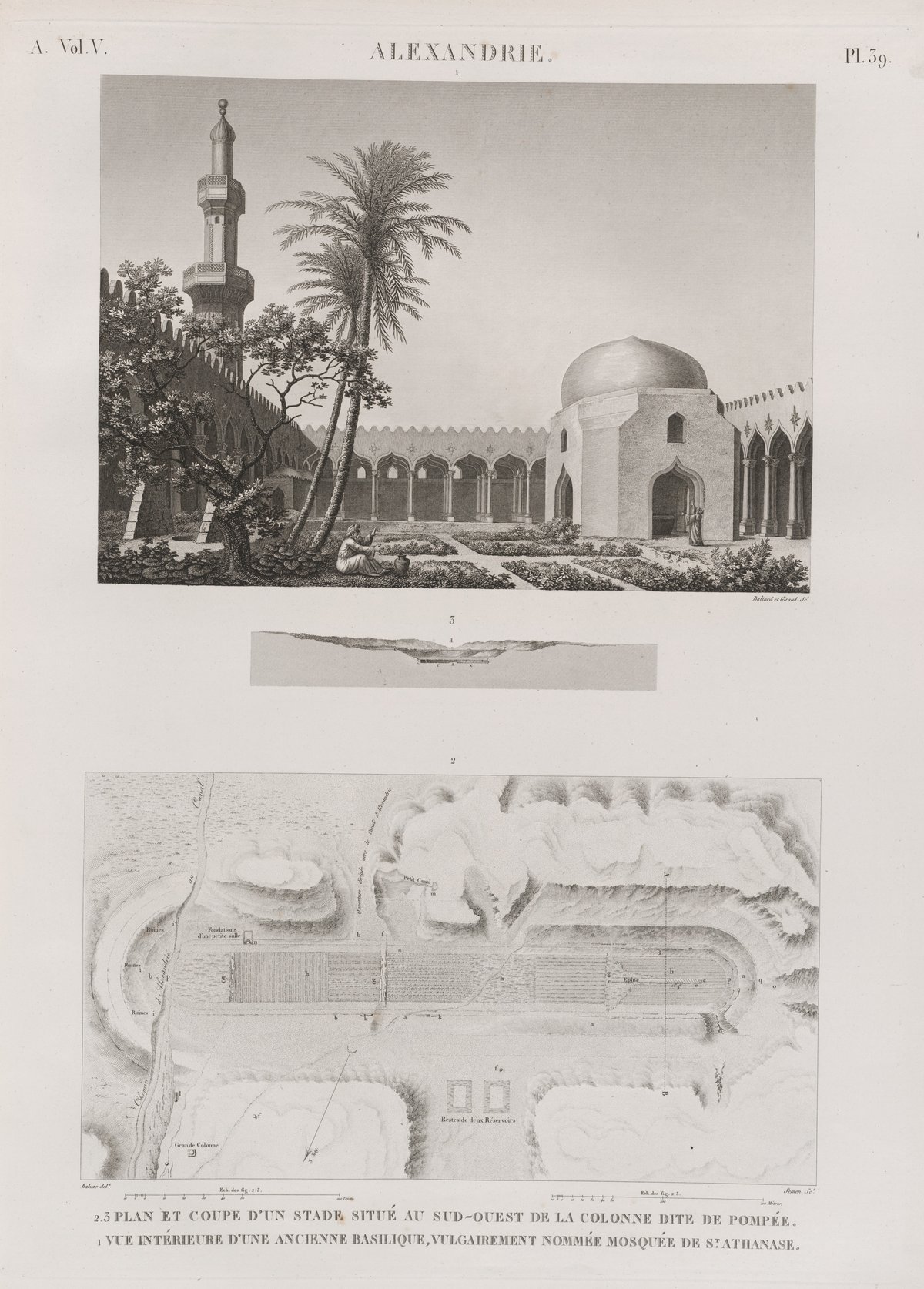
Detailed interior view of an ancient basilica called the Mosque of St. Athanase in Alexandria, alongside architectural plans and cross-section of a nearby stadium southwest of Pompey's column.
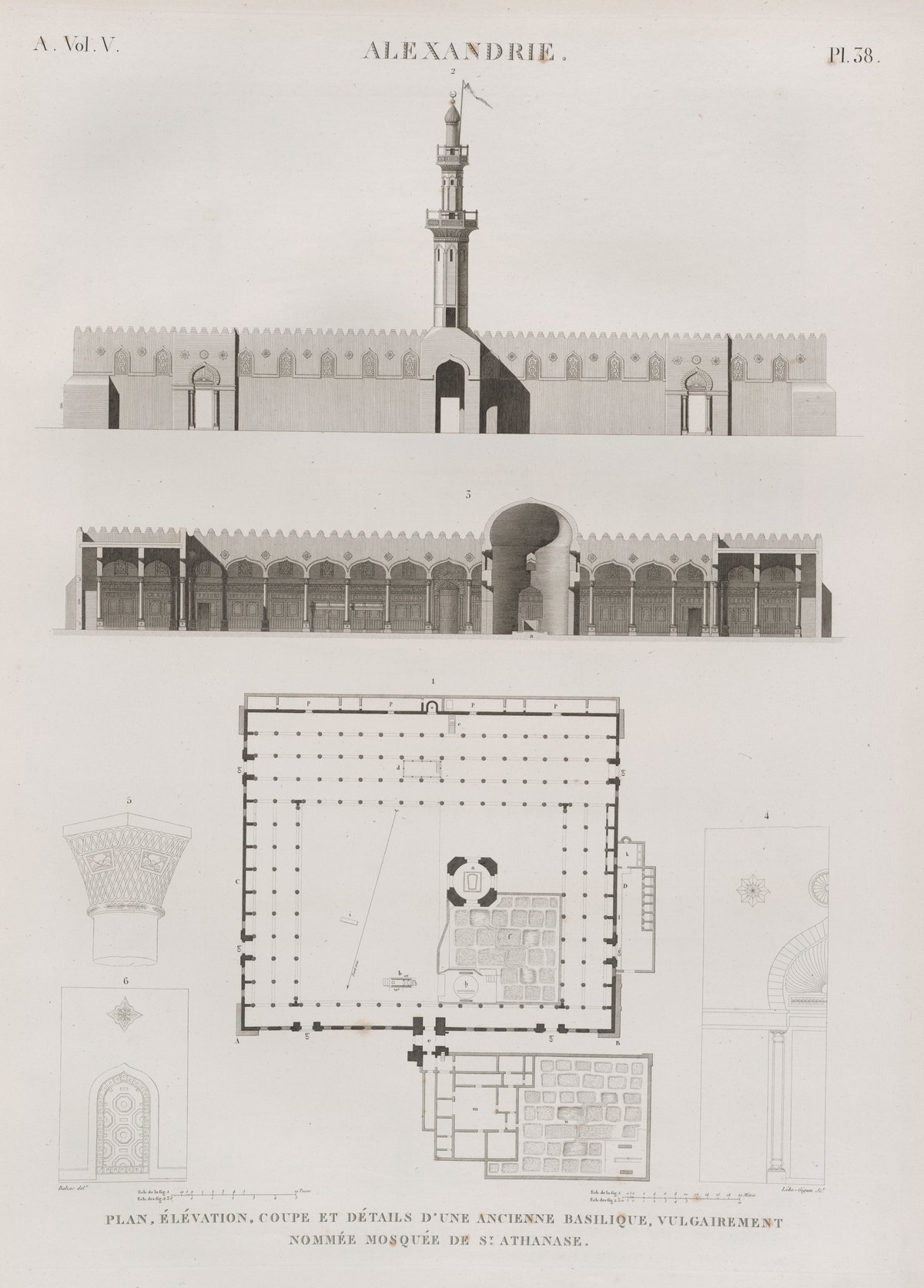
Detailed architectural drawing including plan, elevation, section, and intricate details of an ancient basilica in Alexandria, commonly known as the Mosque of St. Athanase.
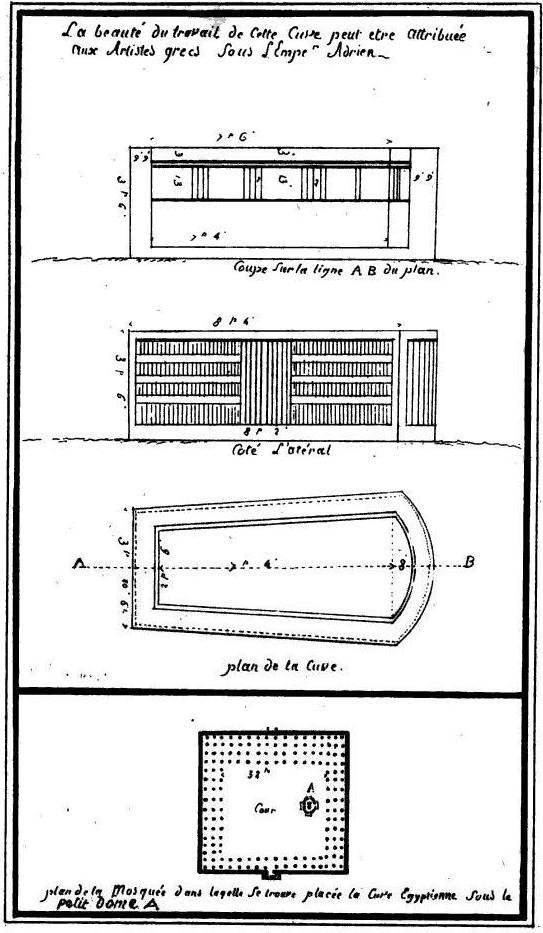
A historical cuve or basin transformed for ablutions in the Saint Athanasius Mosque located in Alexandria, showcasing ancient Islamic architectural heritage.
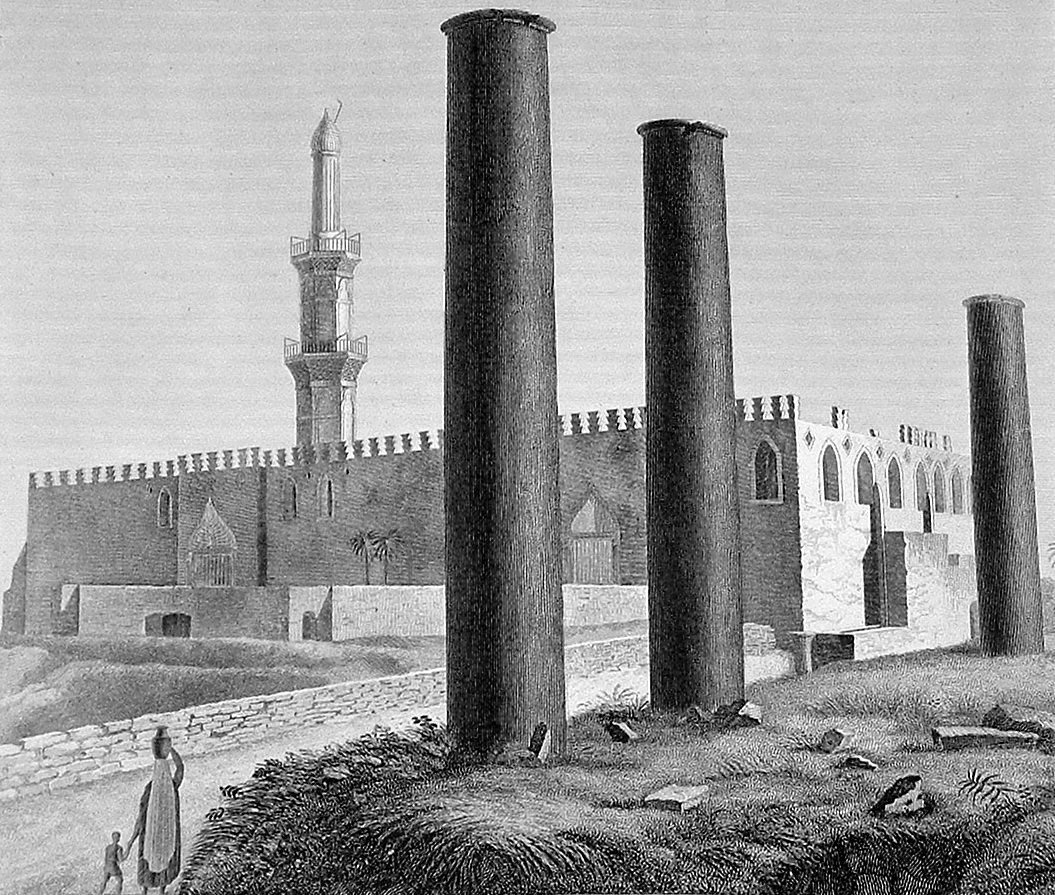
Detailed old drawing showing the Attarine Mosque looking northwards across Canopic Way in Alexandria, created circa 1798 and published in the Panckoucke edition of the Description de l'Egypte (1821-1829).
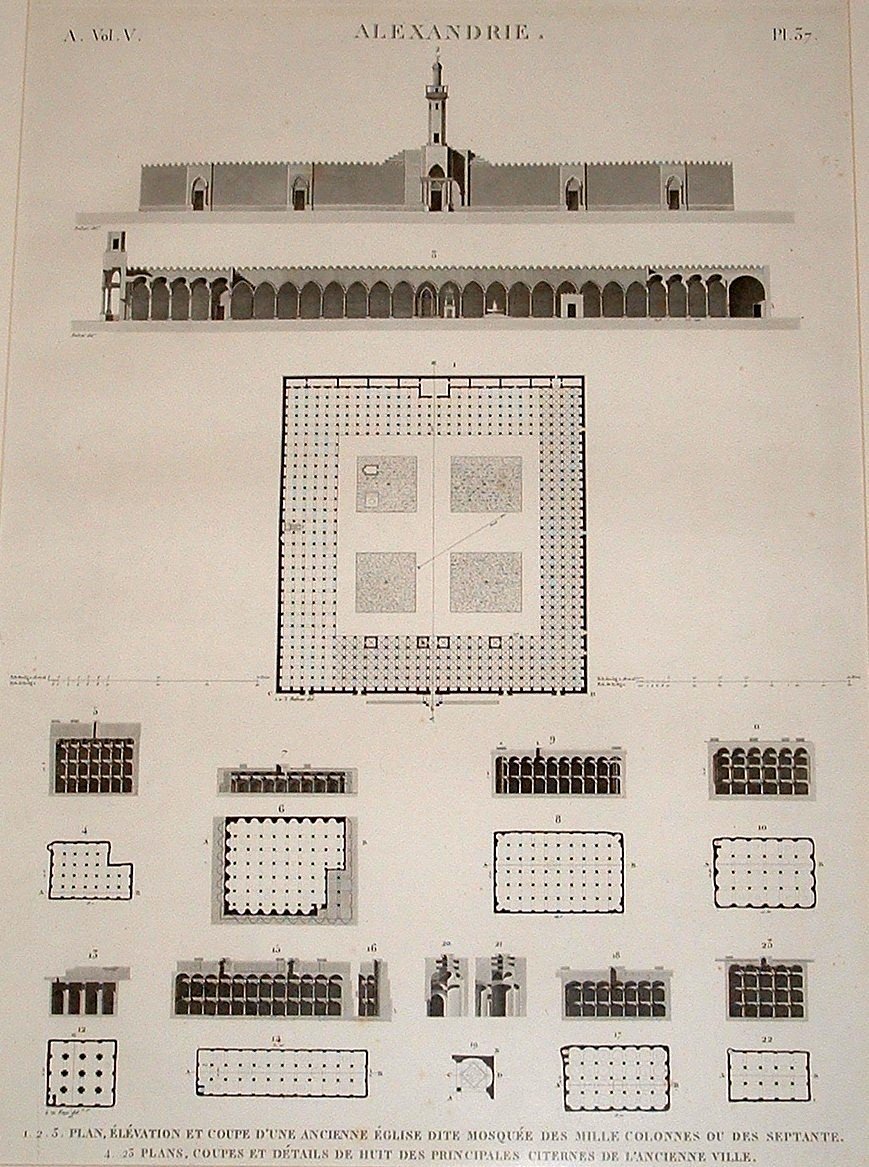
Historical detailed drawing from 1798 depicting the Mosque of a Thousand Columns and ancient subterranean cisterns in Alexandria, featured in the Panckoucke edition of 1821-9.
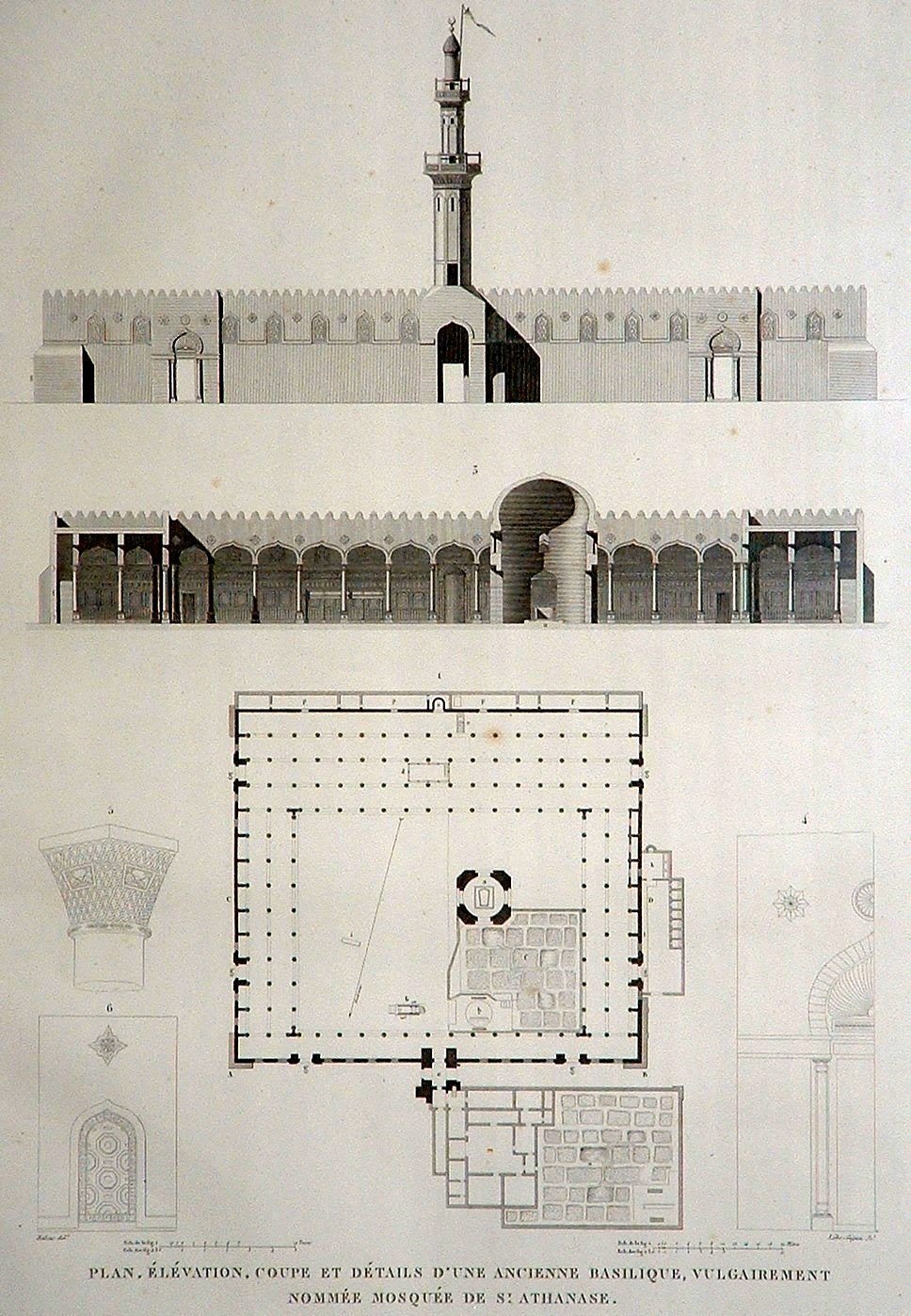
Detailed old drawing of the Attarine Mosque in Alexandria, originally dedicated to Saint Athanasius in 370 and later converted to a mosque during the early Arab conquest, circa 1798.
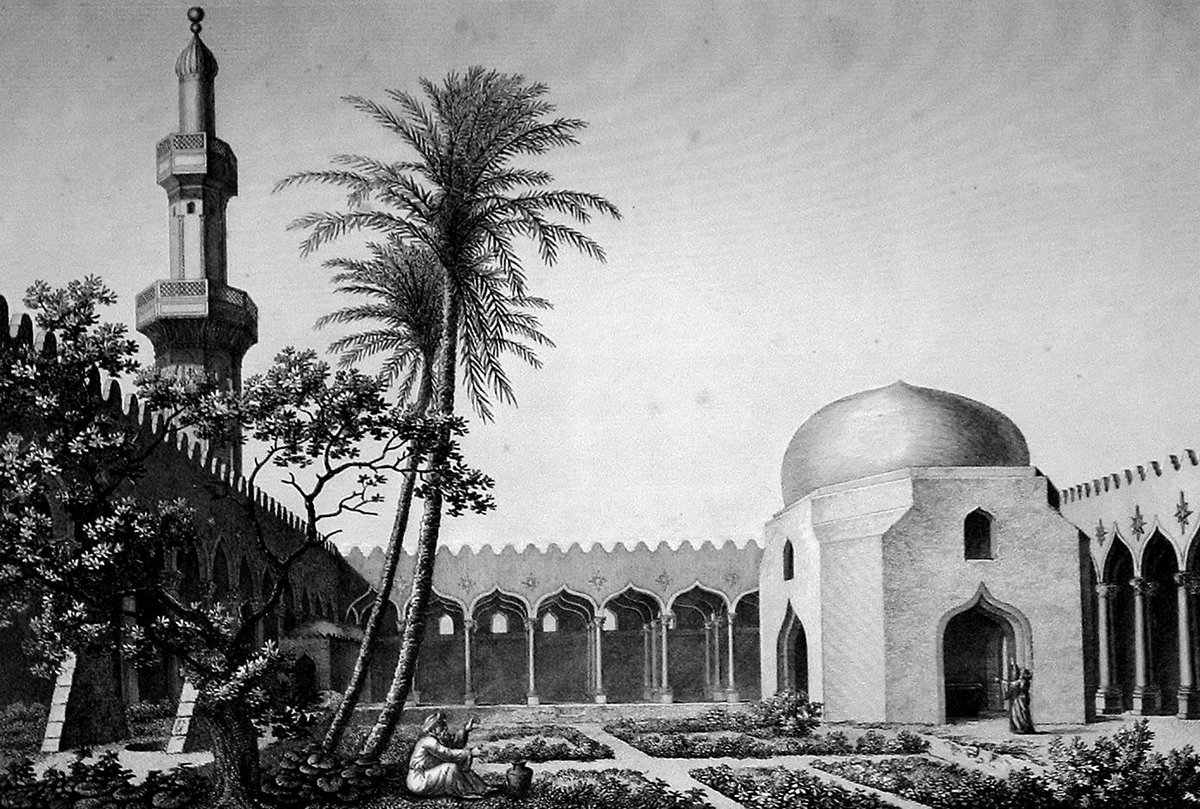
Historic drawing depicting the courtyard of the Attarine Mosque in Alexandria, showing the chapel containing a sarcophagus, created around 1798 and published in the 1821-1829 Panckoucke edition.
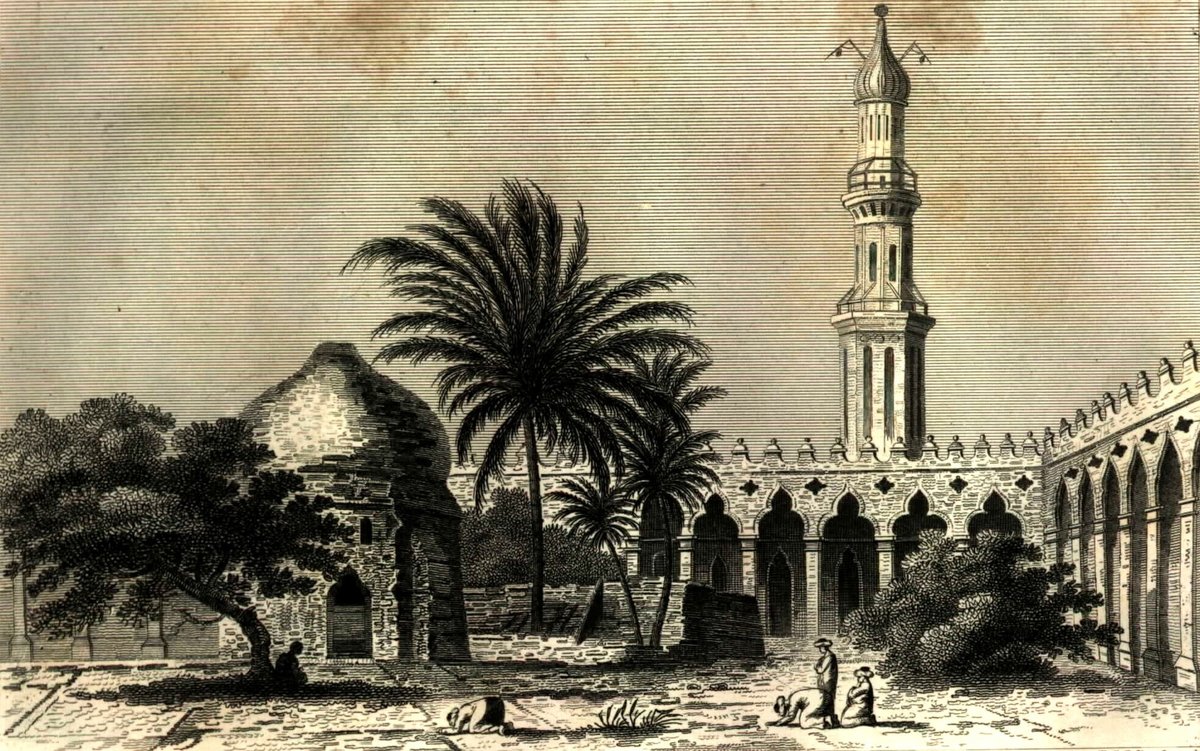
Historic drawing of the courtyard of the Attarine Mosque in Alexandria, created in 1798 by Edward Daniel Clarke featuring intricate architectural details.
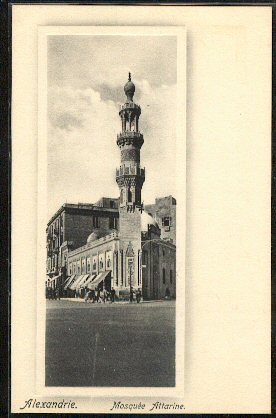
Historic exterior view of the Attarine Mosque in Alexandria showcasing traditional Islamic design and architecture in an old drawing style.
From Church to Mosque: Early Origins
The site of the Attarine Mosque originally housed a Christian church, likely dedicated to St. Athanasius or St. Alexander, dating back to the 4th century AD. After the Arab conquest of Egypt in the 7th century, the church was converted into a mosque, marking Alexandria’s religious transformation from its Christian Byzantine past to an Islamic future (Scribd).
Fatimid and Mamluk Periods: Renovation and Expansion
Significant renovations under the Fatimid vizier Badr El Gamaly in 1057 CE transformed the mosque’s layout, incorporating a hypostyle prayer hall, central courtyard, and minaret—hallmarks of Islamic architecture (Islamic Architectural Heritage). The Mamluks further modified the mosque in the 14th century, adding decorative and structural enhancements.
Modern Restoration
In 1901, Khedive Abbas II oversaw a major restoration, stabilizing the structure and introducing features that blend traditional Islamic motifs with early 20th-century construction, while preserving medieval elements such as the Fatimid-era stone inscription (Islamic Architectural Heritage).
Architectural Features and Design Elements
Layout and Structure
The mosque’s architectural plan retains traces of its basilica origins, with a rectangular nave and side aisles, an unusual feature among Egyptian mosques (Scribd). The hypostyle hall is supported by columns—many repurposed from Roman or Byzantine structures—while arcades and a central courtyard create a spacious, luminous interior.
Minaret, Dome, and Decorative Highlights
The brick minaret, added after the church’s conversion, serves as a visual landmark and focal point for the call to prayer. The dome, likely enhanced during the mosque’s various restorations, and the mihrab are adorned with Islamic geometric patterns, calligraphy, and remnants of Christian stonework, echoing the site’s layered history (archiqoo.com).
Spiritual and Cultural Spaces
A mausoleum for Muhammad ibn Sulayman, a descendant of Khalid ibn al-Walid, is accessed via the eastern entrance, reflecting the mosque’s continued religious significance (Wikipedia). The southern side houses small shops whose proceeds support mosque maintenance.
Cultural and Community Role
Religious and Social Importance
The Attarine Mosque’s continuous use for worship, education, and community gatherings illustrates its central role in Alexandria’s spiritual and civic life (hurghadalovers.com). Historically, it has also been a hub for Quranic schools and charitable activities.
District Identity
Located in the heart of the Attarine district—named after spice dealers— the mosque is integrated into the local cultural and commercial landscape, surrounded by souks, antique shops, and markets that evoke Alexandria’s cosmopolitan spirit (wefreespirits.com).
Visiting the Attarine Mosque: Practical Information
Visiting Hours
- Regular Hours: Open daily from 8:00 AM to 6:00 PM.
- Prayer Times: Access for non-Muslims may be restricted during prayer, especially on Fridays (main congregational day).
- Holidays: Hours may vary during religious festivals; check locally for updates.
Tickets and Entry
- Admission: Free for all visitors; donations for upkeep are appreciated.
- Dress Code: Modest attire is required. Women should cover hair, arms, and legs; men should avoid shorts and sleeveless shirts. Scarves are often available at the entrance (Top Ten Egypt).
- Shoes: Remove shoes before entering the prayer hall.
Accessibility
- Mobility: The mosque is on ground level, but surrounding streets are narrow and uneven, potentially challenging for wheelchair users or those with mobility concerns. Some tour operators offer accessible tours; contact in advance (Cairo Top Tours).
- Guided Tours: Many city tours include the mosque; inquire at local agencies.
Photography and Etiquette
- Photography: Permitted in many areas, but always ask before photographing inside the mosque or during worship (Top Ten Egypt).
- Conduct: Maintain silence, set phones to silent, and be respectful during religious activities.
Exploring the Attarine District
Souk El-Attarine
Directly adjacent to the mosque, this lively market is famous for spices, perfumes, antiques, and traditional crafts. Open daily from around 9:00 AM to 7:00 PM, it offers a vibrant local experience (thegoguy.com).
Nearby Attractions
- Roman Amphitheatre: Well-preserved ruins, open 8:00 AM to 5:00 PM.
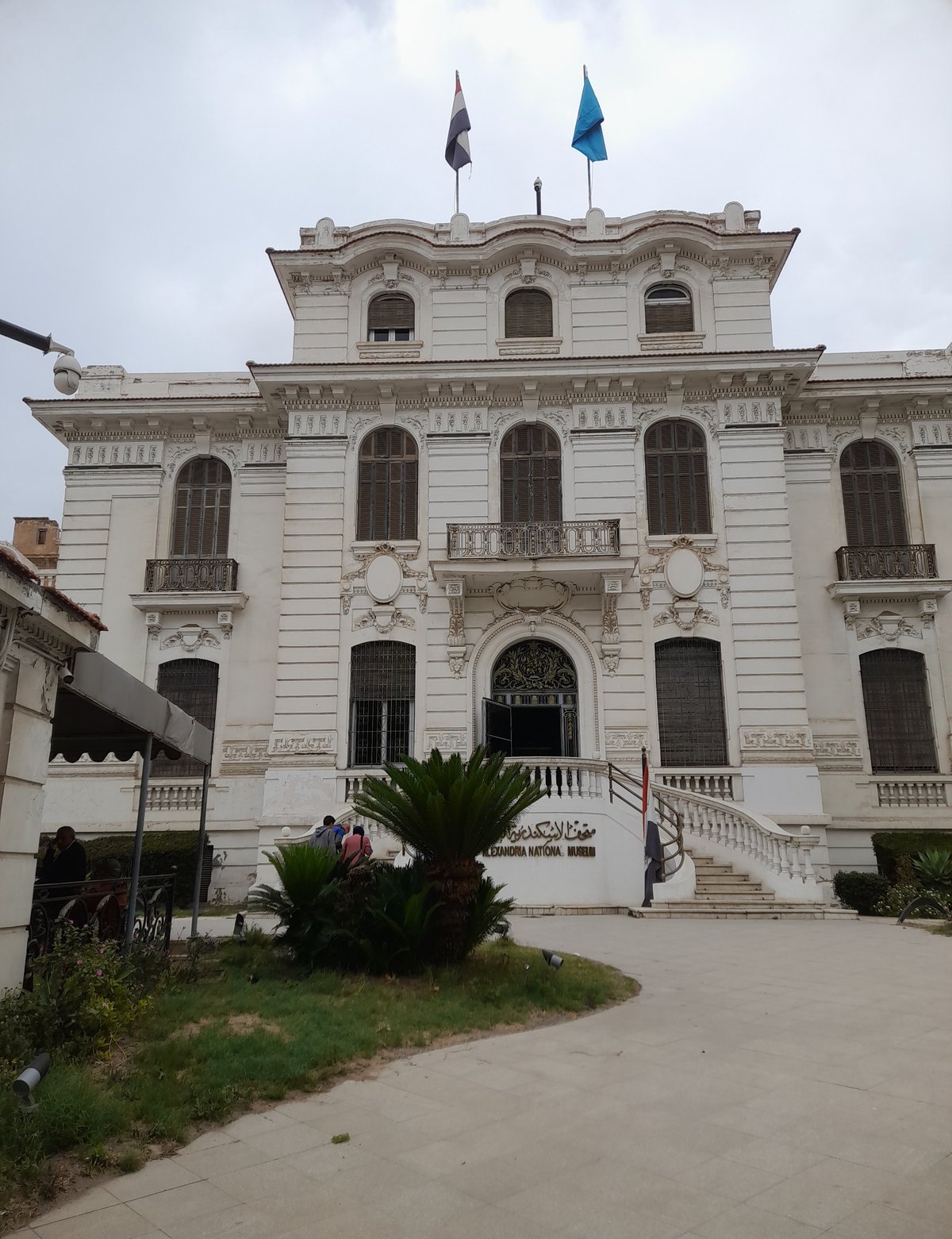
- Alexandria National Museum: Exhibiting the city’s diverse history, open 9:00 AM to 5:00 PM.
- Bibliotheca Alexandrina: Modern library and cultural center, open 9:00 AM to 7:00 PM.
- Other Religious Sites: Abu al-Abbas al-Mursi Mosque, Saint Catherine Cathedral, and more (Egyptopia).
Getting There
- By Taxi/Public Transport: Central location with easy access from all parts of Alexandria.
- On Foot: The district is walkable, ideal for exploring markets and historic streets.
Visitor Experience: Tips and Recommendations
- Best Time to Visit: Mornings (for peace and cooler temperatures); avoid midday heat.
- What to Bring: Scarf (for women), water, easy-to-remove shoes, and a bag for footwear.
- Shopping and Dining: Explore the souk for souvenirs and enjoy local snacks from nearby cafes (thetouristchecklist.com).
- Safety: The area is generally safe; standard precautions apply.
Frequently Asked Questions (FAQ)
Q: What are Attarine Mosque visiting hours?
A: Open daily from 8:00 AM to 6:00 PM; access may be restricted during prayer times or religious events.
Q: Is there an entrance fee or ticket required?
A: No; entry is free, but donations are welcome.
Q: Is the mosque accessible for people with disabilities?
A: The mosque itself is ground-level, but surrounding streets may be challenging. Arrange accessible tours if needed.
Q: Can I take photos inside the mosque?
A: Photography is often allowed, but always ask for permission and avoid photographing worshippers.
Q: What should I wear?
A: Modest clothing; women should cover their hair, arms, and legs; men should avoid shorts and sleeveless shirts.
Visuals and Media Recommendations
For planning and inspiration, consult high-quality images and virtual tours available from Islamic Architectural Heritage and travel blogs. Use descriptive alt tags like "Attarine Mosque Alexandria historical site" for images.
Internal Links
Explore more about Alexandria historical sites and Islamic architecture in Egypt through our related guides.
Discover More
The Attarine Mosque is a cornerstone of Alexandria’s historical and cultural landscape, inviting visitors to explore its unique blend of Christian and Islamic architectural heritage. By observing local customs, planning your visit during appropriate hours, and embracing the vibrant Attarine district, you’ll experience one of Egypt’s most treasured sites. Download the Audiala app for the latest visitor updates, guided tour options, and more tips on exploring Alexandria. Follow us on social media for travel inspiration and practical advice.
Listen to the full story in the app
Your Personal Curator, in Your Pocket.
Audio guides for 1,100+ cities across 96 countries. History, stories, and local insight — offline ready.
Audiala App
Available on iOS & Android
Join 50k+ Curators
Sources
- verified
- verified
- verified
- verified
- verified
- verified
- verified
- verified
- verified
- verified
- verified
Last reviewed: