Destinations

Egypt

"Egypt compresses 5,000 years into a trip that still feels lived-in: pharaonic stone, medieval streets, river temples, and Red Sea reefs all belong to the same map."

location_city

Capital

Cairo

translate

Language

Arabic

payments

Currency

Egyptian pound (EGP)

calendar_month

Best season

October-April

schedule

Trip length

10-14 days

badge

EntryeVisa or visa on arrival for many nationalities

Introduction

Egypt travel guide: one trip can give you pyramid fields, reef walls, Mamluk lanes, and desert silence, often in the same week.

Egypt answers the question fast: you come for the pyramids, then the country keeps widening. Cairo moves at full volume, with Fatimid gates, coffee-stained alleys, and the weight of dynasties packed into a few square kilometers. Across the river, Giza strips the story back to geometry and stone. Then the map opens again. Alexandria gives you sea air, Greek and Roman afterlives, and a different register entirely, while Luxor and Aswan stretch the Nile into a chain of temples, tombs, feluccas, and river light that makes other history destinations feel oddly static.

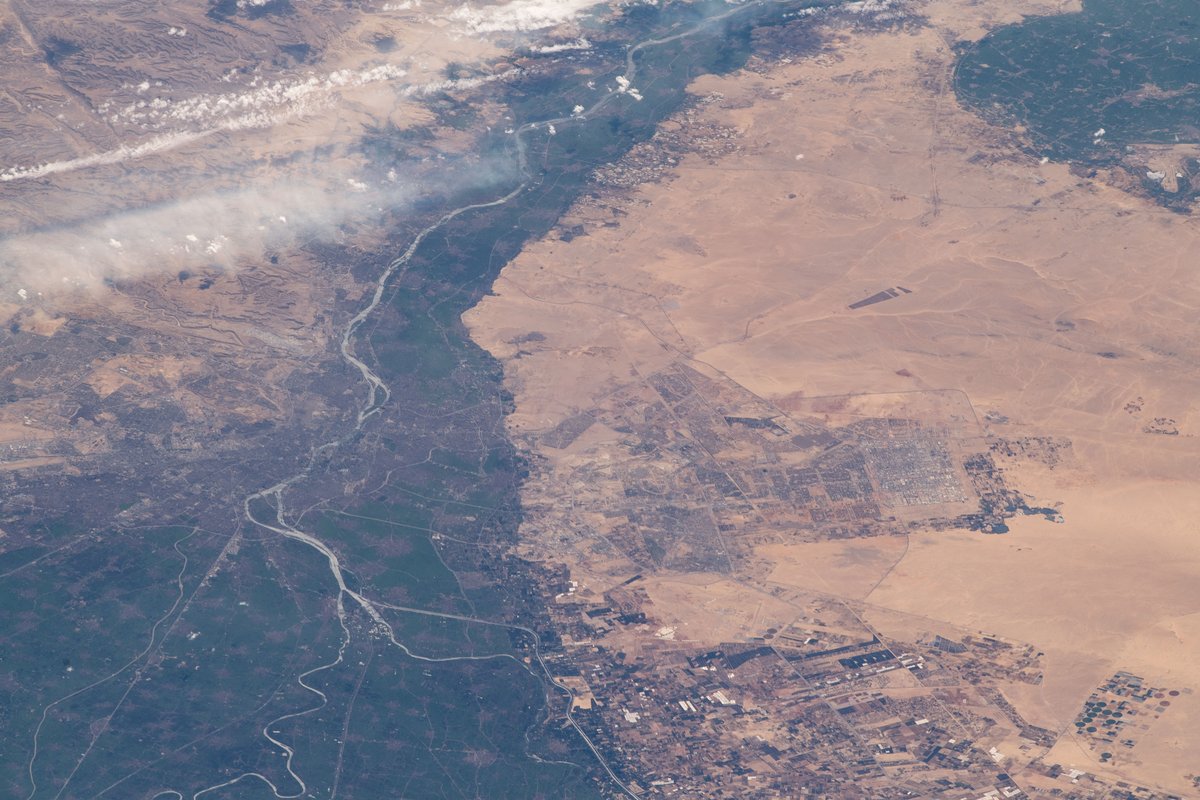
What makes Egypt different is compression. Around 95 percent of the population lives on roughly 4 percent of the land, so city life feels pressed tight against desert margins, and the contrast lands hard when you leave the Nile corridor. In one itinerary you can move from traffic and minarets in Cairo to dawn over the Valley of the Kings in Luxor, then swap sandstone for clear water in Sharm el-Sheikh or Hurghada. Travelers who want fewer people and more sky head west to Siwa, where salt lakes and mud-brick ruins feel almost improbable after the density of the capital.

This is also a country that rewards appetite, not just checklist travel. Breakfast can mean ful medames and ta'ameya eaten standing up, lunch a bowl of koshary in Cairo, and dinner fish on the coast or a late table in Alexandria with the Mediterranean just beyond the corniche. And Egypt is easier to shape than many first-timers expect: trains work for the Nile corridor, short domestic flights save time, and a 10 to 14 day trip gives you room for both headline sites and a second act, whether that means Dahab, Aswan, or a slower few days in Cairo.

A History Told Through Its Eras

When the Sahara Dried and the Nile Became a Throne Room

Before the Pharaohs and Unification, c. 9000-3100 BCE

A painted swimmer on a rock in the far southwest, a cattle camp where sand now reigns, a riverbank crowded by families who did not plan to become the founders of a civilization: this is where Egypt begins. Ce que l'on ignore souvent, c'est that the first great Egyptian drama was climatic. As the Green Sahara failed between the 7th and 4th millennia BCE, people and herds pressed toward the Nile, that thin green corridor which still explains the country's whole geography better than any textbook.

The Nile did more than feed them. It disciplined them. Villages along the floodplain learned the same lesson year after year: if the water rose well, life held; if it failed, hunger came quickly. Out of that repeated anxiety grew bookkeeping, ritual, irrigation, and the idea that order was not an abstraction but a matter of survival. Egypt was born from administration as much as from myth.

Then, around 3100 BCE, a king we call Narmer appears with astonishing theatrical confidence. On the Narmer Palette, now in Cairo, he wears the crowns of Upper and Lower Egypt and strikes down an enemy while a small attendant carries his sandals. The detail is exquisite and almost comic, but it reveals everything. The sovereign's feet must not touch ordinary ground. Already, power is staging itself.

What follows is one of history's great inventions: a state that presents politics as cosmic balance. The king is not merely obeyed; he keeps the world from slipping back into chaos. That idea will build temples, justify taxes, and outlast dynasties. It will also lead directly to the first stone experiments at Saqqara and, in time, to Giza.

Narmer stands at the threshold less as a marble symbol than as a ruler determined to turn two river worlds into one political fiction that proved stronger than armies.

The sandal-bearer on the Narmer Palette may be the tiniest servant in world art, yet he helps announce one of history's first kings.

Stone, Sunlight, and the Terrible Ambition of Kings

Old Kingdom, c. 2686-2181 BCE

At Saqqara, one can still imagine the shock of the first spectators: not a mudbrick mastaba, but a stack of six stone platforms rising into the white glare. Imhotep, vizier to Djoser, changed architecture by deciding that a tomb could climb. Ce que l'on ignore souvent, c'est that he began not as a prince but as a commoner with a mind so formidable that later generations promoted him to godhood.

A century later, ambition moved north to Giza, where Khufu ordered the largest royal machine the ancient world had ever seen. The Great Pyramid was once sheathed in polished Tura limestone, bright enough to catch the sun like a blade. We talk about geometry, and rightly. But one should also picture bread ovens, copper tools, work gangs, scribes recording deliveries, and jars of thick barley beer handed out by the liter. Monuments are built by logistics before they are built by faith.

The old fantasy of pyramid slaves collapses under archaeology. At Giza, workers' cemeteries and ration records tell another story: conscripted labor, skilled crews, state organization, and pride. These men were fed, named, buried near the site, and divided into teams with swaggering titles. Egypt, even at its most autocratic, knew that spectacle required payroll.

Then came the unmaking. Around 2200 BCE, the flood cycle faltered during the 4.2-kiloyear climate event, provincial governors tightened their own grip on grain, and royal certainty cracked. Pepi II may have ruled for around 90 years, which sounds magnificent until one remembers what such longevity does to a court: heirs die, loyalties thin, institutions age around one exhausted body. The pyramids remain. The state that raised them did not.

Imhotep is the rare genius who moved from royal servant to divine patron, a builder so admired that the Egyptians later prayed to him for healing.

Khufu built the largest tomb on earth, yet the only securely identified portrait of him is an ivory figurine about 7.5 centimeters tall.

Queens in False Beards, Heretics in Sunlight, and the Empire at Luxor

New Kingdom, c. 1550-1070 BCE

In the terraces of Deir el-Bahri near Luxor, Hatshepsut staged power with unnerving intelligence. Colonnades rose against the cliff like a ceremony carved into geology, and the queen, refusing the limits of regency, had herself shown in royal kilt and false beard. Ce que l'on ignore souvent, c'est that her grammar betrayed her even when her sculpture did not: inscriptions sometimes use feminine forms for a king presented as male. Egypt was obedient to ritual, but clever women could bend ritual until it served them.

A generation later, another court chose rupture over continuity. Amenhotep IV became Akhenaten, shut temples, offended the priests of Amun, and moved the capital to Akhetaten, today's Amarna, a city built almost in a single ideological breath. His religion of the Aten feels, even now, half vision and half political gamble. The Amarna Letters, found by chance in 1887, show foreign rulers pleading for gold and military help while the pharaoh gazed toward the sun. Piety did not make him efficient.

Then came one of those Egyptian reversals that would delight any court historian. Akhenaten's experiment collapsed, Tutankhamun restored old cults, and the priests returned with chisels. Names were erased, faces hammered out, memory itself disciplined. Egypt understood perfectly that destroying an image is a form of politics.

Under Ramesses II, theatre returned on an imperial scale. At Abu Simbel and across Upper Egypt, the king announced victory at Kadesh in inscriptions so grand that one almost hears the trumpets. The trouble is that the Hittites preserved their version too, and it was no triumph. It was a bloody draw, followed by the earliest surviving international peace treaty. Ramesses sold glory magnificently. He also left an overextended state and a dynasty crowded with heirs.

By the late 12th century BCE, the empire was fraying, tomb workers at Deir el-Medina went on strike when rations failed, and the machinery that had filled Karnak began to cough. A civilization famous for eternity suddenly looked fragile. That fragility opened the door to Libyans, Nubians, Assyrians, and eventually the Persians.

Hatshepsut remains the great rebuke to lazy assumptions about pharaonic power: a ruler who understood image-making so well that even her enemies struggled to erase her completely.

In 2007, a single molar tooth helped identify Hatshepsut's mummy, which had lain for decades in a side chamber far from the splendid temple built for her memory.

From Persian Satraps to Cleopatra's Perfumed Barges

Conquerors, Alexandria, and the Coming of Faiths, 525 BCE-641 CE

When Cambyses II conquered Egypt in 525 BCE, the old pharaonic script of kingship did not vanish; it was appropriated. Foreign rulers quickly learned that Egypt was easier to govern if one dressed power in familiar costume. Ce que l'on ignore souvent, c'est that conquest here often begins with imitation. The invader borrows the language of the throne before he dares to alter it.

Then Alexander arrived in 332 BCE, young, theatrical, and astonishingly quick to understand the value of Egyptian legitimacy. He visited the oracle at Siwa, where priests hailed him as son of Amun. One can almost see the scene: desert light, controlled silence, a conqueror asking for divine parentage because military success, however brilliant, is never enough. He founded Alexandria, and after his death the Ptolemies turned that city into a court where Greek polish and Egyptian ritual cohabited uneasily.

No one embodies that world better than Cleopatra VII. She spoke more languages than most of her ancestors, sailed on the Nile in state, and treated diplomacy as a kind of staged intimacy. Rome has spent two thousand years flattening her into seduction. That is far too simple. She was a ruler trying to keep a very rich kingdom alive between Roman egos, family murder, debt, and grain politics.

After Actium in 31 BCE, Egypt became the emperor's personal possession, and its grain fed Rome. Temples still rose. Priests still served. But the center of gravity had shifted decisively. Later centuries brought Christianity, monasticism in the deserts, theological quarrels in Alexandria, and finally the slow hollowing out of pagan worship. The ancient gods were not toppled in one afternoon. They were outlived.

In 641 CE, Arab armies took Babylon Fortress near today's Cairo. Greek, Coptic, Roman, and pharaonic Egypt did not disappear at once, but a new language of state, devotion, and urban life had entered the valley. The next capital would not be Alexandria. It would rise beside the Nile further south.

Cleopatra was less the femme fatale of Roman gossip than a sovereign balancing scholarship, spectacle, and sheer nerve in a kingdom already ringed by predators.

Legend loves Cleopatra's rolled carpet, but the more revealing detail is that she reportedly had herself smuggled to Julius Caesar as a political calculation, not a romantic whim.

Cairo, the Citadel, the Canal, and the Republic Born from Fire

Islamic, Ottoman, and Modern Egypt, 641 CE-1952 CE and after

A military camp called Fustat became the seed of one of the world's great capitals. From there, dynasties built and rebuilt the city until Cairo emerged as a constellation rather than a plan: Fatimid mosques, Ayyubid walls, Mamluk minarets, Ottoman houses, Khedival boulevards. Walk in Historic Cairo today and time does not sit politely in layers. It jostles. A carved Mamluk portal may face a fluorescent shop selling phone chargers.

Salah al-Din, whom Europe remembers as Saladin, understood that Egypt was the key to a wider contest. He ended the Fatimid caliphate, reoriented power toward Sunni rule, and built the Citadel above Cairo, less a palace than a statement of command. Later came the Mamluks, former military slaves who ruled with extraordinary elegance and ferocity, filling Cairo with madrasas, mausoleums, and domes while also mastering trade routes between the Mediterranean and the Indian Ocean. They made piety monumental.

The Ottoman conquest of 1517 did not reduce Egypt to silence. Local households, merchant fortunes, and religious institutions retained immense influence. Then Napoleon landed in Alexandria in 1798 with cannons and savants, and from that collision emerged one of history's oddest invasions: soldiers measuring temples while generals fought. The Rosetta Stone, found in 1799 near Rashid, would let Champollion unlock hieroglyphs in 1822. France lost the campaign. Europe won an obsession.

Muhammad Ali, an Albanian officer who seized Egypt after the French departure, founded the modern dynasty with cold brilliance. He massacred rival Mamluk beys in the Citadel in 1811, sent armies into Arabia and Sudan, built factories, canals, schools, and a state that watched more closely than before. His descendants pushed Egypt toward cotton wealth, debt, and grandiose display. When the Suez Canal opened in 1869, glittering and ruinously expensive, it announced not only prestige but vulnerability.

British occupation followed in 1882, nationalism sharpened, and the monarchy that survived into the 20th century looked increasingly ceremonial in the face of anger, inequality, and occupation. In July 1952, the Free Officers moved against King Farouk. He left Alexandria aboard the royal yacht Mahrousa with more luggage than dignity. One era ended in tailored uniforms and cigarette smoke; another began in republican promises, military power, and the remaking of Egypt around Cairo, Giza, the canal, the dam at Aswan, and a new language of sovereignty.

Muhammad Ali was no enlightened reformer in the sentimental sense; he was a hard sovereign who understood that modernity begins with barracks, taxation, and fear.

When King Farouk went into exile in 1952, witnesses noticed the almost operatic quantity of trunks loaded onto the yacht, as if a collapsing dynasty still believed wardrobe might outlast history.

The Cultural Soul

A Country That Answers Before It Agrees

Egyptian Arabic does not enter a room. It arrives already in conversation. In Cairo, one hears greetings before requests, blessings before prices, jokes before refusals, and the ear learns fast that volume is not aggression but evidence of life; a fruit seller on Talaat Harb Street can sound as if he is denouncing your family while merely recommending better oranges.

A few words govern entire afternoons. Maalesh is the national sedative: pardon, never mind, life continues, what else did you expect. Khalas can end an argument, a meal, a taxi ride, a love story. Habibi slips between waiter, aunt, mechanic, child, stranger, and only a foreigner imagines scandal every time it appears.

Then comes inshallah, that masterpiece of civilized ambiguity. It can mean yes, no, maybe, later, not in this lifetime, or I respect you too much to humiliate you with a plain refusal. A language reveals its theology by its evasions. Egypt has turned the evasions into an art.

The Bean, the Onion, the Empire

Breakfast in Egypt is not a light beginning. It is a moral position. Ful medames arrives in a dented metal bowl, dark and slow as old thought, with lemon, cumin, oil, and aish baladi for scooping; one tears, folds, drags, eats, and understands at once why a civilization built on the Nile would trust a bean more than a croissant.

Taameya, the Egyptian cousin of falafel, is green inside because coriander and dill have entered the matter like conspirators. Koshary is a different doctrine altogether: rice, lentils, macaroni, chickpeas, tomato sauce, fried onions, garlic vinegar, chile. Hunger invented it, then Cairo perfected it. A country is a table set for strangers.

The serious mysteries begin with texture. Molokhia slides like green silk with garlic at its throat. Hamam mahshi asks you to negotiate bones for pleasure. Feteer meshaltet arrives glossy with ghee, torn by hand and dragged through honey or white cheese, and the hand learns before the mind does that Egyptian hospitality does not feed you out of kindness alone; it feeds you to establish reality.

When the Voice Refuses to End

Egypt treats singing as a form of weather. A voice can fill a taxi at midnight, a kiosk in Alexandria, a family salon in Aswan, and no one behaves as though this were background. It is not background. It is tarab, that state in which melody stops being entertainment and becomes a condition of the chest.

Umm Kulthum still rules the republic of longing. Her Thursday night broadcasts once emptied streets from Cairo to the villages, and even now the opening measures of Enta Omri can make a cafe fall into a more dignified silence than most parliaments have ever achieved. The song does not progress in a hurry. Why would it. Ecstasy hates punctuality.

Listen to the old qasidas, the violin answering the oud, the qanun laying down its bright arithmetic, the tabla pushing the pulse forward by fractions. Then step into a wedding where shaabi erupts from speakers that should have died years earlier, and notice that Egypt has no interest in choosing between refinement and excess. It keeps both. Wisely.

Ceremony Wears Plastic Sandals

Politeness in Egypt is expansive, not minimalist. You do not walk up and ask for what you want as if the world were a vending machine. You greet, you ask after health, you comment on the heat, you inquire about the family, and only then do you approach the practical matter, by which point the practical matter has usually softened into something almost human.

Hospitality has its own choreography. Tea appears. A second tea appears. Refusal must be gentle, gratitude repeated, and shoes come off without drama when the room asks for it. In homes, in mosques, in certain shops with carpet and low seating, the threshold is a small exam. Egypt notices how you cross it.

Baksheesh belongs to this theatre too, though theatre is unfair because the exchange is perfectly real. Small notes matter. So does dignity. The porter at a hotel in Luxor, the man who watches your shoes outside a shrine, the attendant in a station bathroom, each occupies a role in the daily machinery of passage, and the coin or note you offer is less a bribe than an acknowledgment that service, however humble, should not be invisible.

Stone That Never Retired

Egyptian architecture has one insolent trait: it remains in use. In Historic Cairo, a Mamluk minaret rises above satellite dishes, a carved mashrabiya shades a room with a refrigerator humming behind it, and a Fatimid street bends toward Khan el-Khalili as if the 10th century had merely changed light bulbs. The past has not been embalmed. It still collects dust and rent.

Then one goes to Giza and encounters another scale of thought. The Great Pyramid was built around 2560 BCE with about 2.3 million limestone blocks, and the first reaction is not reverence but disbelief of a very physical kind: human hands did this, human backs, human rations of beer, human calculations under a sun that had no pity. Grandeur becomes intimate by force.

Egypt never stopped adding layers. French balconies and Khedival facades in downtown Cairo, Greco-Roman ghosts in Alexandria, temple columns in Luxor cut to the measure of gods who preferred mass to grace, Nubian houses near Aswan washed in blue and white like pieces of sky disciplined into geometry. A building here is rarely one era speaking. It is an argument among centuries.

The Hour Belongs to God, Repeatedly

Religion in Egypt is not tucked away for weekends. It orders the day by sound. The call to prayer crosses a neighborhood from several directions at once, one muezzin a half-breath behind another, and the city acquires for a few minutes the strange acoustics of a conscience addressing itself. In Cairo, bells and adhans have long shared air. The arrangement is not simple. Few serious things are.

Islam gives public rhythm to the country: Friday prayers, Ramadan fasts, Eid tables, Qur'anic phrases woven into ordinary speech until theology and habit become indistinguishable. Yet Coptic Egypt is no footnote. Churches in Old Cairo keep another clock, another calendar, another repertoire of incense and painted saints, and the old desert monasteries carry a severity that makes most modern ambitions look comic.

The striking thing is not only devotion but ritual literacy. People know when to lower the voice, when to remove shoes, when to offer congratulations for a feast that is not theirs, when to say alhamdulillah and mean anything from gratitude to endurance. Faith here is doctrine, yes, but also etiquette, acoustics, scheduling, appetite, and the management of hope.
What Makes Egypt Unmissable

account_balance

Pyramids and tomb cities

Giza, Saqqara, Dahshur, Luxor, and Aswan are not isolated monuments but entire landscapes built around death, kingship, and afterlife. You see the scale first, then the workmanship: chisel marks, painted ceilings, boat pits, quarry scars.

mosque

Historic Cairo streets

Historic Cairo is one of the great urban archives of the Arab world, with Mamluk mosques, caravanserais, workshops, and market lanes still doing business. The point is not museum silence. The point is that the city never stopped using itself.

scuba_diving

Red Sea reefs

Sharm el-Sheikh, Hurghada, and Dahab give Egypt a second identity entirely: coral walls, wreck dives, desert-backed beaches, and water clear enough to reset your eyes after a week of stone. Visibility is often at its best from October to May.

sailing

The Nile in motion

Egypt makes more sense from the river. Between Luxor and Aswan, temples, villages, date palms, and desert escarpments line up in a sequence that explains why this narrow green corridor carried an entire civilization.

landscape

Desert worlds beyond the Nile

Most of Egypt is desert, and that fact changes how the country feels. Siwa, the White Desert, and Sinai replace monument density with distance, wind, salt flats, and night skies that feel stripped to essentials.

restaurant

Street food with memory

Egyptian cooking is built on beans, bread, rice, spice, and patience, then sharpened by vinegar, garlic, pickles, and fried onions. Start with ful, ta'ameya, koshary, hawawshi, and Alexandrian liver, and don't pretend dessert is optional.

Cities

Cities in Egypt

Cairo

"Cairo does not unfold in a straight line; it arrives in layers of stone, exhaust, prayer calls, and sweet tea. You look for one era and leave hearing seven at once."

139 guides

Alexandria

"Alexandria feels like a city that keeps two diaries: one written in salt wind and cafe chatter, the other sunk just below the harbor surface, waiting to be read."

93 guides

Cairo Governorate

"Cairo keeps its loudest stories undergroundโ€”beneath the dust of Al-Muizz, behind the locked doors of Ottoman houses, in the echo of a 9th-century mosque where the call still climbs the same brick minaret every dawn."

61 guides

Giza

"Stand at the base of Khufuโ€™s pyramid at 6 a.m. and the 2.3 million stones feel less like architecture and more like a question still waiting for an answer."

16 guides

Suez

"A city built not for pharaohs or gods, but for ships. The desert air carries the deep-throated horn of a container vessel, a sound that has dictated global fortunes for 150 years."

Tanta

"A city that hums with devotion and the scent of toasted sesame, where the crush of a million pilgrims gives way to the quiet dignity of delta life."

Luxor

"The entire east bank is a living temple city; the west bank is a necropolis so vast that farmers still plough fields between tombs."

Aswan

"The Nile narrows here into something almost intimate โ€” pink granite boulders, Nubian villages painted indigo and ochre, and the silence that precedes Abu Simbel."

Sharm El-Sheikh

"Below the surface of the Strait of Tiran lies one of the most biodiverse coral systems on earth; the resort infrastructure above it is incidental."

Hurghada

"The gateway to the Egyptian Red Sea, where dive boats leave before dawn for reefs that drop sixty metres into cobalt water and occasionally surface a whale shark."

Siwa

"An oasis four hours from the Libyan border where Alexander the Great came to be told he was a god, and where the local Berber dialect has survived three millennia of every empire that passed through."

Dahab

"A former Bedouin fishing camp that became a backpacker village beside the Blue Hole, one of the most famous โ€” and quietly lethal โ€” dive sites on the planet."

El Minya

"The stretch of Nile between Cairo and Luxor that tour buses skip, lined with rock-cut tombs at Beni Hassan and Amarna, the ghost capital Akhenaten built and abandoned in seventeen years."

Ismailia

"A colonial-era canal city where French and British engineers built tree-lined boulevards beside the Suez Canal, and where the engineering logic that reshaped global trade is still physically legible."

Abydos

"Seti I built a temple here so perfect that Egyptologists still argue about its proportions, and beneath the sand lies what may be the oldest royal cemetery in Egypt โ€” predating the pyramids by five centuries."

Marsa Alam

"The southern Red Sea coast where the desert meets the water with almost no infrastructure between them, and where dugongs still graze the seagrass beds off the shore."

Regions

Cairo

Greater Cairo and the Pyramid Fields

Egypt starts here whether you planned it that way or not. Cairo, Giza, and Cairo Governorate hold the country's loudest contrast: Fatimid lanes, Mamluk domes, flyovers, apartment blocks, and the oldest giant stone geometry on the planet, all packed into one overworked horizon.

placeHistoric Cairo placeKhan el-Khalili placeEgyptian Museum placeGiza Pyramid Complex placeSaqqara

Alexandria

Mediterranean Coast and Delta

Alexandria gives Egypt a sea-facing mood the Nile cities do not have: salt in the air, fish on the table, and a memory of Greek, Roman, Ottoman, and modern layers that never quite settled into one voice. Inland towns such as Tanta feel less polished and more revealing, especially if you care how ordinary urban Egypt actually works.

placeBibliotheca Alexandrina placeCorniche placeCitadel of Qaitbay placeAbu Mena placeTanta central markets

Ismailia

The Canal Zone

Ismailia and Suez sit on one of the world's most consequential shortcuts, and that fact shapes everything from the city's layout to the conversations in waterfront cafes. This is not ancient-Egypt scenery; it is strategic Egypt, where shipping lanes, military history, and modern trade matter more than postcard romance.

placeSuez Canal viewpoints placeIsmailia waterfront placeSuez city center placeCanal museums placeLake Timsah

Luxor

Upper Egypt and the Nile Temples

South of Cairo, the country narrows and history gets denser. Luxor and Aswan are the obvious names, but places such as Abydos and El Minya matter because they show the long run-up to imperial Egypt rather than only its greatest hits.

placeKarnak Temple placeValley of the Kings placeAbydos Temple of Seti I placePhilae Temple placeAbu Simbel

Sharm el-Sheikh

Sinai and the Red Sea

Sharm el-Sheikh, Dahab, Hurghada, and Marsa Alam belong to a different Egypt, one written in coral walls, desert roads, and resort logistics rather than dynastic chronology. The sea is the reason to come, but Sinai's mountains and the strange meeting of Bedouin culture, dive shops, and package tourism are what give the region its personality.

placeRas Mohammed National Park placeBlue Hole Dahab placeMount Sinai placeGiftun Islands placeElphinstone Reef

Siwa

Western Desert and Oases

Siwa feels remote because it is remote: hundreds of kilometers from the Nile, closer in mood to the desert than to Cairo's velocity. Salt lakes, mud-brick ruins, date palms, and the old Oracle tradition give this corner of Egypt a cooler, stranger gravity than the rest of the country.

placeSiwa Oasis placeTemple of the Oracle placeShali Fortress placeSiwa salt lakes placeGreat Sand Sea

Suggested Itineraries

3 days

3 Days: Cairo and Giza First Pass

This is the cleanest short trip for travelers who want Egypt's biggest names without pretending three days can cover a civilization. Base yourself between Cairo and Giza, move early, and give one full day to the pyramids and one to Historic Cairo before the traffic starts making decisions for you.

Cairoโ†’Gizaโ†’Cairo Governorate

Best for: first-timers, short stopovers, museum-heavy city breaks

7 days

7 Days: Mediterranean and Canal Cities

This northern route shows a different Egypt: sea air in Alexandria, Delta streets that feel lived-in rather than staged, and the working geography of the canal. It suits travelers who want ports, food, and urban texture more than tombs in a row.

Alexandriaโ†’Tantaโ†’Ismailiaโ†’Suez

Best for: repeat visitors, food-focused travelers, people curious about modern Egypt

10 days

10 Days: Upper Egypt by Rail and River

Start in El Minya, then move south through Abydos, Luxor, and Aswan for the tightest concentration of temples, tombs, and dynastic ego on earth. The route works because the geography is honest: one river, one corridor, one layer of history stacked after another.

El Minyaโ†’Abydosโ†’Luxorโ†’Aswan

Best for: history obsessives, photographers, travelers who prefer trains to beach resorts

14 days

14 Days: Sinai to the Red Sea

This trip swaps monumental stone for reefs, mountain roads, and long stretches of coast where the country feels almost weightless. Begin in Dahab and Sharm el-Sheikh for Sinai's sharper landscapes, then cross to Hurghada and Marsa Alam for diving, boat days, and a slower finish.

Dahabโ†’Sharm el-Sheikhโ†’Hurghadaโ†’Marsa Alam

Best for: divers, beach travelers, couples, winter sun seekers

Notable Figures

Narmer

fl. c. 3100 BCE ยท Founding pharaoh
Unified Upper and Lower Egypt

Narmer matters not because he was the first ambitious ruler on the Nile, but because he made unity visible. On the palette in Cairo, he turns conquest into ceremony, and from that moment Egypt begins to imagine itself as one kingdom rather than a chain of river settlements.

Imhotep

c. 27th century BCE ยท Architect, vizier, physician
Designed the Step Pyramid at Saqqara

Imhotep gave Egypt its first great stone monument and, with it, a new idea of immortality. What makes him irresistible is the social ascent: a non-royal servant whose intellect carried him so high that later Egyptians worshipped him as a god.

Hatshepsut

c. 1507-1458 BCE ยท Pharaoh
Ruled from Thebes and built at Deir el-Bahri near Luxor

Hatshepsut understood image better than many kings born to it. She dressed sovereignty in the expected forms, beard and all, while quietly proving that competence, trade, and architectural splendor could defeat prejudice for a generation.

Akhenaten

c. 1353-1336 BCE ยท Religious reformer and pharaoh
Moved the capital to Akhetaten, modern Amarna

Akhenaten tried to replace Egypt's dense divine world with one radiant sun disk and called it truth. The gamble nearly broke the state, which is why he remains so modern and so maddening: visionary to some, political arsonist to others.

Cleopatra VII

69-30 BCE ยท Queen of the Ptolemaic Kingdom
Ruled from Alexandria

Cleopatra's real drama lies in government, not gossip. From Alexandria she fought siblings, creditors, Roman strongmen, and the fatal arithmetic of empire, using language, ceremony, and nerve to postpone annexation longer than anyone expected.

Hypatia

c. 355-415 CE ยท Philosopher and mathematician
Taught in Alexandria

Hypatia belongs to Alexandria at its most brilliant and most combustible. She lectured on mathematics and philosophy in a city of schools, sects, and rival mobs, then died in a murder so shocking that her name became shorthand for a civilization tearing at itself.

Saladin

1137-1193 ยท Sultan and military leader
Ruled Egypt and built the Citadel in Cairo

Saladin made Cairo the pivot of a larger Islamic world while fighting Crusader states with both ruthlessness and political grace. His genius was to see that Egypt's wealth, if disciplined, could finance not only defense but legitimacy.

Muhammad Ali Pasha

1769-1849 ยท Ottoman governor and dynastic founder
Created modern dynastic Egypt from Cairo

Muhammad Ali arrived as an Ottoman officer and stayed as the architect of a new Egyptian state. He drilled armies, monopolized crops, opened schools, and killed rivals without sentiment; the dynasty he founded ruled until the officers swept it away in 1952.

Gamal Abdel Nasser

1918-1970 ยท President and nationalist leader
Led the 1952 revolution and reshaped modern Egypt

Nasser gave republican Egypt its voice, its swagger, and many of its contradictions. He humiliated an old monarchy, nationalized the Suez Canal, and made Cairo the loudest capital in the Arab world, even as defeat in 1967 exposed the limits of charisma.

Top Monuments in Egypt

Practical Information

passport

Visa

Most travelers need a visa for Egypt. U.S. and UK passport holders can usually buy a 30-day visa on arrival at major airports for about USD 30 cash, while the official eVisa portal lists single-entry tourist visas at USD 25 and multiple-entry visas at USD 60; your passport should be valid for at least 6 months beyond arrival.

payments

Currency

Egypt uses the Egyptian pound, written EGP or ยฃE. Carry small notes for tips and toilets, check whether a restaurant bill already includes service, and budget roughly USD 35-60 a day for a lean trip, USD 80-160 for a comfortable one, and USD 220 and up for private drivers, smart hotels, or a Nile cruise.

flight

Getting There

Cairo is the main international gateway and the sensible entry point for Cairo, Giza, and most domestic connections. If your trip is mostly beaches or diving, flying straight into Sharm el-Sheikh, Hurghada, Luxor, or Alexandria can save a full day of transfers.

train

Getting Around

Trains work best on the Nile corridor: Cairo to Alexandria, Cairo to Luxor, and Luxor to Aswan are the classic runs. Use domestic flights when time matters, ride-hail apps in Cairo and Alexandria before street taxis, and expect buses to do the heavy lifting on Red Sea and Sinai routes.

wb_sunny

Climate

October through April is the sweet spot for monuments, with cooler days in Cairo and manageable heat in Luxor and Aswan. June through August can push Upper Egypt past 45C, while the Red Sea stays busy and the Mediterranean around Alexandria feels milder.

wifi

Connectivity

Mobile data is cheap, and an eSIM or local SIM is the easiest way to stay functional on trains, in desert towns, and during long transfer days. Hotel Wi-Fi ranges from decent in Cairo and Alexandria to erratic in smaller properties, so do not assume you can work smoothly from every guesthouse.

health_and_safety

Safety

Egypt is manageable with normal big-city caution, but scam fatigue is real around transport hubs and headline sites, especially in Cairo and Giza. Use registered guides where needed, agree taxi prices or use apps, dress with some local awareness, and check fresh government travel advice before heading into Sinai or remote desert areas.

Taste the Country

restaurantFul medames

Breakfast, dawn, metal bowl, aish baladi, lemon, cumin, oil. Families scoop and fold with fingers. Workers eat standing before shops open.

restaurantTaameya

Morning, paper wrapper, street counter, tea glass. Friends bite through crust, herbs, sesame, then argue about the best stall.

restaurantKoshary

Lunch or late night, spoon, rice, lentils, macaroni, chickpeas, onions, da'a, shatta. Tables fill with office clerks, students, taxi drivers.

restaurantMolokhia with rice

Home lunch, family table, ladle, rice mound, chicken or rabbit. Bread tears, garlic rises, bowls empty fast.

restaurantFeteer meshaltet

Village visit, afternoon, hot tray, hands, honey, black molasses, white cheese. Hosts tear pieces and watch your face.

restaurantHamam mahshi

Feast table, Eid, wedding, Sunday family lunch. Hands pick through skin, rice, tiny bones, then fingers shine with fat.

restaurantKunafa after iftar

Ramadan night, bakery box, syrup, cream, nuts. Families and neighbors eat after sunset and tea.

Tips for Visitors

euro
Carry small cash

Baksheesh runs on small denominations, not heroic generosity. Keep a separate stash for porters, toilet attendants, and minor service tips so you are not breaking large notes all day.

train
Book Nile trains early

Prime Cairo-Luxor and Luxor-Aswan seats sell faster than many travelers expect, especially in the cooler months from October to April. Use the official Egyptian National Railways channels where possible rather than station middlemen.

flight
Fly when distance wins

A flight from Cairo to Aswan or Sharm el-Sheikh can save half a day or more. If your trip is only a week, paying for one strategic domestic flight usually improves the entire route.

restaurant
Check the service line

Many restaurant bills already include service, and adding another full 10 percent on top is often unnecessary. Read the bill, then leave a modest extra cash tip only if the service deserved it.

hotel
Choose location over stars

A decent hotel in central Cairo or on the right side of Luxor will save more time than an isolated five-star deal. Traffic, bridge crossings, and late-night airport runs can eat the value of a cheap room fast.

health_and_safety
Use bottled water

Drink sealed bottled water and be picky about ice if your stomach is not battle-tested. Street food can be excellent, but busy stands with high turnover are a smarter bet than empty counters at 3 p.m.

mosque
Dress for the room

Egypt is not uniformly conservative, but modest clothing makes transport, old neighborhoods, and religious sites easier. In mosques and churches, cover shoulders and knees and keep your phone away during prayer.

Explore Egypt with a personal guide in your pocket

Your Personal Curator, in Your Pocket.

Audio guides for 1,100+ cities across 96 countries. History, stories, and local insight โ€” offline ready.

smartphone

Audiala App

Available on iOS & Android

download Download Now

Join 50k+ Curators

Frequently Asked

Do I need a visa for Egypt as a US citizen? add

Yes, in most cases you do. U.S. citizens can usually buy a 30-day tourist visa on arrival at Egyptian airports for about USD 30 cash or apply through the official eVisa portal before departure, which is the calmer option if you want fewer airport variables.

Is Egypt expensive for tourists in 2026? add

No, Egypt is still relatively affordable once you land. Budget travelers can get by on roughly USD 35-60 a day, while mid-range trips with decent hotels, some ride-hails, and paid sites usually fall around USD 80-160 a day before international flights.

What is the best month to visit Egypt? add

November and February are among the safest bets for most routes. You get cooler weather in Cairo and Giza, workable temperatures in Luxor and Aswan, and Red Sea water that is still comfortable without the furnace heat of June through August.

Is it better to fly or take the train from Cairo to Luxor? add

Fly if time matters, take the train if the journey itself matters. A domestic flight saves hours, but the rail route makes more sense for travelers building a Nile corridor trip and trying to cut airport friction.

Can I use Uber in Cairo and Alexandria? add

Yes, Uber works in Cairo and Alexandria and is usually the easiest way to avoid fare arguments. Careem also operates widely, and both are usually easier than negotiating with a street taxi after a long museum day.

Is Sharm el-Sheikh visa free for tourists? add

Sometimes, but only under narrow conditions. If you fly directly into Sharm el-Sheikh and stay under 15 days within the South Sinai resort zone that includes Dahab, Nuweiba, and Taba, you may get a free Sinai entry permission stamp instead of a full Egypt visa.

How many days do you need for Egypt? add

Seven to ten days is the practical minimum for a first serious trip. Three days can cover Cairo and Giza, but once you add Luxor, Aswan, Alexandria, or any Red Sea time, a week stops feeling generous very quickly.

Is Egypt safe for solo female travelers? add

Yes, many women travel Egypt solo, but it rewards planning and a firm threshold for nonsense. Conservative clothing, ride-hail apps, reputable guides for certain sites, and hotels that handle arrivals smoothly make a noticeable difference.

Can you drink tap water in Egypt? add

It is better not to. Stick to sealed bottled water, especially in hotter regions such as Luxor, Aswan, and the Red Sea coast, where dehydration arrives faster than people expect.

Sources

Last reviewed:
